

Beyond Us and Them: An Interview with Podcaster Trey Kay (Part Four)
/This is the final part in a conversation between Henry Jenkins and journalist Trey Kay about Kay’s podcast Us and Them. The podcast covers how people sort themselves, creating an “us” that almost inevitably also generates a “them.” Trey and Henry single out particular episodes for potential use in a social science, literature, or media arts classroom before discussing what might make them good for teaching and how they might be organized around core issues being examined.
Sorting and Belonging
Trey: As I wrote in my earlier response (Part I), this story helped me understand that Us & Them is not fundamentally a program about politics. It is about sorting: the ways people divide themselves into groups, develop a sense of who belongs to “us,” and almost inevitably identify someone else as “them.”
The divide in this case is hyperlocal and seemingly small — “hillers” and “creekers” in the community where I grew up — but the emotional mechanism underneath it is recognizable almost anywhere. That is one reason I think it could be useful pedagogically. Students can examine tribalism, class, identity and belonging in a context that initially appears removed from national partisan politics.
It also demonstrates something important about documentary reporting. I went into the story thinking I understood what it was about. An emotional moment in an interview with my childhood friend Randy Thomas changed that understanding and changed the story. The reporting itself redirected the narrative.
Henry: A teacher could springboard from this discussion to try to map some of the cultural divides in their communities. I have used the scene from Mean Girls where a character maps the cliques at the school cafeteria and where they sit as a way of triggering such a discussion. There’s a similar scene about divides within the South Asian community in Netflix’s new movie, The Best of the Best. I have done this activity in schools before but there should be some caution about intensifying the tensions between groups rather than creating an awareness of how the divides might be impacting fellow students now.
One thought I had was to take a page from your book and go back in time a little bit. What if they were to interview an adult who grew up in their community about the conflicts they faced when they were in school and how they have dealt with them as adults. My bet is that like the “Hillers and Creekers” distinction, some of these divides pass on from one generation to the next, especially in small towns and rural communities where several generations in the same family have gone to the same school.
I know such stories can be deeply meaningful. I used to do anti-bullying talks in high schools, and I would tell them of the experience of meeting several people at our high school reunion who had bullied me. They came up to apologize for events that had happened decades before, and I was struck that, for both of us, they were still a vivid memory. They had lived with the guilt; I had dealt with the shame and anxiety around these incidents. But they proved difficult to shake whether you were the perpetrator or the victim. I would tell students that these conflicts remain on your real “permanent record.” My sense is that you had a similar emotional encounter with Randy, which is why this remains such a powerful episode.
Trey: Henry, I really like your idea of the “permanent record.” Making that episode forced me to confront that from both directions. Randy was carrying something that had been done to him decades earlier. But the reporting also brought me back into contact with a woman I had treated badly when we were young. Before I could comfortably interview her, I felt I needed to acknowledge that and apologize. So the episode became, for me, not only about what we remember having been done to us but also what we eventually have to own about what we did to other people. That may be another reason the story has such resonance.
Also, I particularly like your instinct to move the exercise back a generation rather than asking students to map the most combustible divisions operating among them in real time. One thing “Hillers and Creekers” taught me is that distance can create room for reflection. People may be able to examine cruelty, status, shame and belonging thirty years later in ways they simply could not while they were still inside the social hierarchy that produced them.
Education Battles and the Culture Wars
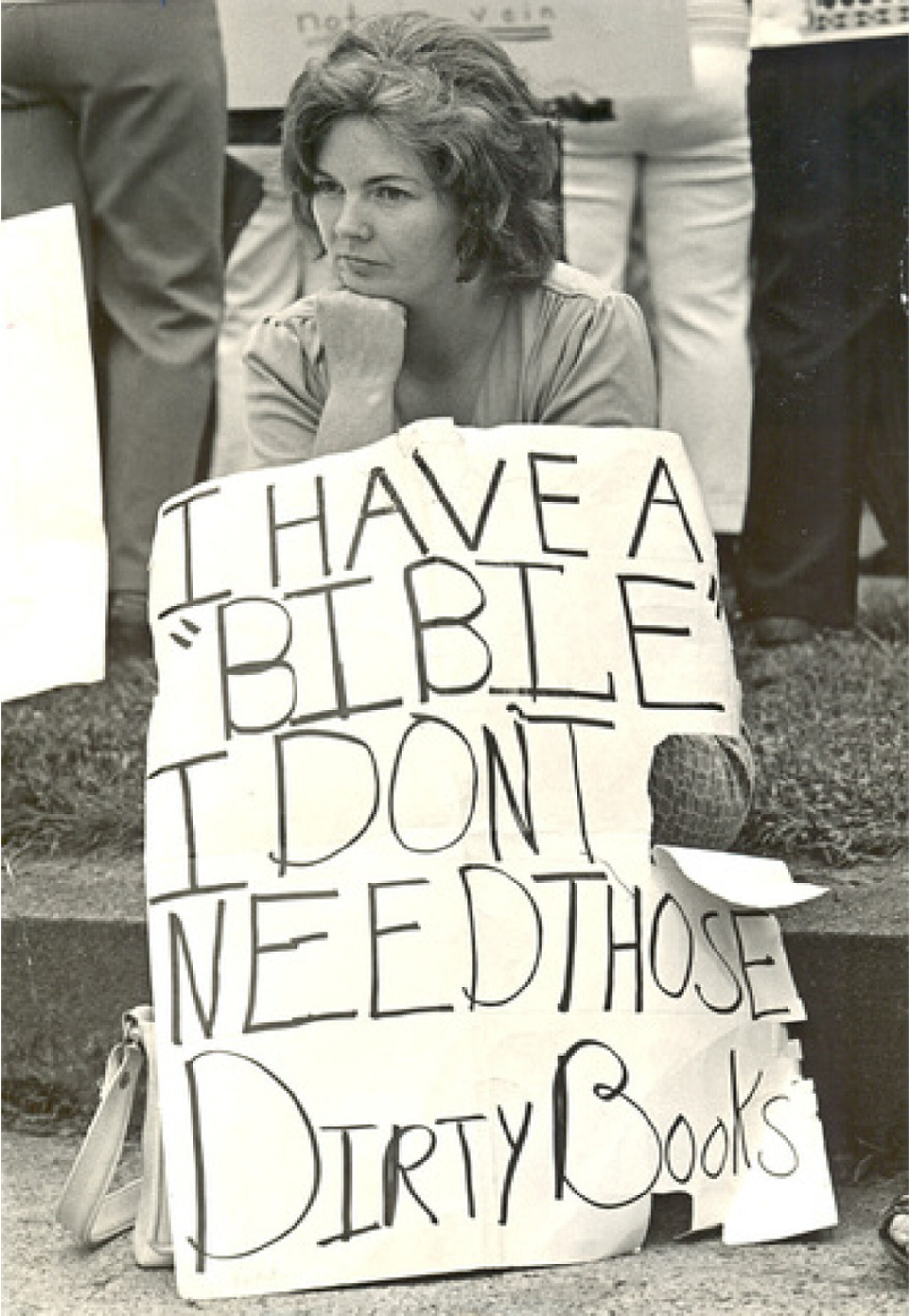
Trey: As you know, the 1974 Kanawha County textbook controversy was, in many ways, the story that first led me into the kind of reporting that eventually became Us & Them. What interests me about it now is how clearly the conflict anticipates culture-war battles that have continued for another half-century.
Parents believed schools were introducing values that conflicted with what children were being taught at home. Teachers and school officials believed educational judgment and intellectual freedom were under political pressure. Religion, race, patriotism, literature, sexuality, parental rights, and trust in institutions all became intertwined.
For media-literacy purposes, I think the episode gives students an opportunity to examine how narratives about the same event are constructed from very different understandings of what is actually at stake.
Henry: One thing that makes this episode a teachable moment is that one woman’s complaint about the teaching of “poor grammar” gets amplified and expanded into a community-wide conflict – including people walking off their jobs, parents refusing to send their children to school, and even acts of violence (blowing up a classroom). It might be a useful classroom activity to try to map the spread of the conflict (at least as far as we can understand it) based on the narrative you provide here. What groups or people played a role in expanding the terrain or intensifying the emotions around this conflict?
There's an interesting discussion here about how the absence of a conservative media outlet may have led to deeper feelings of alienation. We are used to hearing the argument made the other way: that because people are consuming Fox News in the absence of alternative media sources, the commentators (say, Tucker Carlson) have an undue influence on public opinion and can stir people towards culture wars. This might be a good context to think more deeply about this question. When does the presence of alternative voices (in this case, cultural conservatives) contribute to anger and when may it offer an outlet that leaves people feeling less alone? We might then ask about what roles media can play in bridging divides and bringing people together. I was struck by the one man who says that he never felt heard; if the educators had only listened, it might have lowered conflict. This might be a good place to discuss how we might learn to be better listeners for others in our community who may be coming from a different place than we are.
I might also suggest supplementing Great Textbook Wars with the follow-up episode you did about your friendship with Alice Moore and how that relationship evolved over time. I also play part of this for students to reflect on what it means to continue to live in a community and learn to interface with people with whom they disagree. You model such rich civic behavior here.
Trey: I think this is a really important point. One of the things that is easy to forget about the 1974 textbook controversy is that there was no conservative media ecosystem anything like the one that exists today. There was no Fox News, no Newsmax, no social media, and very little media that the protestors felt reflected their worldview or took their sense of outrage seriously.
As someone who was on the other side of that conflict, I think I probably experienced the local newspapers and television stations as basically reflecting what I considered legitimate. But if I put myself in the position of the textbook protestors, I can understand why they might have felt that the institutions deciding what counted as credible information were also institutions that did not really hear them.
Information still circulated, of course. Articles were copied and passed from person to person almost like chain letters. But that is very different from having a large media institution saying, in effect, “We see the world the way you do, and your concerns deserve attention.”
That is why Reverend Henry Thaxton’s observation in the documentary still stays with me. He essentially says that being ignored was worse than being attacked. There is something important there about listening. Listening does not require agreeing with someone, but when people believe that nobody in authority is even willing to hear them, that sense of alienation can intensify a conflict.
Henry’s question also raises an interesting contemporary paradox. Today we do have powerful conservative media institutions, and they can give people who once felt unheard a genuine sense that their worldview has a public voice. But those same institutions can also intensify grievance and polarization. So the question becomes: when does alternative media give people an outlet that reduces alienation, and when does it amplify anger and deepen the divide?
Henry, it really pleases me that you pointed to my relationship with Alice. That became one of the most meaningful parts of the entire Great Textbook War project for me.
Alice and I came to that history from very different places, and yet we developed a genuine friendship that lasted until her death. That relationship became important to me both personally and professionally because it taught me something I have carried into Us & Them: disagreement does not necessarily have to foreclose affection, respect, or relationship.
I don’t know if you know this, but I delivered the eulogy at Alice’s funeral. That gives you some sense of how significant she became in my life.
So, yes, I would be very glad to include the follow-up episode in this discussion. In some ways, the relationship with Alice may be as important pedagogically as the original documentary because it allows students to think about what happens after the argument is over — how people continue to live in the same community, how relationships can change over time, and whether it is possible to understand someone deeply without coming to share their worldview.
I have actually been thinking for some time about writing more fully about Alice and the textbook controversy in a book. A few people have recently encouraged me to revisit that idea. I just have to figure out where in my life I can make the time to do it.
Trust
Diminished Trust in the News Media
Trey: The episode grew out of a live event at West Virginia University and includes a conversation with Raney Aronson-Rath, executive producer of PBS FRONTLINE.
The central question is not simply why people distrust journalism. It is what journalism can do about it.
That connects directly to something I wrote in my earlier response to you: journalists can no longer assume audiences understand the professional processes behind a piece of reporting. We need to do a better job of explaining how information was gathered, what an editor does, why sources are corroborated, how corrections work, why someone being criticized is contacted for response, and what distinguishes reporting from commentary or advocacy.
I think this episode could pair especially well with the media-literacy section of our conversation.
Henry: Some questions to consider might be: what do we mean by trust? Trust to do what? Trust on what level? We cannot discuss trust without taking a step back and thinking about our own expectations about what we want journalists to do. Often, when people attack the news, it is because they have particular expectations that are not being met.
Many of these high school students are forming their initial relationship to the news. Maybe they are following the news more closely than ever before. What are their expectations, and where do they come from? Do they have the same expectations for their school paper, their local radio station, a podcast, or CNN?
One of your speakers makes a blunt statement that objectivity is humanly impossible. As human beings, we are going to have “feelings” about a particular topic. So how do journalists deal with those feelings? Your podcast models a particular practice which acknowledges the differences and then actively listens with the goal of understanding other perspectives. You model a form of curiosity that is rare in our society today.
I might refer teachers also to Braver Angels as a group which has produced books and materials (including its own podcast) which try to model what conversations across ideological divides look like. Your Dinner Party episodes do a great job here also.
A key question is what practices do more established journalists use to achieve a greater degree of objectivity. I often hear it said that our current expectation for news requires transparency and authenticity rather than old school forms of objectivity. What mechanisms do we find helpful in acknowledging bias and being up front about where you are coming from?
Trey: I like the way you frame this, particularly the question of what we actually expect journalism to do.
One of the practices I developed with Us & Them is to acknowledge that I am not a person without opinions. I have a worldview and I have political beliefs. But I make a kind of covenant with the audience: I will tell you where I am coming from, and then I will make a serious effort to understand people whose worldviews are different from mine and give them a fair opportunity to explain what they believe.
That is different, to me, from pretending that a journalist has somehow become completely objective or has no feelings about the subject. The discipline is in what you do with those feelings. Can I represent someone I disagree with accurately enough that they recognize themselves in the story? Can I give them the strongest opportunity to make their case rather than simply setting them up to be knocked down?
Most of the time, even when people I interview disagree with me substantially, I hear afterward that they felt I gave them a fair hearing. I think that matters.
I also like your reference to Braver Angels. I think they do terrific work, and there is a real kinship between some of what they do and what we have tried to do with the Us & Them Dinner Parties. In fact, we have featured Braver Angels in one of those episodes.
The larger problem, though, is that I think the relationship between the public and the news media has accumulated enormous mutual resentment. Many people in the public feel that journalism is something that is simply “done unto them.” They do not feel they have much agency over what gets amplified, what gets ignored, or how their communities are represented. Journalists, meanwhile, often feel that the public has little understanding or appreciation of the work involved in reporting and that politicians can score easy points simply by attacking the press.
I sometimes think we need a kind of reset in that relationship.
Transparency may be one part of that. One thing I found interesting in our conversation with Raney Aronson-Rath from FRONTLINE was the idea of making more of the underlying reporting available — fuller interviews, source material, and other documentation that allows audiences to see how a piece was constructed and judge for themselves whether someone was taken out of context or treated fairly.
I am not suggesting that every reporter can simply dump every piece of raw tape onto the Internet. But I do think journalism needs to do a much better job of opening the books and saying: Here is who we talked to. Here is what we checked. Here is how we reached this conclusion. Here are the standards we were trying to follow.
That kind of transparency does not eliminate bias, but it gives the public something more concrete than “trust us.” It can also make the process more expensive and time consuming on the part of news organizations, but sometimes I think the erosion of trust has gotten so bad it might be justified to go to the expense.
Henry: Media literacy research suggests that many people fail to recognize biases in the sources they turn to for news, even though they are also drawn towards journalism which reaffirms their existing belief system. A discussion around this episode might provide an opportunity to think together about how to detect media bias and what to do about it. Many adults consciously read news which comes from a different perspective to understand the state of the debate and to better grasp why other people feel the way that they do. This is a practice I think we should be encouraging. Detecting media bias is also a traditional aspect of media literacy education, and some traditional materials can be deployed effectively here to help students think through this issue.
Trey: I agree with this. One of the difficulties is that we are often much better at recognizing bias in media we dislike than in media that confirms what we already believe. That is true across the political spectrum.
I like the idea of encouraging students to consume some journalism that comes from outside their normal ideological comfort zone — not because every source is equally reliable, and not because they should abandon standards of evidence, but because it helps them understand how the same event can be framed differently and why people on the other side may be responding to information they themselves rarely encounter.
The challenge, I think, is to teach students to distinguish between perspective and standards. A news organization can have a recognizable worldview and still practice serious reporting, verification and correction. Conversely, a source can tell us exactly what we want to hear and still be unreliable. Learning to separate those questions seems like an important part of media literacy.
Local Narrative, Regional Agency and the Decline of Local Journalism
West Virginia’s News Deserts — With No Government Watchdog, Civic Engagement Plummets
Trey: We look at what happens when there are no journalists regularly attending meetings, asking questions, checking records, or telling residents what government is doing.
But I also think it connects with the narrative question. When local reporting disappears, information about a place increasingly comes either through social media or through national media that may only arrive when something dramatic or terrible happens.
That changes not only what people know about their community but how the community is represented to itself and to the outside world.
Henry: I would start with the concept of the “news desert” and might undertake a classroom project to map the state of news in their community. What alternative news sources are available? What kinds of alternative perspectives do they offer? How much of the news they consume is national rather than local? What is the health of their own local papers? What roles do local papers or radio stations play in the life of their community?
One test case often raised is how quickly news gets dispersed in their community if there is a natural disaster or how citizens know what is happening at their school board meeting or about candidates for local office.
Then there’s the issues you are raising about how the community sees itself or feels misrepresented by people outside the community, such as concepts like “hillbilly” or “redneck.” This issue of representation and accountability runs through all of the episodes we are sharing here. When people feel misrepresented or misperceived, when they feel talked down to, tensions within a community grow.
How has this shifted in a world of hyperlocal news and “citizen journalists”? In the absence of commercial or public news sources, how have citizens taken on greater responsibilities to cover local politics or events? This episode offers a range of models of citizens running news outlets, sometimes on microbudgets, working out of their homes or without pay. Can students locate such people in their own community and identify why they felt the need to step up to serve civic needs?
Trey: I think this is a fantastic classroom idea.
I would be interested in pushing the mapping exercise beyond simply asking, “What newspaper or television station serves this community?” I would ask students to map how people in the community actually learn what is happening around them.
How do you find out what happened at the school-board meeting? Who tells you who is running for local office? But also: how do you learn about a wedding, a death, a football game, a prom, a church event, a majorette festival, or something else that helps define the everyday life of a place?
That seems especially interesting now because so much of that information has migrated to Facebook, Instagram, neighborhood groups, and other social-media networks. But those networks can be very fragmented. I may learn what happens within my own circle, but does the larger community still have a place where it encounters itself as a community?
If I were teaching this at a university, I would also be interested in having students map the media ecosystems of the places they come from rather than only the city where the university happens to be. At a school like USC, for example, students might be able to compare communities from different parts of the United States or even different countries.
For people of your and my generation, there was usually some recognizable structure that told us how a community was informed. I am not sure that is as obvious anymore. That is exactly why I think the mapping exercise could be so revealing.
The mapping idea also makes me think about the Vanderbilt Television News Archive, which I have used in my own reporting. One of the reasons that archive became so valuable was that, for a long time, television news simply went out over the air and disappeared. If you wanted to know years later how Americans had been informed about a particular event, there was often no complete record of the actual broadcasts they had seen.
I wonder if we are creating a similar problem now at the local level. If people increasingly learn about their communities through Facebook groups, Instagram posts, neighborhood feeds, text chains, and other fragmented sources, will someone twenty or thirty years from now be able to reconstruct how a community understood what was happening to itself? We may preserve a tremendous amount of information digitally while still losing the shared record of how a community was informed.
That seems to me like another reason the mapping exercise could be valuable. It is not only about identifying where people get information now. It is also about asking what kind of civic record we are creating for the future.
Biographies

Trey Kay is creator of the award-winning Us & Them podcast, which is produced by West Virginia Public Broadcasting and distributed by PRX. For years, he’s reported on culture war battles in America. In 2009, he produced the radio documentary The Great Textbook War, which was honored with Peabody, Murrow, and du Pont-Columbia Awards. In 2013, he produced The Long Game: Texas’ Ongoing Battle for the Direction of the Classroom, which he researched as a Spencer Fellow for Education Reporting at the Columbia School of Journalism. In 2005, he shared in another Peabody for his contribution to Studio 360’s “American Icons: Moby Dick.” He’s produced for This American Life, The New Yorker Radio Hour, Marketplace, American RadioWorks, Morning Edition and PBS Frontline. Kay has taught at the Columbia School of Journalism, Marist College and at the State University of New York at New Paltz. He splits his time living in New York’s Hudson Valley and the Kanawha Valley of West Virginia.
Henry Jenkins is the Provost Professor of Communication, Journalism, Cinematic Arts and Education at the University of Southern California. He arrived at USC in Fall 2009 after spending more than a decade as the Director of the MIT Comparative Media Studies Program and the Peter de Florez Professor of Humanities. He is the author and/or editor of twenty books on various aspects of media and popular culture, including Textual Poachers: Television Fans and Participatory Culture, Hop on Pop: The Politics and Pleasures of Popular Culture, From Barbie to Mortal Kombat: Gender and Computer Games, Convergence Culture: Where Old and New Media Collide, Spreadable Media: Creating Meaning and Value in a Networked Culture, and By Any Media Necessary: The New Youth Activism. His most recent books are Participatory Culture: Interviews (based on material originally published on this blog), Popular Culture and the Civic Imagination: Case Studies of Creative Social Change, and Comics and Stuff. He is currently writing a book on changes in children’s culture and media during the post-World War II era. He has written for Technology Review, Computer Games, Salon, and The Huffington Post.