

Beyond Us and Them: An Interview with Podcaster Trey Kay (Part Two)
/This is the second of a four-part conversation between Henry Jenkins and journalist Trey Kay about Kay’s podcast Us and Them. The podcast explores how people sort themselves into groups, “us,” which almost inevitably creates a “them.” It revolves around not only reaching across political divides but helping people in different groups recognize common humanity. This installment explores civic education—what skills young people need to be effective citizens in our contemporary world and how journalism fits into that picture.
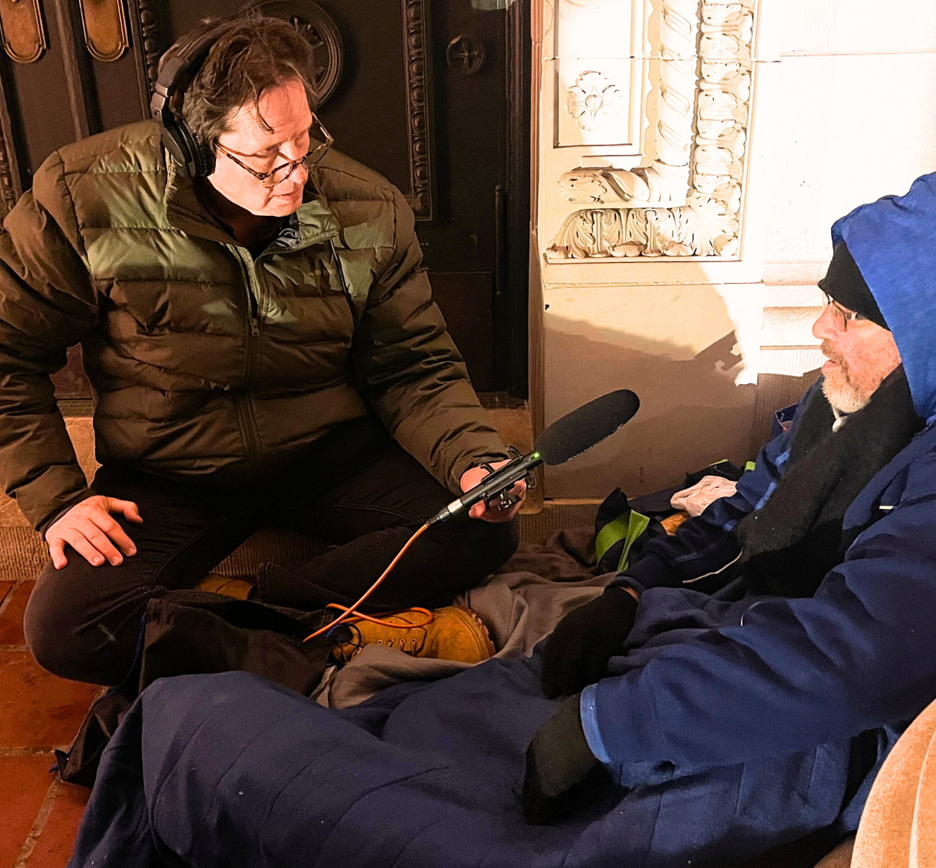
Henry: I have incorporated your episode – “The Black Talk” – into my own teaching. Made at the peak of the Black Lives Matter protests, you were willing to cede time and space to actively listen to Black friends and neighbors describe the advice they give to Black children about their dealings with the police. Many of us white folks struggle with what our role should be in such exchanges. How did you think through those issues given the emotional intensity of that moment? How did you decide when and how to insert your own voice in that episode? When should we talk and when should we listen?
Trey: We had previously produced an episode called The Talk about sex education. A listener responded to that episode and pointed out that in the Black community there is another conversation commonly known as “the talk”—the conversation Black parents have with their children about race, policing, and how to navigate encounters with authority. That listener’s observation became the inspiration for The Black Talk.
One thing I learned making The Black Talk was that sometimes my most useful role was not to demonstrate what I knew but to create enough room for someone else to explain something I did not know. In one interview, a Black father was describing the conversation he has with his son, and because his son was not there, I essentially stepped into that role and asked him to talk to me as though I were the young person receiving the advice. In that moment I was not trying to prove that I understood the experience. I was allowing myself to be taught.
Another of the most powerful moments came when a West Virginia mother read a letter she had written to her children about race and her fears for them. Her children were in the room and began crying as she read it. I remember feeling that my job at that point was simply not to get in the way. There are times when the journalist's contribution is the question and then the discipline to become quiet enough to hear the answer.
Henry: What civic education do young people need? What skills do they need to become effective citizens?
Trey: I want to make one distinction at the outset. I am less interested in teaching students how to become activists than I am in helping them become capable citizens. Activism may grow out of that, but I think the larger goal is to prepare young people to participate thoughtfully, knowledgeably, and responsibly in civic life.
For me, civic literacy begins with a serious understanding of the country’s founding documents and political history. I mean the Declaration of Independence, the Constitution, the Federalist Papers, the disputes among the founders, and the ways those documents have subsequently been interpreted, challenged, and expanded. Democratic government depends upon an informed citizenry, but I worry that we increasingly encounter the Constitution not as something to study deeply but as something to quote selectively as ammunition in an argument.
I sometimes think Americans approach both the Constitution and the Bible in a similar way: we know a few passages that support what we already believe, but we often don't know the larger document particularly well. I would never propose the Bible as a civic creed in a religiously pluralistic country, but it is difficult to understand American history, culture, rhetoric, literature, and many of our contemporary political conflicts without some understanding of Christianity and the biblical tradition. Large numbers of Americans identify as Christian, many others remain culturally connected to Christianity even if they are secular, and biblical language has profoundly shaped American public life
I would love to see civic education move away from that kind of proof-texting, whether constitutional or biblical. If you're going to invoke the First Amendment, understand the larger constitutional argument around it. If you're going to invoke Scripture in public life, understand the larger tradition, the context, and the disagreements within it. Context matters.
But content alone is not enough. Young people also need a set of civic habits and practical skills that help them navigate a very complicated information environment. Media literacy is central to that. Students need to know how to ask who produced a piece of information, what evidence supports it, what may be missing, and whether they are looking at reporting, commentary, advertising, propaganda, or outrage amplified by an algorithm. They need to be able to distinguish a primary source from a secondary interpretation and both of those from somebody simply asserting something on social media.
Historical context matters just as much. Students need to learn how to understand a quotation, law, political claim, or historical event in the world in which it originally appeared rather than pulling it out of context and using it as a weapon in a present-day dispute. I also think they need to get better at distinguishing between disagreements over facts and disagreements over values. Are we arguing about what actually happened, about what the evidence shows, or about what we think ought to happen? Those are different kinds of disagreements, and they require different kinds of conversations.
Listening is another civic skill that I think we undervalue. Can I describe another person’s argument accurately enough that they would recognize it before I begin criticizing it? Can I ask, “How did you come to believe that?” rather than, “How could you possibly believe that?” Can I hold a strong conviction and still ask myself what evidence might cause me to reconsider it? That kind of intellectual humility is not weakness. I think it is one of the things democratic life requires.
There is another practice that I think could have real civic value, and it comes from the 12-step tradition. One of its central ideas is that when you are angry with another person or institution, you do not begin by cataloging everything they have done wrong. You take what is sometimes called a “fearless moral inventory” and ask, as honestly as you can, what your own part in the conflict might be. Another common way of expressing the idea is that you try to keep your own side of the street clean.
I find that principle enormously relevant to public life. Much of our political discourse encourages us to become experts in the hypocrisy, dishonesty, and failures of the other side while remaining remarkably incurious about our own. We are very good at identifying what “they” have done to us and much less practiced at asking what we, our party, our movement, our institution, or our community may have contributed to the problem.
The 12-step tradition also carries that self-examination one step further. If you recognize that you have harmed someone, the responsibility is to make an amends where possible. What I find striking about that principle is that it does not depend upon the other person apologizing first. They may have harmed you as well. They may never acknowledge it. The question is still: What is mine to own, and what can I do about it?
I sometimes wonder what American political life would look like if that became a more common civic habit. What if, before demanding an apology from the other side, political leaders, institutions, and ordinary citizens were expected to identify their own contribution to a conflict? What if taking responsibility were regarded as evidence of strength rather than surrender? I think that kind of moral self-examination could help reduce the constant projection of our own failures onto political opponents.
That connects closely with disagreement without dehumanization. Young people need practice in opposing an argument strongly without turning the person making it into an enemy. They also need practical constitutional and civic knowledge. What rights do I actually have? What powers does a school board, city council, legislature, governor, president, or court actually possess? What are the mechanisms available to me if I want to change something? Do I know who makes decisions in my own community and how to participate in those decisions?
I would add coalition building to that list as well. Can I work with someone on an issue where we agree even if we disagree profoundly about five other things? That may be one of the most important civic capacities of all. Democracy does not require everybody to arrive at the same worldview. It requires people who disagree to retain enough shared civic language, enough trust in institutions, and enough trust in one another that they can continue governing themselves together.
The other challenge, of course, is how to make any of this engaging for young people. I would probably add Schoolhouse Rock to that conversation. A whole generation learned something about grammar, mathematics, and how a bill becomes a law because those ideas were turned into songs, characters, and stories. When I was growing up, Jesus Christ Superstar gave me an entry into biblical characters, stories, and questions long before I had anything approaching a sophisticated theological understanding. Hamilton has done something similar for a generation of young people with the American founding.
All three remind me that storytelling, music, drama, and popular culture can sometimes create a doorway that a textbook alone cannot. The question now is what the equivalent looks like in the YouTube and social-media age. How do we take complicated ideas about government, history, journalism, or media literacy and make them accessible without making them simplistic?
Perhaps that is one place where media literacy, storytelling, and civic education can come together. Rather than simply telling students what responsible citizenship is supposed to look like, we might give them stories, experiences, and conversations through which they can actually practice it.
Henry: You have done a number of episodes centered on the state of the news media today and the future of journalism, particularly as it impacts small town and rural America. What do you see as some of the bigger issues there? How does this impact "trust" in the news media? What forms of news media do youth need as they begin to encounter professional news for the first time?
Trey: This is an enormous question because journalism has been going through a profound transformation for at least twenty or thirty years. The collapse of the traditional economic model for newspapers, the growth of digital media, and then the rise of social media all fundamentally altered how journalism is financed, distributed, and consumed. In many communities, particularly rural communities, the result has simply been that there are far fewer journalists doing the work.
Some of our Us & Them reporting has looked specifically at what happens when small communities lose local news. One example is our reporting in Welch, West Virginia (Another Small Town Paper Down). When a local newspaper disappears or is hollowed out, the loss is not only that fewer reporters attend government meetings or investigate public officials, although that is critically important. A vacuum in watchdog journalism creates more opportunity for corruption, abuse of power, and decisions being made without meaningful public scrutiny. But something less obvious is also lost. The local newspaper once documented the life of a community: the football game, the majorette festival, the graduation, the school-board dispute, the wedding, the obituary, the business opening, the flood, the church supper. Particularly in a rural state like West Virginia, where people may live scattered through mountains and hollows, local news helped tell people, in effect, this is your community, and these are the people who belong to it.
That connects to something we have been thinking about lately through Us & Them reporting on narrative change in Appalachia. Appalachia has long been represented from the outside through a set of familiar stereotypes: the ignorant hillbilly, the moonshiner, the toothless mountaineer, the isolated and backward inbred community. One of the questions we have been asking is what happens when people in a region have more agency over the stories that define who they are. Who gets to describe a place? Who gets to decide which people, institutions, achievements, and struggles matter enough to become part of its public identity?
I think about this very personally. When I was growing up in West Virginia, much more of the television and radio that I encountered in the morning was locally produced. A local broadcaster told us what the day looked like, what the roads were like, what had happened in town, who had accomplished something, what school was closed, what team had won, and what people in our community were talking about. It did something more than deliver information. It amplified the importance of the place itself. It told me, as a young West Virginian, that the people around me and the things happening where I lived were significant enough to be reported.
Over time, more of that local programming was replaced by national programming with short spaces for local news, weather, or traffic. There are many advantages to that model. It connects us quickly to a much larger national conversation. But I also think something was lost along the way. Our community became a small insert inside someone else’s larger story. I remember feeling, as a young person, that where I lived somehow mattered less than the places I was seeing represented nationally. I do not think that feeling alone caused me to leave West Virginia, but I do think it became part of the psychology of believing that the important things were happening somewhere else.
That makes me wonder about the psychological consequences of losing local media, especially in rural communities. What happens when a place no longer regularly sees itself reflected back through professional storytelling? Does a community begin to feel less consequential? Do young people begin to believe that success requires leaving because the people who remain are largely invisible? I cannot say that everyone experiences it this way, but I know that I did, and I doubt that I was completely alone. Local journalism therefore does more than monitor government. It contributes to a community’s sense that it exists, that it has a history, that its people matter, and that it has some agency in defining itself.
When local journalism disappears, we lose some of that connective tissue. Social media often moves into the vacuum, but social media is not journalism. It generally does not have editors, institutional standards, routines of verification, corrections policies, or professional obligations to determine whether information is true before distributing it.
That distinction is increasingly difficult for young people to see because many of them encounter a newspaper story, a TikTok video, a meme, a podcast clip, an Instagram post, a piece of advocacy, and a reported news story through essentially the same device and often within the same feed.
I think that is where trust becomes especially complicated. Before asking whether young people “trust the news,” I think we need to ask what they expect journalism to do in the first place. Do they expect the same thing from a school newspaper, a local radio station, a podcast, CNN or somebody they follow on TikTok? Do they understand that those sources may be operating according to completely different standards and purposes?
One thing I believe we need to do much better as journalists is show our work. We need to explain more clearly what a news story is, what a feature is, what analysis is, what an opinion piece is, and what investigative reporting is. We need to explain what an editor does, why sources are corroborated, why someone being criticized is contacted for a response, why corrections matter, and why we distinguish between what we know and what we suspect.
Those practices may feel elementary to people who grew up in newsrooms, but they are not self-evident to someone who has grown up in an environment where almost every form of information arrives through the same screen.
If I were introducing young people to professional news, I would want them to encounter multiple forms: straight reporting, long-form narrative journalism, investigative reporting, local journalism, public media, and thoughtful analysis. But I would teach those forms alongside the processes that produced them.
I would also start by asking young people about the media world they already inhabit. Where do you get news? Who do you trust? Why do you trust them? What do you think journalism is supposed to do? Do you have a local newspaper or radio station? Who reports on your school board or city council? If something important happened in your community tomorrow, how would you find out about it?
Those questions could themselves become a media-literacy exercise. Students could map the news ecosystem in their own community and begin to see not only what information is available to them but what is missing.
The larger media-literacy challenge is not simply helping young people decide whether one particular story is true. It is helping them understand how knowledge is produced and what makes one information system more trustworthy than another.
Biographies

Trey Kay is creator of the award-winning Us & Them podcast, which is produced by West Virginia Public Broadcasting and distributed by PRX. For years, he’s reported on culture war battles in America. In 2009, he produced the radio documentary The Great Textbook War, which was honored with Peabody, Murrow, and du Pont-Columbia Awards. In 2013, he produced The Long Game: Texas’ Ongoing Battle for the Direction of the Classroom, which he researched as a Spencer Fellow for Education Reporting at the Columbia School of Journalism. In 2005, he shared in another Peabody for his contribution to Studio 360’s “American Icons: Moby Dick.” He’s produced for This American Life, The New Yorker Radio Hour, Marketplace, American RadioWorks, Morning Edition and PBS Frontline. Kay has taught at the Columbia School of Journalism, Marist College and at the State University of New York at New Paltz. He splits his time living in New York’s Hudson Valley and the Kanawha Valley of West Virginia.
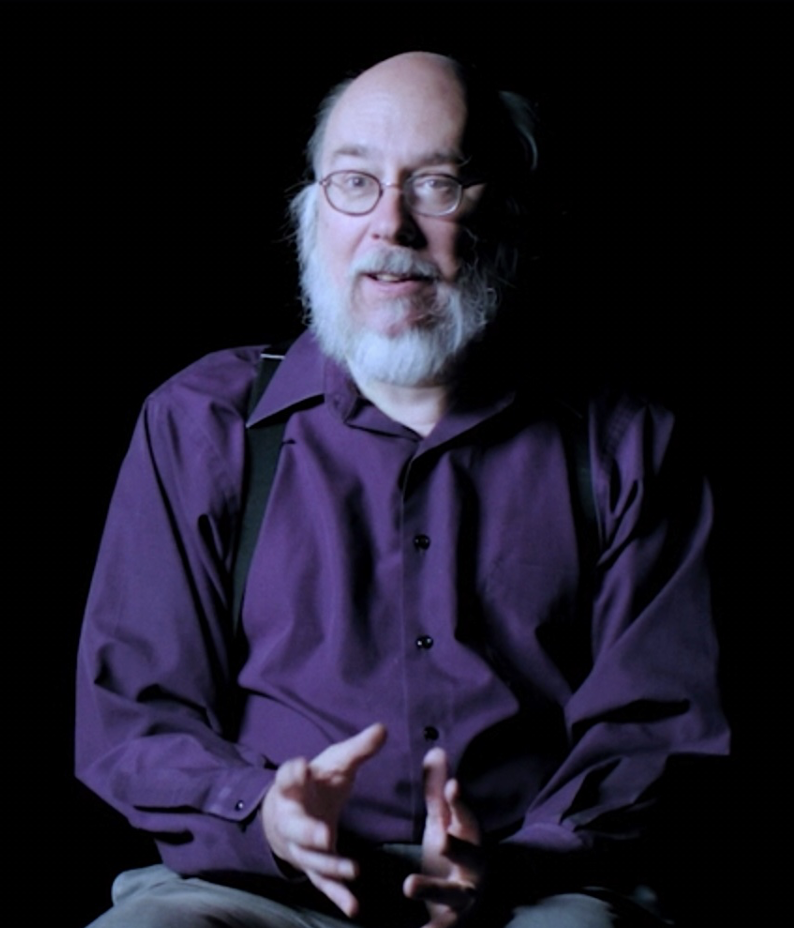
Henry Jenkins is the author and editor of more than 25 books on various aspects of media and popular culture, including: Textual Poachers: Television Fans and Participatory Culture (soon to be published in a 35th Anniversary edition), Convergence Culture: Where Old and New Media Collide, Confronting the Challenges of a Participatory Culture: Media Education in the 21st Century, Reading in a Participatory Culture: Re-Mixing Moby-Dick in the English Classroom, By Any Media Necessary: The New Youth Activism, and Where The Wild Things Were: Boyhood and Permissive Parenting in Post-War America. He is currently coauthoring the Frames of Fandom book series with Robert Kozinets and is completing The Global Handbook of the Civic imagination with Sangita Shreshtova. He is the Provost’s Professor of Communication, Journalism, Cinematic Arts, Education, and East Asian Languages and Cultures at the University of Southern California.