

Beyond Us and Them: An Interview with Podcaster Trey Kay (Part Three)
/This is the third of a four-part conversation between Henry Jenkins and journalist Trey Kay about Kay’s podcast Us and Them. The podcast covers how people sort themselves, creating an “us” that almost inevitably also generates a “them.” This installment explores media literacy, journalism, and podcasting, discussing the strengths of new media like podcasts but also where they create challenges for young people trying to understand the world when one device hosts content created through enormously different processes.
Henry: Going back to the "Great Textbook War," you often have focused on cultural divides in education — from current debates about history or critical race theory to the plight of historically black colleges and universities. Yet, these can be some of the hardest issues to discuss inside educational settings because teachers fear for their jobs if they are seen to take a partisan position. Yet, how can they not care given how immediately these conflicts impact their work and lives. What suggestions do you have for teachers caught in this situation?
Trey: One of the things I learned from studying the 1974 textbook controversy in Kanawha County is that cultural conflict in education often emerges when parents begin to believe that the values being transmitted at school are fundamentally different from the values being taught at home. For generations, public education had been an essential part of the American promise. Families who themselves had limited educational opportunities sent their children to public schools believing those children would gain knowledge, enter the larger society, perhaps attend college, and have opportunities their parents and grandparents had never had.
Social change complicated that bargain. When parents begin to believe that schools are introducing children to ideas about race, religion, gender, sexuality, history, science, or national identity that contradict what the family believes, education can suddenly feel less like an opportunity and more like a threat. I can empathize with part of that anxiety. Parents naturally care about the values their children encounter.
At the same time, I think public education has a responsibility both to protect legitimate inquiry and to treat students’ backgrounds and beliefs with seriousness and respect. That means science should be taught according to scientific standards, and history according to historical evidence, but it also means that religious belief should not be treated as something quaint, backward, or intellectually unserious simply because it falls outside a secular framework. For many students and families, faith is one of the central ways they understand identity, morality, community, and the meaning of their lives. A classroom should be able to acknowledge that without turning religious belief into scientific evidence or requiring students to accept a particular theology.
The difficult question is what happens when concern about values turns into pressure to suppress evidence, distort history, limit scientific inquiry, dismiss the importance of religion in people’s lives, or require teachers to present a sanitized account of complicated subjects. For me, the guiding principle has to be truth, while acknowledging that serious people may disagree about interpretation.
History is complicated. The United States has extraordinary achievements and ideals, and it also has parts of its history that are painful, unjust, or morally indefensible. I do not think teaching those complexities means teaching children to hate their country. In my own life, knowing the difficult things about myself does not make me hate myself. Ideally, it gives me a fuller understanding of who I am and a greater opportunity to become better.
But I also think educators need to recognize that the fear on the other side is real. Some parents genuinely worry that education has shifted from teaching students how to think toward telling them what to think. Even when I disagree with the conclusion, simply dismissing that concern is unlikely to resolve the conflict.
One of the things that stayed with me from reporting The Great Textbook War was something a teacher named Becky Burns told me. She had been part of the committee that selected the textbooks that became the focus of the 1974 controversy. What struck me was that the controversy did not simply end when the demonstrations ended. For years afterward, she described feeling as though she had to watch what she taught and how she taught it. She worried that something said in the classroom might make its way home, anger a parent, and set off another confrontation. The effect was not necessarily that someone officially prohibited her from teaching a particular subject. The pressure itself made her more cautious.
That is one of the complicated things about civic protest around education. I admire the fact that people show up to school-board meetings, organize, speak publicly, and participate in democratic institutions when they believe something important is at stake. Parents should have a voice in public education. At the same time, the intensity of those movements can have a chilling effect. Teachers can begin making decisions not solely on the basis of what is historically accurate, intellectually important, or pedagogically sound, but on what is least likely to provoke a confrontation. Sometimes increased sensitivity and accountability may improve teaching. But there is also a point at which fear can narrow legitimate inquiry.
We saw some of those tensions again when Us & Them reported on the debate over critical race theory (Can We Have A Hard Conversation About Race In America’s Classrooms?) and interviewed people involved in the parental-rights movement, including a founder of Moms for Liberty. What interested me as a reporter was not simply deciding which side of the argument was right. It was the intensity of the distrust. People who opposed certain curricula often believed schools were becoming ideological institutions, while teachers, historians, and others worried that political pressure was making it harder to teach honestly about race and American history.
That is where I think educators and historians have to be willing to defend professional standards. There are legitimate debates about interpretation, curriculum, age appropriateness, pedagogy, and how contested ideas should be presented. There are also conservative scholars and parents who want curricula to give greater attention to ideas they believe have been neglected, whether those involve religion, intelligent design, interpretations of American history, or criticism of particular academic frameworks. Those arguments are part of the public conversation. But there is a distinction between debating interpretation and insisting that uncomfortable evidence disappear. The challenge is to preserve space for vigorous disagreement without allowing the loudest or most intimidating voices on any side to determine what may be taught.
What I would tell teachers is to stay rooted in evidence and in the professional standards of their discipline and to be transparent about what they are teaching and why. They should distinguish teaching a contested subject from prescribing the correct political or moral position students must adopt, and they should create space for students to ask difficult questions without immediately categorizing those questions politically. Teachers also need to continue speaking publicly about the pressures they are experiencing. If teachers believe legitimate scholarship is being suppressed or that they are being asked to distort what they know, the broader public needs to understand that.
At the same time, I would encourage educators to do something I try to do in Us & Them: ask what role their own institutions may have played in producing the distrust. In many of our cultural conflicts, each side arrives convinced that the other side is the entire problem. I find it useful to borrow something like the moral inventory practiced in twelve-step programs. What part of this belongs to me? What did people on my side fail to hear? Where did we become dismissive? Where did we mistake disagreement for ignorance or bad faith? That does not mean all claims are equally valid. It means that understanding how a conflict developed is often the first step toward getting out of the defensive crouch that makes meaningful conversation impossible.
Henry: Media literacy classes address a range of different media, but podcasting is still a new and emergent media. What specific things do you think students need to know to fully assess the credibility of podcasts they might be consuming?
Trey: Podcasting creates a particularly interesting media-literacy challenge because the form is so intimate. A podcast host can feel less like Walter Cronkite delivering the news and more like a smart friend sitting beside you explaining the world. That intimacy is one of the great strengths of the medium, but it can also make listeners less conscious of the distinction between trust in a personality and trust in the information that personality provides.
At Us & Them, because we come out of a public-radio and newsroom tradition, we try to bring traditional journalistic practices into the podcast form: reporting, verification, editing, fairness, corrections, sourcing, and editorial review. But podcasts as a whole do not operate under one common professional system. Some are journalism. Some are commentary. Some are advocacy. Some are entertainment. Some are essentially conversations or gossip. Some combine several of those forms without clearly identifying which mode the listener is hearing at any particular moment.
I think students therefore need a basic set of questions they can ask whenever they encounter a podcast claiming to tell them something about the world:
Who is speaking? What is the host’s background, expertise, and relationship to the subject? Why am I hearing from this person on this subject, and why do I need to hear this person’s views on it?
What kind of program is this? Is it journalism, opinion, advocacy, entertainment, personal narrative, gossip, or some mixture? What does the program itself claim to be?
Where did the information come from? Are there identifiable sources, documents, interviews, studies, court records, data, or firsthand reporting?
Can I trace important claims back to evidence? Does the program link to sources or explain how it knows what it claims to know?
Has anyone else examined the material? Is there an editor, producer, fact-checker, newsroom, or institution providing another level of scrutiny?
Does the program distinguish fact from interpretation? Can I tell when the host is reporting something established and when the host is offering an opinion or inference?
How does the program deal with people it criticizes? Are those people represented fairly, and were they given an opportunity to respond?
Does the program correct mistakes? Is there any visible mechanism for accountability?
What incentives are operating? Who finances the program? Is someone selling something? Does the host benefit politically, financially, or professionally from persuading the audience toward a particular conclusion?
How does the program make me feel? This may be one of the most important questions. If a piece of media consistently makes me furious, frightened, morally superior, or certain that my enemies are evil, that emotional response itself is worth examining.
The idea of having some recognizable indication of journalistic standards actually came to me through something completely unrelated to journalism. Years ago, I was in a wine store with a French friend who knew far more about wine than I did. He showed me certain designations on French wine labels and explained that, if I knew what I was looking at, the label gave me useful information about where the wine came from and the standards under which it had been produced. It did not guarantee that I would like the wine, and it did not mean that every bottle without that particular designation was bad. But it gave an inexperienced person like me a way to understand something about the provenance and standards behind what I was buying.
I sometimes wonder whether journalism needs a better version of that. I am not suggesting a government label that determines who is and is not allowed to call themselves a journalist. I would be very uncomfortable with that. But I do think journalism as a profession needs to find clearer ways of signaling the practices behind the work. Was this reported? Was it edited? Were sources verified? Were people criticized in the story given an opportunity to respond? Is there a corrections process? Who is accountable if the information turns out to be wrong?
The point would not be to tell audiences, “Trust us because we have the right label.” In fact, I think that is part of the mistake traditional journalism has made. The point would be to say, “Here are the standards we say we follow, and here is enough of our process for you to judge whether we actually followed them.”
For decades, journalists often assumed that audiences understood what happened inside a newsroom. I do not think we can make that assumption anymore. In an information environment where a newspaper investigation, a partisan commentary show, an influencer’s TikTok, an advocacy podcast, and a piece of professional journalism can all appear next to one another on the same phone, process itself has to become part of media literacy. Journalists need to show audiences not only what we know, but how we came to know it.
Biographies

Trey Kay is creator of the award-winning Us & Them podcast, which is produced by West Virginia Public Broadcasting and distributed by PRX. For years, he’s reported on culture war battles in America. In 2009, he produced the radio documentary The Great Textbook War, which was honored with Peabody, Murrow, and du Pont-Columbia Awards. In 2013, he produced The Long Game: Texas’ Ongoing Battle for the Direction of the Classroom, which he researched as a Spencer Fellow for Education Reporting at the Columbia School of Journalism. In 2005, he shared in another Peabody for his contribution to Studio 360’s “American Icons: Moby Dick.” He’s produced for This American Life, The New Yorker Radio Hour, Marketplace, American RadioWorks, Morning Edition and PBS Frontline. Kay has taught at the Columbia School of Journalism, Marist College and at the State University of New York at New Paltz. He splits his time living in New York’s Hudson Valley and the Kanawha Valley of West Virginia.
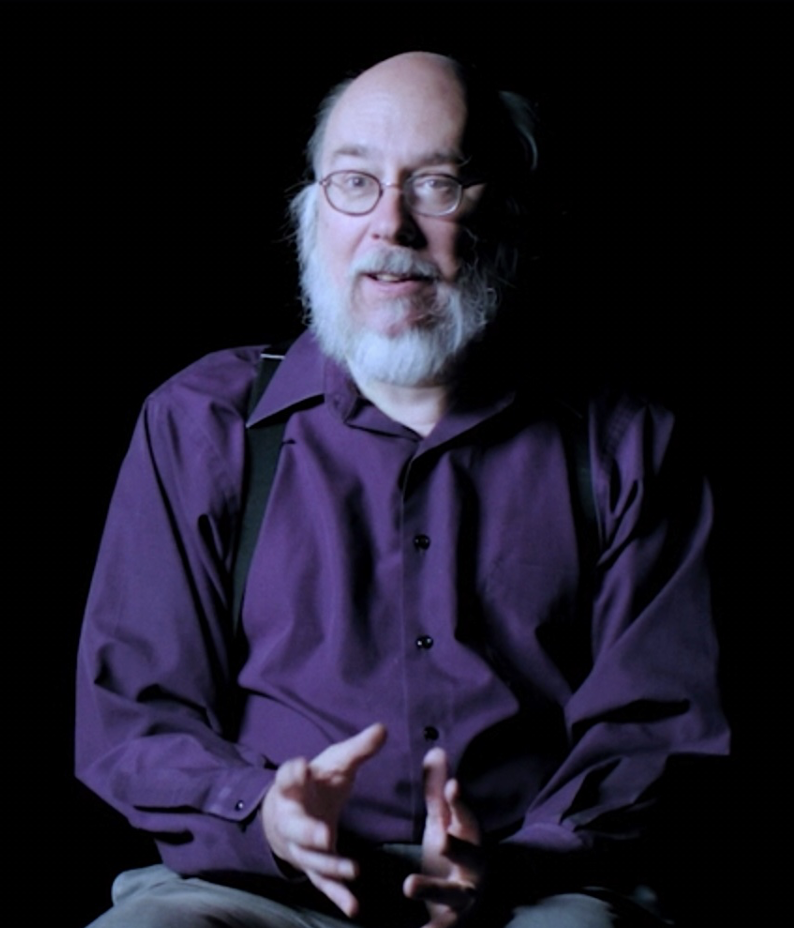
Henry Jenkins is the author and editor of more than 25 books on various aspects of media and popular culture, including: Textual Poachers: Television Fans and Participatory Culture (soon to be published in a 35th Anniversary edition), Convergence Culture: Where Old and New Media Collide, Confronting the Challenges of a Participatory Culture: Media Education in the 21st Century, Reading in a Participatory Culture: Re-Mixing Moby-Dick in the English Classroom, By Any Media Necessary: The New Youth Activism, and Where The Wild Things Were: Boyhood and Permissive Parenting in Post-War America. He is currently coauthoring the Frames of Fandom book series with Robert Kozinets and is completing The Global Handbook of the Civic imagination with Sangita Shreshtova. He is the Provost’s Professor of Communication, Journalism, Cinematic Arts, Education, and East Asian Languages and Cultures at the University of Southern California.