Interactive Narratives and Meaningful Design: An Interview with Hartmut Koenitz

Interactive Narratives and Meaningful Design: An Interview with Hartmut Koenitz

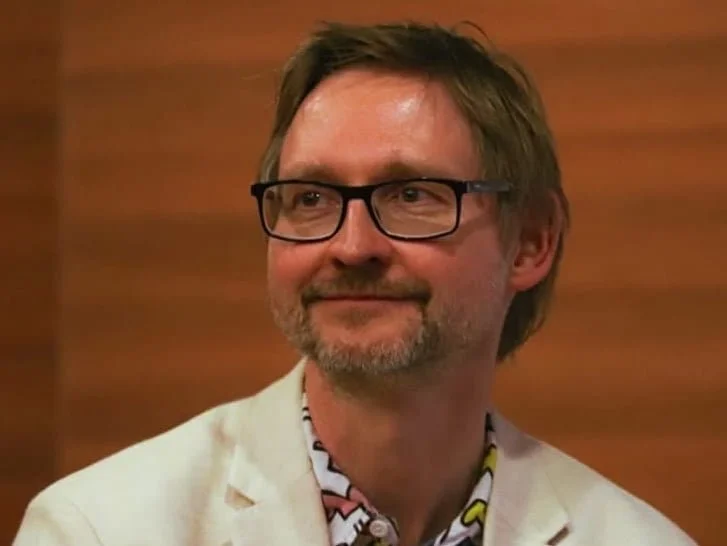
Renata Frade interviews Hartmut Koenitz — a leading scholar, designer, and theorist in interactive digital narratives — to explore the evolving relationship between storytelling, human–computer interaction, and meaning-making in digital culture. Read to understand how interactive narratives reshape our understanding of user experience, complexity, and participation across media forms, how interactive narratives can inform civic and cultural engagement, and what impact generative AI is having in this space.

Read More

Chernobyl a Miniseries Between “Reality” and “Television”

Chernobyl a Miniseries Between “Reality” and “Television”

Chernobyl (HBO – SKY, 2019) is a miniseries inspired by the real fact (or, rather to say, by the huge amount of historical, journalistic, administrative and scientific documents available on the subject) and also, in part, by the book Prayer for Chernoby by Svetlana Aleksievic. Miniseries are one of the most popular formats in current television production. They are characterised by a closure at the end of the planned episodes and are therefore also called limited series.

Read More

History, Power, and Narrative: Chernobyl is Still There

History, Power, and Narrative: Chernobyl is Still There

The title of this contribution is alluding to the relationship between history and fiction, in Chernobyl tv series. On the one hand, the Chernobyl series challenges the so-called connection between fiction and nonfiction. It takes up the narration of the events in a rather precise way; but, at the same time, it works on memory and narrative, on the construction of personal experience and testimony, as well as on perception – and therefore on the plastic (that is, aesthetic-perceptual) and visual/figurative dimension. On the other hand, the question is: how the process of contextualization is staged?

Read More