

The WAG Pipeline: Building the World and the Audience Before You Build the Game
/The Ludo-Centric Transmedia Dream
Preaching to the Converted
Transmedia storytelling techniques, for me, are poetic devices on a storyworld scale. As poetry stacks images to create invisible meaning, transmedia stacks media to create invisible worlds with equally rapturous effect. Metapoetry. And since mainstream audiences are more naturally fluent in media than poetry, they are often more deeply moved by a well-executed transmedia moment than by a beautifully crafted line of verse.
Sometimes that poetry is an epic: The Dark Knight’s Why So Serious? campaign briefly made Gotham feel like a place we inhabited rather than a film we watched. At other times, the poetry is confessional (quieter, more intimate) like the way players carried the emotional reality of Telltale’s The Walking Dead or Life Is Strange with them, long after play, into reaction videos, playlists, and personal paratexts.
There’s little better a brand can do for itself than to delight across modes. But just as bad poetry is painfully bad, botched transmedia can land like a rotten egg. This seems especially true for video game fandoms. Both the transmedia devotee and the gamer in me both want to see a truly integrated game-anchored transmedia experience thrive. It’s my ludo-centric transmedia fantasy, and it remains stubbornly elusive.
The years that I spent chasing that dream as Story Architect inside an ambitious transmedia universe gave me an insider’s perspective on the challenge and left me chasing productive questions. Where in the lifecycle does transmedia belong? Can the world, the audience, and business realities collaborate from the start instead of colliding into each other at the end? Can game studios retrofit their worldbuilding pipelines to compose something like “poetry at the scale of a universe?”
What I did not anticipate was that processing my experiences through these kinds of questions would result in the development of my own creative pipeline. The WAG Pipeline proposes we treat transmedia not as marketing or extension but as R&D and early audience formation. Instead of guessing at what a future audience might want, we can let the signals emerge until they reach a point where the audience is asking for a game. Alongside this organic emergence, we deliver a worthwhile transmedia journey to encourage their participation. The result is a risk smart, audience backed, transmedia-primed pipeline for developing new game-ready IP.
Before we get into the model, I want to share the lived context that shaped it, so those of you working in transmedia can see the industry mechanics behind my ideas.
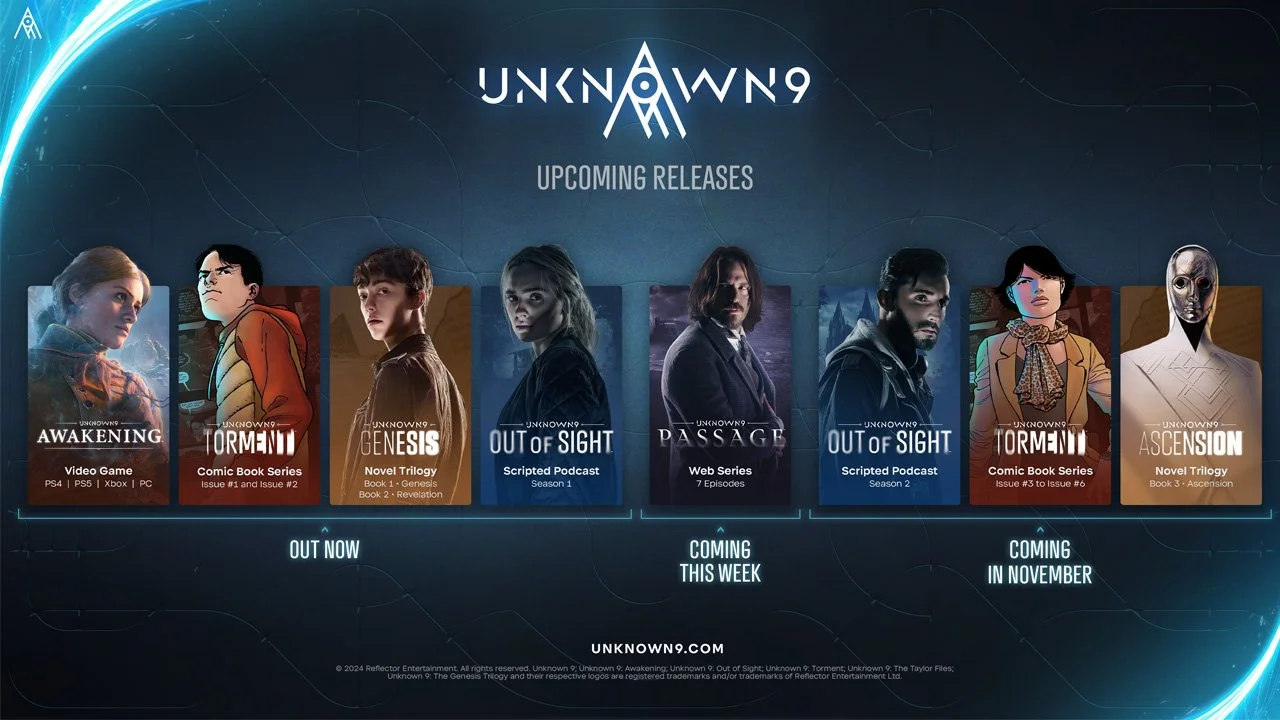
FIGURE 1: The major products of the Unknown 9 story world. Source: Bandai-Namco
Potential: Unknown
Gold in a Collapsed Transmedia Mine
When I joined Reflector Entertainment as Story Architect on Unknown 9, the mission was to build an entire story universe at once. It was bold and exciting. A major video game was in development and would serve as the revenue engine for the IP.
We wanted to create a transmedia world that truly affected audiences, one that sparked wonder and curiosity and inspired people to explore every corner. We dreamed of mysteries that would unfold over years and of communities that would form around them. We wanted a kind of narrative alchemy where each medium amplified the others. A podcast that somehow sounded like the comic book. A comic that somehow looked like the novel. Paratexts that mattered. Mind-bending metapoetry, touchpoints interlocking with touchpoints, media stacked on media, invisible worlds made manifest in the mind’s eye. Our ambitions were sincere and our vision was big. Transmedia would be our key to unlock these rarefied experiences.
When our teaser trailer launched, a few YouTubers reacted with genuine excitement. They discovered the wider transmedia plans and started searching for more details. Watching how curiosity pulled them from one medium to another was intoxicating. It felt like a glimpse of what transmedia could really do when everything clicked.

FIGURE 2: One of many YouTuber reaction. - Source: https://youtu.be/ibUajMnf6wE?si=t82MHFiAlt9I7uow
So, we set out to build a slate of interconnected storyworld products. Enough to sustain a year or more of releases that would grow an audience ahead of the game. The idea was to allow for organic discovery, community formation, brand evangelism, earned media, and a rising sense of anticipation. And, in some cases, it worked. A small but passionate community rallied around our first two ARGs.
The narrative design of the game anticipated all of this. Secret histories and recurring character origins were meant to pay off therein. Powers that had only been whispered about would be experienced directly by the player. Disparate narrative threads would converge to create material for the next story cycle.
In my opinion, video games are uniquely powerful not as first touchpoints, but as arrivals. Within a transmedia ecosystem, they function less as invitations and more as destinations. After reading, listening, speculating, and imagining, players would finally arrive inside the world and perform it themselves. They would now be doing everything they had heard and read about. Accumulated meaning collapses into presence. This is not a romantic notion; it is a structural strength of the medium. Games are the most immersive form of storytelling we have, and that immersion compounds when it is earned.
But business realities can shift. Instead of letting transmedia blaze the trail for the new IP, the ancillary content was reframed as a tool to extend the sales window of the game.
Reflector’s transmedia journey is complicated, and one day it will hopefully be told in detail because it contains lessons that could help creators everywhere. What became clear is that there was no established playbook for launching a whole transmedia universe whose commercial prospects were tied almost entirely to a AAA or AA game. Not even for Reflector’s parent company, Bandai Namco, who have a long history of successful franchises with cross media elements.
Along the way, online discourse around the game soured for reasons not entirely related to the actual content of the game, making the job of marketing it all the more complicated.
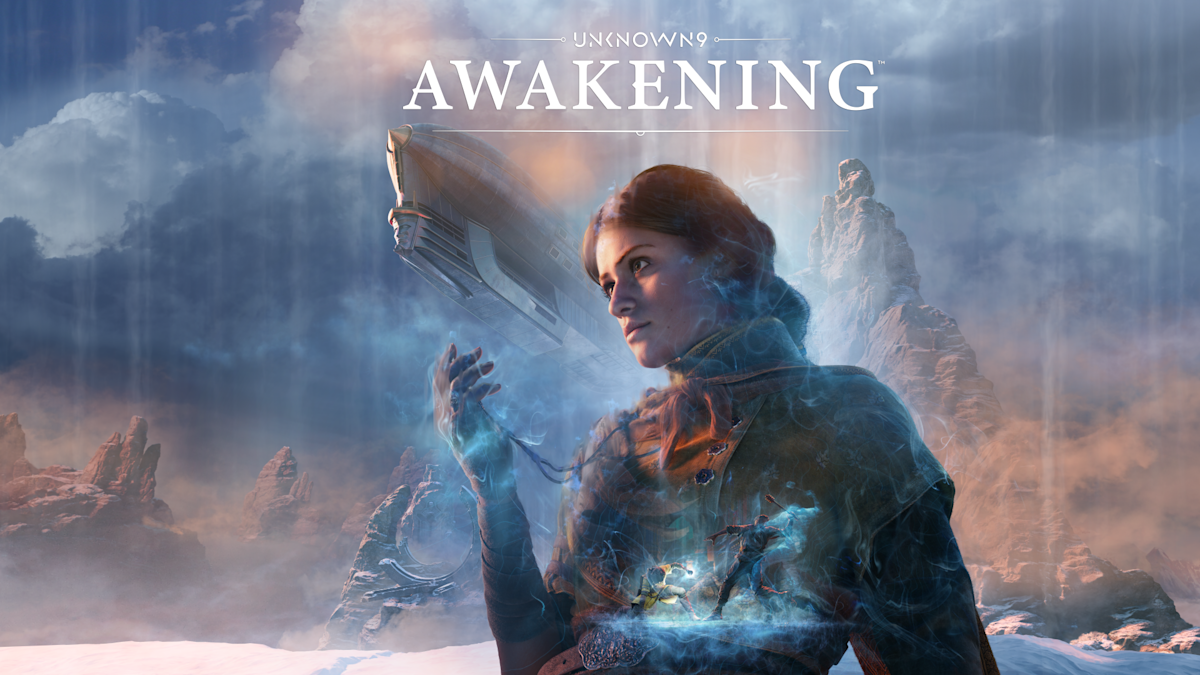
FIGURE 3: Key Art for Unknown 9: Awakening. Source: Bandai-Namco
The result is well known. Unknown 9: Awakening did not perform commercially and the IP, including the transmedia initiative, was shut down.
The cancellation felt like an existential crisis for me as a creator. I believed, and still believe, that transmedia can produce sublime outcomes, yet five years of my work had failed to move the needle in any measurable commercial sense.
And yet those signals were impossible to deny. Curious YouTubers pulling at loose narrative threads. Community members literally DM-ing me to tell me how much the project means to them. Tiny sparks that couldn’t be ignored.
What became clear to me wasn’t that transmedia had failed, or that the industry was somehow doing it “wrong.” The constraints are real. Most new IP fails. Games are extraordinarily expensive and increasingly risky to produce. Development pipelines are built around technology, iteration, and mechanics, not story worlds already in motion. Under those conditions, transmedia almost inevitably arrives at a late stage, once the shape of the game is already locked.
At the same time, the audience signals I’d seen were real. When transmedia works, it doesn’t just market a world. It changes how people relate to it. And when a game finally arrives after that kind of buildup, its immersion is amplified, not diluted.
The problem, then, wasn’t ideological. It was temporal. Worlds, audiences, and business decisions were all being asked to carry too much weight, too late in the process.
The WAG Pipeline is my attempt to reorganize that timing. It is a way of letting worlds, audiences, and business realities shape each other early enough that none of them must carry the full burden alone.
Introducing the WAG Pipeline
The WAG Pipeline is a progressive model that builds a World, then an Audience, and finally a Game. W-A-G. It borrows from the best habits of transmedia storytelling, like iteration, modularity, and community testing, and applies them to IP incubation.
Just as importantly, WAG treats community not as an emergent side effect of success, but as a system that is intentionally cultivated, observed, and shaped over time. Audience formation is not something that happens after the work is done. It is part of the work.
Before I outline the model itself, a note on scope. What follows is not a turnkey playbook or a fully costed production plan. It is a framework for thinking differently about how new IP is developed, tested, and ultimately greenlit. The specifics of staffing, budgeting, studio structure, and audience cultivation will necessarily vary from company to company. Those details matter enormously, but they are also contextual by design. My aim here is to describe a pipeline that reframes risk and timing, and to show where transmedia techniques can do their most meaningful work.
Phase 1: Strategic Framing and IP Funnel
Define the business opportunity and generate some viable candidate worlds
Everything starts with a clear sense of opportunity. It’s incumbent upon studio leadership to assemble a strategic brief that will motivate ideation. Phase 1 is not about narrative inspiration alone. It is about aligning creative exploration with real studio context.
This brief may include:
A genre gap the studio believes is underserved.
An audience segment the studio wants to reach but has not yet unlocked.
A portfolio need, such as live service potential, systemic replayability, or evergreen IP.
Existing strengths, such as patented mechanics, proprietary tools, or deep expertise in a particular design space.
Games are built on technology stacks, not story bibles. That reality does not disappear in WAG. Phase 1 is where it is acknowledged explicitly. The goal is not to build a world in a vacuum, but to explore worlds that could plausibly express themselves through the studio’s strengths.
From there, a small creative team develops a handful of original IP concepts. These are not fully fledged franchises. They are storyworld prototypes. Rough, directional, but promising.
Each IP concept includes a few key elements:
A short world bible describing setting, tone, and themes.
Pitches for a few story products suited to low-cost experimentation.
A game concept pitch outlining genre, player fantasy, and how the game would express the world.
A high-level scan of the market opportunity.
These concepts are evaluated not just on creative appeal, but also by their alignment with the strategic brief and with the studio itself. If the studio is known for its gory horror titles and the world pitched points to a game that is a sparkly marshmallow of an idle clicker, then toss that fish back. Discovering a mismatch between studio identity and proposed experience is a feature of the funnel, not a bug.
This phase benefits from a specific creative profile. Not just auteurs, though they matter deeply, but builders who thrive under constraints. Creators who do their best work with a team, a clock, and a clear objective. Structured development sprints tend to unlock that mode of creativity, and WAG is designed to take advantage of it.
Producers should be on the lookout for talent that can bring the right kind of following. You’ll get a lot more mileage out of whatever your crack creative team comes up with if they are collaborating with, for instance, a social media savvy actor-writer who is known for their work in that genre; genuine engagement with their existing community will be invaluable in the early phases. Their involvement must be genuine and substantial, however.
Acquiring the rights to an independently created project and supporting the original creator can be an alternative to developing an IP from scratch. Challenges can include finding a creator who wants to work within this framework, finding alignment between the existing IP and the initiative’s strategic brief. The upside is an accelerated path to audience building.
There are a ton of other creative strategies out there to help fuel this phase, and some signposts that can help point teams in the right direction. My humble blog post, “7 Critical Worldbuilding Principles for Transmedia-Ready IP,” can offer some guidance.
At this point, the studio has a small portfolio of possible worlds, each designed to respond to the Motivating Insight in a different way. Decision makers can decide which of these to pass to the next phase.
Phase 2: Initial Story Product
Flesh out your selected world(s) and launch them in low-risk formats.
Each chosen IP now gets one small, affordable, self-contained story product: a short podcast, a webcomic, an interactive vignette, a visual novella. The goal is not to announce a transmedia universe. The goal is to give the world its first breath of air and see how it moves.
In fact, resist calling it a “transmedia universe”. That often sounds like a pitch rather than a story. Let the work stand on its own. It is much more compelling if later cross media pieces feel like they emerged because the audience wanted more, not because a validated marketing plan required them.
Phase 2 is about creating the conditions for early community formation. Not scale, not hype, but the beginnings of a shared space where curiosity can turn into conversation. Comments, replies, duets, fan theories, and even confusion are all signals that people are not just consuming the work but relating to it together.
This first product must be satisfying even if no other piece ever appears. But it also functions as your test balloon. Does the tone land? Do people finish it, share it, ask questions, or make fan art? Which elements spark curiosity?
Everything in Phase 2 lives on platforms with no barriers to entry. Those with native affordances for interaction and remixing are even better. I want the world to meet people where they already spend time, and where they can talk back, speculate, and respond to one another.

FIGURE 4: Caption: Web Toon is a major force in IP incubation - Source: Web Toon
That means short videos, lightweight podcasts, web fiction, Webtoons style comics, and social channels where characters or lore can take on a life of their own. The point is to speak the native language of each platform. A chaotic TikTok character will not behave the same way in a comic panel or an audio log, and that tension is useful. Each platform becomes a small experiment that shows us what audiences notice and what they want more of.
There is a lot of comparable IP incubation happening in the webtoon space. A comic that gains momentum on a UGC platform arrives with a built in fanbase, a known tone, and genuine proof of concept. Platform owners then adapt the strongest performers into animation, print, and other media. They grow the audience first, expand second, following the same logic as Phase 2. It’s a great system, providing you own a massively popular UGC platform… For everyone else, there’s WAG.
The goal here is to gather real signals: analytics, comments, shares, Discord chatter, fan creativity. Because the investment is small, you learn quickly without taking on major risk.
This phase also surfaces internal signals. Do people inside the studio feel excited about the world? Are developers seeing game potential? Genuine internal enthusiasm is a data point too.
After a few months, the team looks at everything. If the audience response is strong and the internal energy is real, the project earns its second greenlight.
Phase 3: Second Story Product and Community Expansion
A cross-media touchpoint sparks big IP momentum
The worlds that show real promise move into Phase 3. Here, the team builds a second story product in a different medium. If the first product was a webcomic, maybe this one is an audio drama. (Ideally, the world transparently incorporates community feedback.) This is more than just cross-platform distribution: it’s the introduction of transmedia magic. The first execution of a poetic device on a story world-scale.
You needn't design a dramatic twist or a universe-shaking revelation. Just experiencing that visual world in an audiomode is a jolt that only transmedia can produce and can ignite the audience’s imagination. This little webcomic I love became a podcast… What else could it become?
By Phase 3, community is no longer incidental. It is a core system of the IP. At this point, a dedicated community manager becomes essential, not as a marketer, but as a listener, translator, and steward of the relationship between audience and world. Audience cultivation requires intentional design and has established techniques, though their discussion is outside the scope of this article. Most mid to large studios already have strong community teams, so seconding someone into this phase may be feasible.
Merch signals are also important here. Too many IPs introduce merchandise too late and without sensitivity to what fans care about. Ideally, Phase 1’s worldbuilding included props, symbols, and costumes with real personality. Now the community manager watches closely. What iconography gets fans excited? What designs do internal devs want to wear? (Developers are reliably honest merch test subjects!)
Nothing in Phase 3 should feel like marketing. It is exploration, not exploitation. The audience should feel like they are interacting with something alive, not being shepherded toward a product page. When they start asking for more, that demand becomes the fuel that propels the world into Phase 4.
Phase 4: Evaluate Signals and Greenlight the Game
Experimentation Gives Way to Commitment.
After two or more story products, the team can finally evaluate the world with real clarity. Phase 4 is where the experiment becomes a decision. The studio reviews a spectrum of signals, checking not just whether people are consuming the content, but whether they’re investing:
Are fans creating art, fic, memes, or discourse?
Are they crossing from one medium to another unprompted?
Are audience numbers rising, or is enthusiasm deepening?
Are internal teams still energized by the world and eager to build within it?
Importantly, these signals are not treated as vanity metrics. They are inputs into a decision-making process. We are not greenlighting based on vibes. Community behavior becomes part of how the studio evaluates viability, alongside financial modeling and production realities.
Sometimes, the smart choice is not to greenlight. That is not failure. It is the model working as intended. A negative signal here is a cheap signal compared to discovering it after millions have been sunk into a full-scale game.
Even when a world doesn’t earn a game greenlight, the work isn’t lost. By this point the studio has created a small but valuable transmedia asset with real audience traction. That can potentially be monetized through licensing, outsourced adaptations, low-cost standalone products, UGC-enabled asset releases that let the fan community build momentum on their own or simply vaulted for future development. In the WAG model, even a “no” is a productive outcome. The process returns value either way.
But when the answer is yes, the picture changes. Now the studio can greenlight the game with confidence grounded in behavior, not hope. The world has demonstrated tone, audience viability, cross-platform elasticity, and internal creative heat. Instead of betting everything on a single untested idea, the studio has cultivated several and can now invest deeply in the one that has clearly taken root.
This is the pivot point of the pipeline. Experimentation gives way to commitment, and the chosen world moves into full production supported by data, community energy, and creative momentum.
A natural question at this point is: how long do we let this build before a greenlight? The honest answer is that the WAG Pipeline doesn’t fix a timeline in advance, because time is not the thing being optimized. Instead, time is allowed to stretch until specific signals emerge: sustained audience curiosity, repeat engagement, and a clear pull toward a more expensive form, often a game. In this model, the timeline isn’t decided upfront; it reveals itself through the behavior of the world and its audience.
This represents a cultural shift for game studios, and one of several required for the model to take root. Transmedia universes are, almost by definition, slow builds. Meaning compounds over time rather than arriving all at once. Traditional marketing attempts to compress that process by spending heavily, effectively buying speed through reach. The WAG Pipeline takes the opposite approach. It treats time itself as a lever, allowing an IP to grow more cheaply by letting curiosity, attachment, and audience signals accumulate naturally before escalation.
Phase 5: Storyworld Bridge to Launch
Integrating Transmedia Strategy with Game Development and Audience Growth.
Phase 5 begins once the game is officially greenlit. The world has already proven its viability and resonance. The community is no longer just an audience-in-waiting. It is a durable asset. Phase 5 is about respecting that relationship, deepening it, and ensuring that transmedia activity continues to reward attention rather than extract it as we guide players towards launch. This is where the R&D team becomes the engine of the storyworld. Ideally, the same people who incubated the IP are still shaping it, enabling a bridge to launch that is coherent, adaptable, and creatively aligned with the game team.
At this point, the model becomes intentionally flexible. Production timelines, audience behavior, and narrative momentum all vary, so Phase 5 focuses on goals rather than prescriptions.
The first goal is to maintain and grow the audience through steady engagement that deepens the world without spoiling the game.
The second is to align narrative momentum so every storyworld beat feeds anticipation.
The third is to experiment and reward, using formats that Phase 2 and 3 couldn’t justify: longform podcasts, serialized webfiction, visual stories, even light ARGs.
And finally, everything must coordinate with development so storyworld work supports, not burdens, the game team.
Three strategic arenas shape this phase.
Narrative rhythm defines when the world “speaks”: Does it go quiet to build anticipation, or escalate toward a pre-launch crescendo?
Narrative interface defines how transmedia events connect to the game: Are mysteries seeded here resolved in-game? Do audience actions influence factions, lore, or cosmetic designs?
And media scope determines what’s feasible within bandwidth and timelines — from novellas to character journals to multi-week interactive campaigns.
Optional enhancements can increase resonance: letting fans shape small elements of the final game, timing major transmedia beats with trailers, or creating onboarding tools so newcomers can catch up before launch.
By the end of Phase 5, the team locks the narrative handoff to the game. Everyone knows what stories pause, conclude, or continue, and the world is ready for a launch campaign powered by everything learned along the way.
Why This Matters
Most pipelines ask teams to predict what audiences will love. The WAG model flips the pressure. It builds a world step by step, gathers honest signals, and only makes a major investment when those signals are strong. It protects creative teams from guesswork. It protects leadership from unnecessary risk. It protects the IP itself by letting it grow in a natural sequence, instead of forcing it into a game before it is ready.
This approach also creates alignment across publishing, game development, and community work. Everyone sees the same early artifacts. Everyone understands how the world behaves under different mediums. Everyone has visibility into what audiences actually respond to. Silos are toxic in this industry, and that alignment with audiences is rare and valuable.
Limited early investment is not merely a protective measure, but a creative affordance. Low-cost media invite bolder experiments precisely because failure is survivable. They allow unfamiliar ideas to surface, mutate, and find their audience before large-scale commitments are made. In that sense, the model doesn’t suppress risk; it relocates it to stages where originality can actually breathe.
WAG will not guarantee a hit. Nothing does. But it does guarantee that the studio learns early, learns cheaply, and learns together. That is the difference between building blind and building with a compass.
Easier Said Than Done
None of this is effortless. Studios are built to ship games, not necessarily to incubate worlds in public. Cultural shifts are often harder than creative ones. Leadership must tolerate uncertainty for longer. Teams must accept that early experiments will be small. And transmedia design must live alongside production realities without becoming a distraction. This article cannot offer all the answers, nor can it convey every expensive lesson learned along the way. What it can do is sketch a different path, one that treats audience demand as something to be earned before the biggest bets are placed. If that path is worth exploring, then the next step is not another model, but a conversation. I’ve learned some of those lessons the hard way. I’d much rather help others learn them more cheaply.
Who Should Run This Pipeline?

FIGURE 5 - Caption: An example of how a transmedia jam can be run. Source: https://www.storyworldexplorers.com/
This pipeline will be most feasible for mid to large studios because they already possess many of the required ingredients. They have cross-disciplinary talent, from narrative to design to community. They have publishing and marketing teams who can help identify strategic opportunities. And they have enough runway to allow ideas to mature before locking in large-scale production decisions.
Smaller teams can absolutely apply this model, too. In fact, the creative generalists on many indie studio rosters could thrive on such a structure. But larger studios tend to have the institutional bandwidth to run multiple experiments in parallel and to absorb uncertainty without panic.
If you want to try this without committing to the full pipeline, begin small. Hold a transmedia jam with a few creators from different disciplines. A creative skunkworks, if you will. Give them a creative prompt or light strategic brief and one week to outline the world and generate three story touchpoints. Watch what comes alive and what falls flat. This alone will tell you more than six months of slide decks.
I recently teamed up with the hosts of the Story World Explorers Podcast, Frank and Jack Konrath, and piloted a transmedia jam format ourselves. We were so pleased with the results, that we’re doing it again with multiple teams and will podcast the results! Stay tuned for “Around the Story World in 8 Days.”
Closing Thoughts
If Unknown 9 was about building a finished universe and dropping it into the world, the WAG Pipeline is about growing one in plain sight. It is slower, humbler, and I think, much smarter. It is not a formula, but an invitation to build worlds with patience, curiosity, and respect for the audience. It asks studios to let stories breathe and to follow the energy wherever it gathers. When a world is ready, the signals are unmistakable. And when it is not, the work still enriches the studio, the creators, and the craft.
Transmedia is not dead. It just needs to remember that it was never about selling more stuff. It was about connecting story and audience in new ways. At its core, WAG assumes that worlds do not become meaningful in isolation. They become meaningful when people gather around them, talk about them, argue over them, and imagine within them together. Designing for that gathering is not optional. It is foundational.
And maybe that is the simplest version of the idea: before you build the game, build the world. Then let the world wag the game.
Biography
Christopher Masson is a writer, narrative designer, and media producer who builds worlds designed to travel through games, interactive experiences, and beyond. His creative work spans theatre, comics, film and television, poetry, photography, digital video, and advertising. He’s fascinated by participatory culture, and the “sites of magic” where familiar worlds are encountered in new forms. His current focus is on advancing ludo-centric transmedia, with video games at the creative center, while critically exploring how AI is reshaping narrative experiences and creative production.