

Fandom as Consumer Collective: Christmas Trees as Fannish Display
/The below presents an excerpt from Henry Jenkins and Robert Kozinets’ recently released third book in the Frames of Fandom book series, Fandom as Consumer Collective. This extract considers the work of Daniel Miller which touches on questions of collecting and meaning-making through our relationship with “Stuff.” In honor of the holiday season, we are focusing on the ways that in an increasingly secular era, Christmas trees can become a site of fannish display and their decoration a process of recalling the stories of our lives.
Studying “Stuff”
British anthropologist Daniel Miller (2013) studies the investments people make in the “stuff” of our everyday lives—our “belongings” and “longings.” While acknowledging the materialistic values of our culture, he is more interested in seeing our “stuff” as the focus for meaning-making and memory management. As we do, he sees collecting as a form of everyday curation through which we shape our environments. Stuff is difficult to study, Miller suggests, because these relationships often take place behind closed doors: “Families are created in bedrooms and sometimes divorced there. Memories and aspirations are laid out in photographs and furniture. Yet, peering into the wardrobe, you may be accused of voyeurism” (Miller 2013, p. 109).
Miller’s book, The Comfort of Things (2008), takes us inside thirty households on the same London street, using ordinary objects to document material culture at work. His approach is descriptive and narrative; he constructs portraits of people and their stuff. There is an order to things:
They put up ornaments; they laid down carpets... Some things may be gifts or objects retained from the past, but they have decided to live with them, to place them in lines or higgledy-piggledy... These things are not a random collection. They have been gradually accumulated as an expression of the person or household. (Miller, 2008, p. 2)
For Miller, people’s relationship to these objects is a cosmology or an aesthetic, a way of making meaning of themselves and their lives:
The aesthetic form that has been located in these portraits is not simply a repetitive system of order; it is above all a configuration of human values, feelings, and experiences... These are orders constructed out of relationships, and emotions and feelings run especially deep in relationships. (Miller 2008, p. 296).
A Cosmology of Things
For him, people’s relationship to these everyday objects might best be described as a cosmology or an aesthetic. People are making meaning of themselves and their lives via what they accumulate and display:
The aesthetic form that has been located in these portraits is not simply a repetitive system of order; it is above all a configuration of human values, feelings, and experiences. They form the basis on which people judge the world and themselves. It is this order that gives them their confidence to legitimate, condemn and appraise. These are orders constructed out of relationships, and emotions and feelings run especially deep in relationships. (Miller 2008, 296).
Similarly, Anna McCarthy (2001) conducted an ethnographic study of the ways people place familiar objects in and around their television sets—such as knickknacks or family portraits—to create personal shrines to their media consumption: “The TV set is a kind of semiotic magnet in social space, a place to put stickers, posters, plastic flowers, real flowers, and written signs that communicate something about the space to others” (p. 128).
One recent book (Maira and Soep, 2011) explored youthscapes as windows into the socialization and enculturation processes impacting immigrant and minoritized youth. On the one hand, their most intimate spaces often contain objects they brought with them from their motherlands, sometimes family heirlooms or cultural symbols meant to express who they are and where they come from, sometimes objects grabbed quickly as they escaped from danger and risk and thus embodying the trauma of being a refugee.
On the other hand, these immigrant youth may also decorate their rooms with objects that signify their affiliation with Western popular culture. Such objects express their aspirations of belonging in this new world, of being part of a wider and more diverse youth culture. Alexandra Schneider (2011, pp. 144-145), for example, traces the range of material practices deployed by a Tamil foster child named Mani to express his affiliations and identifications with Hong Kong action star Jackie Chan:
Over a period of roughly five years, his encounter with Jackie Chan led him to produce a series of texts of different types. His "initiation" into Chan's filmic world took place in the foster home, where he saw his first Chan movie on TV. His fandom started out with watching movies, and in a first phase, Mani developed classical fan activities such as clipping, collecting, and archiving newspaper articles and promotional materials in fan albums, creating collages from printed materials, making film lists, and imitating the star's poses in personal photographs. Later, Mani started making short movies of his own, such as Jackie Chan trailers and video clips….Using semi-professional digital video cameras and video editing software, Mani currently uses his spare time to produce so-called "Schlegli" films (which roughly translates from Swiss German as "beat'em-up movies") in a style reminiscent of Jackie Chan's work.
Here, we see a progression from collecting pre-existing materials that reminded Mani of his entertainment experiences but gradually he began to produce his own media objects, including his own “beat’em-up movies” as he locate himself in relation to the imagined world he had seen in Chan’s movies.
Christmas Trees as Fannish Displays
One of Miller’s households in The Comfort of Things (2008) displays an obsession with all things Christmas. He writes, “In the bay window is the most perfect Christmas tree... None [of the ornaments] is too large or gaudy, there is nothing plastic or vulgar” (p. 18). Miller is interested in how a "tasteful" performance of Christmas can become the center of one’s identity. As I read the passage, I was inspired to think about what it might mean to celebrate Christmas as a member of a fandom, where many of the choices made are indeed “gaudy,” “plastic,” and “commercial.” Christmas trees become vehicles for expressing a range of meanings, and today, we often customize them to reflect the personal mythologies we have constructed.
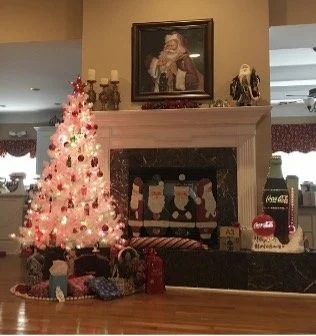
Figure 10.1. Henry’s brother themes his Christmas tree around Coca-Cola-related ornaments. Photograph by Cynthia Jenkins
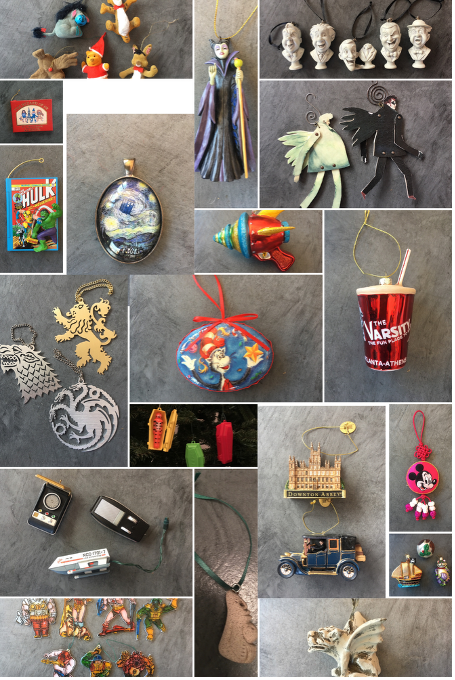
Figure 10.2: Ornaments from the Jenkins family Christmas tree, which suggest the eclectic mix of stories (both personal and collective) a family of fans accumulates across a lifetime together; photographs by Cynthia Jenkins.
My brother, Russell, decorates his tree in Coca-Cola red and with ornaments that reflect a multi-decade campaign to associate the brand with Christmas (see Figure 10.1). For Russell, this is not just about a beloved brand but also a source of civic pride, since Atlanta, where we grew up, is Coca-Cola’s corporate headquarters.
The ornaments on my family tree, pictured in Figure 10.2, are more eclectic, functioning as the intertwined portrait of our family as our tastes and interests evolved. When we first married, both my wife and I brought beloved ornaments from our own families. We made felt ornaments for our first few Christmases. When our son was little, his love for spooky things led to a plastic coffin candy container, now holding a Tony the Tiger toy, becoming a cherished heirloom. His stained-glass He-Man characters also remain.
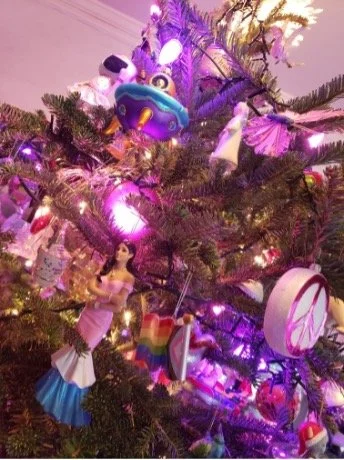
Figure 10.3: Henry’s boyhood friend Edward’s Christmas tree decorations incorporate the peace symbol and the Gay Liberation rainbow flag. Photograph by Edward McNalley
I collect plastic animals from zoos I visit. We have ornaments from our travels around the world. We have a wooden Russian Orthodox cross from my grandfather, carved when I was obsessed with Leo Tolstoy. We have a stone hand-carved by an Inuit artisan to commemorate the Raven Festival from Northern Exposure. Characters from Doctor Seuss, Winnie the Pooh, and the Wizard of Oz represent childhood favorites. Our fandoms are a recurring theme: Disney, Marvel Comics, Good Omens, Game of Thrones, Doctor Who, and Downton Abbey, among many others. A 1950s ray gun is generic; the tech from Star Trek is highly particular. The Varsity, a beloved Atlanta hotdog stand, suggests I share my brother’s civic pride. Unpacking and placing the ornaments becomes an occasion for memory-making and storytelling. The ornaments are carefully curated to convey things that mattered to us across the span of our lives.
Edward, one of my boyhood friends, has two or more trees each year, each a portrait of his evolving tastes, often including icons from cinema and pop culture, from Star Trek to Marilyn Monroe. As someone involved with the arts, he is drawn towards vivid colors and a more flamboyant presentation (see Figure 10.3). While each of these trees may reflect individualistic ways to display fannish identities, they also reflect the expanding market for distinctive decorations, so that, as Miller might suggest, our trees become mirrors of our own consumption practices.
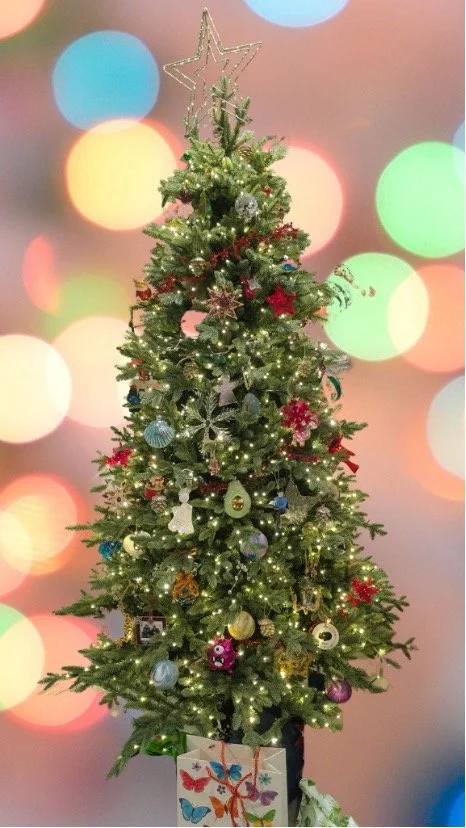
Figure 10.4: The Kozinets Family Tree in Los Angeles, California (photography by Robert V. Kozinets)
Rob here. I could not resist adding a photograph of our Christmas family tree (see Figure 10.4). If you care to peep closely, you may indeed find a Star Trek Spock figure accompanied by an Eddie Van Halen painted guitar, mirror balls, Monsters Inc. and other Disney figures, and many other fannish touches hanging alongside numerous perfect shiny balls, handmade styrofoam balls we made with our neighbor, Patty, old handmade crafts from Austrian villages and small towns in the forest, local images of Santa in a Hawaiian shirt and shorts, and sparkly octopi and jellyfish. Because my wife and I only began living together when we began our life in Los Angeles, the story our tree tells is one of a combined life of forests, mountains and beach life, fandoms, food, music, and cats. It seems pretty obvious that these trees function as active, living archives.
The annual ritual of putting those decorations onto the Christmas tree is a key moment when, as Daniela Petrelli and Ann Light (2014, p. 16:2) describe it, "the present meets the past." It is memory work. Taking memories out of boxes, placing them onto a tree, and lighting them up: it is to pay respect, homage even, to your past selves and to the past itself. And the material memory metaphor continues as, each year, new ornaments are added to the old. The collection becomes an ongoing material assemblage. It displays a physical record of the family’s evolving journey that is territorialized onto the temporal space of the holiday. The unboxing becomes an occasion to "reflect and reminisce about special moments" (Petrelli and Light 2014, p. 16:2), as each object is handled and its story is retold, reinforcing the family’s unique narrative.
Lest the tree decorating be cast as overly jolly, Cele Otnes and her colleagues conducted in-depth interviews with 26 consumers about their Christmas tree rituals. They found that decorating was the result of a powerful negotiation that occurs within the family. Households face down, negotiate, and must repeatedly resolve a key conflict between "aesthetics vs. tradition." The "perfect" tree described by Miller, with its unified silver and gold baubles, represents a victory for a singular, impersonal aesthetic. In contrast, the fannish trees we have described, with their chaotic mix of handmade heirlooms, plastic pop culture icons, and travel souvenirs, demonstrate a deliberate choice to prioritize the family’s unique history and personal stories (tradition) over any single, coherent design scheme. Within this ritual, the commercial objects are stripped of their purely market-based meaning and reinscribed with the intimate, sacred meaning of a specific memory—a trip taken, a movie loved, a private joke. This process reveals how a seemingly simple holiday decoration becomes a complex site for cultural work, where a family actively performs and solidifies its collective identity by curating and displaying the material artifacts of its shared life.
Biographies
Henry Jenkins is the Provost Professor of Communication, Journalism, Cinematic Arts and Education at the University of Southern California. He arrived at USC in Fall 2009 after spending more than a decade as the Director of the MIT Comparative Media Studies Program and the Peter de Florez Professor of Humanities. He is the author and/or editor of twenty books on various aspects of media and popular culture, including Textual Poachers: Television Fans and Participatory Culture, Hop on Pop: The Politics and Pleasures of Popular Culture, From Barbie to Mortal Kombat: Gender and Computer Games, Convergence Culture: Where Old and New Media Collide, Spreadable Media: Creating Meaning and Value in a Networked Culture, and By Any Media Necessary: The New Youth Activism. His most recent books are Participatory Culture: Interviews (based on material originally published on this blog), Popular Culture and the Civic Imagination: Case Studies of Creative Social Change, and Comics and Stuff. He is currently writing a book on changes in children’s culture and media during the post-World War II era. He has written for Technology Review, Computer Games, Salon, and The Huffington Post.
Robert V. Kozinets is a multiple award-winning educator and internationally recognized expert in methodologies, social media, marketing, and fandom studies. In 1995, he introduced the world to netnography. He has taught at prestigious institutions including Northwestern University’s Kellogg School of Business and the Schulich School of Business in Toronto, Canada. In 2024, he was made a Fellow of the Association for Consumer Research and also awarded Mid-Sweden’s educator award, worth 75,000 SEK. An Associate Editor for top academic journals like the Journal of Marketing and the Journal of Interactive Marketing, he has also written, edited, and co-authored 8 books and over 150 pieces of published research, some of it in poetic, photographic, musical, and videographic forms. Many notable brands, including Heinz, Ford, TD Bank, Sony, Vitamin Water, and L’Oréal, have hired his firm, Netnografica, for research and consultation services He holds the Jayne and Hans Hufschmid Chair of Strategic Public Relations and Business Communication at University of Southern California’s Annenberg School, a position that is shared with the USC Marshall School of Business.