

OSCARS WATCH 2026—It’s Not an Accident: Restrictions Informing Stylistic Choices in Jafar Panahi’s 'It Was Just an Accident'
/This piece is part of a series of critical responses based on the films nominated for the 98th Academy Awards. In this contribution, Melanie Robson discusses It Was Just An Accident, which is nominated for Best International Feature Film and Best Original Screenplay.
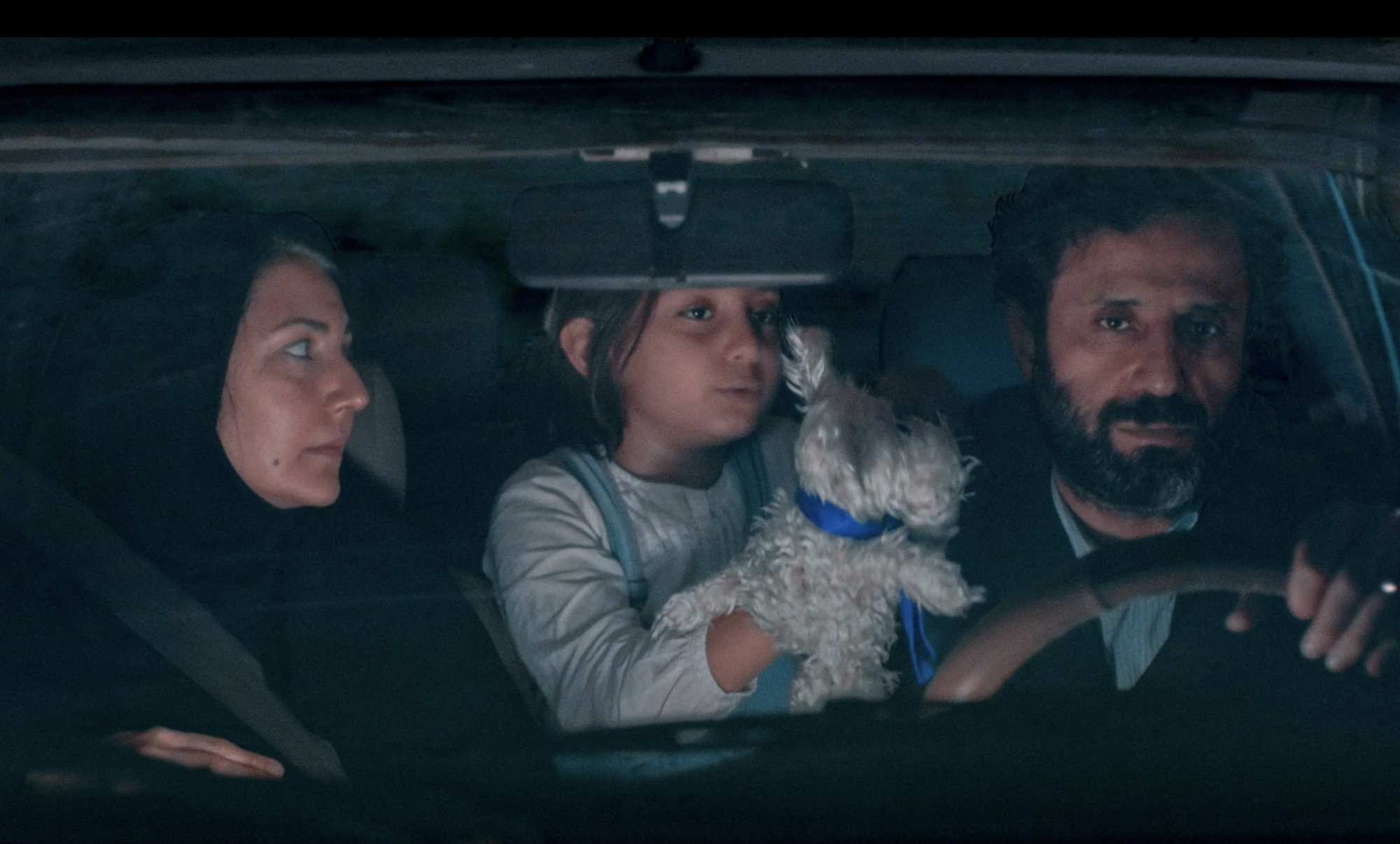
Figure 1: Family framed in car in It was Just An Accident (2025)
For anyone familiar with Jafar Panahi’s body of work, the opening images of It Was Just an Accident will be immediately recognisable as belonging to him. The camera frames a family of three through the windshield of a car at night, driving along a windy road. Car interiors have become the filmmaker’s hallmark. The fixed framing and lack of non-diegetic sound reinforces the realist and formally minimalist style characteristic of Panahi’s work (Figure 1). Even when the titular accident occurs—the car hits a stray dog on the road—and the man, Eqbal, steps out of the car to check it out, the camera barely moves. We never see the dog. Formal restraint is established early in the film, and Panahi is asking us to use our ears as much as our eyes.
While familiar in its presentation, the film coincides with a lot of firsts for the filmmaker. In 2010, he was sentenced to a twenty-year ban from filmmaking by the Iranian government for “propaganda activities against the Islamic Republic,” which overlapped with a travel ban for the filmmaker and a six-year stint in prison. Not one to quit easily, Panahi released a film the following year, facetiously titled This is Not a Film (2011), followed by a further three feature films made in secret under the ban. It Was Just an Accident, in many ways, feels like a new chapter for Panahi. It is the first film since the ban to be an entirely fiction film (the others could be classified as hybrid documentaries). It is the first in 19 years in which Panahi does not appear. And, with the lifting of his travel ban, it is the first of his films in 18 years he could watch with an audience and for which he could accept awards in person. This is particularly significant given that the film is the most awarded and nominated of his career. It received 130 nominations and 39 wins for a diverse array of awards, the most prestigious of which was the Palme d’Or at the 2025 Cannes Film Festival. Despite these firsts, I want to explore how It Was Just an Accident is a continuation, and even the culmination, of the specific style and way of working Panahi developed post-ban.
The film’s fictional scenario affirms this continuity. After the unfortunate car accident described earlier, the family’s car begins giving them trouble. They go to a local mechanic. One of the workers there, Vahid, recognises the squeak of Eqbal’s prosthetic leg as belonging to an intelligence agent who tortured him while he was blindfolded in prison. Planning to get revenge, Vahid kidnaps Eqbal. Wanting to be sure he’s got the right man, he drives around Tehran with Eqbal in his van, picking up fellow former prisoners who might be able to confirm Eqbal’s identity. Together, they then must decide what to do with him. Panahi’s films are typically deeply and overtly personal, with each of those made after his filmmaking ban particularly so, given that the filmmaker appears as himself in each of them. Taken as a body of work, his post-ban films have effectively ‘trained’ the viewer to be aware of Panahi’s subjectivity and his position behind the lens. This awareness began with The Mirror (1997), when the fictional façade of the film is torn down as the child actress throws a tantrum and Panahi has to intervene. From then on, he became both filmmaker and subject.
In It Was Just an Accident, this personal dimension is more difficult to determine but no less present. In an interview with Dennis Lim during the 2025 New York Film Festival, Panahi reflects on why he does not appear in the film (Film at Lincoln Center, 2025). Prior to the film’s release, his filmmaking ban was lifted. He says that the ban’s lift “had a psychological effect, that I was no longer in the centre of my films, and I stepped aside, and I went behind the camera” (Film at Lincoln Center, 2025). Those accustomed to his style will feel his absence, but the film’s personal nature exists in the story’s inspiration: while serving time in prison, Panahi, too, was blindfolded and subject to interrogation by men he only recognised by sound and not by sight.
Despite the lifting of the ban, however, It Was Just an Accident was not officially approved by the government. Its production came under intense scrutiny, and it was shut down for a month when authorities failed to find and confiscate the footage. So, although the film is undeniably fictional in its presentation, it carries with it similar stakes and similar tensions as those present in Panahi’s earlier films. The film’s framing is a constant reminder of the restrictions under which it was filmed. Panahi pointed out, “I shot It Was Just an Accident more in secret than all the films I made since 2010” (Bodroian, 2026). These tensions are felt most acutely in the scenes filmed within the city. Amid the hustle and bustle, the camera always remains either within the van or within a shop. The city streets are off-limits. Panahi reflected on the precarity of filming out on the street, saying “When we had to leave the van, that was much scarier. We had to shoot fast, under the same stress as being interrogated. That feeling bleeds into the film” (Russell, 2026). The stakes are perhaps highest when one of the group, Shiva, leaves the van without wearing a hijab and runs across the road to convince Hamid to join them (Figure 2). She gets into a physical scuffle with Hamid and his friends and falls on the ground, drawing attention to her on the busy public street. With the camera remaining in the van out of sight, the unusual distance between camera and subject is felt. Shiva seems vulnerable as cars and trucks pass between her and the camera; the point of audition is the interior of the van, which further emphasises Panahi’s restrictions. We still, therefore, feel a guerilla filmmaking sensibility running through the film. The risk of the film’s making is imprinted on its framing.
Such moments in It Was Just an Accident make it clear that Panahi’s films post-ban have not only been subject to greater restrictions and clandestine working conditions, but that these conditions have become part and parcel of his directorial style, too. His choices in response to his ban (which includes his choice to make films at all) have evolved into a signature aesthetic that is uniquely Panahi. Scholar Jamsheed Akrami, while interviewing Panahi, proposes that the director’s career might be divided into two eras, which he uncontroversially designates pre-ban and post-ban, but subsequently nuances this further: what he calls outside films and inside films (2018, p. 68). Panahi’s films pre-2010 are all shot and take place predominantly outside. The White Balloon (1995), The Mirror, The Circle (2000) and Offside (2006) take place out in public, in the city streets. The interiors of homes and other buildings only figure very minimally throughout that first period. From This is Not a Film onwards, nearly everything is shot inside looking out. In Closed Curtain (2013)—ostensibly also about a filmmaker trapped in a house—perhaps the most striking shots are those, reflecting the title, in which the camera frames a window, in turn framing the beach beyond. In Tehran Taxi (2015) the camera never leaves the confines of the taxi. Interiority in these films is accentuated. It is this interiority that is perpetuated in It Was Just an Accident, not just in the scene taking place in Figure 2, but also in scenes that take place within the cramped confines of the van as tensions rise over the fate of the group’s hostage.
It is only when the group go out to the wide-open spaces outside the city, where they consider what to do next (including potentially burying Eqbal), that we’re presented with wide shots and the characters are staged spread out outside the van (Figure 3). Akrami suggests that Panahi’s sentence, while intended to end his career, has instead “been like a permit to work freely, albeit not too visibly” (2018, p. 67). We feel this balance between freedom and restriction (tied to the production’s visibility) in It Was Just an Accident. In these moments, the film revels in the wider framing made possible by the rural setting, where production is no longer under such intense scrutiny. More conventionally cinematic long panning shots capture sparse dialogue and carefully composed framing. Unsurprisingly, rural settings have allowed Panahi greater freedom in the past, as well as offering different formal choices. Both his previous two films, 3 Faces (2018) and No Bears (2022), are filmed predominantly in rural villages, which allow for more exterior shots and for Panahi (as both filmmaker and actor/character) to move freely without excessive surveillance or risk of arrest. Nonetheless, in No Bears, impenetrable borders still cast a shadow: Panahi goes to live in an Iranian town near Türkiye, crossing the border of which would have serious implications for the filmmaker. It’s in these rural spaces, then, that It Was Just an Accident feels truly like an evolution in both freedom and style. The sheer time allowed for these exterior shots feels appropriately indulgent. Undeniably the boldest shot (both logistically and formally) of the film takes place outside, away from the city in the dark of night: a thirteen-minute static long take captures the final interrogation of Eqbal, his face bathed in the van’s red light. This moment cements the film’s message in a raw, uncompromised way that hasn’t always been possible in Panahi’s career.
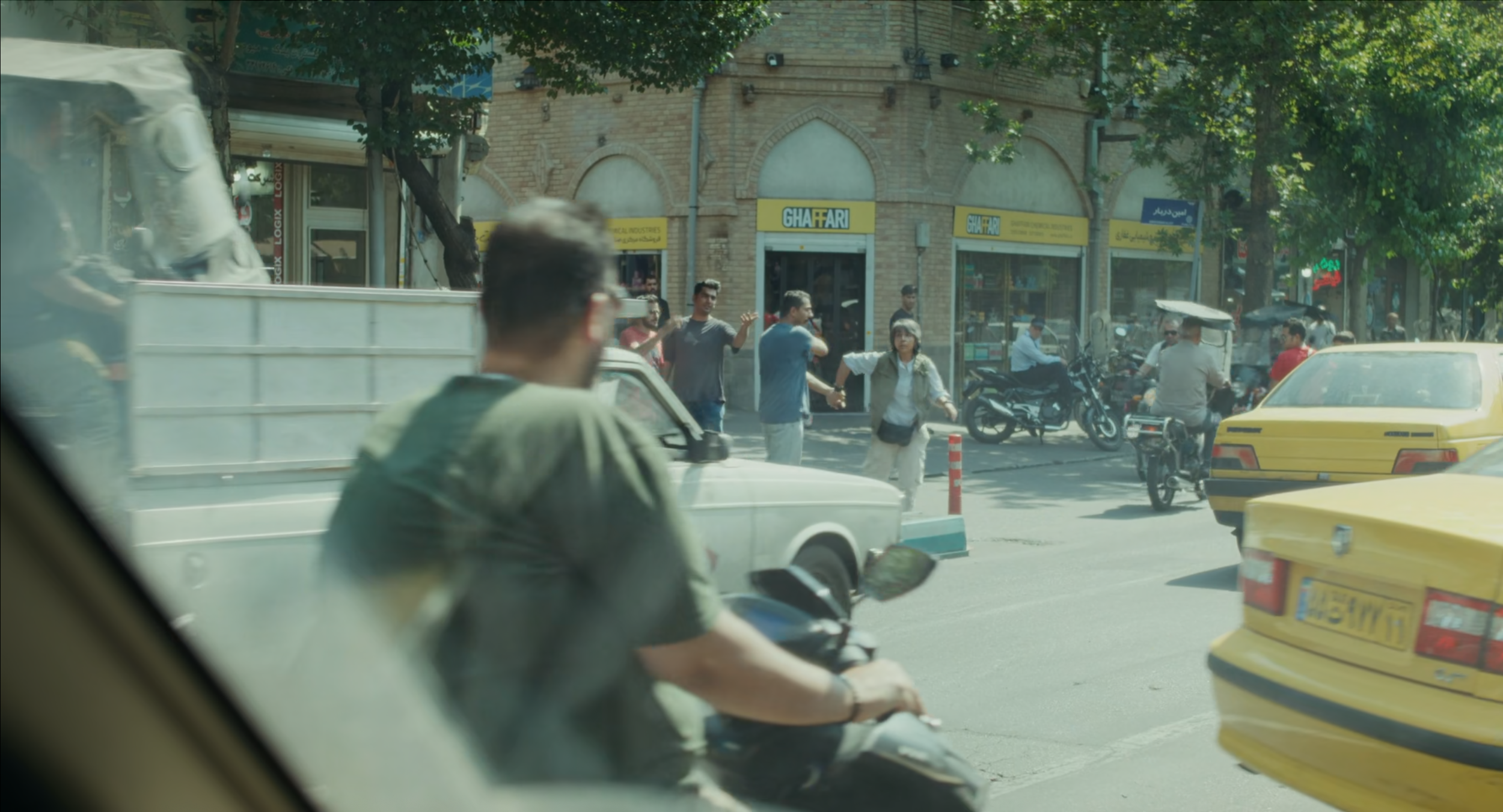
Figure 2: Shiva leaves the van without wearing a hijab in It was Just An Accident
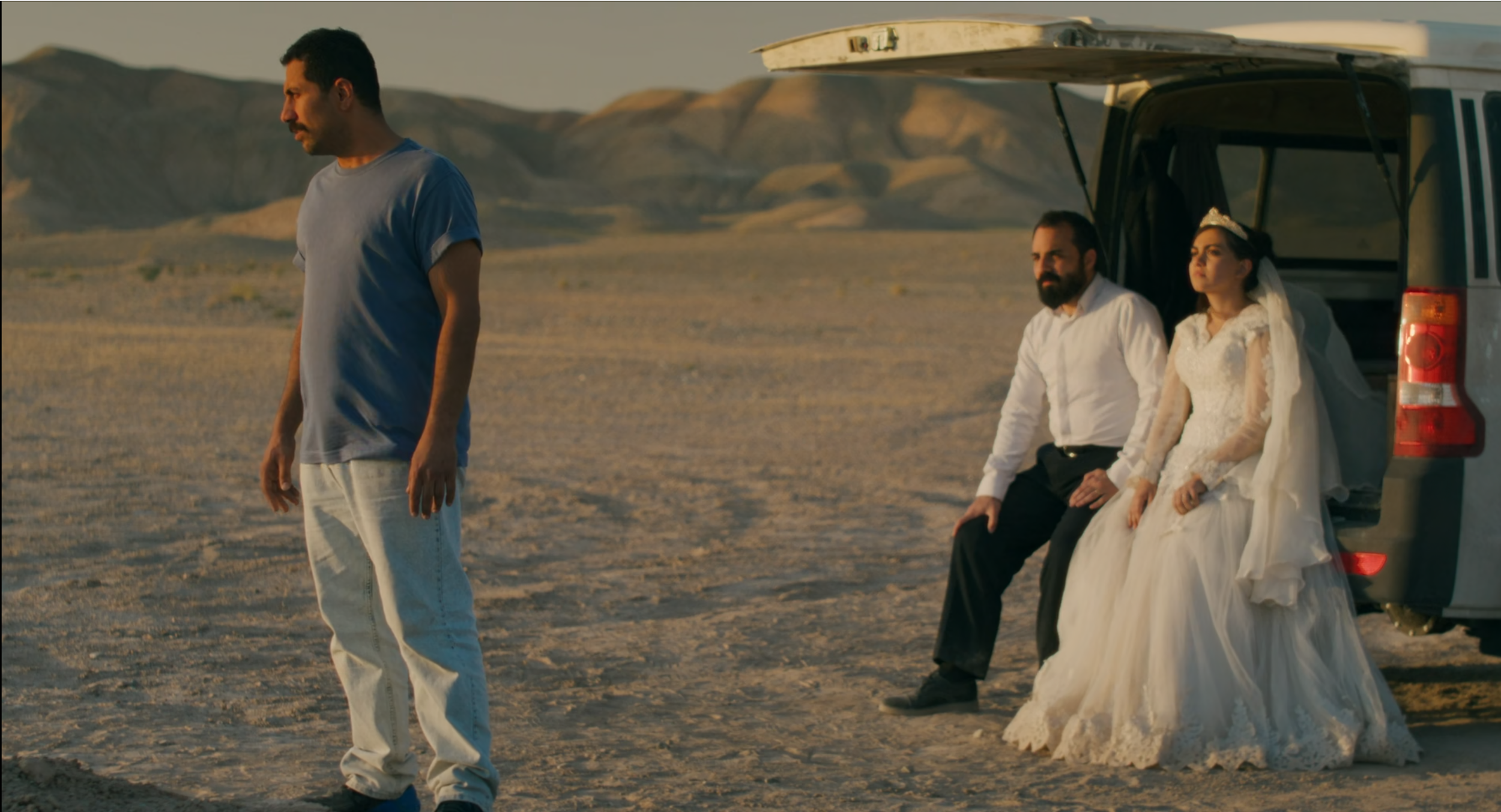
figure 3. use of wide shots in It was just an accident
Given Panahi’s relative freedom in promoting and touring It Was Just an Accident around the world since Cannes 2025, he has reflected at length in various press releases and interviews on the position this film has in his career. He has implied in these reflections that with the temporary lift of his filmmaking ban, he essentially returned to how he worked before 2010. He returned to fiction and stepped back behind the camera. But it is clear that the film represents an evolution in his filmmaking style, one undeniably impacted and changed by his experiences over the last 15 years. Those elements that were once only a practical response to restrictions—filming in vehicles, working in small crews, and prioritising rural over urban locations—have cemented themselves in his style. In It Was Just an Accident they don’t feel like limitations but rather choices that enrich the film’s visual presentation.
References
Bodrojan, S. (2026, February 27). Jafar Panahi will go to prison and write another movie. Paper. https://www.papermag.com/jafar-panahi-interview#rebelltitem1.
Film at Lincoln Center. (2025, October 10). Jafar Panahi on It Was Just an Accident [Video]. YouTube. https://www.youtube.com/watch?v=AlLCk6IlDsM.
Panahi, J., & Akarami, J. (2018). Dissident Cinema: A conversation between Jafar Panahi and Jamsheed Akrami. World Policy Journal, 35(1), 56-69.
Russell, S. A. (2026, January 15). Jafar Panahi is ready to go to prison for the film the Iranian government doesn’t want you to see. ABC News. https://www.abc.net.au/news/2026-01-15/jafar-panahi-iran-it-was-just-an-accident/106227500
Biography
Melanie Robson is a Lecturer in Screen Studies in the BA program at the Australian Film Television and Radio School (AFTRS) and has a PhD from UNSW Sydney. She has co-edited a collection on Alfred Hitchcock (One Shot Hitchcock, Oxford University Press) and published in Studies in European Cinema, Mise-en-Scene: The Journal of Film & Visual Narration, Refractory and MAI: Feminism & Visual Culture.