

OSCARS WATCH 2026—'F1' and Persisting Assumptions of Quality
/This piece is part of a series of critical responses based on the films nominated for the 98th Academy Awards. In this contribution, Duncan McLean discusses F1: The Movie, which is nominated for Best Picture, Best Visual Effects, Best Sound, and Best Editing.
And the nominees for Best Picture are: Bugonia, Frankenstein, Hamnet, Marty Supreme, One Battle After Another, The Secret Agent, Sentimental Value, Sinners, Train Dreams and… F1: The Movie?
One of these things is not like the others.
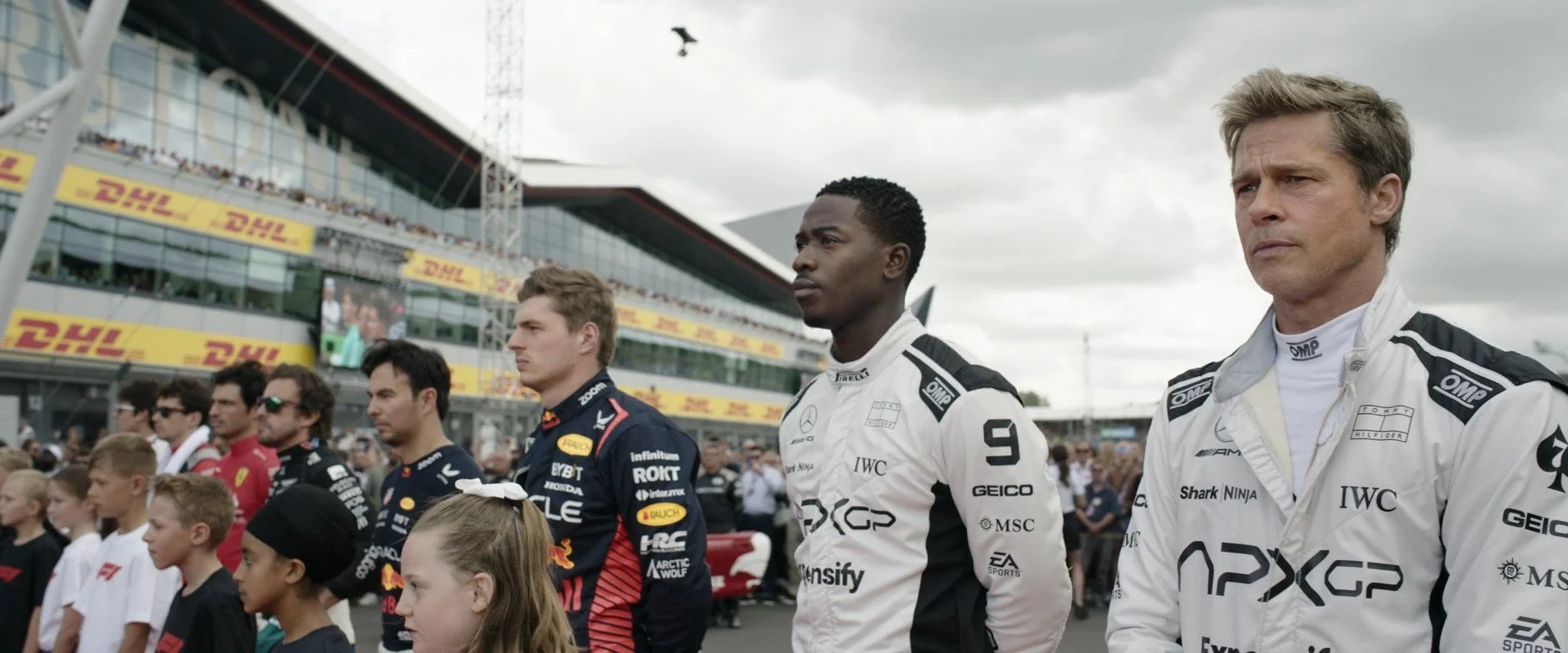
figure 1. Damson Idris and Brad Pitt at the Silverstone Grand Prix. Oscar night won’t be the first time the team from F1: The Movie have had to convince an audience they belong in a lineup of genuine articles.
With Oscars prognostication having become a fine art, it is rarer and rarer that the announcement of the Oscar nominations offers up genuine surprises. But when Danielle Brooks and Lewis Pullman stood up early in the morning on 22nd January and announced Joseph Kosinski’s blockbuster, motor-racing drama F1: The Movie as one of the ten contenders for Best Picture, more than a few eyebrows were raised. It headlined many of the next day’s mandatory ‘Surprises and Snubs’ pieces. Pundit reactions ranged from bemusement (Perry, 2026) to outrage (Simmons, 2026), though the nomination did get a very supportive write up on the official website of the Formula One (F1, 2026). It has fallen to a few brave contrarians to mount the defence of F1’s position in this particular race (Surrey, 2026); however, even those defenders tend to position the nomination as part of a cynical effort by the Academy to include more popular films to draw larger audiences to the broadcast, rather than genuinely entertaining the idea that the film might represent one of the ten best cinematic achievements of the year.
Arguing the comparative merits of films as different as F1 and Jafar Panahi’s It Was Just an Accident, which many considered the surprise omission from the field, seems like a subjective and ultimately futile exercise. A question that is more interesting to me is, why did people get so cranky? When there are always two or three nominees in the pool who don’t feel like genuine contenders, why has this nomination been cause for such vitriol? And, why is it that I, someone who really likes F1 and watched it multiple times in cinemas and a couple more times at home since, also feel a little bit funny about it being nominated?
Over decades of Oscar watching, we have built up an image of what a Best Picture nominee looks like, and a conventional crowd-pleaser like F1 isn’t it. Even for those who have called for the Academy to expand their thinking beyond the middle-brow Oscar bait that usually gets attention, this is not the type of ‘different film’ they had in mind. It simply doesn’t correlate with internalised assumptions about what ‘quality’ cinema looks like. In that light, this is an interesting counter-situation to when the online mob came for Martin Scorsese after he suggested in an interview with Empire magazine in 2019 that he didn’t consider Marvel movies to be “cinema” (De Semlyen, 2019).
The Academy, of course, was already aware of an issue with the narrow perception of what constitutes a Best Picture. In June 2009, when they announced the decision to expand the Best Picture field from five to ten nominees, it was widely accepted to have been in response to mainstream, critical and commercial hits Wall-E and The Dark Knight being overlooked for Best Picture nominations in favour of more traditional quality dramas (the five films that vied for Best Picture at the 2009 Oscars were Slumdog Millionaire, The Curious Case of Benjamin Button, Frost/Nixon, Milk and The Reader). Speaking to this belief that the view of cinema represented by the Best Picture nominations year on year was becoming too narrow, then-President of the Academy Sidney Ganis said this move was designed to make the field “more interesting and less cloistered” (Gray, 2009), with the additional spaces creating opportunities for the consideration of animations, documentaries, comedies, and genre films.
On the genre front, we can see that this move has been successful. With an expanded pool of nominees and a revitalised Academy membership and voting body, genre films like Get Out, District 9, Black Panther, Barbie and The Martian have made their way into Best Picture contention. The Shape of Water and Everything, Everywhere, All at Once even managed to win the award, and just this year Ryan Coogler’s vampire film Sinners broke the record for most nominations for a single film. But while genre has become a more accepted presence in Best Picture consideration, it tends to be a particular type of genre film: auteur-driven genre pieces that use the familiar conventions of the form to explore important ideas. That’s right, we are talking about ‘elevated genre.’
F1 is not elevated genre. It is not attempting to subvert our expectations of the sports movie. Nor does it attempt to use the conventions of that genre to say something important and pressing about the state of the world. As a sports movie, Kosinski and Ehren Kruger’s screenplay hits a number of very familiar beats: the veteran getting one last chance at their dream; the young, upstart with all the ability and none of the humility; the outmatched team with their backs against the wall; the tension between those who see sport as a business and those driven by the purity of the contest. But it is not the story or the themes that make F1 stand out. It is not the story or themes that made F1 one of the year’s commercial success stories, taking over US$630 million at the global box office. F1 plays the hits and plays them satisfactorily enough to serve as the foundation for what actually makes the film exceptional: the spectacle.
This brings us to the second challenge F1’s nomination offers us. Not only is F1, as a conventional genre film, not the type of film that we expect to see in a Best Picture field, it is also not the type of cinematic achievement this award traditionally recognises. What sets F1 apart from previous racing films is the authenticity of its race sequences, the result of an impressive logistical and technical achievement. Working in close collaboration with the Federation Internationale de l’Automobile (FIA), the production and its fictional APX GP joined the 2023 and 2024 Formula One tour, effectively as an eleventh team on the grid. APX GP was given a marquee on pit lane, and the film shot in and around the live F1 race weekends. At the Silverstone Grand Prix, actors Brad Pitt and Damson Idris joined the real drivers in the lineup for the national anthem (Fig. 1), and their cars were at the back of the grid for the actual race start. A Formula One race weekend is a large and highly orchestrated event with minimal flexibility to accommodate a film shoot. As such, Kosinski and his team had to find short windows to shoot within the tightly scheduled race weekends, while working to ensure their presence was not evident in the race broadcasts (Apple TV, 2025). It is a very different set of logistical challenges to, say, shooting The Revenant in freezing, rural Alberta, but the production challenges are no less demanding.
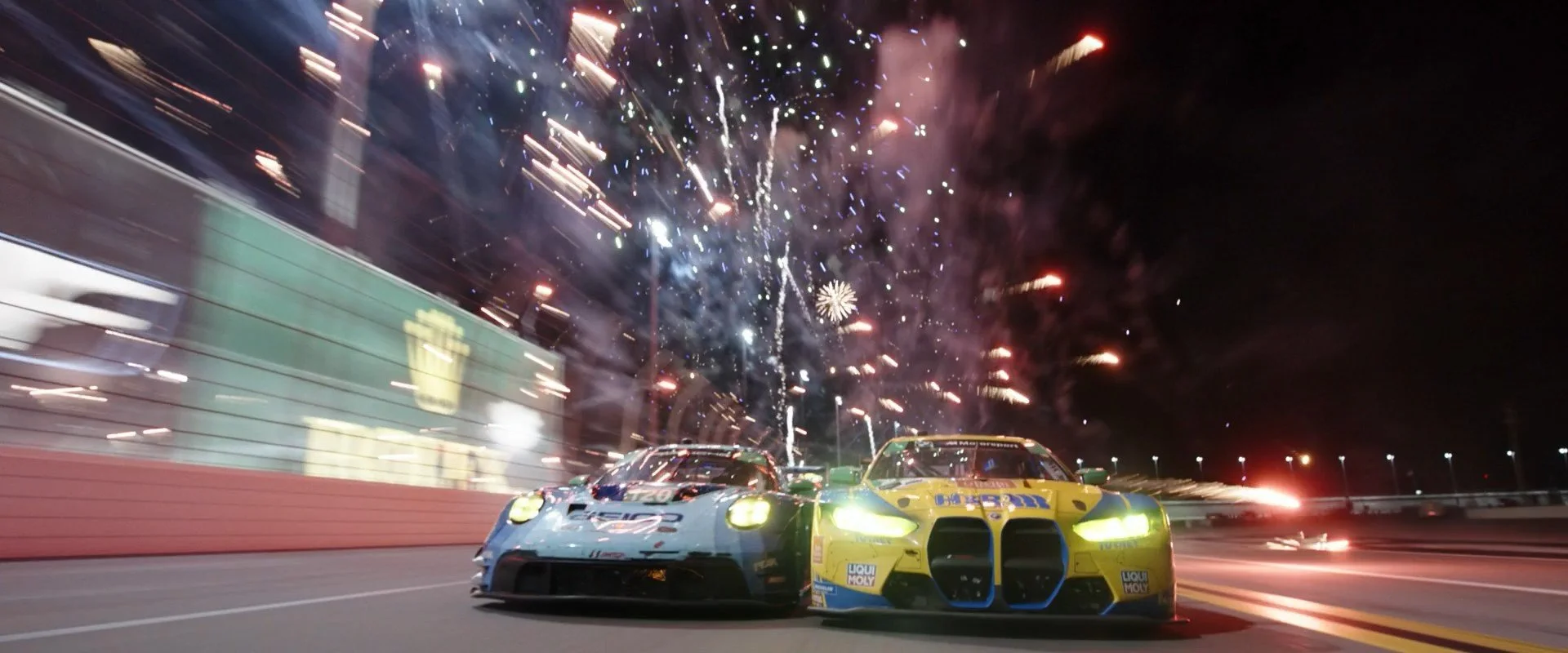
Figure 2. The exhilarating authenticity of F1’s racing footage, achieved through technical innovations and collaborations with sporting bodies, set a new high bar for the genre
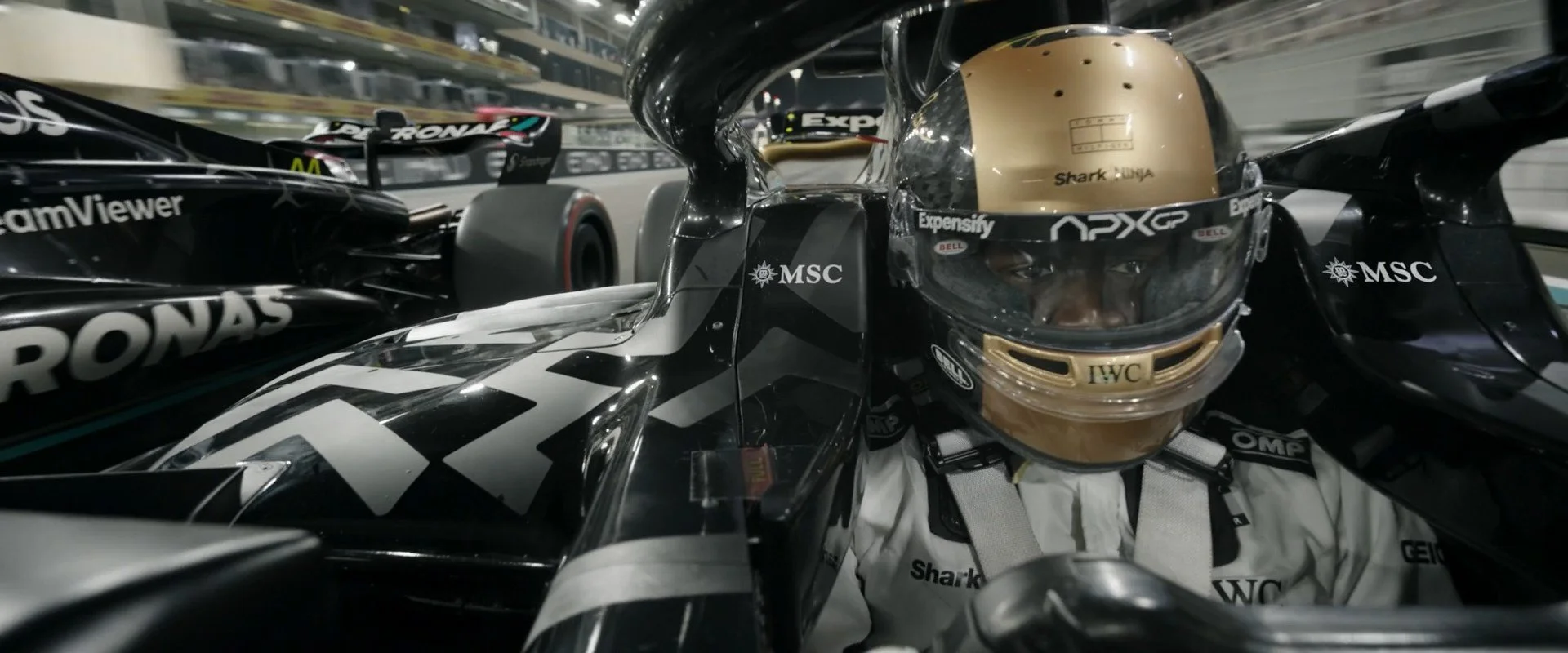
Figure 3. Putting actors in actual Formula One cars, driving on the actual Formula One tracks, unified character and spectacle in F1’s racing sequences.
For the race footage itself, Kosinski was determined to give the audience the experience of what it is like to be in a Formula One car. Unwilling to resort to shooting on a Volume stage or at lower speeds for convenience, Kosinski and cinematographer Claudio Miranda worked with Sony to customise cameras small enough to be mounted on a Formula One car, robust enough to withstand the vibrations associated with speeds in excess of 120mph, but with a large enough sensor to capture images for both standard theatrical and IMAX distribution (Dillon, 2025). The sound team had to work out how to record dialogue in live race environments, while also working with the broadcast team to integrate 150 microphones placed around the track with the broadcast system (Tangcay, 2026).
In recognition of these achievements, F1 was nominated for major prizes at the awards for the Producers Guild of America, the American Cinema Editors, the Motion Picture Sound Editors, the Art Directors Guild. It has been Oscar-nominated by the editing, sound and VFX branches of the Academy. These are achievements that make it a strong blockbuster and fantastic cinematic experience. But are they the kind of achievements that make a Best Picture?
F1 has received four Oscar nominations. That is the same number as fellow Best Picture nominees Bugonia, The Secret Agent and Train Dreams. It is more nominations than previous Best Picture winners CODA (three nominations), The Broadway Melody (three), and The Grand Hotel (one). History tells us four nominations isn’t a problem. The issue is that F1 has the wrong kind of nominations for a Best Picture contender. We don’t bat an eyelid if a Best Picture nominee only has three or four nominations as long as they are in the screenwriting, acting or directing categories. But the below-the-line categories tend to be populated with blockbusters and commercial fare. A genuine contender can also have below-the-line nominations (see Sinners), but it can’t only have below the line nominations.
Yet, part of the reason the Academy Awards holds its privileged position as the culmination of the award season is that, unlike the various guild awards that precede it, the Academy’s voting body represents a cross-section of production roles. For the screenwriters, actors and maybe even directors in the Academy, F1 might not be one of the pinnacle achievements of the last year, but for the producers, editors, sound editors and cinematographers there is clearly a great admiration for the achievement the film represents. For the last 20 years, the efforts to expand and diversify the Best Picture field have focused on recognising more commercial films, more international films, more culturally representative films, but not different types of cinematic achievement. An overall award like Best Picture needs to be able to genuinely consider how F1’s achievement in the areas of spectacle, editing, sound and effects compare to a film like Sentimental Value’s achievements in writing and acting, rather than assuming achievement in one area trumps achievement in another. Is it not more interesting to have F1 in the mix as the best achievement in blockbuster spectacle rather than having its spot go to the seventh or eighth best drama?
Having said all of this, I don’t believe F1 is a genuine Best Picture contender. Not even Sonny Hayes himself could find a way to weave through to the front of this field. But it is absolutely a good thing that it is there. The joy of cinema, the reason we love it, is the diversity of experiences that it can provide for an audience. It can provoke, challenge and inspire us. It can also exhilarate and entertain us. If we are going to engage in an exercise as futile as singling out one film as being the best of the year, then we need to be willing to genuinely weigh different types of cinematic achievement against each other rather than operate on the assumption that one is inherently more worthy than the others.
References
Apple TV (2025). F1 the Movie - Making it to Silverstone| Behind the Scenes | Apple TV [Video]. YouTube.https://www.youtube.com/watch?v=J5xE-WdGokg
De Semlyen, N. (2019, Nov 7). The Irishman Week: Empire’s Martin Scorsese Interview. Empire Online. https://www.empireonline.com/movies/features/irishman-week-martin-scorsese-interview/
Dillon, M. (2025, Nov 1). On the Fast Track for F1: The Movie. American Cinematographer. https://theasc.com/articles/f1-the-movie-cinematography
F1 (2026, Jan 23). ‘F1: The Movie’ Gets Four Oscar Nominations After Hugely Successful 2025 Release. Formula1.com. https://www.formula1.com/en/latest/article/f1-the-movie-gets-four-oscar-nominations-after-hugely-successful-2025.59jbRGRMmjrn0G2tJ5X5IC
Gray, T. (2009, Jun 24). Oscar Expands Best Pic Noms to 10. Variety. https://variety.com/2009/film/awards/oscar-expands-best-pic-noms-to-10-1118005322/
Perry, K.E.G. (2026, Jan 22). Brad Pitt’s F1 Somehow Got an Oscar Nomination for Best Picture – Here’s What Should be on the Podium Instead. Independent. https://www.independent.co.uk/arts-entertainment/films/features/f1-best-picture-oscar-nomination-shock-snubs-b2905895.html
Simmons, J. (2026, Jan 22). Hear Me Out: F1 is One of the Worst ‘Best Picture’ Nominees Ever. Far Out. https://faroutmagazine.co.uk/f1-is-one-of-the-worst-best-picture-nominees-ever/
Surrey, M. (2026, Mar 9). Make the Case: F1 Doesn’t Deserve Your Best-Picture Scorn. The Ringer. https://www.theringer.com/2026/03/09/oscars/f1-best-picture-deserved-oscar-brad-pitt-apple-make-the-case
Tangcay, J. (2026, Feb 27). How F1’s Sound Team Gave the Film Its Sense of Scale and Authenticity With Unprecedented Access to Formula 1 Tracks, Grand Prix Races, Camera Footage and Audio. Variety. https://variety.com/2026/artisans/news/f1-movie-sound-formula-1-grand-prix-races-1236672932/
Biography
Duncan McLean is the Discipline Lead for Screen Studies in the BA program at the Australian Film, Television and Radio School (AFTRS) and has a PhD in Film Studies from Macquarie University. In addition to Pop Junctions, Duncan’s writing on genre has been published in The Journal of Popular Film and Television and Refractory: A Journal of Entertainment Media.