

GLOBAL GENRES—Thinking about Genre: What Makes a Movie “Religious”?
/This contribution is part of a series of posts on genre and the ‘global shuffle’.
Have you ever looked at the Wikipedia article listing “religious films”? Probably not, right? Well, if you do, you’ll notice the list feels a bit… strange. Many entries are unsurprising—Ben Hur, Himala, or Siddartha. But what is striking are the films that don’t make the cut—movies like Life of Pi (2012) or The Chronicles of Narnia (2005-2010) —especially when Disney’s The Hunchback of Notre Dame (1996) or Monty Python’s Life of Brian (1979) do qualify.

Granted, the standard high school teacher dictum (“don’t trust Wikipedia, anyone can edit it”) still applies as always. But lists like this one aren’t alone. And more importantly, they are often useful barometers for what assumptions are commonplace. After all, when we think about what makes a movie “religious,” we probably have different ideas. Cecil DeMille’s The Ten Commandments (1956), for example, is absolutely ‘about religion’ because it’s about Moses and Aaron in Exodus—duh! But are the second and third Pirates of the Caribbean (2006, 2007) installments ‘religious’ because they are driven by themes of life and afterlife, judgment, and redemption?
Maybe the jury is still out.
As is hopefully becoming clear, part of the problem lies in the semantic slide between saying “religious” and “about religion.” The former typically describes a devotional disposition, while the latter makes a claim about content. But there’s a larger problem at stake. Typically, sets of iconographies, themes, and even ideologies constitute distinct genres that announce themselves quite readily. Gunslinging in ramshackle frontier towns lets us know we’re watching a Western, as in The Good, The Bad, and the Ugly (1966); capes and underwear worn on the outside of tights let us know a superhero will save the day, seen in Superman (2025).
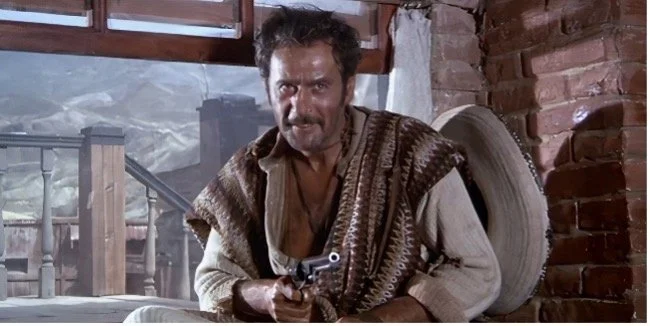
The Good, The Bad, and the Ugly (1966)

Superman (2025)
But what cues tell us that religion matters in a film? Monks chanting in a mountaintop monastery? An enchanting adhan calling Muslims to prayer? A hushed Bible study? Across traditions, the “religious film” lacks stable conventions or images that travel cleanly from one context to another.
This absence reflects a problem of category that scholars of religion have been wrestling with for decades: “religion” is not a timeless or neutral category. Influential scholars like Talal Asad have argued that the modern idea of religion emerged to suit the needs of secular governance, in ways that quietly privilege Christianity while sidelining other forms of devotion. Those downstream of him argue that the “global religions” paradigm arose with the turn of the 20th century—but, the resulting rubric boxes other traditions into a near-image of Protestant Christianity.
When examined through the lens of genre, the “religious film” inherits this instability of category, too. Film scholar Rick Altman famously argues that genres do not ‘live’ inside of films; they’re negotiated between producers and consumers. Filmmakers and studios, and audiences and critics, continuously co-produce, maintain, hybridize, and transform genres. Genres persist because people agree—often implicitly—on what to expect from them, and when to reward familiarity or embrace deviation.
Framing genre as a negotiation helps bridge the fuzziness of parsing ‘religious’ from ‘about religion,’ by providing a vocabulary of intent, expectation, and effect. However, it does not clarify the terms of negotiation when we mark a film as “religious.” Is the negotiation in question about subject matter, like gods and scriptures? Or perhaps whether it centers metaphysical questions on suffering and salvation?
Let’s think about the consumers’ end of the equation. One rather Protestant way of slicing things starts with the question “What do viewers pay to feel when they buy a ticket to a film we might call ‘religious’?” Altman helps us phrase things more neutrally: What do viewers expect as norms, and what deviations from those expectations give them pleasure, within a genre economy?
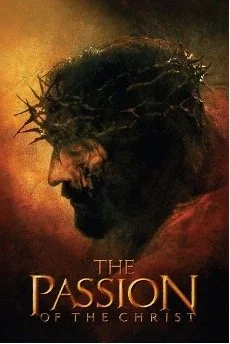
The passion of the christ (2004) poster
Take The Passion of the Christ (2004), which reigned for two decades as the highest-grossing R-rated film of all time. Headlines from its release remind us that viewers left theaters in tears. Reportedly, one viewer suffered a fatal heart attack from shock upon witnessing its depictions of extreme violence. Observers described audiences leaving the film as resembling a funeral procession or wake. Many of these affected patrons had paid to witness what they believed was an unflinchingly accurate representation of Christ’s suffering for humanity and its sins. In a phrase, they paid for a “religious experience,” or perhaps a “devotional encounter.”
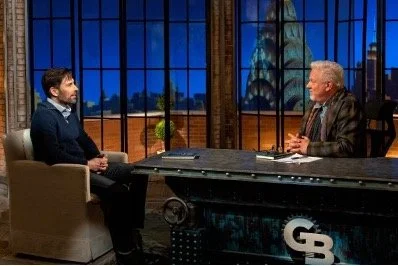
Glenn Peck show
These days, biblical epics like The Passion of the Christ (2004)—which participates in a pre-cinematic tradition of “passion plays” that dramatize Jesus’ final days—often circulate in a market outside of mainstream film production. Independent films in its wake dominate the Christian cinematic marketplace. Nefarious (2023), for example, is a modern morality play about a psychiatrist tasked with evaluating the sanity of a man on death row claiming to be possessed by a demon.
In the final act, the killer—host to a very real demon—is executed. The demon then possesses the psychiatrist, whom it forces to steal a gun from a prison officer in order to kill himself. The psychiatrist, a steadfast atheist, spontaneously asks God to intercede, and the pistol misfires. One year later, the psychiatrist appears on Glenn Beck’s show, now agnostic and “open” to Christianity. The message is unmistakable: secular skepticism collapses in face of the divine.
Nefarious (2023) clearly represents an attempt to create a religiously palatable alternative for conservative Christian audiences to tried-and-true secular entertainment (especially for those who believe the world is ending soon). Liberal values like ending racism, gender inequality, and homophobia are played for laughs—including those of the incredulous demon. And ten times in the film does the demon sneeringly allude to Jesus Christ as “the carpenter” without naming him—an invitation to Christian viewers to pat themselves on the back for successfully identifying the referent. Nefarious (2023) instrumentalizes the psychological horror/thriller genres as a vehicle for depicting the satisfying moral breakdown of a smug secular liberal skeptic; only can an encounter with the divine make him a ‘potential’ believer (and we, the knowing audience, sense he has already been persuaded).
So-called “faith-based” films companies doubtless fall under the umbrella of religious movies. But they are hardly alone. Heretic (2024), another independent psychological horror film with a one-word title, incorporates skepticism toward organized religion into the core of its drama.

Heretic (2024)
Heretic (2024) makes the cut for the Wikipedia list even though Nefarious (2023) does not. Now, part of why it earns this dubious honor certainly has to do with the fact that Heretic (2024) stars Hugh Grant, and earned 10 times the cash in box office sales. But the distinction is still revealing, because the religious elements on display in Heretic (2024) are not genre markers.
The camera’s lingering on weighty scripture tomes—and the main characters’ exchanges quoting snippets from them—reveal precious little about what the audience might expect to ‘feel’ while watching. That responsibility is reserved for hallmarks of psychological horror and thriller: claustrophobic spaces, dark corridors, blocked entrances, uneven power dynamics and a loss of control, close-up camera shots, and the like.
What the religious framing does do here is refract these familiar elements through a certain prism of moral anxiety, to accent and heighten their affect. Grant’s Mr. Reed interrogates the missionaries about their doctrine and manufactures “tests of faith.” While these elements do not constitute a genre framework in their own right (unless “satire about atheist who won’t shut up” counts), they amplify and inflect the terror and thrill.
Physical jeopardy becomes cosmic as faith falls under siege; and the audience fears not just ‘traditional’ bodily harm, but a powerful disorientation that occurs when characters’ access to what they revere is interrupted or weaponized against them. That is, unless you, too, are an atheist who won’t shut up.
Contrasting Heretic (2024) and Nefarious (2023) —two independent films of the same genre that center religious themes from similar traditions—exposes a fault-line in seeing “the religious” as a cinematic genre. But at the same time, the plasticity that makes it falter as a genre helps it thrive as a higher-order concept: a mode. A mode here describes a portable set of attitudes and tonal registers that can refract across more precise or elaborate genre traditions. It overlays the structure of a genre with a distinct affective palate, deepening the stakes and coloring, but not dictating, narrative form.
Turning to global cinema deepens the genre fault line, but is persuasive for the case of the mode. The Iranian neo-noir movie Holy Spider (2022) provides an especially compelling case study. Based on true events from the turn of the millennium, the film follows a fictional journalist investigating a string of brutal murders of prostitutes in the holy city of Mashhad, Iran, whose cases are not treated seriously by local authorities. For our purposes, Holy Spider (2022) is instructive precisely because it mobilizes the religious not as a generic foundation, but as a moral and affective mode that animates socio-political landscapes, reconfiguring otherwise ‘secular’ genre conventions.
The film’s noir scaffolding—its unfolding mystery, its muted color palate, its lingering focus on urban decay, its victims’ anti-sensational deaths, and the ethical ambiguity of institutions typically vested with social safety, order, and uplift—provides a backdrop against which to raise questions of devotion, sin, and justice. Film noir’s characteristic concern with moral decay becomes, in Holy Spider, inseparable from the spiritual corruption of a community that conflates piety with religiously sanctioned violence.
Saeed Hanaei, whose string of murders inspired the film, acquired the sobriquet “Spider Killer” because he lured women back to his apartment before strangling them to death, as a spider lures its insect victims to its web. The “holy” in the film’s name comes from Saeed’s self-appointed mission of moral cleansing. When reporter Arezoo Rahimi stages a sting and exposes him—doing the work the police won’t—Saeed receives widespread support for his violent murders; the city becomes engulfed in a discourse dehumanizing the women who are sex workers, for religious impropriety.
The religious social fabric of Mashhad makes possible a compelling variation on the typical noir formula. Saeed embarks on a personal crusade to root out corruption and moral deficit; when he is found out, he is rewarded and his sentiments are echoed. And yet, the figure responsible for injecting the language of corruption into collective debate is among the primary upholders of a deep-rooted spiritual corruption that manifests as repression and violence against women.
Personal social experiences of corruption and immobility motivate countless noir antagonists, but in Holy Spider (2022) they take on an extra dimension. Saeed reframes his private anger as divine duty, displacing responsibility onto God as he targets sex workers—and not the social forces that weigh upon them both, nor the men who create demand for their services—as causes of moral decay. Such is the heart of the noir: fighting against rotting social institutions is fruitless and disillusioning, especially in a society willing to quietly excuse heinous violence when it reinforces patriarchal control.
The film evidently submits a sustained indictment of unquestioned male social hegemony (or in a word, patriarchy). One of the most powerful ways in which it does so is by establishing parallels between how Saeed interacts with his children and how he interacts with his victims. When he is about to drive off with either of his children, and particularly his daughter, he takes care to warn them to “hold on tight” on the back of his moped.
When he first persuades each of his victims to come home with him, he gives them the exact same warning: “hold on tight.” A tender expression of paternal concern is twisted into a pretension disguising imminent violence and control. So morally corrupted is the city of Mashhad that a father elides his protective responsibilities with his self-appointed violent duty of religious purification.
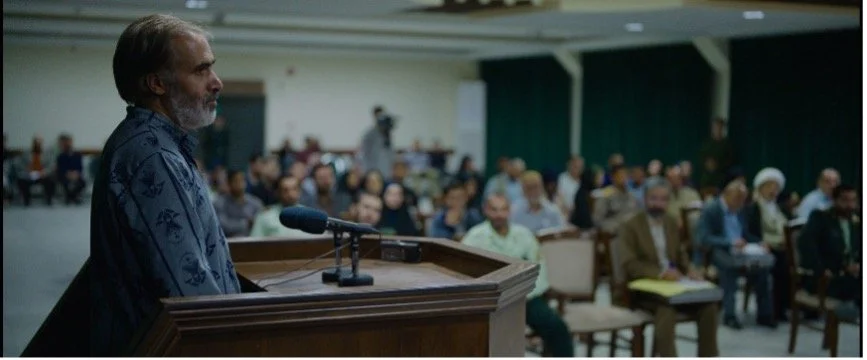
Holy Spider (2022)

Holy Spider (2022)
The same man who kills women in the name of virtue exerts tyrannical control over his family, especially the women in it, under the guide of fatherhood and righteousness. Although he believes he is protecting his family by ridding Mashhad of the ‘undesirables’ who bring or signal corruption, in actuality he replicates the same violence and objectification across each context. Nowhere is this clearer than the very final scene of the film, in which Saeed’s son proudly replicates what he thinks his father did to the women he murdered, and he does so by bossing around his younger sister. The religious mode here inflects and intensifies the noir film’s usual logic of cyclical corruption by transforming this warning of continued violence into a ritualized reproduction of patriarchal violence.
If a film channeling the religious mode in the way of The Passion of the Christ (2004) could be said to invite spectators to participate in a devotional encounter, Holy Spider (2022) instead stages a crisis of devotion. Elements that register as religious are mobilized not to stir positive religious fervor, but to elucidate the consequences of suffusing a social fabric with its logics in the first place. In a system where women’s worth is tied to their modesty and obedience, violence against “unworthy” or “impure” women is not just tolerated—it can be justified morally.
Understanding “religion” as a mode rather than a genre in film production helps keep track of its transgeneric and transnational passports. Much like the melodrama, which represents a distinct affective and ideological structure, the religious mode names an orientation that organizes feeling around moral legibility, transgression, and redemption; and, it does so with an eye toward the way dichotomies between the sacred and the profane pervade the everyday.
As a mode, it does not merely represent belief but formalizes the tension between transcendence and immanence, faith and doubt, devotion and desecration. Like the scholarly word “religious” itself, isolating “religious films” as a genre distinct from other generic categories misses the point of channeling that mode of communicating via screen. Much as one cannot simply isolate religion from cultural complexes, neither can religious films be treated solely as performing “religion” qua genre. Take another look at the Wikipedia list. How many of those movies are ‘just’ doing something religious? What is religion helping the film accomplish?
Biography
Christian Pattavina is a doctoral student at USC, where he researches religion, media, and American politics.