IPDW2025—Minding Dreams
/To celebrate International Production Design Week (IPDW) between October 17th-26th, Pop Junctions presents a range of contributions related to the craft of production design, with particular focus on the art of world-building and the creativity and culture of production design practice. IPDW is an initiative led by the Production Designers Collective and involves a calendar of events that showcase production design around the world.
In this contribution, Academy Award-winning Production Designer Rick Carter offers a meditation on the nature of creativity as a practice of ‘dream minding’.

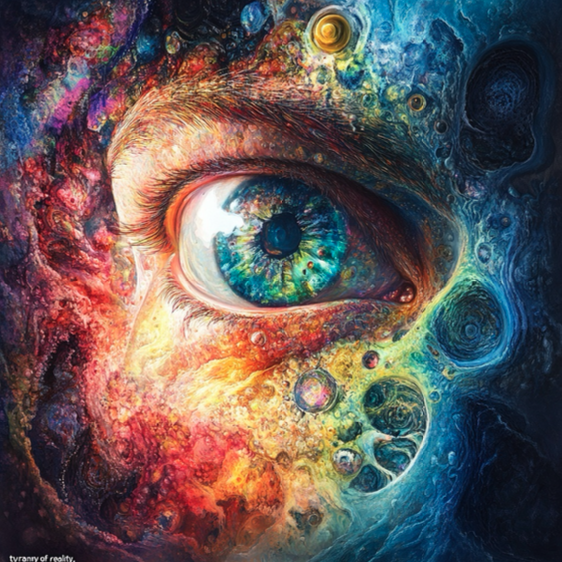
As a teenager in the late 1960s, I enjoyed “turning on, tuning in and tripping out.” But I never in my wildest adolescent dreams could have foreseen the trip that “minding dreams” has taken me on. These dream journeys that I have experienced have been far more wondrous than I could have ever imagined when I was younger.
What have I discovered over this past 50+ years of “minding dreams?” What is it about each one of the dreams that has resonated with me? When you experience specific types of dream imagery over and over again... it’s almost like you’re finding your own water level of subconsciousness. My pursuits and interests as a young person were quite varied. From drawing and painting and writing and traveling and then philosophizing, continuously seeking transcendental experiences, even being on the receiving end of “messages,” which I thought were meaningful to me. I don’t mean weird otherworldly “messages,” I just mean listening to and being influenced by music, especially the songs of the Beatles; to the extent that I, like so many others of my generation, felt I actually understood where they were creatively coming from. I still do.
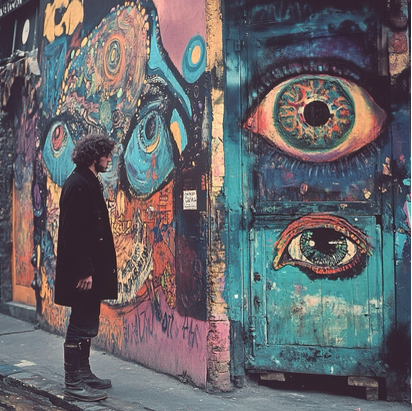
I marveled at the Beatles’ ability to form something that was so much greater than the sum of the individual parts in their music, and to express that so magnificently that the “message” was not only exhilarating, but overwhelmingly resonant when played and replayed again. And most importantly, that I could keep hearing those musical and lyrical “messages” playing in my head over all these years. I think that my being on the receiving end of that kind of a dream-like “messaging” in the late 1960s, especially from John Lennon, reinforced for me something that I felt I already intuited about the life of many Dream Minders.
After a Dream is first experienced, each person who “has it” often tries to recall who was in it and what happened…and then perhaps to understand what it was about. But afterwards, what the dreamers are often left with is the memory of images of not just who was in the dream and what occurred, but also where the dream took them, and how it made them feel to be there.
During this process of “minding dreams,” we often like to think we can justify the aesthetics from an “almost” rational perspective, but most of the time we simply respond to what feels intuitively plausible to us. Over the years, I have learned that there is almost always a way to perceive an ethereal creative dream web underlying each dream, so that we later can actually “mind” that area, as in later exploring it conceptually and emotionally. And perhaps even spiritually.
I’ve found that this level actually matters to many of the best dreams, which inspire us to find the mysterious aspects that are “there” to be discovered, which we might not at first have seen or realized were “there.” I’m personally usually looking to experience dream places that feel like they have already existed before I arrived there in my dream.
What does the process of “dream minding” look like? What does it feel like? What does this emotionally or even intellectually express? Where we go, we take others. And once we show where we are, it often becomes clear that this also fundamentally helps to determine “who we are.” And this, for me, is the essence of what “minding dreams” is all about. They reflect simultaneously both the sum of what was first experienced, and then subsequently what is shared with other dreamers who can now “mind” the same dream.
Through writing, music, film, painting, sculpture, in a digital or analogue medium, many dreamers attempt to express or re-create their dreams in order to see them “come true.” However, not many are successful at doing this. The fortunate Dream Minders, who truly create from the dreams that come to them naturally, usually have their inner eyes and ears attuned to their inner mind of dreaming much of the time.
One celebrated Dream Minder once said, “Some of my best dreams are not my own.” His interactions with others in the creative process of “minding dreams,” which have subsequently inspired so many, is located somewhere within the mind space between where he is and where others subsequently arrive mentally.
One of the things that most “Dream Minders” have in common with one another is a deep love of visual storytelling, combined with a great desire to inspire and be inspired by the dreams of others. Dream visions are not always something anyone can illustrate right away. Dream Minders can feel that they’re having a vision of a dream before they can fully “see” it. It’s not always an image that comes into view in their mind’s eyes, but almost more of the feelings of a presence in a dream that mysteriously demands engagement and exploration.
There’s always a gap between each one of us, because as individuals we each have our own individual consciousness. We usually feel original and uniquely alone while we are dreaming. But where do those images and sounds, and our responsive thoughts and feelings come from? Surely from somewhere…and, once we express them as dream visions, how are they actually received by other dreamers, particularly in a potentially collaborative process such as “minding dreams?”
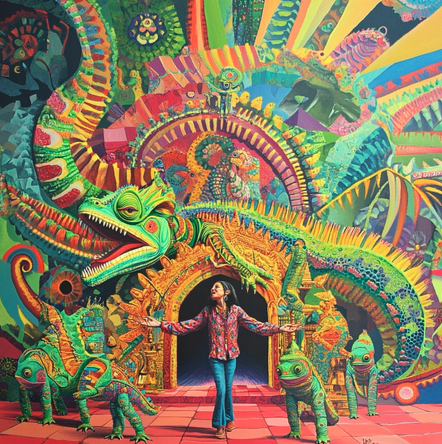
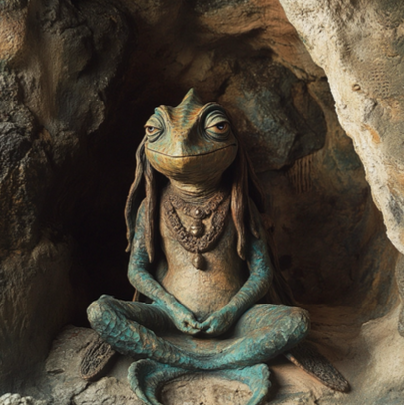
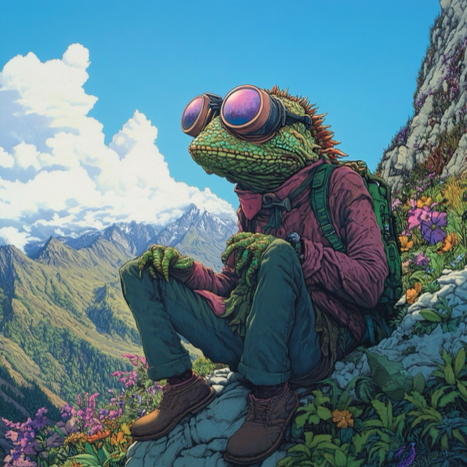
The context of what you're “seeing” or trying to “see” in a dream makes such a big difference in how you perceive it, especially when you’re trying to transform it into something else in the process of “minding dreams.” Sometimes when I'm scouting in my mind’s eye, I have the feeling that actually I'm “auditioning” dream places, characters, ideas and feelings in order to see if they not only want to be in my dream, but can they be in my dream to fulfill a specific purpose.
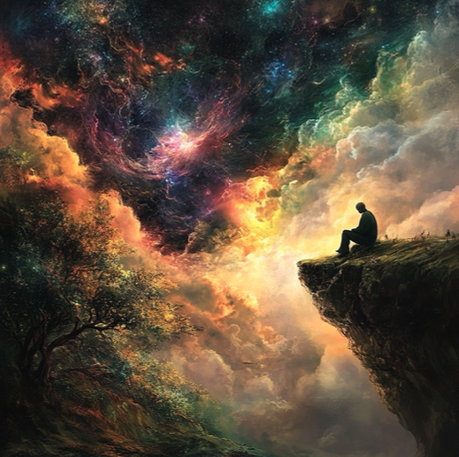
That means a Dream Minder must have a filter that disregards what they are looking at in a naturalistic sense. We’re only “seeing” it for how it might potentially fit into that specific dream. Underneath this level are other considerations, such as, what is it for or what’s the reason for it to be in this dream? Most importantly, what is its spiritual purpose in the dream?
Biography
Rick Carter is a production designer and art director best known for his work on films such as Back to the Future Part II (1989), Back to the Future Part III (1990), Jurassic Park (1993), Forrest Gump (1994), Avatar (2009), Lincoln (2012), Star Wars: The Force Awakens (2015), and The Fabelmans (2022). He has collaborated with directors such as Steven Spielberg, Robert Zemeckis, James Cameron, and J. J. Abrams and is a two-time Academy Award winner.