Walking the Walk: Report from Game Developers Conference 2009 (Part Two of Two)

Here's the second part of Eitan Glinert's regular update of the Game Developers Conference. What I love about Eitan is his enthusiasm for alternative gaming -- whether serious games, games for the visually impaired, or indie games. He's one of those people who wants to continue to expand what the games sector looks like so that games achieve their full potential as a medium. Full disclosure requires that I acknowledge that I am on the board of advisors for his new game company, Fire Hose Games, and am really excited about some of the directions they are going. Walking the Walk

by Eitan Glinert

Welcome back to part 2 of the series on GDC 2009. While the last post covered some of the more interesting sessions from the Game Developer's Conference., today's post will focus on some of the more interesting people I had the pleasure of meeting. While you may not recognize all of their names (at least not yet), these are the guys and girls and who are doing new and exciting things in games. Perhaps unsurprisingly they are all independent developers and academics who are truly trailblazing new areas in gaming.

Alex Austin, Cryptic Sea

There are a large number of us who try very hard to make serious games that teach users real life skills in a fun way. Then there's Alex, who just does it on a regular basis. He's the brilliant mind behind Bridge Building Game (which eventually turned into Bridge Construction Set), a fantastically fun game in which you have to build suspension, draw, and railroad bridges over rivers and pits using real world physics. Alex isn't stopping there though, and is currently hard at work on a new game... set on the moon. The premise is pretty simple, you're an astronaut in a lunar lander, and you're trying to take off from the moon and rendevous with the lunar orbiter so you can return to Earth. The catch? Limited fuel, a moving target, and a nasty case of gravity. It's not enough to simply aim at the orbiter and go, you need to estimate where it will be, shoot ahead of it, and hope that you can meet up. The game sounds like a lot of fun, and will be available on Steam (hopefully soon!). The best part is that the game is just going to be part of a six pack of small, bite sized offerings, though I personally hope they all involve space, rockets, or bridges.

Jane McGonigal, Institute for the Future

All games require user input to be played, otherwise they wouldn't be especially interactive. But what about games that require users for content? That's where Jane comes in. She's one of the leading Alternate Reality Game (ARG) developers out there, having helped on projects like World Without Oil, a fascinating game in which users collaborate to discuss what a hypothetical world in the midst of an oil crisis might be like, in an effort to help solve some of our oil usage problems with collective knowledge. Jane is at it again, helping Rachel Lyle and Jason Tester with a new ARG called Ruby's Bequest. Set in the present to near future, this ARG invites participants into the world of Deepwell, where a mysterious woman (Ruby) has recently passed away and has willed a large sum of money to the city provided the residents can start "caring" more. The game is one part mystery and one part collaboration, as users are asked to contribute and raise the "caring index". If it sounds weird, it's because it is - but that's how all innovative games seem at first. I strongly recommend checking out the website and poking around, I'm sure you'll enjoy it.

Matthew Wegner and Steve Swink, Flashbang Studios and Blurst

I wanted to talk about Matthew and Steve not because of a new game they have coming out, but rather because of their studio and what they've done (past tense). Flashbang is a small indie studio that's been around for 6 years making small PC games. Blurst is their new offshoot studio that does more advanced 3D browser based games, and has just been started up recently. What is really amazing about these guys is that they've been at this for so long and they've managed to maintain independence so they can keep making whatever they want, which is especially impressive when you consider that many of their more popular titles are free and have no ads! The games they make are fun as hell too, and way out there. With crazy titles like Off-road Velociraptor Safari, Minotaur China Shop, Jetpack Brontosaurs, and Blush, Matthew and Steve are certainly experts at creating memorable experiences. The games are all free, so I would definitely take a look!

Rob Jagnow, Lazy 8 Studios

Rob a smart ex-MIT guy who likes gears. A lot. So much so that he made a new

puzzle game all about them called Cogs. The game has the user moving around puzzle tiles to line up gears and make things... go. So you'll make flying things go, like rockets and balloons. You'll make music things go, like bells and chimes. The game seems incredibly addictive, and it's a good mental workout to figure out how all the gears line up. But perhaps most impressive in my opinion is how many variations Rob manages to get out of such a simple theme. I'm excited to grab it off Steam when it comes out soon, it should be a lot of fun!

That wraps up this year's GDC highlights! If you liked what you saw, please stop by our website on a regular basis to get more updates on interesting news in the video game world. You'll also be able to read about our game and the development process behind it. Hopefully it'll be a good read!

GDC 2009: Talking the Talk (Part 1 of 2)

Last year, Eitan Glinert, former MIT student and currently the head of a Boston startup games company, Fire Hose Games, wrote his impressions of the innovation and diversity he saw at the Games Development Conference. He did such a great job that I asked him to write some follow up reflections at this year's event. Take it away, Eitan. Hi Everyone! Henry, thanks for inviting me back for my annual round up of all the interesting things that happened this year at the Game Developer's Conference (GDC). For those of you who are reading my posts for the first time I'm Eitan, local Boston game nerd and developer. I used to be a grad student at MIT doing games research, and now I'm the founder and creative director of Fire Hose Games.

But enough about me, let's talk about games! This year I'll be doing two posts: Talking the Talk, and Walking the Walk. The first (today's post) will be all about interesting talks, lectures, rants, and totally inappropriate outbursts heard at the conference. The next post will be all about the amazing developers I was lucky enough to meet who are making things happen. So let's get started - what was awesome?

Usability, Motherfuckers!

Sure, it's a little self serving to talk about your own session first, but it was a damn good talk and I want you to hear about it. A lot of people out there can't play video games due to some sort of disability (this applies to computer systems in general). However, with a bit of extra thought and planning game developers can frequently make their titles work for many of these disabled groups, and in the process make their game more usable for everyone. This can even lead to increased sales, so spending money on making a game highly usable will often earn money! I covered a bunch of concrete tips for things that developers can do to make their games more usable, and pointed out examples of games that exemplify this behavior (like Half Life 2 and Peggle) and games that could do so much more (like Trespasser and Puzzle

Quest). If this sounds interesting you can grab the slide deck here.

My First Time - Games about Sex

Eric Zimmerman is a smart guy from New York who likes to make game developers think about how much more they could be doing. One of the neat ways he does this is with the annual Game Design Challenge, in which he goes "Iron Chef" on a panel of famous developers and asks them to propose a game with some sort of secret ingredient. This year the theme was "My First Time", and the panelists had to incorporate their own autobiographical first time having sex. Erin Robinson and Heather Kelley came up with a hilarious Wii title in which you start by point and click your way to make the first move with an especially awkward guy, and culminates with you counting the ceiling tiles in his room. Sulka Harro deviated a bit from the autobiographical nature and proposed a user generated game in which participants tell the world about their first time, like in post secret. Finally, Steve Meretzky was both hilarious and touching as he recounted how he was a late bloomer and it took coming to MIT to find other nerds that were sufficiently weird like him to finally meet girls, and proposed a Second Life text adventure in which users must navigate the isles of awkwardness in a three part act in which you finally, after a long time, get laid. The audience voted and Erin and Heather ultimately triumphed, who were rewarded with a deck of sex cards for their efforts. Lots of fun!

User Generated Content and the Soviet Space Program, 1978 -

1989

This was one of the weirder talks I saw, and that's really something after that sex panel. Chris Hecker started off by discussing user generated content in games, using Spore as an example. The talk was fairly straight forward, and Chris started walking through the "Sporepedia" to show examples of what people had come up with. Then the screen flashed, music started playing, and a slide with crazy spaceships was shown with the title "Russian Space Minute". Will Wright (famous for The Sims and SimCity) then gets up and proceeds to give a 15 minute presentation on the late years of the Russian space program, outlining in detail the counterpart to the US Space Shuttle and the design process that went into making it. He finished by showing how the space program fell apart with the demise of the Soviet Union, and then just as quickly as he started Will sat down and Chris Hecker got back up and continued discussing Spore. The whole experience was especially surreal, as Wright's appearance was completely unexpected and seemed to have nothing to do with anything. I later discovered that Will apparently likes to intersperse "Russian Space Minutes" into his talk because, well, he's Will Wright, and he decided to make a guest appearance in this talk because he couldn't in the next panel he was in, which was...

The (Positive) Future of Games

This star-studded panel featured Will Wright, Peter Molyneux, Lorne Lanning, Bing Gordon, and Ed Fries. Just like the panel moderator I'm not going to introduce these guys since they're super famous and you have easy access to google if you don't know. The talk centered around whether or not developers have an ethical responsibility to their users, and if they do how the games that are made can be beneficial to society. The talk was especially hilarious, and the inappropriate comments flew. Among my favorites?

Paraphrased: "We should try to make the worst game possible. Perhaps a game about 72 Victoria's Secret models, and they're in heaven, and the game is in Arabic." and "I would love to see a game like Second Life, but good." The panel was all over the place, but generally they did seem to agree that it was important to make games that were useful in some way, whether by making people think more about the consequences of their actions or by encouraging positive behavior. On a related note, I went to a roundtable at the end of the conference on positive impact in games which was headed up by Rusel DeMaria, the panel moderator. I was pleasantly

shocked to see how full the room was, there were many more developers there than I would have expected. Seems like a lot of people are taking this message to heart!

Constraints are your Friends

Perhaps not as flashy as the other talks, but a challenging discussion all the same. Dylan Fitterer (creator of Audio Surf) spoke about the path he took to success, starting with releasing a small game every week for over a year just to find his muse. The games were free, made him no money, and he didn't get much acclaim, but it did serve to get his mind working about what he really wanted to do. One of the games, Tune Racer, was not especially popular on the site but Dylan felt it was likely one of the more interesting titles he came out with, and eventually it morphed into Audio Surf. He pointed out that unlimited freedom often

leads to unlimited failure, as it is very difficult to figure out where to go next. Constraints, on the other hand, makes design much easier as it gives you bounds to work within. He gave the example of famous song writers like Kurt Cobain cuttings words out of newspapers to help write lyrics with the constraint of only using words and phrases they could find. It's an interesting point, but I personally think that doesn't apply to everyone - some people like having unbounded room to come up with ideas.

That's it for today, see you next blog post!

Computer Game Spaces: An Interview with Georgia Tech's Michael Nitsche (Part Two)

You also suggest that the design of games space has been heavily influenced by our shared understanding of cinematic conventions. Which aspects of film form exert an influence on the design of game worlds?

Video games, film, and television are all part of the moving image media family. They share many aspects, differ in many others and continuously add to each other's vocabulary through their shared origins. There are at least two connections that we have to take into account when we discuss game spaces and their visual representation.

On the one hand, a large number of games try to remediate cinematic visuals. There is no reason for a lens flare effect in Unreal Tournament because there are not physical optics involved. But the programmer included it. Neither is there any technical reason for suddenly increasing grainy imagery in sections of Fatal Frame. But the images are altered nevertheless. These are rendering effects applied to the game world in order to recreate cinematic visual effects and to achieve distinct dramatic impacts.

Most of the time, we have to read and understand a game world to interact meaningfully with it. That is why visualization is a very powerful form of expression in digital games and not necessarily subordinate to interactivity. Cinematic traditions are built into these games to direct our reading of the world. Because designers constantly develop new visual expressions for their games, we cannot pinpoint a single cinematic reference point for video games. The main visual traditions of 3D game cinematography (following camera, overhead view, first-person point of view and pre-defined viewing frames) have all connections to existent cinematic traditions but they have developed their own specifics over time.

The interactive following camera, for example, changes the way that the main character is visually situated in the game world and often becomes not only a visual but also a action controlling device when the hero is programmed to always run in the direction the player points the camera. Equally important is the question of montage of different viewpoints in video games. Film has developed multiple techniques of montage and games seem to gradually follow with some own concepts that are organized around their interactivity.

In many 3D games players not only control the virtual hero but have also taken on the role of virtual cameramen and editors. Maybe the most surprising fact is how seamlessly audience can accept this responsibility. The camera work in the newer Prince of Persia titles is highly developed and might be influenced by the player in the midst of equally complex game play situations. Nevertheless, players seem to readily adapt to that task. Nowadays, a player not only accepts the role of the virtual hero but also that of the "man with the movie camera." And this transition happened extremely smoothly overall. Maybe because of our familiarity with cinematic techniques.

This points to the second main connection between games and film: players have developed certain expectations towards the moving image. We have been educated by television conventions and cinematic visual storytelling and look at game through this expectation.

This allows players to understand the elegant intro sequences of the Half-Life games as descendents of the classic long opening shots that we have seen in Altman's The Player or Welles' Touch of Evil. Players bring this kind of media literacy to the game and can read it through their proficiency in film and TV visual storytelling. So we expect games to work a bit like movies because film and TV are essential sources of our visual literacy.

This is a two-way street, of course, and with the growing role of games as media for socialization the influences starts to shift. We can see that games start to educate our visual expectations and drive shots in television and cinema productions. So instead of a single influence I would argue for a growing shared ground that is based on the tradition of the moving image.

As you note, game designers rely on a range of spatial metaphors to discuss

their craft -- drawing parallels between games and gardens, sand boxes,

amusement parks, labyrinths, mazes, and arenas or talking about games as being

on "rails" or "tracks." Which of these analogies are most productive for

thinking about games space? Which do you think are confusing or misleading?

The book does not directly pick up the discussion of games as gardens or sand boxes - not because these metaphors are misleading but mainly because to me it seemed that a lot of detail is lost in such an approach. These are very useful approaches and often well applied in other works but a bit too large for the detailed analysis I had in mind. In my case, I tried to look into more precise spatial subcategories - like the path, the arena, or the labyrinth.

So instead of discussing the overall summary of a virtual space, which indeed might work and feel like a virtual garden, the focus is on details that might evoke this impression. I call these details evocative narrative elements and they work like spatialized hooks that affect the way the player experiences the game universe. They support the player to make sense of the virtual world and the situations in it and offers opportunities to connect and contextualize the events in relationship to each other. Finding a item important to the player, defeating an opponent or saving a friendly character, discovering the value of a certain item and overcoming threshold - all these can be evocative narrative elements that are situated in the game world.

However, how the player truly interconnects these hooks is up to her. Evocative narrative elements can add up to a fuller picture of a garden of a sandbox-like world, but in the end this depends very much on the player.

That is why I suggest a different metaphor in the end of the book, namely that of the kitchen. The kitchen caters for the growing role of players in the formation and re-usage of game environments. Following established recipes or gradually experimenting with new ones might be translated in the players' actions in innovative titles from Spore to Little Big Planet to Second Life or MetaPlace. And getting all the set up right might just about decide the fate of worlds like Sony's Home.

Michael Nitsche is an Assistant Professor at the School of Literature, Communication,

and Culture at the Georgia Institute of Technology where he teaches courses on virtual

environments and digital moving images. Michael heads the Digital World and Image Group, which works the design, use, and production of virtual spaces, Machinima, and the borderlines between games, film, and performance. His work combines theoretical analysis and practical experiments and his collaborations include work with the National Film and Television School London, Sony Computer Entertainment Europe, Turner Broadcasting, Alcatel Lucent, and others. He is author of Video Game Spaces: Image, Play, and Structure in 3D Worlds (MIT Press, 2008), and has published on Game Studies, virtual worlds, digital performance, games and film, and machinima in numerous publications. In a former life he was co-author for a commercial videogame, professional Improv actor, and dramaturgist.

Computer Game Spaces: An Interview with Georgia Tech's Michael Nitsche (Part One)

For a while there, it looked like the debate between the ludologists (who focus on game play mechanics) and the narratologists (who focus on storytelling) was going to define the range of perspectives in games studies. As someone who was falsely labeled a narratologist for a bit, I found this model of the field constraining and distorting. Now, of course, we've seen an explosion of different perspectives in the academic study of computer and video games. One of the most promising approaches emphasizes the spatial dimensions of game design, a topic which was, in fact, the real focus of my own early writing on games (and not coincidentally a recurring focus of the work of Espen Aardseth, a card-carrying Ludologist), suggesting that space is not only the final frontier but also the common ground of many of the first generation of game scholars. Michael Nitsche, a games researcher at the Georgia Institute of Technology (better known as Georgia Tech), has written a significant new book, Video Game Spaces: Image, Play, and Structure in 3D Worlds (MIT Press, 2008) which sums up what we can learn about games by examining them as spatial systems. His writing is informed not only by work in games studies but also from media studies, performance studies, urban planning and architecture. As he discusses in the interview below, this work has been informed by his work with the Digital World and Image Group at Georgia Tech.

I had a chance to visit Nitsche and his colleagues down in Atlanta late last fall and came away tremendously impressed by the spirit of collaboration and exploration which exists within that particular academic community. The Georgia Tech folks are doing cutting edge work across many different research areas. I am lucky enough to have Michael's colleague, Ceila Pierce, presenting the opening colloquium this term, sharing her work on the construction of fictional ethnic identities within multiplayer game worlds.

Here and next time, Nitsche shares some thoughts about the theoretical stakes of thinking about games space.

You come to this book both as a game designer and as a game theorist. How have the two perspectives informed each other here? To what degree do you see your design work as a mode of experimentation with the basic building blocks of games as a medium? Can you describe for us some of the projects you've worked? How does work with games done in research centers differ from the kind of work which occurs within commercial games companies? What value do you think university-based game research brings to the evolution of games as a medium?

Most examples in the book are drawn from commercial video games but it does include a wide range of research projects, too - including some of my own practical experiments. We need these experimental game projects to fill in the gaps left by commercial titles.

Commercial video games have to make money and they often have to be streamlined and optimized to reach that target - university-based games research projects have all kinds of limitations but they thankfully do not have to sell. This allows us to explore some of the more complicated areas that commercial games have to avoid to stay afloat.

My own work has always been a mixture of theory and practice but I have to admit that I somehow lack a single direction in the experiments I have conducted. I have worked on educational virtual environments, procedural game spaces, virtual and mixed media performance spaces, augmented reality prototypes, and these days I start to experiment with location-based handheld applications. In my case these experiments are truly explorative. They start off with a relatively simple question and snowball into more and more challenging test beds. While a commercial game production has to streamline the design at that point and focus on the core, research projects remain free to explore. I like that - a lot.

At Georgia Tech we are used to testing theory and analysis in such an experimental set up. So, shortly after I joined the faculty here, I started the Digital World & Image Group. One of our first major projects was Charbitat, an experimental game that creates a 3D world around the virtual player depending on how you play the game. First, we focused on the question of procedural space generation and how to design for these new and dynamic worlds. But once we had the functional prototype up and running, we moved on to look into procedural quest generation, dynamic camera control and patterns to support spatial navigation in infinite worlds - all based on the original game prototype. Any commercial developer would have cut this additional research, which is why this kind of gradual experimental discovery is only possible in a non-commercial environment. This certainly does not mean that academics should tell developers how to create their games, but it shows that research projects can offer additional information because they are free to explore venues that are locked off by deadlines and budgets in commercial production.

Other areas are not covered by commercial games, yet. For example, I am very interested in game worlds as performance spaces where players do not play to achieve certain high scores but instead to express something effectively. Consequently, some of my projects deal with virtual puppetry or augmented reality performance spaces.

I also have done quite a lot of work in machinima. The industry might recognizes the promise in these areas but it is simply not clear how these ideas might work out in a viable single application. So here the university-based research project can break completely new ground.

Many accounts of game theory have emphasized the tension between ludological approaches, which focus on game play mechanics, and narratological approaches, which focus on story telling. Does a focus on game spaces give us a different way of thinking about the relations between these two approaches?

I believe it does. Space is certainly not the single answer to all of our problems but it surely predates play as well as narrative. We learn how to deal with space before we start to tell stories or play games. If we translate this into video games, space becomes a higher category, one that can include narrative qualities as well as ludic ones.

I started to look into expressive 3D game spaces around 1999, when I began my studies at the University of Cambridge's Department of Architecture. This was just around the time the debate about narratology and ludology heated up. We did a lot of work with video but I felt somewhat shielded from the divide because even in the darkest controversies nobody ever argued against the importance of space in games. From where I was standing, you had to ask whether there is really a substantial divide at all between ludology and narratology. For me, both become part of how we deal with spaces and are not opposites but complementary to each other.

In the book I talk about Story Maps, a form of imaginary map that we form in our mind as we play our way through a virtual environment. These maps are shaped by what we do in the game world as well as how the action it told through various forms of presentation in sound and image. Sure, there is a strong narrative element in these maps but they can only be created when the game is played. So I could never really fully see the divide because my work seemed to be right in the middle of this discussion without conflicting with either.

A key goal throughout the book has been to map the many different devices that shape the player's perception and experience of games space. What value is such a catalog to the game designer? What do you see as some of the under-developed opportunities in the creation of expressive game spaces?

Game Studies has covered a lot of ground and opened up a wide range of approaches, which is good. What I suggest is a combination of different fields. That is why the book references various disciplines from architecture to film, to drama and literature studies.

Game designers very often use these and other references already as they collect ideas and inspirations. They do this often intuitively and this book might help to stimulate this messy process and provide an additional perspective.

Any designer worth their salt is aware of the fundamental role of a video game such as Mario 64 for the way we design games today; this book offers an additional view at some details regarding these innovations specifically for 3D game worlds. It does not suggest a single solution or a unique missed opportunity but instead discusses a range of available options by looking at the underlying basics.

For example, the whole argument of the book is built on the idea that game worlds are not simply polygon masses arranged in a certain way in the engine. Instead, we should look into different layers where game spaces come to life. These include the play space in the living room of the player, as well as the fictional and mediated spaces generated by the presentation and the imagination of the player. The rule-based level is only one of five layers for game space analysis. The task, then, is to find the connections between the different layers. New interfaces such as the Wii remote or webcams are good examples for these connections. They put much more emphasis on the world in front of the screen. But what can we make of this expansion into the physical space? Among other things, the book invites us to think about ways these connections into the living room can be made more effectively.

Throughout the book, you draw heavily on ideas from architecture and urban planning. What do these fields have to contribute to games studies?

There are some obvious parallels, such as the relevance of urban planning for the design of free-roaming game worlds or the way architectural styles are copied in video games. However, I would argue that we have to look a bit deeper to identify more fundamental parallels.

One example for a more direct connection is the way we read large-scale environments no matter whether it is a real world like my hometown or a virtual one like an online world. We gradually form a cognitive map based on certain key features and navigate through the world based on this map. Architectural theorists like Alexander or Lynch have done extremely valuable work in precisely this area and a range of research projects has shown that the same ideas apply to virtual environments.

However, games offer different means to accentuate a players' development of a cognitive map. Designers have full control over the space and the possible actions in it and use it to dramatize the experience. That is why we also have to take theatrical spaces into account.

Most virtual worlds are designed not for a "live-like" experience but for overly dramatic ones. These game worlds would fall short if they would provide "only" realistically functioning virtual cities. Instead, they have to deliver virtual stages, full or extraordinary events and opportunities that are not available in real world designs. That is why we have to add these dramatic functions to the architectural ones and combine dramatic moments with cognitive maps.

Likewise, architecture is very helpful in the discussion of specific spatial structures, such as paths, arenas, or labyrinths. They clearly reflect and reference existent architectural structures but we have to add the game specific elements that usually enhance their dramatic impact. The labyrinths of Doom or Silent Hill are not just navigable virtual architectures but the actively put the player into a highly engaging dramatic situation.

The video game world tells the player where she is projecting her actions. It positions the player via spatial means and uses references to architecture and urban planning. At the same time, it is a dramatic positioning. Players do not enter a game world as a neutral observer or visiting tourists but as cops staged in the middle of a gang war, a superhero with the power to destroy or rescue Metropolis, a lost soul that only tries to escape and survive.

These options are embedded in the game world's architecture, its presentation, and its functionality. Urban planning, architecture and performance studies help us to balance and connect these features better.

Michael Nitsche is an Assistant Professor at the School of Literature, Communication,

and Culture at the Georgia Institute of Technology where he teaches courses on virtual

environments and digital moving images. Michael heads the Digital World and Image Group, which works the design, use, and production of virtual spaces, Machinima, and the borderlines between games, film, and performance. His work combines theoretical analysis and practical experiments and his collaborations include work with the National Film and Television School London, Sony Computer Entertainment Europe, Turner Broadcasting, Alcatel Lucent, and others. He is author of Video Game Spaces: Image, Play, and Structure in 3D Worlds (MIT Press, 2008), and has published on Game Studies, virtual worlds, digital performance, games and film, and machinima in numerous publications. In a former life he was co-author for a commercial videogame, professional Improv actor, and dramaturgist.

Desmond Wong and the Art of CarneyVale

I am gladly turning over my blog today to Geoffrey Long, a CMS alum who is currently the Communications Director and a researcher for the Singapore-MIT GAMBIT Game Lab, as we seek to showcase one of the lab's major success stories. As someone who has watched this game take shape from a simple concept into a full-fledged title, I am busting out of my buttons here. This is a real testament to the value of what GAMBIT is trying to achieve and the team which its director Philip Tan has pulled together. But it is also further validation of the idea that creative and innovative games, from Flow to Portal, can come from university- and school-based research and training programs.


Thanks, Henry!

The Independent Games Festival recently announced the finalists for this year's Seamus McNally Grand Prize, and all of us here at GAMBIT were thrilled to find our game CarneyVale: Showtime included on the list. Showtime, which was developed by the GAMBIT Singapore Lab using XNA and is available for download now on Microsoft's Xbox LIVE community service, is the spiritual sequel to our summer 2007 prototype game Wiip. We sat down Desmond Wong, a recent graduate of Nanyang Polytechnic who was the lead artist for both Showtime and Wiip, to discuss how art was used to link the growing CarneyVale franchise together.

CarneyVale: Showtime

How was the art style chosen for Wiip?

During the concept stages of Wiip, the team was trying to settle on a suitable theme for a whipping game. We tried all sorts of ideas and eras ranging from cowboy western to jungle tribal. However, none of the themes had that special factor to them, they felt too overused and unoriginal. Eventually, the idea of being a ringmaster settled in. We knew it would be cool to be a raging ringmaster with a ferocious whip, and the idea of a mysterious circus quickly came into play.

My initial concepts for Wiip were very dark and creepy, with outlandish animals and clowns. Although interesting, we knew that we needed something cuter and more approachable. Fortunately, the team had another artist who drew really cute and wonderful things. We had her take a stab at the early concepts, and she came up with her own cuter renditions. Eventually, the final product ended up as something both cute and creepy at the same time, a perfect balance between the two.

src="http://gambit.mit.edu/movies/wiip_500-poster.jpg"

href="http://gambit.mit.edu/movies/wiip_500.mov"

target="myself"

controller="false"

autoplay="false"

scale="aspect">

Art trailer for Wiip

How did the art style change between Wiip and Showtime?

Slinky

If Wiip was the growing child, then Showtime is the maturing teenager. For Showtime, the art style took a more circus city feel to it. It was literally a city with circus performances on its streets. With that, we could have all assortments of neon signs, glowing lights and bustling color. The genral rendering of the characters also took a more mature turn. instead of kiddy characters, the characters in Showtime are more proportionate and grown. The style of shading also changed, employing more tones of shade and detail.

Despite all the changes, the art style was generally kept to roughly the same feel. The bright and colorful characters and scenery were still present, and the quirky designs never disappeared. It was just an art style evolving as time went on.

Who or what would you cite as the inspirations behind CarneyVale's art style?

Environment

The biggest inspirations for the art style for Showtime were definitely Cirque du Soleil and Las Vegas. I remember the team watching video performances by the Cirque du Soleil troupe, and the costume designs just blew my mind away. Las Vegas was also a huge inspiration to the art style. Being a city circus, I looked to Las Vegas for its neon lights and signboards to give life to CarneyVale. I also used Las Vegas a lot when trying to merge a circus and city together. I would look at photos of that city, and imagine it with circus elements on it, and it would always work.

Artists such as Yoji Shinkawa also give me tons of inspiration. Famous for his work in the Metal Gear series, what I really like about his works is his ability to generate such a distinct style of his own. The way he paints and conceptualises his ideas are what I respect most about this particular artist.

<a href="http://video.msn.com/video.aspx?vid=9c5941d9-8996-41e6-aaa1-e2c127bf19b2" target="_new" title="CarneyVale: Showtime trailer ">Video: CarneyVale: Showtime trailer </a>
The trailer for Showtime

How did you consciously use the art style to tie Wiip and Showtime together?

Slinky

The colors were the main things. When I was working on Showtime, I made sure that my color palette contained all the colors I used with Wiip. This was mainly the reds and yellows, however, I made sure to inject new tones and colors to keep things fresh. I also made sure to include the familiar red and white curtains from Wiip in Showtime as well. This served as a link between the two games, and added a distinct circus vibe to the game as well.

The general details for the items in the world were also kept consistent to tie the two games together. For example, I employed a certain motif in Wiip that I reused on some of the props in Showtime to keep the world whole and seamless. Most importantly, the narrator for Showtime is the main character from Wiip. No better way to tie two games together than that.

What's your usual workflow like? How do you go about creating a piece of art for the game?

Cannon Concepts

Usually I start with an idea. Ideas can come from anywhere. I got the idea for the Grabber prop by walking past those toy machines where you had to direct a hand to grab the toy you wanted. When I have a general idea down, I take it to the paper and pen. I sketch my ideas out and make sure to do as many variations of it as I can. I also find it very useful to get input from the people around me at this stage when the idea is still fresh and at its infant stage.

Around this point, I start choosing the best few concepts and proceed to creating art for the game. I use Photoshop to draw out and color the art, and once that is done, I export it out and get it ready to be put into the game. From here on, it's mostly seeing what works and what does not. For example, the launcher for the missile looked good on paper, but when it was put into the game, it was a little too big and bright. The good thing is that once the art is there, it's mostly just tweaking to strike the perfect balance between making it look good and work well too.

If you were to do a third game in the series, what new types of imagery would you like to explore?

Wiip took place inside a busy circus tent, and Showtime took place in a bustling city at night. For the third installment, I would really like to see how the game would look like in outer space. We initially wanted to bring Showtime into space for the last few performances, but scrapped the idea in the end. What I really want to try is actually put Slinky in a world where gravity is at its weakest. The image of Slinky doing a double back flip in slow motion while floating upwards is too good to throw away.

Being outer space, I could go crazy with the art style. There are just so many quirky things an artist can design when he isn't restricted. Imagine shooting through the stars on a flying comet as you are flung through rings of fire in front of a multi-colored nebula. It would be nothing short of legendary.


The winner of the Independent Games Festival's Seamus McNally Grand Prize will be announced at the Game Developers Conference in San Francisco this March. Keep an eye on the GAMBIT Updates blog for more details.

Beyond Barbie and Mortal Kombat: An Interview with Yasmin B. Kafai, Carrie Heeter, and Jill Denner (Part Two)

There's an emphasis throughout the book on user-generated content. One can argue that modding and other user-generated forms of content have made it easier for women to repurpose existing games to better meet their interests. Yet, one could also argue that this reliance on user-based solutions has marginalized female-interests into narrow niches rather than reshaping the design of commercial games. What do you see the gains and losses surrounding user-generated content?

CARRIE: I applaud tools to place modding and customization in the hands of more players. But these new tools will not stop advocates for girls to grow their technological comfort and expertise from wanting them to pursue the more difficult (and more powerful) advanced forms of customization through programming. Hopefully even when in-game toolsets for customization are available, it will still be possible to dig deeper and change the game even more.

JILL: The chapter I wrote with Shannon Campe describes the types of games made by 126 middle school girls, when they are given the tools and supports to design and program their own games. In fact, we found that girls' games were not highly gendered. Instead, many used humor to play with, explore, and challenge gender stereotypes. At the same time, they created games that addressed topics of great interest to them, such as fears about getting into trouble at home or school, and on moral decisions. These are topics that are relevant to many teens (male and female) but are completely absent from the most widely accessible games.

YASMIN: It's one of these unpredictable and interesting twists in the history of gaming that for once researchers interested in gender and games predated a paradigm shift in what you now call participatory culture. User-generated content carries with it the high and low: most of what is generated is not particularly compelling, if only for personal reasons, but then there are always a few examples that rise to the top. It's a gain because so many interesting developments are happening on the margins of gaming in discussion boards, machinima - this is what makes gaming an interesting experience. It's a loss if we see player-generated content as the answer to the gender issue. It's not. There is a place for professional design and production and consequently the people there need to become more cognizant about how inclusive or exclusive certain design decisions are.

All evidence suggests that adult women constitute the largest market for casual games. Has this market dominance led to any shifts in the decisions made by game designers serving this space? Does the book offer any insights into why more women play casual games than platform games?

CARRIE: Adult women tend to have less free time and the free time they have is available in shorter chunks of time. That makes games they can pick up and play in short blocks of time more possible and more appealing. Some casual games are available on platforms, but purchasing the console and getting it out and setting it up can be more than a casual commitment. Using the PC for games and the rest of life is in line with multitasking games and the rest of life.

Casual game companies are adopting approaches to acquire a sophisticated understanding of their market. Part of the beauty of online games is an ongoing connection with the player and continuous collection of play data. The game companies I am familiar with involve their most avid players and other volunteers as beta testers, and prior to beta, conduct frequent play tests before deciding the next game is ready to shift. Once a game company has a successful property, they start working with that audience to expand and improve. I don't see the market and the game company as being totally separate. Game design is becoming quite an intimate dialog.

YASMIN: This is really one of the areas deserving more attention research-wise; it just popped up when we started pulling together the book edition. To begin with the name alone 'casual' is of course a misnomer. It implies that these games are not as hardcore or serious as platform games because they don't require hundreds of hours of game play. Some however argue if you compile all the hours spend on casual games albeit distributed you end up with similar levels of involvement.

TL Taylor also made the observation that many of these word and puzzle formats found among casual games have a longstanding history of women playing them. So what we see is not the sudden emergence of the women gamer or a new genre but rather a continuation of traditional game play moving onto a new platform. It might be worthwhile to untangle all these different aspects ...

When we first edited our book, we were often asked why it mattered whether or not women played games. A decade later, what evidence has emerged which might offer a better response to this question?

CARRIE: I think games are still in the process of oozing into all walks of life. So the "one decade later" mark is not an end point but a stepping stone. There will be more change in the next ten years than there were in the last ten years. Games are sometimes and will increasingly be necessary for some jobs, and recommended for personal physical, emotional, and cognitive health. The Pew Foundation report on teens, gaming, and civic life reported that 99% of teens play games, and those who play more were more likely to be active in civic life.

I admit I am a blatant enthusiast, but games offer the curious mind a way to experience, learn, and play outside of the mundane constraints of the physical world. They are important for socialization and for maintaining and performing interpersonal relationships. They are part of participating in modern culture. Also, as games for health, games for learning, and games for social change continue to grow, playing games will be increasingly necessary.

JILL: The chapter by Elisabeth Hayes directly addresses this question. There has been a steady decline in student enrollment and graduation from computing majors in college, and a corresponding decline in the US IT workforce. Hayes argues that gaming can build IT expertise, which may potentially help to fill this gap.

YASMIN: There is one particular reason why it matters now more so than 10 years ago whether or not women and girls play games. This reason is tied to the current interest in games as promising learning and teaching tools. If we consider games effective tools and bring them into schools for that reason, then we better pay attention to their design so that everyone can learn with them. Then of course it matters what outside of school experiences you have because there is ample evidence that this impacts students' participation and success in the classroom.

The book offers some close consideration of the experiences of women working in the games industry. What factors might make this industry more challenging for women than for men to enter and maintain careers?

CARRIE: The huge barrier is programming. 95% of game programmers are male, and the proportion of females major in Computer science continues to decline. For the most part, those with a major voice in game design are the programmers and artists (also 85% male) who work on the game day after day. We either need to find ways to get more girls and young women interested in computer science, or else game development culture needs to open up roles for design consultants who don't come from the ranks of programmers and artists, but contribute in other ways.

JILL: The chapters by Mia Consalvo, and by Tracy Fullerton and her colleagues, describe how the culture of the gaming industry prevents women from entering and staying. Factors include crunch times that force employees to choose between home and work life for extended periods of time, and a devaluing of games that have social value.

The growing emphasis upon "serious games" and educational games raises new questions about gender, since it would be a tragedy if the use of games in the classroom made it that much harder for girls to learn and embrace Science, Technology, Engineering, and Math related subjects. What should educational game designers learn from the research presented in your book?

CARRIE: Part 4 of the book (changing girls, changing games) includes 3 chapters about science, math, engineering, and technology (SMET) games designed specifically for girls. The Click Urban Adventure is a mixed reality detective game in which teams of girls work together using science to solve a mystery. Kristin Hughes at Carnegie Mellon University used extensive formative research to understand some of the needs and desires of urban middle school girls in Pittsburgh. She was able to match narrative types, science tasks, tools and technologies, characters and personas to create a game very well suited to her audience. Her research showed the game was successful in generating a sense of agency and interest in SMET. Thus, games for learning do not, necessarily, exclude girls.

Caitlin Kelleher developed storytelling Alice, a tool for constructing animated stories, and for learning programming along the way. Her hunch that girls would be more interested in programming in order to build a story rather than programming to create a rudimentary game proved to be right on target. Middle school girls who used the Storytelling version of the ALICE programming software instead of the generic version learned more programming, were more delighted with the end product, and were more interested in going on to study programming.

Mary Flanagan created Rapunzel, a game in which players cooperate and compete to program dance moves. She and her team struggled to embed key activist social values within gameplay, such as sharing, cooperation, diversity, autonomy, self-esteem, and authorship.

Taken together these three projects shows that educational games certainly can be designed to appeal to girls. They reinforce the appeal of story and character and remind that games embody values whether designers intend them to or not.

The Heeter and Winn chapter reports on an experiment in which we found that rewarding speedy play interfered with girls' learning, whereas rewarding exploration slowed boys down and helped their learning but did not change girls play behavior positively or negatively. So the chapter does advise educational game designers to come up with ways to make a game "fun" other than including a time limit. As we teach in serious game design graduate classes, creating serious games is even harder than creating games. The audience is often forced to play and usually includes males and females. Learning outcomes, not just fun, must be considered. I am convinced we are all still learning how to make great games for learning. Making the experience good for all learners is part of the requirement.

A decade ago, the core question was whether we should design games specifically for girls or so-called "gender neutral" games to be played by boys and girls together. Is this still a burning question? If so, what new perspectives have emerged over the past decade?

CARRIE: That question makes me schizophrenic. In the collection of research citations on gender and gaming that I have been curating, the two most frequent tags are "gender stereotypes" and "what women want." The gender stereotype research tends to complain about girls and women are portrayed or conceptualized in stereotypical ways that ignore the wide diversity of female-ness. The what-do-women-want research reveals gendered desires and offers suggestions about how to create games to appeal to females.

From a design research perspective, Alan Cooper's proposition to "design for just one user" follows the tradition of designing products to "delight the few, please the many." That perspective implies that very best games for me would be designed for me. Some of what delights me also delights most humans. Some of what delights me would only appeal to a handful of other telecommuting, cat loving 52 year old new media professors. Even just satisfying one player would require many different Carrie-games, not just one. Each of us is more than our gender. The call for "games for girls" is a gross generalization. And yet, of course, some game designs are likely to be more appealing, overall, on average, to females and others to males. Schizophrenic. Sorry.

In her chapter, "Are Boy Games Even Necessary?", Nicole Lazzaro points out that designing for an extreme demographic reduces market size. An extreme male-typed game or an extreme female-typed game both leave out what players like most in most games. Games have changed enormously in the last decade, transitioning to become a mainstream medium and big business. With such an enlarged playing field, the answer from a business perspective is yes games for girls and games for boys and games for everyone. Gaming is large enough that it is beginning to resemble the magazine market. There can be very narrow market game franchises (paralleling the range of women's interest magazines from Vogue to Ms.) and more mainstream game franchises (paralleling Time or Newsweek).

Gender and gaming researchers tend to be more interested in empowering girls and women to engage with technology than they are with increasing game industry revenues. Betty Hayes' chapter points out that boys are more likely to engage in constructive, game-related activities such as modding, machinima, and creating fan web sites. These behaviors contribute to their IT expertise. Games for girls often do not include modding or recording, and therefore inhibit rather than facilitate tech expertise. Tracy Fullerton, Janine Fron, Celia Pearce, and Jackie Morie envision a "virtuous cycle" in which more women work in the game design industry, resulting in more games that appeal to girls, resulting in more girls becoming interested in becoming game designers. It doesn't matter whether the games are for girls, or gender neutral (ugh, that sounds so bland). We just want more appealing games.

My own research with colleagues Brian Magerko and Ben Medler at Georgia Tech and Brian and Jillian Winn at Michigan State University is moving in the direction of considering player type and motivation. We are working to develop and study adaptive games that express different game features depending upon what each individual player enjoys the most. Thus, instead of creating a game for girls, or a game for everyone, we create a game that can transform to become better for each individual player.

YASMIN: Can a game, or anything else for that matter, ever be 'gender-neutral'? And who decides? Game design can and should be more inclusive; one doesn't need to disrupt the narrative to offer more options for customization of characters or levels that are now common place for most games. That said, if we deal with younger players and school contexts, we need to be deliberate on what choices we offer in game designs to facilitate learning for various players.

In film studies, there has been extensive discussions of whether feminism has implications in terms of production processes and formal practices. Is there such a thing as a feminist approach to game design and if so, what would it look like?

YASMIN: A book chapter by Mary Flanagan and Helen Nissenbaum suggests an approach on how designers can identify the values that impact their design decisions from the initial conceptions to prototyping and play testing. You can call this a feminist design approach, if you want, or just plain good design strategy that can help everyone design better games.

We pointed to the rise of game companies as sites of female entrepreneurship as one factor that might shift the gender content of games. Why do we still see so few games companies run by women?

CARRIE: It seems like that ought to have started to change by now. Soon, perhaps? A few years ago game industry professionals complained that innovation was stifled because the game industry giants controlled distribution channels. But the growth on online computer game and movement to open up access to consoles seem to have eased some of the roadblocks.

Also, the proportion of female programmers in the game industry was only 5% in 2005, and 13% artists. The industry retains an ethic of "you have to be there when decisions are made" and an expectation that only those who do the heavy lifting have earned a say at the game design table. I am hopeful that new roles will open up such as design consultant to permit much broader participation in game design.

Happily, the Serious Game Design MA program at my university has had close to 50-50 female/male ratio of students in the first two years we've offered it. From where I sit (in a San Francisco basement telecommuting to a Midwestern university), there is plenty of interest on the part of women, and some are intending to start companies. Hopefully this same experience is happening on a much wider scale.

Our book ended with a consideration of Female Gamers as offering an alternative perspective on the "girl's game movement." Your book includes an interview with Morgan Romine from Frag Dolls. Such groups continue to be highly controversial with both feminist supporters and detractors. How would you evaluate their contribution to the issues this book explores?

CARRIE: A writer at the Chicago Tribune called to interview me about the release of the last Lara Croft game, hoping, I think, that I would be outraged. My response was to say Angelina Jolie is really cool, and although Lara's dimensions are ridiculous I am enormously glad to have a strong albeit ridiculous female character be the basis of a game franchise. I've had fun discussion with some of my male undergrad students in a gender and games special topics course, talking about what it feels like to them to play her.

But you asked about Frag Dolls. My response is similar. I celebrate every game conference attendee they beat (male or female). What a nice counter-stereotypical impression they walk away with. I hate the violence of video games and it bothers me that anyone enjoys blowing people and things up, even in a game. I love their confidence and their energy. They are being exploited, but they are also getting paid to do something they really enjoy. It is the birthright of Frag Dolls and other young women to contradict interpret and express the next generation of feminism.

YASMIN: The Frag Dolls are also opening a whole new chapter on the professionalization of gaming that is happening in the US; it has been around in Asia for quite some time. TL Taylor, one of our book contributors, actually examines in her chapter the ramifications of this change in the gaming landscape. A group like the Frag Dolls is just the most visible signpost of this change. As gaming moves into mainstream entertainment and professions, it can and will not escape the gender issues present in other industries as well. Ten years ago, the observations in From Barbie to Mortal Kombat seemed to focus on a group on the margins of technology while in fact, they were telltale signs of things to come. The chapters in Beyond Barbie and Mortal Kombat discuss the complex and continuing story of women and technology now situated in the context of gaming.

A Professor of Learning Sciences at the University of Pennsylvania's Graduate School

at Education, Yasmin Kafai leads research teams investigating learning opportunities in

virtual worlds, designing media-rich programming tools and communities together with

colleagues from MIT, USC and industry. In the early 90's at the Media Lab she was one

of the first researchers to engage hundred of children as game designers in schools to

learn about programming, mathematics and science. While at UCLA, she launched virtual epidemics in Whyville.net, a massive online world with millions of players age 8-16, to help teens learn about infectious disease. She also studied how urban youth create media art, games, and graphics in Scratch, a visual programming language developed together with MIT colleagues. Her research has been published in several books, among them Minds in Play" (1995), Constructionism in Practice (1996 edited with Mitchel Resnick), and the upcoming The Computer Clubhouse: Constructionism and Creativity in Youth Communities (edited with Kylie Peppler and Robbin Chapman). She has studied in France, Germany and the United States and holds a doctorate from Harvard University.

Carrie Heeter is a professor of serious game design in the department of Telecommunication, Information Studies, and Media at Michigan State University. She is co-editor of Beyond Barbie and Mortal Kombat: New Perspectives in Gender, Gaming, and Computing and creator of Investigaming.com, an online gateway to research about gender and gaming. Heeter's innovative software designs have won more than 50 awards, including Discover Magazine's Software Innovation of the Year. She has directed software development for 32 projects. Her research looks at the experience and design of meaningful play. Current work includes design of learning and brain games which adapt to fit player mindset and motivation and persuasive games where the designer goal is to engender more informed decision-making on complex socio-scientific issues. Heeter also serves as creative director for MSU Virtual University Design and Technology. For the last 12 years she has lived in San Francisco and telecommuted to MSU.

Jill Denner is a Senior Research Associate at Education, Training, Research Associates, a non-profit organization in California. She earned her Ph.D. in Developmental Psychology in 1995 from Teachers College, Columbia University. She studies gender equity in science, technology, engineering, and mathematics, with a focus on Latinas, in partnership with youth, schools, and community-based organizations. She edited the book Latina Girls: Voices of Adolescent Strength in the US (2006, NYU Press) and is the founder of Girls Creating Games where she conducts research on learning and technology in the context of after school programs.

Beyond Barbie and Mortal Kombat: An Interview with Yasmin B. Kafai, Carrie Heeter, and Jill Denner (Part One)

In 1997, Justine Cassell (then a Media Lab faculty, now at Northwestern) and I organized a conference, From Barbie to Mortal Kombat: Gender and Computer Games, for the MIT Women's Studies Program. It was one of the first academic conferences I'd ever organized, but I had no idea what a big deal it was going to be at the time. We brought together feminists from academia and industry to talk about the emergence of the short-lived girl game movement and in the process, we tried to explore what it would mean to expand the female market for games. A year later, Justine and I published a book based on the conference through the MIT Press, which has since become a standard in the Games Studies Field. Now, history has repeated itself: Yasmin B. Kafai, Carrie Heeter, Jill Denner, and Jennifer Y. Sun, seeking to understand what has changed over the past ten years, have organized a conference -- at UCLA -- and now a book for MIT Press, Beyond Barbie and Mortal Kombat: New Perspectives on Gender and Gaming, which was released late last year.

Justine and I were invited to speak at the opening of the conference and wrote an essay for the book exploring our own shifts in understanding the issues of gender and computer games since the conference. There, we express our pride -- and mild discomfort -- at seeing ourselves transformed from junior scholars to senior statesmen thanks to the publication of this new book. Frankly, I'm more flattered than anything else to see a new generation of feminist gamers, game designers, and game scholars take up this banner and release an important new body of research around the still very timely topic of women and the games industry.

The book opens with reflections from several other veterans of our original event, among them Brenda Laurel and Cronelia Brunner, and continues to have essays which talk about women's experiences working in the games industry, the growth of casual games as a market which strongly attracts female interests, the gender implications of work in the space of serious and educational games, and interviews with female game designers and with the leader of UbiSoft's Frag Dolls, a female gamer guild.

I couldn't let the release of this important book go without a shout out on this blog, so I asked the editors if they would agree to an interview about the book and about what has or has not changed about gender and computer games over the past decade.

It's been more than ten years since Justine Cassell and I published From Barbie to Mortal Kombat. What motivated you to want to update that book?

JILL: The first book had such a large impact on those of us trying to understand the role of gender in gaming and in technology more broadly. It was helpful to have a mix of academic and industry perspectives, as well as voices from different sides of the "pink" games debate. But as you know, in the last ten years, gaming has changed a lot--it has moved from the margins to the mainstream. It is one of the fastest growing industries in the US. and games are no longer simply a source of entertainment for the most tech savvy. In fact, games are driving innovation in health, business, education, and beyond. New types of gaming experiences have led to greater participation by females, and new research has revealed a greater understanding of what, how, and why females play. But even though women and girls are playing games in increasing numbers, the gaming industry is still run by men, and women seem to be the primary group expressing concern about this. Thus, we felt it was important to follow the model of the first book, with updates from the field.

YASMIN: We actually met a conference where we observed (and participated in) a very prominent event, called "the gender panel", that can be found at nearly any conference featuring female presenters with a mostly female audience. We wondered why nothing had changed in the ten years since the first edition had come out. We knew the field and the business of gaming was booming and that more girls and women were playing games. We titled the book edition for a reason Beyond Barbie and Mortal Kombat to open up the gaming community to the fact that gender issues are not just about equality in numbers and not just about differences in interests. The contributions in the book provide a broader perspective of what we need and can pay attention to when we study and design games for rich experiences.

Many more women play games today than they did ten years ago. Indeed, recent data released by the Pew Center for the Internet and American Culture implies that the gender gap we were discussing has significantly narrowed. What factors have encouraged more girls and women to play games?

CARRIE: At almost every age category, males spend more time playing games than females do. The magnitude of the gaming gap increases as children become young adults. My own research with Jillian Winn found in college, males have more free time than females and that free time is available in larger blocks of time. Available free time is associated with time spent gaming.

This statement of the near universality of gaming masks large variation in how much and what kinds of games teens play. The Pew report also says that boys play significantly more than girls and notes many significant gender differences by game genre. Boys play for more time and they play more and more different genres of games than girls do. The study asked whether teens played each of 14 common game genres. Boys play more action, strategy, sports, adventure, first-person shooter, fighting, role-play, survival-horror, and multiplayer games. Girls play more puzzle games. There is no significant difference in amount of play of racing, rhythm, simulation or virtual worlds games.

But your question was, what factors encourage more girls and women to play. Hardware and software technology is vastly more capable. Just look at how much computers themselves have advanced in 10 years. In 1997 Apple promoted "the blazingly fast (240MHz) PowerBook 3400." Today's 2008 a MacBook Pro runs at 1066MHz. The game industry has also grown into a multibillion-dollar marketplace. Game companies are seeking larger and new markets, and games are targeting females, either as the primary market, or more often, as part of a larger audience.

Games are getting more interesting, visually rich, more sophisticated, more diverse, more targeted and more ubiquitous. Games are a cultural medium. They are experiences to share and discuss. They are beautiful and surprising, funny and exciting.

YASMIN: The landscape of gaming in terms of genres and platforms has broadened over the last ten years. It has become socially acceptable to play games because a first generation of video game players has grown up and continues to play - all numbers indicate that indeed the gamer population is aging. In the last few years, we have seen a significant shift in who we consider a gamer: with the appearance of Wii older generations are gaming to stay fit both physically and mentally. Today, when we talk about gaming, we include all kinds of games from console games to FPS, sports, casual games, MMORPGS, and even virtual worlds that can have game components. We no longer play games only in arcades or basements but we play games everywhere. So it shouldn't come as such a big surprise that girls and women are playing games too.

Some claim that these shifts make gender a less urgent consideration in our understanding of games culture. Yet, you argue that "it is still critical to consider gender in order to understand and improve on the design, production, and play of games." Why? What issues have proven the most difficult to resolve?

CARRIE: Since we turned in the BBMK manuscript (in August, 2006), I have been developing an online gateway to research about gender and gaming. So far we have identified 362 citations dating back to 1982, including academic journals, conference presentations, books and book chapters as well as industry reports and web articles. The number of articles about gender and gaming has nearly doubled every five years since 1982. In other words, the topic is receiving more attention than ever.

Part of the reason for the fuss is the nature of the medium. We don't hear a lot about gender differences in movie going. Or books. Or web browsing. Or even toys, despite the extreme gender typing of a lot of toy advertising. I could offer excuses for each. Movies in the theater are a group activity, and Hollywood is better served by targeting as large an audience as possible. There are so many books and so many toys it is hard to worry about the overall category. Web sites tend to be functional and only a small subset target one or the other gender.

So why the continually increasing attention to gender and games? Electronic games emerged as a male medium, and typical game mechanics retain the original shooting, fighting, racing, and sports mechanics. The programmers who make electronic games are still overwhelmingly male. Somehow the medium still retains heavy traces of its origin. Lots of games still feel like they are more for boys than for girls, based on look and feel, story, and player actions. Perhaps if books had been invented by girls and only girls could write them. Might not books for boys still be a bit off target as the medium grows into its larger cultural market?

JILL: Several of the authors in our book talk about the fact that there are more similarities than differences in what, why, and how males and females play digital games. However, there seem to be great differences in how males and females experience the games they play. For example, in the chapters by Nick Yee and Holin Lin, we learn how the social context of gaming plays a significant role in a player's experience, and it appears that gender role stereotypes and discrimination are common across many settings and culture. In addition, the chapter by Elisabeth Hayes describes how different types of gaming experiences have the potential to increase IT capacity, but games that are more likely to be played by girls have fewer of the IT fluency building opportunities (e.g., modding).

YASMIN: I think in research and public media we have by far a much easier time to talk about differences in gender than about the construction or performance of gender. The story that girls don't play games in as large numbers as boys do or that they play different games is easily verifiable and accessible: who hasn't seen the difference in toy preferences and play first hand in their own family? It's much harder to sell the idea that gender is performed and thus more malleable. Theory and research-wise you have to be much more attuned to nuances and how they might play out in different situations.

Many critics of our original book assumed it would be primarily focused on the representations of women in games yet neither books spend much time dealing with games on this level. Why not?

CARRIE: Here too, a lot of the explanation goes back to the nature of the medium. Hollywood movies and TV shows are visual, linear and not interactive. Those media are all about representation. Games are so much more than representation. They involve player actions in the game, their interactions with other players, and sometimes customization of their avatar. And, as you ask in more detail later, what happens on the screen is only part of the game. The physical and social context and interpersonal dynamics with other players help define and shape the experience of playing a game.

The annoying aspects of the portrayal of women in games are not very different from all of the other mass media portrayals of women. It is not the most interesting aspect of gaming, and the portrayal emphasis on hypersexualized beautiful young bodies is so pervasive that the complaint is more about society than about games.

YASMIN: The focus on the representations of women in games and advertisements is often the most visible and thus most accessible entrance point into gender and games. I concur with Carrie that the representation in avatars is only one part of the complex equation of how gender comes into game play. But even these representations are culturally bound as for instance Mimi Ito's book chapter on gender dynamics in the Japanese media mix illustrates. In Japanese games male player characters often have features such as big eyes that would be considered part of feminized designs in Western games.

You write, "Today, in 2007, there has been a noticeable shift from pink or purple games to a more complex approach to gender as situated, constructed, and flexible." What would be some compelling examples of this more "complex approach" to gender and game design?

CARRIE: I think researchers studying and theorizing about gender and gaming are the ones who are approaching gender as situated, constructed, and flexible. Game designers are learning to think more broadly about player motivations. Nicole Lazzaro's chapter, "Are Boy Games Even Necessary," calls for moving away from demographic targeting, in which extreme preferences are targeted, in favor of more mainstream, designing for mainstream (male or female) players. My own work is moving to focus on player motivations and player types. Although some player types may turn out to be more prevalent among one gender, the emphasis is on the motivations sought, not the gender seeking those experiences.

JILL: The more complex approach can be found primarily in MMOs, or other types of games that allow players to create their own identity. Players can choose to take on distinctly feminine or masculine avatars, or an animal avatar that is not clearly male or female.

A Professor of Learning Sciences at the University of Pennsylvania's Graduate School

at Education, Yasmin Kafai leads research teams investigating learning opportunities in

virtual worlds, designing media-rich programming tools and communities together with

colleagues from MIT, USC and industry. In the early 90's at the Media Lab she was one

of the first researchers to engage hundred of children as game designers in schools to

learn about programming, mathematics and science. While at UCLA, she launched virtual epidemics in Whyville.net, a massive online world with millions of players age 8-16, to help teens learn about infectious disease. She also studied how urban youth create media art, games, and graphics in Scratch, a visual programming language developed together with MIT colleagues. Her research has been published in several books, among them Minds in Play" (1995), Constructionism in Practice (1996 edited with Mitchel Resnick), and the upcoming The Computer Clubhouse: Constructionism and Creativity in Youth Communities (edited with Kylie Peppler and Robbin Chapman). She has studied in France, Germany and the United States and holds a doctorate from Harvard University.

Carrie Heeter is a professor of serious game design in the department of Telecommunication, Information Studies, and Media at Michigan State University. She is co-editor of Beyond Barbie and Mortal Kombat: New Perspectives in Gender, Gaming, and Computing and creator of Investigaming.com, an online gateway to research about gender and gaming. Heeter's innovative software designs have won more than 50 awards, including Discover Magazine's Software Innovation of the Year. She has directed software development for 32 projects. Her research looks at the experience and design of meaningful play. Current work includes design of learning and brain games which adapt to fit player mindset and motivation and persuasive games where the designer goal is to engender more informed decision-making on complex socio-scientific issues. Heeter also serves as creative director for MSU Virtual University Design and Technology. For the last 12 years she has lived in San Francisco and telecommuted to MSU.

Jill Denner is a Senior Research Associate at Education, Training, Research

Associates, a non-profit organization in California. She earned her Ph.D. in

Developmental Psychology in 1995 from Teachers College, Columbia University.

She studies gender equity in science, technology, engineering, and

mathematics, with a focus on Latinas, in partnership with youth, schools,

and community-based organizations. She edited the book Latina Girls: Voices

of Adolescent Strength in the US (2006, NYU Press) and is the founder of

Girls Creating Games where she conducts research on learning and technology

in the context of after school programs.
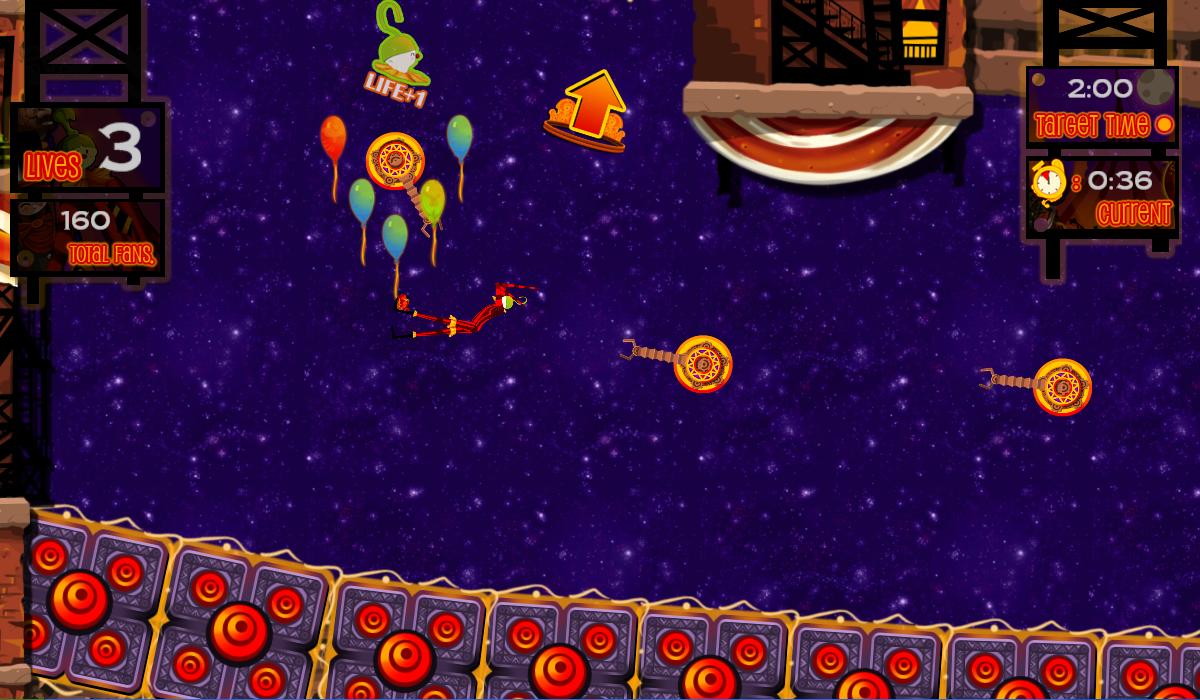
Changing the Game: An Interview on Games and Business with David Edery and Ethan Mollick (Part Two)

The use of Second Life as a platform for consumer advertising and corporate promotion has generated a great deal of buzz in recent years. Now that the dust has started to settle, what do you see as the strengths and limitations of virtual worlds as a platform for brand messages?

The answer depends on the virtual world. But, since you mention Second Life, we'll focus on that. Second Life is, as innumerable news stories have pointed out, simply not a good place for traditional advertising. The world is too large and too sparsely populated for billboards, in general. And unmanned virtual exhibits and structures, no matter how glorious, are simply not interesting to most consumers who visit Second Life to experience the thrill of creating and the joy of interacting with others. Why would anyone choose to walk through an uninhabited virtual

hotel when they can visit remarkably creative and/or otherworldly territories, populated and/or created by individuals like themselves? Why walk past a virtual billboard when you can teleport anywhere in an instant? Low-cost, targeted advertising campaigns that are designed toengage consumers on a personal level, and enlist them as brand agents, are far more effective.

All that said, the virtual hotel news article we referenced previously contains a hint as to the real potential of Second Life for businesses: not advertising, but harnessing user creativity to generate useful business innovations. Several large corporations have started working with the users of Second Life to model new products and test new services. Philips, for example, has been working with users to design new appliances in Second Life. Pontiac gave out virtual versions of its cars and encouraged Second Life users to hack and modify them.

At the end of the day, Second Life is a world created by its users for its users. There's something poetic -- not to mention very sensible -- about enabling those users to create and modify virtual goods that could someday be sold in the real world for millions, if not billions of dollars.

As you note, there is now a rush towards corporate sponsorship of Alternate Reality Games. What factors should a company consider before entering this space?

To date, most ARGs have required a significant financial commitment and tremendous effort to successfully execute, so businesses that are interested in creating an ARG should be sure to work with an expert in the field. That said, an ARG can prove an effective marketing tool, as demonstrated by Audi's Art of the Heist. Visitors who were attracted to audiusa.com by online advertisements promoting Art of the Heist devoted 34% of their page views to "buying indicator" pages - i.e. car configurator, dealer locator, payment, estimator, and request a quote -- which represented a 79% increase in qualification over previous launch efforts. And Art of the Heist resulted in over 45 million PR impressions for Audi, while generating over 10,000 unique leads for Audi dealerships.

Jordan Weisman, one of the inventors of the form, shared with us his well-informed views on the commitment necessary to pull off an ARG marketing project. In his words: "There's a misconception that this form of marketing entertainment has to be cheaper. Well, it's not cheaper. A heck of a lot more effort goes into an ARG than a 30-second TV spot. You have to create a lot more content, and there's a much larger editorial process involved. But the benefits, as opposed to the 30-second spot, are the level of immersion you create, and the level of affection that a person has for the brand and the experience, not to mention the community that grows around the brand and the experience. Those things provide real lasting benefit to brands. And one of the great things about an ARG is that, unlike with a TV spot, you know how engaged people are. You know how many people visited your websites, you know how many people are participating on the message boards - you can quantify things."

All that said, ARGs are poised to become much more than just marketing tools. In Changing the Game, we discuss how ARGs can be used for training purposes, and even for harnessing collective innovation. At this point, there are some

exciting experiments in these areas that are worth examining, but more work is

needed to develop ARGs to their full potential.

Corporate training games have been a huge growth area, even as other kinds of serious games have struggled to get traction. What should the developers of educational games learn from the space of corporate training and conversely, what do educational game designers get right that should be considered more closely in corporate training games?

Educational game designers seem to think more about engagement and the role of fun in games than most corporate trainers. By focusing on how to reach kids, educational game designers seem to become more aware of the "holy grail" of training -- education so entertaining that it proves self-motivating. Ironically, this is also the greatest weakness of many educational game designers. In an attempt to make learning as much like a game as possible, they end up creating the proverbial "chocolate-covered broccoli" -- shoehorning educational content into traditional games. The result is neither fun nor particularly educational.

The corporate training market has typically proven less concerned about stereotypical "fun," and instead has invested more in simulations in which learning happens naturally. Simulations like Virtual Leader, the leadership training simulator, end up being fun because the player gets to experiment with the role of leadership. Similarly, the Beer Game (a system dynamics simulation) is engaging because it is played as part of a team, in a competitive environment. Both Virtual Leader and the Beer Game teach valuable lessons in interesting ways because they allow exploration and experimentation, and encourage team interaction -- not because they ape traditional video games. Educators should think more about how to encourage interesting exploration and interaction, rather than combining time tables with first person shooters, or hiding multiple choice examinations beneath the thin veneer of a "trivia game."

Some of the most interesting sections of the book deal with the use of games as a means of collecting user innovation and tapping collective intelligence. To what degree is this section speculative? What work is already being done in this space?

We wouldn't call it speculative, but we would say that this is the very cutting edge of the serious games movement. While there are only a few examples to speak of, they have proven very successful. In particular, Luis von Ahn's work on "games with a purpose" has been published in a number of important journals, and von Ahn won a MacArthur Genius Grant for his work. One game of his, the ESP Game, encourages players to voluntarily identify random images on the Web in a way that computers simply aren't capable of doing on their own. Many people play the ESP Game for over 20 hours a week, and over 20 million image labels have been harvested in just a few years; the equivalent of several million dollars of free labor. Professor von Ahn estimates that just 5,000 people playing The ESP Game for a month - a tiny number, compared to the active populations of many gaming websites - could label every image on the Web.

Other efforts include Fold.it, a game designed to help its creators identify the optimal shape of proteins. Fold.it players are already proving to be of great help, and interestingly, many of the top players are not biologists, or even people with a strong academic background in biology.

You may also have heard about the X2 Project (which has evolved into Superstruct, the forecasting game.) Efforts like these show how ripe this area is for future work!

For more on Changing the Game.

DAVID EDERY is the Worldwide Games Portfolio Manager for Microsoft's Xbox Live Arcade, and a research affiliate of the MIT Comparative Media Studies Program. He is a regular speaker at game industry events such as GDC, has published numerous articles on the topic of game development and the business of games, and maintains a personal blog called Game Tycoon.

ETHAN MOLLICK studies innovation and entrepreneurship at the MIT Sloan School of Management, where he is also conducting a large research project on the game industry. He has consulted to companies ranging from General Mills to Eli Lilly on issues related to innovation and strategy, and has worked extensively on using games for teaching and training, including on the DARWARS project of the Defense Advanced Research Projects Agency.

Changing the Game: An Interview on Games and Business with David Edery and Ethan Mollick

Editor's Note: The election has come at a particularly intense moment in my life. I plan to run a more extensive reflection on the role that media played in shaping and responding to the outcome but I have not been able to write it yet. I expect to post it early next week. For the moment, let me say that this early "Obama Boy" could not be more delighted with the outcome but fears that all of the "transformational" language got used up on tuesday night, leaving us with no new adjectives to throw out there. barack_obama_burnout.jpg

Around the Comparative Media Studies Program, there's been considerable discussion over the past few weeks about the decision of the Obama campaign to advertise in an Xbox 360 game, Burnout Paradise. The topic is the perfect intersection between our researchers focused on games, branding, and civic media, and reflects an ongoing conversation we've been having on the blog and elsewhere about Obama as the candidate for all platforms. If convergence culture can be described as a world where every image and idea flows across the maximum number of media platforms, acquiring meanings and value and attracting new participants at each step along its trajectory, Obama's people have embraced the full range of new media -- from mobile phones to social networks, from virtual worlds to video games -- in their effort to reach and mobilize young voters.

Hoping to get some further insights into this story, I reached out to David Edery and Ethan Mollick, the authors of a newly released book, Changing the Game: How Video Games Are Transforming the Future of Business. Both Edery and Mollick are alums of MIT's Sloan School of Mangement; Edery was involved with us while still a graduate student, was briefly on our staff, and has continued to be an affiliated researcher on our Convergence Culture Consortium since he has graduated. As experts on current trends around games and advertising, I was curious to see what they would have to say about the Obama ads:

The Obama campaign's decision to advertise within the Xbox 360 game Burnout Paradise is notable for being, to our knowledge, the first time a presidential candidate has ever taken advantage of advertising opportunities within a retail video game. The ads appear as billboards by the roadside, and contain the message "Early voting has begun" and "voteforchange.com" in addition to Senator Obama's photograph.

The message on the billboards seems to indicate that the Obama campaign was hoping to achieve a very specific outcome: give young adults who support Obama, but who perhaps lack the drive to vote, a nudge in the direction of the ballot box. More interestingly, the Obama campaign may also have been hoping to send a subtle message to gamers and young adults in general: "this is a candidate who understands technology and new media, isn't afraid of it, and doesn't intend to demonize it." If the latter was indeed a part of the campaign's strategy, it worked out brilliantly, because the Burnout/Obama advertisements received a tremendous amount of mainstream and game industry press. Whether you played Burnout or not, if you're a highly engaged gamer, odds are you heard about the Obama ads.

So in-game advertising and US presidential politics have converged. Is this a particularly important milestone for the in-game advertising industry? Perhaps, and perhaps not. After all, plenty of Fortune 500 companies have beaten the Obama campaign to this milestone, and are in fact experimenting with games and advertising in far more interesting ways. But there's no doubt that this *is* an important milestone for the game industry in general. It suggests that a US presidential candidate has recognized, for the first time, that gamers are an important voting group.

As they note, businesses have been using games as platforms for branding, advertising, and corporate training ever since the first platform games were released. Changing the Game offers a cogent overview of the thinking shaping current corporate strategies for deploying games as well as offering some thoughtful and forward looking recommendations about how companies can be even more effective in deploying these new media platforms towards their interests. There are plenty of lessons here which will also be helpful to those developing serious games or otherwise using games for pro-social ends. And there's much here that needs to be understood by the media literacy community if it wants to help young people understand how branding impacts the games that they play.

In this two part interview, the authors share their insights about games and advertising, the use of games as platforms for training, the value and limits of virtual worlds for corporate purposes, and the potential of games as tools for gathering collective intelligence and sparking user-based innovation.

The central premise of your book is that there are significant benefits for companies that recognize that games can be "more than just a diversion." What do you see as the primary rewards of integrating work and play? How do we confront a tendency in our culture to see play as the opposite of meaningful employment?

The primary reward of integrating work and play is happier, more effective employees. The problem is that when most people hear that claim, they immediately assume you're making the old, tired argument that games are good solely because taking a break from work is good for productivity. While many studies have purported to prove the latter, the latter is not what we are focused on.

In Changing the Game, one of our major arguments is that games can be used, not as breaks from work, but as enhancements to work. There's ample evidence that games can be used to cost-effectively train employees and to motivate them. We found great examples in the health care industry, the high tech industry, and (not surprisingly) the military, to name a few. And as we note in the book, it's rather remarkable how many managers struggle to maintain acceptable productivity levels when they control an employee's paycheck, while many game developers have found ways to make *us* pay *them* for performing tasks that seem remarkably like work. (We really don't want to know how many hours we personally spent crafting virtual armor and other items in World of Warcraft...)

Fortunately, great examples of the constructive power of games are starting to find their way into every corner of American life. Public schools are bringing Dance Dance Revolution machines into their gyms to combat the obesity epidemic, and millions of Americans are bringing Nintendo's Wii Fit into their homes. Educators are hearing about the incredible sales of games like Brain Age and realizing that maybe play and education *can* go together. These things have little to do with work, so we don't spend much time discussing them in the book, but they are helping to change the way people think about games, in general, so they certainly merit mention!

You open the book with some acknowledgment of some of the social policy debates surrounding games, including a consideration of video game violence and media effects. Many media reformers use the analogy to advertising to explain why they believe that games may have negative impacts on the people who play them. If advertisements may shape consumer behavior, they argue, games must have an influence on players. As someone who has reviewed the research on the impact of advertising on consumer decision making, how would you respond to this analogy?

What many media reformers don't understand is that games are powerful advertising (and educational) tools in large part because they can be used to communicate a persuasive message or lesson to a *highly involved* audience. People playing video games are not passive, mindless zombies... on the contrary, they are quite consciously engaged. They have to be; otherwise, how can they win the game? Anyone who doubts this should pick up an Xbox 360 controller and try to play a stereotypical first person shooter (like Call of Duty 4). These games are incredibly complex -- most first time players have trouble just figuring out which buttons to press, much less successfully navigating the entire game. Winning many video games is anything but easy.

At any rate, our point is that because gamers are quite consciously processing gameplay -- because they are NOT mindless zombies -- they are not being "brainwashed." And this is apparently what the British Board of Film Classification (BBFC) determined after performing their own extensive study of video games, in which they noted: "far from having a potentially negative impact on the reaction of the player, the very fact that they have to interact with the game seems to keep them more firmly rooted in reality. People who do not play games raise concerns about their engrossing nature, assuming that players are also emotionally engrossed. This research suggests the opposite; a range of factors seems to make them less emotionally involving than film or television."

All that said, we prefer not to simply cite research in a situation like this, because critics of video games have their own body of (in our opinion, questionable) research to respond with. So why not stick with the cold, hard facts? The U. S. Secret Service recently examined each of the 37 non-gang and non-drug-related "targeted" U.S. school

shootings and stabbings that took place from 1974 through 2000, including infamous incidents such as the Columbine massacre. They found that there is no "profile" of a school shooter. In fact, only 1 in 8 of the perpetrators studied by the Secret Service showed any interest in violent video games. Given that in the same time frame, the vast majority of school-going males were playing video games, how can critics continue to claim any sort of correlation between games and school violence?

What factors are leading towards the increased interest in advergaming and product placements in games?

Put simply, it's getting harder and harder for advertisers to reach their target audience with traditional advertising. Games are an increasingly popular medium that is well-suited to carry (and to be) advertising, so why wouldn't advertisers by interested?

What does marketing research tell us about good and bad approaches to integrating brands into games?

We wrote two whole chapters on that, so it's difficult to boil down into a couple paragraphs. Rather than tackle every point, let's address the most important one. As we noted earlier, it all comes down to a question of involvement. When a person is highly involved in an aspect of gameplay, they are thinking very actively about it, and they aren't likely to forget it later on. In such situations, an advertisement really needs to not only make sense within the context of the gameplay, but to fundamentally enhance the gameplay experience and communicate a useful message to the player. Otherwise, what you get is an annoyed player whose experience is disrupted, and who therefore forms negative associations with the brand.

Imagine that you're watching a James Bond movie. Q tells Bond that he's got a great new car for him. They walk into the secret lab, and a shiny Ford Pinto is waiting there. That's an example of a product placement not fitting into the context of the entertainment media. But let's take this further. Imagine instead that the car is a sporty BMW. That's more like it! But what if the sporty BMW never broke 30 miles an hour during the entire movie? That would be an example of not communicating a useful message. The idea here is that you have a highly involved gamer on your hands. They are actively processing the information you are putting in front of them, and they probably aren't going to forget it. So, not only should you be extremely careful not to put

something in front of them that simply doesn't make sense (the Ford Pinto), but you should also make sure that what the player can do with your product placement actually communicates a message you're interested in communicating as an advertiser.

Conversely, there are moments in gameplay that are not highly involving. When players run past a billboard in a virtual sports stadium, they are focusing on the action in the stadium (i.e., an offensive play in a football game) -- they are not focusing on the billboard. The football game is highly involving; the billboard is not. Those low-involvement advertisements -- which we call "peripheral" advertisements -- are a good place to put simple ad messages like logos and short slogans. These advertisements don't have the ability to convey a complex, persuasive message that

consumers will generally recall, but they do have the ability to simply increase our familiarity with a brand, and that has its own significant benefits.

DAVID EDERY is the Worldwide Games Portfolio Manager for Microsoft's Xbox Live Arcade, and a research affiliate of the MIT Comparative Media Studies Program. He is a regular speaker at game industry events such as GDC, has published numerous articles on the topic of game development and the business of games, and maintains a personal blog called Game Tycoon.

ETHAN MOLLICK studies innovation and entrepreneurship at the MIT Sloan School of Management, where he is also conducting a large research project on the game industry. He has consulted to companies ranging from General Mills to Eli Lilly on issues related to innovation and strategy, and has worked extensively on using games for teaching and training, including on the DARWARS project of the Defense Advanced Research Projects Agency.

Playing Columbine: An Interview with Game Designer and Filmmaker Danny Ledonne (Part Three)

In making the film, you are choosing to tell your own story, yet you are also interviewing some of your harshest critics. Watching the film, I kept wondering about the dynamics of some of those interviews. What was it like to interview the organizers of Slamdance or Jack Thompson or the Columbine survivors about their reactions to your work?

I decided early on that making a film about this topic was not merely a matter of editorializing my own perspective. When I told people I was making a documentary, many imagined a bombastic, Michael Moore approach of framing the story with my narration, maintaining a strong on-camera presence as the "main character," or generally centering the film on me. Frankly, I found the debates this subject matter engages to be far more interesting than my own opinions on it; I filmed many of the presentations I gave during this time and cut out almost all the material as more exciting, articulate ideas arose during other interviews.

Many of the interviews with my harshest critics were not conducted by me at all. I knew that in order to conduct a more impartial interview, I would be better served by having other filmmakers sit down with Parents Television Council president Tim Winter, Denver resident Roger Kovaks (who initially ousted my anonymity after being outraged by SCMRPG) or anti-videogame activist Jack Thompson. Often times I prepared the questions myself and watched the footage with great interest as their points of view were very insightful as I began to reflect on my own. If given the chance, I recommend everyone take the opportunity to interview their most outspoken critics!

My interview with Slamdance Film Festival director Peter Baxter was very challenging because he seemed rather disinterested the entire time. It seemed to me that every question I asked was met with the phrase, "well like I just told you..." as though I was simply not listening. When Brian Crecente of Kotaku interviewed Peter, he reported much the same experience: "I spent forty-five minutes on the phone trying to get him to answer the question of 'why.'"

During this interview, while Peter would shower videogames as a "powerful" art form with praise, he seemed generally disengaged from his own decision to pull SCMRPG and questioned the effectiveness of other game developers protesting his decision by boycotting the festival. He more or less deferred to legal advice he'd received and a court of law that he imagined would ruin his festival (never mind that no legal threat--specific or vague--was made of Slamdance in connection to SCMRPG).

The film draws some parallel between your game and others about current events, ranging from what sounds like a pretty exploitative game about the Virginia Tech Shooting as well as games about Waco and Darfur. Are all of these games equally valid? What criteria should we use to determine whether they represent appropriate or meaningful responses to the events they depict?

In my eyes, all games are equally valid insomuch as they offer us opportunities to evaluate their game rhetoric. That means that I can think critically about Tetris as well as Manhunt. As protected speech in this country, both games should enjoy the same open discourse in a pluralistic society. How much time I choose to spend playing either of these games is up to me as a media consumer--hopefully a well-informed one. I think the best way to illustrate how I would answer this question is to give you a specific example.

Recently there was a game released by a young Australian man called Muslim Massacre. The title had obvious reference to mine so I wanted to play the game and evaluate it using my own admittedly biased criteria. I did not find the game itself overtly offensive as I read the game as satire--much in keeping with a film like Team America: World Police which I enjoyed immensely. I projected my own political views onto the game when I determined it was an effective videogame caricature of US foreign policy and the US media's representation of Muslims.

As one might predict, the game came under immediate scrutiny by the Western and Arab cultures. I emailed the game's creator after reading a letter of apology he posted in response. However, the game's creator replied to my email indicating that the apology was fake and designed to offend and dupe more people. This, to me, eroded the credibility of the game developer; he was less interested in socially-engaging discourse from his work and more interested in executing a juvenile stunt with a videogame as its central function. While that many invalidate the game developer, I still see the same initial value I held in the game itself; Muslim Massacre remains valid to me because I can identify with the cultural criticism it represents to me--whether the game's creator meant it or not.

This is why my film raises the point of authorial intent. In some ways, it is irrelevant whether I made SCMRPG to create a dialogue, make money, encourage school shooters, gain attention for myself, or to save the whales. The game stands on its own as a valid expression--free for interpretation and conjecture. I believe that my decision to stand behind the game, author an artist's statement, and argue for its value in the press has helped my credibility as a multimedia artist. The game stands alone, however--as all cultural artifacts ultimately do when we engage them.

In the film, Jack Thompson talks about the backlash against him in the games blogosphere as a threat to his own free expression rights. What similarities and differences do you see between the responses to Thompson and the responses your game has received from some of his allies?

John Bruce Thompson, disbarred attorney at law, is an interesting fellow. I find his self-fueled conviction fascinating--so much so that I made a music video about his crusade entitled When Jack Thompson Talks to God that can be found on YouTube. Jack was so enamored with this video that he called my phone at 5am on a Sunday morning demanding that I call him back (so he could threaten me and tell me that I'm "messing with the wrong guy.") What a charming voicemail, indeed.

What Jack and I share is the experience of being a controversial public figure--one that includes receiving hate mail, death threats, and assaults on our characters by people who will never know us. Some of his criticism in the film is directed at the immature antics against him--people who oppose Jack's point of view and see fit to mail sex aid products to his wife. He has also carved himself a unique cornerstone as the arch-nemesis of game culture (or at least its bumbling court jester).

Generally Thompson and I are not attacked by the same people; often I can imagine that those would have sympathy for Jack's position are the ones emailing me with clear information as to how quickly I am going to Hell. Similarly, I have won support from those who imagine that I have created a headache for people like Jack Thompson. To put this in general demographic terms, Jack Thompson is attacked by gamers and I am attacked by their parents.

Unlike Thompson, I do not feel entitled to press and don't use it to establish my professional credentials (Jack Thompson predictably introduces himself as the man who predicted Columbine on the Today Show and appeared on 60 Minutes twice). Also unlike Thompson, I do not believe I am on a personal mission from God to accomplish my goals.

What advice would you have for other game designers who find themselves in

similar controversies in the future? What do you wish you had known going into

this struggle that might have changed how you approached things?

At the end of my documentary, I try to provide just such advice. Let me summarize it here:

1. Do not be afraid of controversy. It can be a useful tool to spread your message. Just make sure you have a message. You will gain respect from people for standing behind what you believe in.

2. Stand behind your creative decisions. While some people will always call you "pretentious" or "vapid," articulate your intentions and design choices. It may not change everyone's mind, but it will challenge them to think more carefully about their suppositions.

3. Welcome allies and actively form new ones. I slowly discovered that for every email I received from an angry person, there were ten more that silently supported my efforts even if they could never take up such an effort themselves.

4. Take creative risks. There are boundaries on all fronts to push with regard to the creation of media. If you don't push them, someone else will. If you are a creative person and really love what you do, ask yourself what impact you want to leave on the world.

I read that "well-behaved women rarely make history." That is not just true for women.

Playing Columbine: An Interview with Game Designer and Filmmaker Danny Ledonne (Part Two)

The film suggests that generating controversy is a tribute to the artistic accomplishments of the game. Is this to suggest a bad or banal game couldn't generate controversy? To what degree is the controversy about the subject matter of the game rather than its execution, given the fact that the film also tells us that many of the critics have never played Super Columbine?

Controversy generated for its own sake is a pointless exercise that is soon forgotten and rarely culturally impactful. While some charge SCMRPG with being just that, the inclusion of a discussion forum--augmented by an artist's statement and my commitment to defending the project--is a testament to the ongoing discourse I sought to create. What makes SCMRPG an important cultural discussion point is that it is, by your own admission, a "perfect storm" for discussing matters of videogame violence, representation of real events in digital culture, and the future of videogames as an expressive medium.

I do think that the polarizing effect the game has on people (those who play it and those who do not) indicates its overall cultural value. Very little of social impact has been received with universal praise. The polemical presentation of the game certain denotes controversy as an aesthetic choice. Ours is a culture where so often the only way to be heard outside the established information channels is by being provocative and challenging social taboos. In some ways, the act of being offended is really one of being intellectually challenged--by encountering an unfamiliar or difficult idea. Some people handle this challenges better than others; we see those that are easily offended as the very same who rally to censor media and regulate creative expression. I have no problem with the allegation that SCMRPG is a "bad game" since it works outside the expectations of what a "good game" is supposed to be. But I would hardly call SCMRPG "banal," Henry.

The controversy around SCMRPG is largely one of the subject matter and not its execution. Only when I give talks at game design schools am I taken to task for my design choices. For example, the Associated Press, Christian Science Monitor, or Parents Television Council were not complaining with:

"Why did you hide a book in the upstairs classroom that you need to complete the last part of the game? I had to start over!"

"The hallway is really hard to sneak through. I couldn't even tell those were security cameras until my friend showed me!"

"The graphics suck, noob."

Instead, the mainstream press attacked the very notion that a game like SCMRPG could exist! Heavens, we can have a film or book or magazine article about Columbine but a VIDEO GAME? This was the tone of much of the initial reporting. Eventually, however, a few credible journalists for Wired and other publications began to take the proposition of a game about Columbine seriously--and their articles reflected that. Consequently, their readership reported a greater understanding of the game and larger social phenomenon of digital media for change.

You position the game in relation to the serious games movement. What does the concept of "serious games" mean for you and how does it relate to forms of nonfiction in other medium, including documentary films like Playing Columbine? What do games add to the mix in terms of shaping our understanding of real world events and processes? Would Playing Columbine have worked as a game?

As I have come to understand it, the traditional definition of "serious games" has virtually nothing to do with kinds of social issue-driven games like SCMRPG. Let me try and analogize.

The serious game has been akin to a training manual--such as the airline safety card or a "how to use your new vacuum" tutorial booklet. The military, medical, and corporate sectors use these serious games as pedagogy; these games do not make rhetorical claims. The kinds of games that Playing Columbine showcases are different. They are more like editorials in the New York Times or a polemical book on bookshelves or downloadable on the web. These are games that make arguments; these are "games with an agenda" as Persuasive Games' Ian Bogost says.

Let's pull this down to first principles. Why do you think games are an art form? What kind of art are they? What criteria should be used to evaluate games as art?

Throughout my travels in interviewing game developers, their critics, and those affected by videogames in relation to school shootings, no one claimed outright that videogames are not an art form. Most recognized that there are some games perhaps more artistic than others, that some art is appropriate for youth whereas other art is not, and that videogames are a relatively new art form with much potential and boundaries yet to be defined. Some people think the Grand Theft Auto series represents the future of immersive, state-of-the-art gaming. Others revile at the notion that one would call such a game "art" at all. These are inevitably conversations of subjectivity rather than concrete empirical claims.

For myself, I think games are a synergy of existing media traditions of visual arts, graphic design, musical composition, the written word, and the cinema. Of crucial distinction to, but certainly not exclusion from other art forms is the interactive nature of games--the elements of role-playing and narrative authorship being chosen in whole or in part by the audience ("the player"). Interactive media therefore combines many of the art forms we are familiar with but adds to them a significant degree of audience participation. Not audience control, however; aspects of the game physics, narrative, world design, etc. are not generally defined by the player as these are simply the pre-ordained "rules of the game."

I am not sure we ever got around to calling board games, card games, or table top role playing games as an art form or a "medium." Which is too bad; these earlier societal distinctions would have paved the way for a less misunderstood reception of game design. Videogames have as much in common with chess as they do with Starship Troopers.

In terms of how games as art are evaluated, clearly the existing systems are ill-equipped; games are currently evaluated as products. A typical evaluation of a videogame in a popular magazine or online publication might read:

Graphics: 9

Sound: 8.5

Play Control: 9.5

Challenge: 8

Replay value: 7

As one might imagine, games like SCMRPG would fail rather miserably by these traditional standards and indeed in 2006 PC World declared it the 2nd Worst Game of All Time (just behind E.T for the Atari). When reviewed by Jason Rohrer for Arthouse Games, SCMRPG was praised for its bold use of the form to critique a contemporary social event. Perhaps then the question of "games as art" asks more of the player than the ability to score points and navigate pristinely-rendered 3D environments; perhaps games as art are those which challenge the player emotionally or intellectually rather than strategically or tactilely.

The larger question for each of us to answer when we ask ourselves how to evaluate art--whether in games or cinema or literature--is what we expect it to accomplish. A great number of people will not tolerate a subtitled, foreign language film or a videogame that offends their assumption that games are escapist entertainment. Indeed, the concept that films could affect social change was hotly contested by filmmakers, distributors, and critics for decades. As the boundaries of what a game can be expand, the evaluation for games as art becomes more charitable.

Playing Columbine: An Interview with Game Designer and Filmmaker Danny Ledonne (Part One)

Danny Ledonne's Super Columbine Massacre RPG! has been the center of controversy since it was released in 2005, on the sixth anniversary of the shooting at a Colorado high school which sparked international controversy surrounding the links between video games and real world violence. Some have embraced the game as a powerful demonstration of how games can force us to re-examine controversial issues from new vantage points. Others have condemned the game in the harshest terms possible, suggesting that it exploits a deep human tragedy. In 2006, PC World declared the game #2 on its list of "The 10 Worst Games of All Time." Every time the controversy started to die down, some new development shoved the game back into the news, whether it was attempts by the news media to link it to a Canadian shooting or the decision by the directors of Slamdance's games festival to withdraw the film, a decision that led to strong support from many invested in the idea of games as art or simply the value of free expression. Ledonne's game has been a model for other serious games projects and has been a focal point for discussion about whether there are some topics which can not or should not be explored through this medium. For an overview of the controversy, check out this Wikipedia entry. You can see the game yourself and make up your own mind about its merits.

Now, Danny Ledonne has produced Playing Columbine, a compelling documentary which allows him to tell his own story. This film will be extraordinarily valuable as a classroom resource for those who want to spark discussions about games as a medium. It will also be a useful film to share with skeptics who doubt that games can deal with serious topics.

Danny was kind enough to agree to an extensive interview for this blog, one which takes us through the various controversies as well as examines the process of producing this documentary. You will see that I adopt a devil's advocate posture here, pushing Ledonne to pull down to first principles and explain his own thought process concerning the Super Columbine game and Playing Columbine. I hope this three part interview will spark further reflection on these very important topics.

Ledonne is a graduate of Emerson College's film program. He has worked as director of photography on KiskaDEE, as editor for An Awakening Journey, and shot and edited Kenya Jidaya. He is a native of Colorado and currently lives in Washington DC where he owns Emberwilde Productions.

What were motives for making the Super Columbine Massacre RPG? It sounds like you had not done much work in games before this. Why did you think games were the right medium to say what you wanted to say about Columbine?

I have answered the question of "why did you make this" many times--probably so many that I have begun to wonder why I am asked so often what my motives were. I suppose releasing a highly controversial game on the Internet, free of charge, and setting up a discussion forum does make one wonder. I guess if I had charged five dollars per download it would be evident that I was trying to make money and then the question would shift from "why" to "how could you?"

SCMRPG is my first game and perhaps my last. What most outsiders to the creation of games do not understand about game design is how specialized a field it is--involving a multitude of skills from computer science and programming to graphic design and (hopefully) a flare for storytelling. Games generally cannot be made without a set of highly acute skills and usually a great deal of training. My efforts were amateur and my game certainly reflects that--but even then the results were only possible because I had a game creation program (RPG Maker) to act as middleware between an untrained user and a finished game concept.

Columbine had been a subject of considerable importance in my own life. I was a sophomore in high school at the time of the shooting in another Colorado high school. I listened to the same music, played the same videogames, and at times even had similar feelings of anger or depression as Harris and Klebold (the shooters). Amidst all this was a media frenzy and subsequent political fervor over a "culture of violence" replete with condemnation toward Hollywood, the music industry and videogames (in short, the best ways to decompress after another day of high school). As a politically powerless teenager, I had no real way to challenge the official assumptions as to why the shooting occurred. Among my friends, though, the consensus was that the real causes of Columbine could not be answered by pointing to Doom, Natural Born Killers, or Marilyn Manson.

Years later in the fall of 2004, I came across RPG Maker and it occurred to me that the RPG form could yield a deep and complex story-driven environment for a game. As a fan of such games as Chrono Trigger and Final Fantasy VI, I had always taken an interest in this game genre. Because I was 22 and not 12, my interest in games was not one of childish fantasy but of contemporary reflection and examination. In some ways, Columbine had been a latent thread in my life and the opportunity to explore it in interactive form seemed especially promising since the event itself was inextricably linked to videogames. While authors, politicians, moral pundits, musicians and filmmakers had contributed their thoughts to understanding Columbine, no game developer had (probably for reasons of sensibility and an interest in preserving company relations). As an outsider to the game developer world, I could afford to take those risks--though the ramifications to follow were quite surprising nonetheless.

The film suggests you grossly underestimated the interest and backlash your game generated. Why do you think the game spread as far and as fast as it did? What aspect of the reaction surprised you the most?

It is worth mentioning that for a long time the game received the kind of underground, subdued exposure that I expected it to get. I posted the game online around April 20th, 2005 to coincide with the sixth anniversary (not the best word to use here, I know) of the shooting. For over a year, it remained an Internet anomaly--receiving about 10,000 downloads. I more or less went back to my life of working as a youth mentor, honing my filmmaking craft, teaching Tae Kwon Do, and volunteering as a community radio station DJ.

I posted the game anonymously for many reasons, some practical and some ideological: 1) I was aware that the approach of using a videogame to represent a school shooting would generate outrage from those unwilling to acknowledge games as a socially-conscious medium. 2) I was interested in fostering discussion not about myself and my motives for creating the game but rather the shooting at Columbine itself. 3) I had no interest in furthering a career in game design so putting my name to the work in some attempt to be "discovered" or "recruited" was unimportant. 4) The larger experiment was one of digital culture; I wished to combine musical, photographic, and textual elements gleaned from the web, assemble them in a piece of software, and finally release this reassembled contextualization onto the Web for further discourse. I did not know why, per se, but that the possibility to do so did not exist a decade earlier and this experimentation seemed interesting to me as a multimedia artist. It was as though the Internet itself assembled this game--as though it were a living information machine giving birth to a new creation.

It was a full year later around April 20th of 2006 that the game began to get the attention of gaming blogs like Kotaku and Watercooler Games. Not long after this, the game crossed over into the mainstream press. By the time the Washington Post article ran in late May of 2006, the game was getting 8,000 downloads per day and despite several PayPal donations to keep the game online, my server crashed. It was also at this point that my identity became sought after and I chose to publicly defend my game amidst harassing emails and death threats. Before long, the game was back online at several download mirrors. Little did I know the controversy was just beginning. To date the game has received nearly 700,000 downloads on the main mirror location--although the real number will never be known since it is being shared in so many decentralized ways.

What were the biggest misunderstandings people had about the game?

Misunderstandings can be miniscule or they can be gigantic. Among the smallest misunderstandings was that I was a former Columbine High School student who made the game as an act of catharsis to personally grieve or process the tragedy. Among the largest were that I made the game for money, I made the game to get on television, or that I made the game to encourage school shootings.

On some level, I welcome one form of misunderstanding because I enjoy eliciting a broad range of responses from my work. Many elements of the game have personal interpretations to me but others view them differently. The water fountain, for example, gives the exact particle content as described by Denver's municipal water authority when Eric or Dylan drink from it. Some have taken this to be meaningless, others a joke, while some have observed that this is commentary on the notion that whatever caused the shooting, it wasn't what was in the water.

The larger opportunity here is not misunderstanding but rather self-understanding. A game like SCMRPG can take players to an ethical situation they have never been to before. It can challenge them with a role not of mindless power but of tormented anguish, revenge, or anger. In doing so, players often reflect on their own feelings of childhood depression or angst while at the same time interacting with a pivotal event in US history. I do not have a specific expectation for what that understanding is supposed to yield. That is the beauty and perhaps the danger of art.

Which criticisms of the game hit you the hardest? Were there moments when you questioned your own creative choices?

At first I was hesitant to keep the game online. However real or imagined the charges are, the legal implications of producing controversial media can be intimidating. And that is precisely what I have faced from time to time. As one can imagine, various groups and individuals have sought to take SCMRPG off the Internet--using a variety of tactics from baseless claims of personal injury to draconian interpretations of copyright law (the game features the same media posted all over the Net and in news reports and documentaries which employed Fair Use in Copyright).

The major point of introspection occurred at the time of the Dawson College shooting in Montreal in the fall of 2006. Here I had successfully defended the game's right to exists for the entire summer and I thought I was in the clear for future projects and a kinder, gentler Inbox. However, on September 14th, my phone began ringing at 8am and did not stop quite literally for days. I cannot tell you how many emails I received threatening me with violence, legal action, or both. I replied to as many as I could, patiently diffusing allegations the mainstream media had whipped up about a game they had never played and did not understand. In the weeks to follow I formed new alliances including one survivor of the shooting, Joel Kornek. Having initially written me in anger after leaving the hospital and learning of my game on the news, we soon leveled with one another and set about to collaborate. The results of that collaboration are my documentary and his suicide prevention website, killthinking.com.

I began to realize that making meaningful media sometimes has a personal cost--and perhaps it always should. My creative choices have always been questioned. Sometimes my answers strike people with more satisfaction than others. I think such questioning (of ourselves and of others) is very healthy, though--not just for creative efforts but in general; I'm writing you in a time of national leadership that bombs first and asks questions later. We would be living in a better world if we were just a little less certain of our own hubristic convictions.

All of these debates came to a head around the Slamdance Guerilla Games

competition. What are your thoughts about those events, looking back on them

several years later? Do you have any clearer sense of why the festival made the

decision to pull the game?

If the Dawson College shooting was the low point in the discourse of SCMRPG, Slamdance pulling it from the Guerrilla Gamemaker Competition would have to be the high point. For the first time, I was not defending my game in solitude but with some solidarity--often from game developers far more talented and established than I. If it weren't for this competition and the controversy that pulling out the game created, the dialogue about games with a social agenda would be slightly further behind. Finally game writers and cultural critics began to take notice of the double standard our culture has imposed on games in comparison to other popular media. Finally the game wasn't the central scrutiny of every article it was mentioned it. Finally the wagons were being circled and the case was being made in the larger culture for Super Columbine Massacre RPG!

In terms of why the game was pulled, I think the most likely answer is the most disappointing: Peter Baxter was unwilling to assume the same legal risks of showing a controversial game as showing a controversial film. In the service of obscuring this double standard, circular logic abounds: music clearance issues which had previously been vetted were reintroduced, "moral obligations" which had been previously weighed, and the imagined loss of sponsorship when in fact a sponsor only left upon the game's removal rather than its inclusion.

As I write this, the Slamdance Guerrilla Gamemaker Competition has completely fizzled; entrants into the last iteration of the program have been refunded their entry fees. While film festivals such as Slamdance want to celebrate independent game making, the task must be taken with utmost respect and courage for the medium. In the meantime, several substantial game industry events are held annually to celebrate independent games and game developers are deeply appreciative of them.

Some of My Best Friends Are Pirates

In mid-September, I went to Singapore to meet with some of our collaborators on the MIT-Singapore GAMBIT games lab and to speak to the Games Convention Asia about "Games as Transmedia Entertainment." In the course of the weekend, I gave an interview to a very thoughtful young reporter from the Philippines Daily Inquirer in which I was asked about the implications of the concept of convergence culture for the developing world. To be honest, I didn't think much more about the interview until some of my comments about "piracy" began to surface in western blogs within the gamer realm. The story spread through news portals focused on Asia to the gamer world, which is often keeping a close eye on developments in the Asian games sector and often gains prestige by being early importers of Asian-produced games before they are legally on offer here in the west. One American blogger even "pirated" one of my portraits, which was doctored to depict me as a pirate. I figured that "pirating" it back is only fair game.

henry pirate.jpg

Indeed, the time lag between the interview appearing in a Manila-based newspaper and its surfacing on western blogs could be counted in a matter of hours, rather than days. At no other time in human history would such a flow of information have been imaginable. In the past, an American academic giving an interview in Singapore would in all likelihood have been locked down in a very localized context. And so in many ways, the circulation of this story demonstrates in pretty powerful ways what I saw as the central thrust of my comments -- that media companies can no longer realistically lock down their content into predictable zones and roll it out on their own time table. The moment content emerges anywhere in the world, it creates a hunger around the planet among potential consumers which will be met illegally if it is not met legally.

When I was in Shanghai last January, I learned a good deal about how fans of popular western programs such as Prison Break operate: within a day of an episode appearing on American television, it has been digitized, translated into various Chinese languages by an army of dedicated fans, and begins circulating throughout the Chinese hinterland and across the Chinese diaspora. In many cases, this is content which would never have been commercially available in China as a result of nationalistic and protectionist policies limiting the amount of American media that can be marketed to their country. And if this content was made available commercially, then few Chinese locals outside of the most wealthy and cosmopolitan cities would be able to afford it. So, in what sense can Hollywood be said to have lost markets that it could not have reached and could not have sold to in the first place?

Yet, it is clear that exposure to American media in the developing world often awakens desires and fantasies that can only be satisfied by more such content; it is part of the process of westernization and modernization which is impacting many sectors in Asia at the present time. A growing number of researchers are finding that these same tendencies are operating in reverse across America and Europe, exposing western consumers to Asian-produced media (Bollywood films, Anime, K-Drama, and the like), and gradually creating viable commercial markets where they didn't exist before. In many cases, those fans who have taken these materials without permission, done the hard work of translating them into English from their original language, taken on responsibility for educating consumers about the contexts from which they came and the conventions under which they operate, have gone a long way to open up markets which would previously have been closed to Asian media producers. Here, "piracy" becomes "promotion."

Does it make sense to refer to such practices as "piracy"? It's a debatable proposition but for the moment, many in the media industries are inclined to think of such consumer practices through a language of copyright theft and piracy. If we adopt that framework, then yes, I think there's a solid case to be made that "pirates" actually expand markets, over time, even if they cause short term "losses" for the initial rights holders. That said: I recognize that not all "piracy" follows such a pattern. There are a significant number of people out there who are exploiting the intellectual properties of others for their own financial gain and there are some who buy these materials because they don't want to pay the price being asked for this content. Nothing we say is going to change this basic dynamic, but the media industries could reduce some forms of "piracy" by better understanding what motivates it and reading it as symptomatic of the marketplace reasserting demand in the face of failures in supply.

For example, should we be surprised that protectionist policies surrounding media imports no longer work effectively in a global networked culture? Whatever gets stopped by customs the border will spread easily online and reach geographically dispersed consumers. Should we be surprised that consumers no longer want to wait to view content that they know is already available in other markets and is being actively discussed by others in their online communities?

For example, relatively few hardcore American fans of Doctor Who or Torchwood are willing to wait the six to nine months it is taking these episodes to cross the Atlantic and get aired on the Sci-Fi Channel. Many of them are seeking online channels, mostly illegal, to gain access to this material in something close to the same time frame as British fans are consuming it. This has not necessarily reduced sales of the DVDS or viewership of the cable airings of this content here, but it has pushed many hardcore fans to step outside of the law in order to access content they would most likely willingly pay to access if it was made available to them in a timely, accessible, and legal manner.

In my heart of hearts, I think most people would prefer to work within legal structures if they are available to them and I'd suggest that the relative success of iTunes in the face of readily available "free" sources for much of this content points to a deep desire to behave "honestly" when media companies do not create strong incentives to behave otherwise.

We can also understand this piracy as part of a breakdown of the moral economy between producers and consumers. Here's what I mean by a moral economy: Underlying all economic transactions are certain social understandings between buyers and sellers that reflect their sense that exchanges are just and fair to both sides. We can call this a moral economy.

When the rules of exchange shift, they are accompanied by certain social disruptions as both sides seek to legitimate their new practices and thus secure a higher ground in the emerging moral economy. We can see the deployment of terms like "piracy" or "sharing" as different bids to legitimate these evolving practices. It's a kind of rhetorical war for moral legitimation, which reflects the fact that both sides want to see themselves as behaving fairly. When there is a perception of unfairness, then there is a much higher likelihood that parties will step outside of established mechanisms and adopt practices which the other side sees as illegitimate. And clearly over the past few years, technological and cultural shifts, not to mention the legal battles that have emerged around them, have gone a long way to undermine the existing moral economy and thus create a crisis of trust between producers and consumers. Until media companies find a way to restore the balance, they are going to find themselves increasingly subject to behaviors which undercut their perceived economic interests and such behaviors are likely to be increasingly labeled as "piracy."

Such "piracy" is a global phenomenon, but it occurs in particularly overt ways in much of the developed world, which has historically been used as a final dumping ground for media goods that have played out in the rest of the world. As more and more young people in the developing world go online, have access to information about such content, and desire stronger connections with their counterparts elsewhere, these inequalities of access to media content becomes more and more frustrating. And "piracy" is emerging as the "great equalizer" to insure they have a chance to participate more fully in our emerging media landscape. Such young people, long term, represent the most likely market for western produced media, and this early, often illegal exposure is part of what will make them a desiring market for such materials over time. Framed in these terms, the debate about "piracy" becomes about short term losses versus long term gains for the media industries.

"Piracy" enters the developing world in another way as well: the production of local knock-offs of western media properties. Consider, for example, almost twenty years of the production and circulation of "Black Bart" T-shirts in intercity and impoverished neighborhoods around the world. These appropriations of The Simpsons have been a source of revenue for the small scale entrepreneurs who produce and sell them and they have been another way of connecting to the larger media franchise. Throughout much of the developing world, the images of western media are being translated into local folk art practices and then sold back to visiting tourists from the West. When I visited Shanghai, for example, I came back with hand-woven Chinese New Year decorations which deployed Mickey Mouse to signify the "year of the rat." Such goods were clearly not authorized or licensed by the Disney corporation. Yet, they represent another way that those in the developing world were attaching themselves to Western media franchises and do represent a form of grassroots convergence.

I am not making a moral argument here. I certainly understand why many media companies would feel that all of this represents a serious threat to their livelihood and that it constitutes another example of how they are "losing control" over their content in a networked culture. All I am arguing is that current inequalities of access to media content and the fraying of the moral economy between producers and consumers work together to create a context where more and more consumers, not only in the developing world but here in the west, are stepping outside of legal mechanisms to acquire access to content. We can call this "piracy" or not. But it will continue to be a reality until the media companies develop a more sophisticated understanding of what factors motivate such behavior and the ways that such practices reflect breakdowns in the market mechanisms surrounding the creative economy.

So, in conclusion, I just want to say "Aargh!"

Video Games Myths Revisited: New Pew Study Tells Us About Games and Youth

Some years ago, I published an essay, "Eight Myths About Video Games Debunked" in conjuncton with the PBS Documentary, The Video Game Revolution. At least once a month, I see the article has been discovered by another blogger who is bringing it to the attention of his or her community, so I know that there continues to be interest and uncertainty about many of the issues that it sought to address. A recent report released by the Pew Internet & American Life Project offers some valuable new data about the place video games play in the lives of American young people. T

At the most basic level, game playing has become more or less universal. Fully 97% of teens ages 12-17 play computer, web, portable, or console games. 50% of teens played games "yesterday." I'm thinking about all of the moral reformers who note, whenever there is a school shooting, that they knew the suspects would turn out to be a gamer. I'd say the current statistics suggest that the odds are very much in favor of them being right but the claim is now meaningless. Indeed, many are suggesting that in such a context, the term, "gamer," may be obsolete -- at least as a description seperating those who play games from those who don't. It may, however, still work much like the term, "reader," to distinguish those who gain some kind of social identity through their relations with games from those for whom game playing is simply one activity among many.

The Pew research may also force us to rethink once again the assumption that there is a gender gap in terms of who plays games: "99% of boys and 94% of girls report playing video games. Younger teen boys are the most likely to play games, followed by younger girls and older boys. Older girls are the least "enthusiastic" players of video games, though more than half of them play. Some 65% of daily gamers are male; 35% are female. Girls play an average of 6 different game genres; boys average 8 different types."

A decade ago, when Justine Cassell and I edited From Barbie to Mortal Kombat: Gender and Computer Games the picture was dramatically different: many were worrying that girls were being left out of this particular version of the digital revolution and that there would be social and educational consequences of this "gender gap." The new statistics show that this gap has significantly closed and that even other patterns people have observed (that boys play games more often, that boys play more different kinds of games, and that boys play games over a longer period of their lives) are starting to shift, though we can still see traces of these earlier patterns in their data. If you are interested in the gender-specific nature of game playing, you should check out Beyond Barbie® and Mortal Kombat: New Perspectives on Gender and Gaming (Edited by Yasmin B. Kafai, Carrie Heeter, Jill Denner and Jennifer Y. Sun) and due out from MIT Press any day now. This book updates our earlier collection with cutting edge perspectives from a new generation of games scholars who grew up with this medium. Justine and I wrote a new piece for the book reflecting back on the context of gender and games in the mid-1990s and looking forward to new challenges confronting the industry today.

The Pew Data complicates easy generalizations about the place of violent entertainment in the lives of American teens. For example, the five most popular among young Americans are Guitar Hero, Halo 3, Madden NFL, Solitaire, and Dance Dance Revolution. Of these, only Halo 3 would qualify as a violent game. Over all, non-violent genres were the most popular. But, 50% of boys name a game with an M or A/O rating as one of their current top three favorites, compared with 14% of girls. (0ne of those places where gender really does make a difference in how people relate to games.) 32% of gaming teens report that at least one of their three favorite games is rated Mature or Adults Only. 12- to 14-year-olds are equally as likely to play M- or AO-rated games as their 15- to 17-year-old counterparts.

The Pew Data further challenges the idea that game playing is a socially isolating activity. The researchers found "65% of game-playing teens play with other people who are in the room with them. 27% play games with people who they connect with through the internet. 82% play games alone, although 71% of this group also plays with others. And nearly 3 in 5 teens (59%) play games in multiple ways -- with others in the same room, with others online, or alone." As someone who has watched games over the past two decades, I would argue that game play has always been more social than many non-gamers expect. I recall my son and his friends going to each other's houses as a kind of victory house when they beat a level in a challenging game, showing the others how to do it and helping them over the hump. Indeed, playing a game alone is often seen as a rehearsal mode, getting ready for more social forms of play, much like a kid bouncing a ball against a house and catching it, because there aren't people around to play ball with. The Pew data suggests that for many kids, games is sometimes social, sometimes solitary, but most have a healthy range of different ways of engaging with the games medium.

The Pew Research does indicate some areas where parents should be concerned about the gaming lives of their sons and daughters. Nearly two-thirds (63%) of teens who play games report seeing or hearing "people being mean and overly aggressive while playing," and 49% report seeing or hearing "people being hateful, racist, or sexist" while playing. However, among these teens, nearly three-quarters report that another player responded by asking the aggressor to stop at least some of the time. Furthermore, 85% of teens who report seeing these behaviors also report seeing other players being generous or helpful while playing. Many of us believe that cyberbullying is a much more real concern than the worry that playing violent games might somehow make young people more aggressive in the real world. A decade ago, the digital world felt like a safe space for many young geeks, especially when compared with school hallways or gyms, but now that everyone is playing games and going on line, the bullies are showing up there too and young people are having to confront in cyberspace those problems which haven't been resolved in the real world. It isn't that games make kids more aggressive; it may be that real world aggression and conflict is spilling over into games.

The Pew Research also challenges the prevailing myth that most parents are worried or alarmed about their young people's relations to games. 62% of parents of gamers say video games have no effect on their child one way or the other. 19% of parents of gamers say video games have a positive influence on their child. 13% of parents of gamers say video games have a negative influence on their child. 5% of parents of gamers say gaming has some negative influence/some positive influence, but it depends on the game. I see this data less as an indication of the "actual effects" of game play on children but rather as an indication that most parents have come to accept games as a normal part of American childhood and that more of them now see positive benefits than negative harms. After all, a significant number of contemporary American parents were part of that first Nintendo generation, grew up playing Super Mario Bros. and Sonic the Hedgehog, and are thus less likely to be panicked by an unfamiliar technology in their living rooms. Many discussions about games and parenting fail to reflect this generational shift in who these parents are and how they think about this medium.

There's lots more to chew on in the Pew report, including some interesting suggestions about the civic impact of games and whether online play has the same social value as face to face play. I am hoping that this new data will further sharpen the conversations around games.

For more interesting insights on these questions, check out the podcast of a recent CMS colloquium, "The Myths and Politics of Video Games Violence Research," featuring Lawrence Kutner and Cheryl Olson, authors of the recent book, Grand Theft Childhood: The Surprising Truth About Violent Video Games and What Parents Can Do. If you don't know this book, you should since like the Pew research, it challenges many common assumptions about this issue, daring to ask and find answers to basic questions about the place of violent games in young people's lives.

Marching to a Different "GumBeat"

gumbeat_200x283.jpgThis summer, 45 Singaporean students, drawn from many of the island nation's universities, colleges, polytechs, and art schools, came to MIT to work with students from Comparative Media Studies and Computer Science through the MIT-Singapore GAMBIT games lab. The lab, funded by the National Research Foundation and the Media Development Authority, functions both as a training program fostering new talent and as a incubator for new approaches to game design, both of which will help recharge games as a creative industry in Singapore and, we hope, inform discussions of games as a medium around the world. It does so by putting Singapore and MIT students on teams which work together all summer to develop playable games which we hope will stretch our understanding of the medium. Having attended the roll out of this summer's games and having recently seen the Singapore students demoing what they created at a Pan-Asian games industry gathering in their home country, I have to say I am tremendously excited at what the GAMBIT teams have been able to achieve. You can see the games for yourself – they are available for download online. Some of them are already generating healthy discussions.
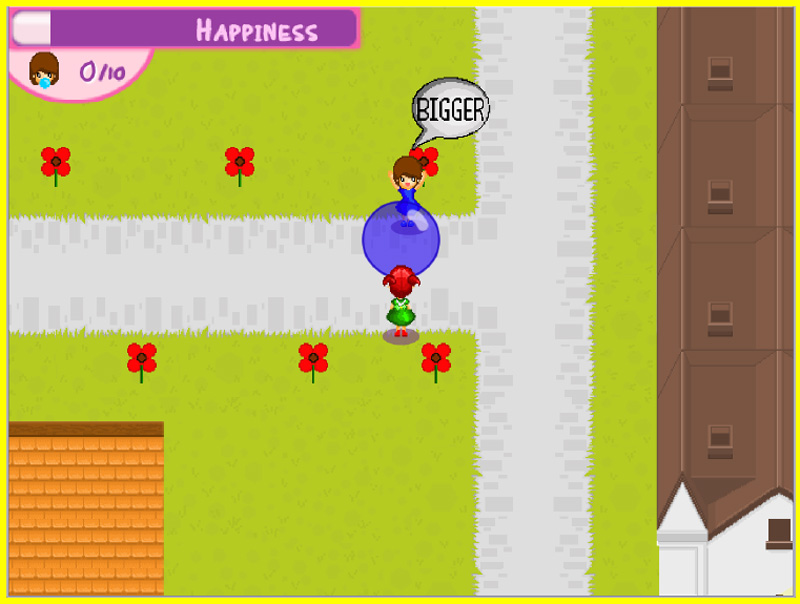
A case in point is GumBeat. Here's how the game was described by the Singapore Straits Times:

USE THE cheery pink power of bubblegum to convince your fellow citizens to join a popular revolt against a repressive government.

While doing so, you stop policemen by popping bubbles in their faces.

This is the premise of GumBeat, a new video game developed as part of an annual joint collaboration between the Massachusetts Institute of Technology (MIT) and Singapore's digital media students.

How does it work?

Well, the heroine chews on candy and blows them into big pink bubbles beside unhappy citizens in the unnamed country in which the candy is banned.

This cheers them up enough to entice them to join the protagonist in a revolution, mustering enough angry citizenry to overthrow the oppressive government.

This is the aim of the game, said National University of Singapore undergraduate Sharon Chu, who presented her team's game to reporters earlier on Tuesday.

Throughout the revolution, you and your followers must evade or stun policemen trying to prevent your march on city hall by popping the bubbles in their faces.

The game was made to show that games with serious-themes like say, 'political oppression', can be fun, said Ms Chu.

Asked if the unnamed country in question was Singapore, she would only say that 'it is up to the player's interpretation'.

Given that one of the first things many Americans learn about Singapore is that it has officially banned the public chewing of gum, the Singapore media can be forgiven for jumping to the conclusion that the game was made about local politics. *shrug* I couldn't say.

gumbeat_02.jpg

I know that the idea for the game originated in part in a blog post by Matthew Weise, a CMS Masters alum who is now the Lead Game Designer at GAMBIT. In the original post from the GAMBIT blog which I crossposted here, Weise talked about his experience of watching the film Persepolis and his desire to see a game which really put us inside the mechanics of what it was like to survive and perhaps resist in a repressive society. Here's part of what he wrote at the time:

The goal of a game like this, from the player's perspective, would involve two distinct

aspects:

Firstly, the player would have to learn the behavioral rules of the repressive society.This would be necessary so that the player could be invisible within the society in order to be able to subvert it. This layer would be somewhat like a stealth or spy game, in which players must learn to dress, act, and talk a certain way in order to avoid suspicion. Only instead of some military espionage scenario, the environment would just be everyday life.

Secondly, the player would have to perform acts that would affect the happiness levels of the society at large. This could manifest concretely as a list of civil liberties which the citizens don't have. Restoring each one of these liberties would be a goal of the game, like a series of non-linear missions. Once all the liberties were restored, the society would be transformed.

I was part of the early conversations with the GAMBIT team where they struggled with what it would mean to represent such political processes in a game and how one could still produce a game which was "fun" but dealt with these themes. I went away on vacation and came back to discover that they had come up with this distinctive approach, reflecting their own experiences growing up.

gumbeat_03.jpg

Joshua Diaz, a CMS Masters Student who was a "product owner" on the team and thus helped to shape the development of the game, has recently posted his reflections on the production process at the GAMBIT blog:

During the prototyping stage, they narrowed in on some basic concepts and hooks that would persist throughout the entire project: gum, police, impressing crowds, popping bubbles, and tagging NPCs with gum. Once they'd established the basic context, Nick Ristuccia designed several different mockups. Perhaps the most impressive was the live-action version of GumBeat that they ran; students sneaking through the lab, lifting sodas and smuggling them back to their lab. The use of a physical, tangible, active test session gave them access to a lot of mechanics that survived the development process and persist in the game you can download today. This was followed by numerous board and paper versions of the game, allowing them to experiment with different mechanics and verbs....

One of the successes of the game was the establishment of several different goals for players. The narrative has a a single driving goal and a short epilogue, but the way multiple gameplay systems combine enables a few open-ended challenges. Feel free to collect not just 10 but 20 or even all 30 citizens; try to max out the city's happiness (no, I don't know exactly what that means, philosophically, but roll with it), or trick the police officers into assaulting each other as supposed chiclet activists. As The Only Haven You Can Trust notes, these kinds of varied goal structures can be a powerful hook in a game's design, and I believe this sort of gameplay is definitely a result of the kind of player-focused testing strategy that PanopXis maintained as a core principle of development.

gumbeat_04.jpg

We are hoping that the game will help spark more reflections about what it means to create a "serious game" and how "serious" serious games need to be. We hope it will get people thinking about game mechanics as embodying social systems through their procedural logic, to channel Ian Bogost for a moment. And we hope that such conversations may lead you to check out the other games to come out of GAMBIT this summer. I'm sure I'm going to be talking about some of the others here before much longer.

Augmented Learning: An Interview with Eric Klopfer (Part One)

For the past five years, Eric Klopfer has helped to lead the Education Arcade, the MIT based research group which is seeking to explore the pedagogical uses of computer and video games. One of his biggest contributions has been to insist that our research reflect the realities which teachers encounter with trying to deploy learning games in the classroom. Well before the Arcade launched, Klopfer has been doing cutting edge work on Augmented Reality Games. Here's a description I wrote four years ago for Technology Review of one of the games he helped to create:

In early February, a powerful demonstration of augmented reality took place at Boston's Museum of Science. Eric Klopfer, an MIT professor of urban studies and planning, along with a team of researchers from the Education Arcade (an MIT-based consortium devoted to promoting the pedagogical use of computer and video games) conducted what they called "a Hi-Tech Who Done It." The activity was designed for middle-school kids and their parents. Participants were assigned to teams, consisting of three adult-child pairs, and given a handheld. For the next few hours, they would search high and low for clues of the whereabouts and identity of the notorious Pink Flamingo Gang. Thieves have stolen an artifact and substituted a fake in its place. Thanks to museum's newly installed Wi-Fi network and the players' location-aware handhelds, each gallery offered the opportunity to interview cyber-suspects, download objects, examine them with virtual equipment, and trade their findings.

Each parent-child unit was assigned a different role--biologists, detectives, or technologists--enabling them to use different tools on the evidence they gathered. As I followed the eager participants about the museum, they used walkie-talkies to share information and to call impromptu meetings to compare notes; at one point, a hyperventilating sixth grade girl lectured some other kid's parents about what she learned about the modern synthetic material found in the sample picked up near the shattered mummy case. Racing against time and against rival teams, the kids, parents in tow, sprinted from hall to hall.

I was with one of the teams when they solved the puzzle. A young girl thrust her arms in the air and shouted, "We are the smartest people in the whole museum!" What a visceral experience of empowerment! The same girl said that everyone else in her family was smart in science but that on this occasion, she felt like a genius.

Talking to the parents afterward, one woman told the research team, "This is the longest time I've ever spent having a substantial conversation with my son in as long as I can remember--without any fighting." Many of the others had in the past dragged their kids to the museum kicking and screaming. This time, however, these same kids wanted to go back and spend more time looking at exhibits they had brushed past in their investigations.

The activity had forced the kids to really pay attention to what they were looking at, to ask and answer new questions, and to process the information in new ways. These kids weren't moving in orderly lines through the science museum; they owned that space. It wasn't a sanctuary; it was their playground.

But there was nothing chaotic about their play. This was hard work, and it engaged every corner of their brains. Though the robbery was imaginary, the kids had to go through something akin to the real-world scientific process to solve the mystery--gathering evidence, forming hypotheses, challenging each other's interpretations, and in the end, presenting the data to the judges to see how close they came to figuring out all of the case's nuances.

As this description suggests, Klopfer's games blend fantasy and reality, combines the capability of location-aware mobile devices with the power of direct observation, and merge together individual and collaborative modes of problem solving. And what's more, Klopfer has been working with teachers to get them not only to deploy his own games but to develop their own games which take advantage of the resources and concerns of their own local communities. He's been a huge influence on the games-oriented students who have come through the Comparative Media Studies Program, leading to thesis projects such as Karen Schrier's Reliving the Revolution, which simulated the first shots of the American revolution. And I recently featured Klopfer's handheld work as part of an account of the history of our serious games research.

Now, it's my pleasure to direct your attention to Augmented Learning: Research and Design of Mobile Educational Games, newly released from the MIT Press. As the title suggests, he shares some of the insights he has gained from his extensive research on mobile and augmented reality games, research which will be of great interests to those interested in developing their own learning games as well as to teachers who want to harness the power of gaming through their classrooms. The book is written in the matter of fact and pragmatic style I've come to associate with Klopfer. He reflects back on his own work, offers frank assessment of the existing mobile games space, and proposes some basic design and instructional principles which should guide all future work in this space. If your ideas about learning games begin and end with the commercial marketplace, Klopfer will shake up many of your preconceptions, offering radically different approaches to what a learning game looks like which take advantage of social dynamics and real world spaces rather than relying on 3d graphics and complex AI. He offers a model of what we can do right now for very little money using existing technologies.

He was kind enough to agree to an interview here. In part one, we explore in more depth his concept of augmented reality games and in the second part, we will explore the field of serious games more generally.

Most contemporary mobile games consist of casual games ported onto the mobile phone. Yet such games do not exploit most of the unique properties of mobile technology. How do you define those properties and what do you see as the limits of current games being developed for such platforms?

I think that in the near term mobile games for cell phones will continue to primarily take the form of ported casual games. There are a couple of reasons for this. First, these games fit the playing habits of people playing mobile games. That is, they can be played for a few minutes at a time while riding the train, standing in line, etc. Second, the development costs of mobile games is disproportionately high, primarily because of the current need to develop a single game hundreds of times for each different phone and carrier. As the industry moves towards consolidation of platforms through things like the iPhone, Windows Mobile, Symbian, and Google's Android, I think we'll start to see developers make a move to develop new and interesting games on mobile devices. We've already seen this on the Nintendo DS, which has broken a lot of new ground in the mobile games space, and also has sold phenomenally well.

Because of the powerful hardware in cell phones, I think we'll see even more innovative work on this platform.

When Kurt Squire and I sat down to make our first big push into mobile educational games we defined a number of characteristics that we attempted to tap into, namely:

  • portability - can take the computer to different sites and move around within a location
  • social interactivity - can exchange data and collaborate with other people face to face
  • context sensitivity - can gather data unique to the current location, environment, and time, including both real and simulated data
  • connectivity - can connect handhelds to data collection devices, other handhelds, and to a common network that creates a true shared environment
  • individuality - can provide unique scaffolding that is customized to the individual's path of investigation.

These principles have guided much of our work, and we're starting to see more of this in the marketplace. Apple is going to make a big push for mobile games on the iPhone and this will mean taking advantage of these unique properties, and other companies will follow.

Much of your own work has focused on the development of augmented reality games. Can you explain that concept and offer some illustrations for the kind of work you've done in this area?

Augmented Reality, as we define it, is a digital layer of information spatially overlaid on the real environment. While others narrowly define this space to include heads up displays using helmets and goggles with precise positioning providing real time visual overlaid information, we use the term broadly enough to include location-based games on handhelds and mobile phones which provide additional virtual data or information at given locations. Specifically we focus on what we call "lightly" augmented reality. That is, we provide a minimal amount of virtual information, and players use a lot of real world information as a part of game play.

For example, our most recent game TimeLab, starts with a video that sets the players 100 years in the future when global climate change has wreaked havoc on Cambridge. They are then sent back in time to present day to study ballot initiatives that could potentially remediate the effects of global climate change in the future. Players walk around the MIT campus and surrounding areas collecting information (real and virtual) on methods of reducing climate change and the impact of climate change on Cambridge. For example, at one point they look across the Charles River to the Hancock Tower that currently uses a beacon to provide information about the weather, and consider whether a more comprehensive weather warning system could be of use to warn future area residents of frequent severe weather. As players stand on Memorial Drive near the MIT campus, they consider how 100 years in the future that location is often under water from floods, and think about ways that those floods could be prevented. In the end, the players choose a number of ballot initiatives that they must debate, and through some simple game mechanics ultimately find out whether those measures are approved and what impact they have.

Some would argue that augmented reality games don't look or act very much like commercial entertainment titles. Is that an advantage or a disadvantage in terms of getting teachers to engage with these activities?

In most cases this is an advantage. Game is still a four-letter word in most schools, and teachers will sometimes ask us if we can call it a "simulation" or "technology-enabled activity" instead. I'm less concerned with the label than with the learning and engagement so I usually oblige. In terms of the actual experience, while students sometimes elaborate 3D games with holographic images to emerge from the handhelds (this is MIT), they quickly engage with our much more primitive map-based interfaces. Finally in terms of game play, the format of the games are quite flexible and can be changed by the teachers or the students themselves to create games that involve varying degrees of collaboration and competition.

You've developed tools which enable teachers to design educational games that are appropriate to their own locations. Can you give us a sense of how educators have been using those tools? How might my readers get access to those tools?

Our Outdoor Augmented Reality Toolkit, which is a drag and drop authoring tool for location based games on Windows Mobile devices, has been used by dozens of researchers and educators around the world. We're putting the final touches on our first public release, which should be available within the next few weeks on our website (http://education.mit.edu/drupal/ar).

In many cases teachers are using this to localize an existing game that has been created elsewhere. At a minimum this means importing new maps and GPS coordinates, and making sure that players need not walk into the middle of a road or a lake to get the information that they need. But ideally, this means making some changes to the content to localize it a bit better including some local history and personality, or incorporating unique features of the geography.

The tool is easy enough for a non-programmer to use (technically) to create an AR game from scratch. But this still requires a fair bit of thought in terms of the actual game design. We expect this feature to be used by educational institutions like museums, zoos, and science centers. In many cases we expect that teachers will wind up doing this kind of design as a class activity, rather than solo, and we're designing new versions to specifically support this kind of design.

Your augmented reality games combine elements of simulation with the direct observation of the real world. Why is "reality" an important element to tap for educational games?

Many of our AR games are built around socio-scientific problems, that is issues that require both an understanding of the underlying science as well as an understanding of the social and real world context for the problem. We've found that the AR games do a good job of integrating these two components. When using AR to study problems that are seemingly "entirely scientific," players tend to think more holistically considering many of the subtle real world constraints - how will this impact me or the people I know? What will the community think? How will this impact what I see around me? It is much harder to generate these kinds of considerations in a purely virtual experience we have found. Many of our games are explicitly designed around these tradeoffs.

Eric Klopfer is the Director of the MIT Teacher Education Program, and the Scheller Career Development Professor of Science Education and Educational Technology at MIT. The Teacher Education Program prepares MIT undergraduates to become math and science teachers. Klopfer's research focuses on the development and use of computer games and simulations for building understanding of science and complex systems. His research explores simulations and games on desktop computers as well as handhelds. He currently runs the StarLogo project, a desktop platform that enables students and teachers to create computer simulations of complex systems. He is also the creator of StarLogo TNG, a new platform for helping kids create 3D simulations and games using a graphical programming language. On handhelds, Klopfer's work includes Participatory Simulations , which embed users inside of complex systems, and Augmented Reality simulations, which create a hybrid virtual/real space for exploring intricate scenarios in real time. He is the co-director of The Education Arcade, which is advancing the development and use of games in K-12 education. Klopfer's work combines the construction of new software tools with research and development of new pedagogical supports that support the use of these tools in the classroom. He is the co-author of the book, Adventures in Modeling: Exploring Complex, Dynamic Systems with StarLogo, and the author of Augmented Learning: Research and Design of Mobile Educational Games for MIT Press.

Designing Accessible Games

Last Week, I spent some time going around the GAMBIT lab with game designer Warren Spector (System Shock, Thief, Deus Ex, now working for Disney) to talk with the teams who will be developing this summer's games. You may recall that every summer some 60 Singaporean students and faculty from ten different institutions come to MIT to work with our students to develop playable games. Each team of eight students has about eight weeks from conceptualization to user testing to develop a game which we hope will be, in some sense, innovative. Some are trying new game mechanics or testing new genres; others are designed to be technically innovative. I can't tell you anything about this year's games: it's a lab policy not to talk publicly about games still under development. But I can tell you that Warren and I were both very excited about we saw and I can't wait to introduce some of these games to my readers in the fall. You can check out some of the lab's work last summer here. In the meantime, I wanted to share with you some thoughts from Eitan Glinert, who has contributed to this blog several times in the past. Eitan is a friendly neighborhood computer science major who has become very much a part of the Comparative Media Studies Program in his two years at MIT. Last summer, he was part of the team that developed AudiOdyssey, a sound based game designed for the visually impaired. The game provided the basis for his master's thesis which explores issues of accessibility and game design. I know this topic will be of interest to many of my regular readers who work in and around the games industry, so I asked him to offer a preview of the thesis.

Hi everyone, it's Eitan Glinert. In the past I've guest blogged here covering video gaming conferences and talking about important developments in the gaming industry. Well, I just finished MIT and Henry has agreed to let me write one last post about my thesis concerning accessibility in video games. Today's post will be a bit more technical than usual as my thesis is intended to serve as a tool for game developers to use to make better games, however I think it is an interesting read as it provides insight into how one designs and creates a game interface.

For those of you interested you can read the entire thing here.

Accessibility refers to who can play a game, and is generally used to describe opening games up to disabled users. In contrast, usability refers to how well a user interface can be used by the target audience(s). While most developers agree that usability is important, many also feel that making accessible games is an altruistic mission, and that the benefits of accessibility do not outweigh the added costs. This is not the case! Aside from humanitarian reasons here are many important justifications for making games accessible:

    - Any added cost is certainly offset by an increased potential market, as an accessible game is one which impaired individuals can purchase. Furthermore, accessibility design themes tend to make games more usable for everyone, resulting in a game which will be easier to use for a broad section of the

population.
    - While making a game accessible may incur extra costs it is likely not as high as one might expect, especially if accessibility is considered from the outset. This post outlines several design principles which, if kept in mind from the beginning of development, can have big payoff for little

investment.

    - Even those who are not disabled now

might be someday. The sad fact is that impairments tend to be acquired as people grow older, and as the age of the gamer increases, so does the likelihood that he or she has accessibility concerns.

Of course, it is not possible to make every game user interface accessible to everyone, nor is it advisable to attempt to do so in all cases. What is usable for some may be unusable for others, even within the same disability group! Consider visual impairments - some people have trouble viewing high contrast elements, while others are unable to view low contrast details. Rather than implying that accessibility is some sort of magical solution to usability woes, the goal of this post is to impart two key ideas onto the reader:

Key Idea # 1) When developing a game one should think about which user groups could play an accessible version, and which interface changes could help achieve that end without changing the core game aesthetic or incurring huge added costs.

Key Idea # 2) Even if it is not clear how to make a game accessible, there are certain design principles which can be followed that tend to increase usability across the board. This increase in usability may in turn lead to accessibility.

Here are some of the basic design principles which can be followed to increase usability and accessibility:

Probably the easiest rule to remember is the importance of simplicity. Keeping the game output simple is helpful as it reduces confusion and makes it easier for the user to pick out critical information. For many impaired individuals the interface bottleneck

lies in discovering what the system is saying - legally blind people tend to slowly scan the screen for information, the completely blind use screen readers to read text, and mentally impaired individuals might need longer to parse given options. A simplified output helps reduce the time spent in this phase.

On the input side simplicity is still important, but even better are configurable or alternate control schemes. Configurable control schemes are especially important for motor impaired individuals as frequently they are unable to use all of the elements of an interface controller. Some motor impaired individuals have specialized controllers which are easy to remap with configurable controls. Impaired individuals are also generally willing to spend more time configuring controls. Many computer games offer such functionality, but consoles titles seldom do. Alternate controls tend to make the largest difference when the control schemes are highly varied.

Even better for some people than configurable controls are partial artificial intelligence (AI) controls. While rare now, there are several such schemes on the horizon, perhaps most notably EA's family play controls. Passing sections of control over to the AI not only helps impaired users but also novices who haven't had a chance to

learn how to play the game. A great example of this is Gordon's Trigger

Finger, a Half Life 2 modification that has AI auto-movement and aiming, while the user just worries about shooting. The result is a first person shooter which motor impaired users can play with only one switch.

All modern games have two main forms of output, audio and video. Two of the broad disabled groups are visual and hearing impairments. Therefore any system that outputs information in only one format will always be inaccessible to one of these groups. Redundant audio for all visual effects, and vice versa, is the ideal way to overcome this

problem. Closed captioning for all audio can make most games accessible to the hard of hearing, while sound effects and speech output can make a large number of games usable by the blind. An added benefit of redundant audio and visual output is that the game feels more natural to all users, as humans are used to hearing a noise when an action takes place; think how odd it sounds watching fireworks to see the explosions, but only hear them a split second later.

There are several common game elements and mechanics that tend to hurt accessibility. Mandatory timers that cannot be disabled greatly reduce usability as they require the user to quickly uptake and process information, and punish those who cannot do so rapidly. Complicated controls with large numbers of commands are highly

problematic, but can be mitigated through menu browsing as the user won't need to mentally recall all the options and fewer buttons are required for action selection.

Two disabilities that affect large portions of the population and are relatively easy to accommodate are hearing impairments and colorblindness. Closed captioning of both speech and sound effects removes reliance on audio, and has many benefits for groups beyond the hard of hearing. As for colorblindness, games should avoid relying on

color alone to convey information, and instead should also use secondary cues such as position, shape, and texture for differentiation purposes. Red and green with the same saturation should especially be avoided, as these colors are generally the hardest to tell apart.

Finally, user centric design and development, or having people who are actually in the targeted user group involved in the development process, is critically important and cannot be overstressed. When designing accessible UIs it is crucial for the developers to remember that they are not the users, and to actually get impaired users involved from the beginning. Design advice from these users is generally valuable, and can save time and money by pointing out accessibility issues before they are even implemented. Once the UI actually exists, it is just as important to conduct broad testing across all potential user groups who might want to play the game. Testing always brings the worst usability bugs to light, and once identified the developers can make appropriate decisions about the value of implementing changes.

While these general rules are useful for developing highly usable games which tend be accessible to many groups, they certainly do not cover every nuance of game design for all user groups. For more on universally accessible game design I highly recommends reading Unified

Design of Universally Accessible Games or playing Game Over! which teaches

several of these design points.

Recap of design themes:

    - Simplicity

    - Alternate and configurable

control schemes

    - Redundant audio/visual output

    - Partial AI control where possible

    - Browse and select for actions

    - No mandatory timers

    - Closed Captioning

    - Never rely on color alone, especially

red/green

    - User centric design

    - Broad user testing

    - Think about usability and the UI

from the beginning

For more information check out my

website or send me e-mail at eitan -at- eitanglinert [dot] com.

Persepolis: The Video Game?

The following essay by Matt Weise appeared late last week on the blog for the Singapore-MIT Gambit Games Lab. My readers who are interested in games might well have encountered it there. But what he has to say is apt to be of interest to those of you who are interested in comics and animation, so I wanted to cross-post it to this blog. I read this essay with a certain pride: Weise was a Master's Student in our program before he went into the games industry (and then came back to play a central role in the operation of our games lab). His master's thesis (look under the class of 2004) dealt centrally with issues of how meaning and emotion get expressed through games, themes to which he is returning to within this post. Here, you see an example of a particular mode of games analysis which has become more wide-spread in our program through the years: Rather than writing an ideological critique which stressed the limits of the original text (or in this case, of games a medium), Weisse engages in a thought experiment -- first, comparing the game Just Cause to what he sees as a more rewarding media experience, Persepolis, and then imagining how games as a medium might be able to more fully realize what he sees as lacking in the text under examination. This is a mode of analysis which doesn't simply point out limitations but also imagines alternative possibilities; it doesn't just accept the text as given but rather writes beyond the ending of the text, reconstructs an alternative version of it to show what might be missing in the original. We've found that these kinds of thought experiments can generate more concrete discussions and may become the spring board for more creative interventions. In a space like Gambit, which is involved in developing playable prototypes which stretch the games medium, this ability to move between current examples and alternative versions can be a springboard for design activities. It represents one way that we can blur the lines between theory and practice.

Persepolis for Xbox 360?

by Matt Weise

Last week I bought a game I swore I wouldn't buy: Just Cause. I

">swore I wouldn't buy this game when I read that its politcal premise--the overthrow of a corrupt South American regime through guerrilla warfare--would involve the typical American rhetoric that, it would seem, no war-themed game can exist without: the protection of American interest. Thus a game that could have been, provocatively, Che Guevara meets Grand Theft Auto became yet another emulation of Chuck Norris barf bag cinema, the kind where some helpless country needs a swaggering yank to pull it, kicking and screaming if necessary, to democracy. This is why in Just Cause you are some CIA dude, and not just a suffering citizen of the (fictional) country who's finally had enough. One might imagine that a horrific dictatorship would be reason enough to go guerrilla, but in Just Cause we need the threat of WMD's which could possibly be used on America to justify ass kickery. Viva la Revolucion!

The notion fills me with disappointment. I know better than to expect a serious, documentary-like experience from a mainstream videogame, and yes many games are just elaborate power trips. But what's wrong with a power trip in which the indigenous population gets empowered in a way that isn't filtered through America's big brother mythology? Ugh. Still, I bought it last week.

I bought Just Cause because I played it at a friend's house, and it turned out to be pretty fun. The American aspect of the story is more or less in the background. Your avatar is Latin American at the very least, though he does appear to work for the CIA. The story itself is still moronic, full of Hollywood cliches. But those cliches make for fun gameplay at times, like when you perform all manner of ridiculous stunts. My friends and I had a ball riding cars, boats, and even planes like surfboards as we ran from government stooges. After that, I decided to swallow my political angst and pick it up for cheap.

Then, yesterday, my girlfriend and I went to see Persepolis.

The movie had a huge effect on me. I actually didn't know much about it, aside from the fact that it was based on a comic and was an autobiographical account of an Iranian woman's life. I wasn't expecting it to go so far into the politics and cultural fallout of the 1979 Islamic Revolution. I found the film deeply moving for many reasons, but I think what affected me most was how the protagonist was portrayed, as a wonderfully intelligent girl who was just trying to have a normal life while simultaneously dealing with a deeply repressive political shift. It humanized the recent history of Iran form me in a way that I hadn't experienced before. On another level the film worked simply as the story of a promising life tragically complicated by authoritarian religion... a concept that, at least in the abstract, strikes home for me.

I came home after watching this movie and didn't feel like doing anything. I just needed to sit and let the film sink in. My girlfriend kept asking me if I was okay because I basically stared into space for the rest of the evening. I thought maybe I could break out of my reflection by playing some videogames, but I stopped short at the thought of playing Just Cause. In light of something as moving and personal asPersepolis, the idea of playing a game that dealt with repression and revolution like Just Cause did made me recoil. My initial revulsion at the game's shallowness came surging back even more intense than before. Disgusted, I asked myself why it seemed impossible to make a game that dealt with social upheaval the way Persepolis did. Why couldn't Just Cause have been like Persepolis? Did I have to be embarrassed at the thought of picking up a controller every time I came home from a movie like Persepolis?

I don't have an answer to these questions, suffice to say that if it's not possible to make a game like Persepolis I've clearly been wasting my time with this garbage we call videogames. I wonder what it would take to make a game like Just Cause express ideas closer to what Persepolis is expressing. Leaving aside the typical objection of "you'd never get a game like that funded!" it seems a game design question worth exploring.

One striking aspect of Just Cause is how, for a game about a repressive regime, the regime doesn't actually seem to be repressing anyone. The NPC's--whom you see everywhere going about their daily lives--don't seem to do anything other than walk around and drive cars. They don't seem particularly unhappy. They are, essentially, exactly like characters in GTA: more of a decoration than a meaningful aspect of the virtual world. In GTA this is fine since the world is not about the NPC's, but in a game that's about revolution and freedom in the name of The People you'd think The People would be... well, people. Not that we need hyper-advanced A.I., but we at least need a game design where political repression is part of the world you are trying to simulate.

How do you do this? There's obviously no single, right way to do it. But we can start by observing that repressive states are, in essence, extremely limiting rule systems that every citizen must learn and deal with. This is something that Persepolis illustrates extremely well, especially in the first half where the protagonist is struggling to deal with all the new rules that are being imposed on women in the first years of the Islamic Republic. The women in the film learn to survive by quickly mastering this rule system, by learning exactly when to wear the veil, how to behave towards men in public, etc. As time goes on both men and women learn the system well enough that they are able to subvert it in small ways, such as having illegal parties with alcohol and banned western music.

It's easy to see how one can take the logics of state repression and model them as a game system. Because a citizen in a police state is in a game of sorts, a game with extremely dire consequences. But citizens try to game the system in order to survive, to express their sense of self and hope. A select few of those citizens might go further,and game the system with the intent not just to survive it but to change it. When the rules of the game are successfully rewritten, you've had a revolution.

Why can't Just Cause follow a model like this? One can imagine a virtual world in which citizens have simple behaviors. They wake up, eat, socialize, work, and go to bed... sort of like in The Sims. But they have to do all these things within a strict framework of government rules that sometimes conflict with their desires. For example, citizens might be expected to dress a certain way, stand at attention during a patriotic hymn, etc. If any deviation from this behavior was witnessed by patrolling police, citizens might be arrested, which would affect the happiness levels (like in The Sims) of the citizens around them.

The goal of a game like this, from the player's perspective, would involve two distinct

aspects:

Firstly, the player would have to learn the behavioral rules of the repressive society.This would be necessary so that the player could be invisible within the society in order to be able to subvert it. This layer would be somewhat like a stealth or spy game,in which players must learn to dress, act, and talk a certain way in order to avoid suspicion. Only instead of some military espionage scenario, the environment would just be everyday life.

Secondly, the player would have to perform acts that would affect the happiness levels of the society at large. This could be manifest concretely as a list of civil liberties which the citizens don't have. Restoring each one of these liberties would be a goal of the game, like a series of non-linear missions. Once all the liberties were restored,the society would be transformed.

This idea is interesting for its emergent possibilities. I am not imagining a game where society changes instantly, as the hard-coded result of a cut-scene or boss battle. I'm thinking that each "rule" that the police enforce (i.e. what clothes you can wear) correspond to a certain civil liberty on your list. Once that liberty is restored, the police stop enforcing it, changing the dynamics of the game. Thus "freedom" is something you experience as a player by having restrictions removed, and it is also something you see in the citizens around you because they no longer have to deal with those restrictions (i.e. there are less arrests, therefore happiness levels increase.)

And how exactly do you restore all these freedoms? Well, that's the real trick. Do you assassinate and intimidate? Do you organize peaceful protests in secret? It might be interesting to have a game where you could do both kinds of things, and each would have an affect on the citizens you are trying to help. For example, if you want to assassinate a government official by blowing up his house, that might work. But if you blow up his house, it will also affect the happiness levels of the population. Is the trade off worth it? What if you affect political change but end up alienating the population? Have you accomplished your goal? Is your goal to check all the liberties off your list? Or is it to make the population as happy as possible?

I don't know if the game I just described is subtle or complex enough to do justice to the personal nature of something like Persepolis. Of course, Persepolis isn't about being a revolutionary. It's about a citizen trying to keep her life and identity from falling apart under repressive rule. A game where you played a citizen under a repressive regime could be its own kind of game, with maybe some similarities to the game I described above.

Perhaps we're not ready for a Persepolis game on Xbox 360. Perhaps we're not ready for a Persepolis game at all. Perhaps I am dishonoring the reality of the author's life experience by even suggesting that we entertain such a notion. But I hang onto the notion that I am not doing that, that games are not somehow intrinsically superficial in their engagement of political ideas. Political and social ideas need not be trivial in videogames. They are not trivial by default. They are full of reality, tragedy, and emotion. The only reason they become trivial in videogames is because the makers of games choose to trivialize them.

I have no idea if a game like the one I described would work, but I believe that a Hollywood bubblegum crapfest like Just Cause could only benefit from such an experiment. Then maybe I could come home from a movie like Persepolis and not feel like a moron for having spent $400 on an Xbox 360.

I could feel proud.

Matthew Weise

Producer, Singapore-MIT GAMBIT Game Lab

Matthew Weise is equal parts gamer and cinephile, having attended film school before segueing into game studies and then game development. Matt is a producer for GAMBIT and a full-time gamer, which means he not only plays games on a variety of systems but he also completes (most of) them. Matthew did his undergrad at the University of Wisconsin in Milwaukee, where he studied film production before going rogue to design his own degree. He graduated in 2001 with a degree in Digital Arts, which included videogames (this was before Game Studies was a field). He continued his research at MIT's Comparative Media Studies program, where he worked on Revolution with The Education Arcade. After leaving MIT in 2004 Matt worked in mobile game development for a few years, occassionally doing some consultancy work, before returning to work at GAMBIT.

Links, Links and More Links...

I have been pulled in so many directions lately that I've been having trouble finding time to blog about everything that has been happening. So consider this post as a chance to catch up on some materials which may be of interest to my regular readers. A few weeks ago, I joined my CMS colleague Beth Coleman for a conversation about virtual worlds, hosted by the MIT Club of Boston and webcast to alumni around the country. You may recall that Coleman and I were two participants in a three way conversation with Clay Shirky about virtual worlds a while back. Coleman is in the process of writing Hello Avatar!, which is intended as a primer about virtual worlds. She regular writes about such topics over at her Project Good Luck Blog. The fine folks at the MIT Alumni Office offer a streaming version of the conversation. And Ravi Mehta, VP of Publishing for Viximo, a virtual goods start-up, has posted a thorough and perceptive account of the event over at Virtual Worlds News

Those of you who have been engaged by my recent posts on "The Moral Economy of Web 2.0" might be interested in the podcast of a recent colloquium CMS hosted which focused on "viral media." Berkman Center Fellow and C3 Consulting Researcher Shenja van der Graaf moderated a candid converation with Natalie Lent from Fanscape and Mike Rubenstein of The Barbarian Group. The session offers some rich insights into the thinking behind contemporary branding and advertising practices.

For those of you more interested in the world of games, check out this podcast of our event last week with Dennis Dyack, the founder and president of Silicon Knights. In this capacity, he oversees the creation and development of games, and continues to further the growth of the company. Under Dyack's direction, Silicon Knights has evolved into one of the top independent interactive software developers in the world. Working with Nintendo as a second party, Silicon Knights created the critically acclaimed Eternal Darkness. Together with Nintendo, Silicon Knights worked with Konami to create Metal Gear Solid: Twin Snakes. In this podcast, Dyack discusses his views on why video games may represent the 8th Art and describes some of the thinking going into their Too Human trilogy, currently under development. This event was sponsored by the MIT-Singapore GAMBIT Lab.

You might also be interested in listening to recordings of two other recent events hosted by the MIT Communications Forum:

A conversation with John Romano, writer and producer on more than a dozen shows including Hill Street Blues, Party of Five, and Monk as well as creator of Class of '96, Sweet Justice, and Michael Hayes.

A discussion of the globalization of contemporary television featuring CMS's co-director William Uricchio, Utrecht University's Eggo Müller and University of Nottingham's Roberta Pearson.

Both events are moderated by David Thorburn, the director of the MIT Communications Forum.

Coming up soon: two events jointly hosted by the MIT Communications Forum and the Center for Future Civic Media: one featuring a conversation between Cass Sunstein and Yochai Benkler; the other a program on Youth and Civic Engagement (which features Lance Bennett, editor of Civic Life Online: How New Media Can Engage Youth; City Year's Alan Khazei; and MTV's Ian V. Rowe).

GDC Roundup 2008: Diversity and Innovation in the Contemporary Games Industry

Every Friday afternoon, the team at our GAMBIT Lab hosts a game critique session. Lab staff and students pick a theme, bring out a range of contemporary examples for people to play and pick apart, as the lab seeks to develop their own strategies for game design. GAMBIT's remit commits it to trying to expand and diversify our understanding of games as a medium of expression. A few weeks ago, Eitan Glinert presented the group with his perspectives on the games which had been nominated or won awards at the recent Game Developers conference and they individually and collectively generated a lot of buzz and excitement in our group. There is especial interest here in games which manipulate time and space in creative ways. Some years ago, I was part of a group which organized a series of Creative Leaders workshops for Electronic Art. One of the exercises we did was have game designers read passages from Alan Lightman's novel, Einstein's Dreams. Lightman, a physicist, was interested in describing worlds with radically different structures of time and space and then playing out how they would impact the lives of their residents. Our conversations with game designers focused on how they might giv e players the experience of "visiting" such worlds, though I have also had fun in class discussions getting students to imagine what it would mean to design media for the inhabitants of such worlds

Much of the creativity which Eitan saw exhibited at this year's conference emerges from the newly revitalized indie games movement -- a topic which we explored here through a series of interviews with Greg Costikyan, Stephanie Barish, and Eric Zimmerman a little over a year ago. I have long argued that games need a strong independent sector if they are going to escape the constraints which a studio mode of production can impose on artistic expression. This seems to have been the year where that surge of creativity was felt in the games industry much as this year's Oscars reflected the continued creative dominance of independent films (not to mention the globalization of the movie industry, another topic for another day!)

In any case, the conversation which Eitan has started aroung GAMBIT was so interesting that I wanted to share it with my readers.

GDC 2008 Round Up

by Eitan Glinert

The Game Developer's Conference, GDC for short, is the annual meeting of the entire video games industry: from studio executives to indie developer to academics, just about everyone who works with games for a living either attends or follows the proceedings. Last year I covered some of the more interesting presentations; this year I'll discuss some of the prevalent themes to come out of the conference.

Conventional wisdom tells that commercial video games are generally derivative. Almost all first person shooters inherit huge portions of their gameplay from Doom, which in turn borrowed from Wolfenstein 3D. Most of today's racing games have the same core game mechanics as Pole Position, an Atari offering from early 1980's. Now, this isn't to say there say that there hasn't been any innovation; surely, objective based missions, multiplayer capabilities and narrative storylines have improved the FPS genre, likewise realistic graphics and physics engines have made racing games far more enjoyable. However, it seemed that these innovations tended to be incremental in nature, and that the best selling games tended to be the ones that didn't stray too far from prior accomplishments (the Madden football series comes to mind).

Well, at least that was the conventional wisdom. Recently there has been a shift in the industry, and it seems like this year more than most innovation has been greatly rewarded. This was especially evident at the Game Developer's and Independent Game Festival awards ceremonies, the video game world's version of the Oscars. Many of the winners and nominees were relative newcomers with interesting new game mechanics, and these games frequently beat out competition from large studios with long standing franchises. Nowhere was this more apparent than in the "game of the year" category, in which Portal, a short puzzle game in which you use a personal wormhole generator to escape a prison-like lab, beat out favorites like Super Mario Galaxy and Rock Band.

I feel that much of what I saw can be grouped into three non-exclusive themes: Games as art, space/time manipulation games, and user generated + independent games.

Games as Art

I've heard a lot of talk about whether or not games can serve as art, and apparently several developers have tried to address this issue in the past year with games that have heavily artistic components. Nominated for just about every award out there, Everyday Shooter is a game by Jon Mak which, on it's surface, is just a regular "shoot anything that moves" game. However, it presents itself in album format - each level has a unique song track that marks the level's progression, and gameplay that reflects the mood of the song. When the song ends, so does the level. Jason Rohrer's Passage, downloadable here, is a short and interesting game that has a lot to say about life. Winning the best downloadable game of the year, flOw is a beautiful game that has you exploring an ocean, eating other fish, and probably enjoying the relaxing experience. Finally, The Night Journey is an interesting experimental offering that really is more of an art piece than a game. In it, the player explores a strange valley during the last minutes of dusk before nightfall, meditating upon past experiences along the way.

Space/Time Manipulation Games

A second theme I noticed was the prevalence of games that focus on manipulating space and time in interesting new ways. The most well known of this group is Portal, which made huge waves this year with it's puzzle/FPS/comedy mix. In the game you have a portal gun, which can shoot two sides of a wormhole upon (just about) any surface. These two sides are then linked in space, allowing users to rapidly hop between two remote locations. If the concept sounds confusing, pick up the game or watch one of the myriad youtube videos and it'll make more sense. Another game called Fez has the user taking the role of a 2D avatar in a 3D world, shifting the world viewpoint to solve spatial puzzles.

Playing with time was also prominently showcased, with many popular games like Cursor x10 and The Misadventures of P.B. Winterbottom. In both these games, a single player is faced with what is essentially a multiplayer game, and needs to control different versions of himself in time to accomplish certain goals. Need to get over a gap? No problem, just clone yourself several times, and stand on a tower of you!

User Generated + Independent Games

With all this focus on new and innovate games, it should come as little surprise that the game dev environment is becoming much friendlier for indie developers (i.e. anyone with a computer, some talent, and the desire to make their own game). Microsoft announced the creation of the XBox community, which promises to be the youtube of the games world. Of course, it is only available on the Xbox 360, but at least it will give burgeoning developers the chance to release their work to the greater community. Microsoft should also be commended for releasing useful toolkits for these indie developers, the only real problem as I see it is the lack of a payment structure in which the person who made the game can actually make money off their work. Then again, youtube doesn't have a payment structure, and there doesn't seem to be any shortage of people clamoring to put their content out for the world to view.

Beyond the Microsoft announcement, many of the award winners and nominees were small, interesting games made by small or single person teams. Audiosurf, Crayon Physics, and World of Goo all took big honors, and show the creativity people can have when they think outside the realm of what's normal for games. Even Portal started out as a small student project, with a few Digipen students creating the prototype as a Half Life 2 modification. Valve was smart enough to pick them up and now, two years later, they won best game of the year. Will other big developers follow their example?

What Will be Next?

So that's my analysis of the big themes from this year's GDC. I'm now going to do something dangerous and potentially foolish, and hazard a prediction about one interesting theme we'll be seeing in coming years: new user interfaces. We've been playing video games for years with roughly the same interface - joystick(s), buttons, mouse, keyboard. But that's now changing. We've already seen how new controllers like the Wiimote or Guitar Hero guitars can radically change how we interact with games. I suspect that the future games will really drive in this direction, and we'll start seeing incredibly intuitive new user interfaces that are so natural that you don't even need instructions to play. Several companies had their own take on head tracking virtual reality displays, copying work by Carnegie Mellon grad student Johnny Lee, and despite some hiccups during a live demo Emotiv had some interesting new brain motoring hardware which could be used as controller input. I think this is the tip of the iceberg, and that over the next few years we'll see some really engaging new interfaces that will make today's controllers seem quaint by comparison.

Eitan Glinert is a MIT Computer Science Master's student, graduating this May. He's worked on educational and accessible game titles like Immune Attack and AudiOdyssey, and most recently helped create Zen Waves, a digital take on the Zen garden. After graduating he will be doing a startup to explore how to make games with meaningful new user interfaces. For more information you can check out his blog at www.eitanglinert.com.