Global Fandom Jamboree Conversation: Mado Mai (Cameroon) and Anastasia Rossinskaya (Russia) (Part Two)

М: Your responses are quite enriching and seem to focus mostly on different modes of communication with the example of ficwriting and how each mode of communication can be used to enrich teaching and learning nowadays. It however appears that there are more facets of communication than what you have mentioned directly. Can you maybe expand more on the SKAM/DRUCK TV shows clearly illustrating the impact of the fans on such shows?


A: I will do that with great pleasure. Recently I analyzed the structure of communication between creators and fans of DRUCK, a German remake of a Norwegian TV show SKAM. The original show was based on thousands of interviews with teenagers that Julie Andem, its screenwriter and director, conducted around Norway (Pickard, 2016). Thus the original show was conceived as a result of intense communication with the target audience.


When different countries started making their remakes of SKAM, adapting it to their cultures, it wasn’t supposed that viewers would have much influence on the content. The first seasons of SKAM France, SKAM Italia, SKAM NL, WTFock (a Belgian remake) closely followed the plotlines set by SKAM. However, in February 2018, after the German remake was announced, a German fan made a post on Instagram (see Pic.1) suggesting that the third season of the German remake should be about a transgender character. This suggestion was supported by many viewers and though this character was not in the original show, DRUCK creators managed to persuade the broadcaster to include them. David Schreibner, the first trans character in SKAM universe, became one of the main characters in Season 3.


Pic 1. The screenshot of the post that started the campaign for transgender character in DRUCK (posted on February 20, 2018 https://www.instagram.com/p/BfbXkkyBDZE/)


When creating their own further seasons 5-7 (2020-2021), the authors of DRUCK were not constrained by the limits of the original SKAM material. To find relevant themes and stories, they asked their audience – teenagers and young adults in Germany to fill out questionnaires about their lifestyles, problems, friendship and love, graduation, etc. They were distributed through the official DRUCK channels on YouTube and Telegram. According to reports on the official DRUCK Telegram channel @DruckDieSerieBot more than 20 thousand people responded to the questionnaire for the new generation in early 2020, and 27281 people responded to the next questionnaire in early 2021. The creators of the series carefully analyzed viewers’ responses and used some plot ideas as well as problems and concerns fans wrote about in the script. We see here an example of how media creators can engage audiences into co-writing the show through direct and indirect communication.


The dialogue between viewers and show creators is most intense while the show is airing. Due to the transmedia format of DRUCK, which includes short clips on YouTube, the characters' WhatsApp chats and Instagram accounts, viewers have the opportunity to engage in active communication with the creators and even characters in real-time. On the official channel it is done through comments, which often get replies from a representative of DRUCK (Pic. 2). In comments fans discuss events happened in clips, share impressions, opinions and life experiences. During the episodes live broadcast each Friday, viewers can communicate with each other and with a DRUCK representative in a live chat. In this case, an exchange of emotions prevails. Thus, viewers can give feedback to creators directly as they are watching, and creators who are present in the chat too can observe the impact that an episode makes.


Pic 2. Viewers’ comments and DRUCK’s replies to Clip 28 of Season DRUCK Nora on YouTube https://youtu.be/6Du8s3Z73D8


Another channel of communication is the platform where viewers receive screenshots of the characters' chats. It changed several times, depending on which platform was more convenient for the dialogue with the viewers at that moment. At the beginning of the first season in March 2018, Tumblr (druck-serie-blog.tumblr.com) was used for this purpose, then WhatsApp. In September 2019, the channel moved to Telegram, and in September 2021 to Instagram. On each of these platforms, viewers could send messages to DRUCK, but the intensity and engagement in communication varied. The dialogue was especially intense on Telegram. Viewers received detailed personal responses to their messages from DRUCK representatives. Moreover, fans who did not know German received replies in English.


It is interesting to note that the choice of the social network can lead to a breakdown in communication with viewers. Before Season 7 Isi, DRUCK obtained an official Instagram account @druckaddicts. During the season it was used to post characters’ chats in stories, to announce episodes’ airing times, to post memes, videos from clips, screenshots, polls, etc. However, some viewers reacted negatively to this innovation. Co-existence of the official account and characters’ accounts on the same platform ruined the participatory and realism effects for them.


There is a lot of interaction among fans when the show is airing. It mostly takes place on Tumblr, Twitter and Instagram. Viewers make posts to express their opinions and emotions in the form of text posts, screenshots, gifs, fanart and fanfiction. Posts are commented on by other fans and discussed in fan chats. "Reaction" format is also popular: video bloggers record themselves as they are watching episodes and reacting to them. Since most of the viewer content is posted publicly, DRUCK creators can see it using their private accounts. In interviews, they say that they follow viewers' posts on social media and, although they do not engage in direct communication, they discuss viewers' opinions in the course of their work (see for e.g., Barwenczik, 2019). The only exception from this rule that I know of is the writers' reaction to Ana Pinto's YouTube video reactions to Season 6. DRUCK Team praised her in stories in their private accounts on Instagram.


During hiatus between seasons, which sometimes lasted as long as 12 months, the dialogue between viewers and DRUCK creators does not stop. Viewers regularly initiate communication using all available means – email, the official Telegram channel and Instagram account, as well as engaging in direct communication with the actors, directors, and screenwriters through their private accounts and during lives on Instagram. New media have made creators more accessible to fans. The local homely nature of DRUCK and the openness of its creators to communication resulted in their multiple conversations with fans.


In my short overview I tried to show various ways communication between TV show creators and viewers can happen. It is important to note that this becomes possible only if the production team is interested in the dialogue and ready to listen to and adapt to their audience.

References

Ana Pinto’s YouTube channel https://www.youtube.com/c/rantyana  (accessed: 15.03.2022)

Barwenczik L. (2019) Young Adult Series “Druck”: “A Little Flippant and Imperfect”. Goethe Institut https://www.goethe.de/en/kul/flm/21657771.html (accessed: 15.03.2022)

DRUCK / funk Presse https://presse.funk.net/format/druck/ (accessed: 18.03.2022)

Pickard M. (2016) Norway feels Shame / Drama Quarterly  https://dramaquarterly.com/norway-feels-shame (accessed: 15.03.2022)


A: Is it common for Cameroonian hip-hop artists to engage in communication with their fans and followers? How do they use their public image for communicating social messages?


M: Looking at the practices of youth hip hop culture in Cameroon through the lenses of online social media, television and advertisement for instance, it is obvious that this embraces language forms which embody their identities and other cultural artefacts. These hip hop media practices portray identities which are exhibited in forms of dancing, dressing and speech in their musical linguistic repertoires that are not only multifaceted but also complex.


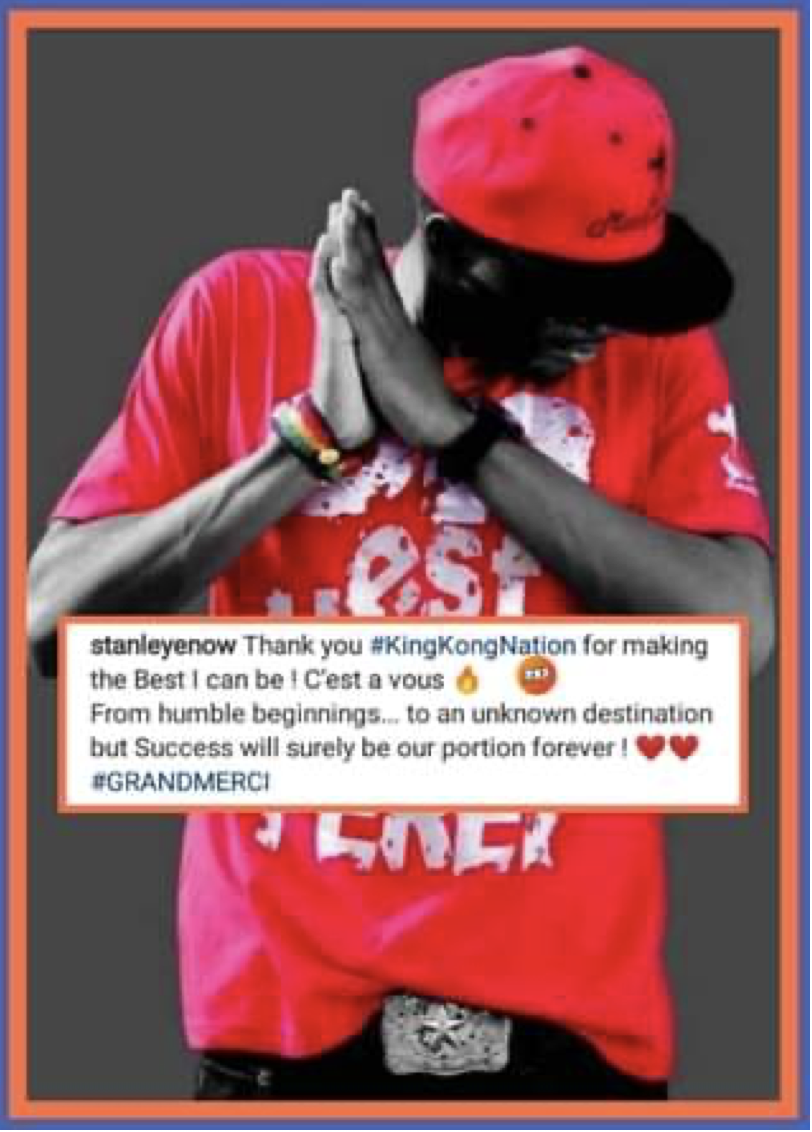
A look at the advertisement billboard with the Cameroonian king kong in Figure 1 below substantiates this claim. That Stanley Enow features in a Guinness advertisement says a lot about the number of his fans and followers and their behavior as well. This time, it is not only limited to the youth. It cuts across generations given that Guinness Cameroon is an ancient enterprise well-known for its identification, selection and rewarding of the very best talents in the country. 
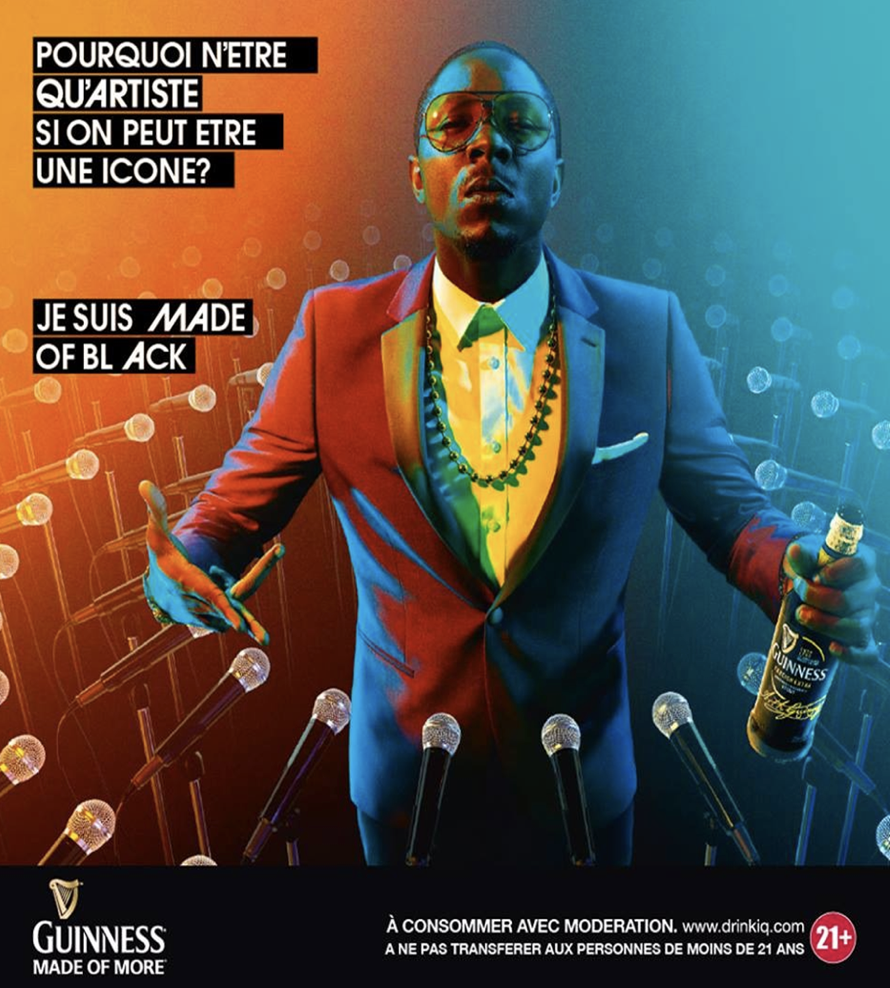


Figure 1: Stanley Enow adapted; from Guinness Made of More Large Format Campaign for the Agency AMVOBBDO (https://cargocollective.com/motioncult/Guinness-Made-of-More). 

 That Stanley Enow features in a Guinness advertisement says a lot about the number of his fans and followers and their behavior as well. This time, it is not only limited to the youth. It cuts across generations given that Guinness Cameroon is an ancient enterprise well-known for its identification, selection In the advertisement above, they recognize the young artist as an iconic figure in society and hence the question “Pourquoi n'être qu’artiste si on peut être un icône? (Why limit oneself to being just an artist if one should rather be an icon?). This also demonstrates in a way that Guinness Cameroon identifies themselves in the young artist and hence, the company in this advertisement suddenly switches from the highly standardized French version and English version (“Guinness Made of More'') to Camfrnglais; “Je Suis Made Of Black”. The blackness of the Guinness beer can also relate to the Africanness of the multi-talented artist


Born in Bamenda, the capital of the Northwest region of Cameroon, with family from Bayangi, located in the Southwest region, Stanley Enow’s nickname “Bayangi Boy '' reflects the importance of regional origins for the young rapper. Coming from the two English-speaking regions of Cameroon (West Cameroon), and having attended school in the Western Region, French-speaking Cameroon, (East Cameroon), Stanley Enow choses to rap in CPE and Camfranglis, as a way to translate his cultural diversity and Cameroonianess in his music.

In June 2013 Enow became famous with his first single “Hein Père'' which again became a center of attraction in the Cameroon 2021 African of Cup Nations finals. The video, with more than a million of views, followed the traditional depiction of young male rappers, with a great display of luxurious cars, jewels, and surrounded by his crew in the background. In the song, Stanley Enow uses a lot of Pidgin English, CPE which is a (re)mix of English and the national languages/expressions (Camfranglai)s – youths’ favorite language for communication (cf. Mai, 2007). His cultural pride and sociolinguistic repertoires do not only appeal to the youths and fans who rally behind him as seen in one of his Facebook interactions with his followers below;

“I would like to thank all of my fans nationwide who have secretly tattooed  MOTHERLAND or Stanley Enow in their souls.

I have a VERY STRONG ARMY

LOVE YOU ALL”.

In fact, his communicative style also extends to attract fans from other avenues. Among his followers are the radio stations and popular industries as shown above. His linguistic repertoire is reiterated in the above advertisement which displays English, French and Franglais, thus, also showing his secret of attraction. The famous age-long Guinness company in Cameroon business owners are thus not insusceptible to his linguistic repertoires. 

His language forms, his portrait on the billboard above and the lyrics of his song below translate the same confidence familiar in the hip hop industry and among youths, especially with the title “Hein Père” which is an interjection from Camfranglais, meaning “say what!”, used to express either surprise or admiration. The French word “Père” means “Dad” and in Cameroon it is a way to call a homeboy.

Hein Père lyrics and translation

I don waka no be small, se ma foot

 /I have walked (meaning worked) so hard, look at my feet/

Up down around town see ma boots

 /Up down around town, look at my boots

Ma foot dem di worry need Dschang shoes (Shoes made from used tires and plastic, popular among low-class people, useful during rainy days.

/My feet got so bad they need Dschang Shoes

Like Banso man I di fight fo ma oun

/Like a Banso Man I fight to survive/ ( Banso refers to “people of Nso”, a people of the Bamenda Grassfield in the Northwest Region of Cameroon.).


With his “Hein Père” Stanley Enow expressed his attachment for his culture. He put Camfranglais and CPE on the spotlight of the African hip hop scene and social media.

Lyrics of “Hein Père”: https://genius.com/Stanley-enow-hein-pere-lyrics

Music video: https://www.youtube.com/watch?v=Rcc2dAkaOcY


Reference List

Agha, A. 2007. Language and Social Relations. Cambridge: Cambridge University Press.

Bird, S. 2001. Orthography and Identity in Cameroon. University of Pennyslvania: [online]; Available, http://sabinet.library.ingentaconnect.com/content/jbp/wll/2001/00000004/00000 0 02/art00001. Accessed, 03/11/2022.

Harris, T. (2019).  Can It Be Bigger Than Hip Hop?: From Global Hip Hop Studies to Hip Hop

Journal of Hip Hop Studies, Vol. 6, Iss. 2 [2019], Art. 7

Mai, M. 2007. Assessing Patterns of Language Use and Identity Formation among Cameroonian Migrants in Cape Town. Masters Dissertation, Linguistics Department, University of the Western Cape.

Mbock C. G. (ed.), Cameroun: pluralisme culturel et convivialité (Edition Nouvelle du Sud, Paris, 1996).

Nyamnjoh, Francis B. & Jude Fokwang. 2005. “Entertaining Repression: Music and politics in Postcolonial Cameroon.” African Affairs:245.

Nyamnjoh, F (1999), ‘Cameroon: a country united by ethnic ambition and difference’, African Affairs 98, 390 pp. 101–18.

Tagem, D. (2016). Oral History, Collective Memory and Socio-Political Criticism: A study of popular culture in Cameroon DOI: http://dx.doi.org/10.4314/tvl.v.53i1.11 ISSN: 0041-476X E-ISSN: 2309-9070. Tydskrif Vir Letterkunde.
Global Fandom Jamboree Conversation: Mado Mai (Cameroon) and Anastasia Rossinskaya (Russia) (Part One)

Mado Mai (M): I wondered where the common ground between us was. But it would appear I answered my own question when I saw you mentioned the youths, classrooms, communication, rejection and the social aspects of life. 

 Anastasia Rossinskaya (A): That is right, a lot of media nowadays is targeted at the youth. Much of it aims at communicating educational messages and bringing up social awareness in a way accessible and understandable for the youth, e.g. through TV shows and music. I would like to know more about your sociolinguistic studies of hip-hop and your findings in how it reflects this trend.

M: Thanks, Anastasia, for your curiosity on the sociolinguistic practices in Cameron. Indeed, most music and particularly the hip hop musical genre can be hardly understood without some sociolinguistic knowledge of the country. Concerning my interests, I specialize mostly in language and society - sociolinguistics. I am new to the world of fans and fandom. But, since this has to do with society, my hope is that together we shall be able to consider the intersection of hip hop language use, fandom and popular culture. If possible, see how this can impact communication. Of course, you will see much of Cameroon language styles and practices through our interactions. 

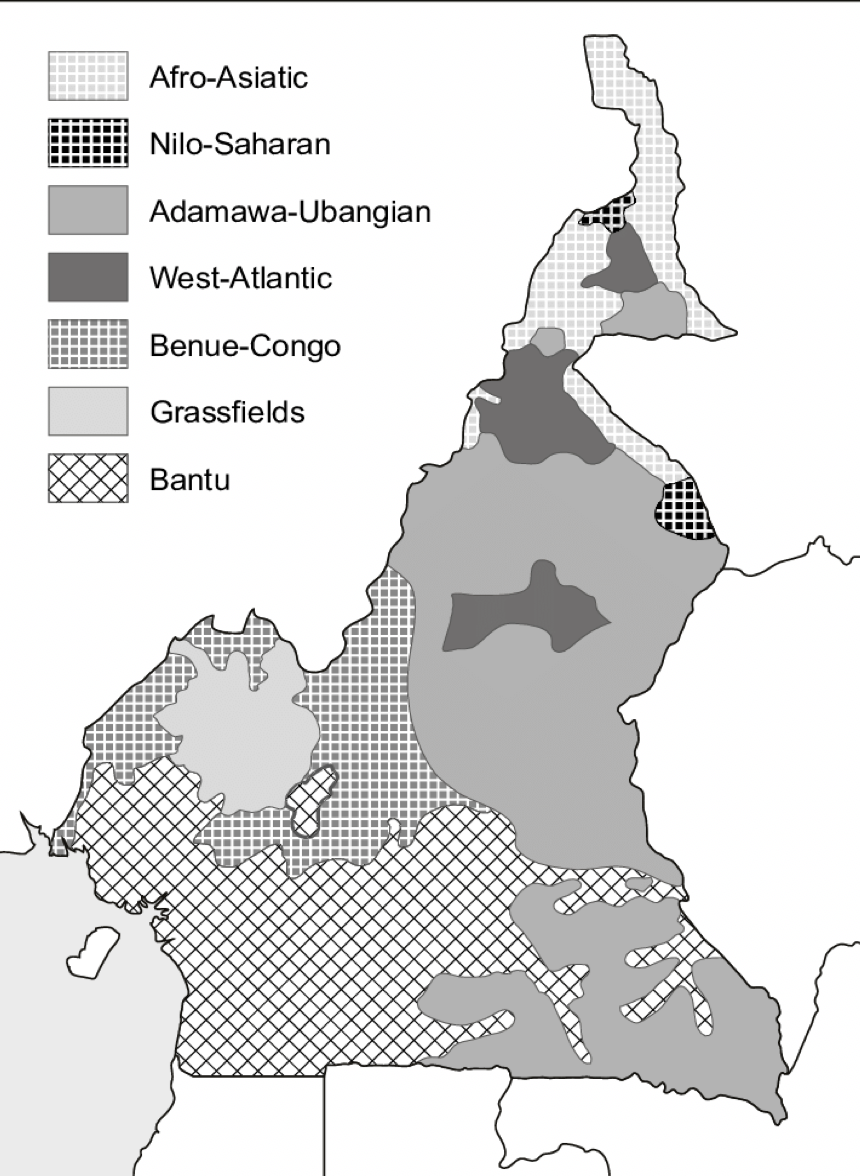
 From a linguistic viewpoint, reports from Ethnologue (2002) show there are 279 national languages in Cameroon, a country as small as San Francisco. This country also has a complex sociolinguistic background with a resultant linguistic baggage that relegates the national languages to the background while encouraging an official language bilingualism of colonial language – English and French. 

 Stanley Ebai Enow is an embodiment of this complexity. He is a Cameroonian rapper, radio and TV presenter, and voice actor who co-owns the record label, Motherland Empire. He is popularly known as Bayangi boy, with Bayangi being a linguistic group in the South West region of Cameroon- the birthplace of his parents. Why I prefer him as an example of a Cameroonian hip hop artist is not only due to his growing popularity as a multiple award winner with more than one million followers on YouTube at the release of his song Hein Père (where ehein is a national slang expressing surprise and père means father in French) but also because Stanley Ebai Enow is a representation of Cameroon in terms of cultural, linguistic, geographic and socio-economic diversity. His socio-cultural background, choice of music genre and language form which he uses for communication with his fans, followers and audiences portrays both uniqueness and heterogeneity that is tantamount to what some historians and geographers often refer to as “Africa in miniature” when they try to highlight the fact that the diversity found in Cameroon alone encompasses the entire African continent.

 Besides this, popular culture, and its constituents have apparently not been attractive to the Cameroonian academia. This is especially true if one has to compare it to the number of theses already emerging on fandom from the Russian institutions of higher education which my conversational partner, Anastasia still considers small. In fact, when it comes to Cameroon, there are few accounts on popular culture (see for example Tagem 2016, Mbock 1996, Nyamjoh, 1996) with nothing concrete on hip hop. All three authors link music to politics and place of origin. In the process, they also emphasise the diversity of music, culture and identity without failing to point out the critical undertone of the artists. Tagem (2016), especially situates popular culture as an aspect of oral history and collective memory while showcasing the use of Camfranglais, Cameroon Pidgin English and of course the multilingual and multicultural diversity of the country. Most artists in Cameroon draw from either Cameroon Pidgin English (CPE - an English based pidgin, arguably a creole, formed by borrowing from English and some of the many national languages, which also plays the role of mother tongue for a majority of urban youths in Cameroon) or  from Camfranglais (a mixture of French, English and some national language expressions) and sometimes both as is the case with Stanley Enow when he displays his multicultural and multilingual diversity during the AFCON opening ceremony (https://www.youtube.com/watch?v=IvBJLJuVn5k) in both song and dance in ways that effectively communicate, entertain and educate the audiences from all walks of life and among all age groups. Linguistic diversity in Cameroonian society is an aged long phenomenon. For this reason, the types of music in Cameroon are not only numerous but also diverse in nature. The many different types of music in modern society each represents unique experiences that shape identity. In Cameroon for instance, makossa, bikusi, bottle dance and bend skin among others, usually relate to celebration and happiness in general where themes such as love, social problems are dominant.

 This notwithstanding, many have decried the fact that local rhythms are now so transformed that elders don not recognize anything anymore. Local artists have also been accused of copying international artists when it comes to dressing styles, which result in outfits that are considered ‘shameless’. Accordingly, one talent agent and producer Florence Tity-Dimbeng, asserts that the Cameroonian music lacks identity and has become senseless. However, an art critic Théodore Kayese suggests that the evolution of music can be seen from a different angle and that to get a real opinion about popular evolution, one has to look separately at every single angle of Cameroon. Over the last 10 years, each part of the country, he reckons, has had its hour of glory, for example; the coast with makossa, the western part with ben-skin, the north west with njang and samba, the centre, east and south with Bikutsi. Only the north didn’t really have a specific style although, no successful musical festival can take place without representation from the north. Of all these rhythms, is the afro-fusion and particularly hip-hip, which is very popular among youths thanks to artists like Krotal, Gasha, Stanley Enow, X-Maleya, Tizeu No Name Crew and Jovi One Love among others. This young generation of artists is definitely ready to take off.

 From this perspective, it can be said that the hip hop culture in modern society can draw together various people from many different backgrounds. The hip hop culture as Harris (2019) argues is more than just a culture. It is a phenomenon. This phenomenon is now explored by youths and artists, particularly the hip hop artists to capture a kind of globalized sociolinguistics reality among young people where multilingualism is presented as both stylish and mobile. Hip hop according to (Nyamjoh 1999 and Mbock 1996) is a genre traditionally associated with resistance, an aspect which coincidentally relates to the Russians’ popular views on fandom as Anastasia had mentioned in one of our conversations.

Following from the multicultural and multilingual landscape of Cameroon, I sought for a scholarship that recognizes the intermixing of various Cameroonian languages and language forms in hip hop, what Agha (2007) has called amalgam systems, first to initiate a communicative mode that would bring to fore the creative and stylistic realities of a heterogeneous urban Cameroonian youths, and second, to inductee popular culture research in the area of hip hop into the Cameroonian academia as it is already an inundated area of research around the globe.

A: Thank you for this abundant tour into Cameroonian hip-hop culture and the state of its research. Many trends are similar to the Russian music scene, especially the accusations of copying foreign artists. On the other hand, various language and ethnic backgrounds of our multicultural and multilingual country are heavily underrepresented on the stage, which is dominated by the Russian language, only one of more than 150 languages of Russia (according to the Languages of Russia project http://jazykirf.iling-ran.ru/list_concept2020.shtml).

M: In your opening statement you point out that participating in fandom activities can have educational effects. Have you had a chance to research it and find out what these effects are, particularly in the sphere of communication?

A: Thank you for your question. I am happy to have this opportunity to share the results of my latest research. When I got interested in studying media and fandom I decided to look at them from the point of view most natural for me as a scholar, i.e. through an educational lens. We should keep in mind that education is not limited to classrooms. We learn a lot outside of the formal school system: in everyday life, traveling to and back from work or place of study, while enjoying hobbies and arts, doing social and volunteer work, etc. It is particularly important to consider in Russia, where school education is still quite conservative and uses approaches developed more than a hundred years ago, e.g. limited opportunities for teamwork, initiative, and creativity. Furthermore, the cult of mistakes and punishment for them instead of learning from them and the authoritarian role of a teacher doesn't allow to successfully implement teaching 21st-century skills in schools. Therefore, I focus my research on how these skills are developed outside school and which activities are more effective in compensating for the lack of attention to them in formal educational system.

 As an example, I would like to share some results of my recent research of DRUCK fandom activities. DRUCK (Ger. pressure) is a German youth TV show produced by funk TV channel. It is a remake of the legendary SKAM, mentioned in some of the previous conversations. DRUCK has seven seasons so far. The eighth has been recently announced for spring 2022. The first four seasons were based on SKAM characters and plotlines, after that the new generation was introduced (Pic 1). DRUCK fandom is quite big for a local non-English language show and includes people of various age groups from Australia, New Zealand, Brazil, the USA, Poland, the UK, Switzerland, Russia, France, Italy, Spain, Korea, and other countries.


Pic 1. Old (left) and new generations of DRUCK. Official promo materials from funk TV channel.


The aim of my recent research was to determine the educational outcomes of fanfiction writing in DRUCK fandom. In March 2022 it had 1454 works posted on Archive of Our Own site. In January 2022 I held a series of interviews with ten ficwriters from DRUCK fandom. They helped me to compile a list of educational results of their ficwritng activities. Communication skills are quite significant among them.


Writers who work in pairs or groups learn to effectively communicate with each other to get to the mutually satisfactory result of their collaboration – a posted fanfic. Communication skills that they require for it include abilities to state one’s opinion clearly, support it with valid arguments, listen to and consider opposite opinions, discuss and come to decisions together. We see here that communication skills develop along with such collaboration skills as the ability to plan work together, to support and motivate each other to write.


On the other hand, interviews showed that writing fanfiction for those who work alone can also be considered a communicative practice because they enjoy interacting with readers, discussing their work, responding to requests, and sometimes discussing personal issues or problems raised by their works of fanfiction.


These interviews also gave me an interesting input on the motivation that drives ficwriters. Some of my respondents mentioned that they started writing because they wanted to communicate about their favorite media – DRUCK. Communication between ficwriters and readers happens mostly on the platforms where fanfiction is posted. My respondents admitted that lack of communication discourages them. Some reported that they stopped posting or writing for the fandom at all because they didn’t receive enough communicative support from the readers. Many respondents compared different platforms where they publish their works in terms of intensity of communication. They often complained that though Archive of Our Own is the most populous platform now, it provides much fewer means for communication between writers and readers than others before, e.g. LiveJournal, and therefore ficwriters are not satisfied with the amount and quality of communication there.


Writer-readers communication also contributes to the development of their communication skills such as the ability to listen and read, to respond regarding the other person’s personality and life circumstances, and to maintain prolonged communication. One respondent, who focuses much of their writing on exploring communication disorders and disruptions, noted that writing fanfiction about characters dealing with communication problems helped them to feel more confident when communicating in their everyday life.

Global Fandom Jamboree: Anastasia Rossinskaya


Screenshots of TV newsreel (360 TV channel) about all-Russia soccer fans protest actions against police violence. The posters say “A fan is not a criminal”.

https://youtu.be/4FHioPMBGYo

Let me start with a short introduction. I am a senior researcher in Moscow City University, Russia. I study informal educational practices and develop methods of teaching using cultural institutions, media, city environment, and community resources.

Russian editions of SKAM scripts are sold in plastic cases and marked 18+ according to laws that prohibit to mention LGBT characters in books for people under 18 years old. People under 18 cannot buy these books legally. Photo by A.Rossinskaya

My interest in fan studies started in 2019 when I came across SKAM youth TV show and its universe of remakes and consequently joined its Russian and international fandom. Very soon it became clear that as a fan I cannot put aside my professional view as an educator. I started to analyze the fandom, fans’ activities, and SKAM universe through the prism of my academic interest in education. As a result, I discovered a lot of educational and teaching potential in both the show and its fandom activities. I will touch upon them later. First, I would like to give a short overview of Russian fan studies.

I started my research by looking around and trying to locate academic works on fan practices, fandoms, and fanfiction in Russia. It transpired that there has been relatively little done in this field apart from works by Natalia Samutina[1] (1972-2021), who systematically studied Russian fandoms of Harry Potter and manga. Most other publications are sporadic works. The only exclusion is made by the studies of sports fans, especially soccer fans. Keyword search for “fan” on the largest Russian scientific e-library Cyberleninka brought back 91 articles published in 2011-2021. 74 of them discuss soccer fans, mostly legal aspects that focus on topics of crime and aggression among fans. It also became apparent that a substantial part of soccer fan studies is done in the psychological field. Most of them as well discuss the origins of aggressive fan behavior or how to deal with it. Some linguistic studies focus on soccer fan folklore and forms of verbal abuse that soccer fans use. This focus on the negative aspects of sports fandoms may stem from the perception of fans as a destructive group of young people inherited from the Soviet period when any youth activity not sanctioned by the communist authorities was considered potentially dangerous for the state.

Books and movies fandoms have also attracted some interest from Russian linguists and literary scholars. Besides seminal works by Natalia Samutina[2], some articles focus on stylistic, genre, and linguistic specifics of fanfiction. Most researchers are interested in popular fandoms like Harry Potter, Tolkien, and BBC’s Sherlock. There has also been some research on fanfiction for XIX century classical Russian literature (e.g. little known to Western readers author A.K. Tolstoy, not to be mistaken for Leo Tolstoy) as well as poets of the beginning of the XXth century such as Vladimir Mayakovsky and Sergey Yesenin.

Harry Potter fan graffiti in Ivanovo “Harry will win!”. Photo by A. Rossinskaya

In the last ten years, only five Ph.D. dissertations were defended on fan studies in Russia. Three of them are written on sports fans and two are on fanfiction. They reflect the trends I mentioned above. If we look at students’ theses, we won’t see many works either. In HSE University, one of Russia’s leading universities, only nine theses (of 61 thousand total) were written on fan studies during 2013-2021: four bachelors’ and five masters’. Among them seven were on fandom activities, one about sports fans and one focused on fanfiction. In MCU out of 13 thousand bachelors’ and masters’ theses, defended between 2015-2021, only four bachelors’ were written on fan studies, three of them on fanfiction and one on sports fans. This is a very small number for such a large country as Russia.

How can this limitation be explained? Regrettably, the very word “fan” (Rus. fanat) in the Russian language has very strong negative connotations of fanaticism, radicalism, intolerance, and violence. Moreover, fan studies in Russia often come into conflict with the official stance and state policies on issues like family and sexuality. For example, LGBTQ+ topics are not allowed to be discussed with or in the presence of children under 18, and public demonstration of the so-called ‘non-traditional relationships’ (the term coined by and used in Russian legislation) or anything associated with them (e.g. a rainbow flag) is prohibited by several federal laws. For these reasons scholars who study fan practices and fandoms often hide their research interest under less provocative terms such as poklonnik (admirer) or lyubitel’ (fancier, enthusiast) instead of fanat (fan) or soobschestvo (community) instead of fandom. Such scholastic camouflage makes it very difficult to conduct fan studies discourse in Russia as well as for researchers to find other scholars with similar interests.

My interest in fan studies is heavily influenced by my main field of research – education, to be exact – informal educational practices and the possibility to implement them into formal and non-formal education. Therefore, while watching SKAM and its remakes, observing its fandom, and participating in its activities, I focus on the following questions:

·       To what extent participating in fandoms is an educational experience?

·       Which fan activities can be utilized in formal and non-formal education and how?

·       How may educational content be successfully included in youth shows without being overly didactic?

I approach the first two questions with the 21st-century skills concept scale. My observations show that participating in fandom requires cognitive, communicative, collaborative, and creative skills – the so-called 4Cs, the core of the 21st-century skills model. It is possible to theorize fandoms as mutual-teaching and self-educating communities where people master these skills with the help and encouragement of fellow fans. Thus, fandoms can be seen as a potentially rich resource to teach the 4Cs. This is especially pertinent in Russia where teaching these skills in schools is underdeveloped or non-existent even though it is proclaimed among the goals of education.

Formal school education in the Russian Federation is a highly centralized system. Federal State Educational Standards define the goals students must achieve at each stage of education – elementary, middle school, and high school. These goals include three types of achievements: acquiring subject knowledge and skills, acquiring transferable skills, and personal development. While Russian teachers have a lot of experience in teaching subject knowledge and skills, the other two goals present a challenge for many of them. This can be explained by the relative novelty of these requirements, lack of well-developed teaching materials for regular classrooms, and lack of time allocated to teach them. Thus, there is an acute need for educators in Russia to acquire new ways to teach 21st-century skills which are both effective and practical. I believe fandom practices may serve as a useful tool for teachers to meet this need.

I will be happy to discuss the educational side of fandom activities and youth TV shows with fellow scholars from around the world.


Anastasia Rossinskaya, Ed.D., is a senior researcher in the Laboratory of Sociocultural Practices, Research Institute of Urban Studies and Global Education, Moscow City University, Moscow, Russia. She is the program director of the Master’s program ‘Teacher-researcher’ in MCU and a guest lecturer at the Institute of Education, HSE University, Moscow, Russia.


[1] Samutina, N. (2019). Japanese manga in Russia: Introduction to research on reading practices. NOVOE LITERATURNOE OBOZRENIE, (160), 307-321.

[2] Samutina, N. (2013). The Great Female Readers: Fan Fiction as a Literary Experience. Russian Sociological Review 12 (3):137-194.

Samutina N. (2016) Fan fiction as world-building: transformative reception in crossover writing, Continuum, 30:4, 433-450, DOI: 10.1080/10304312.2016.1141863.

Samutina N. (2017) Emotional landscapes of reading: fan fiction in the context of contemporary reading practices. International Journal of Cultural Studies. 2017;20(3):253-269. doi:10.1177/1367877916628238.

Global Fandom: Mbong M. Mai (Cameroon)


Secrets and Styles in Popular Culture: Youths’ Krotal Cameroun Nâ yâh feat Jahel Video


Cameroun nâ yâh (feat Jahel)

Refrain :

Ring di alarm / anoda soul si dying / oohh / Faisons sonner l'alarme / plus rien ne va regardes bien / Ntondobe ma sili na yâ o né / I wa yen foâ infâ bi toâ ? / Cameroun ma sili wa nâ yâ ? / I wa tsog nâ bi ne dzâm kuî ???

Krotal :

Aveuglés par un monde sourd / à nos appels le silence nous a doté de la parole et sans appel / Mon coeur de lion depuis n'a plus de crinière / mais juste un collier de barbe et sur son pelage des tâches de Panthères
Un jour tu gagnes comme un jour tu perds / à défaut d'être un roi gars appelles moi juste chef einh / dès la naissance c'est le tiercé les dés sont lancés réfugié dans le rêve la lune m'a brûlé les ailes / En vol plané bien qu'ayant sorti mes flaps / ma destinée s'est écrasée sur une table de craps / à les entendre vivre est une maladie chronique / et si mes fauve sont blessés le Hiphop est une clinique / En attendant le changement / ou que la nous console au bord de la console on fait tourner l'Odontol / Trop tôt pour beaucoup c'est le ghetto / pour les getam babylon a mit un veto / ça sert plus à rien petit que tu te leves tôt / l'avenir appartient ici à ceux qui se baissent tôt .

Refrain ...

Jahel :
Wow !!!
C'est une histoire de quoi ? / De monarchie d'anarchie ou de droit ? Stop !!! / Faut arrêter de nous prendre pour des chèvres / faut arrêter de nous abrutir au jus de maïs / Un peuple acculturé moderne entre guillemets berné par un système éducatif de bornés mort - nés / Ici on ne peut plus accepter d'être / et si l'écart se creuse c'est que la classe sociale est polarisée / Donc nos histoires sont faites de lances et de flèches / de peuples Moundang ou de Guinarous qui se réveillent / passe passe l'Essingan que je développe ma pensée / pour ceux qui ont traversé l'âge de la pipé taillée / aveuglés par l'école et les diplômes la vie à fait qu'ici les jeunes se pètent pour s' en sortir / Trop de pression y'a le feu dans les backs / les animaux se lâchent et y'a le feu dans la brousse / y ' en a qui volent tuent pillent / au nom de la religion torturent en démocratie

Refrain ...

Krotal :

Aveuglés par un monde sourd / à nos appels le silence nous a doté de la parole et sans appel / On nous a dit pour évoluer faut go au school / familles démunies donc à l'église on se colle / même si chez les curés après les cours c'est la tourmente / combien se barrent en courant des viols et des tournantes / Les vies prennent des virages / des directions opposées / déjà à contre - courant bien avant même de poser l'espoir fait vivre / mais ici le droit de vivre est une marque déposée / l'essence de ma musique et ses idées sont ménopausées / Le Cameroun vit quand Yaoundé respire / le pays subit l'asphyxie si la vérité se respire / falsifier jusqu'à notre histoire t'inquiètes on vit dans le faux donc du mensonge on s' inspire / 2013 on paye pour leurs erreurs / subir le ndem ou mourir en martyr / Si le savoir est une arme je suis calibré comme le B.I.R / En attendant le meilleur j'ai appris à maîtriser le pire

Refrain ...

 Krotal is among the first hip hop musician in Cameroon with thousands of fans. Thought-provocative about the youth situation in Cameroon, he protrays the regime in place that has crippled the youth with no hope for the future. For example:” stop treating us as goats/stop stupefying us with corn’s juice. A community asleep through an education system of blind dead-born…/ the country is suffocating…/ while waiting for the best, I have learned to master the worst”.  Such are some of its words. The language used here is a combination of French, English and a local language as illustrated on the refrain. This type of expression is common among Cameroonian musicians and hip hop musician in particular. This style of expression, typical of Cameroonian youth, appears to orchestrate well with the local youth. 

This style of language, synchronizing with the youth population in general and drawing a large number of fans in the process will be investigated. We will also explore the cross-border and commercialization of such Cameroonian styles.


Art of Attracting Massive Followers in Cameroon 


Popular culture generally refers to those type of things that have mass accessibility and appeal to the wider population. The football sports for instance and its associated lead figures like Samuel Eto’o Fils in Cameroon has the highest number of fans and followers on the three major social media namely; Instagram, Facebook and Twitter. It goes without saying that popular culture goes hand-in-hand with its fans and followers and on specific media. In the modern West as in Africa, pop culture refers to services and products such as music, art, fashion, dance, film, cyber culture, television, and radio that are consumed by majority of the society’s population. The focus of this project however will be the Cameroonian hip hop culture from a metapragmatic perspective as portrayed on social media. Metapragmatics describes relations between different discourses in linguistics and thus relates to aid in understanding certain aspects of culture inter-subjectively (Overstreet and Yule, 2002).


Hip hop can be defined as a subculture, of which artists and youths use for self-expression or self-definition, and as a tool for resistance. This relates to (Wortham, 2006) assertion that youths, can use language to co-construct (inter)subjectivities and related identities. For example, in expressing the youth frustration and rage about unemployment, Valsero in 2002 wrote the songs ‘Ce pays tue les jeunes’ (This country kills the youths) and ‘Ne me parlez plus de ce pays’,(Do not talk to me about this country anymore) which rapidly became very popular, especially among the disillusioned youth who could identify with the harsh realities in his songs. 


In Cameroon, there is dearth in this area of research with just one referenced article on Cameroon hip hop in 2013 by Wakai, Kangsen Feka which was published in a magazine. The hip hop artists and the youths whom they represent become an important constituent in the socio-political and economic development or the lack of these in the country. 


Given the Anglo-French background in the already multicultural and multilingual setting of Cameroon this genre of music becomes multifaceted as stimulated (Nyamjoh and Fokwang, 2005) by either the many other music genres and/or the many languages and cultures of this country. Thus, other genres of music and their expansion would require a comparative glance to ascertain the place of Hip hop as a sub-culture. To do this, first, I briefly outline the history of hip hop, and its expansion, second, the language of hip hop as expressed by local artists and finally the use hip hop as an identity will be reviewed below and the finally, the implications thereof. Cameroonian hip hop musicians use a language style typical of local contemporary youth’s expression, which enable them to synchronize with their large youth population followers.  It is this style of language enabling such synchronicity that we aim to explore.


A brief account of hip hop

Historically, it is believed that hip hop was born at a  birthday party in Bronx in the early ‘70s (History.com Editors).But in reality, the roots of hip hop can be traced as far back as the 40s in Jamaica, where it gradually evolved to street corners by the ‘60s. Only by the 70s was this phenomenon to become popular in the United States, particularly in the Farragut Projects in Brooklyn, NY. Among the earliest DJs then, were; Kool, Maboya, and Plummer who mostly played disco music. As the love for hip hop increased, so too was the controversy about what sub categories of music actually defined hip hop. Hip hop and most of its subgenres are often defined by the artist’s lifestyle, sound, subject as well as where an artist comes from. This project explores the hip hop sub culture in Cameroon while acknowledging the different facades of popular culture. 


The Origin and artist behind the evolution of Cameroon hip hop.

Traditionally, the Hip-hop genre was associated with resistance (Mbock 1996, Nyamjoh 1999). On contrary, other popular local genres such as bikusi, makossa, bottle dance, soukous or bend skin among others, usually relate to celebration and happiness in general where themes such as love, social problems, sex and relationship issues are expressed. While the many most genre of music all over the country tend to derive from specific linguistic groups, hip hop on the contrary, is associated with youth movement that bring to the fore new music, language and art. According to Nyamnjoh and Fokwang, Bikutsi and Makossa, they argue, became popular thanks to the emergence of His Excellency, Biya as head of state since Biya is from this region of the country.  But it took almost two decades for hip-hop to establish itself and become as popular as the genres mentioned above. This so because in the beginning, hip-hop was marginalised and associated with angry youths. However, this was not always the case with some pioneering artists namely Benjo, Stars System, Bashiru, Ak Sang Grave and so on. This master genre has musical themes that are different from other genres, offering platforms for youths to speak up for socio-political issues they believe in.  In this light, hip hop unfolded in Cameroon in fascinating ways in the ‘80s. As this genre gained more grounds in the ‘90s, Louis Tsoungi purchased a recording studio, and alongside Paul Edouard Etoundi and Patrice Bahina in 1998 and started Mapane records in the capital city of Cameroon-Yaoundé in 2000. This became one of the most important music labels of the 2000s, championed by artists such as Krotal, Ak Sang Grave, Bashirou, Ebene and others. The first album to be released under this label was Yaounde Pour La Planete in 2002 by Ak Sang Grave. Following from this, other emergent hip hop musical labels were to spread over the country. 

Despite its status as a latecomer among Cameroonian musical genres, two decades since it first emerged, hip-hop has undergone a series of transformations and today is no longer associated with disgruntled youths, but rather with social consciousness and musical innovation. Today, Stanley Enow’s ‘Hein Pere’ (2013) from his EP Tumuboss has become the first of a MTV Africa Music Award winner in the Best New Act category in 2014 in Durban-South Africa.  This album explores complicated issues of hardship, and faith and flaunts his Cameroonian-ness on almost every level – culturally, thematically, linguistically and stylistically.


 Stanley Enow - Hein Père (Official Music Video)

Hein Père

{Intro}

Stanley Enow, Stanley Enow
Bayangi boy huh
You know what it is, hehe!
Hein pere!
Hein pere!
Listen, check!

{Verse 1:}
I don waka no be small, see ma foot
Up down around town see ma boots
Ma foot dem di worry need Dschang shoes
Like Banso man I di fight fo ma oun
Tara dem di gossip, hala hala
No time for dirty fight man, pala pala
Hustle hard nigga I di waka waka
Go slow go slow, hein Jaga Jaga
Hein! Etantimomanyang hein!
Niggas holla back I never rest yo
Been working so hard with the king yo
Thank you Tony Nobody this is me hein
Hein père! say what!
Pour tout mes gars du mboko,mes tatats
Soso go before no matter what
Ask Petit Pays na God go pay
Hein père!

{Hook: x2}
Nous on est au quat on est high père!
Et comme mes gars du mboko on dit "Hein père" (Hein Père)
Hein Père (Hein Père)
Yes yes yes yes c’est pour mes frères père!
Oh boy we dey fo qwata on est high père!
Et comme mes gars du mboko on dit "Hein père" (Hein Père)
Hein Père (Hein Père)
Yes yes yes yes c’est pour mes frères père!

{Verse: 2}
Mami nyanga, rouge à levre kos kos
Straight bensikin wanna see Mr Cosmos
Don petite seour wanna get rich at all cost
Ma’ala, Kamdem wanna be a boss-boss
Hein Pere! Sexy Makero
Ova don na mbout oh boy da wan na lapiro
Jean Michel Kankan donne moi mon marigo
Djobolos vient on va au beignet Haricot yeah!
Yémalé! Sharp sharp,chakak koubi,zing zing,fap fap
Don petite soeur I go take you for la’akam
Work dat body,gi you small Kanwang
Muah!!
Charlotte Dipanda I go marry you
Lady Ponce I go marry you
Karyce Fotso I go marry you
I go marry you, I go, I go marry you yeah

{Hook: x2}
Nous on est au quat on est high père!
Et comme mes gars du mboko on dit "Hein père" (Hein Père)
Hein Père (Hein Père)
Yes yes yes yes c’est pour mes frères père!
Oh boy we dey fo qwata on est high père!
Et comme mes gars du mboko on dit "Hein père" (Hein Père)
Hein Père (Hein Père)
Yes yes yes yes c’est pour mes frères père!

{Outro: End} 

Stanley Ebai Enow is referred to as the Cameroonian King Kong with over 400.000 followers on YouTube (https://www.youtube.com/watch?v=UnEh1dU7bfY). Enow is a Cameroonian rapper, radio and TV presenter, and voice actor. He is the co-owner of the record label, Motherland Empire. He began writing rap lyrics break dancing while at high school. With his English-French bilingual background and multi talents, Enow quickly combined his talents and showbiz personality to become part of the new generation of the hip hop movement in Cameroon. With Hein Père (where hien is a typical Cameroonian slang which means what; usually used to seek clarification or express surprise) and Père, (a French word meaning dad/father but in slang language would mean guy, man, buddy etc.), literally, it meaning What buddy!), while sticking to the hip hop gangster style, Enow’s clip and language has no vulgarity, a thing very rare to find in hip hop nowadays.

Apart from his talents, Enow performed with a lot of Cameroonian originality, the language style where his lyrics and street stories are in typical Cameroonian Pidgin English and French spiced with Lapiro-like flavour of slangs. His intentionally sloppy sounding voice over the beat makes it look like he is drunk and high on some kind of drug. To crown it all, Enow appears as patriotic when he is shown on a few scenes draped with the Cameroon flag. This song has taken him round the world and to the Unity Palace where he performed in front of the Presidential couple. In addition, to this, he has also created a social movement with Hein Père.

In the above video clip, the fans and followers of Stanley Enow are presented life in the capital city of the country Yaounde. Notice that Cameroon is a country made up of both English and French regions. As shown above, Stanley is from the minority English-speaking Cameroon.  Yet, from the response and attitude he gets, it shows how Stanley’s followers and fans cut across both national and international boundaries.
In addition to these fans and followers, hip hop is prominent for nurturing and preserving collaboration among artists. In the above video clip, Stanley Enow was invited on stage by a hip hop artist from another country who apparently is a legend in the domain, compared to young Stanley, and so, he was invited to perform in Cameroon. In hope, to hear the famous “Hein Pere”, once more, he eagerly asked Stanley for an impromptu performance. But Stanley instead sang “My way” which the audience and fans still welcomed as shown above. While expressing his love and admiration for Stanley he quickly announced their (Stanley and himself) up-coming album and mentioned his preference “Hein Pere”. At the mention of this, Stanley quickly switches and sang parts of the second verse of “Hein Pere” that was happily received by the audience who sang along with him and followed his gestures.

Below is a video clip of my way.


 References & Further Reading

Clark, Misa Kibona. 2012. “Hip hop as Social Commentary in Accra and Dar es Salaam”. African Studies Quarterly 13(3):23-24.

MBOCK, C. G. (ed.), Cameroun : pluralisme cultel et convivialité (Edition Nouvelle du Sud, Paris, 1996). 

Nyamnjoh, Francis B. & Jude Fokwang. 2005. “Entertaining Repression: Music and politics in Postcolonial Cameroon.” African Affairs:245.

NYAMNJOH, F. B., ‘Cameroon: a country united by ethnic ambition and difference’, African Affairs 98, 390 (1999), pp. 101–18.

Overstreet, M. and Yule, G., 2002. The metapragmatics of and everything. Journal of Pragmatics34(6), pp.785-794.

Onambélé, Paul Edouard Etoundi. “Les Musiques Urbaines au Cameroun de 1983 à nos Jours.” (Unpublished Ministry of Culture Document)

Wakai, Kangsen Feka. “A New Chapter in the Kamer (Cameroon) Hip-Hop Files: A Review of Jovi Le Monstre’s H.I.V (Humanity is Vanishing)”.  Bakwa Magazine <http://bakwamagazine.com/2013/04/26/music-review-a-new-chapter-in-the-kamer-cameroon-hip-hop-filesand-there-was-jovi-le-monstre-a-review-of-h-i-v-humanity-is-vanishing/(link is external)

Wortham, S. (2006). Learning identity: The joint emergence of social identification and academic learning. Cambridge: Cambridge University Press.

 Mbong M. Mai completed a PhD in Language and Communication at the University of the Western Cape (UWC). Mai’s research interests include curriculum language and culture, language and identity, transformation, language and migration, entrepreneurship, and globalisation with interesting findings, some of which relate to the well-established perspectives on centre-periphery, territoriality, and identity formation. Mai has served as a postdoctoral fellow in the Department of Communication and Media Sties at the University of Johannesburg (UJ)., and as an Academic coordinator at the office of the Vice Chancellor: Academic Affairs for the Division for Postgraduate Studies at the University of the Western Cape and as a Sociolinguistics and Super-diversity fellow for the Max Plank Institute for the Study of Religious and Ethnic Diversity. Currently, Mai is a researcher32 at the UJ. 

Transforming Hollywood 10: Streaming to Global Markets


Transforming Hollywood 10: Streaming to global markets

 Friday, April 8, 2022

 9 a.m. – 3:30 p.m. PT

 Online

Transforming Hollywood is an annual summit where communication and media studies scholars join with media industry professionals, creators, producers, talent, and executives to engage in panel discussions regarding the future of entertainment.  Comprising a partnership between USC’s Annenberg School and UCLA’s Television, Film and Theatre Department, Transforming Hollywood 10 will focus on the topic of Global Streaming Video.  Panels will discuss the disruptive influence of these new players and technologies that are dramatically reshaping the global media industries landscape, the challenges and opportunities for cross-cultural programming across a global streaming environment, data harvesting, and the cultural politics engaged by programming strategies.

Program

The program panelist line up is still is still being finalized. This site will be updated periodically.

Opening Remarks

9–9:15 a.m.

  • Willow Bay, Dean, USC Annenberg

  • Hector Amaya, Professor of Communication, Director of the School of Communication, USC Annenberg

  • Henry Jenkins, Provost Professor of Communication, Journalism, Cinematic Arts and Education, USC Annenberg

  • Denise Mann, Professor, Cinema and Media Studies, UCLA School of TFT

Panel 1: Carnival Row: Producing world-building TV originals to access global markets 

9:15–10:35 a.m. PT

Panel 1 engages in a deep-dive exploration of Amazon Studios’ Carnival Row to discover whether not just Amazon but all U.S. streaming platforms are expediting a shift in overseas media industries by financing high-profile TV originals that use world-building, media franchising, and interactive, digital media marketing experiences to keep global consumers actively engaged within their 24-7 ecosystems.

  • Denise Mann (moderator), Professor, Cinema and Media Studies, UCLA School of TFT

  • Petr Szczepanik (panelist), Associate Professor at Charles University, Prague

  • Kevan Van Thompson (panelist), Producer, Czech Anglo Productions

Break: 10:35–10:45 a.m. PT

Panel 2: Towards data-driven entertainment?

10:45 a.m.–12:05 p.m. PT

This panel will bring together various types of data specialists working for the streamers or the studios, as well as expert scholars, who will engage in a conversation about the central impact of data in the age of global streaming.

  • Violaine Roussel (moderator), Professor, University of Paris VIII; Affiliated Scholar, UCLA, TFT

  • Chloé Delaporte (panelist), Associate Professor, Film and Media Studies, University Montpellier 3, France

  • Marina Kosten (panelist), Head of Research and Strategy, Storyfit; Senior Fellow, USC Center for Digital Future

  • Rohit Joshi (panelist), Senior Director, Data and Analytics, NBCUniversal

Lunch (informal networking event): 12:05–1 p.m. PT

Panel 3: Streaming the global majority

1–2:20 p.m. PT

As film and TV distributors shift to global streaming, how does that shift the conversation around diversity, equity and inclusion? Join executives from across the industry and the world to discuss how Hollywood is expanding the concept of representation in 21st century.

  • Aymar Jean Christian (moderator), Associate Professor Communication Studies, Northwestern University

  • Ramon Labato (panelist), Associate Professor DSC School, Media and Communication, RMIT University

  • Erik Barmack (panelist), Producer, CEO Wild Sheep Content

Break: 2:20–2:30 p.m. PT

Closing discussion: U.S. SVODs going global: A conversation with Amanda Lotz

2:30–3:30 p.m. PT

Amanda Lotz is a media scholar, professor, and industry consultant. She leads the Transforming Media Industries research project in the Digital Media Research Centre at Queensland University of Technology. She is the author, coauthor, or editor of ten books that explore television and media industries including We Now Disrupt This Broadcast: How Cable Transformed Television and the Internet Revolutionized It All, The Television Will Be Revolutionized and Portals: A Treatise on Internet-Distributed Television, and Media Disrupted: Surviving Cannibals, Pirates and Streaming Wars.

  • David Craig (moderator), Clinical Professor of Communication, USC Annenberg

  • Henry Jenkins (moderator), Provost Professor of Communication, Journalism, Cinematic Arts and Education, USC Annenberg

  • Amanda Lotz (speaker), Professor and Transforming Media Industries program leader

  • Digital Media Research Centre, Queensland University of Technology


Global Fandom Jamboree Conversation: Uwa Innocent (Nigera) and Swapnil Rai (India) (Part Two)

LANGUAGE, CULTURE AND LATERAL FLOWS OF CONSUMPTION PRAXIS BETWEEN INDIAN AND NIGERIAN FANS


Uwah: 
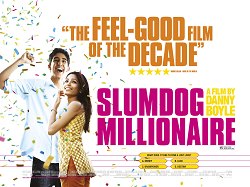
I love the whole thing you said and how have placed it within a historical perspective, like the way Zee world began. That's interesting to see how a television network that stood up to globalization is now a globalizing factor. In discussing Bollywood as its same in discussing Zee world, one discovers Indian identity, dressing style and culture and the patronage it receives across the world and like you mentioned, it is now in about 169 countries and one of the high points it has is cultural resonance which is why it is so popularized also in Nigeria because people are interested in India stories. It is what you alluded to when you spoke of the Hollywood director who handled the Slumdog Millionaire story and made people feel good about the Indians in the story. It is what is found in Germany with the emphasis on melodrama, music, and same for us in Africa,  a great point in it is large families since Africa is communalistic and people do a whole lot of things together within the family.


Uwah: But it is also amazing that its language appeals to all whether in Africa or the West. The west coastt is individualistic and Africa is communalistic but Zee world being presented in English translations or other languages helps fans across the continents to follow and enjoy its storylines. The fans actually create the structures and contexts of consumption mechanisms. 
Fandom in Zee world then is big in Nigeria because of ESL – English as second language – so many young people learn their grammar through acting out what they see on screen and by imitating their heroes. In that way what came to fight globalism by sticking to Indian stories is today a channel of globalization by extending the same stories globally.
We are by is saying it is going round and people are embracing it.


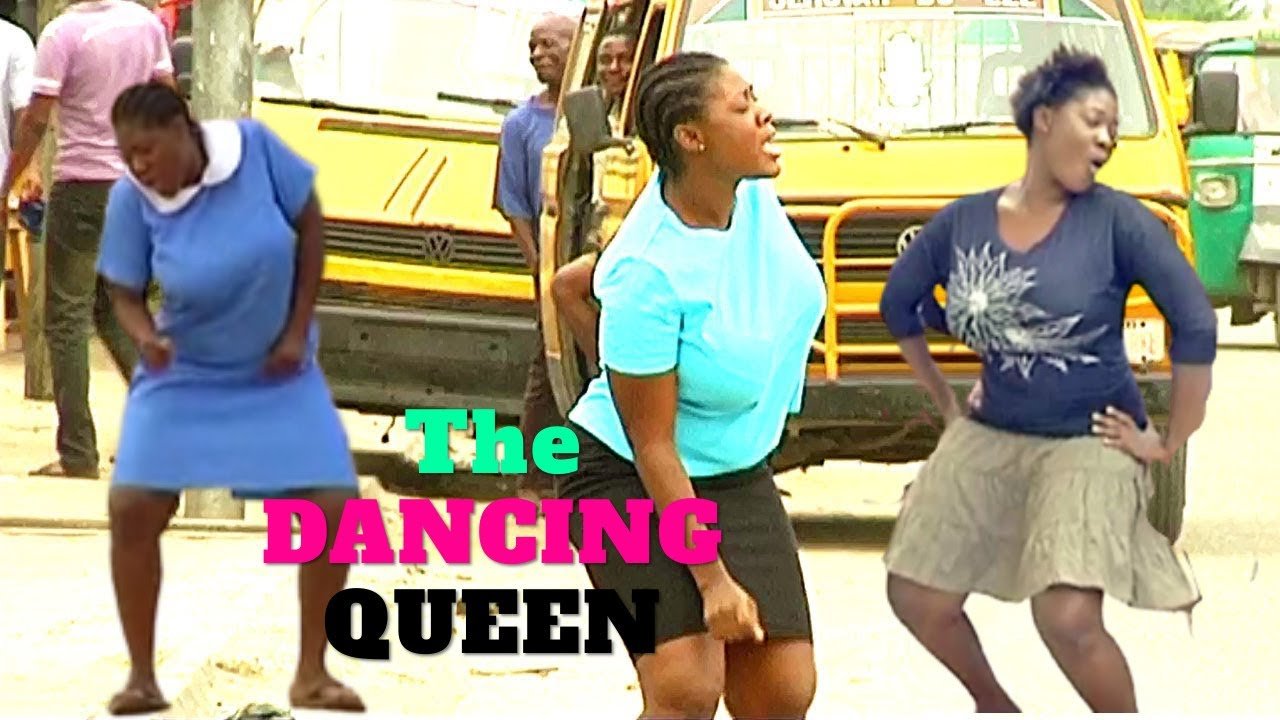
I quoted the director of a film, Dancing Queen in my write up It is a Nollywood film,  of course you know that Nollywood is the film industry in Nigeria, just like we have Bollywood.
Both of them going after Hollywood. So, in this film Dancing Queen, on

e would see that the protagonist, had good love for Zee world, alongside the mother, and some other fans and as she watches it on screen and becomes engrossed in the mannerisms of its casts, she uses her lines to influence the mannerisms of her fellow villagers, in terms of dressing culture, dance steps, accent and attire and because of the changes people see in her as she becomes influential (like a celebrity) in the society, she is able to gather youngsters in the village square and be teaching them how to dance Indian music and carry out actions as seen in  Zee world storylines. Like a network standing for globalization, so also is Nollywood today not only standing up for Africans as against but also for the world as to help add glee to the integrity of Nigerian cultures on screen.


Rai:  You make a great point. And this is something that I bring up in my own research as well . It's like you're pointing to like these global South proximities and for that reason how Bollywood is perceived differently. This sort of comparative research can highlight that. So Bollywood, even though the term itself sounds very imitative in that it is named after Hollywood, Bollywood is a very old industry. To borrow Michael Curtin’s phrase, Mumbai has been this media capital and existed contemporaneously with Hollywood. The first Hollywood movie was made in 1910, India made its first movie 1913. So the fact that this industry became popular as Bollywood happened in the 70s. I think that what we need to understand this dichotomy between the global north and south and we need to acknowledge the existence of other centers, you know, that have existed contemporaneously with Hollywood and have influenced other global regions like Nigeria because of cultural ties because of postcolonial proximity. Yeah, so we have defined that the fact that we have something like Zee points to, you know, these other centers within the global south, that are perhaps as if not more important in thinking about lateral flows and flows of cultural form and connections. Because Nigeria and India have a lot more in common, and have a lot more cultural connections, whether it is their post-colonial past that brought about sort of a different type of exchange or, you know, other kinds of political solidarities. And so, to think about recentering this narrative about how Hollywood is thought of as the originating point for everything,  which in the case of India and Africa it's not.


Uwah: That makes it a good contribution to note that Bollywood is an old industry. The first-time cinema was shown in Nigeria was in 1903. but the influence and aspiration to be like Hollywood has been there. African filmmakers keep reacting to it, I mean Hollywood, whatever it is.  So, what we want to do is be like Hollywood, or be on top of it and tell our own stories unlike what was told about Africa at the earliest times when cinema began about the continent. So, Africans today believe that they can tell their stories better than what the Western world has already told about them before now.


They believe that the wisdom of God in filmmaking and in creating Africa stories can be handled by themselves since the West did not utterly do justice to most of the stories, it was something like what Chiamanda Adichie says when she cautions about believing a “single story” which does not tell the whole truth, So most stories, do not play with specific things and that's why when they do, they want to showcase the context. Yeah, originality, identity, history and other issues like you said point to the connection between Nigeria and India, your arts and ours, again our political history, but also our cultural aspects. Not only political history actually, but also in some form of aspirations to be independent of colonial powers. After their long back and forth battle against colonialism and the effort to really assert themselves in who they are, they have meeting points that we can as well raise.

Uwah: Ok, do you see Zee world making inroads into any other country, whether in the West, or somewhere else, apart from Germany and how do people share in its storylines?

Rai: So to be very honest I haven't watched the Zee world shows in great detail and Zee world is specific to Nigeria. But what I can say in general is that, and this is something you also talked about so in terms of fandom and fan consumption, what attracts these fans or audiences to this type of content is that they want to dress like that, you know, be like Indians wear the bangles, wear the jewelry in a specific way. Thus kind of consumption of Bollywood as a cultural form beyond  just a media text is very interesting. It is a consumption pattern where Bollywood sort of exceeds this its limits as media or becomes this broader cultural form that encompasses Indian traditions, Indian culture, Indian kind of mannerisms gestures, all of those become interesting. So now the point of comparison I would say between how that same thing is received in Nigeria versus Germany would be able to say how are they consuming it? Is there an exoticization happening, even in the Nigerian context because surely in the German context it is happening. Whether it's Bollywood dancers who think about Indian media in specific way as exotic, as different, as fun, and that sort of becomes the point of resonance. However, the fans as entrepreneurs that I talk about are able to think beyond it. They understand this phenomenon and make connections with the industry.

The example that I used in my blog post is about this woman who grew up in the 2000s so she's very young. She grew up on a steady diet of Bollywood films edited for TV that were now being shown on German television. Zee came to Germany only recently, so the young fan consumed Bollywood in a specific way on mainstream German TV not Zee. In her performances she mimics gestures that she sees in Bollywood movies, perfectly like the Indians and there are sort of two levels of exoticization happening here. First she is consuming as a unique cultural form, then presenting it front of the industry and audience as this fan-entrepreneur. The industry is receptive to her because she is exotic. Her fandom and interest in Bollywood is exotic because she is occidental. There is a complex reverse post-colonial exoticization of the white fan/entrepreneur at work here. Her Bollywoodized whiteness is being consumed by the Indians. the Indian embassy or cultural organizations looking to sell Indian culture, for cultural diplomacy would then hire her to perform the Indian Bollywood dance in this context. It's like a very recursive loop where this sort of and exoticization is happening at multiple levels.

Uwah: Zee world is also a bit different and culturally specific. For instance, in its love stories, there is a shift in understanding what people call romance. It is full of words without the emotional show of specific arts like kissing as you see in western movies.
It has to be clean as it is hard to see a full-blown kissing, or having intimacy, on screen in Zee world, again it reveals fashion and how actors are covered-up with costumes and that they do not go as far as showing flesh. They cover the flesh. They are well dressed, shows too how Indian culture plays a huge role in whatever costumes they wear and whatever vision they portray, and the kind of culture, they feel to share. So in that context when we talk about romance in Zee world, it is quite different from some other portrayals in, say Hollywood movies. So, if we use the yardstick of the Western world to discuss romance in Zee world, it can be misleading.
That means that romance in the context of Zee world can be qualified as not making one uncomfortable or saying that too much of flesh is exposed.


Rai: One thing I would say that Indian self is changing very rapidly in these contexts, especially with the coming of streaming platforms and you see the newer bollywood movies and a lot is exposed and a lot is now permitted on screen. So yeah, so this is there is a different level and it's kind of dual edged sword. That sari can be worn in a certain way and thought of as a garment of modesty, in one context, can be a very sensual garment in another context so you have to look at how the fans in Africa are wearing it versus how these German fans are wearing it.
It is important to be able to make these comparisons because Bollywood or Indian media content in general as it exists today, is very vast therefore the form of consumption  is important.
The form is important because for Zee primarily, it is  Bollywood filtered for, the home, for TV ergo for a family audience. Right. And that's why it's important because the world is not the same as the Bollywood world. Zee world presents a kind of Bollywood sensibility filtered for the family and that is why I feel there's that great level of reliability in Africa, which would kind of focus on modesty, or the way that older Bollywood films were they aren't anymore. But still TV content in general uses some of the same structures because the primary target audience is still a family audience.


Uwah: Yeah, so that's the big difference I think.


Rai: Yeah. The other thing I would also say is that there is also a big cultural difference in the reception of Bollywood films  in Germany and Nigeria. In Germany the circulation of Bollywood started on TV. The films are usually three hours long. They were edited down to cut many songs and remove the extraneous information. That is how the circulation started in Germany, by showing edited Bollywood films on the German channel RTV 2. As long as that existed and the Bollywood films were being shown by mainstream German channels it worked fine, but as soon as Zee went into that market and started showing the kind of TV content that's popular in Nigeria that's more Bollywoodized, the fandom dropped. They did not appreciate it in the same way and Zee had to shout down their German operations.

Uwah: Exactly, yeah, yeah, yeah, exactly because we consume to relax and feel happy… the fastness or thematic thrust in production angles may not be the same, so it's understandable that culture speaks to all audiences who patronize it and not merely for academic purposes.


Swapnil Rai is Assistant Professor of Film, TV and Media at the University of Michigan, Ann Arbor. Swapnil’s research is concerned with the intersections of politics, popular culture and media industries and brings together global media industry studies, transnational stardom, audience studies and women and gender studies. Her work has been published in a range of scholarly journals including Communication, Culture & Critique, Feminist Media Studies, International Journal of Communication, Jump Cut and Cinephile. In her prior experience as a journalist, writer and editor, Swapnil has covered beats pertaining to cinema, art, and culture. She has also worked in the multimedia and information services industry for Thomson


Dr. Innocent Ebere Uwah is a Reader in Film Studies, at the Department of Theatre and Film Studies, University of Port Harcourt, Nigeria. His research interests are on the interface between representations and cultures, Nollywood and media education, identity constructions in films and religion communications.


Global Fandom Jamboree Conversation: Innocent Uwa (Nigeria) and Swapnil Rai (India) (Part One)

Bollywood Fandoms: The West versus East (Germany and Nigeria)

Is this fandom feminized in the West?


Rai: All right, so the first question of that I had for you is how is the Bollywood fandom itself feminized in a global more Western context. This is something I’ve been mentioning is the case in Germany. But I'm curious to know if it is similar in Africa,  or is it more dispersed because in some of the examples that I saw of Bollywood fans hailing from let's say Africa or other countries, living in western context both men and women equally consume the cinema. What are your thoughts in this for Nigeria, specifically?

Uwah: Fandom in Nigeria can be witnessed by looking at the contexts of film consumption – for example, where and how is Zee world consumed? The media act with attractions to audiences, like football game, music, film, or whatever help us to appreciate the nature and dynamics of fandom. That is what obtains in speaking about Zee world here.

Rai: it is similar to what you get by looking at Bollywood?

Uwah: Whatever I say Zee world stands for Bollywood which I concentrated on while discussing fandom as can be seen in my write up. Therein you see how, especially young couples, follow and consume Zee world; you discover that for homes that have aspirations and share values together, they look out for what to see in Zee world series.
So, they do a whole lot of things together, and everything they tend to share seems to revolve around the Zee world values. You also discover that apart from couples doing things together. Most women, consume it because there's some sort of escapism in it, because so many of them would love the canons of the story from the angle of romance.
The angle of love. and the way issues of life relationships are treated in Zee word are well captured in its stories. So, Zee word has a whole lot of patronage in Nigeria, because of its thematic thrust, focus of its relationships, because of its high points in humanness among young people. Again, because of its high appeal, people tend to enjoy how it goes about family issues and therein one can discover the dynamics of huge familyy life from one generation to the second and even up to the third.

Every story is in fact too wide to collapse, so  many people here in Nigeria practice living with extended family members and it is one thing you see sustaining family relationships in Zee world where everybody is involved, you don't take any person for granted. And sometimes the need of the baby can even be seen in the act of a granny, and the joy of the wife has implications for the husband, or the affairs of the house can make someone declare war in the family…so it makes people look up to the stories that resonates with their circumstances and feel good.

People also use it to explore the culture of the Indians. Look at the kind of traditional attires they put on as costumes as well as the way people handle spoken English spoken, most young people want to have aaccess to best practices in other words people also learn grammar through this, so they have a lot of things that bring up treasures to them from the screen experience and these things are some of the reasons why because zee world is hugely patronized and consumed on TV rather than on websites many would have gone online in Nigeria as a collective, but because not so many people can access the digital world from their homes, emphasis is on consuming it on television screen. The most they have to do is to buy the watch their favorites on TV unlike how it is done in the Western world where fans would connect each other online.

We have people in Nigeria that can follow a particular series of TV wherever they are by going online, and then watching it on screen, but people prefer to follow it live on television in Nigeria and watch it on TV. So that's how the zee world fandom sounds here.

Rai: So, what I'm hearing here is that there are a lot of factors that create these cultural resonances so one is age factors and generational. You said young couples, so the romance of it becomes important. You're also saying that family values, and the kind of resonances that exist in the way that Indian families are structured, that kind of reflects in in the narratives of the world, resonates with the African way of life as well, because it, it places emphasis on family bonds and children on like filial piety and things like that.
You also pointed to some platform issues that there is sort of this digital divide, wherein the access primarily comes through TV.

Uwah: Yeah.

Rai: For my part I can actually begin with contrasting this with how Zee exists in other contexts, and how the consumption of Zee which is this big TV conglomerate has a very interesting history in India . Zee’s parent corporation was a large industrial corporation Essel that had now media interests before they started Zee. And when, at the beginning of point of globalization, you know, when star and Rupert Murdoch and others wanted to enter the Indian market Zee stood up, as this entity who did not like these white skin channels to dominate the Indian mediascape .They were sort of the real original powerful Indian media conglomerate.
So, and they existed like that for a long time. And, like in their heyday even now, they have operations in over 169 countries now. Mostly they operate on the kind of cultural resonances that you're talking about so they started with markets where they had that sort of resonance, but they built on Bollywood. Because Bollywood has had a global circulation and popularity as you and I already discussed in Africa.

And so this cultural resonance with Bollywood is something that they banked on to then identify where else should they start their next channel and that this would function but then, like you also said genre elements the fact that a lot of their soap operas and stories were based on romance this sort of family drama and traditionally operated through a very melodramatic narrative. So those became key factors but often like they started with culturally proximate markets, but oftentimes Bollywood was sort of their touched on, to figure out whether their content would work in this specific market or not. Now, Germany, the context that I talked about in my blog post and is sort of a newer context.


In contrast to Africa in Germany Bollywood only became popular as it started to get globally popular in the 2000s with. And this was several factors that contributed to the global presence of Bollywood which was the industry itself was changing got globally ambitious got recognized by the Indian state as a legitimate industry so then could be a part of the global market in a way that it couldn't have been in the past and that changed a lot of things in the early 2000s. And then you've got a movie like Slumdog Millionaire, which essentially was an homage to Bollywood actually was an Indian story used Indian actors used bollywood, bollywood tropes and kind of this Hollywood director presented a cultish Bollywood for the rest of the world but are most of the elements, a lot of the elements of the movie were Indian so so this kind of Bollywood becomes a thing, a cultural form that people look up to and it becomes globally popular and is in that moment that a German channel sort of picked up on Bollywood movie to show, and this one particular star becomes really famous and and his films kind of start to get exported andthis whole thing starts. And that's when Zee also begins to think that okay well maybe there is a market here, and they start a channel of the Germany, but mostly as you know to see world It isn't just Bollywood but it's also Indian soap operas, and all of those kind of are intermixed as cultural forms both operate within similar structures of melodrama and music and so forth, which works well, let's say in a more culturally proximate market like Africa, but was and didn't work all that well in Germany consistently and it's only until they actually shut down their channel in the midst of the pandemic because they were incurring losses.

So how Bollywood continues to circulate is through the fans. These cultish fan followers these white women that are older women and younger women that are all very fond of Bollywood predominantly for how it emotionally moves them. But, unlike Africa, the difference is that they do not see any direct resonances to their real life or circumstances because that being a very Western context, the society is individualistic and not so community family driven, that those kind of resonances would be possible. But it's mainly around sort of the romance of it. And I've seen how now those fans have now carried the baton and want to create an Industrial structure which is sustained by them so these fans actually went ahead and started a Bollywood magazine, and they have their blog, they do film festivals.

So, even though industrially with nodes like Zee, Germany seems to be a place where they have sort of given up or do not have a concerted strategy around this market. The fans have become this industrial node that they are sustaining these flows and the Bollywood industry itself, draws from them.

Global Fandom: Swapnil Rai (India)

A Portrait of a Fan as an Entrepreneur and Industry Node:

Bollywood’s Female Fans in Germany and Russia


I was intrigued by [Kabhi Khushi Kabhie Gham, 2001 (SRK’s film)], but I was even more intrigued by the effect it had on my mother. I cannot remember ever seeing my mother cry, not even at funerals. But there she was watching this film, and she had tears running down her face.

—Julia Wessel, Editor of German Bollywood Magazine Ishq[i]

Julia Wessel, a twenty-five-year-old German student, was so moved by the phenomenon and fandom around Shah Rukh Khan (SRK) that she quit her degree in cultural anthropology to edit a German Bollywood magazine.[ii] SRK’s popularity among his German fans spurred the creation of fanzines, industry infrastructure, and collaboration that opened up a new market for Bollywood in the early 2000s.

Similarly, women in Russia and the former Soviet Union have consistently been ardent admirers of Bollywood since the 1950s. Awaara (1951; Dir: Raj Kapoor) was one of the earliest and most popular Indian films in the Soviet Union. The film’s release turned out to be a pivotal and defining moment for cinematic and cultural exchange with Russia. Awaara sold close to 64 million tickets, became the third most viewed foreign film in Soviet history, and made Raj Kapoor a soviet cultural icon.[iii] According to Bollywood fan Alyona Kuznetsova, "back then, Raj Kapoor was a sex symbol."[iv] Many of Kapoor's films subsequently found distribution in Russia, and he collaborated with Russian production companies and actors. Thus, Awaara instigated a new channel for distribution and market for Indian films. By the time of the collapse of the USSR, no fewer than 226 Indian films had been screened in the country.[v] However, following Perestroika, Russia was inundated with media products from around the world, and the popularity of Indian cinema declined. Nevertheless, the Indian Hindi film culture still retained its most dedicated audience – women. 


In an interview with a programming consultant for Zee, an Indian satellite TV broadcaster that has operations in over 169 countries, it was revealed that the main pull for Zee to launch a Bollywood channel in Russia was the dedicated female audience for Hindi films. Even though the global popularity of Indian cinema is not well known in the Anglo-phone western world, Indian films have been popular in diverse global regions ranging from Azerbaijan to Egypt. While in the global south in countries such as Afghanistan, Egypt, or China, Bollywood films are seemingly popular across male and female audiences, Germany and Russia offer an interesting manifestation of female fandom. Companies such as Zee or Rapid Eye Movies (German Distributor) are very clear about the audience they are targeting and, in their estimation, it is women –  particularly older women in their 40s, 50s, and 60s.


The core questions that I want to engage with are tied to

  • 1) the feminization of a film culture from the Global South, especially when the recipient is from a western context. What are the reasons for it, and why are German and Russian women attracted to Bollywood movies?

  • 2) How does this affective fan labor engage with industry networks, especially in Germany, where the fans themselves became an industry node by starting a magazine, organizing Bollywood award shows, and hosting films on the web. In this context, I want to foreground the notion that these women fans become the affective industrial catalyzers and intermediaries that exceed notions of traditional fandom based on free fan labor or the exploitation of fan labor. While it is a labor of love for them, it comes with the expected fruits of entrepreneurship.

  • 3) How do these fans and their mattering maps (Grossberg) for these films and film stars generate affect that in turn translates to industrial contexts creating new distribution networks for Bollywood films in regions where Bollywood was not popular before?

[i] (Chopra, 2014) Chopra, Anupama. 2014. "Bollywood is dancing far abroad; Global fortunes advance for Hindi films, but US market is still resisting." International New York Times, September 27: 1.


[ii] Wessel’s magazine, Ishq, has a circulation of 30,000 in Germany, Austria, and Switzerland (Chopra, 2014).

[iii] ibid

[iv] (Fedotova 2013)

[v] ibid

Global Fandom: Innocent Ebere Uwah (Nigeria)

Fandom is typically a global consumption practice. Among the platforms where it is visibly contextualized in Nigeria are popular cultures like football, music, big brother Naija, comedy skits, and Nollywood films with different genres and stars having large followers among the audiences. Being the nation’s film industry, Nollywood in particular, is very popular with prosumers – (producers and consumers) – as it serves many sensations and tastes given fans’ identification with its storylines, stars and thematic concerns. Although my interest in media studies has overtime been focused on Nollywood studies, I am drawn to discuss the Zee World television channel here in the same light as Nollywood genres since it is consumed in the same fashion and mode as films on television screens. Again, both share borderline connections such as the overarching use of dialogue to drive storylines and excessive use of visual effects to punctuate narratives. There is reliance on emotional appeal to inflect suspenseful key motifs in them. Added to these is the idea of audiences taking both Nollywood and Zee World representations as purveyors of good spoken English language techniques and social behavior mannerisms for possible identity construction and affirmation.


Zee World is a Bollywood English Language television channel and program that is made available to consumers in Nigeria via the South African satellite television network provider, DSTV, owned by The Multichoice Group. It plays melodrama in seasons and is replete with excesses of emotion, sensation and suspense. Of course, many things can trigger one’s interest in consumption practices of media fans, but one which makes me consider Zee World’s patronage in Nigeria is not only because of the massive number of consumers it has but the nature of its reception contexts as an example of Bollywood, in competition for fans and audiences, with Nollywood in the country. 


Most young people love arts and follow it up wherever it is showcased insofar as it is beautiful and satiating. Zee World is one of those with every melodramatic quality: filled with excesses of emotion and dialogue. Its depictions are more of romantic stories that tend to elicit responses from passionate viewers, most especially the young and females in particular. Of course, this is one of its high points and one of the key reasons why it attracts most people to its viewership. People do not only love watching romance on television but follow emotions as cast on screen to identify with characters and their stories. They watch and comment alongside the narratives as the ‘seasons’ unfold progressively. Reporting their joy in watching Zee World, some Nigerian women interviewed for this write up point to their escapism with the television program based on a few things, such as the admiration of the portrayal of Indian culture on, the sense of fashion and jewelries used by cast and the tropes of romance that is differentially suspenseful. One person who emphasized this is Salome[i], a thirty-two-year-old woman who loves watching Zee World with her husband. According to her:


As for me and my husband, we like watching Zee World and while doing so, you discover that you are lost in suspense because they have lots of seasons and you cannot predict the storylines. I like it because it is a friendly television program. You can hardly see in Zee World where people kiss or openly romance, unlike some others that can make a family uncomfortable. I think they respect the Indian culture just as seen in Bollywood movies. My children watch Zee World with me and my husband because there is no fear of misleading them with excessive romance on screen, not to talk of sex and I love the sense of fashion they show…Zee World respects the Indian culture. They hardly swift away and keep to the rules of their Indian culture. It resonates with us as a young couple because the stories are all about giving love and receiving love. The cast do the normal things movies portray, such as real emotions, culture, jewelries and nice costumes. Also, I love seeing them portray emotional commitment and couples reasoning alike and trying not to hurt each other…it just feels nice watching the episodes.


Fandom as implicative here therefore, refers to the exuberant and habitual performative consumption of the screen actions that the Zee World television melodrama helps us decode among Nigerians, especially young women, by looking at key mannerisms underlying the sites and moments of its consumption. Even though, an analysis of this nature may not easily tally with expectations that pertain to digital platforms where fans have a network of friends engaged in chatting and discussing their views, yet; activism in media consumption, especially in Nigeria, where some limitations do not yet guarantee full blown netnography of audiences cannot easily be ignored based on premises that pertain to digitization. It will be denying the truth if one thinks that not much of interactivities take place between Zee World texts and its numerous consumers across Nigeria, albeit in the domestic rather than online spaces. For other fans like Agnes[ii], who takes her womanhood serious, “Although Zee world is my favorite television program, the stories can at times be disrespectful to women… toiling with their emotions…. but the one character I love most is Zara. Zara, in one of the episodes fought hard for the right of women…if men have the right to work, then the female folk has to have the same equal right to work…she fought for her right and I love her and her role.” Like Agnes so also is Juliet[iii], another young woman of twenty-nine years who believes that Zee World resonates with her mainly because of her position as a newly married woman and the lessons it helps her learn. According to her, “I love it when I see a good storyline and the cast playing captivating roles in Zee World. Over 90 percent of Zee World films I have watched has marriage and family settings…. they show how a good number of people live together as a family, both the young and the old. So, as a young woman who has a new home, I love to watch it and learn how I can handle my home and live with good number of people and accommodate them.”


There are ample reasons to robustly think that there are Zee World fans in Nigeria than can be imagined. Apart from the one-on-one personal communications I have had with most Zee World fans; I have experienced the joy and laughter of a group in catching up with the episodes even in my sitting room. I once invited some young people to a meeting and while we were waiting to form the quorum, the television set was on and people, mostly young women, could be seen discussing a Zee World episode going on at that time passionately with convincing knowledge of plotlines from its beginning and using names of casts to drive their analysis. Again, at some other gathering, I have seen couples leave an assembly earlier than others because they would not like to miss a show out of the ‘seasons’ of their favorite Zee World television program. In other words, Zee World has become a household word and a catch phrase in the Nigerian lexicon currently. There are both passive and active consumers. Most importantly, there are engaging and vibrant fans who follow the ‘seasons’ on regular basis and have deep-seated knowledge of the history and storylines of the programs. Corroborating the popularity of Zee World in Nigeria, a filmmaker I cited his work in my article decided to encode frames of family members watching Zee World in one Nigerian (Nollywood) film, titled Dancing Queen[iv] (Chidebe, Mac-Collins, 2017). By doing so he foregrounds the connection of people with Zee World and showcases the high level of patronage the Indian melodrama receives in the country.

 Strictly speaking, discussing fandom in Nigeria can be engaging from many fronts. But the idea behind limiting it to Zee World here is with the mindset of conducting an ethnography that can be managed in terms of exploring the nature of its consumption practices among young people who have access to it via cable television network. Such a study will dovetail not only the personal contexts of its consumers but also the uses they make of the screen narratives and the nature of their consumption modes. Doing so will not only reveal further the place and status of fan studies in Nigeria but also significantly help to map out the unique characteristics of the fans of  Zee World in the Nigerian context.


About the Author

Dr. Innocent Ebere Uwah is a Reader in Film Studies, at the Department of Theatre and Film Studies, University of Port Harcourt, Nigeria. His research interests are on the interface between representations and cultures, Nollywood and media education, identity constructions in films and religion communications.


[i] Salome, not the real name, personal communication on 01/21/22.

[ii] Agnes, pseudonym, personal communication on 01/20/22

[iii] Juliet, pseudonym, personal communication on 01/25/22

[iv] See: Uwah, I. E. (2019). Repositioning Nollywood in a Struggling Economy: The Need to Reform a Self-Help Industry for Maximum Impact in Nigeria. Black Renaissance Noire. Volume 19. Issue 1. New York University. USA. Pp. 126 – 135.


\

Global Fandom Jamboree Conversations: Veluree Metaveevinij (Thailand) and Khursten Michelle L. Santos (The Philipines) (Part Four)

Santos:


I would like to express my appreciation to Veluree and the knowledge she has imparted on Thai BL in her comments. Seeing the robust transformations of women’s literature and the thriving creative industry in Thailand makes me recognise the parallels in publication trends in the Philippines. Interestingly, while this has transformed women’s literature, it hasn’t developed on the same scale as it has in Thailand. In the next sections, I’ll be answering some of Veluree’s questions. 


BL ECOSYSTEM IN THE PHILIPPINES


While my research on Boys Love (BL) initially focuses on Japan, the next stage of my research looks into the idea of how BL literacies are translated and adapted outside of Japan. For example, one of the more popular BL literacy involves kabedon, the act of pushing a person against a wall in order to have an intimate conversation. Stemming from depictions in various shojo manga, kabedon has been extensively used in BL manga. This visual concept would be adapted in global BL works as Thai BL and Pinoy BL titles would use kabedon as an opportunity to establish a couple in the story. That said, global BL media are also finding new affective media elements from local concepts and practices. An example of this is the association of nom yen, a Thai pink milk, with characters who bottom in Thai BL. The inclusion of these local concepts and practices highlights the diversification of BL literacies that are expanding beyond those defined by Japanese BL fans. 


A ‘kabedon’ scene from Gaya sa Pelikula (2020)


Compared to Japan, Thailand, and China, the media ecosystem of surrounding BL in the Philippines is still very young and has much room to grow. Unlike in Thailand, where there is wide access to Japanese and Thai-produced BL media, from novels to comics, the Philippines has limited access to these materials and often rely on the limited fan-translated works that are openly distributed online for free. It shares a similar history with Thailand where the initial community of BL readers heavily interacted with BL communities online, many of which are Anglophone BL (or yaoi) fan spaces such as Aestheticism.net or Aarinfantasy.com. In the early 2000s, these spaces were central in educating different fans of the different literacies associated with Japan’s BL culture. As such, initial Filipino BL creators were heavily influenced by these literacies and would use them to create various fan-works. Online blogging spaces such as Livejournal and archives for self-produced fictions such as Fanfiction.net, Archive of Our Own, and Wattpad were important spaces for Filipino BL fans to explore writing BL. Y!Gallery, Deviantart and Pixiv were critical for learning how to draw BL. By 2010s, social media platforms such as Facebook and Twitter became important avenues for BL interaction. While these online developments provided a larger space for BL expression, the diverse access points to BL has also diluted BL literacies from Japan. 


Most BL works in the Philippines are fan works produced and distributed online. These BL fanworks shift with global media trends as some feature popular anime and manga characters while recent BL fanworks focus on shipping idols from KPOP, and actors from danmei-related drama or Thai BL. The lack of local original BL works is primarily due to the lack of media infrastructures that sustainably allow Filipino BL creators to make a living out of creating BL. Since 2013, there is only one BL publisher in the Philippines, Black Ink which publishes BL novels and comics in Filipino. The difficulty in producing BL comics and novels at a commercial pace have left creators to pursue self-publication. Artists such as CinnamonRub choose platforms such as Tapas to distribute their BL works. Philippine BL fan events such as Blush have produced BL anthologies but the cost of production and the lack of contributions have made the publication of the anthology inconsistent. In 2020, taking inspiration from Thai BL dramas, PinoyBL, Philippine-produced BL web dramas also emerged. A handful of PinoyBL titles reached global acclaim as titles such as Gameboys received nominations and awards from all over the world. This energy brought about by the confluence of global BL cultures will hopefully help nurture and develop BL media in the Philippines. 


In terms of literacies, Black Ink follows uses Japanese BL literacies while adapting some of these by featuring stories in the Philippine context. An example of this can be seen in Claudine Erang and Peach Balai’s 2015 comic BTS, which features two rival actors where one actor followed a Filipino path to stardom. Black Ink, despite its low prices ($2.00 for an 80-page comic), is less accessible compared to a Thai BL show which can be watched for free on mobile devices. Different mobile packages that give “free” bandwidth data to Youtube has made Thai BL more accessible to Filipino BL fans. As such, since 2014, a good number of Filipinos became more interested in Thai BL (Baudinette 2020). By the time series such as SOTUS became accessible on Netflix and 2gether was globally broadcasted with Filipino subtitles on Youtube at the start of 2020, Thai BL became the more recognizable form of BL in the Philippines. The emergence of PinoyBL, would often allude to Thai BL as their inspiration and motivation rather than Japanese BL. The lack of access to legal or fan translations of Thai Y-novels made Thai BL dramas the main point of access to Thai BL and BL Literacies. As such, there is an interesting mix of BL fans in the Philippines. First, there are BL fans who are literate in Japanese BL literacies and its connections to transnational flows of BL across the region. Second, there are BL fans who are unaware of BL’s long history and highly associate BL culture with Thailand.  


ON EROBL IN THE PHILIPPINES 


While I analyzed EroBL in commercial Japan works, I can’t say that EroBL has emerged in commercial BL works in the Philippines. The obscenity laws in the Philippines prevent the depiction of these kinds of scenes. Black Ink labels some of its BL titles as M, indicating that it contains mature content, but many of its texts imply sexual scenes rather than depict them. PinoyBL also imply sexual intimacy but do not portray sexual acts in their dramas. 


This lack of EroBL in commercial BL media does not mean that pornographic BL works are not produced by Filipino BL creators nor does it mean that there is a lack of support from local BL fans. Many of these are distributed as fanworks online, either as explicit fanfiction or fanart. Some are self-produced and are distributed in local and global fan events such as Comic Market in Japan (Santos 2019).  


ON FILO AU 


While PinoyBL is a commercial BL work inspired by Thai BL web dramas, FILO AU is a fan-based adaptation that engages with Thai BL through localised shipping practices on social media. Filo AU emerged in 2018 as part of K-POP shipping culture and with the popularity of Thai BL it has been used by fans as an avenue to explore different scenarios for their favourite ThaiBL ships. In tagging a social media AU as FILO AU, readers are expected to see ships situated not from their original canon but in the Philippines. For example, BrightWin FILO AU may feature BrightWin as rival athletes from Philippine universities renowned for their athletic rivalry. Sometimes, these popular ThaiBL ships are rewritten in a FILO AU as characters in a famous Filipino romance movie. Even when there are local actors that can slip into these FILO AU, the choice to use queer characters and identities, such as Thai BL characters, highlight the strong heteronormative attachments to local actors and the need to use queer characters to explore queer local Filipino contexts that are deeply attached to heteronormative media and norms. 


Metaveevinij:


I really appreciate the great information Kristine has given. Also, thanks for the questions Kristine picked up for further discussion. I will respond accordingly. 


ON THE TENSION OF MODERNITY IN THAILAND


I argue in my paper that audiences in Thailand and Myanmar are consuming transnational media because of the feeling of ‘modernity’. This argument is in accordance with what Koichi Iwabuchi (2004) argued in his edited book, Feeling Asian Modernities Transnational Consumption of Japanese TV Dramas. Burmese audiences feel a notion of ‘modernity’ when they are watching Thai media, whereas Thai audiences feel similarly when they are watching Korean series. Therefore, transnational media seems to fulfill audiences in a particular way that local media cannot offer them. 

  Recently, there are controversial arguments among netizens in Thailand regarding the difference between Thai and Korean TV dramas/movies. Many Thai netizens, especially the young generation, argue that qualities of Thai media content are lower than those of Korean content. They denounced the predictable formula and melodrama styles of Thai content. Although this criticism is partly true, they ignore the fact that Thai content, including BL series, is able to attract an international audience and receive global recognition. I would like to argue that this criticism comes from the tension of modernity in Thailand. Thai young audiences feel that content in Thai media is less modern so that they cannot be attracted by this local content. 


Arguably, nowadays the audience in Thailand has separated into two main groups. The first group is the audience who still enjoy watching Thai soap operas. The second group is the audience who enjoy watching Korean, Japanese, and Western media. The first group usually is in their 30s and over, while the second group seem the younger generation. Nonetheless, in many times, ages cannot identify this difference, and these two groups of audiences can be overlapped. Thai BLs seem an ‘in between’ of these two kinds of media content. They have Thai settings with  non-heterosexual relationship and Japanese influence. Therefore, young Thai audiences seem to accept this kind of content more than traditional Thai soap operas.    


What I am trying to say is the fact that there is a big generation gap. Or, maybe, it is not a ‘generation’ but an ‘ideological’ gap in Thailand. Many audiences feel that they can relate themselves to Korean TV dramas rather than Thai TV dramas. This means that Thai media cannot offer content that convinces particular audiences in Thailand. For example, young audiences may feel that romantic relationships portrayed in Thai soap operas are not ‘real’ for them, compared with romantic relationships portrayed in Thai BL series, Japanese manga, or Korean dramas. This ideological gap can be seen in a form of differences in political ideologies as well. Arguably, this leads to the phenomena that many Thai youths are using popular culture as an expression of their political ideologies. 


THE FANDOM IS POLITICAL OR APOLITICAL SPACE 


As mentioned in my opening statement, I am interested in the way that young protesters use #MilkTeaAlliance and other popular hashtags to evoke global pro-democracy movement. I am excited to know that the Filipino fans also participate in this movement. As you mentioned, in many times, fan activities seem to be a way to escape from political reality. Nevertheless, I would like to argue that eventually fans cannot help to relate themselves to political reality in Thailand. For example, Thai fans are fascinated to watch Korean series because characters in the series criticize established institutions, such as the military, police, and court in a way that they would like to criticize these institutions in Thailand. 


When the famous Korean series, such as Kingdom (2019), Squid Game (2021), and Vincenzo (2021), are released on the streaming platform. Many Thai fans captured some dialogues and scenes to relate series content to what is going on in Thailand.  My argument is that consuming popular culture seems to be apolitical activity. But, in fact, this activity is closely related to political ideology, regardless of whether audiences realize this fact. 


My current research project, therefore, aims to investigate how the BL fans join online political movements by using a concept of fan-based citizenship, which is public engagement and civic action that arise from fandom participation (Hinck 2019). Hopefully, my forthcoming paper can provide a better understanding of the complexity of cultural and political spaces in BL fandom. 


In terms of literacies, Black Ink follows uses Japanese BL literacies while adapting some of these by featuring stories in the Philippine context. An example of this can be seen in Claudine Erang and Peach Balai’s 2015 comic BTS, which features two rival actors where one actor followed a Filipino path to stardom. Black Ink, despite its low prices ($2.00 for an 80-page comic), is less accessible compared to a Thai BL show which can be watched for free on mobile devices. Different mobile packages that give “free” bandwidth data to Youtube has made Thai BL more accessible to Filipino BL fans. As such, since 2014, a good number of Filipinos became more interested in Thai BL (Baudinette 2020). By the time series such as SOTUS became accessible on Netflix and 2gether was globally broadcasted with Filipino subtitles on Youtube at the start of 2020, Thai BL became the more recognizable form of BL in the Philippines. The emergence of PinoyBL, would often allude to Thai BL as their inspiration and motivation rather than Japanese BL. The lack of access to legal or fan translations of Thai Y-novels made Thai BL dramas the main point of access to Thai BL and BL Literacies. As such, there is an interesting mix of BL fans in the Philippines. First, there are BL fans who are literate in Japanese BL literacies and its connections to transnational flows of BL across the region. Second, there are BL fans who are unaware of BL’s long history and highly associate BL culture with Thailand.  


ON EROBL IN THE PHILIPPINES 


While I analyzed EroBL in commercial Japan works, I can’t say that EroBL has emerged in commercial BL works in the Philippines. The obscenity laws in the Philippines prevent the depiction of these kinds of scenes. Black Ink labels some of its BL titles as M, indicating that it contains mature content, but many of its texts imply sexual scenes rather than depict them. PinoyBL also imply sexual intimacy but do not portray sexual acts in their dramas. 


This lack of EroBL in commercial BL media does not mean that pornographic BL works are not produced by Filipino BL creators nor does it mean that there is a lack of support from local BL fans. Many of these are distributed as fanworks online, either as explicit fanfiction or fanart. Some are self-produced and are distributed in local and global fan events such as Comic Market in Japan (Santos 2019).  


ON FILO AU 


While PinoyBL is a commercial BL work inspired by Thai BL web dramas, FILO AU is a fan-based adaptation that engages with Thai BL through localised shipping practices on social media. Filo AU emerged in 2018 as part of K-POP shipping culture and with the popularity of Thai BL it has been used by fans as an avenue to explore different scenarios for their favourite ThaiBL ships. In tagging a social media AU as FILO AU, readers are expected to see ships situated not from their original canon but in the Philippines. For example, BrightWin FILO AU may feature BrightWin as rival athletes from Philippine universities renowned for their athletic rivalry. Sometimes, these popular ThaiBL ships are rewritten in a FILO AU as characters in a famous Filipino romance movie. Even when there are local actors that can slip into these FILO AU, the choice to use queer characters and identities, such as Thai BL characters, highlight the strong heteronormative attachments to local actors and the need to use queer characters to explore queer local Filipino contexts that are deeply attached to heteronormative media and norms. 


Global Fandom Jamboree Conversations: Veluree Metaveevinij (Thailand) and Kirsten Michelle L. Santos (The Philipinea) (Part One)


Santos:


Veluree’s works and opening statement speak of the transnational impacts of Southeast Asian media within the region. From the exploration of nostalgia to aspirations of modernity and hybrid expressions of gender, Veluree has highlighted fan communities in modern transition. In doing so, we can see through her analysis of these transnational films the ways in which fans in the region reflect on the changes happening in their everyday lives and their desire for change while also longing for the past. I find this negotiation relatable as I also see it within Philippine fan communities that seek to find their identities by engaging with regional media. 


ON THAILAND’S MODERNITY 

Your finding on the contrasting interests among young Thai and Burmese fans and their aspirations has its similarities in the way Boys Love has been viewed here in the Philippines. While I don’t have any idea on the response of Thai Fans to PinoyBL, I have seen Filipino viewer responses to Thai BL and they do associate a kind of “modernity” with Thailand because of how forward Thailand appears in producing BL content alongside their long media history of presenting queer narratives. It is quite interesting that this perception of “‘modern’ sexual expression” is associated with Thailand given that Thailand has its own struggles with LGBTQ politics and issues. If I recall, a number of ThaiBL actors have been quite supportive of the LGBTQ community yet this support is not consistent among other BL actors. I’d like to ask your opinion on this “modern” tension. 


ON #MILKTEAALLIANCE: THE FAN IS POLITICAL


Your section on the #milkteaalliance is a wonderful example of transnational connectivity and political causes brought about by a media landscape that has consciously (or unconsciously) integrated fan culture and politics. In my short observations of this hashtag, I am impressed by how some actors actively participated and fans eagerly rallied behind them. What’s fascinating is how you mentioned Philippine participation in this hashtag when it came to our own border concerns with China. It is one of many examples that exhibit fan networks exercising their political agency. A wonderful counterexample to many criticisms of fans as mindless consumers of popular culture. 


That said, I find the visibly of fan politics highlight the political tension between fans. In the Philippines, whenever fans engage in political activities, there are heated discussions concerning media and its fandom as an apolitical space. The tensions surrounding political factions in the Philippines colour fan understanding of politics. For example, the hashtag #KPOPStansforLeni was an initiative by some Filipino fans to support a political candidate and develop voter education for the upcoming May 2022 Philippine presidential election. This was met by criticism by other Filipino fans who feel that fandoms shouldn’t associate their KPOP groups with political events and issues. Of course, #milkteaalliance and KPOP fans’ political initiatives are some examples of how fans align with the politics of their idols. At the same time, however, not all fans develop this political attachment. Some fans see their idols as a form of escape from political reality. A part of me wonders if you see this kind of tension within fan spaces in Thailand and Myanmar. 


Metaveevinij:


“ROTTEN WOMEN” AND BOYS LOVE LITERACIES 

 I am interested in the term “Rotten women” you mentioned in your opening statement. As far as I know, there is no such word in the BL communities in Thailand. Thai female BL fans are called ‘Sao Wai’. Sao means girls, and Wai comes from the sound of Y, the first alphabet of Yaoi. On the contrary, many Thais call television soap operas ‘Nam Nao’, which literally means “Polluted water” because of  their cliché stories and stereotypical characters. 


Therefore, at the beginning of this dialogue, I would like to unfold the literacy communities in Thailand, particularly female writers and readers connecting with the BL literacies. Hopefully, this discussion can bring better understanding of the BL communities in Thailand and the Philippines. 


Previously, novel writers in Thailand, especially female writers who write romance novels, published their works in weekly and fortnightly magazines which target housewives and female readers. Famous magazines, such as Satri Sarn, Sakulthai, and Kwan Ruean highly influenced women’s literature in Thailand. Novels of acclaimed writers published in the magazines may eventually become television dramas, which also have female audiences as a main target. 


Nonetheless, this situation has changed since the late 2010s.  Digital disruption leads to decline in popularity of printed magazines and newspapers. To survive, various magazines have transformed from printed media to online platforms. However, many editors of magazines that publish novels were in their 50s or 60s. They decided to retire from the business. The printed platform for weekly and quatarly Thai romance novels, then, have ceased operations. However, there are still publishers that publish Thai novel books. 

In the meantime, there is a new arrival of digital platforms for writing and reading novels. The website called Dek-D.com, established since 1999 for teenage content, has opened a section for publishing online novels.  Later, many other digital platforms, such as ReadAWrite, Tunwalai, and Joylada, established and quickly gained popularity among young writers and readers. Many writers who publish their works on these platforms are the young generation who are familiar with popular culture from Japanese manga, K-pop, and Western fantasy novels. Finally, these newcomers become key creators for the Boys Love novels that drive the BL community in Thailand. Thai BL writings closely relate to fandom cultures. Many BL novels are written as ‘fan fictions’, in which popular idols are paired up as the imaginary male-male couples. As a result, the readers of this kind of fiction usually share a common interest with K-pop and J-pop fans. This situation possibly happens in the Philippines as well. 


Consequently, I would like to ask you for further elaboration. What kind of ecosystem has BL novels or contents been created in the Philippines? As I already mentioned about Thailand’s case, changes in media technology and the emergence of a new generation of novel writers and readers are key factors that lead to the popularity of this kind of content. I wonder how it is going in the Philippines’ case.

ERO BL 

Another issue I would like to discuss with you is ero BL, a pornogaphic subgenre in Boys Love manga that you mentioned in your paper (Santos 2020). This subgenre exists in Thai Boys Love literacies as well. As mentioned earlier, many Thai BL novel writers published their works online. The online platforms usually have specific genres for BL novels. For example, in readAwrite, there is a “Boy Love Lovely Room” tag for BL romance novels. However, if love scenes or sex scenes in novels are quite explicit, there is also a “Boy Love Secret Room” tag for BL erotic novels. Readers can access novels tagged “Boy Love Secret Room” only if their ages are 18 years old and over. Some contents are able to be accessed for free. But, writers can limit some content for only readers who pay them ‘coins’ - a currency that is exchanged in the online novel platforms. Many online writers, therefore, try to attract readers by composing sexually explicit narratives. In the Thai online novel community, these explicit scenes are called NC (No children) scenes. Writers, sometimes, inform readers that their content are ‘NC 18+’ (suitable for either 18  years old or above) or ‘NC 20+’ (suitable for either 20 years old or above) to attract readers who are looking for sexually content which are similar to soft core or hard core porn. 


Genres of Thai Online Novels, 

including Boy Love Lovely Room and Boy Love Secret Room


As mentioned above, ero BL exists because there is a system to support them - both readers and writers are motivated to read and write this kind of content. Although online communities seem to give writers more freedom to write adult content, there is also an attempt to limit this kind of content for only suitable readers. I wonder if there is any kind of system in the Philippines supporting ero BL. 


INFLUENCE OF THAI BL IN THE PHILIPPINES 


Last but not least, I would like to discuss with you about Thai BL’s influence in the Philippines. As you mentioned in the opening statement, FILO AU, a fan-produced content based on social media, has transformed Thai BL 2gether (2020) to BL in Filippino’s setting. Could you please elaborate more about this transformation? This fan made content exists in the form of novels, manga, or moving images. Also, it would be more interesting if you could explain further the local audience feedback. Do Filipino fans read the adaptation of 2gether (2020) by comparing it with the original one? Or, they just read it as the Filipino BL. 


Compared to Japan, Thailand, and China, the media ecosystem of surrounding BL in the Philippines is still very young and has much room to grow. Unlike in Thailand, where there is wide access to Japanese and Thai-produced BL media, from novels to comics, the Philippines has limited access to these materials and often rely on the limited fan-translated works that are openly distributed online for free. It shares a similar history with Thailand where the initial community of BL readers heavily interacted with BL communities online, many of which are Anglophone BL (or yaoi) fan spaces such as Aestheticism.net or Aarinfantasy.com. In the early 2000s, these spaces were central in educating different fans of the different literacies associated with Japan’s BL culture. As such, initial Filipino BL creators were heavily influenced by these literacies and would use them to create various fan-works. Online blogging spaces such as Livejournal and archives for self-produced fictions such as Fanfiction.net, Archive of Our Own, and Wattpad were important spaces for Filipino BL fans to explore writing BL. Y!Gallery, Deviantart and Pixiv were critical for learning how to draw BL. By 2010s, social media platforms such as Facebook and Twitter became important avenues for BL interaction. While these online developments provided a larger space for BL expression, the diverse access points to BL has also diluted BL literacies from Japan. 


Most BL works in the Philippines are fan works produced and distributed online. These BL fanworks shift with global media trends as some feature popular anime and manga characters while recent BL fanworks focus on shipping idols from KPOP, and actors from danmei-related drama or Thai BL. The lack of local original BL works is primarily due to the lack of media infrastructures that sustainably allow Filipino BL creators to make a living out of creating BL. Since 2013, there is only one BL publisher in the Philippines, Black Ink which publishes BL novels and comics in Filipino. The difficulty in producing BL comics and novels at a commercial pace have left creators to pursue self-publication. Artists such as CinnamonRub choose platforms such as Tapas to distribute their BL works. Philippine BL fan events such as Blush have produced BL anthologies but the cost of production and the lack of contributions have made the publication of the anthology inconsistent. In 2020, taking inspiration from Thai BL dramas, PinoyBL, Philippine-produced BL web dramas also emerged. A handful of PinoyBL titles reached global acclaim as titles such as Gameboys received nominations and awards from all over the world. This energy brought about by the confluence of global BL cultures will hopefully help nurture and develop BL media in the Philippines. 


In terms of literacies, Black Ink follows uses Japanese BL literacies while adapting some of these by featuring stories in the Philippine context. An example of this can be seen in Claudine Erang and Peach Balai’s 2015 comic BTS, which features two rival actors where one actor followed a Filipino path to stardom. Black Ink, despite its low prices ($2.00 for an 80-page comic), is less accessible compared to a Thai BL show which can be watched for free on mobile devices. Different mobile packages that give “free” bandwidth data to Youtube has made Thai BL more accessible to Filipino BL fans. As such, since 2014, a good number of Filipinos became more interested in Thai BL (Baudinette 2020). By the time series such as SOTUS became accessible on Netflix and 2gether was globally broadcasted with Filipino subtitles on Youtube at the start of 2020, Thai BL became the more recognizable form of BL in the Philippines. The emergence of PinoyBL, would often allude to Thai BL as their inspiration and motivation rather than Japanese BL. The lack of access to legal or fan translations of Thai Y-novels made Thai BL dramas the main point of access to Thai BL and BL Literacies. As such, there is an interesting mix of BL fans in the Philippines. First, there are BL fans who are literate in Japanese BL literacies and its connections to transnational flows of BL across the region. Second, there are BL fans who are unaware of BL’s long history and highly associate BL culture with Thailand.  


ON EROBL IN THE PHILIPPINES 


While I analyzed EroBL in commercial Japan works, I can’t say that EroBL has emerged in commercial BL works in the Philippines. The obscenity laws in the Philippines prevent the depiction of these kinds of scenes. Black Ink labels some of its BL titles as M, indicating that it contains mature content, but many of its texts imply sexual scenes rather than depict them. PinoyBL also imply sexual intimacy but do not portray sexual acts in their dramas. 


This lack of EroBL in commercial BL media does not mean that pornographic BL works are not produced by Filipino BL creators nor does it mean that there is a lack of support from local BL fans. Many of these are distributed as fanworks online, either as explicit fanfiction or fanart. Some are self-produced and are distributed in local and global fan events such as Comic Market in Japan (Santos 2019).  


ON FILO AU 


While PinoyBL is a commercial BL work inspired by Thai BL web dramas, FILO AU is a fan-based adaptation that engages with Thai BL through localised shipping practices on social media. Filo AU emerged in 2018 as part of K-POP shipping culture and with the popularity of Thai BL it has been used by fans as an avenue to explore different scenarios for their favourite ThaiBL ships. In tagging a social media AU as FILO AU, readers are expected to see ships situated not from their original canon but in the Philippines. For example, BrightWin FILO AU may feature BrightWin as rival athletes from Philippine universities renowned for their athletic rivalry. Sometimes, these popular ThaiBL ships are rewritten in a FILO AU as characters in a famous Filipino romance movie. Even when there are local actors that can slip into these FILO AU, the choice to use queer characters and identities, such as Thai BL characters, highlight the strong heteronormative attachments to local actors and the need to use queer characters to explore queer local Filipino contexts that are deeply attached to heteronormative media and norms. 


Metaveevinji:


I really appreciate the great information Kristen has given. Also, thanks for the questions Kristen picked up for further discussion. I will respond accordingly. 


ON THE TENSION OF MODERNITY IN THAILAND


I argue in my paper that audiences in Thailand and Myanmar are consuming transnational media because of the feeling of ‘modernity’. This argument is in accordance with what Koichi Iwabuchi (2004) argued in his edited book, Feeling Asian Modernities Transnational Consumption of Japanese TV Dramas. Burmese audiences feel a notion of ‘modernity’ when they are watching Thai media, whereas Thai audiences feel similarly when they are watching Korean series. Therefore, transnational media seems to fulfill audiences in a particular way that local media cannot offer them. 


Recently, there are controversial arguments among netizens in Thailand regarding the difference between Thai and Korean TV dramas/movies. Many Thai netizens, especially the young generation, argue that qualities of Thai media content are lower than those of Korean content. They denounced the predictable formula and melodrama styles of Thai content. Although this criticism is partly true, they ignore the fact that Thai content, including BL series, is able to attract an international audience and receive global recognition. I would like to argue that this criticism comes from the tension of modernity in Thailand. Thai young audiences feel that content in Thai media is less modern so that they cannot be attracted by this local content. 


Arguably, nowadays the audience in Thailand has separated into two main groups. The first group is the audience who still enjoy watching Thai soap operas. The second group is the audience who enjoy watching Korean, Japanese, and Western media. The first group usually is in their 30s and over, while the second group seem the younger generation. Nonetheless, in many times, ages cannot identify this difference, and these two groups of audiences can be overlapped. Thai BLs seem an ‘in between’ of these two kinds of media content. They have Thai settings with  non-heterosexual relationship and Japanese influence. Therefore, young Thai audiences seem to accept this kind of content more than traditional Thai soap operas.    


What I am trying to say is the fact that there is a big generation gap. Or, maybe, it is not a ‘generation’ but an ‘ideological’ gap in Thailand. Many audiences feel that they can relate themselves to Korean TV dramas rather than Thai TV dramas. This means that Thai media cannot offer content that convinces particular audiences in Thailand. For example, young audiences may feel that romantic relationships portrayed in Thai soap operas are not ‘real’ for them, compared with romantic relationships portrayed in Thai BL series, Japanese manga, or Korean dramas. This ideological gap can be seen in a form of differences in political ideologies as well. Arguably, this leads to the phenomena that many Thai youths are using popular culture as an expression of their political ideologies. 


THE FANDOM IS POLITICAL OR APOLITICAL SPACE 


As mentioned in my opening statement, I am interested in the way that young protesters use #MilkTeaAlliance and other popular hashtags to evoke global pro-democracy movement. I am excited to know that the Filipino fans also participate in this movement. As you mentioned, in many times, fan activities seem to be a way to escape from political reality. Nevertheless, I would like to argue that eventually fans cannot help to relate themselves to political reality in Thailand. For example, Thai fans are fascinated to watch Korean series because characters in the series criticize established institutions, such as the military, police, and court in a way that they would like to criticize these institutions in Thailand. 


When the famous Korean series, such as Kingdom (2019), Squid Game (2021), and Vincenzo (2021), are released on the streaming platform. Many Thai fans captured some dialogues and scenes to relate series content to what is going on in Thailand.  My argument is that consuming popular culture seems to be apolitical activity. But, in fact, this activity is closely related to political ideology, regardless of whether audiences realize this fact. 


My current research project, therefore, aims to investigate how the BL fans join online political movements by using a concept of fan-based citizenship, which is public engagement and civic action that arise from fandom participation (Hinck 2019). Hopefully, my forthcoming paper can provide a better understanding of the complexity of cultural and political spaces in BL fandom. 


Global Fandom: Kristine Michelle L. Santos (The Philippines)

DSC_0038 3.jpg

How does a girl from the Philippines come to understand, enjoy, and actively engage with Japan’s Boys Love (BL) culture? This was the question I was frequently asked in fan spaces that pushed me to unpack my fan experience and initiate my venture into critical research into popular culture.

 In the early 2000s, the Philippines experienced waves of media imports from Japan, Taiwan, Hong Kong and Korea. Japanese animation and Korean dramas were most accessible through local and cable television. Manga, on the other hand, was limited to those who could understand Japanese or Chinese or could afford the expensive English editions that were sold for the equivalent of almost twenty US dollars in local bookshops. The Philippines, at that time, was a challenging market for these imported media products as a larger part of our population would find it difficult to legally purchase these goods roughly costing a student’s monthly allowance. In comparison to Western media products that had long been integrated into the Philippine cultural economy, media goods from East Asia relied on informal networks of fans and migrant networks during those early years. This made products not only rare and potentially inaccessible, but also expensive for their young market. Hence, the previous question touches upon issues of access where, in a market where most consumers cannot afford such products, just how could a female student consume media from these countries? 

 The question felt increasingly loaded when one also took into consideration that the media which I enjoyed focussed upon male-male romances, the kind of romance that would be traditionally dismissed in a conservative country like the Philippines. Adding in the reality that I am also a young woman navigating BL, a complex queer media that explores romantic and sometimes sexual relationships between men. The fact that I am not Japanese made people question my ability to understand the nuances of a niche genre mostly produced in Japanese at that time. That fact that English was not my native language also complicated the way I communicated with fan communities that actively conversed in English. 

 While the question appears innocent, its constant reiteration during my interactions with other fans within the global community for anime and manga highlights prejudices that demean and undermine some fan practices. I turned towards various research on anime and manga culture in hopes of finding some validation for the fan practices I have embraced from Japanese BL fans, yet earlier studies focused on studying Anglophone fan discourse and culture or have analysed Asian fan practices outside of their local contexts. This disconnection became increasingly apparent as I witnessed the supposed utopia of fandom crack as old friends started discrediting Asian fan practices. Various articles, both academic and non-academic, were used to reinforce how some fan practices that Asian women enjoy were “wrong.” The invalidation of fan practices in Asia became my motivation to process the shame I was starting to feel as a BL fan. I redirected my wavering confidence towards researching answers to the questions I faced as a fan. 

 Using approaches from New Literacies Studies and perspectives from interdisciplinary Japanese cultural studies, I examined the media and communities of female fans who have been scrutinised for reimagining the homosocial relationships of male characters in mainstream Japanese media as BL. I specifically looked into fujoshi (rotten girl), a term for female BL fans in Japan, and how they used fan comics to queer male characters coming from the most popular boys’ comic magazine in Japan, Shōnen Jump. In studying the fifty-year history of BL culture for my PhD dissertation, I learned the nuanced and affective literacies developed within girls’ commercial and amateur comics and how these literacies were used by fans to transform and queer male characters in popular media. I have framed these literacies as “Boys Love literacies,” encompassing the layers of media literacy practices within BL culture and the importance of affect in queering media (Santos 2020). This research expanded my appreciation for BL as I witnessed how the shared literacies of fujoshi empowered these young women to explore sexual topics and develop creative techniques for sexual expression. My experiences resonated with many of the BL creators and fans I researched who found a safe space for sexual play and expression within BL media. I also found value in their BL literacies, a critical tool in understanding the emergence of BL fans in the Philippines and Southeast Asia. 

 While I was knee deep in comics for my PhD, BL became an emerging media genre all over Asia. The popularity of BL web novels in China (Yang and Xu 2016) and Thailand (Baudinette 2019), Korean BL webtoons (Kwon 2019), and the growing BL zine culture in the Philippines and Southeast Asia (Santos 2019) signify the transcultural power of BL literacies which are learned by BL consumers through affect. The growing interest in BL pushed media companies in the region to adapt local BL texts into television dramas and distribute them on online streaming platforms such as YouTube. With the rise of online streaming by the 2010s, BL became more accessible. In the Philippines, where internet providers have special data offers for YouTube and Facebook for less than the equivalent of one US dollar, BL media­­–specifically Thai BL soap operas like Lovesick (2014) and SOTUS (2016)(Baudinette 2020), became widespread. The popularity of Thai BL eventually inspired Pinoy BL dramas in 2020. 


The growth of BL in Asia affirmed my position as a BL fan in the Philippines. The power of BL lies in its transformative literacies that are used by its creators and fans alike to challenge conservative media landscapes. BL in Asia reflect how the genre has inspired women and other sexual minorities from different countries to experiment with narratives and sexualities. Increasingly, BL has become an avenue for creators in the region to define their own affective literacies and celebrate queer romances. I am currently fascinated by BL creators who borrow characters from various BL-coded media all over the region and situate them in local contexts. 

 FILO AU, a multimodal fan-produced content based on social media, is a kind of BL fan work that immerses BL-coded characters or idols, whether from anime, K-pop, or Thai BL, in a Philippine setting. The engineering students from Thai BL 2gether (2020) are transformed into basketball players from the most renowned rival college teams in the Philippines. K-pop idols from Seventeen become a Filipino “love team” who just nabbed the multi-million endorsement of a local fast-food chain because their love just got “real.” Sunday dates between cultivators from the Chinese BL drama The Untamed involve going to mass. In transforming these characters into Filipinos, their imagined fluid identities are woven into Philippine contexts, thus inspiring BL readers not only to reflect on the lived realities of sexual minorities but to also explore the queer potentials of local heteronormative spaces and practices. Since FILO AUs appeared in many fan communities since 2018, Filipino fans have become increasingly visible to English-speaking fans who are also able to enjoy these fan practices on their own terms. Filipino fan works such as FILO AUs diversify BL culture and the face of its fandom. Their presence breaks the myth of a monolithic, Anglophone, White fandom and open more spaces of fan expression. In acknowledging their play on BL literacies within Filipino contexts, we empower the creativity and queer imaginations of Filipino fans. 

 FILO AU and other emerging BL media across Asia reflect the decentralised flows of BL culture in the region. BL media from different countries in Asia are actively expanding BL literacies with lightning speed. Japan, which was once the centre of this media, are now trying to catch up to these developments. Japanese BL fans are embracing some of these new literacies as they also being to watch BL dramas from China and Thailand. The global distribution of Asian BL titles on platforms such as Netflix has made more people aware of this growing phenomenon. That said, the global growth of Asian BL has also made Asian BL fans more vulnerable to various prejudices.  

 The question confronting me at the start of my life as a fan about the legitimacy of my position and experiences persists in fandom and is more toxic than ever before. Social media platforms have made these microagressions more visible and pertinent in fandom. There is not a day where I do not see a thread that demeans fujoshi culture, undermines the complexities of Chinese BL, or silences the contribution of women in BL culture in the Philippines. In my research, I have witnessed various Southeast Asian artists who have received targeted hate for producing BL works; some even deliberately avoid writing BL altogether as online discourses have shamed their interest in the genre. Despite the wonderful advances in research in the last decade, to which I have been privileged to contribute, discrimination in fandom continues. As such, I remain highly driven to produce research that will uplift many Southeast Asian fans to show how that they are doing something truly revolutionary. Ultimately, I strongly insist through my academic publications and public outreach there is absolutely nothing “wrong” about enjoying BL. 

Works Cited: 


Baudinette, Thomas. 2019. “Lovesick, The Series: Adapting Japanese ‘Boys Love’ to Thailand and the Creation of a New Genre of Queer Media.” South East Asia Research 27 (2): 115–32. https://doi.org/10.1080/0967828X.2019.1627762.

———. 2020. “Creative Misreadings of ‘Thai BL’ by a Filipino Fan Community: Dislocating Knowledge Production in Transnational Queer Fandoms Through Aspirational Consumption.” Mechademia: Second Arc 13 (1): 101–18.

Kwon, Jungmin. 2019. Straight Korean Female Fans and Their Gay Fantasies. Iowa City: University Of Iowa Press.

Santos, Kristine Michelle. 2019. “Disrupting Centers of Transcultural Materialities: The Transnationalization of Japan Cool through Philippine Fan Works.” Mechademia 12 (1): 96–117.

———. 2020. “Queer Affective Literacies: Examining ‘Rotten’ Women’s Literacies in Japan.” Critical Arts 34 (5): 72–86.

Yang, Ling, and Yanrui Xu. 2016. “‘The Love That Dare Not Speak Its Name’: The Fate of Chinese Danmei Communities in the 2014 Anti-Porn Campaign.” In The End of Cool Japan: Ethical, Legal, and Cultural Challenges to Japanese Popular Culture, edited by Mark McLelland, 163–83. London; New York: Routledge.


Kristine Michelle SANTOS is the executive director of the Ateneo Library for Women's Writing and an assistant professor in the Department of History and the Japanese Studies Program at Ateneo de Manila University. As a cultural studies scholar and historian, her research examines women's queer transformative literacies that challenge norms in popular media. She also researches the transnational flows and neo-liberalization of these queer literacies across Southeast Asia. Her recent publications, "Queer Affective Literacies: Examining "Rotten" Women's Literacies in Japan" in Critical Arts (2020) and “The Bitches of Boys Love Comics: The Pornographic Response of Japan’s Rotten Women,” in Porn Studies (2020) highlight these queer transformative literacies and their transnational impacts. 


Global Fandom: Veluree Metaveevinij (Thailand)

Veluree Metaveevinij


         My academic interest is media and cultural studies, particularly transnational media and transnational fans. My recent work - ‘Consuming Modernity and Nostalgia: A Case Study of Cross-border Representations and Fandom of Thailand-Myanmar Transnational Cinema’ is published in 2019. In this paper, I studied transnational cinema which was jointly produced by Thailand and neighboring countries, including Thailand-Myanmar co-productions. The co-productions are directed by Thai film directors with both Thai and Burmese casts and narrate cross-border love stories between Thai-Burmese with beauty scenery.

Thai boys love series actor behind Tuk-Tuk (a three-wheeled motorized vehicle in Thailand). This poster is sponsored by his fans for his birthday celebration.

Thai boys love series actor behind Tuk-Tuk (a three-wheeled motorized vehicle in Thailand). This poster is sponsored by his fans for his birthday celebration.

The finding is that Burmese fans and Thai fans have different perspectives towards the transnational cinema. Burmese fans enjoyed the film Myanmar in Love in Bangkok (2014) that emphasizes modernity and the representation of a modern woman in Bangkok. On the contrary, Thai fans enjoyed the other film From Bangkok to Mandalay (2016) which emphasizes exotic film locations in Myanmar. The beautiful Myanmar as presented on the film reminds them of Thailand’s good old days. 

         This finding can relate to what Koichi Iwabushi (2002; 2004) argues regarding popular culture consumption in East Asia in 1990s. During that time, many Asian youths lived in fast-changing societies which transformed from traditional to modern ones. Therefore, many youths became fans of Japanese trendy dramas which depicted the portrayal of modern male and female characters. These dramas therefore help audience to consume ‘Asian modernity’ and reconcile their traditional values with the Asian modernity (Iwabushi, 2004). On the other hand, Japanese audience consumed the portrayal of other Asian countries because of the feeling of nostalgia they arouse (Iwabushi, 2002). 

Finally, I conclude in my paper that media consumption of transnational fans closely relates to geopolitics of countries in the region. In case of Southeast Asian transnational cinema, I argue that Burmese youth fans consume images of modernity because these images help them to engage with their fast-changing society[1]. On the other hand, Thai fans are yearning for nostalgia mediated images because Thailand has confronted severe political conflicts since 2010s. Also, the country lost King Bhumibol, the center of Thai nationhood, since his death in October 2016. Therefore, the consumption of modernity and nostalgia are motivated by transitions in the political and social context of both countries.     

         Afterwards, I am eager to learn more about transnational media and transnational fans. In my current project, I am working on the movement of Asian youth fans calling for democracy and showing their solidarity against authoritarianism. For example, one of the most well-known hashtags #MilkTeaAlliance are used by many fans in Thailand, Taiwan, and Hong Kong to show their political stand. 

         This hashtag is part of yaoi culture which relates to the popularity of boys love (BL) series in Thailand. The Japanese term, yaoi, refers to the narrative of romantic relationship between homosexual partners (Prasannam, 2019).  The yaoi culture has been popular in Thailand because of growing number of yaoi fans who appreciated seeing male-male couples on screen. GMM Grammy, a big Thai entertainment company, has produced boys-love series since 2014. And, one of their biggest hits is 2gether: The Series starred Vachirawit Chiva-aree (Bright) and Metawin Opas-iamkajorn (Win). The series was officially aired in Thailand, the Philippines and Japan in 2020. However, it was also released online with fan-generated subtitles and attracted fans all over Asia. Many twitter accounts have been created to support the series and two main actors since 2020.  

         On 9th April 2020, Vachirawit retweeted an image with a caption “four pictures from four countries – Hong Kong, Singapore, Japan and Thailand” on his twitter account. This post was attacked by nationalist Chinese who stated that Hong Kong was part of China instead of an independent country. Schaffar and Wongratanawin (2021, 13-14) argues that this attack possibly came from state-sponsored Chinese trolls. Nonetheless, fans in Thailand, Hong Kong and Taiwan jointly posted online content to support Vachirawit. According to Dedman and Lai (2021, 98), a Hong Kong twitter user named @ShawTim initiated #MilkTeaAlliance. This hashtag highlightsThai, Hong Kong and Taiwanese people drinking tea with milk. And, their identities are different from mainland Chinese drinking traditional tea without milk. The new hashtag was used by million tweets overnight. Eventually, it becomes a political symbol against Chinese hegemony. Later, youths in Myanmar use this hashtag as part of their online democratic movement after the 2021 military coup d’état.   

         I, therefore, are interested in fandom communities that relate to political activities. Also, I am curious about how transnational fans repost and reinterpret online content to be in accordance with particular social and political context in their countries. 

         Participating in the project initiated by Professor Henry Jenkins, an acclaimed aca-fan, will help me to share and discuss with other scholars who are interested in similar topics. Last but not least, this global fan studies project definitely shed some light on fan-related issues both nationally and transnationally.   


My name is Veluree Metaveevinij. I graduated with a Ph.D. in film studies from SOAS, University of London, UK in 2015. Currently, I am an associated professor and a director of Bachelor program in Management of Cultural Heritage and Creative Industries, Thammasat University, Thailand.


References


Dedman, A. K. and A. Lai. (2021). Digitally Dismantling Asian Authoritarianism: Activist Reflections from the #MilkTeaAlliance, Contention, 9(1), 97-132. 

Iwabuchi, K. (2002, Winter). Nostalgia for a (different) Asian modernity: Media consumption of “Asia” in Japan. Positions: East Asia Cultures Critique, 10(3), 547-573.

Iwabuchi, K. (Ed.). (2004). Feeling Asian modernities: Transnational consumption of Japanese TV dramas. Hong Kong: Hong Kong University Press.

Metaveevinij, V. (2019)/ Consuming Modernity and Nostalgia: A Case Study of Cross-border Representations and Fandom of Thailand-Myanmar Transnational Cinema. Plaridel, 16(2), 1-23. 

Metaveevinij, V. (forthcoming). Asian Youth and Resistance in Transnational Media: A Case Study of the #MilkTeaAlliance.

Prasannam, N. (2019). The Yaoi Phenomenon and Fan/Industry Interaction. Plaridel, 16(2), 63-89.

Schaffar, W. and P. Wongratanawin. (2021). The #MilkTeaAlliance: A new Transnational pro-democracy movement against Chinese centered-globalization?. Australian Journal of South-East Asian Studies, 14(1), 5-35.  


[1] I conducted this research before the 2021 Myanmar coup d’état. The situation may have changed after the military regains power in the country.  

Global Fandom Jamboree Conversation: Alexia Smit (South Africa) and Ioanna Vovou (Greece) (Part Two)

Alexia Smit : Second response to Ioanna


Sometimes when writing about South African TV, I worry about the usefulness of my research for those who are not familiar with the context of South Africa. Ioanna your response has made me realise that I should put those worries to bed. Because, as you so beautifully explain, that TV fandoms are interesting precisely because of the tensions between local contingencies and “collective imaginaries”.  I love this phrasing and it so well describes the rich repertoire of discourses that are enacted in fan cultures. These are not bound by a linear tension between centre / periphery, or a straightforward tension between local and global but rather by a much more complex and intersecting web of affinities, communities and material practices which produce TV culture.  


The term “geopoetique” is perfect! (sounds like a  great article title ;) ) And thank you for sharing with me MC Solaar!  How perfect for this conversation that as a scholar in Africa, I am learning from my Greek colleague about this this great African born musician! Geopoetique indeed!


This conversation raises another question of how transnational fandoms are mediated by language.  While I’ve written about the importance of local African languages in TV fandoms, I haven’t reflected as much on the transnational currency of English as a way of sharing fan activity. Much of the global and African TV I examine is linked by a shared use of the English language which is the result of English colonization of Africa. I am keenly aware of how little I engage with Francophone and Lusophone TV fandoms in Africa. I would love to know how you experience the negotiations around language and transnational culture. It strikes me that Greece does not have as extensive Greek speaking audiences abroad, compared to nations with more recent colonial history like Spain, France, Portugal and England.  How big is the Greek diaspora? Does this hamper the extent to which Greek TV culture can travel via tv networks and fan communities.  This makes me consider how, despite the flexibility and rapid changes of our era of global fandom, the conversations are still necessarily underpinned by colonial histories. 


I was interested in the questions you raised about how themes such as love and romance are apparently universal and yet enacted in specific ways across programme texts and contexts.  In particular I would love to carry on the conversation you raise about gender. I think reality tv texts perform such interesting work in terms of circulating ideas about gender across regions, and at the same time speaking to very particular ways in which these ideas are enacted in local settings. Here work by Simidele Dosekun (2015) on postfeminism as transnational culture might be brought into conversation with ideas about gender in tv fan cultures. 


The bridal television shows that you mention (Don’t Tell the Bride,  and A bride for my son [Mia nifi gia ton yio mou[Μια νύφη για τον γιο μου, Aplha TV, 2010]) are great examples of the “collective imaginary” you discuss. Via reality tv franchising, reality television programmes bring a kind of global bridal culture to a dispersed range of fans across many national contexts. All share to some extent in a certain neoliberal and postfeminist sensibility about weddings as exercises of personal self-expression through consumption. And yet when the formula of the bridal show is enacted in different national contexts, this collective imaginary comes into conversation with local experiences. I am fascinated in the many ways this imaginary converses with local cultures, at times amplifying gender cultures locally and at other times coming into contradiction with local realities and mores (which are in themselves constantly shifting). This reminds me of your point about the tension or ‘paradox’ between this global collective and the importance of locality for fan communities. I think reality fandoms can be understood as a key site at which local and global modes of belonging are negotiated. 


The second part of your response deals with questions of diversity. I agree it would be hugely interesting to study how ideas about what constitutes “diversity” are negotiated in different fan communities across different national contexts.  The recent backlash about casting in the South African franchise of Love Island is a fascinating case from South Africa. I agree that this would make for a wonderful study and is perhaps something we could take forward. 

Finally, I enjoyed your description of how unstable the categories of backchannel and primary channel may become in fan culture. What you describe as the ‘oscillation’ of fans between primary texts and fan-made media ideas is fascinating because it asks us to question the differing levels of inclusion and access involved in textual reading and fan practice. In South Africa the extreme disparities in income within the population mean that access is always an important question driving the way fan engagement works. It would be fascinating to consider how this works in another nation and I agree it would make for a great study! 


Thank you so much Ioanna for this opportunity to reflect with you on fandom! It has been invigorating to think through my work from your fresh insights. I am excited both by the commonalities between our approaches and concerns and by the points of difference produced by our contexts. 


References

Dosekun, Simidele. "For western girls only? Post-feminism as transnational culture." Feminist Media Studies 15.6 (2015): 960-975.


Ioanna: Second response to Alexia


Global Fandom as in Politics?

As I am considering ways to pursuit our discussion and expand our research encounters in the future, dear Alexia, I would like to focus on two points that I think are running through your answer: a) the question of identity related to an engagement with global media products –even in their local variations; and b) the ironic dimension introducing a playful reception register.  I would try to discuss these points departing from specific examples, not exhaustive nor exclusive ones, in the manner of the French literary theorist Gérard Genette: “This corpus is worth another […] It cannot claim any exhaustiveness (Genette, 1982: 549).  


a)     Glocal fandom, an alter ego?


I would like to begin with an example -among numerous others- of a parodic glocal fan fiction, offered by my first year students in the Department of Communication, Media and Culture of Panteion University of Social and Political Sciences, Athens, Greece, on the TV series La Casa de Papel. The video is titled La casa de Frappe and was originally broadcasted on YouTube on December 2018.[1] The pun here is based on the consonance of the word “Papel” with the word “Frappe” (pronounced ‘frappé’), a Greek shaken iced coffee which is very popular in Greece, especially in the summer. This linguistic association also refers to the stereotypical image of nonchalant Greek. Both familiar and yet a bit outdated, it refers to a nostalgic cultural stereotype of the past decades; nowadays the ‘Frappe’ coffee is largely replaced by the “freddo”, which "modernizes" Greek consumerism habits. This parodic meta-fiction of a group of high school students has nothing to do with coffee. It has to do with local cultural engagement to an internationally famous series. In fact, as a preamble to the latter fan fiction, we read a card that wonders and in the same time announces: “If the Casa de Papel was produced…. In Greece ". Then, a pastiche à la grecque of the famous series on Netflix (originally broadcasted on the Spanish TV channel Antenna 3) follows: the heroes’ code names are borrowed from Greek cities, islands and places, scenes from the Athenian metro are well recognizable in the video, etc. According to Rose (1993: 99), “while meta-fiction can be defined as a work of fiction which comments or refers upon another text, its ‘intertextual’ element can be described as the presence in its text of the metafiction of the words, passages, or messages of other texts”. Still, following the French media theorist François Jost, when it comes to audiovisual contents, what is missing from the literary definition of metafiction, and often of parody, is the fact that the presupposition of reception is based on the sharing of common knowledge of the parodied audiovisual content. As my former PhD thesis supervisor [indeed this is turning to a quite reflexive and personal discussion!] explains, there is a significant paradox: « parody operates at the level of linguistic transformation while not being a truly textual phenomenon » (Jost, 2008). Thus, this adolescent parodic metafiction, transforms and disguises the original text in such a way that it acquires a strong Greek locality. And that may be ‘technically’ happening in a textual level but it wouldn’t mean anything [or to be more precise it would mean something else] if it was not perceptible in a cultural level.

Illustration n.11

La Casa de Frappe


In similar registers, the myriad local based parodies of world-famous media products deal with questions such as: “How does this concern us?”, “In what way do they matter to us”?


b)    Beyond Irony… Meanness 


During our discussion and trying to reflect on fandom trends in both of our countries (South Africa and Greece), seeking at several cases of travestied fandom participation and engagement in media products, I could not help thinking of the turn taken by the “critical ironic detachment” you point out. As you explain in a very subtle way, Caughie’s category of ‘ironic suspensiveness’ (“…knowing and not knowing, being and not being…”, Caughie, 1990: 54) can be used as a frame inside which we can perceive global television culture.

But more and more often we witness an ironic mood in parodic fan creations that go beyond irony… they are mean. This move from irony to meanness is very often observed in the reactions to reality TV contesters and the situation in which they operate, as you notice Alexia on the comments on twitter for the South African TV show Our Perfect Wedding. It can also be discerned in so many hostile parodies (the expression is borrowed from Dentith, 2000). Laughing at the expense of others, canceling them, seems to open an alternative path to be part of a discursive community; that is of a community that previously did not have the opportunity, nor the power to express itself. Do you see there any relation with hate speech on Twitter, Facebook and other social media?

So (quoting once again Jost, 2018) what meanness is the symptom of? Jost hypothesis would be that these acts of meanness are committed diachronically through various channels and dispositifs in the name of an opposition to an elite that can take different forms over the years. In other words, they would be another people’s weapon against those who, in various historical circumstances, have expressed a hegemonic discourse. Therefore, meanness would be the expression of a populist protest –as Taguief (2002) has explained- that feels justified to go public… See any resonance with politics there?

I am aware that I am opening a whole new chapter of discussion rather than closing it … 

So dear Alexia, feeling so grateful I had the opportunity to discuss global fandom with you, I can only promise that this is not a final word… this is definitively an au revoir…


References


Caughie, J. (1990), “Playing at being American: Games and tactics”, in P. Mellencamp (ed.), Logics of Television: Essays in Cultural Criticism. Bloomington: Indiana University, pp. 44-58.

Dentith, S. (2000), Parody, London/New York: Routledge.

Genette, G. (1982), Palimpsestes. La littérature au second degré, Paris: Editions du Seuil. 

Jost, F. (2018), La méchanceté en actes à l’ère numérique, Paris : CNRS Editions.

Jost, F. (2008), « Peut-on être drôle à l’insu du public? (Parodies, pastiches et faux télévisuels) », Humoresques 28.

Rose, M. (1993), Parody. Ancient, Modern and Post-modern, Cambridge University Press.

Taguieff P.-A. (2002): L’illusion populiste. Paris, Éditions Berg International.


Global Fandom Jamboree Conversation: Alexia Smit (South Africa) and Ioanna Vovou (Greece) (Part One)

Alexia Smit: Response to Ioanna’s Opening statement


Ioanna, I feel fortunate to be paired with you and during our initial zoom meeting we discovered a wealth of shared interests and ideas. Both of us have an interest in television (though Ioanna’s interests are wide ranging) and particularly reality TV. We both study television culture in nations (South Africa and Greece) whose television histories, have been impacted by complicated political and social histories.  And we both share an interest in ironic or mocking fan practices. It is refreshing to talk with you about the complexities of considering fandom in our respective nations.  


In your opening statement you explain how Greece gained a television service later than other European nations and how the military junta beginning in 1967- 1974 had tremendous impact on Greek social life. South Africa has a similarly fractured television history. The apartheid government banned television as a dangerous foreign influence until 1976. Television was then controlled as the mouthpiece apartheid state up until the advent of democracy in the 1990s. The television service has been overhauled in the post-apartheid era but has still been subject to tremendous instability due to factional party politics within the ruling ANC. As in the case of Greece, the 90s also saw the deregulation of the South television industry with global television pay television options expanding in the country.


While I can’t speak for Greece, certainly within South Africa the concept of a stable “national” television culture is something of a myth, and in my context television culture has been seen as conduit of transnational culture from the outset.  Audiences and fan practices in both of our nations might be understood in terms of complex struggles around identity and national positioning. It is thus not surprising that we have both identified irony as a fundamental feature of the fandoms we examine. 


In your opening statement you identified modes of fandom which rely on a playful critical distance and comic take-downs of the text. And you call this “[c]ynical fandom” or “fandom as mockery”. Both of these phrases could easily be applied to the cutting comic commentary made by TV fans in my own consideration of South Africa’s black twitter. 


I so enjoyed your description in this paragraph: 


Fandom shifts to mockery, into having fun at the expense of the participants and of the situations watched on various screens. At this point, we could diagnose a turning point, a shift taking place gradually over the years to a cynical way of watching TV and of enjoying popular culture products: that of derision, not only in production strategies but, also, in consuming attitudes.


Both of our studies are evidence of fandom as a form of creativity and criticism. It struck me that your ideas about cynicism could be brought into conversation with work on irony, cynicism and camp by British television studies scholars. I am reminded of Karen Lury’s  work on “cynicism and enchantment” in British Youth TV  and Faye Woods discussion of camp in British reality TV. But given our respective positions in Greece and South Africa, this shared observation of irony as a key characteristic means it might be interesting to examine what dimension nationality and the transnational brings to questions of irony the negotiation fans must make with global media cultures. That is, both South African and Greek fans place themselves and their fandoms in relation to globally popular texts produced the U.S. and the UK. This is evidenced in your discussion of fan responses to I Genia ton 592 Evro a text fans were able to enjoy while still acknowledging its debt to American shows like Big Bang Theory and Friends. It is possible that the negotiations and displacements involved in watching TV transnationally might be especially conducive to a critical or ironic positioning. 


In my work with Tanja Bosch on the twitter fandom of Our Perfect Wedding, fans are responding to a local show but also adapting global and largely African American cultural phenomenon of “Black Twitter.” The show itself is also drawing on the conventions of bridal reality TV. While we did not code for this in our study it would productive to examine fan responses to OPW which highlight tensions between ideas about local vs global bridal and television culture. From my familiarity with the twitter feed I know that many of the conversations turn upon comparisons between an aspiration to emulate global celebrities like Beyonce and the parochialism of the actual lifestyles represented onscreen. For example, twitter fans responded with great mirth when a bride described a dress as being “imported from Durban”. The joke turned on the fact that Durban is a city within South Africa rather than an elite overseas fashion capital. These comic observations are conditioned by the particular ways in which fans are located at the intersection of local and global ideas about femininity, blackness and luxury.


You introduce your  discussion of ironic fandoms by explaining the context which partially enables this ironic positioning: 


The circulation of concepts, ideas, formats, styles is a trend that characterizes in an international level TV and media production diachronically. The matrix of many media products and productions, as well as the adaptations of radio and TV shows, films, etc… seem to design a borgesian universe. Or, in other words, the mosaique of intermedial culture can, also, be perceived as a palimpsest: if one scrubs the surface, the remaining of another writing appears. As the French literary theorist Gérard Genette (1982) has pointed out, it is quite impossible to trace back the original text (impossible to figure out the urtexte). (Vovou, 2021)


I like the way you resist framing the discussion as an exchange between an imposing culture and a grounded local-ness but rather understand fan culture as operating in response to a “mosaic of intermedial culture”.  This is a lovely and useful phrasing. You’re description of media culture as  palimpsest conceives of fans as readers, not just of a surface  message but of layers of textual relationships. 


The ideas in your opening statement prompted to re-read an older article: Playing at Being American: Games and Tacticsby John Caughie. Please forgive me for going on a bit of a tangent into this work. The openness of this format is making me feel playful! I so enjoyed re-reading the piece (written by my former thesis supervisor) after years of thinking about global television and fan cultures. I think it connects with so much of what you are discussing. While this article dates back to 1990 and a great body of work on transnational television and transnational fandom has been developed since, I think Caughie’s approach is still worth rehearsing now, especially when trying to understand TV fandom from particular national contexts. 


Caughie recounts an experience of watching Dallas and then a British Royal Wedding in the Pyrenees as a Scottish Tourist. He uses this anecdote about displacement and disjuncture as the starting point for thinking about the “suspensive irony” enabled by transnational tv viewing. Caughie notes the importance of early feminist work on the ironic fan experiences of women viewers and argues for thinking in similar ways about national audiences who we might be tempted to other as the “dupes” of an imperialist television system (1990, 47). Instead of thinking about the relationship between located viewers and imported television texts in generalised terms as a battle between dominant culture and ‘active’ or resistant audiences Caughie argues that thinking about irony might enable a rethinking of local fan practices in terms of knowingness and play. This means thinking about viewers as self-aware and active subjects but not necessarily overestimating the degree to which engagement means radical resistance. Caughie draws on Alan Wilde’s description of “suspensive irony”(Wilde cited in Caughie, 1990, 52), an ironic mode linked to postmodern discourse which responds to the world’s  “disorder” with “acceptance” rather than despair or a quest for order.  Caughie sees “ironic suspensiveness” as something which has “very little to do with authorial or institutional intention, and more with historical and textual condition” (1990, 52). In Caughie’s account ironic suspensiveness is a pleasurable viewing position enabled by the fragmentary and segmented nature of television texts and compounded by the global distribution of television texts beyond their immediate production contexts. That is, in contrast to the absorption and identification encouraged by the traditional viewing conditions of the cinema, television’s discontinuities might provide the conditions for critical ironic detachment. Such a set of “historical and textual condition[s]”  provide the framing for your discussion of the multi-layered engagements produced by the conditions of global television culture. 


Intermediality is another key theme which connects my research with yours. You discuss how fan parodies of television on TikTok complicate the false dichotomies between “old and new media” in popular culture. Similarly, the South African twitter fandom surrounding Our Perfect Wedding demonstrates the degree to which fan practices enmesh twitter activity and traditional television viewing practices in which pleasure relies on the relay between these media. 


Sometimes when I present on my research at international conferences I come away feeling that work on South African tv and audiences being received as an aberration from “normal” TV or as a quaint local example. But in reading your work on irony has allowed me to consider how the idiosyncrasies of the television fan cultures we have observed in our respective contexts are powerful sites for theorising about contemporary television as a cultural form which is by definition intermedial, transnational, layered with readings and open to ironic engagement.


Another feature of your discussion that I’d love to pick up on, perhaps in our next engagement, is the question of authenticity which you explore in relation to Wild Bees, #MeToo and the pandemic.  This investment in authenticity might appear to contradict the ironic discourse we have discussed so far but it would be exciting to explore to what extent a desire for authenticity lives alongside cynicism in television fan cultures. Indeed, such a discussion takes us back to early work on the soap opera. But I will leave this for our next exchange.


References

Caughie, John (1990) ‘Playing at being American: Games and tactics", in P. Mellencamp (ed.) Logics of Television: Essays in Cultural Criticism. Bloomington: Indiana University pp. 44- 58  

Lury, Karen E. (2001) British youth television: Cynicism and enchantment. Oxford University Press.

Woods, Faye. (2014) ‘Classed femininity, performativity, and camp in British structured reality programming.’ Television & New Media 15(3), pp.197-214.


Ioanna Vovou: Response to Alexia’s Opening Statement


#Global… as Intercultural ?


The above though came to my mind with persistence, after reading your opening statement, dear Alexia, and, also, after having followed the evolution of the Global Fandom Jamboree Conversation so far. That is the idea of something evolving between cultures, deriving from them, shared and transformed in multiple cultural and media landscapes. In the same time and as a paradox, though only apparent, the question of locality as an important element of reception and of creation of fan communities. 

It kind of struck me as a sort of epiphany that the so well-known global circulation of TV programs is not only about TV formats but also and, mainly, about collective imaginaries solidly granted in geo-cultural topoi, and at the same time travelling and metamorphosing from one register to another, just like ideas, concepts, thoughts and materialities move in a géopoétique”, as MC Solaar would sing – you can read/hear through the lines/lyrics, that I am totally immerged here in an aca-fan posture, speaking à la manière de…!  


The palimpsest of TV formats’ circulation

Firstly, I thought about the kind of popular culture products generating fandom activities in South Africa, i.e. reality TV shows such as Our Perfect Wedding and Date my Family, that I immediately looked up on YouTube to get an idea. Thinking in a playful mood, we could also consider the programs in a logical association of series, at first dating the family in order, afterwards, to assure the perfect wedding. By that, I tent to shed light on the human interest storytelling involving sentimental relationships. In other words, the promise of love and happiness undertaken by these programs, in the core of our existence, of our personal life. How universal and global can this be? And yet, how socially/historically/culturally delimited? 

Date my family is a format, based on a concept that has circulated in various versions worldwide. It reminded me of the reality TV show Meet my Folks (NBC, 2002-2003), in which we could notice intertextual associations with the film Meet the Parents (2000). In Greece, we had a sort of a Greek version of Date my Mom (MTV, 2004-2006)a factual (sic) reality TV show called A bride for my son [Mia nifi gia ton yio mou(Μια νύφη για τον γιο μου, Aplha TV, 2010)], the gendered representations of which would be the object of another jamboree conversation…. In this show, the mothers examined the potential brides for their sons. I am wondering whether we could find gendered representations and fan reactions in Date my family… Another interesting thing is that these formats seem to take some time before implementing local TV markets, in this case, several years (2010 for Greece, 2017 in South Africa, if I am not mistaken).
As for Our Perfect Wedding, it reminded me of two “factual” based entertainment TV shows: Say Yes to the Dress and Don’t tell the Bride (BBC 3, BBC1, Sky 1, Channel 4, 2007-2020), the latter produced also in a Greek version (Min to pis sti nifi [Μην το πεις στη Νύφη], Antenna, 2011), where the concept evolved around weddings organized exclusively by the groom, surprising the bride (see any gendered allusions there?)


Illustration n.10

Don’t tell the Bride, Greek version (Antenna TV, 2011)[1]


The “identity” question in fandom

Secondly, a very insightful element in your opening statement is the “negotiation of black identity in the post-apartheid space” and, consequently, the need to “seek out site of community around shared black cultural understandings” and the modalities of a “black belonging”. Consequently, your perceptive overview of the understanding of fandom as a “white phenomenon” reducing South African TV viewers to consumers, points out the neuralgic position of the researcher, as well as socio-historical features functioning as a prism under which theoretical analysis will develop. In a different register, following Tzvetan Todorov’s thoughts on ethnocentrism “the judgements that are carried on nations by other nations inform us on those that speak, not one those they speak of […] instead of the other, we find, most of the times, a distorted image of itself” (Todorov, 1989: 32). The latter quotation is also relevant when thinking for instance the claims on the special “community of Greeks”, made by the presenter of the first Greek version of the reality show Big Brother, back in 2001 (Antenna TV). Or, thinking of the claim on ‘diversity’ when it comes to the casting of participants in recent reality shows, ‘surfing’ on the social demand for the acknowledgement of “diversity” as a question that runs through political and public life, institutions, the business world and interpersonal relationships, retrieved intensively on social media. The question would then be not only “what is the meaning of ‘identity’ or ‘diversity’ in popular media products?” but, also, how this meaning is negotiated by the community of fans. 


Fandom as a democratization of TV entertainment 

Thirdly, the fan activity of retelling the story events in these two TV shows you mention, parodying scenes by the use of memes or mock the English language featuring in the shows on Twitter (as a marker of class identity and mobility), is, broadly, an inclusive one. Inclusive of a larger community of audiences within which everyone does not, effectively, watch the program but participates, nevertheless, in its narrative universe; more precisely, in its discursive universe. For the programs’ meaning is not only to be found in the audiovisual text broadcasted on a pay TV service, but also in the cultural practices taking place on Twitter, based on the idea of connectivity (see for instance, Simonsen, 2013). Hence, the dialectic between the “primary site of consumption” and the “backchannel” can be understood under the prism of a Gestalt perception, where the figure and the background are interchangeable. Depending on the situation one is placed, having or not having watched these TV shows, participating or not in the fan activity on Twitter, the meaning, as well as the discursive reality perceived by audiences, may oscillate. In a global fandom context, it would be interesting to observe and apprehend these oscillations in a cross-cultural perspective; what a thrilling social oriented and ongoing research project that would be!
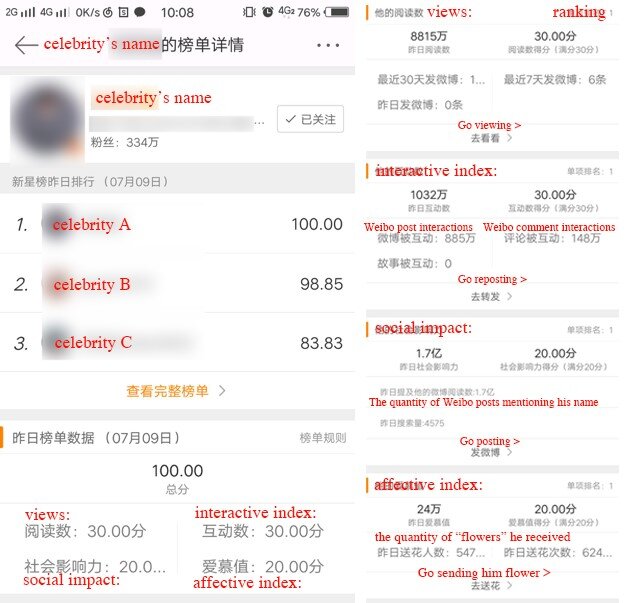
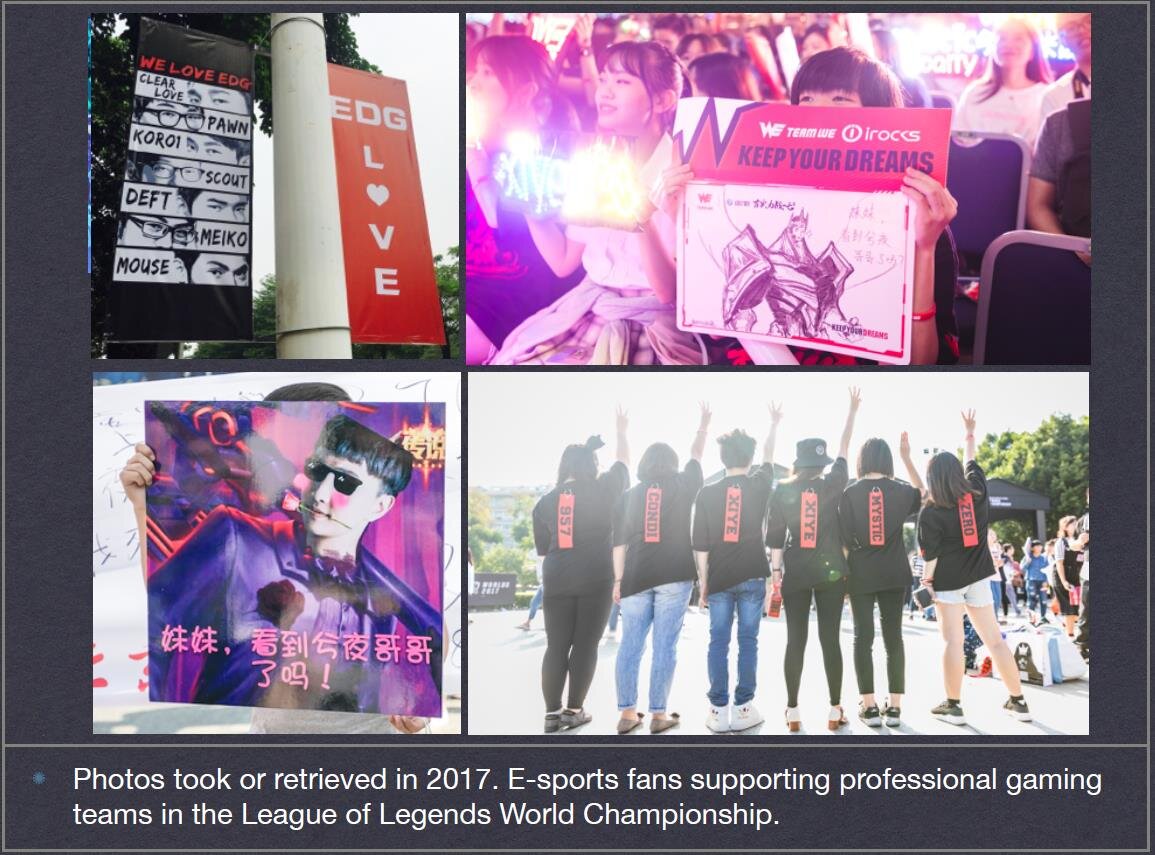
 

References

Simonsen, T. M. (2013), « The Mashups of YouTube », Nordicom Review 34-2, pp. 47-63.

Todorov, T. (1989), Nous et les autres. La réflexion française sur la diversité humaine, Paris : Editions du Seuil.


[1] https://www.youtube.com/watch?v=16ONDC9DBlcaccessed on February 3, 2022.

Global Fandom: Ioanna Vovou (Greece)

Ioanna Vovou (Greece)


Fandom culture is developing world wide as a phenomenon similar to what Marcel Mauss (The Gift, 1924) has described as a total social fact, relevant to and spreading at all aspects of collective life. To make a long story short, the rise and rapid development of a local tradition of fandom in Greece -as we can acknowledge it under contemporary terms and without tracing back a kind of genealogy of fandom- is to be researched in the ‘80s. At that period the development of the life style press is interlinked and promotes the first steps in forming a celebrity culture both local and international.

A crucial boost in that direction has been given with the deregulation of radio/television in the late 80s and the beginning of the 90s. At that period production and programming of national  TV fiction in private TV channels implemented new and different trends as regards to the relation of TV viewers with a medium the origins of which are to be traced back in 1966 -much later than other European countries- just before the establishment of the military junta on 1967 that lasted until 1974 with severe implications in all levels of  collective life (Koukoutsaki-Monnier, 2010; Papathanassopoulos, 1994; Paschalides, 2005; Vovou, 2010).

If we turn our focus to contemporary expressions of fandom in Greece, one cannot pass by the expansion of fandom in multiple fields such as TV programs, gaming, Youtubers and influencers, artists and athletes (the list can go on…), also linked with a celebrity culture and a diffused regime of visibility (as Heinich, 2012, has described it) that social media shape and accentuate. 


TV series fandom

A quite stable element of Greek fandom is to be found diachronically in national TV series, starting from the ‘90s when private TV channels (and especially Mega Channel) produced a significant number of local TV series, popular to a large audience. After a period of penury in national fictional production during the years of the financial crisis mostly the first half of the 2010s, Greek TV fiction is making its strong coming back. Although comedy is considered among the most popular TV genre, it is worth mentioning the great success of the historical TV drama series Agries Melisses [Wild bees, Antenna TV, 2019-…], unfolding the life of three sisters in the Greek province during the ‘50s, which has been cherished by a large part of the Greek audience and has loyal fans, forming social media communities, expressing themselves on Facebook or Twitter. The series became a daily routine especially during the lockdowns due to the Covid 19 pandemic and, also, echoed through its plot, in the second season of the series, the Greek movement of #metoo in spring/summer of 2021. This was an element that increased the sentiment of authenticity and that of a fictional universe that matters to the audience and its real world.


Vovou iIlustration 1.png


Illustration n. 1

Fan craft making inspired by the TV series “Wild Bees”:

The characters of the series made by a confectioner during the lockdown

Source: Espresso, 22.08.2021 (retrieved on the 10.09.2021)

https://www.espressonews.gr/reportaz/289626/zacharoplastis-fanatikos-tiletheatis-agries-melisses-dimioyrgise-figoyres-protagoniston/


At the same time, Greek fans of international (mostly American) TV fiction are firmly present and in a constantly increasing orbit, an evolution related to the implementation of cable and streaming services (Netflix, Apple TV and so on). The pandemic period we are going through accentuates this trend. To give an empirical example coming from a personal experience, in the -pandemic- academic year 2020-2021, when asking first year students at Panteion University of Athens where I teach to choose a case study for the analysis of media products, Greek and American TV fiction was at the top of their choices, leaving far behind other genres such as news.


Diffused Intertextuality and Fandom: Mixing the local and the global

The circulation of concepts, ideas, formats, styles is a trend that characterizes in an international level TV and media production diachronically. The matrix of many media products and productions, as well as the adaptations of radio and TV shows, films, etc… seem to design a Borgesian universe. Or, in other words, the mosaique of intermedial culture can, also, be perceived as a palimpsest: if one scrubs the surface, the remaining of another writing appears. As the French literary theorist Gérard Genette (1982) have pointed out, it is quite impossible to trace back the original text (impossible to figure out the urtexte).

This intertextual yet reflexive trend is not only promoted by media productions and oeuvres; it is also acknowledged by the spectators and the fans. Τhe TV comic series broadcasted in the years of the severe economic crisis in Greece, I Genia ton 592 Evro [The Generation of 592 euros, MEGA channel, 2010 – 2011], which unfolds around the life of a group of friends, six young people trying to survive the economic crisis, is one example among many others. Some of the comments on YouTube where the episodes can be watched are quite telling, providing insights, and clues of how -in what mode- to watch the series, i.e. as a paratextual element of the text. In fact, spectators notice that characters, situations, scenes and lines are inspired from other TV series like The Bing Bang Theory (2007-2019, CBS) and Friends (1994-2004, NBC). A TV program can make a promise of referring to reality elements. The latter promise, however, in a pragmatic context of communication (which takes into consideration the eventual meanings or uses), is, or is not, acknowledged as such by the viewers. As it can be understood by the comments cited below, the relation of the series to the reality of the financial crisis is not an issue. Viewers seem to skip the pretext and go directly to the various layers of the text (Vovou, 2019). 

Some of the viewers’ comments are quite eloquent in regard to intertextual citation of other media texts, in this particular case ‘flirting’ with plagiarism:[1]

 “They have stolen lines, themes and characters from American series BUT the series is very good and achieves its purpose of laughing. Good lines, very good interpretations, nice directing and despite the stolen it has some original elements!!!”

“Basically it must be a little bit stolen huh?”

“Sheldon from big bang, Rachel, Ross, Phoebe and Joey from friends, Fez from that 70s show… in a collage à la grecque”

“As a TV viewer of both series I have to say that they took some elements even whole scenes from the big bang theory” 

Vovou Illustration 2.png


Illustration n.2

 I Genia ton 592 Evro [The Generation of 592 euros, MEGA channel, 2010 – 2011]

Diffused intertextual elements (characters, situations, scenes and lines) acknowledged as borrowed from American TV series The Bing Bang Theory (2007-2019, CBS) and Friends (1994-2004, NBC) by the fans of the series


Cynical Fandom or Fandom as moquery

Besides fiction, factual entertainment television and, in particular, reality shows have nourished a kind of travestied fandom. After 20 years of reality television the mode of reception has moved to a second degree, as a semiologist would put it. Fandom shifts to moquery, into having fun at the expense of the participants and/of the situations watched on various screens. At this point, we could diagnose a turning point, a shift taking place gradually over the years to a cynical way of watching TV and of enjoying popular culture products: that of derision, not only in production strategies but, also, in consuming attitudes. This tilt to a cynical mode of consuming, is a distinct element worth examining in the context of entertainment practices and attitudes which are far from being homogenous. In a pragmatic frame of analysis, this register of reception counts on the existence of a discursive community that makes possible the ironic effect.

Parody fan culture – an intermedial genre taken over by the fans

Following this evolution of fandom as moquery, another aspect of Greek fan culture is the increasing production of parodies of Greek television programs on platforms like YouTube or on TikTok. This takes place as a fan attitude that acts on the television document by travestying and producing multiple burlesque variations. In the midst of globalization of fandom mixed with local popular cultures, the parodies of television programs, as well as the pastiches of formats (such as TV news, personal confessions or telemarketing shows) and of forms of enunciation (testimony in front of the camera, journalistic commentary, etc.) testify to the appropriation of a television culture by the fans by the means of a burlesque diversion (Jost, 2008). The concept of fandom gets broader, considered in the first as well as in the second degree, in a love-hate relationship that embraces the tradition of buffoonery. 

We can find an illustrative example among many in the TV show Ta paratragouda (Tempo TV, 2001 – Alter, 2002-2011), where ‘everyday people’ who don’t get to access usually the public sphere expose their personal stories. A female participant, the ‘persona’ of “papadia” (meaning “the preast’s wife”) has triggered a series of parodies on TikTok,[2] many years later. These fandom moquery productions are retrieved by the TV show (titled nowadays Annita Koita [Annita look, after the name of the female presenterOPEN, 2019-…),[3] implicitly self-claiming the cult value of the TV show.   


Vovou Illustration 3.png

Illustration n.3

The TV show of personal confessions

‘Annita Kita’, OPEN TV, 02.05.2020


Vovou Illustration 4.png

Illustration n.4

#Papadia TikTok


Vovou Illustration 5.png
Vovou Illustration 6.png
Vovou Illustration 7.png
Vovou Illustration 8.png
Vovou Illustration 9.png

Illustrations n. 5, 6, 7, 8, 9

Parodies of the “papadia”


Alternative media memories

Fandom parodic productions, could be considered as a certain post-media conception of TV content driven by participatory culture. The intermedial participation of audiences in the consumption of popular culture products provides a crucial element of destabilization of the dichotomous “old/new media” conceptual (and sometimes even ideological) thinking. At the same time, the parodies of TV programs on various platforms are to be perceived in their function, both informal and in the same time intense, of creating/modulating a parallel history of television based on a fragmented memory and “coming from below”, in contrast with the “institutional” history of the medium. In that sense, the way in which the parodic travestissement (which relies on a long theatrical, literary and televisual tradition) is recovered by content creators on various platforms, leaves significant traces in what we understand by “media memory” and media productions worth to be included in a TV or media “anthology” as cultural heritage.


References


Genette, G. (1982), Palimpsestes. La littérature au second degré, Paris: Seuil.


Heinich N. (2012), De la visibilité. Excellence et singularité en régime médiatique, Paris: Gallimard, « Bibliothèque des Sciences humaines ».


Jost F. (2008), « Peut-on être drôle à l’insu du public? (Parodies, pastiches et faux télévisuels) », Humoresques 28.


Koukoutsaki-Monnier A. (2010), “Greek TV fiction: diachronic evolution and production trends”, in Vovou I. (ed.), The world of television. Theoretical approaches, case study analysis and Greek reality, Athens: Herodotos, pp. 417-451. (In Greek).


Papathanassopoulos S. (1993), Liberating television, Athens: Kastaniotis. (In Greek).


Paschalides G. (2005), «Greek television», in Verinikos N., Daskalopoulou S., Cultural Industries. Procedures, Services, Products, Athens: Kritiki, pp. 173-200.


Vovou I. (2019), «Injecting Actuality in TV Fiction: The Financial Crisis in Greek TV Comedy Series», FILMICON, Issue 6, Dec. 2019. https://filmiconjournal.com/journal/article/page/93/2019/6/6


Vovou I. (2010), “Elements of a meta-history of Greek television. The medium, the politics and the institution”, in Vovou I. (ed.), The world of television. Theoretical approaches, case study analysis and Greek reality, Athens: Herodotos, pp.93-140. (In Greek).


Ioanna Vovou is an Assistant Professor at Panteion University of Social and Political Sciences (Athens, Greece), in the Department of Communication, Media and Culture. She has also the title of « Maître de Conférences » in the French Public University “Université Paris XIII” where she was teaching for the period 2002-2007. She is a full member of the « Centre d’Etudes des Images et des Sons Médiatiques » (CEISME/CIM, University of Paris III-Sorbonne Nouvelle). Her research interests focus on the relation between the media and the society, on media analysis and on Television studies. She is participating in international research projects and is the author of essays dealing with the history of television, the political talk shows on Greek television, social representations in reality TV and TV fiction, gendered representations in the media, intermediality and media archeology.


[1] Available at: https://www.youtube.com/watch?v=n_vaerIh_9w, last access 8 September 2021.

[2]https://www.tiktok.com/tag/%CF%80%CE%B1%CF%80%CE%B1%CE%B4%CE%B9%CE%B1?lang=el-GR&is_copy_url=1&is_from_webapp=v1, accessed at 09.09.2021.

[3] Excerpt from the show on YouTube: https://www.youtube.com/watch?v=OTyMk3tITQQ, accessed at 09.09.2021.

Global Fandom Jamboree: Alexia Smit (South Africa)

A fan-made meme compares South African black twitter fans to an armed militia, ready to take aim at participants on the show.

Sunday Night Black Twitter and TV Fandom in South Africa

On Sunday nights South African viewers can be assured that the Mzansi Magic Channel (hosted on pay TV service DSTV) will screen its most talked-about reality television fare.  During the evening timeslot fans head to twitter to share responses, banter and memes for the duration of the programme screening.  The Sunday night slot became popular through Mzansi Magic’s hit show Our Perfect Wedding (OPW) which produced a culture of fan commentary on South Africa’s “black Twitter” during its 7pm timeslot.   OPW was soon followed by another local reality tv success Date My Family (DMF) in the Sunday 6pm timeslot.  While Mzansi screens other premium fare in the later timeslots it is Our Perfect Wedding and Date My Family which have garnered significant twitter activity. These shows centre black South African experiences and like much reality TV fare foreground ‘real people’ performing themselves for the cameras. The twitter responses to these texts are laden with acerbic comedy and linguistic play. The OPW and DMF fan activity is a significant example of South African television fandom and is a particularly creative and critical site for the negotiation of black identity in the post-apartheid space. 


While most of my work has been textual analysis-based, my studies of OPW and DMF have been my first experiences of engaging with fandoms. In 2020 I collaborated with Tanja Bosch on a study of the twitter feed for Our Perfect Wedding in an article which combined both a quantitative and qualitative analysis of the twitter data attached to the hashtag #OPW. I admit that, while I knew we were examining the work of fan audiences, I gave little thought to how this activity might be theorized in relation to existing scholarship on fandom. This conversation series gives me the opportunity to reframe this work in relation to the field of fandom studies and to consider how the South African context fits in to broader discourses on fandom. 


As Tanja Bosch and I argued in our discussion, the twitter feed attached to OPW operates as a backchannel to traditional modes of television viewing. The TV channel (which is hosted on a pay TV service) actively encourages and reinforces the twitter life of these programmes, through in-text references to twitter, screen pop-ups with the twitter hashtags and active promotion of the show through the programmes official twitter page (Smit and Bosch, 2020).  Through an examination of twitter data for the hashtag #OPWmzansi, we found that the broadcaster maintains considerable power in the show’s twitter network. However, our qualitative study of the twitter responses revealed the work of fans in producing comedic responses to the text, constructing memes, and recounting storylines for viewers without access to pay TV networks. 


Work on fandom in South Africa has focused primarily upon sports fans (Davis and Upton, 2004, Kaminju and Ndlovu, 2011, Fletcher 2012, 2014, 2015). Some studies have explored local fan engagement with global fan culture, for example, Catherine Duncan’s (2018) work on transnational fandoms in South Africa, and Trish Ramrathen’s (2016) work on anime fandom in South Africa. There is little work on South African fandoms organized around local film and television productions despite the fact that very exciting fan cultures exist. This may simply be the result of a generally limited interest in television and popular culture amongst South African scholars.  I also wonder whether the limited development of fandom studies in South Africa might be linked to certain entrenched ways of thinking about South African audiences. Fandom has largely been constructed as a white phenomenon despite the existence of thriving black fandoms (Stanfill 2011, Wanzo, 2015) and black South African television viewers may not accord with assumptions about what constitutes a fan. With some notable exceptions in the small field of audience studies in South Africa (Tager, 1998; Roome 1998, Tomaselli, 2019) black South African audiences have often been conceived of either as receivers of public service messages or as markets for the consumption of TV products. There has been much interest in audience reception of messaging around the HIV/AIDS pandemic (Tufte, 2002; Ponono, 2014). And scholars have also examined how audiences have engaged with messaging around democracy and transformation in the post-apartheid years (Roome, 1998; Kruger 1999). 


Black South African television viewers are often positioned by media culture as “consumers” rather being considered for their active engagement as fans.  Indeed, as Iqani (2017) has argued, black South Africans have been fetishized for the potential promised by their consumer activity in post-apartheid space, with the increased spending power of black South Africans also taken as a representation of social change.  Work in critical consumption studies has explored how South African transformation has been expressed through representations of black spending power and through narratives of aspirational consumption (Posel 2010; Iqani and Kenny, 2015). The field of critical consumption studies is vibrant in South Africa, producing tremendously important and nuanced work.  But this emphasis on consumption both in popular culture and in academic spaces has possibly meant that black audiences have very often been considered in relation to consumption rather than fandom. 


Limited attention has been paid to the creativity of South African television fans and the cultural spaces and artefacts that they produce.  Examining the Sunday night fan practices around OPW and DMF provides opportunities for exploring how black TV fans in South Africa position themselves in relation to representations of consumption, aspiration and black identity. I want to highlight a series of points which may have interesting connections to global debates in fandom:


Twitter fans of OPW and DMF position themselves self-consciously in terms of shared black experiences through their alignment with black twitter.  The hashtag #blacktwitter frequently shares space with #OPW in fan tweets and tweeters make explicit reference to Sunday night practices as a function of black twitter.  This South African black twitter is a site of confluence with global fan practices, and particularly with American black Twitter. This is potentially an exciting area for further study. On the one hand this is a distinctly local space where tweeters share very situated experiences using local languages and expressions but through its positioning as “black twitter” this fandom also marks itself as connected to global blackness. Unlike black Americans, black South Africans are a majority audience, and yet due to the unequal nature of South African society, and a history of limited access to official cultural sites,  the self-aware positioning of fan twitter activity as  “black twitter” demonstrates the need to seek out site of community around shared black cultural understandings. Sunday night twitter practices could be constructively linked to broader debates about the role of Twitter in John Fiske’s “audiencing” (1992) which is defined by Highfield et al. (2013) as “the public performance of belonging to the distributed audience for a shared media event”. Here the practice of audiencing is also a means of producing a sense of black belonging.  While this belonging is crucial to the pleasures of black twitter, the twitter feed for these shows also features an active grappling with the complexities of black identity and a pointed undermining of performances of class distinction. 


Language play and multilingualism is a means through which South African Sunday night twitter fans express community and negotiate black South African identity.  This tendency potentially intersects with discussions of fan multilingualism in many different regional contexts and in transnational TV fandoms. OPW and DMF are both primarily narrated in English but feature a range of South African indigenous languages, depending in the ethnicities of the participants. South Africa has 11 official languages and many South Africans have some proficiency across these languages. However, due to the legacy of apartheid and colonialism, English language proficiency is often understood as a marker class mobility due its association with university education and employment opportunities. The twitter feed attached to these programmes features frequent comedic responses to language use and particularly to perceived failures in English pronunciation and grammar. I am interested in embarking on a more extensive engagement with the ways in which this interest in language operates as a way of critically examining performances of classed identity for black South African fans.  


Finally, because OPW and DMF are behind a paywall, the Twitter feed becomes a way in which fans without access to the service consume the texts. This means that for some Twitter is not the “backchannel” but the primary site of consumption. And so we could ask to what extent does DMF/OPWs reliance on fan narration and retelling of the story events undermine the traditional relationship between sites of TV production and consumption even as this twitter engagement bolsters the brand identity and prestige of the traditional pay TV broadcaster ? 


References

Duncan, Catherine. Production locality: practices in a South African transnational participatory fandom. Diss. University of Johannesburg,  2018.

Fletcher, Marc William. " These whites never come to our game. What do they know about our soccer?": soccer fandom, race, and the Rainbow Nation in South Africa. Diss. University of Edinburgh, 2012.

Fletcher, Marc. "‘You must support Chiefs; Pirates already have two white fans!’: race and racial discourse in South African football fandom." Soccer & Society 11.1-2 (2010): 79-94.

Fiske, John. "Audiencing: A cultural studies approach to watching television." Poetics 21.4 (1992): 345-359.

Highfield, Tim, Stephen Harrington, and Axel Bruns. "Twitter as a technology for audiencing and fandom: The# Eurovision phenomenon." Information, communication & society 16.3 (2013): 315-339.

Iqani, Mehita. "A new class for a new South Africa? The discursive construction of the ‘Black middle class’ in post-Apartheid media." Journal of Consumer Culture 17.1 (2017): 105-121.

Iqani, Mehita, and Bridget Kenny. "Critical consumption studies in South Africa: roots and routes." Critical Arts 29.2 (2015): 95-106.

Kaminju, Antony, and Thabisani Ndlovu. "Playing from the terraces: notes on expressions of football fandom in South Africa." African Identities 9.3 (2011): 307-321.

Ramrathen, Trisha. Rise of the Otaku: investigating the anime fandom in South Africa. Diss. 2016.

Roome, Dorothy. "Transformation and Reconciliation:‘Simunye’, a flexible model." Critical Arts 11.1-2 (1997): 66-94.

Roome, Dorothy. "Humor as" cultural reconciliation" in South African situation comedy: Suburban Bliss and multicultural female viewers." Journal of Film and Video 51.3/4 (1999): 61-87.

Smit, Alexia, and Tanja Bosch. "Television and black Twitter in South Africa: Our perfect wedding." Media, Culture & Society42.7-8 (2020): 1512-1527.

Stanfill, Mel. "Doing fandom,(mis) doing whiteness: Heteronormativity, racialization, and the discursive construction of fandom| Stanfill| Transformative Works and Cultures." Transformative Works & Cultures 8 (2011).

Tager, M. 1995. The Bold and the Beautiful: The relationship between the fictional universal universe of the soap opera and the lived experience of the black urban viewer in KwaZulu-Natal . Diss.  University of Natal, 1995.

Tager, M. 2002. The Bold and the Beautiful and Generations: A comparative ethnographic audience study of Zulu-speaking students living in residences on the University of Natal's Durban Campus . Diss. University of Kwazulu Natal, 2002. 

Teer‐Tomaselli, Ruth. "Drama, Audiences, and Authenticity: Television Programming and Audiences in Post‐Apartheid South Africa." A Companion to Television (2020): 423-438.

Wanzo, Rebecca. "African American acafandom and other strangers: New genealogies of fan studies." Transformative Works and Cultures 20.1 (2015).


Short Biographical Note

Alexia Smit is a senior lecturer in Film and Television studies at the Centre for Film and Media Studies at the University of Cape Town in South Africa. She holds a PhD in Television studies from the University of Glasgow. Her research focusses on popular entertainment television, with a particular interest in South African reality television, gender, class, postfeminism, transnational African TV, and womens television genres in Africa. 

Global Fandom Jamboree Conversation: Yiyi Yin and Susan Noh (Part Two)

Susan (respond to Yiyi):      

Two features of Yiyi Yin’s entry stood out to me: the emergence of fan circles and the continued centralization of algorithmic cultures and digital features which mediate engagement between the fans and their objects of affection, as well as engagement with one another. I believe that “fan-circles” may need further clarification and definition of what it actually is. From the entry, I am presuming that fan circles are fandoms in which boundaries are blurred between various groups. For example, Chinese ACG fans can easily overlap with K-pop fans, as is often the case with the American anime fandom, and it may be safe to assume that one who is literate in anime culture within the United States may also have a fair amount of exposure to K-pop culture as well. It is interesting then to consider how fan morality may overlap with one another, irrespective of one’s object of affection. For example, the general acceptance of fansubs as being necessary within both K-pop culture and anime culture, even in the face of strict piracy laws, may gesture towards this overlap in ethical codes that govern global fandoms. How scholars can go about studying the overlap of international fandom, the moments of contact, and the frictions and symbioses that these moments of contact foster would be very productive. 

            In the case of K-pop fandom and ACG fandom within China, I would particularly be interested in how historical colonial legacies continue to shape the ethicality of these overlapping fandoms, and whether these histories influence the way Chinese fans engage with these various fandoms. Given the blurring of boundaries between fandoms in China, it would be interesting to see how one’s own historical background may contribute to this blurring. In the American anime fandom, but perhaps more specifically, the music fandom subsection of the anime fandom, there are sometimes discussions and frictions relating to how one should perceive K-pop within this merging of East Asian music fandom. While discussions between fans are tinged with a kind of political ethos that may go unnoticed by the fans themselves, it is fascinating to see how these historical legacies continue to color fan rhetoric. 

            In regards to using the formal features of platforms to shape fan practices, there was also a key moment of overlap between Yiyi’s research and my own on formal streaming services. Crunchyroll, which is a streaming service that caters primarily to the global anime fandom has a series of platform features which help to define them as a “fans-first” service within the slew of streaming services that originate from the United States. Given the intense competition that they face from more general and mainstream services like Netflix, Amazon Prime, HBO Max, and more, all of which have stakes within anime distribution, it behooves Crunchyroll to really highlight features that foster fannish affect. This includes a five-star review system, forums, comment sections, review sections, news sections, and more. Given the high volume of fan contact that subscribers are privy to, it has been productive to observe the ways in which fans govern themselves within these spaces. 

            Much like the “report” function that Yiyi gestures to in her own research, fans can be seen occasionally using the “spoiler” function on Crunchyroll’s comments sections, which immediately whites out the comment. There are moments where these comments are not actually spoilers for the media text in question, but instead, reveals a kind of negativity that fans may not support. Defining some of these comments as “spoilers” immediately whites the comment out of the discussion and also forces those who are interested in these kinds of comments to have to do additional labor to see them. These small moments reflect the ways in which fans are using elements of the formal platform in order to govern themselves as fans, either to censor or to influence the general mood of the discourse that is occurring within these comments sections. 

            Despite Crunchyroll’s commitment towards creating a space in which fannish affect can flourish within their interface, there are moments when these features backfire. One example where we can see this is through the fan reception of an anime-inspired Crunchyroll Original series, High Guardian Spice, which was marketed as a progressive series that would have abundant LGBTQ representation. Fans used the comment and review affordances of the platform to “review bomb” the series, as well as create a hostile and homphobic/transphobic atmosphere within this progressive series. For fans who did not openly engage with homophobic/transphobic rhetoric, but were still critical of the series, they pointed to the fact that the production was “anime-inspired,” a term that often yields an ambivalent fan reaction due to perceptions of anime-inspired work being of lower quality in comparison to Japanese originated content. 

            This case study revealed two things: that fans can easily hijack the formal features of their platform to go against the platform itself and that fandom is certainly not guaranteed to use these spaces for progressive or supportive modes of expression. Indeed, one must never forget that a fan’s personal identity always governs their membership into fandom, and in this case, it became very clear that there was an active homophobic and transphobic branch within anime fandom that would foster a hostile environment for LGBTQ global anime fans. Homophobic fans may ban together in order to upvote comments that reflect their own political views, while simultaneously shutting down more productive commentary within these spaces. This is yet another use of the formal features of the platform. While the digitization of fandom does help large corporations to govern fannish affects to a certain extent, fans remain more than capable of using these features for their own governance, irrespective of the platform’s desire. Whether this is progressive and productive for the fandom has yet to be seen. 

            Given that Crunchyroll is a global platform that serves many different regions, I would be curious to see how this border crossing may affect fan attitudes towards media objects around the world. For example, does the homophobic and transphobic nature of the reviews stemming from the American branch of Crunchyroll affect the way fans may be receiving the work in Latin America or Russia due to certain forms of anime journalism and social media? I would be curious to see if there’s a merging of global fan ethics due to these platform features or a divergence. 


Yiyi (respond to Susan):

I would like to thank Susan for the inspiring response. Before I come to further discuss the fan-circle and the digitalization of fandom, I’d like to first respond around the impact of historical legacies on fan consumptions. This is a very interesting topic especially when thinking of the linkages between the historical colonial legacies and the current global relations. In China, the consumptions of Japanese anime and K-pop were long considered as “flattering” by the mainstream discussions. Back in 2010, the K-pop fans in China were seriously attacked online because the fans gathered chaotically at the World Expo before a concert inviting the K-pop group Super Junior. More recently, a domestic actor was boycotted because he took a photo in front of the Yasukuni Shrine several years ago. These cases show that the nationalist ideology emerged in China has largely influenced the fan rhetoric and the norms of fan practice in China. The fans, especially whose fan objects involve nations like Japan and Korea, have to paradoxically negotiate with their own historical background as Chinese and the affective passion towards the fan objects. For example, in celebrity fandoms, fans would voluntarily mute online on dates like July 7th (Marco Polo Bridge Incident), September 18th (Mukden Incident), and consider these historically significant dates as the “no-entertainment day”. This kind of norms of practice also becomes something that fans need to negotiate with in the overlapping fandoms, especially in emerging fandoms like the eSports fandom. As the eSports teams in China has started to invite Korean players since 2015, there were a lot of new coming fans from the K-pop fandoms. The conflict between fans of “all-Chinese teams” (i.e. a team with all Chinese players) and fans of Korean players has lasted till today. I agree with Susan that it would be very interesting to see the impact of one’s historical legacies on fan practice especially when the global relations have become intensive again in the recent years, as the contextualized fan participation could become the frontier of nationalism.

Going back to the topic of “fan-circle”, as Susan suggested, I need to further define it as a specifically contextual phenomenon in Chinese fandom. For my research, the definition was summarized from more than 50 interviews I have conducted with fans from various fandoms (e.g. anime fandoms, eSports fandoms, K-pop fandoms, TV fandoms etc.). A “fan-circle” refers to a group of fans with sharing cultural norms, knowledge, and ideologies. At first glance, the fan-circle carries similar meaning with the term “fan community.” Nevertheless, the “fan-circle” should not be interpreted as a particular fan community with its own performances and norms. Instead, it refers to a broad set of norms, rules, culture tastes, and patterns of participation that is cross-community. 

According to the interviews, the fan-circle culture has reclaimed the authorial legitimacy of certain affective practices, not on the basis of the moral economy but of a sort of rationale that can only be made sense with specific cultural imagination. Almost all of the interviewees who lived with such struggling attributed it to the influence of “the rules of the fan-circle”. In their narratives, the fan-circle is defined by specific patterns of rules and participation, including the regulation of online practices, supportive activities, sociality, consumption, fan-production, and so on. The formalization of the fan-circle practice is thus seen as a process in which fans explore and legitimate “proper” ways to actualize the abstract and affective fan-object relationship, negotiating it with specific industrial, socio-cultural and media circumstance. With its own characteristics and norms, the “fan-circle” culture has invaded to various fandoms, and thus been questioned, contested and challenged by many fandoms. This is a typical phenomenon that could happen in the trans-fandom when individuals traveled all across the fandoms and communicate with different types of performances and values.

The fan-circle type of fan practice can be easily identified on social media platforms like Weibo, not only because the topics will be mostly about a particular celebrity or fan object, but also because of the formats they have adopted. The formatted content of posts has become a sort of shared knowledge or social capital among the fan community, whereas the term “efficient” clearly hints at the platform logic. In a research proceeded by me and Zhuoxiao Xie (2021), we explored five functionally differentiated purposes of speaking on Weibo: resources, sentiments, fan works, ritualized tasks, and diplomatic interactions. We also found that most of the functional terms used by fans are highly technologically constructed. The construction of proper fan behaviour has shaped the discourse, as the fans selectively utilize certain functions or resources provided by the platform.

This observation echoes to Susan’s case in which fans use the technological settings of platforms like Crunchyrollfor their own governance, but meanwhile also suggests that the governance itself becomes digitalized and technological. For example, the use of “report” on Weibo and the use of “spoilers” both gesture to the logic of digital visibility. That is, fans govern themselves and the fan others by manipulating the visibility of certain (positive or negative) content on the platform. The digital governing has thus facilitated and meanwhile constructed the rule of fan practice. This logic of visibility, as we argued in our research, becomes the logic of fan-circle participation and legitimates the fan-circle as a dominant way of fan participation in the overlapping fandoms. In the case of fan-circle, even when fans start to use the formal technological setting for their own governance, the governance itself is made sense by the platformized rule. This is the reason that I come to argue that the Chinese fan-circle culture is becoming an algorithmic culture in which fans not only use the technology to participate, but also participate in technology. I’m thus very curious whether the logic of visibility or the significance of “traffic data” makes sense in other countries and regions as it does in China. For example, fans on Weibo pay particular attention to the trending, and would devote significant digital labor to control the content appears on the trending list (e.g. posting to heat the hashtag or posting the same content around the hashtag). I would be curious to see how global fandom develops differently in the trends of platformization and digital capitalism.


Bibliography

Yin, Y., & Xie, Z.E* (2021). Playing platformized language games: Social media logic and the mutation of participatory cultures in Chinese online fandom. New Media & Society. First published online. https://doi.org/10.1177/14614448211059489

Global Fandom Jamboree Conversation: Yiyi Yin and Susan Noh (Part One)

Yiyi (respond to Susan):

I would like to thank Susan for the fascinating introduction about the English anime fansubbing and especially the emergence of fan-ripping. Sadly I have not done any research on fan-subbing myself, so that I might not be able to provide many critical thoughts. However, as a Chinese anime fan, I grew up receiving translated anime content provided by online fan-subbing groups, and I’m now seeing a similar landscape where the grass-root fan-subbing groups were largely declined. For me, it is particularly interesting to see how the traditional distinction between the competitive camps, namely the speed-subbers and quality-subbers, has been challenged by the existence of fan-rippers who can distribute the official translated version of anime most rapidly. Fan-subbing can be a very good case indicating how fan practices and engagement might react to the shifting media industry and the formal media distribution portals. As Susan also mentioned, fan-subbing served primarily for accessibility in the earlier days. Similarly, in my interviews with Chinese ACG fans, they recalled that they were simply “fed” by the fan-subbing groups in the late 1990s as there was nothing else to consume. Today the problem of accessibility has been replaced by the difficulty to consume media content from different streaming services, and the fan-rippers emerged to solve the problem by downloading and distributing the content.

One thing I’ve been curious about throughout the reading was: Who were the fan-rippers? More specifically, to what extent were they also fans? I ask the questions because the ripping seems to require much less labor the time than translating and subbing, which somewhat makes the fan-ripping less a “fannish” practice but more “commercial”. For example, there are several non-official video sites and Apps in China that do similar things as fan-rippers, as they rip the content from streaming services and distribute it onto their own sites. Unlike fan-subbing groups, these ripping websites gained profit from advertisements and low subscription prices. These websites and Apps are very popular among common audiences and consumers (partially because the accessibility remains a problem to Chinese audiences), but fans would rather embrace the version released by fan-subbing groups to consume the content with better “quality”. As Susan emphasized, the “quality” remains as the important cultural capital of fan-subbing groups not only because the text type or special effect was necessarily needed by fans, but also because it indicated the distinctive time and effort dedicated by fans. Consequently, in China, the conflict between fan-ripping and fan-subbing was always paralleled with the binary of fans/non-fans, or true/fake fans. To some extent, fan-ripping seems to be recognized by fans more within the formal economy rather than the informal economy in China. I’m thus particularly interested in how fans and the fan-rippers themselves consider their identities, and how they might share the content in specifically different ways.

            Another topic that interests me is the blurring boundary between formal and informal economy, as Susan mentioned that the co-option of fan-subbing groups was not likely to happen in the English-speaking anime fandoms. A quite interesting observation for me is that in China it is the platformization of fandoms that progresses this kind of co-option, in which the platform exploits but also saves the fan-subbing groups by hiring them as “professional fan-subbers” to distribute the content with the quality that fans need. For example, the video site Bilibili, the largest video platform for ACG content and subcultural fans in China, began to collaborate with fan groups and fan-subbing groups recently. In some cases, Bilibili purchased the license from the distribution company and collaborated with the fan-subbing groups to produce the subtitles. The subtitles usually include special text type and animation, especially during the openings/endings and special scenes such as charm spelling. The subtitles might also include extra information for fans or for the common audience to learn when watching the anime series. This kind of co-option can now be seen also in the cases of English drama and film fandoms. In its recent release of The Lord of the Ring, Bilibili worked with the fan group “LotR Chinese Wiki” to produce the official version of the subtitle with the beautiful translation of poems in the background soundtrack.

In the case of Bilibili, the co-option happens when the platform, which purchases the license from the content distributor and needs to translate it, tries to snatch the fans from fan-subbing groups. The “quality” still plays a significant role that justifies the survival of fan-subbing groups and distinguishes fan-subbing from either official or speed-subbing works. However, the “quality” is also becoming the means for industrial players to exploit labor within the formal economy. I’m thus interested in how platformization and digital capitalism might influence fan practices such as fan-subbing. From the case of Bilibili, I think the platformized fan labor might be the way that the declining fan-subbing groups reenter the neoliberal market. Yet, the underlying ideology within the informal economy that “quality as the proof of love” has been largely replaced by the social media logic of visibility or popularity in van Dijck’s term.


Susan (respond to Yiyi):

            An interesting point that Yiyi brings up in her response is this perceived divide between the commercial, formal economy of media distribution and the fannish shadow economy, which helps to sustain a wider web of interest. Indeed, as Yiyi has accurately pointed out, fan-rippers often help to bridge the gaps between franchises that are split apart due to digital platforms vying for popular media titles. Particularly for Japanese anime, narratives can expand to multiple seasons, movies, remakes, OVAs (original video animation), and more. These wide-spanning franchises are often fractured in their distribution along the lines of streaming networks. For example, for the enormously popular Neon Genesis Evangelion franchise, Netflix currently streams the original anime series and two films in the United States, but Amazon Prime distributes the newest filmic remakes, as well as a documentary series revolving around the series creator. Unless one has the economic means to legally access all of this content through streaming subscriptions, which is often not the case for younger viewerships, fansubbed and ripped content continues to be the primary means in which fans can gain access to all of the fragments of a media franchise. As part of my own research, I engaged in an online survey of anime fans within the United States regarding where they got their content and why they chose the particular routes that they did. Unsurprisingly, not being able to afford all subscriptions to legally gain access to their desired anime content was one significant reason why fans continued to turn towards ripped and pirated content.   

            Certainly, these dynamics may continue to change as fans witnessed announcements in 2021 of the consolidation of two major anime streaming portals, Funimation and Crunchyroll, in the North American anime streaming scene. This merging may help in further centralizing a formal access point for fans. Further, as anime industry related news regarding the challenges and hardships of industry laborers continue to travel from Japan to the rest of the world, fans may also reconsider where they decide to source their content along the lines of personal ethics. 

            Returning back to the divides between fansubbing groups, rippers, and formal streaming services, it should be noted that an antagonistic relationship between fansubbers and services like Funimation and Crunchyroll need not have necessarily been a foregone conclusion. As a case in point, Crunchyroll began as a pirating site for anime fans, before they changed their branding and models of operation in order to collaborate directly with Japanese anime studios. Because of the streaming service’s legally questionable beginnings, gaining the trust of Japanese studios was an uphill battle for the founders of Crunchyroll. Becoming a more legitimate global distributor required purging fansubbed content from their catalogues, which drew critique from both formal industry players and fansubbers alike. 

Instead of the rather antagonistic route that formal North American anime distributors and tertiary anime companies took towards English-language fansubbers, there is also an alternative tactic that could have been engaged, where industries co-opt fansubbers’ talents and help them to professionalize, fostering a potentially more harmonious relationship. There have been moments where fansubbers and formal distributors have collaborated successfully with one another, and these collaborations may be seen as a source of pride by fansubbing groups due to the legitimacy and testament to quality that is implied in such relationships. For example, one fansubber that I interviewed enthusiastically recounted how the popularity of their group’s fansubs influenced the studio behind a widely-known anime series in using the group’s naming conventions within the formal subtitles.  However, it seems like these moments remain unlikely exceptions, particularly when considering the punitive measures that have been taken against anime piracy within the United States, as well as the rhetorical strategies that have been leveraged against fansubbers in order to try to delimit their practices. For example, on June 8, 2003, Anime News Network released an article titled, “A New Ethical Code for Digital Fansubbing,” which sought to encourage the formation of some ground rules for fansubbing groups. For example, suggestions included ensuring that a fansubber always aims to minimize their impact on the commercial sphere and that motivations for doing such labor should never be for personal fame or profit. Of course, these rules tend to go against the ethos of fansubbing, particularly in the contemporary moment, when fansubbing tends to differentiate itself through discourses around quality, as well as a more personal interest in learning the technicalities and artistry behind the trade. Far from not attempting “​​to match or better the quality of a professional DVD,” fansubbers continue to push the limits of what fansubbing can do or be both in technique and artistry. For example, productive fansubbers have programmed scripts that help to automate certain steps of the process in order to ease the labor of their fellow fansubber, as well as make the communication processes between fansubber and their viewerships smoother.  Given this ethos of constant self-improvement and exploration that characterizes the industrious fansubber, it is no surprise that fansub groups did not fall in line with these ethical codes that were outlined for them. 

While I would argue that fansubbing is not necessarily “dead,” we are certainly witnessing a moment when former motivations that once encouraged individuals to pick up the labor of fansubbing are no longer so prevalent. Challenged both by streaming services and ripping groups alike, the existence of fansubbers are intimately connected to the whims of digital platforms and portals. Contrary to the “social media logic of visibility or popularity,” fansubbing is seeing a decline in returns for both factors, as content hungry fans are more likely to default to what is most convenient and available fastest (simulcasting or ripping), as opposed to what is arguably of better quality. In this manner, perhaps the current state of English fansubbing reflects an exception to this rule that Yiyi has stated at the end of her response. 


Global Fandom: Yiyi Yin (China)

I’m Yiyi Yin. I self-identify as an aca-fan and have been working on Chinese fandom studies for several years. In 2002, I wrote and posted my first fanfiction on a BBS where fans of the Japanese animation B’TX congregated. I was 12 years old back then, and hardly knew anything about fandom or fan culture. I even had never heard the word “fans.” Every day I discussed the storyline of B’TX with one of my neighbors who was also fond of it, and wrote poems together for our favorite characters. I remembered how we snuck into her mother’s office and dialed-up to the Internet, reading everything we could find on a themed forum related. I remembered my very first post on the forum, which was a repost of another B’TX fanfiction from one forum section to another. As I recalled, my personal experience as a “fan” probably started from there, even though I had no idea of such identity at that time. 

Since then I’ve been a long-term observer and participant of multiple fandoms, including some in Japanese manga, some in English television dramas and films (e.g. Lord Of The Rings, Sherlock, and Marvel movies), some in popular music, and some in eSports. Growing up in the 1990s in mainland China, my own experience as a media fan was accompanied by the process of becoming a “netizen”. In terms of the expanding media industry of China, the period between the 1990s and the 2000s was also a critical process in which the marketization, commercialization, and the national “soft power” construction significantly progressed. Meanwhile, as the acceleration of the process of globalization has led to a drastic transformation of fan culture in China, the fandom has emerged from hitherto underground development and community-based activity to a vibrant social group operating on the Internet. During this time, I, as a teenager, inevitably encountered new genres of media and cultural products, new patterns of participation, and new forms of fandom. For me, the meaning of the term “fandom” has been constructed precisely during this time, as a naturally dynamic and relational concept that never restricted to only one single object.

In mainland China, the development of local fandoms was not linear, as it was varied constantly by waves of foreign culture. The local fan culture was firstly introduced into mainland by Hong Kong celebrities and their fans, and thus formed the earliest celebrity fandom in mainland China. Another influential fan culture was shaped by the imported Japanese animations in the late 1980s. The ACG culture and Otaku culture influenced Chinese fan culture to a large extent, which have made the Chinese fan culture notably different from the Western country where Star Trek was always noted as the early fan-text. It is fair to say that the transcultural Otaku culture initially shaped the Chinese fan culture in terms of the patterns of participation, ways of expression, and communal appearance. However, the Japanese cultural products were mostly banned in China in the early 2000s. The materials for fan consumption have thus changed, way before the Chinese fan culture has been formalized by the Otaku culture. Since then, along with the development of the Internet, the Chinese fan culture was primarily influenced by the K-pop celebrity culture, and then the Anglo-American traditions of media fans. When the so-called domestic fandom focusing on local celebrities and cultural products emerged in around 2005, the Chinese fan culture has become a very hybridized and multi-cultural combination of various subcultural traditions. Figure 1 shows the fandoms that my interviewees involved. Almost everyone has involved at least two fandoms in the past decade. The fandoms are thus interconnected with a flow of participants.


Figure 1: Hybridized online fandoms in China

Interestingly, these foreign waves, including Japanese Otaku culture, Hong Kong/Taiwan celebrity culture, Hallyu, Western media fan culture, had not appeared as separate fandoms in China. In the age of digitalization, we’ve seen different patterns of fan cultures clashed, negotiated and converged especially in the 2000s. My research interest thus comes from the dynamic development of fan culture in China, especially how fan performances are constantly negotiated and reconstructed, while fan norms, values and cultural practices are formalized and legitimated. My recent works focused mostly on the phenomenon of “fan-circle” in China, which was defined as a dominant pattern of fan participation, involving intense digital labor and regulation of online communicative practices, sociality, media use, consumption and production. [YY1] The fan-circle became discursively powerful in the past decade, ruling out other fan performances by establishing new moral values and redefining the legitimacy of being a fan. These fan-circle moral values first penetrated the popular or mainstream fan communities such as ACG[HJ2]  (Animation-Comics-Games) and celebrity fandoms, and then the relatively marginalized or underground communities like eSports and crosstalk fandoms. In this process, fandoms have become interrelated, without clear-cut boundaries separating each fan realm. Instead, the new boundaries have been set as fan-circles, where fans instantly step in and out to struggle with their own cultural identities of being fan.


My general interest is to see the process of formalization of the fan-circle [HJ3] [YY4] and its rules in multiple fandoms (Yin, 2020a). I and Dr. Xie Zhuoxiao from Nanjing University first noticed the technology-specificity of fan-circle, as it largely reflects the platform setting and algorithm in terms of how fans speak, consume, produce and use the media (Yin & Xie, 2018). One of my works (Yin, 2020b) examined particularly the Chinese online fandom as an emerging algorithmic culture in which the ongoing interaction among affect, fan subjectivity, and the algorithm continually shapes and reshapes the everyday fan practice in terms of its sequence of acts, norms, and ways of thinking. In this dynamic process, some activities have been formalized into everyday practice, with authority borrowed from the commercial or industry framework, while others are still negotiated by fans in playing with the rules of the algorithm. The platforms and institutions such as Sina Weibo strategically embed the logic of data in daily fan practice by promoting numerous algorithmic operations including all the indexes, ranking and their rewards. The digitalization significantly shapes the fan performance when it promises certain affective fan-object relationship. The rematerialization of data has allowed the fans to connect themselves to the fan objects that were inaccessible in the past. Through practicing around the data, fans can actualize certain relationship to the foreign celebrities that were out of reach before.             

Figure2_The popularity ranking on Weibo.jpg


Figure 2: The popularity ranking designed by Weibo

It is also very interesting to see how fans, including the fan-circle participants, make use of the technological resources provided by the platform in unexpected ways. Examples might include how fans appropriate the “report” function to achieve their own goals, and how they flood to resist against the visibility algorithm manipulated by the platform. I’ve seen a case in which the Weibo trending topic was originally about one thing (e.g. “Marvel screening”), but was transformed by fans into a completely different thing by flooding with Weibo posts containing the same keywords yet in different combination (e.g. “Marvelous film screening”). For those who clicked the trending topic without knowing the original event, the content of the trending topic has been efficiently changed by fans. In doing so, they still claim to control the visibility that is powerfully manipulated by the platform and the media producers engaged. In cases like this, fan agency is still potentially creative in a sense that fans would never entirely compromise to the dependency of commercialized cultural industry. 

I discussed mostly about how fan-circle is technologically specific. And I am now interested in how and why this algorithmic fan culture can be culturally specific. For instance, Weibo was known as similar to Twitter in terms of its technological settings and social media functions. In media use, fans on both Twitter and Weibo participate in producing Trending, Hashtags, Super Hashtags. Yet the specific patterns, rules, and purposes of fan participation vary. A forthcoming paper of mine and my coauthor would examine the very particular communicative practices of celebrity fans on Weibo, but we have not yet elaborated it from a comparative perspective.

 Another interesting but rather pessimistic concern about the cultural specificity of fan-circle is the politicization of fan culture, which can also be seen in other countries (e.g. the fans of Donald Trump) but is especially noteworthy in China due to its complex socialist tradition and political scene. The stressful cultural censorship has forced the fans to further regulate their own participations to prevent the possibility of being criticized or even banned. While there has been a dangerous trend that fans make use of the authorial power to attack the vital fan groups or fan individuals. In fact, the use of “report” function can be seen as a case in which fans take use of the “punishment mechanism” to shut down the posts they don’t like. In recent years, along with the increasingly strict control of Boy’s Love literatures, some fans even report the disliked fanfic to the governmental Weibo accounts. When fandom is becoming more and more mainstream, it is noticed not only by the capitals but also the political actors as potential social power. As the political intervention and fan activities have progressively overlapped, the politicization of fan practice is becoming an increasingly significant and another complicated aspect of the fan-circle phenomenon. 


My Projects for References

Yin, Y. (2020). An emergent algorithmic culture: The data-ization of online fandom in China. International Journal of Cultural Studies, 23(4), 475–492.

Yin, Y., & Xie, Z. (2018). The bounded embodiment of fandom in China: Recovering shifting media experiences and fan participation through an oral history of Animation-Comics-Games lovers. International Journal of Communication, 12 (18): 3317–3334. 

尹一伊(2020),《粉丝研究流变:主体性、理论问题与研究路径》,《全球传媒学刊》,7 (1):53-67页。