Games, New Media and Learning in Argentina: An Interview with Ines Dussel (Part Two)

Can you tell us something about the context of this debate in your country? For example, how much access to students have to new media technology outside of school? How much exposure do teachers as a class have to new media in the course of their everyday life?

I would say that most students have access to technology, although the frequency and intensity is heavily dependent on socio-economic backgrounds. The main divide is between urban and rural/semi-rural populations, because even in low-income groups in big cities there is a push towards having multi-functional cell phones that allow most of the operations one can do on the internet. Of course, the problem is the soaring costs of the broadband or the phone service, which are still terribly high in the region. In Portugal, and in some Brazilian cities, there are state policies being effected that subsidize broadband connections to low-income populations (5 euros per month or less). This might be a really democratic move in the near future in most of Latin American countries, but we are not there yet. Anyway, I was surprised to read some recent educational research that shows that almost 50% of the children from low-income families report to have Internet connections at home. This means it is spreading quickly.

But the divide, as many people are arguing, is moving from access to use. In a research we are currently doing at FLACSO on schools and visual culture, we find a clear distinction between the type of uses young people from middle and upper classes are doing, and the ones done by young people who come from low-income families, and especially those in semi-rural areas. The first ones are making sophisticated videos, have large collections of images and music, and produce multimedia reports for schools, while the latter make basic powerpoints and have smaller collections of pictures and music, generally with less reflection on what it is, and what for, they are collecting. As always, there are exceptions, but this seems to be the trend. That is why I believe schools could be very important in providing a wide range of experiences that enrich young people's engagement with the media.

Teachers, on the other hand, do not have a special relationship to new media as a class, that is, because they are teachers. Quite the contrary: pre-service training has started to include it as a curricular content only in the last two years, and it is still a marginal trend, though increasingly important in some groups (who can be considered as "early adaptors," as in the work you are doing in the New Media Literacy project). But most of the times, one can see young teachers in low-income schools who do not have an email account or don't even know about the possibilities that new media offer. I ask myself how it is that nobody in their training, which did not happen in the 1980s but only three or five years ago, told them that having an email account and navigating the internet is important not only for them as professionals who are concerned with knowledge or as citizens of this world, but also for them as teachers in their relationship and their cultural offer to their students.

I think that this has to do with some prejudice on the part of the teacher training institutions that assume that new media is kind of a "sumptuous consumption" for low-income populations who are not getting the basics (decent employment, food, electricity or water) and so that it should not be included as a basic content. What they are overlooking is that today access and use of new media is part of the "basics," of being a member of the local or global community, of getting to be informed and participate in a public culture, even of getting a job.

And children and young people know this better than the training institutions, which are falling behind. In our research, we found multiple examples of young people from low-income families whose relatively-poor use of IT is still pivotal for themselves and their parents in doing budgets for contract works, making a website for home repairs or other informal jobs, or connecting to family in other provinces or neighbouring countries. These uses might not be as sophisticated as others, but are none the less very effective and important in helping them get better material and emotional conditions.

Most teachers do not use new media in these ways, nor do they recognize that their students are doing these kind of things with the computers. The kind of activity they privilege in classrooms, when they do anything, is that of seeking information (all they see in the internet is a gigantic library), and sometimes asking their students to write a report, preferably text-only, or produce a powerpoint with some images, but generally without further reflection on the combination of text, sound, special effects or rhythm that is implied in multimodal texts, as Gunther Kress and many others have emphasized.

So, as research notes in other countries, in Argentina the uses promoted by schools are poor when compared to the actual things young people are doing at homes or with their friends in cybercafés. It is slightly different in middle- and upper-classes, but overall I would say there is still a small proportion of schools that are promoting richer, innovative uses of new media.

How has new media been perceived by the Argentinian public? Is it still read mostly as a threat or is there an awareness of the opportunities it represents?

Well, part of the answer refers to what I said before. For some people, those in the middle classes, new media are a luxury that comes after some basic issues have been guaranteed for the society as a whole. And while this argument is sensible (you cannot think about the internet if you're not eating or have no electricity), it is not true that one thing can be solved without the other. As the examples mentioned above show, low income families use the internet to improve their work opportunities and to enrich their support networks in multiple respects. It is part of having a wider horizon and range of possibilities.

On the other hand, the public debate is still organized around moral terms which are dichotomic, and I would say that they tend to go for the pessimistic side of the dichotomy. Talks of threat, safety, danger, not only for the children but also for the Spanish language (fear of Anglo-influence) or for "the world as we know it," are visible in most of the media coverage on new media. Teachers tend to endorse this view, and complain about the supposed empoverishment of writing and oral skills that new media are causing in young people (with the support of traditional agencies like the National Academy of Letters, who has produced a report on this, with doubtful empirical evidence but with lots of media coverage).

But there are some perspectives that are trying to build a more balanced approach, which value the opportunities while they point to the challenges the new media are posing to us. My own concern has been to produce something in that line. I believe that a deeper discussion is needed that addresses the profound changes brought about by new media, part of which I signaled when talking about the 1-to-1 strategy. I particularly like Bernard Stiegler's discussion in The YouTube Reader on the breakdown of the synchronized access to a flux of programmed texts such as the ones provided by broadcast TV, and the emergence of a cardinal access that can be produced and controlled by the user. I think that there are many issues to be debated around the possibility of a common, public culture that goes beyond what each ones of us chooses to look at, consume, produce in our individual screens and in our own time or pace; and that is why I also do not want to give up on the presence of a common screen in the classroom, be it the blackboard, the smart board, or any other common point of attention. In that respect, I also align myself with the comments done by you, Mimi Ito, and many others, on the reports done through the MacArthur Foundation initiative, that posit the discussion of new media in the light of the production of a public culture.

I got a sense from some of the questions I was asked that new media is understood through some of the same paradigms that were applied to broadcast media -- concerns that it exposes Latin Americans to cultural imperialism from Hollywood and elsewhere. How big a concern do you think this is for parents and educators?

I believe that anti-Americanism is more prevalent among progressive intellectuals (including educators) than among the general public, but I do not know of any serious study on this so I will speculate in the next paragraphs. There might be a reemergence of a certain nationalism or LatinAmericanism in the last decade, after the 2001 crisis which put the region in the verge of a collapse, and also backed by the center-left governments in the region that have stressed a rhetoric of autonomy and self-determination for Latin Americans. And of course Bush's government has done lots to increase the anti-imperialist rhetoric. I know that the rates of disapproval of Bush in Argentina were among the highest in Latin America, and that people welcomed Obama's election as a hope of a new external policy in the US.

But these are the only data I recall to make a statement about the public's relation to the US, and I don't think this translates into a relationship to broadcast media or anti-Hollywood: blockbusters are the same ones than in the US, with the exception of some Argentinean films. But even speaking of "Argentinean films" is ambivalent: the best Argentinean filmmaker today is Juan José Campanella, whose movie El secreto de sus ojos(The Secret in Their Eyes) won the Oscar for foreign films in 2010. Campanella works in LA and has directed some episodes of House, M.D. and other major TV series in the US. So whether his narrative style and aesthetics is anti-Hollywood remains quite debatable... I don't think he even considers that a problem or a question that deserves attention.

Anyway, in some respects, your perception is right in terms that anti-imperialism is a significant force in terms of how educators react to new media (I'm less sure about parents). Many teachers feel that they have to defend the nation and the Spanish language against any kind of imperialism, and that they have to do it in the schools, through their teaching. I would say that, as a general rule, teachers in Latin America are more politicized than in the US, and think of themselves as constructors of the nation, as producers of a new type of citizen.

I did my Ph.D. in the US, at UW-Madison, and I was surprised when teachers said that their primary task was to develop the full potential of the individual child and spoke almost exclusively in psychological terms. You don't see that kind of talk in Argentina or in most Latin American countries. Even the less politicized teachers make reference to the nation, to the society, to social functions and ideals. They might do it in a conservative way, but they still feel part of a social mission, of a political project.

But the question you raised takes me in another direction, that is how the global and the local are negotiating in and through new media. Being an otaku in New York or in a small village of Salta, Argentina, is similar and different, in ways that we need to analyze much more carefully than simply celebrating cosmopolitanism and global culture, or rejecting it by refuging ourselves in an anti-Hollywood or anti-US culture position. Watching a TV series like 24 in the US might reaffirm a certain power narrative about geopolitics and the imperial domination, but when seen in Latin America it might say quite the opposite.

I like very much the work done by Carlos Monsiváis, a wonderful Mexican cultural critic who just passed away, on the dispositions and sensitivities of the audience in our region -which is extremely diverse, of course. He said that, contrary to Hollywood's happy ending movies where the cowboy saves the girl, it is very likely that in Latin American melodramas the girl dies right before her hero comes to her rescue. For him, melodrama was a "structure of understanding," a "unifying device for experience" that was built into politics, religion, and social bonds. This structure (which he thought of as something loose, not rigid) comes from the verbal blocks of 19th century novels, the filmic melodrama, or TV's telenovelas.

So, following his lead, I would say that for most Latin American viewers there is not an epic of triumph when seeing these TV series, but we put them along or inside a narrative that is sadder, more nostalgic, definitely not victorious (may be it derives in identifications with the bad guys, which is extremely dangerous). Images and audiovisual texts might be the same, but the locality of the viewing makes a great difference in understanding the narratives in which they are inscribed, and the meaning which we produce. So yes, going back to your question, I would say that locality plays a role in new media, and the structures of understanding still seem more local than global.

Inés Dussel graduated from the University of Buenos Aires in Educational Sciences and got her Ph.D. at the Dept of Curriculum and Instruction, University of Wisconsin-Madison. She is a Principal Researcher at Flacso/Argentina, a centre for research and graduate teaching in the social sciences, and Educational Director of Sangari Argentina. She's currently interested in the intersections between schooling, new media, and visual culture, and is doing research and producing materials for classroom teaching.

Games, New Media and Learning in Argentina: An Interview with Inés Dussel

Earlier this summer, I shared with you some of my experiences in Buenos Aires where I was a speaker at the VI For Latinoamericano de Educacion, hosted by the Fundacion Santilla, an event attended by education ministers and educational researchers/policy makers from many of the Latin American countries. My host for the event was educator and public intellectual Inés Dussel who is one of the co-authors with Luis Alberto Quevedo of a new white paper exploring the impact of new media on education in Latin America, Educacion y nuevas technologias: los desafios pedagogicos ante el mundo digital. I was deeply impressed by Dussel and her colleagues: she is highly engaged with the work we've been doing through the MacArthur Digital Media and Learning initiative, as well as the debates taking place in South America around these same topics. I wanted to be able to share more of her perspectives with English-language researchers and educators in hopes of brokering more conversations between educators in the North and the South who are confronting the ways that rapid media change is reshaping the lives and interests of their students.

While I was in Argentina, you released a significant report which sought to explore the impact of new media on educational practices in Latin America. What were your major goals for this project?

The report was commissioned by the Organization of IberoAmerican States (OEI) and the Foundation Santillana, which is affiliated to a major publishing house in the Spanish-speaking world. They organize annual conferences that bring together Ministers of Education from throughout the Southern Cone, educators, and media people. It is an important venue for public policy and debate in education.

The 2010 Forum, on which you were the guest speaker, was devoted to the pedagogical challenges of IT technologies in the region. Luis Alberto Quevedo and myself were asked to write the discussion paper, which actually turned into a 60+-pages report. Both Luis Alberto and myself have been working on these issues for a number of years, and run together an online course on education, visual culture and media designed primarily for educators. Above all, we share an active engagement with public debate in and around media, both in public and commercial media, although Luis Alberto has a more sociological take on this and I bring a pedagogical concern with what people learn from their experiences with the media.

Our goal with the report was to provide a broad frame that helps organize a discussion around the different alternatives that are being explored either by public policies or by the schools themselves in the introduction of IT. We talk about four major strategies: a) organizing computer labs in schools, b) getting one laptop to every child (1-to-1) either by joining the OLPC initiative or through major commercial firms, c) having portable carriages with laptops for planned, alternate usage in classrooms, and d) introducing electronic boards in each classroom. Each strategy has different assumptions about the extent to which IT should permeate the daily life of schools and of course imply different costs and mobilization of resources.

In the report, we were also interested in taking a look at the production of content, especially the work done by teachers with the use of blogs or video production for educational purposes, and by the Argentinean Ministry of Education, which has done an interesting TV series for rural schools called Horizontes (Horizons) whose impact on school practices we want to investigate. These schools usually have only one teacher with multi-grade classrooms, so IT technologies can be a great help in supporting teachers who usually exhaust themselves in their daily work.

We could only get a glimpse at content issues and DIY media production in the report but it seems promising, and we are currently doing research to get a better understanding of what is going on. And finally, we made a review on the changes on teacher training, looking in particular at changes in curricular contents, and discussing whether there are new teaching figures appearing in the landscape of schools (IT specialists or audiovidual assistants, among others). So, as you can see, the scope was broad and it calls for more research and more writing, which is the step in which we are currently engaged.

Which models have gotten the greatest traction in Latin America and why?

So far, the most extended strategy in the region is to equip computer labs, but research shows that, while it was helpful in the 1990s to get at least some teachers interested in IT, today it tends to confine the novelty to a marginal place in the curriculum and does not contribute to a deeper discussion on the big changes brought about by digital culture in the production and circulation of knowledge in our societies. Also, it has been noted that computer labs usually get trapped in the micro-politics of schools, with power games around who's got the key or privileged access to the lab (the same can be said about any innovation in schools, of course, but the concentration of computers in one space contributes to a more centralized struggle around access and control).

There is also a particular Argentinean context that has to do with the scarcity of resources: the first reaction of school principals and teachers when they get computers or even books is to lock them off so that they are not lost or ruined by usage. This sounds absurd, but it has to do with an entrenched learning that in schools you don't get good things too many often, so you better preserve them, even though this might mean not using them at all...

So, as we all know but tend to forget, innovations and new technologies in schools have to negotiate with multiple levels of adaptation and with different school dynamics that produce unexpected effects. Sometimes they are able to mobilize creative, wonderful energies and forces in the schools, and sometimes these effects are undesirable. When involved in the innovations, we tend to forget about the latter.

The second alternative, which is actually becoming the most common nowadays, is the 1-to-1 strategy of equipping every child with a netbook. In Uruguay the Plan Ceibal, effective since 2007 and based on OLPC, has been very successful in doing that with all elementary school children in public schools (around 320,000 students, ages 6 to 11). Uruguay is a relatively small country, with a flat land, and is one of the most socially egalitarian in the region, so in many respects it has not gone through the challenges of connectivity that other countries are undergoing right now, especially when there are high mountains with blind spots for telecommunication, lots of isolated villages, or heavily marginalized groups with a predictable feeling of resentment towards State policies (which might derive in high levels of theft or destruction of equipment), challenges that countries such as Argentina, Chile, or Perú are facing. Argentina's government has recently started a program called ConectarIgualdad (ConnectEquality) that will provide 3,000,000 secondary school students in public schools with netbooks, manufactured by commercial firms. It is probably the largest single investment in the region, and we are all eager to see how it will work.

The third and fourth alternatives (portable carriages with laptops and smart boards) are being implemented in small scale, and more research is needed to understand their effects. Both seem interesting ways of making a smoother transition into the digital culture than the 1-to-1 strategy, because they are closer to the way in which classrooms are organized today. But apparently the 1-to-1 option is the route that the educational systems are taking in our region. It might be interesting, though, to keep these other possibilities in mind, as we don't know yet how effectively the 1-to-1 strategy is going to work, and also because we don't think this should be an "either/or" option: school systems are large conglommerates of people and institutions and they should be able to incorporate new media through many different strategies that might be useful for different purposes.

What are the goals of Latin American governments in seeking to expand access to new media?

Our reading of initiatives like the 1-to-1 option is that they are great strategies for digital inclusion, and the main effects are not only to be seen on children's lives but on their families'. In Uruguay and Argentina, the fact that the netbooks are going to public school children means that they are helping to bridge the digital gap in terms of access (middle and upper classes have fled to private schools some decades ago).

There's an ad from the Plan Ceibal in Uruguay that is rich in images about the social progress that rural children will make with their laptops. The song is performed by Jorge Drexler (Oscar winner with the film The Motorcycle Diaries, about Che Guevara's youthful journey across South America) and says something like this: "I want to be a sailor/ on the Austral sky/ without getting away from my haven/ under the shadow of my ceibal" (which is a common tree in the pampas). The symbolic aspect of having an opportunity for growth and development without being forced to migrate to a big city or to a foreign country is something that is really strong in the Latin American context, and points to a transformation in the economy and the politics of our societies. I want to stress the complexity of the symbolism that is being mobilized: it is conceived as part of the rights of every citizen; it also has overtones of deep quests for social justice in Latin America and it implies an affirmation of local development not in a nostalgic mood but with hope for the future. This is a major change, and, from my point of view, quite an interesting and promising one.

Surrounding these initiatives there is, however, a significant lack of discussion about what it will mean for schools and classrooms to have children connected to individual screens, presumably moving at their own pace in a rich environment with multiple alternatives and pathways to be followed. This sounds fantastic on one level, but it is also terrifying for most teachers who have no clue about how to handle these new situations.

A person who is doing research in Uruguay told me some days ago (two or more years after they started) about the kind of problems teachers get when some students are not able to connect, which sometimes can happen to almost 50% of the class. The netbooks might have software or hardware problems, and at any rate teachers are not prepared to deal with them and do not have a technical aid at hand. Thus, the classroom sequence they prepared most likely starts to sink. When you encounter this kind of problems, you cannot simply tell the students with failing equipment to shut up and let other children work (in fact you can, but this won't make things any better!). There are things to be done in these situations, but what I mean is that teachers should have a repertoire of alternatives that they don't have yet.

The training they are receiving is on software and, as far as I know, there is no organized training or discussion about the pedagogical situations they are facing. This is something that could be dealt with if there were more concerns about pedagogical issues and about the skills and practices that are needed to implement these changes.

There is also not much reflection on the demand for new content and sequences for teaching that this change will place on teachers and school administrators, and unfortunately there has been no significant investment so far to put up to this challenge. In educational journals and in mainstream media there are lots of apologetic talks on the "School 2.0," most of the times in de-politicized terms, that propose an ideal of a direct (un-mediated) access to information and knowledge and that assume the model of the business websites for participation. In this view, with the Internet 2.0 children will (finally!) be free from the domination of the teacher and the institution of schooling, and the rhetoric promises that, instead of having ill-trained teachers, young people will be able to access any site and get all the expert advice that they want from top scientists and thinkers.

The mainstream rhetoric is no different, at least from what I've read, from what you hear in the U.S. or in Europe. I have many problems with these arguments, among them, the derogatory view they have of actual schools and teachers and the uncritical privileging of expert knowledge, but probably the largest difference lies in the assumption that there is an access to knowledge that is un-mediated by existing social knowledge or institutions.

Let me give just one example of this difference, referred to the type of production children and young people do with digital media. As Sonia Livingstone, Mimi Ito and Julian Sefton-Green have shown in their work, tyoung people's uses of digital technologies are not necessarily creative, but tend to be shaped by their own culturally-mediated practices with existing media. For instance, some years ago the Ministry of Education developed an interesting program on short-film making with digital media (camcorders, simple editing programs, a notebook) in low-income schools in the northern provinces of Argentina -the ones with the highest levels of exclusion and poverty, and lower performance rates in schools. The program was led by a great team that included popular educators and young filmmakers (interestingly, Argentinean film industry is booming and the film schools are producing many graduates who have trouble finding a job, so teaching is actually an option for many of them, and while this is bad for the young graduates, this is a great opportunity for schools to involve people from the creative industries).

During its first year, the program was very open about the kind of topics and styles that students could use, and the short films that young people produced were all in the line of TV reality shows, with topics such as drug addiction, juvenile crime, teenage pregnancy, etc. The aesthetics was mimicking that of the TV shows such as Cops or alike. Most of these young people lived in small villages with different problems than the ones narrated by these sensationalist shows, but the students, when left on their own, had a hard time imagining other narratives or alternative aesthetics than the ones they learned from the TV shows (Julian Sefton-Green and David Buckingham's work in the UK show the same thing). So, after discussing this development, the second year of the program the organizers decided to ask the students to produce short films based on their dreams and with a surrealistic approach. The range of genres and of topics was much more interesting this second time, when actually the framing was more clearly defined in a top-down manner.

For me, this example speaks about the inescapable connections between the kind of productions and uses that young people do with new media and the cultural industries. When I say this, I do not intend to demonize cultural industries; but being naïve about the kind of constraints that are at play is no good either. I like very much Mimi Ito's Engineering Play, because it shows all the nuances of media production in the case of videogames, the different genres, but also all the range of practices in media use or consumption by young people. What I want to stress is that the most likely outcome of this "non-mediated" (which in fact means non-mediated by schools or teachers) access will be in fact mediated by young people's experience with the media outside schools, which is far from being pure or uncontaminated by social class, cultural habitus, etc..

Inés Dussel graduated from the University of Buenos Aires in Educational Sciences and got her Ph.D. at the Dept of Curriculum and Instruction, University of Wisconsin-Madison. She is a Principal Researcher at Flacso/Argentina, a centre for research and graduate teaching in the social sciences, and Educational Director of Sangari Argentina. She's currently interested in the intersections between schooling, new media, and visual culture, and is doing research and producing materials for classroom teaching.

How New Media is Transforming Storytelling: A New Video Series

Kurt Reinhard from the Institut für Theorie, Zurich University of Applied Sciences and Arts, recently posted on Vimeo a fascinating series of short videos on the future of storytelling. The videos juxtapose the perspectives of some key thinkers in this space, including Clay Shirkey (NYU), Joshua Green (UCSB), Ian Condry and Nick Montfort (MIT), Dean Jansen from the Participatory Culture Foundation, Joe Lambert from the Center for Digital Storytelling, and, hmm, Henry Jenkins (USC), among others. Each video is between five and ten minutes long and tackles some of the ways that shifts in the media environment are changing the nature of stories and storytelling. This opening installment sets the stage with a broad overview of the nature of media change.

Storytelling Part 1: Change of Storytelling from ith storytelling on Vimeo.

Here's a segment that deals specifically with the issues around transmedia storytelling and entertainment.

Storytelling Part 3: Transmedia from ith storytelling on Vimeo.

This one deals with storytelling in relation to social networks.

Storytelling Part 4: Potential of Social Media from ith storytelling on Vimeo.

Another explores collaborative production of stories through processes like crowdsourcing.

Storytelling Part 5: Collective Storytelling from ith storytelling on Vimeo.

And this one explores issues of motivation within participatory culture.

Storytelling Part 8: Motivation to Participate from ith storytelling on Vimeo.

I certainly intend to use these videos in my own teaching. Indeed, I am using segment one to launch my Medium Specificity course later today. There's a real power in hearing the voices of people who are so passionate and thoughtful about the nature of media change and its impact on the kinds of experiences we are able to share with each other.

The video series is intended to call attention to the launch of a new collaboration between European institutions to explore the processes, practices, and literacies surrounding stories and storytelling. Beyond Reinhard's own people at Zurich, he says that the following other researchers are going to be contributing to this project:

* Goethe-University Frankfurt am Main, Verena Kuni

* European Institute for Participatory Media Berlin, Jasminko Novak

* Lucerne University of Applied Sciences and Arts, Axel Vogelsang

* University of Zurich, Chair of Marketing and Market Research, Wolfgang Kotowski

* Zurich University of Applied Sciences and Arts, Jörg Huber

* coUNDco Online Marketing Agency Zurich, Florian Wieser

Comics and the City: An Interview with Jorn Ahrens

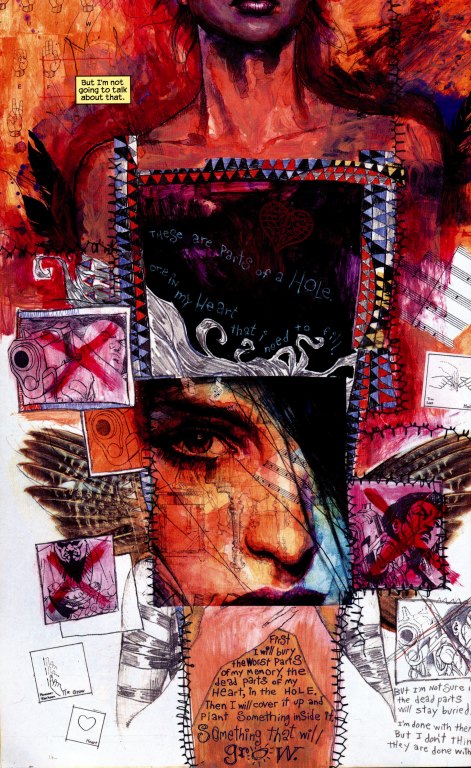
In 2007, I attended a really exciting conference in Berlin which brought together comics scholars from the United States and Europe to talk about the intersections between comics and the city. Here's a blog post that I wrote about the conference at the time. More recently, the conference organizers Jorn Ahrens and Arno Meteling have published a book, Comics and the City: Urban Space in Print, Picture and Sequence which builds upon the conference, including many of the key papers presented as well as some edited for the collection. My own work on Retrofuturism in the comics of Dean Motter was included in the book in a slightly different form that the version I shared with readers of this blog. The book is organized around five key themes: History, comics and the city; Retrofuturistic and nostalgic cities; Superhero cities; Locations of crime; and the City-Comic as a Mode of reflection. I have really been enjoying reading some of the other contributions to the book. Among the comics and artists represented in the collection are The Yellow Kid, Jason Lute's Berlin, the works of Eurocomics masters such as Francois Schuiten and Jacques Tardi, Batman's Gotham City, Ex Machina, Promethea, Spider-man's New York, Will Eisner, From Hell, 100 Bullets, Carl Barks, and Enki Bilal.

Hoping to call attention to this collection, I reached out to Jorn Ahrens, who teaches Cultural Sociology at the University of Giessen, to share some of his own thinking about the intersection of comics and urban studies. Here's what he had to share.

A central premise of the book is that comics have played a key role in producing and reproducing images of the city. Why is there such a close connection between this medium and the urban imagination?

Joern: The medium itself stems from the emergence of urban culture, especially from a mass media that can not be imagined without the urban environments of modernity. That way, from the beginning, comics can be seen as a medium in and by which a modern urban culture reflects itself by establishing certain narratives and images that help to clarify the self-understanding concerning in which "reality" people might be living apart from their nearest life-world. Comics can do that so profoundly, because they are the first medium that successfully combines the elements of word and image which means that they create a double representation of the world. Word and image both reflect on the social world they are produced in and they may also comment each other. With regard to those very new and unconvenient urban environments they massively participate in the construction of specific imagologies of the contemporary, which is: images of the cultural reality that, although they remain being images, help create access to reality and its perception.

Are there specific ideas about the city which originate with comics or do you see comics as primarily replicating ideas which are in broader circulation?

Joern: I see primarily the coincidence of the historical emergance of an environment of mass society, most clearly accentuated in modern urbanity with its implementation of the modern self, speed, a stone-born-nature, etc. and new types of mass media of which the comic is one. This coincidence, in my view, feeds a very particular and reflexive relation between the comic and the city. The film, too, is involved in this development. However, I see the comic being special here when its frozen sequentiality also corresponds with the frozen architecture of the sublime that the modern city contunally tries to realize.

What have comics added to our understanding of what it means to live in the city?

Joern: Especially they added a kind of commonly shared iconography of the city. Comics made the city readable. The city as social realm strongly refers to communication via images. Comics help turning these images into cultural narratives and aesthetics and to create outstanding icons of modern identity, landmarks of our self-understanding that are, by definition, not bound to specific cities or nations.

Your book cuts across some key divides which shape how comics get discussed, discussing commercial and art comics, American and European comics, historical and contemporary comics side by side. What do you see as the advantages and disadvantages of adopting such an inclusive approach?

Joern: The greatest disadvantage is, of course, that the field is too broad--you will always miss something. The nice advantage of the approach is that we are able to offer a sort of panorama that covers all these aspects that you are mentioning and in which combination only you might get that kind of overview we had in mind.
Yet, you also made a decision not to include Japanese comics in your mix. Why? What might such comics have told us about the nature of the urban imagination in comics?

Joern: Well, that's kind of an odd story that tells you more about the adventures of editing a book than of conceptualizing it. The answer to this question is far off from intellectuality. As you know, the idea to realize the book based on a conference we held in Berlin in 2007--and that involved a manga section for we, of course, believe manga to be one of the aesthetic and narrative core genres to presently approach urbanity in comics. Unfortunately, we have been victims of some evil curse that, one by one, took away from us any manga author after we grasped him or her. One disagreed with the book's concept, one was depressive, one was moving house, two just vanished and never answered e-mails again. It's a pity. If ever one or two manga scholars would show up who don't vanish again after two seconds, I'd plea for a special supplemental printing.
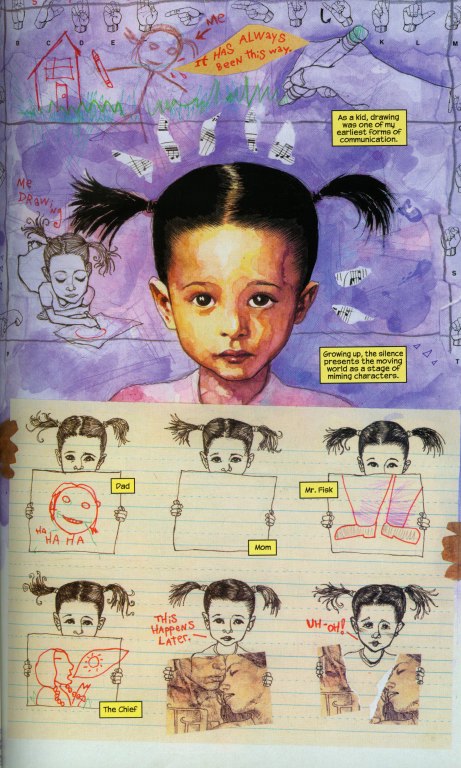
Some of the comics you discuss deal with specific real world cities while other cities are the projection of the author's imagination. How do these different strategies allow reflection on the urban experience?

Joern: The urban experience is a genuinely imaginative one. It comes up as a dreamworld or as "cities of the fantastic" to put it with the comics by Schuiten and Peeters. Take Berlin, City of Stones, for example--there you can find out that the dealings with the real, historically accurately depicted city are always involved into discourses of imagination about the city and its reality. On the other hand, truly imaginated cities, used as parables or simply as topographies unlimited to the author's imagination, like in the works of Marc-Antoine Mathieu, might give room to communicate deep insight about the nature and concept of the modern city in general. Of course, the modern city is a diverse thing, nevertheless there seem to be some core principles that can be elegantly stated by the means of "graphic literature".

Are different genres of comics apt to lend themselves to utopian or dystopian conceptions of the city?

Joern: I wouldn't put it that way. In my view it is rather the city that creates a utopian or dystopian notion to the use of genre. The use and representation of the city itself, may it be in graphics or plot, determines what the genre communicates its readers.

Joern, you focused your essay on 100 Bullets. Can you explain to readers who may not be familiar with this independent title why you think it is especially significant in understanding the themes of the book?

Joern: What fascinates me in 100 Bullets is that this series creates a kind of double imagination of contemporary urban society and culture. So, firstly, we have quite a decent documentary-like approach that presents highly realistic depictions of the urban life from the far upper class down to homeless people. But at the same time this comic is fully aware of its artificiality (as any media product is one) which it shows by its emphasization of aesthetic stylization and narrative cliché. That way 100 Bullets aptly crosses out the distinction of seemingly reality and creates a double representation of the cultural and social environment it is set in that covers both documentation and deconstructing reflection. Hence, in my view 100 Bullets comes up as one of the most fascinating examples for the immanent capacity of popular culture to unfold complex meditations on the medium and society while it still provides a greatly entertaining narrative and exciting artwork. So, with which subject can that be done better than by covering the presently floating images of the modern city and its characters?

The book brings together comics scholars from Europe and North America. What did you see as the differences in the status and approach of comics research in these two contexts? Where do you see common ground between the researchers?

Joern: I think, the main difference still is the divide in the formal canon. European and North American scholars still often refer to quite a different collection of works stemming from the two quite different traditions in comic culture (and Europe, of course, is far from being a homogeneous comic topography itself). This is not banal or only a problem of data overview. Hence, the different approaches in style, format, and narration also produce a different understanding of the medium and its intellectual reflection. Comics here and there are absolutely not the same and yet--they are. Common ground, then, can definitely be seen in the goodbye to the concept of high culture as much as to the struggle between high and low in general. Research in comics stems from a wide understanding of culture that does not doubt the legitimacy and productivity of mass culture. This is the comic studies' advantage in comparison to film studies. Comics never really had their cinephilia that desparately made them try to be acknowledged as art, too, as we still have to face it in film studies. So, I'd say that comic studies are lustily participating in entering a new self-understanding of modern culture.

Jorn Ahrens is Stand-In Professor in Cultural Sociology at the University of Giessen. His research focuses on cultural theory, popular media, questions of the self, violence and myth. His publications include "How to Save the Unsaved World?: Visiting the Self in 12 Monkeys, Terminator 2, and The Matrix," in A. Holba and K. Hart (eds.) Media and the Appocalypse (2009) and "Der Mensch als Beute. Narrationen anthropologischer Angst im Science Fiction-Film" in Zeitschrift fur Kulture-und Medienforschung (2009). Ahrens was a visting scholar with the Comparative Media Studies Program at MIT.

ARGS, Fandom, and the Digi-Gratis Economy: Interview with Paul Booth (Part Three)

As I read your discussion of "database" narratives, I was reminded of Otaku: Database Animals which was recently translated into English from the original Japanese and has a number of key arguments to make about the way the model of the database is impacting fan creative expression. Do you know this work? If so, how would you position your arguments in relation to its core claims about the encyclopedic nature of Otaku culture?

I hadn't heard of Otaku: Database Animals until I saw your question, but after reading it, I can definitely see the connection between Hiroki Azuma's work with database cultures and my own work with database narratives. I think there are some truly interesting parallels as well as some differences between my thinking and Azuma's which elucidate some of the more conceptual ideas in both. For Azuma, Otaku culture seems to reside in a similar place in society as does fan culture: "those who indulge in forms of subculture strongly linked to anime, video games, computers, science fiction, special-effects films, anime figurines, and so on" (p. 3). But I think what intrigues me most about his analysis of Otaku is the way it plays so heavily into cultural theory.

Namely, the shift from modernist culture to postmodernist culture in Japan can be chartered, according to Azuma, through the relationship Otaku have to the media texts they enjoy. This philosophical sea change represents a shift from a mode of fan action based on narrative to a mode of fan action based on the database. I hate to simplify the complex philosophical argumentation and the wealth of examples Azuma brings to the table; but in brief, modernist media texts maintain a "grand narrative" behind the tale - that is, we watch to try and figure out the "deep inner layer" of the story. Each individual mode of narrative - television show, action figure, video game, etc. - represents a minute glimpse into this grand narrative, and by piecing them together, we can find the "truth" behind the complex narrative. In contrast, the postmodernist media text has no "grand narrative," and instead each individual media text exists solely in relation to other media texts, forming a database of information. From this database, Otaku can construct any number of individual narratives. Thus, for Azuma, even derivative works (what I would call fan-created texts) have equal value in this model, for these derivative works contribute equally to this database.

I agree that fan-created texts can, indeed, have equal value for fans as do extant texts. However, while Azuma focuses his work on the move from narrative culture to database culture, I tend to look more at the relationship between the database and the narrative in fans' digital texts. Indeed, I look at how fans represent the linear causality of narrative within the inherently non-linear structure of the database. For example, Azuma describes the encyclopediazation of characters from Otaku culture into massive online databases that allow Otaku to create their own characters from common attributes (TINAMI searches). He writes that this database culture is opposed to narrative, even describing it as "non-narrative." In contrast, I describe the way wikis promote modes of fan expression that use and play with narrative form, like narrative re-purposing and textual spoiling.
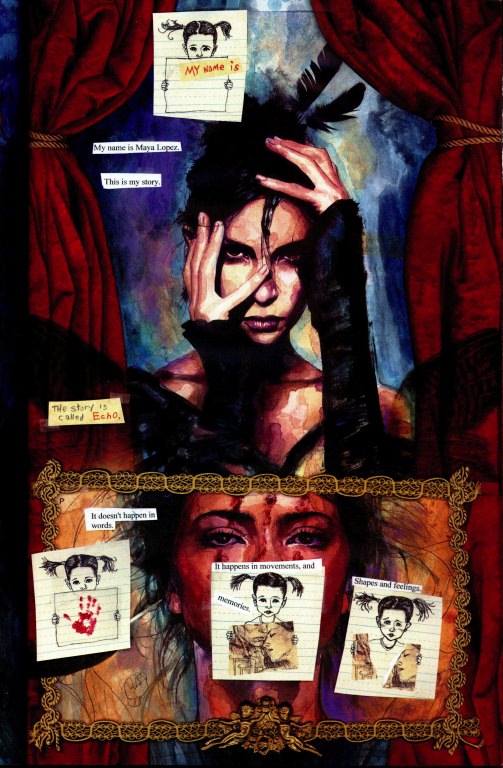
For example, I examine Lostpedia as a fan-created wiki that reconceptualizes narrative from a linear model to a hypertextual model. Delving into narrative theory, I argue that fans read the discourse of Lost, re-write the story, and then re-present that story in a new context on the wiki, thus transferring the temporality of Lost into a spatial reconstruction of the narrative events. Ultimately, like in Otaku: Database Animals, this argument presents a postmodern view of media texts as divorced from definitive authorship, but one that emphasizes the connection between narrative and database.

You talk in the book about "ludicity." Can you explain what you mean by this word and what it might suggest about the relationship between fan expression and play?

Ludicity is related to one key concept that I return to again and again throughout the book: a particular "philosophy of playfulness" that seems to inhabit contemporary media use. By using the word "ludic," I don't necessarily mean that all media are games, or even game-like, but rather that the manner in which contemporary audiences use media is playful, fun and exuberant. We don't watch YouTube, for example - we interact with it, play with it, and search for clips that match the mood we may be in. Today's media are certainly interactive, but the manner of that interaction simulates more closely the way one might play with a game rather than the way one might watch a film.

This playfulness is one reason I believe the Alternate Reality Game features heavily as a metaphor for contemporary media. To "play" an ARG is a vastly different experience from "playing" a board or video game. For one, playing an ARG relies on not knowing whether you are playing or not - the "magic circle" defined by Johan Huizinga envelopes all media. To play an ARG hinges on making all media interactions playful, for a player may never know if an interaction is part of the game or merely real. In contrast to traditional games, therefore, ARGs are boundless.

For fans, this philosophy of playfulness emerges in their interactions with the extant media text. One can often read a sly "wink wink/nudge nudge" feeling from fan-created texts, one that playfully remarks upon the intertextual relationship between fan worlds. I call this feeling "ludicity" in the book, poaching the term from Tom Brown's "The DVD of Attractions'?: The Lion King and the Digital Theme Park." I use the term "ludicity" to refer to the playfulness - silliness, even - with which contemporary media audiences can engage with media texts. For fans, the playfulness of the fan content indicates a close, lively relationship with the text. For example, fans seem to assert this ludicity in the way they articulate the illegality of their fan fiction in their disclaimers. One fan text remarked, "Yes, I blatantly stole ideas from both Battlestar Galactica and Return of the Jedi ... please don't sue me for doing it. This is for amusement and nothing more." The author here understands copyright ("I blatantly stole ideas") and the necessity for acknowledgment ("This is for amusement and nothing more"), but playfully skirts the issue of legality/illegality ("please don't sue me") with a humorous comment.

Ludicity as a concept of (and in) media studies helps to acknowledge that, despite the seriousness with which we examine fans and other media audiences, it is often matched with a converse silliness - which simply makes studying fans much more interesting.

Some critics might argue that your book is drawn towards the fan boy cannon, focusing on such works as Heroes, Lost, Doctor Who, and Battlestar Galactica. Is there something specifically masculine about the forms of fan productivity you are discussing? What would your argument look like if you applied it to shows, such as Supernatural, White Collar, or True Blood, which have a stronger female fan following?
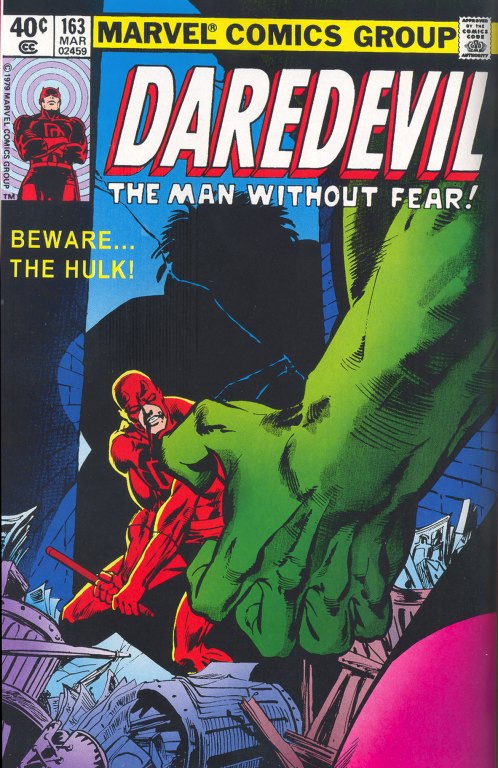
I think it's important to note, though, that just because a show may be weighted masculine, that doesn't mean the fan culture that surrounds it is. While there may be a more masculine bent towards the fan objects I examine, I'm not entirely convinced that a show necessarily geared "feminine" or "masculine" plays out that way in fan discussion. Especially in the cases of Doctor Who and Heroes, I see many female fans participating in online discussions and fandom (and of course both BSG and Lost have many female fans).

But your larger question is quite intriguing - is there something specifically masculine about the fan creativity I discuss in the book? To be honest, I don't think there is. One of the conceptual guides I use to describe fan content creation throughout the book is the "Web Commons," or a conception of the web as a source for community and communal action. To conceptualize the web as a commons (and I am far from the first to do so: Lawrence Lessig's Creative Commons is instructive here, as is Yochai Benkler's in-depth The Wealth of Networks) is to see its primary function as facilitating communities. My research on fans looks at fans from this angle - not as primarily producers but as members of a community. If anything, I would gender this emphasis on community as a more feminine-style discourse; but I'm cautious to do so because I don't think fans in the Web Commons can be so essentialized. Ultimately, I think that fans do what we all do - join communities, discuss their passions, and find commonalities with others which they can share.

An interesting concern here is the attempt to link work on the narrative complexity of contemporary television (such as the work of Jason Mittell) on the complex practices which fans deploy in processing those narratives. Do the new complex narratives depend on the kinds of participatory infrastructure fandom expands? If so, do they rise and fall with their fan bases?

I'm really interested in complex narratives and how they function within our culture of decaying attention spans. We are often warned that we live in a multi-tasking society, where students spend more time on Facebook than they do writing papers, that we are faced with so many screens we can't focus, and that our attention span is atrophying. But the success of shows like Lost, Heroes, The Sopranos, and other long-form complex narratives seems to indicate that at least some portion of the population embraces complexity. Even contemporary cinema provides a glimpse into this tension: Christopher Nolen's Inception is one of the most complex narratives from Hollywood in a long time, and it's also been incredibly popular this summer, raking in nearly 150 million dollars in its first two weeks. It has also led to hundreds, if not thousands, of online discussions.

I think that there is a link between the complexity of a narrative and the fan practices that accompany it. If there wasn't an audience for complexity, these types of narratives wouldn't get made. But success is not always guaranteed. The case of FlashForward is a good example, as on the surface it would seem to be a textbook case of narrative complexity: a serial narrative, an expansive cast of character, multiple (global) locations, deep mysteries and mythic undertones. Yet, the show never truly caught on, and lost viewers nearly every week. Perhaps with some more time, the show would have succeeded - a second season may have saved FlashForward. But the networks seem to want television that hits that perfect storm of complexity and clarity - a tall order given that many complex narratives deliberately take time to understand. For every Lost there are loads of Happy Towns.

Of course there are a multitude of factors that play into whether or not a show succeeds, not least of which is the quality of the writing (a fault that is difficult to forgive in today's market). But fan participation does, I think, have a major factor on shows that air. The work of fans to keep Star Trek alive and thriving is well documented, and other shows have had similar help: Roswell, Jericho, Firefly, Family Guy, and Futurama, just to name a few. But I think, just as Sharon Ross does in Beyond the Box and Jonathan Gray does in Show Sold Separately, that it's also the indirect work that has a great effect on whether shows survive or not. What I mean is that fans can actively petition a network to keep a show on the air, and/or they can participate online to keep communication about the show alive. By keeping a show in the popular discourse, by creating spreadable media that can be shared among fans and non-fans alike, fans can have a grassroots effect on media, and I think this is where the Internet and digital texts have the greatest power.

Along these same lines, fans also demonstrate that our society's attention span isn't necessarily atrophying - it's simply moving onto different texts than what we've concentrated on before. We are intrigued by complexity, narratives, and games - playful texts that challenge as well as entertain. By using the lessons learned from studying complex (fictional) narratives, we can experiment with new ways to harness this attention. Games such as World without Oil or Ghosts of a Chance tell stories in ways that connect with the types of complexity that we do concentrate on, but also harness that storytelling for social good and educational purposes.

You offer a fascinating rethinking of the gift economy in relation to digital media: "The new gift, the digital gift, is a gift without an obligation to reciprocate. Instead of reciprocity, what the gift in the digital age requires for 'membership' into the fan community, is merely an obligation to reply." Can you explain the distinction you are making here between reciprocation and response? Does the obligation to reply create as strong a set of social ties as the obligation to reciprocate?

This is one of the key assertions of the book: that the gift economy itself functions differently in a digital space than it does in traditional spaces. The reason for this difference is, I think, due to the fact that it has to be situated complementary to the commodity economy. The mashup of the two, the "Digi-Gratis" economy, isn't just about the interaction between the gift and the commodity, but is also about the way each changes the other through that interaction. In traditional gift economies, of the type originally described by Marcel Mauss, there is a three-part structure that governs gift exchange: the giving of the gift, the receiving of the gift, and the reciprocation of the gift. Mauss is quite direct about this third obligation: "The obligation to reciprocate worthily is imperative. One does lose face for ever if one does not reciprocate, or if one does not carry out destruction of equal value. The punishment for failure to reciprocate is slavery for debt" (p. 54).

To envision the digital economy as a type of gift economy, as Rheingold's The Virtual Community does, means a change in the type of interaction presented both by the communities and by the technologies involved. Instead of reciprocation, which implies equality in interchange, I argue that digital environments instead embrace the reply. That is, instead of giving back equally, as would participants in a traditional gift economies, fans in the Digi-Gratis economy need merely respond to the "gifts" they've been given. For example, posting a video on YouTube may garner a few video responses, but to participate in the community formed from this content-creation, one need only respond with a comment. To "give" a blog fan fiction post to a community does not mean that the author wants the community members to each write their own story, but rather to comment on the original post. To create a MySpace profile of a character from Gilmore Girls or Doctor Who doesn't mean that everyone must create a profile, but that fans should reply through accepting a friend request.

In traditional gift economies, the power of the gift resided in its tangibility and transferability. That is, it was valuable because once it was given, the owner no longer possessed it. In the digital, unlike in a traditional gift economy, the gift does not disappear after the giving. When one "gives" a blog fan fiction entry, it is public and universal, and one does not lose it. To reciprocate is therefore unnecessary - one acknowledges the presence of the blog gift (usually with positive reinforcement or constructive criticism) through a response, but does not have to fill the void the gift left.

While I think the social ties created by replying instead of reciprocating are different, I don't think they're any less valued in the fan community. The community lies at the heart of the fan practices I observed for the book, and both the gift and the reply function to cohere that community. It's not that members of the community necessarily fit into prescribed roles. Many repliers also write their own fan-texts and similarly await their requisite replies. But at least in the fan communities I observed, the heart of the interaction remained the strength of the community that was formed by the social ties. In that respect, at least, the gift and the reply seemed to form a more consubstantial relationship with each other - that is, they go hand-in-hand in constructing a digital community.

Paul Booth, Assistant Professor of new media and technology at DePaul University, is a passionate follower of new technological trends, memes, the viral nature of communication on the web, and popular culture (especially film, television and new media). He studies the interaction between traditional media and new media and the participation of fans with media texts. He received his Ph.D. in Communication and Rhetoric from Rensselaer Polytechnic Institute.

Paul teaches classes in communication and technology, popular culture, science fiction, fandom, new media, and the history of technology. His book Digital Fandom: New Media Studies investigates how fans are using "web 2.0" participation technology to create new texts online, and how their works fits into our contemporary media culture. He has also published articles in Critical Studies in Media Communication, New Media and Culture, Narrative Inquiry, The Journal of Narrative Theory, American Communication Journal, and in the book Battlestar Galactica and Philosophy. He explores topics in video games, science fiction, social media, politics, philosophy and narrative theory. He is currently enjoying a cup of coffee.

ARGS, Fandom, and the Digi-Gratis Economy: An Interview with Paul Booth (Part Two)

You describe the role which British fans have played in helping to reconstruct and restore missing episodes of Doctor Who. Can you describe the situation for us and tell us what it suggests about possible collaborations between media companies and their consumers?

The case of the missing Doctor Who episode is, I think, one of the clearest cases of the "Digi-Gratis" economy, and particularly instructive in the way media companies and media audiences can reciprocally empower one another. During the early years of Doctor Who, the BBC erased many of the recordings of the show in order to save tape (this was a common practice at the time and not considered unusual at all). Richard Molesworth has written an extensive history of the production of Doctor Who that describes the multitude of reasons why this erasure occurred. One of the most pivotal early serials, "The Invasion" (1968), came from the sixth season of Doctor Who - and the BBC did, in fact, erase episode one and portions of episode four. They simply did not exist.

Or so the BBC thought. It turns out that many fans of Doctor Who, especially in the early years of the show before the invention of the VCR, collected bootlegged audio recordings of the episodes. These fans would hold microphones connected to cassette recorders up to the television speakers and audio record entire episodes as they were broadcast. Some kept these recordings for years, tucked away in shoe boxes under beds or carted from one home to the next.

When the BBC started to release DVD collections of Doctor Who serials, the erasure of the tapes became an issue: how to release an "authorized" collection if huge portions were missing? The short answer is that some of these audio recording fans of Doctor Who collaborated with the BBC and an animation studio called Cosgrove Hall to present an authorized animation of the missing episode that included a remastered original audio track culled from the scores of illegally bootlegged recordings from forty years previous. By combining the audio tracks from these recordings, the BBC created a master-track that was then animated by Cosgrove Hall to re-present the missing footage.

To me, it is a perfect representation of how the "Digi-Gratis" economy functions. For the commodity economy, the BBC was able to sell its DVD and finance the restoration. For the gift economy, the fans were able to respond to the positive emotion they had gotten from Doctor Who by giving back to the show. To look at this interaction as only one or the other is to limit that interaction: it is more meaningful to the fans that they participated and more meaningful to the BBC that they were able to create a product to sell. Both groups benefited; neither one at the others' particular detriment. I think it's particularly instructive for both media companies and audiences to see this interaction as a lesson. Doctor Who has a strong emotional resonance with fans, much stronger than many shows on the air. It would have been just as easy - and probably cheaper - for the BBC to link the episodes with voice-over, or had actors re-create the script. But by respecting the work and energy of fans, the BBC ultimately created a more robust product that acknowledged those fans' illegal practices.

(The story of Cosgrove Hall and the re-making of the serial can be found in the documentary Love Off-Air, produced by James Goss and Rob Francis, for the DVD of Doctor Who: The Invasion.)

Throughout the book, you draw heavily on a novel called Club Dumas. What new insights does this book offer for those of us working in fan studies?

Arturo Pérez-Reverte's The Club Dumas tells the story of Lucas Corso, an expert antique book collector, who uncovers a literary conspiracy among the world's elite book collectors. What fascinates me about this book is the way it specifically details two different popular conceptions of fans. On the one hand, Corso is an active reader of classic literature, who is able to piece together clues that have been inserted into various books throughout the ages to assemble a vast meta-narrative of literature. On the other hand, the evil literati in the book represent the opposite conception: the popular image of fans as fanatical, anti-social, and limited in human encounters.

While an interesting yarn in its own right, Pérez-Reverte's novel also demonstrates something that Roberta Pearson pointed out in her chapter of Fandom: namely, while we associate fan studies most strongly with genre fiction (mainly sci-fi, horror, romance, mystery, etc.), one can truly be a fan of anything - including, in the case of the characters in The Club Dumas, even ancient occult manuscripts. By opening up fandom to outlet, we universalize fandom. Fan scholars can apply the tenets of fan studies in a variety of cultural arenas, to explore new dimensions in cultural studies.

Indeed, good fiction can often spark relevant cultural studies arguments in new and exciting ways. For example, the Footage in William Gibson's Pattern Recognition is a direct and prescient representation of both spreadable media and what I call database narratives. In the novel, Cayce and other Footage followers have to reconstruct a meta-narrative from individual units of the film presented to them as narrative information. Published in 2003, though, Pattern Recognition helps us in 2010 recognize different ways media is spread - this fiction has become useful for analyzing contemporary cultural endeavors.

You examine Star Wars Uncut as offering an alternative model of fan authorship. Explain. How does it resemble or differ from the forms of fan fiction which other accounts have explored?

It seems that empirical data about fans can really only come from one of two sources. We can either ethnographically study fan communities, by joining fan groups, participating in fan discussions, or otherwise involving ourselves with fans; or, we can analyze fan-created texts that populate fan culture. In the ethnographic study, we can easily look at groups of fans - at fandoms - and see how the interaction between fans helps to stimulate interest in the objects of study. In the textual analysis, we can easily look at the creations of individual fans to form inductive conclusions about fandom. It is relatively easy to study either communities or texts, but it is relatively difficult to do both at once.

Star Wars Uncut is, in my opinion, a way of tying the two objectives together: at once, it is a textual analysis of a fan community and a study of a fandom-created text. According to its website, the creator of Star Wars Uncut, Casey Pugh "became interested in using the internet as a tool for crowdsourcing user content. Star Wars was a natural choice to explore the dynamics of community creation on the web - the response from fans has been overwhelming worldwide and the resulting movie is incredibly fun to watch." In practicality, individuals choose a 15-second clip from the original Star Wars (Episode IV, thank you very much) and remake it however they want as long as they follow the timing of the original precisely. Fans have submitted animated scenes, scenes filmed in restaurants or garages, and even one "acted" by the fans' dogs. The 15-second clip is then uploaded to the Star Wars Uncut server where the original music and dialogue from the film are inserted. All the clips are reassembled in the "Star Wars" order. The finished movie is thus the collaboration of literally hundreds of fans, each creating one moment out hundreds for the finished product.

To see Star Wars Uncut as a fan-authored text is slightly erroneous - not only is it the product of a collective, but it's also so completely adherent to the original Star Wars (the timing has to be perfect) -- it can hardly be called fan fiction. Instead, I like to think of this as a form of "Digi-Gratis Fandom." It's not fan fiction because it's the work of a collective (a fandom), and it's representative of this mashup between the commodity economy (Star Wars) and the gift economy (individual submission to Star Wars Uncut).

I think it's also telling that other groups have started to emulate the Star Wars Uncut model. For example, David Seger is crowdsourcing Footloose as Our Footloose Remake, and noted filmmakers Ridley Scott and Kevin Macdonald are making "Life in a Day" by compiling hundreds of YouTube videos. More ecologically-minded participants may also be interested in projects like "One Day One Earth," which similarly documents one day in the world's history via YouTube. To study fandom presents a useful way of examining these new crowdsourcing initiatives.

Throughout the book, you are exploring new forms of fan productivity and creativity which have emerged in response to the emerging affordances of the wiki, the blog, and other web 2.0 platforms. What do you see as some of the most promising experiments in fan expression? Why have fans been such early adapters and innovators of new media platforms?

In my opinion, one of the delights of studying fans and fan-created texts lies in observing how fan expression can be applied in areas outside fandom. As new technologies have emerged in our digital culture, we tend to examine them using traditional media descriptions; so, for example, when we talk about blogs we're mainly talking about blog entries and we tend to slight the important contribution of the blog comments (the important work of Roger Ebert in this discussion is a valuable exception). In my analysis of Battlestar Galactica fan blogs, for instance, I observed that the fiction itself functioned differently from what we might expect: that is, the blog entry (which was the main fiction story) served as a starting-off point for many complicated and intricate discussions about the meaning of that entry in the comment section of the blog. The community of fans, actualized through the comments, seems to be the focus of the blog in its entirety. The entry presupposes the comments, in a Derridean reversal of sorts.

Ultimately, the way fans interact with new technologies presents new forms of expression online. Another example I look at in the book is the wiki. Fans who contribute to Lostpedia, for instance, rework the confusingly multi-linear narrative of Lost into an inherently linear story on the wiki. But the way fans do this is through intense interaction and group collaboration. Like with Star Wars Uncut, the crowdsourcing inherent in Lostpedia indicates a shift in the manner of textual creation by fans.

One danger that I faced while writing this book was in mythologizing fans. Fandom, it must be noted, is not a panacea that cures all that ails media. At the risk of waxing lyrical about fandom, though, fans do seem to populate the extremes of media use, and many early adaptors of technology do seem to be fans of one sort or another. One thing that I've noticed about fans is that there seems to be a desire to delve incredibly deeply into whatever text they're examining: it's not enough to understand the plot as we see it, but we have to understand character motivations, subconscious desires, etc. Perhaps this intense commitment to the text extends to technology as well: the desire to learn everything about a technology may lead fans to greater and more rapid adoption of new technology?

You write of two competing pulls on all forms of fan writing - "one connecting it to a larger corpus of work and the other building a more cohesive document." What are some of the strategies fans deploy to try to resolve these competing tensions?

At its most basic, fan writing lies at the intersection of a palpable tension. On the one hand, fan writers must somehow link their writing to the extant text. Whether it's a relatively weak connection (setting the action in the same universe), or a strong connection (filling in the gaps between moments on screen, perhaps), the effect is the same: there must be some sort of intertextual link between the fan writing and the main text. On the other hand, though, fan writers must also create a work that stands on its own, that becomes its own text. To be too subservient to the extant text is to rely too heavily on unoriginal material. Fans must put their own spin on the larger corpus, but must also create a document unique unto itself. In order to do this, fans have to reference internally unique moments in the fan text - an "intra-textual" reference. Even an inherently derivative work - Star Wars Uncut - has to make itself somewhat unique to stand out and be noticed (hence the self-conscious nature of many of the clips).

These competing pulls, it should be noted, are not entirely unique to fandom. Mikhail M. Bakhtin described a similar type of tension inherent in language in his "Discourse in the Novel." For Bakhtin, language has two distinct pulls. One, the centripetal, pulls all language to a single, unified language, a correct way of speaking. The other, the centrifugal, pulls language away from a central discourse, towards a constructed view where language mutates and adapts to changes in culture. For Bakhtin, every utterance exists between these two pulls: one, trying to tie the utterance to a larger, unified discourse and the other trying to find alternate meanings and themes within the utterance.

To resolve these tensions, speakers of a language must make sense of a slew of material, much of it intuitively. Through context, genre, and other methods of cultural organization, the "proper" form of language becomes apparent. For example, we train children in school to write in the "correct" way, which is often vastly different (and may not be applicable in) their "real world" lives. To teach grammar and "proper" English is to take a decidedly monolithic look at language - yet the language students use on Facebook or in text messaging is decidedly different. SMS shorthand, Leetspeak, or Netlingo are not incorrect, given their situational context.

One of the interesting things that I found in my exploration of fan fiction on blogs is that the resolution of this intertextual/intra-textual tension resides in the dual nature of the blog form. Since fan blogs are made up of both fiction entry and non-fiction comments, the blog form as a technology helps to solidify this tension - one half of the blog document can refer back to the extant text (intertextually) while the other half can refer to the blog itself (intra-textually). The technology complements the writing. Taken as a whole, then, fan writing online uses technology in a new way to resolve old tensions.

Paul Booth, Assistant Professor of new media and technology at DePaul University, is a passionate follower of new technological trends, memes, the viral nature of communication on the web, and popular culture (especially film, television and new media). He studies the interaction between traditional media and new media and the participation of fans with media texts. He received his Ph.D. in Communication and Rhetoric from Rensselaer Polytechnic Institute.

Paul teaches classes in communication and technology, popular culture, science fiction, fandom, new media, and the history of technology. His book Digital Fandom: New Media Studies investigates how fans are using "web 2.0" participation technology to create new texts online, and how their works fits into our contemporary media culture. He has also published articles in Critical Studies in Media Communication, New Media and Culture, Narrative Inquiry, The Journal of Narrative Theory, American Communication Journal, and in the book Battlestar Galactica and Philosophy. He explores topics in video games, science fiction, social media, politics, philosophy and narrative theory. He is currently enjoying a cup of coffee.

ARGS, Fandom, and the Digi-Gratis Economy: An Interview with Paul Booth (Part One)

This week marks the official release date for a new book, Digital Fandom: New Media Studies, which makes a substantial contribution to our understanding of a range of topics which run through this blog. It's author, Paul Booth, has consented to give me an interview where we talk together about the ways that he thinks Alternate Reality Games can shed light on the practices of online fandom, about how we might push beyond the opposition between producer and consumer, about how we might better understand the interplay of the commercial and gift economy as it effects fandom, and about new forms of expression which have emerged as fans work together through social networking sites.

His responses here only sample the richness of this particular book, which draws heavily on digital and literary theory, to encourage us to rethink some of the classic paradigms in fan studies. The work is cutting edge both conceptually and in terms of its range of examples (which include various forms of crowd-sourced and wiki-based forms of fan collaboration that have received limited attention elsewhere.)

The central metaphor for understanding digital fan culture comes from the world of Alternate Reality Games. What can ARGs teach us about new media platforms and processes? What do you see as the similarities and differences between fans and gamers?

To me, Alternate Reality Games are an incredible synthesis of media texts, platforms and outlets. Constructed through a variety of technologies, ARGs are paradoxical: they seem to be ubiquitous and yet they are also fleeting and ethereal. As such, it's very difficult to point to a particular space and say "this is an ARG." They seem to exist in a sort of "space between" media; that is, they are only visible through the contrast with what they are not. They seem to thrive through media camouflage. I'm reminded of the David Fincher film The Game (1997), where Nicholas Van Orton (Michael Douglas) is caught up in a game that he can't tell from reality. Events that occur in the narrative may or may not be authentic interactions, and he is never sure whether he's playing a game or actually caught up in a series of dangerous adventures.

By viewing the ARG in this liminal state, we can begin to see connections to the way new media platforms and processes function in a converged media environment. That is, ARGs, like new media texts, function precisely because they exist as transmedia entities. Similarly, we're beginning to see media texts that transmediate: shows like Lost and Heroes, which tell much of their stories outside of the television; Webkinz, which takes real-world plush toys and lets children play with them in a web environment; or YA book series like The 39 Clues, which ask participants to read the book and investigate clues online.

These examples, of course, bring up another similarity between ARGs and contemporary media: the economics of them. Many ARGs exist to promote or advertise a product, as "ilovebees" promoted Halo and "The Beast" promoted the film A.I. As we embark upon a more mediatized culture, so too do we find ourselves immersed in a more commercialized culture as well.

It is this connection to contemporary digital media that provides a link between ARGs and fan culture as well. I don't mean to suggest that only fans play ARGs, or that only ARGs cater to a fan base; rather, the connection is more symbolic. Fans of contemporary media and players of ARGs both interact with their requisite text in similar fashions. Fans make explicit the implicit active reading we all do when we pick up a book, watch a television show, or experience some form of media. Similarly, ARG players have to actively participate in the construction of the game itself, often uncovering hidden facets of the game, or participating in the development of narrative elements. Both for fans and for players of ARGs, the contemporary transmedia environment facilitates and encourages playfulness and engagement with many different media.

You are trying to push back on metaphors based on "market or commodity economics." What do you see as the key limits of such metaphors and how does your focus on ARGs seek to transform them?

So much of our discussion about media is based on these metaphors that we often forget that they are, indeed metaphors at all. For example, when we talk about "consumers" and "producers" of media, we're engaging in a discourse that uses gastronomic language to describe commodity economics. In other words, we talk about media in the same way that we talk about food. And the natural end result of this metaphor certainly portrays fans (and other active audiences) in a rather negative light: if media companies "produce" and audiences "consume," then what fans create through rewriting or remixing is "garbage" (or worse: a very nasty metaphor indeed). I think this metaphor ultimately limits the conversation, so even if one talks about "productive consumption," one still remains mired in this commodity mindset.

I think that while there is value in seeing media companies as "producers" and audiences as "consumers," a great deal of excellent work has also recently problematized this conception. I'm thinking of your work in Convergence Culture, Axel Bruns' research in Blogs, Wikipedia, Second life, and Beyond, and Lawrence Lessig's excellent Remix. What these books have done, and what I've tried to do in my book, is to look at the metaphors we use to describe media creation and media reception in different ways.

One of the main paths I follow in the book to re-look at these metaphors is to see how a different economic model - the gift economy - could work to establish a new way of describing fandom in the digital age. Both Lewis Hyde's The Gift and your blog post about the gift economy were quite influential to my thinking in this respect. In contrast to a traditional commodity economy, a gift economy values the social relationships the exchange of gifts brings. I think that if we re-examine the media creation process from a gift economy point of view, what we find is that the categories of "producer" and "consumer" simply don't function in the same way anymore. Instead of media "products" being made for "consumers," content "gifts" are exchanged between both creators and receivers. The media text is a gift, which the receiver can reciprocate through attention, feedback, fandom, or even purchasing advertised products. A gift economy metaphor implies a stronger relationship between content creators and content receivers, with more potent feedback implied between the groups. There is also a greater collaborative potential between audiences and creators, and a more fluid dynamic between the two. I certainly don't deny the economic imperative behind media consumption in general, but I think that in concert with a commodity economy metaphor, the gift economy helps create a more complete picture.

To me, ARGs represent an amalgam of the gift and the commodity economies. I've already mentioned that ARGs are often marketing campaigns, which is a strongly commoditized cultural activity. But I think it's crucial to mention that participants in ARGs can devote hours and hours of time and energy to completing the ARG without ever once purchasing the product or watching the media text the ARG advertises. When I mention I study ARGs, the most common question I receive is, "why would someone invest so much time, for free, on a game"? And I think that's a commodity way of looking at ARGs. Instead, if we look at them as gifts, we can argue that players and participants are using their time and energy to respond to the pleasures they experience in the game. The gift and the commodity economies are not enemies; but rather mutually react with each other. This union of the gift and the commodity is what I call the Digi-Gratis economy.

You discuss the emergence of a "Digi-gratis" culture which operates as a "mashup" between market and gift economies. Explain. How is this different from the hybrid economy Lawrence Lessig has discussed in some of his work?

The "Digi-Gratis" economy is a term that I use to describe the mutually beneficial relationship between the gift and the market economies within contemporary media and culture. As I was saying above, it is difficult to see either the commodity metaphor or the gift metaphor as the ultimate metaphor for understanding the relationship between media audiences and media creators. But through a lens which ties both metaphors together, we can more fully appreciate the extent of contemporary content creation.

The term "mashup" is particularly instructive here, because it implies that neither metaphor dominates the relationship. We typically think of a mashup as a sample from one text remixed with a sample from another text to form a third text. Importantly, a mashup relies on the knowledge of both requisite texts that the audience brings with it: for example, in Mark Vidler's "Carpenter's Wonderwall," the music of The Carpenters is remixed with the music of Oasis to form a unique entity, the power of which comes from that particular interaction. We have to know The Carpenters' and Oasis' original songs in order to fully appreciate Vidler's masterful mashup.

I believe that the concept of the mashup can be instructive for understanding more than media issues, and in fact can describe cultural concerns as well. The "Digi-Gratis" economy is one such mashup. As the name implies, it becomes most relevant in observing the way audiences and creators interact in digital environments. The "Digi-Gratis" economy thrives because neither the gift nor the commodity economy outweighs the other. Instead, through mutual reciprocity, their mashup forms a third type of encounter - the "Digi-Gratis." In many ways, it is similar to Lessig's conception of the hybrid economy, insofar as it does describe an interaction between two different economic styles, and that this interaction blossoms through digital technology.

But one crucial difference between the hybrid and the "Digi-Gratis" economies is that issue of the mashup metaphor. For Lessig, the hybrid emerges in spaces where one economy must dominate over the other. In turn, this dominance implies a focus on one end of the production/consumption dynamic. As Lessig says in Remix, the hybrid economy "is either a commercial entity that aims to leverage value from a sharing economy, or it is a sharing economy that builds a commercial entity to better support its sharing aims" (177). One always dominates.

Alternately, the "Digi-Gratis" implies a mutual relationship between the two economies, and places no emphasis between production and consumption: both are weighted equally. To give a recent example, Old Spice's use of viewer questions and the Old Spice man's (Isaiah Mustafa) answers has been a web hit on YouTube, Reddit, Twitter and other social media. To look at the interaction solely through a commodity metaphor limits the range of complex meanings available to the audience/viewers/responders. Audiences have had a powerful role to play not just in the creation of content, but in the focus of their attention as well. The "Digi-Gratis" metaphor offers a chance to view these interactions as meaningful in and of themselves, while not ignoring the complex interactions between commodities and gifts.

Biography

Paul Booth, Assistant Professor of new media and technology at DePaul University, is a passionate follower of new technological trends, memes, the viral nature of communication on the web, and popular culture (especially film, television and new media). He studies the interaction between traditional media and new media and the participation of fans with media texts. He received his Ph.D. in Communication and Rhetoric from Rensselaer Polytechnic Institute.

Paul teaches classes in communication and technology, popular culture, science fiction, fandom, new media, and the history of technology. His book Digital Fandom: New Media Studies investigates how fans are using "web 2.0" participation technology to create new texts online, and how their works fits into our contemporary media culture. He has also published articles in Critical Studies in Media Communication, New Media and Culture, Narrative Inquiry, The Journal of Narrative Theory, American Communication Journal, and in the book Battlestar Galactica and Philosophy. He explores topics in video games, science fiction, social media, politics, philosophy and narrative theory. He is currently enjoying a cup of coffee.

On Mad Men, Aca-Fandom, and the Goals of Cultural Criticism

A few weeks ago, Jason Mittell published a provocative essay on his blog, Just TV, which sought to explain why he dislikes Mad Men, an essay which he framed through reference to the concept of the Aca-fan as cultural critic. The fact that Jason dislikes Mad Men and I like the series is not that significant in and of itself, but Jason uses the essay to challenge some preconceptions about how taste formations work and to trace the trajectory of his relationship to the series. Here are a few excerpts from what he had to say:

Mad Men is lodged squarely within my habitus: along with other cable series from channels like HBO, Showtime and FX, it's part of the wave of "quality television" serial dramas that has raised the medium's cultural value in the 2000s (as Lynne Joyrich discusses in this volume), and served as the object of much of my own scholarly research and personal fandom over the decade (see Mittell 2006). The show is steeped in cultural references that resonate with my own background as a media scholar, flattering my otherwise esoteric knowledge of U.S. advertising and media history. Nearly every television scholar and critic with whom I interact loves the show, making it required viewing for people in my professional and personal taste circles - in fact while I was writing this essay, Facebook encouraged me to become a fan of the show, noting that 61 of my friends had publicly declared their allegiance. In short, it's a show seemingly designed for me to love, and I have tried to fulfill that prediction by giving myself over to it.

Why did this predicted affection fail to take hold? In exploring this question, I highlight my own aesthetic response to shed some light on the mechanics of taste and televisual pleasure. In looking closely at Mad Men, I'm trying to avoid becoming an anti-fan, as I respect too many people who like the show to actively lobby against or condemn their pleasures. As Jonathan Gray has explored, anti-fans are affectively invested in their own dislike of a cultural object and enjoy sparring with its fans, rather than passively ignoring the existence of the object of their distaste (Gray 2003). Yet simply by expressing and explaining a negative attitude toward something beloved by some, fans often rise to defend their tastes and attempt to argue against critics. In discussing my own reactions with my many Mad Men-loving friends, we quickly engaged in arguments as to whose experience and judgement was more valid and true to the show, and typically ended in an awkward and unsatisfying détente of agreeing to disagree.

I found Mittell's essay enormously valuable -- both in sorting out my own complex and often unsettling relationship to the AMC drama and in terms of raising important questions about the place of the autobiographical and subjective in academic criticism. Game designer and theorist Ian Bogost, on the other hand, was disappointed with the essay, seeing it as illustrative of bigger problems he has with the stance of the Aca-Fan in debates about culture. (I should note in passing that I consider both Jason and Ian to be gifted critics and good friends.) Here's part of what he wrote at his blog:

A critic's job, in part, is to explain and justify his own tastes, and to act as a steward for those tastes on behalf of a constituency of readers. People tend to circle around the critics we respect and, more so, agree with because we come to trust their taste. There are pros and cons to such a tendency, the most obvious downside being that we can avoid stretching our minds by surrounding ourselves with only like-minded ideas.

But for the academic critic, I think the stakes are higher. One can like or dislike something, but we scholars, particularly of popular media, have a special obligation to explain something new about the works we discuss. There are plenty of fans of The Wire and Mad Men and Halo and World of Warcraft out there. The world doesn't really need any more of them. What it does need is skeptics, and the scholarly role is fundamentally one of skepticism.

Thus, the only thing that disappoints me about Jason's essay is that I didn't learn anything new about Mad Men.

Both Jason's original post and Ian's critique of it have sparked extensive discussion and comments, involving many of the top thinkers in the space of fan studies and cult media, and if you did not follow them, you probably should take a look. As often happens, the discussions devolved a little as they went forward with side issues taking over from the central concerns, but there was still much at both forums that should spark thoughts about criticisms.

I weighed in enough at Ian's blog that I don't need to repeat all of my thoughts here. I should note that I was engaging there with the larger issue of aca-fan criticism and had not at the time had a chance to read Jason's essay fully.

Having done so, I must say that I disagree with Ian's central claim that the essay is too self absorbed and doesn't teach us much about the series. The discussion the piece generated at Jason's blog suggests otherwise. Many people there found themselves testing their own embrace of the series against Jason's critique in a way which helped them to better understand their own relationship to the series. Much of the discussion centers on how we are supposed to feel about these characters and thus what kinds of pleasures one derives from the series.

Much like Vic (on The Shield) or Tony (on The Sopranos), I find my feelings towards Don Draper and the other characters shifting almost scene by scene. One scene may cause me to admire Don for his creative vision and intuitive understanding of the culture around him, the next may lead me to despise him for his lack of self-consciousness about how he treats the people in his life. He charms me and he repulses me. Part of that fascination has to do with how closed off he is from intimate emotional expression.

Much of my own interest in the show comes in trying to make sense of my parent's generation. I was born in 1958 and was a child, about the age of the Draper offspring, at the time the events depicted on the series took place. My life was deeply shaped by the cultural forces the series tries to capture, including the shifting values around race, gender, and sexuality, which represent the most loaded moments on the series. I respond to the series often as if I was eavesdropping on adult conversations after they thought I had gone to bed. My father couldn't have been more different from Don Draper on so many levels and yet, I do recognize the forces of emotional containment and stoicism that shape this character in my relations with my father (now deceased.) So, as I watch the series, I find myself drawn into both a search for traces of my parents and their friends in the program's character and in a search for signs of the dramatic changes which the culture underwent in the 1960s. Read in this way, I do not have to have sympathy for a particular character or even for any of the characters in order to be emotionally engaged by the series. For one thing, the characters are drawn with sufficient complexity and nuance that I find myself drawn towards them or repelled almost scene by scene. For another, I have enough affection for the people from Don's generation who have touched my life that I will watch the series out of respect for them and out of a desire to cut through the emotional wall that sometimes blocked me from fully knowing why they felt and acted the ways that they did.

Of course, I recognize that the series represents an interpretation of those times, one seen through a modern lens, but the references to smoking early in the series aside, I don't think the point is simply to express the superiority of our current values but rather to understand the values and behaviors as part of a social system. The series has a strong sense of the ways characters are performing for each other, suggesting how the set of values and practices were mutually reinforcing and thus extraordinarily difficult to change.

Yet, I do see in some of the characters the potential for growth as they respond to the changing cultural environment around them. And that's why, for me, it is very important to watch more than one season of the series in order to understand the evolving nature of the characters (as well as to see the brittleness of some of the characters, such as Roger, who seem charming and dominant in the beginning but show limited capacity for growth.) That said, one of the more interesting strands on Jason's blog has to do with how much of a series one must watch in order to be able to cast a judgment about it, given the almost impossible challenge of doing justice to the complexity of a long form drama such as Mad Men, as well as the obligations of the critic in relation to works they do not like.

In the course of the discussion at Ian's blog, I referenced the manifesto which Tara McPherson, Jane Shattuc, and I wrote as the introduction to our book, Hop on Pop: The Politics and Pleasures of Popular Culture, "The Culture That Sticks to Your Skin." When we published this book in 2002, we saw it as building the case for newer perspectives in cultural studies -- including but not restricted to those coming from the then emerging aca-fan community. We used the introduction to sketch out the defining traits of this new mode of cultural criticism and then used the thirty something essays published there as illustrations of these approaches in action. I will say that I would have been proud to have included Mittell's Mad Men essay in the collection because it speaks to many of the central concerns of that book and the current debate seems to me to suggest that the issues Hop on Pop posed are far from resolved.

I wanted to sketch here briefly the traits we saw as identifying this alternative cultural perspective, since I think they might provide a vocabulary which could inform some of these discussions:

We began the essay with reference to the Cyberpunk movement and Bruce Sterling's suggestion that they were writing in response to a shift from monumental technological achievements to technology that was everyday and intimate, that "stuck to your skin." We drew an analogy between that and the position of a generation that had grown up in a world where writing about popular culture had gained a certain degree of academic acceptability and we had the freedom to write about forms of cultural expression which were central to who we were and how we saw the world.

"Like the cyberpunks, we are interested in the everyday, the intimate, the immediate; we reject the monumentalism of canon formation and the distant authority of traditional academic writing. We engage with popular culture as the culture that 'sticks to the skin,' that becomes so much a part of us that it becomes increasingly difficult to examine it from a distance. Like the cyberpunks, we confront that popular culture with a profound ambivalence, our pleasures tempered by a volatile mixture of fears, disappointments, and disgust. Just as the cyberpunks intervened at the point where science fiction was beginning to achieve unquestioned cultural respectability, we are the first generation of cultural scholars to be able to take for granted that popular culture can be studied on its own terms, who can operate inside an academic discpline of cultural studies....The hard fights of the past have won us space to reexamine our own relationship to the popular, to rethink our own ties to the general public, and to experiment with new vocabularies for expressing our critical insights."

We then outlined a series of identifying traits of this "emergent perspective" in cultural studies:

1.Immediacy -- a trait we associate with "intensification (the exaggeration of everyday emotions to provoke strong feelings or a release from normal perception), identification (strong attachments to fictional characters and celebrities), and intimacy (an embedding of popular culture into the fabric of our daily lives, into the ways we think about ourselves and the world around us.)" We offered these trait as a critique of "objective" or "distance" scholarship as blinding us to many defining characteristics of popular culture.

"The challenge from our emergent perspective is to write about our own multiple (and often contradictory) involvements, participations, engagements, and identifications with popular culture -- without denying, rationalizing, and distorting them....We can draw on our personal experiences and subjective understandings to critique the popular as well as to embrace it. Even fans are far from uncritical in their relations to cultural producers."

We linked this concept to shifts in women's studies and queer studies that had embraced the "intimate critique" or "writing from a standpoint," which acknowledged the subjective in exploring cultural issues.

2. Multivalence -- Here, we were arguing against either-or perspectives, insisting on writing that acknowledged the complexity of the popular. We noted, for example, that for some groups which have been consistently marginalized in our culture, they may not be able to describe themselves as fans of dominant cultural productions.

"Their engagement with popular culture cannot be dispassionate, disinterested, or distanced. The stakes are simply too high. Their writing acknowledges the pleasures they have derived from engaging with popular culture as well as their rage and frustration about its silences, exclusions and assualts on their lives. These writers express contradictory responses to the materials of everyday culture and their own dual status as avid consumers and angry critics."

While I have chosen to frame my own perspective of culture in terms of being an aca-fan, because the fan communities within which I have participated for almost 40 years have helped to define how I see the world, and while I often embrace others who share my vantage point, this discussion was intended to signal the validity of many different vantage points from which to frame cultural critique. It simply insists that the writer be honest both about their stakes in their object of study and about the contradictions that they see within the works they are examining. For me, there is nothing "comfortable" or indulgent about taking seriously these two demands. And Mittell's essay demonstrates an ongoing process of self-reflection and self-questioning, exploring contradictions in the text and in his own relation to it, while offering respect for those who differ with his perspective. Not everything written under the "aca-fan" banner does so, to be sure, and so I see Bogost's critiques as a challenge to re-examine our own critical practices and theoretical positions.

While these two traits arose in the course of the discussion at his blog, the remaining traits we identified did not and they also help to round out our expectations about what would constitute quality scholarship in this tradition:

3. Accessability -- We challenged our fellow scholars to take the steps needed to open up their cultural analysis and critiques to a wider public, recognizing that academics are not the only ones who are concerned with the place of popular culture in their lives and suggesting that there is a political stakes in creating resources that are valuable to readers beyond the ivory tower. In a sense, both Mittell and Bogost, along with many other academic bloggers, embody this challenge to expand the address of cultural criticism so that it might engage with fans, policy makers, journalists, industry insiders, artists, and a range of other publics. I am proud of how much progress our field has made along these lines over the past eight years.

4. Particularity -- We summed this up quickly as "details matter" and went on to explain why overly generalized criticism and the sweeping dismissals of whole sets of cultural practices of the previous generation was no longer adequate to the new contexts in which popular culture was produced, circulated, and consumed. We saw the push away from broad theory and towards specific case studies (and within that, case studies that were attentive to as many details as possible) as embodying this shift in the nature of criticism.

5.Contextualism -- Here, we sought to counterbalance our focus on meaningful details with a recognition of how they illustrated and embodied large trends in our culture. As we wrote,"

we view popular texts not as discrete entities that stand alone but instead exist in relation to a broad range of other discourses, placing media production and consumptions witihin a social and cultural configuration of competing voices and positions. Rather than cannonize a text for its intrinsic or inherent value, we try to understand and articulate more fully the framework within which individual texts are produced, circulated, and consumed."

6. Situationalism -- Basically, this trait calls for attention to the contexts within which we are writing, recognizing that we write from a perspective of local knowledge and within our own historical moment, rather than seeking criticism which is universal and timeless.

I am not doing justice to the complexities of this essay, which examines a broad array of different scholarly, critical, and intellectual projects, and would urge you to track down the book and look through its contents. There are many essays there which illustrate the complexities and challenges of creating this kind of criticism. Many of them, I suspect, would embody the kinds of cultural criticism that Bogost has called for at various points during this exchange. These traits set exacting standards which we impose upon ourselves as critics. I don't always meet these standards in my own work, either on the blog or in my publications, but these are the criteria by which I judge my own performance and by which I measure the quality of other people's writing.

Like Bogost, I'd love to see more ongoing discussions about the goals and roles for cultural criticism in the 21st century. If nothing else, Jason's Mad Man essay has helped open up such a conversation and that's more than it's reasonable to expect from any given piece of critical writing. Thanks, Jason and Ian, for the provocation. I am going to be traveling this week and so my ability to respond will be circumscribed, but I would be happy if this post might serve as a fresh start to get out of the entanglements caused by competing understandings of what a fan is and to focus instead on competing ideas about how and why academics should write about popular culture. We received surprisingly few reactions to our own 2002 provocations along those lines, so I would be happy if we could restart the conversation now.

No, You Do Not Have to Be A Gamer to Like Inception!

Last week, Patrick Goldstein of The Los Angeles Times ran a provocative blog post about the mixed reception surrounding the film, Inception, in which yours truly was quoted heavily. Here is what he quoted me as saying:

If Inception plays especially strongly with a young audience, it's probably because they instinctively grasp its narrative density best, having grown up playing video games. "When it comes to understanding 'Inception,' you've got a real advantage if you're a gamer," says Henry Jenkins, who's a professor of communications, journalism and cinematic arts at USC. " Inception is first and foremost a movie about worlds and levels, which is very much the way video games are structured. Games create a sense that we're a part of the action. Stories aren't just told to us. We experience them."

Even though the density of Inception can be off-putting to older moviegoers, it's a delicious challenge for gamers. "With Inception, if you blink or if your mind wanders, you miss it," says Jenkins. "You're not sitting passively and sucking it all in. You have to experience it like a puzzle box. It's designed for us to talk about, to share clues and discuss online, instead of having everything explained to us. Part of the pleasure of the movie is figuring out things that don't come easily, which is definitely part of the video game culture."

Goldstein did a good job of compressing almost half an hour of conversation about critical response to the film into a few substantive paragraphs. In no sense do I feel misquoted there -- indeed, he drew on my conversation as background to frame other parts of his discussion as well.

I have, however, been bemused by the ways that my claims here have traveled through cyberspace and gotten a bit more distorted by each new contributor. So, Entertainment Weekly's blog picked up on Goldstein's story and shifted the ground just a bit. It's headline reads "Inception -- Only Good if You are Young?" And on Twitter, several people rephrased the claim, " Do you have to be a gamer to like #Inception?" By the end of the week, when someone tweeted that they only "partially agreed" with my claims about the film, I wrote back to say that I only "partially agreed" with them too since people were responding to a partial representation of what I had to say in the first place!

So, let me take a step back and sketch out what I thought I was arguing. I start from the assumption that differing responses to the film are at least partially shaped by differing interpretive strategies. I discussed this concept back in my book, Textual Poachers, in relation to arguments made by reader-response critic Peter J. Rabinowitz about how genre impacts reading.

Peter J. Rabinowitz has suggested that genre study might productively shift its focus away from properties of fictional narratives and onto the 'strategies that readers use to process texts," seeing genres as 'bundles of operations,' conventions, and expectations that readers draw upon in the process of making meanings. As Rabinowitz puts it, 'reading' is always 'reading' as."...Different genres evoke different questions readers want to ask and provide alternative rules for assigning significance and structure to textual content. Rabinowitz distinguishes between four basic types of interpretive strategies: (1) 'rules of notice' which give priority to particular aspects of narratives as potentially interesting and significant while assigning others to the margins; (2)'rules of signification' which help to determine what meanings or implications can be ascribed to particular textual features; (3)'rules of configuration' which shape the reader's expectations about likely plot developments and allow the reader to recognize what would constitute a satisfactory resolution of that plot; (4) "rules of coherence" which shape the extrapulations readers make from textual details, the speculations they make about information not explicitly present within the story. The reader's experience, he suggests, thus requires an initial decision about what genre(s) will be most appropriately applied to a given narrative and then the systematic applications of those genre rules to the process of comprehending the textually provided information.

Of course, the ability to mobilize the interpretive strategies associated with a genre rest on having access to and familiarity with that genre in the first place as those of us who teach freshman film classes discover when we try to expose students to westerns or musicals or any other genre which has not been part of their repertoire of consumption. That's the sense in which gamers have an "advantage" -- they have a set of skills, literacies, competencies, expectations, call them what you want, that they bring with them to the theater and which shapes the range of strategies they have available to them which helps them to make sense of a film like Inception.

So, this brings us back to my claim about games and Inception. I am not saying that it would be impossible for a non-gamer to enjoy the movie. It doesn't represent, after all, such a dramatic break with other films which have come before it. In the interview, I drew analogy to the way D.W. Griffith cross-cut between four different historical periods, intensifying the movements between them as we neared the climax, in his silent classic, Intolerance. I would also agree with Entertainment Weekly's Darren Franich that it is less complicated than many art films or even, in his example, some classic film noirs. Yet, it interests me that the discussions around Inception are the kinds of discussions we might once have had around an art film in the 1960s or even an indie film like Nolan's own Memento, yet they are occuring around a summer blockbuster. The genre elements are part of what makes the film popular, part of what makes it fun and pleasurable to play the game that Inception offers us.

David Bordwell and Kristen Thompson have offered a brilliant analysis over at their Observations on Film Art blog about the role that exposition plays in maintaining clarity as we move between the different levels of the film. Indeed, they suggest that the presence of exposition across the film replaces character development in many cases, insuring that we can in fact follow the different levels or layers at work here.

I would also argue that at the start of the film, the audience is required to make a leap of faith, entering into a world whose rules are not immediately clear (especially in the opening sequence) and which are still being laid out to us in the final segment. This is very much like the experience of a gamer jumping into the game without always knowing the rules or properties, trying out new ideas and bumping into walls, until they learn how it works. Bordwell's discussion of the film's opening segment (which he calls a "training exercise") suggests that it may function as a "tutorial" or "sandbox" level -- such as we see in games where our first level of play allows us to test our capacities and rehearses skills we will need later in the game. So, at the most basic level, I would say that gamers have a predisposition to embrace certain kinds of open-ended experiences, figuring out what's going on as they go, which is different from the notion of clear expositional foundations we would association in classical Hollywood narratives. Indeed, gamers may have an expectation, as I suggested, that the film not lay everything out for us at the start but expects us to make an effort to figure out the pieces as we go. This is part of what makes an experience like this more intense and immersive. I couldn't believe it when I realized how long I had been in the theater, not having glanced at my watch during the duration, indeed, not having breathed very much while watching Inception.

This is not to say that the film abandons us altogether to our own devices. Genre plays an important role here in terms of helping us to map what's going on and understanding what matters in the film. We can read it as a straight forward action film or as a science fiction film -- think Total Recall. But there is also the possibility of making sense of it in terms of the conceptual vocabulary that games provide us -- so that we can understand the final sequence as moving between "levels" or "layers," each with a well defined task or "mission", each with a visually distinctive environment (not unlike the fire or ice levels in classic Nintendo scrollers like Mario Brothers or Mega Man), each requiring a different set of skills to master and a different set of obstacles to overcome. I am leaving aside claims that the film may pay tribute to specific games in its visual references: Bordwell cites Assassin's Creed II, Meigakure, and Shadow of Destiny. And Kristin Thompson closely examines a claim that the film was inspired in part by an episode from The Life and Times of Scrooge McDuck Companion.

Entertainment Weekly asks, "Is Inception the first great video game movie? Not based on one specific game, but rather, on the whole stylistic structure of video game storytelling?" Well, not the first certainly, since I think there's a strong argument, say, that Run Lola Run builds on a different set of properties from games, and the same could be said for The Matrix movies, but it does mean that cinema may be learning things from games which come through more interestingly when it is not trying to directly adapt games to the screen but is simply trying to produce movies that speak to a generation of movie goers who have grown up gaming. One reader asked why not just make an Inception game in the first place. I'd argue that these films deploy a language borrowed from games precisely to explore experiences which would be difficult to achieve in a game. I think thinking of Run Lola Run as a game helps us to explore the theme of choice and consequence which runs through the film, yet the filmmaker has the capacity to make every choice offered a meaningful one while in games, many choices are necessarily arbitrary and uninteresting.

Thinking about Inception as a game or at least a film for gamers might also speak to the ongoing critical discussion of its lack of development at least in terms of its secondary characters. Kristin Thompson writes,

"The characters' goals, apart from Cobb's, arise from the premises of the dream-sharing technology. Of course, they want to get paid, but that's assumed. Their actions all arise from the need to keep doing what they must to sustain the dreams and later from the need to improvise solutions to unforeseen problems that seem to violate the rules they have previously known. Why they need the money, whom they go home to when off-duty, how they got into this business, and all the other conventions of Hollywood characterization, are simply ignored."

This is consistent with an argument which Mary Fuller and I made about games in 1995. The very nature of an interactive narrative serves to strip characters of psychological depth -- game characters are often glorified cursers, vehicles we use to move through the game worlds, rather than characters into whom we project sophisticated motives or anticipate character development. Their goals are assigned from the beginning. They are defined through their capacity for action and their missions. The need for an open-ended structure means that we do not expect them to learn through their experiences nor do we expect their actions to be motivated through psychological realism. Choices become relatively arbitrary, having more to do with resources and capacities, than drives or needs. I don't think this lets Inception off the hook in terms of character issues, but it is interesting to think of this shift in the function and nature of characters as an extension of the game-like logic I am describing.

Bill, a reader, sent me an email with an interesting question about my argument:

"I agree with you in the LATimes article where you say gaming experience may have a lot to do with someone's appreciation of the movie Inception. However, I'd like to propose another possibility. I'm not sure many members of past generations understand or accept the film's premise. As DiCaprio's character describes it, conscious experience is not a literal transcript of the world, but an ongoing process of virtual construction by the mind. Although this premise has scientific merit, it is not widely known or embraced by the majority of tradition-bound Americans."

Here's my response:

"I would agree totally with you that the film's perspective on reality and perception also has a generational slant. It's interesting though that the films and television shows which take on some of this philosophical/spiritual argument are often associated with games and other digital media -- so I would see The Matrix, the final episode of Lost, and Inception, as all part of the same conversation about our relationship with the real world. We may as a culture be more open to such ideas because of our experience of the digital, just as people in the industrial age were more apt to think of a clockmaker god, or people in the early 20th century started to understand repetition compulsion in terms of a phonograph record in their heads. As Sherry Turkle suggests, we use technologies as tools to think with and a key question we use them to consider is the nature of consciousness."

This exchange would suggest that the game analogy extends from the formal structure of the film to the spiritual or metaphysical level on which it also tries to operate.

Now, coming back to Goldstein's original blog, he takes my discussion of gamers and maps it onto what he sees as generational differences in people's response to the film. I would point out, however, that the age span of active gaming expands with each passing year: more younger players are entering the game market, more older players are continuing to play into adulthood, and more seniors are trying games through multiplayer worlds and the Wii controller, let aside casual games. So, let's be careful about assuming there's a correlation between being young and being a gamer. After all, I'm over fifty and I still play games.

I hope this at least clarifies what I meant. I have only seen the film once and I have a feeling that I would need to see it many more times before I could offer anywhere near an adequate analysis, so take these as provisional observations about a work which I am sure many of us will continue to debate for a long time. It's exciting to have a summer film which sparks this kind of discussion!

Ethics and Game Design: A Conversation (Part Two)

One goal of the book is to help identify design principles that encourage game designers and players to reflect more deeply on their ethical choices. What would a designer learn from studying the contents of this book?

COLLEEN: You ask the question I'm super invested in and excited about! On one hand, I think we have to be careful about what we mean by ethical choices in the context of designing and playing. Both design and play are inherently transgressive (if they are any good). They push against the boundaries of rules and norms to create new experiences. At least, this is what many of us (designers and players) aspire to. I think what's really exciting about the collection of essays in the book is how each author defines ethics on their own terms, but also in complementary ways. I think the book gives designers the freedom to consider ethics not just as a property of games (to shoot or not to shoot?), but as an active engagement with players, context, and culture. Considering ethical choices as a way of thinking about game design and where and how games take form expands the boundaries of what we think about when we consider a game. The playing field extends beyond the game itself to the social context and the rhetorical perspectives (intentional or otherwise) of its creators (to borrow from Ian Bogost's model of persuasive games).

Do ethical concerns emerge differently in single-player and multi-player games? If so, how are the social dimensions of games being harnessed to encourage greater ethical reflection?

MIGUEL: Even though much of my work is focused on single-player games (as I understand them being the singularity that allows us a deeper understanding of games as ethical systems), I think the right answer to this questions is to say that we, scholars and sometimes developers, don't often think about ethics and multiplayer, and how to harness the social for creating this kind of meaningful play. I mean, the social is always moral (and political), so I guess we are taking it for granted, and focusing much more on this solitary experience (clearly influenced by other media that some could understand operate this way, even though careful reading of say Brecht shows that even epic theatre understood the audience as a social body, even though the experience of the play was individual - but I digress). In other words: we tend to forget multiplayer, and social dynamics, when thinking about the design of ethical gameplay, and we focus too much on either single player, or how the rules/mechanics of a system will affect a single player, even in a multiplayer game.

I think there is much work to be done regarding multiplayer ethical gameplay design. I feel that games like Diplomacy, or Defcon, or even RPGs (specially the swedish school of "jeepen games") have understood how to design particular multiplayer mechanics that generate ethical gameplay. Of course, backstabbing is one: but how does it work? Does it always generate ethical gameplay? How about harnessing empathy, solidarity, other values that are at play in multiplayer contexts? This question you're asking points us, I think, in the right direction: how to include the social, that which cannot be proceduralized, into the design of ethical gameplay?

My answer? By understanding how does a game system operate when creating ethical experiences (high abstract order), and then trying to think about mechanics that translate that into player-to-player behavior. I think the "Fragile Alliance" multiplayer mode in Kane and Lynch does this very well, for example: being a traitor is fun, but it's also a moral decision, one that is recognized so by both the game system and the game players, both reacting to a particular ethical choice.

COLLEEN: Adding another real person into the equation certainly changes the game. Interacting with unpredictable real people demands dynamic ethical choice-making from the start. You can't really grief an NPC! I think, however, it's more difficult to for designers to harness ethical choice-making in these social situations. In MMORPGs to grief or not to grief is really a player choice - like bluffing in human-human poker - these are not "designed" ethical choice moments. They are emergent aspects of play which designers don't always anticipate. This unpredictability is the magic of games and I think it's also where ethical play is more complicated and interesting. The complexity of emergent play - particularly in social play - can't always be harnessed, but it can be sought after. I think the flip-side to this fairly optimistic view of social and ethical dimensions is where we see social games designed around behaviorist concepts to

generate responses like addictive play, social coercion, and perhaps the worst evil of all, spam. I think there are definitely some ethics to consider here. Do we need a game design code of ethics?

Several of the writers note that all games are in some sense "ethical systems." Yet, certain games recur across many of the essays, suggesting that there may already be a canon of "ethical" games within this new field. What are these games doing which makes them such rich examples for research?

MIGUEL: Well, what the games I tend to analyze do right is to think about ethical gameplay beyond the basic consequentialist dilemma posing in a black-and-white moral universe. When we think about ethical gameplay, we immediately fall prey of the binary dilemmas, of the clashes between right or wrong, or between greater and lesser evils. Which I think it's often both too ethically coarse and a waste of time. Games can contribute to fostering our moral values, but they can only do so inasmuch as they first address us, players, as moral beings, then challenging our values and forcing us to reflect about our very notion of morality.

Binary dilemmas just help us corroborate our values - we don't need to challenge them, we act by them. The canon of "good" ethical games presents us with challenges beyond choices, a way in which we can use play to learn, develop and evaluate our own morality, both as players and as citizens. The games I find the most interesting are those in

which either there are no choices (Shadow of the Colossus) or the choices have effects I cannot easily predict by trying to understand the algorithms behind the game, therefore effectively making me develop ethical, and not instrumental strategies (Fallout 3).

KAREN: There are quite a few games that were mentioned regularly throughout the book collection and across multiple authors--games that could be considered part of a growing canon. These were typically games that attempted to include some type of ethical components or questions, or game play that ascribed some type of morality points to how you behave in the game. Some of these games, such as Mass Effect, Red Dead Redemption, and Fallout 3, incorporated a system (which varied from being transparent to opaque), where depending on your choices (e.g., actions in the game, or your dialogue selections), your avatar would be placed on a scale that was related to his or her ever-changing honor, ethics or morality. As a result, different options or interactions would open up due to your avatar's status on this scale. Other games did not use an ethical lever as part of describing your avatar, but offered an ethical choice that had certain direct outcomes, such as in Bioshock I/II. There are also some games that bring up specific ethical issues or concerns through their game content, narrative or other mechanics, such as Super Columbine

Massacre RPG or the Grand Theft Auto series. Thus, many of the authors in this collection analyzed the extent to which these games truly support ethical thinking, and provide the ability to experiment with one's own ethics and values, as well as which types of principles might better support this. I am personally interested in the moments in games when players have difficulty deciding what is right or appropriate to do, and how they think through those decisions.

On the other hand, I believe that all games (and any type of artistic expression) to some extent embody and express values--from everything through their modes of production and distribution, their mechanics and rules, to their cultural touch points and the ways subcultures form around them. For example, how a game is staffed or advertised may

have ethical implications, and there are values embedded in the way a particular game's world is designed. Again, while many games mentioned in the books more directly present ethical content and mechanics around ethics, potentially any game could be a site of interest because of the ways they were used, written about, or played with other people. For example, what is the function of using cheat codes in games?; how do players negotiate with each other in a given game, particularly ones that require social interaction?; and what are the rules around play? Any game can be a beneficial site for exploring ethical issues.

Interestingly, I've noticed that in the past few years, many games, particularly RPGs, have had more direct ethical components and have been quite popular. I believe this may be because games enable you to experience a new perspective--a new role--and one's ethical identity is an important part of this perspective. Being able to access diverse

ethical perspectives is perhaps even necessary for fully appreciating humanity. Through play, we are able to access new ways to experience the world, understand humankind, reflect on our identities, our destinies, our pasts and our mysteries. We may never fully answer these questions, but hopefully games can help us approach them.

Other essays describe so-called "serious" or "educational" games which are created specifically to foster ethical reflection. What are these games doing that's different from those already on the market?

COLLEEN: I'm not sure these games are doing anything different on a formal level, but they are certainly coming out of different development contexts from AAA titles, or "mainstream" videogames. Many of the games referenced in the book are the result of a different economic model: research funding and university/not-for-profit labs. In the last 5-10 years some exciting models have taken form in New York (I have heard it referred to as "The New York School") where there's lots of cross-pollination between academia and industry, enabling lots of low-risk experimentation and new funding possibilities/models. Out there in Cali you guys have some very exciting things happening as well, particularly at your institution, Henry! I think in order to build games that take risks with content and gameplay, there needs to be these kinds of alternative spaces and collaborations to experiment and learn.

The market is definitely changing and diversifying as well. Over the last month console sales dropped and mobile game sales skyrocketed. More distribution platforms for all kinds of games will definitely also help "serious" and "educational" games reach wider audiences, and exist across different platforms and in different contexts.

Games encourage what James Paul Gee describes as "projective identification." How is this concept linked to notions of "empathy"? What role does "empathy" play in fostering ethical reflection through play?

MIGUEL: As a Virtue Ethicist, I would argue that empathy is one of the core virtues that needs to be fostered in order to achieve the good life. However, in games, empathy presents itself in a different way. Let me start with a question - what or who do we feel empathy for in games? In the case of multiplayer games, the answer is easy: other players. Therefore, any game that includes some kind of systemic reward for behaviors that are empathetic will foster that value, and hence maybe not provoke ethical reflection, but have an ethical outcome.

In single player games, though, what is the object of empathy? AI researchers aspire to create empathy for artificial agents, but I am not certain we are there yet. We do feel empathy though for characters and locations, that is, not for the way a particular agent behaves, but for the role a particular agent plays in the game narrative or fiction. So using this instinctive care for the plot (if you wish to call it so - there is no story requirement, and open-world games also foster care for the place), developers can create engaging ethical

experiences based on one of the values that are cardinal to fulfilling the good life. Play, then, becomes valuable.

COLLEEN: I love how you connect empathy to Gee's concept, because in many ways I think Gee has developed a more nuanced - and realistic - model for empathy in games. The role of empathy is key to ethical thinking, since ethical possibilities are always in flux and specific to the situation and people/entities involved. Gee's concept of projective identification goes beyond just trying to understand another person through reflection or thought, it's a verb - learning how to think like someone else by playing them - and by practicing them. That said, I think bridging these experiences between the game and the real world is where the reflection is potentially more potent. The game is a practice space, but it is inherently limited. In many cases, players are not just identifying with the roles they are playing, they are trying to understand what the game - or the game's designers - will reward and they'll play accordingly. In "trw" (the real world) there

are many more possibilities and while stuff learned in the game can be tried out, it will likely produce very different results.

KAREN: This question is of particular interest to me, as I am currently

writing my dissertation on the relationship among play, empathy and ethical thinking! It was also an integral part of the game I co-designed, called Mission U.S.: For Crown or Colony? I outlined the design process for this game in one of the chapters in the book, called, "Using Mission U.S. For Crown or Colony? to Develop Historical Empathy and Nurture Ethical Thinking." Mission U.S. is developed by Channel 13/WNET, Electric Funstuff, historians from CUNY and researchers from EDC. It is an adventure game that teaches historical thinking skills to Middle School students. The game, which centers around the Revolutionary War and Boston Massacre, invites the player to explore 1770 Boston as printer's apprentice, Nat. We argue that through playing the game, the player and avatar form a new avatar-self relationship that embodies both the social conventions of 1770 Boston and the modern-day knowledge of the player. In a sense, we can argue, the player projects his or her identity onto this avatar, thereby

strengthening the ability to see through the eyes of Nat, and empathizing with Nat's 1770 context.

So, although I'm still thinking through this complicated question, my hypothesis (and gut reaction) is that empathy plays a strong role in fostering ethical reflection and reasoning (in games and outside games), because it enables a person to take on a new role, project

one's self into that role, and to perceive the world through those new eyes and from within a new ethical system. Similarly, empathizing with another person in any context allows one to think through their perspective, and start to consider other's points of view, which is

helpful when deciding what is right and wrong in a given situation. In the practice of argumentation, for example, it's one thing to tell your side, but it's a stronger argument if you know what the other side is thinking, and how to incorporate that into your thesis. People are really good at stating their opinion, but not as good as considering other's opinions and building an argument that predicts and addresses contrary opinions. Yet, as citizens in a democracy, it is absolutely necessary to be able to empathize with others so we can judge ethical issues more holistically, argue our opinions more substantially, and decide the best solution to complex issues. From my experience with Mission U.S. and beyond, I think that games have the potential for helping support "projective identification" and empathy,which in turn can help people become better ethical thinkers--and more

engaged citizens.

Karen, the American Revolution was the subject of both your thesis project at MIT and your new initiative, described in the book. What lessons did you learn from your student work that has informed your new project? Why do you think the American Revolution is especially rich as a context for exploring the kinds of historical questioning that have been at the center of these projects?

KAREN:Yes! How lucky was I to work on two interesting history-focused

projects?! Working on my MIT Comparative Media Studies masters thesis project, Reliving the Revolution, was definitely a strong impetus for developing this book collection. It also helped me to shape the game design for Mission U.S, a game that teaches kids historical and ethical thinking skills. Reliving the Revolution is a location-based GPS-enabled game that lets players to step into the shoes of historic figures involved in the Battle of Lexington, and relive the events leading up to and after the battle, so they can figure out together who fired the first shot. To do this, the players explore present-day real-world Lexington, MA, and also interact with virtual historic figures and objects accessed through a mobile device. The purpose of my project was, in part, to help students start to realize that historic moments are interpretable, and that there were many perspectives on what happened during this specific moment. Likewise, I believe all moments--both past, present, and future--are interpretable. I believe that being able to critically analyze these moments, and consider other's perspectives, helps us be better at deciding what is right or wrong in a given context.

History is a great way to practice interpretation, analysis, multiple perspectives and empathy--all important components of understanding complex social and ethical issues. Some may balk, but historical thinking and ethical thinking are, to me, not very different. History just adds another dimension to a moment--time--which affects how you

analyze a particular context. To be a good historian, you need to embody a historical time period, and its unique values, morals and norms. I would argue that historians could (and do) readily apply their skills to current and future moments. When playtesting Reliving the Revolution with Middle School students, I was pleased to see how

naturally the students translated their skills to thinking about current events, and wondering how, for example, the War in Iraq would be written about differently in textbooks there versus here.

Fortunately, I had the opportunity to apply my experience to a new game, Mission U.S.: For Crown or Colony, which was developed as part of a Corporation for Public Broadcasting grant, and as I mentioned earlier, designed by Channel 13/WNET, Electric Funstuff, historians at CUNY, and EDC. The climax of Mission U.S. is the Boston Massacre, which the player, in the role of a printer's apprentice named Nat,

experiences first-hand. Yet instead of showing one version of the event, we built the game so that each student in a class could potentially see totally different versions of what happened. To do this, we created eight different vignettes about the Massacre, some

that displayed the Loyalist/British take on what happened, and some that leaned more to the Patriot perspective. The choice of vignettes that are presented are randomized for each player. After playing the Boston Massacre module of the game, the students then have the opportunity to discuss with their peers why there were multiple interpretations and perspectives on the event. Later, they also have the ability in the game to participate in a deposition where they could tell an officer what they think happened at the event--their testimony even has consequences on their game play. I know it sounds

crazy, but even just the idea that there can be other points of view on the past--and that kids can be active arbiters of historic moments--is an epiphany for many young students. Most students just get fed history facts from a textbook! But being critical thinkers of past

and present moments is necessary for developing engaged citizens in a democracy and a globally interconnected world. No one opinion or interpretation is enough, so we all need to be responsible for considering many points of view and appropriately expressing our own.

I hope this collection will inspire everyone to find ways--perhaps through games and play--to teach these important skills to young people (and adults, too!).

Colleen Macklin is an Associate Professor in the Department of Communication Design and Technology at Parsons The New School for Design in New York City and Director of PETLab (Prototyping Evaluation, Teaching and Learning lab), a lab focused on developing new games, simulations, and play experiences for experimental learning and social issues. Projects range from a curriculum in game design for the Boys and Girls Club, a card game for the Red Cross Climate Centre, and big games such as Re:Activism and the sport Budgetball. In addition to work in social games and interactive media, her research focuses on the social aspects of the design and prototyping process. In this vein, she is working with the Social Science Research Council on a prototyping approach to creating innovative mobile learning spaces with youth, public schools and cultural institutions, with funding through the MacArthur Foundation's Digital Media and Learning Initiative. Member of the game design collectives Local No. 12 (see backchattergame.com) and The Leisure Society. India China Institute Fellow (2006-2007). Interactive work shown at Come Out and Play, SoundLab, The Whitney Museum for American Art and Creative Time. BFA, Media Arts Pratt Institute, graduate studies in Computer Science, CUNY and International Affairs, The New School.

Miguel Sicart is Assistant Professor at the IT University of Copenhagen, where he teaches game design. He received his Ph.D. in game studies 2006; taking a multidisciplinary approach to ethics and computer games, he studied issues of game design, violence and videogames and the role of age-regulation codes. His book, The Ethics of Computer Games, which is based on his doctoral work, was published by MIT Press in the spring of 2009. He is currently working on developing a design framework for implementing ethical gameplay in digital games.

Karen Schrier is a doctoral student at Columbia University, where she is finishing her dissertation on ethics and games. She also currently works full-time as the Director of Interactive Media at ESI Design, an experience design firm in New York City. Her first co-edited book, Ethics and Game Design: Teaching Values through Play, was published last March by IGI Global; the next book in the collection will be published in early 2011. Previously, she worked as a portfolio manager and executive producer at Scholastic, where she spearheaded digital initiatives for the Corporate and International divisions. She has also worked at Nickelodeon, BrainPOP and Barnes & Noble's SparkNotes. Karen was the Games Program co-chair of the ACM SIGGRAPH Conference in 2008 and 2009, currently serves on the advisory boards of the Computer Game Education Review (CGER), and is an adjunct professor at Parsons The New School. Karen has spoken on games and learning at numerous conferences, including GDC, SIGGRAPH, AERA, Games for Change, NECC, and SITE. She also helped develop numerous games and digital properties, such as Mission U.S.: For Crown or Colony?; Scholastic Summer Reading Challenge, and Scholastic.com; and Nickelodeon's ParentsConnect. Her digital and non-digital games have been featured in festivals such as Come Out and Play. Karen holds a master's degree in Comparative Media Studies from MIT and a bachelor's degree from Amherst College.

Ethics and Game Design: A Conversation (Part One)

A year or so ago, Karen Shrier, an alumna from the MIT Comparative Media Studies program, asked me to contribute a forward to a book she was co-editing on Ethics and Games with David Gibson. The opening of the piece I wrote for her book gives some sense of how I personally think about these issues:

What a videogame does at heart is teach you how, in the midst of utter chaos, to know what is important, what is not and act on that" -- Colonel Casey Wardynski

"I'm reviewing the situation. Can a fellow be a villain all his life?" or so asks Fagin, the scheming and ruthless mastermind of an army of thieving young boys, at a key moment in Oliver!, the musical based on Charles Dickens's Oliver Twist. Fagin's "situation" may be an odd place to start in thinking about the potential role of games in providing ethical and moral instruction--after all, Dickens used Fagin to embody the negative influences which besieged young men when society turned their backs on them--but bear with me.

In Oliver!, through the song, "Reviewing the Situation," we have a character digging deep into his own goals, values, and place in the world, and openly proclaiming that his experiences as a "villain" make him ill-suited to most of the trappings of a "normal life." Fagin's self-reflection leads him to construct and test a series of scenarios (marrying, joining respectable society, getting a job, living alone, freeing the young men in his employee, reaching old age), each embodying an alternative version of himself. Fagin plays out their consequences as a series of thought experiments, before pulling back and deciding to "think it out again." In the course of "Reviewing the Situation," Fagin engages in a range of different cognitive processes--projecting alternative versions of himself, and speculating about possible choices and anticipating their consequences--all in a particular kind of mental space that has no immediate consequences for his current social situation, though it has the potential to reshape the way he sees himself and his place in the world. Here, for example, he explores what it would be like to work for a living: "Is it such a humiliation for a robber to perform an honest job? So a job I'm getting, possibly, I wonder who my boss'll be? I wonder if he'll take to me...? What bonuses he'll make to me...? I'll start at eight and finish late, At normal rate, and all..but wait! ...I think I'd better think it out again."

Now consider a typical adolescent, seated in front of her computer screen, beginning to construct a character for a role playing game, and facing the same range of questions about her potential identities and goals. Should she join the dark horde, embrace a life as a villain, commit atrocities on other players, and in the process, begin to experiment with and potentially exorcise the darker side of her own personality? Or, should she become one of the good ones, going out to do heroic deeds, sharing the loot with others in her party, rescuing those in distress and helping newbies learn to play, and developing a sense of responsibility and accountability to others in her guild? Should she design an avatar that reflects the way she sees herself or should she embrace a fantasy radically different from her real world personality or situation and in so doing, see what it might be like to walk in a different set of moccasins?

Like Fagin, she can try on different personas, test different scenarios, and imagine alternative moral codes through which she might navigate the challenges of her day-to-day existence. She has the option of taking risks, dying, rebooting, and exploring another course of action: "I think I'd better think it out again." While young people have often found it difficult to anticipate the future consequences of their current actions, the game offers her a powerful tool through which to accelerate life processes and thus play out in the course of an afternoon several different scenarios and their consequences. And through in-game cameras that allow players to record and replay their actions, she can literally review the situation, going back to key choice points and retrospectively evaluate where she went wrong and how bad decisions led to negative consequences. Seen in this way, the computer game constitutes an incredible resource for self-reflection and personal exploration, one with rich potentials for moral and ethical education. No other current art form allows such an intense focus on choices and their consequences; no other art form allows us this same degree of agency to make our own decisions and then live through their outcomes.

Over time, Karen's project expanded into two edited collections, the first of which is already out in the market, the second of which will appear late this year or in early 2011. If you want to buy the first book, Ethics and Game Design: Teaching Values Through Play, Karen's publisher is generously offering readers a chance to buy a copy at half price if they follow this link. You can see the table of contents for the collection here. The second book will be called Designing Games for Ethics: Models, Techniques, and Frameworks.

Taken together, the two books bring together an impressive array of game designers, theorists, and critics, representing a mix of people working on mainstream commercial and alternative "serious" games production, a global community of people trying to think through the core issues implied by the books' titles. I read the first volume with great interest (and no small amount of pride at seeing my former student at the center of such an effort): the topic is one which deserves more attention than it has and the book offers us some important ways to complicate the typical arguments around games and media effects. These books are important not only to those deeply invested in games but to the growing community of people invested in new media literacies and education, given the centrality of games to the cultural lives of young people and the importance of encouraging self reflection and ethical skills.

In the hopes of calling more attention to this project, I asked Karen if she would do an interview for this blog. The interview has grown into a conversation between Karen and two of her contributors, Miguel Sicart (IT University of Copenhagen) and Colleen Macklin (Parsons The New School), which explores games (in many forms) as ethical systems and as vehicles for shaping the empathy and identification of their players.

As the book's preface suggests, ethics and games is an "emerging field of study." What role do you see this collection playing in generating interest and awareness around this topic?

Karen: A major goal of my co-edited collection, Ethics and Game Design:Teaching Values through Play is to bring together the diverse and growing community of voices and begin to define the field of ethics and games, identify its primary challenges and questions, and establish the current state of the discipline. To start to unpack this, I brought together experts from a variety of perspectives--such as computer science, art history, education, philosophy, law, game design, management, media studies, and psychology. These designers, practitioners, educators and researchers wrote almost 40 chapters on everything from the ethics of Farmville's game mechanics; to a case study on designing Train, a non-digital game about the Holocaust; to the types of ethical play styles of teenagers. Our goal is to encourage game designers to think through and address ethical questions and issues in their designs; to motivate educators to seek new ways to support ethical thinking and reflection through play; and to inspire researchers to develop relevant frameworks and methodologies, design principles and theories for understanding this complex field. Attention to this field is essential for developing citizens who can think deeply about ethics; fully engage with complex issues; reflect on their values; and decide what is right for them, their families, their societies and the world.

My hope is that the collection will provide the foundation to start an engaged, rigorous dialogue around games, play, and ethics. The book collection, however, is just the first step in building a larger community of researchers, policy makers, journalists, educators, game players, and designers who are interested in moving the question beyond whether games are inherently good or bad, to how games and play can support ethics and citizenship skills.

And wow, it was a lot of work putting this collection together, but it was totally worth it.

Games and play are fundamental to all human societies and have historically been used explicitly and implicitly to teach values. What lessons can we learn from thinking about pre-digital games as "ethical systems"?''

MIGUEL: First of all, I am not sure we should make a pre-digital/digital divide without mentioning what makes digital games so unique. It may be possible to argue that in fact, there is nothing unique to digital games, and therefore what we learn from thinking about non-digital games is also valid for digital games.

In the case of ethics and games, I'd argue that there are at least two unique elements in digital games that differentiate it from the past: one, the possibility of single player games, and more importantly, of solitary play. Digital games have afforded single player games that make players engage alone with the game system. Two, the black-box effect (rules are invisible to players and have to deduct them from play - and they are not discussable/easily modifiable) is stronger in games. Of course, there are mod communities and hackers, but still, the access to rules and their configuration is much more complicated than in non-digital games.

In terms of thinking about morality, this implies that there are significant differences with the non-digital world. Essentially, I'd claim that morally interesting non-digital games make it complicated to claim that games can be understood as ethical systems, since the role of the social (which is, in my opinion, always bringing in the political and the moral) is deeply intertwined with the systems design. In other words: how much of the ethical analysis of a non-digital game can argue for the morality embedded in the system, and how much can it refer to the moral social play? With digital games, specially with single-player games, we can have an optimal sample: from the rules, through the player, we can deduct the values, and given the black-boxing of the system, we can claim that those values are inscripted there by designers.

So, after this digression (apologies!), what I want to say is that maybe we can learn from digital games how to look at non-digital games as ethical systems, without the role of the social. And therefore, what we can learn from pre-digital games is that multiplayer is always ethically interesting, and that negotiation of rules, sportsmanship and player-to-player behavior, that is, many of those elements external to a systems-centric understanding of games, are fundamental for the ethics of play. Because what pre-digital games tell us is precisely that: play is moral (regardless of Huizinga's claims), not only because there are many players, but also because the systems are of ethical interest.

I guess I haven't much answered the question as rephrased it and answered what I actually wanted to answer. I'll give a shot at a short answer then: pre-digital games can help us trace the history of play as a moral activity, as one used to teach, educate and promote a number of values in our society by means of systems designed to embody

and foster a number of values.

COLLEEN:I think we can learn a lot. From a cultural perspective, looking at

the historic trajectory of games engaging with social and political issues is pretty exciting. I am thinking here of Situationist Games, The New Games Movement, Buckminster Fuller's World Game and the recent surge of "big games" fostered by festivals like Come Out and Play and (for the first time this year) IndieCade. In fact, many big games bridge pre and post digital games, gaming in and with the real world, which might happen to include and use computers (i.e. mobile devices). These kinds of games take place out in the streets actively blurring the edges of the magic circle and raising all kinds of interesting questions about what happens when public space and game space, game rules and social norms collide. If an ethics is a dynamic negotiation between people and/or entities, I think this kind of negotiation between spaces - inside and outside the game, digital and nondigital - is a productive place to start thinking about "ethical systems."

In the chapter I contributed, I talk about the design of a big game called Re:Activism, which so happens to have "serious" content, but that's not the part that is so interesting to me on an ethical level. What I think is interesting are the complex relationships between the designer, the player and the publics that encountered the game.

Much of the debate about video game violence would assume that games as a rule exert a negative moral and ethical influence on players. How might the essays in this book complicate such an understanding of their impact on players?

MIGUEL: Even though this is something Karen should answer, since she's the editor, let me chip in: I think this collection helps describing why players are moral beings, arguing strongly against the implicit discourse of the computer game player as a moral zombie that is so ubiquitous in popular press and anti-videogame literature. Players are ethical agents, and they have moral fail-safe systems that help them engage with the ethical complexities of computer game play.

KAREN: Again, the purpose of this book is to move the conversation away from simply demonizing games as violent or inappropriate, to really understanding why games are so controversial, and determining the potential (and limits) of games to help us think about and reflect on ethical issues and complex social dynamics. Building on what [one Ethics and Games collection contributor] Nick Fortugno said at a talk a few years ago, there are books that embody what many would consider negative ethics (e.g., Mein Kampf) and books that embody positive values (e.g., The Bible), but we should not deem books themselves as evil or good as a result. As we have seen throughout history, the introduction of each new medium incites fear that it will negatively affect our youth. This happened even during the movement from orality to the written word, where educators were worried that writing things down, rather than memorizing all texts by rote, would destroy young minds. We need to be open about what games can do, rather than focusing on some specific content in a few particular games. Or, at least let's talk about why certain violent content bugs us, or let's reflect on what types of cultural dynamics are at work when some people strive to ban all games.

Thus, many of the authors in this book start to complicate ethics surrounding games, and investigate the nuances of the player and game relationship. For example, Erin Hoffman takes a philosophical approach to understanding the purpose of death in games, and how violence and death may serve to help us contemplate the human experience. J. Alison Bryant and Jordana Drell take a more educational approach and investigate how families play video games together to see how to better foster dialogue about values through group play. Just like ethics themselves, no one feels these issues are black or white, but something to be discussed and deliberated.

Moreover, I want to make it clear that in editing this collection, or designing games, I personally do not seek to decide for someone else what is right or wrong, morally appropriate, or socially acceptable. Rather, I believe there is a need to equip young citizens with the ability to reflect on their values, consider other perspectives, make

complex arguments, and decide what is right in a given context. After all, values are constantly shifting from offline to online, transnationally, and across peer groups and social contexts. How you act at work is different from how you would act on an online parenting discussion group. What is appropriate in one country may not be relevant in another, and what you on the playground may be interpreted differently than in the boardroom. The way we individually and collectively vote on issues today may be different to how we cast our ballot in twenty years. We need to be our own arbiters of right and wrong during complex moments and shifting contexts.

I do feel that games provide a unique opportunity to practice these types of skills.

Colleen Macklin is an Associate Professor in the Department of Communication Design and Technology at Parsons The New School for Design in New York City and Director of PETLab (Prototyping Evaluation, Teaching and Learning lab), a lab focused on developing new games, simulations, and play experiences for experimental learning and social issues. Projects range from a curriculum in game design for the Boys and Girls Club, a card game for the Red Cross Climate Centre, and big games such as Re:Activism and the sport Budgetball. In addition to work in social games and interactive media, her research focuses on the social aspects of the design and prototyping process. In this vein, she is working with the Social Science Research Council on a prototyping approach to creating innovative mobile learning spaces with youth, public schools and cultural institutions, with funding through the MacArthur Foundation's Digital Media and Learning Initiative. Member of the game design collectives Local No. 12 (see backchattergame.com) and The Leisure Society. India China Institute Fellow (2006-2007). Interactive work shown at Come Out and Play, SoundLab, The Whitney Museum for American Art and Creative Time. BFA, Media Arts Pratt Institute, graduate studies in Computer Science, CUNY and International Affairs, The New School.

Miguel Sicart is Assistant Professor at the IT University of Copenhagen, where he teaches game design. He received his Ph.D. in game studies 2006; taking a multidisciplinary approach to ethics and computer games, he studied issues of game design, violence and videogames and the role of age-regulation codes. His book, The Ethics of Computer Games, which is based on his doctoral work, was published by MIT Press in the spring of 2009. He is currently working on developing a design framework for implementing ethical gameplay in digital games.

Karen Schrier is a doctoral student at Columbia University, where she is finishing her dissertation on ethics and games. She also currently works full-time as the Director of Interactive Media at ESI Design, an experience design firm in New York City. Her first co-edited book, Ethics and Game Design: Teaching Values through Play, was published last March by IGI Global; the next book in the collection will be published in early 2011. Previously, she worked as a portfolio manager and executive producer at Scholastic, where she spearheaded digital initiatives for the Corporate and International divisions. She has also worked at Nickelodeon, BrainPOP and Barnes & Noble's SparkNotes. Karen was the Games Program co-chair of the ACM SIGGRAPH Conference in 2008 and 2009, currently serves on the advisory boards of the Computer Game Education Review (CGER), and is an adjunct professor at Parsons The New School. Karen has spoken on games and learning at numerous conferences, including GDC, SIGGRAPH, AERA, Games for Change, NECC, and SITE. She also helped develop numerous games and digital properties, such as Mission U.S.: For Crown or Colony?; Scholastic Summer Reading Challenge, and Scholastic.com; and Nickelodeon's ParentsConnect. Her digital and non-digital games have been featured in festivals such as Come Out and Play. Karen holds a master's degree in Comparative Media Studies from MIT and a bachelor's degree from Amherst College.

Medium Specificity -- a Syllabus

I have been using this blog to share the syllabi of the new courses I am developing for the University of Southern California -- courses which reflect my long-standing research interests. This semester, I was asked to develop a course for the multidisciplinary iMap program in the Cinema School, a program which encourages the interplay between theory and practice. The original subject was developed by the late Anne Friedberg, so I am very much aware of her intellectual legacy as I developed my approach to this subject matter.

I also saw it as a chance to revisit some of my own intellectual roots -- with different topics hearing paying tribute to faculty who have influenced my own intellectual development, including Edward Branigan, Rick Altman, David Bordwell, Kristin Thompson, and David Thorburn -- as well as some such as Tom Gunning and George Lipsitz who have shaped my thinking from afar.

I intend to use this course both to expose students to key ideas drawn from a range of different areas of media studies and to get them to think critically about a range of different media texts. Film, no doubt, plays a special role in this class, because there is such a fully developed tradition of critical and theoretical writing there, but we will also be constantly returning to contemporary developments in digital media as a space against which to test these various theories.

For me, the formal and aesthetic dimensions of this course will form a nice contrast with the more social and ideological issues I am exploring in the Civic Media class that I shared with my blog readers earlier this summer.

Medium Specificity

This course takes as its central themes the borders and boundaries between media. Early on, we will consider some attempts to develop theories of medium specificity - trying to determine what traits define film, photography, and games with a focus on what differentiates them from other existing modes of representation. How is photography distinct from painting? What are the defining traits of the cinematic? Are games narratives? As we deal with these theories, we will show how they each moved from descriptions of the properties of specific medium to prescriptions for what the aesthetics of these media should look like. It is at this intersection where this course most clearly explores the relationship between theory and practice. Even with these medium-specific approaches, we will be exploring how their development required a mode of comparison across media. So, we see Eisenstein, for example, resting his theory of the cinematic on analogies to text-based media and Bazin drawing on notions of photography and theater to talk about cinema. And we will explore how writers like Arnheim sought to resist the coming of sound in order to protect what they saw as the "purity" of their medium specific approach.

As the course continues, we will dig more deeply into media theories and practices which consciously explore the intersections between expressive media rather than marking the borders between them. We will explore notions of interface, affordance, narrative, character, space and spectacle, globalization, and cultural hierarchy as they relate to the interplay between different media systems and practices. Here, we will be looking at theories which celebrate hybridity and border crossing rather than seeing them as problematic. Yet, in doing so, these theories still make implicit assumptions about what each medium does best or what each has to contribute to a transmedia system. So, again, we will find that the notion of medium specificity plays a central role in such formulations.

Across the course, we will be looking at a range of media texts as vehicles through which to test and expand the theories we are studying. These texts are sometimes read as experiments in medium specificity and border crossing and in other cases these works are seen as making their own conceptual contributions to our understanding of the interplay between different kinds of media. In every case, they will be looked at as illustrations of how media theory might inform creative practice and how production may help extend theoretical arguments.

Books:

David Bordwell, On the History of Film Style (Harvard University Press)

Rick Altman, A Theory of Narrative (Columbia University Press)

Bryan Talbot, Alice in Sunderland (Dark Horse)

David Thorburn and Henry Jenkins (eds.), Rethinking Media Change: The Aesthetics of Transition (MIT Press)

Assignments:

Contributions to Class Forum on Blackboard (20 Percent) Students should share short reflections or questions on the materials read for each week's session, which can be used as a springboard for class discussions. Ideally, these should be posted by 10 a.m. on the day the class is being held.

The Specificity of Digital Media (20 Percent) Much of what we are reading this semester was written in regard to early 20th century media such as film and photography. In what ways have these debates surfaced as our culture has responded to the emergence of new media of expression? What similarities or differences do you see in terms of the debates about games or the web and the debates about these earlier media? Which ideas from the past offer us the best tools for thinking about the present and future of digital expression? (Sept. 27)

Textual Analysis Paper (20 percent) Students should select one of the media texts we have watched through the class session and develop a five page paper which explores the relationship of this work to its medium. You should draw on ideas from one or more of the essays we've read this semester to help you frame your approach. OR you should select a specific theme or creative problem (such as representing simultaniety or microcosm) which has been expressed across media. Select at least three texts representing three different media and discuss how the creative artists involved how exploited the potentials of those media to work through this challenge. (Nov. 8)

Final Paper (40 percent) - Students should write a 20 page essay on a topic of their own interests as they reflect to the core themes and concerns which have run through the class. Students may consider doing a creative project which explores these same issues with permission of the instructor. Students should submit a one to two page abstract of the project by the mid-term so that they can receive feedback as they are developing their concepts. Students will give a 10 minute final presentation sharing their project with the class.(TBD)

August 23rd

Kristin Thompson, "Take My Film, Please," Observations on Film Art

Laura Marks,"The Memory of Touch," The Skin of the Film: Intercultural Cinema,

Embodiment and The Senses (Durham: Duke University Press, 2000).

Donald A. Norman, "Affordances, Conventions and Design," Interactions 6(3):38-43, May 1999, ACM Press.

Screening: Sita Sings the Blues (2009)

The Problem of Medium Specificity (August 30th)

Geoffrey Pingree and Lisa Gitelman, "What's New About New Media?," New Media

1740-1915 (Cambridge: MIT Press, 2003), pp. xi-xxii.

Noel Carroll, "Medium Specificity Arguments and the Self-Consciously Invented Arts:

Film, Video, and Photography," Theorizing the Moving Image (Cambridge: University of Cambridge Press, 1996), pp. 3-24.

D.N. Rodowick, "The Virtual Life of Film," The Virtual Life of Film (Cambridge:

Harvard University Press, 2007), pp.1-24.

David Bordwell, "Defending and Defining the Seventh Art: The Standard Version of

Stylistic History," On the History of Film Style (Cambridge: Harvard University Press, 1997), pp.1-45

Rudolph Arnheim, "Television, a Prediction" and "A New Lacoon: Artistic Composites and the Talking Film," Film as Art (Berkeley: University of California Press, 1957), pp.199-220.

Sergei Eisenstein, Vsevolod Pudovkin and Grigori Alexandrov, 'Statement on Sound,'

The Film Factory: Russian and Soviet Cinema in Documents, 1896-1939, edited by Richard Taylor and Ian Christie (Cambridge: Harvard University Press, 1988), pp. 234-35.

Screening: Applause (1929)

LABOR DAY, NO CLASS (September 6th)

Medium Specificity in Cinema (September 13th)

David Bordwell, "Against the Seventh Art: Andre Bazin and the Dialectical Program,"

and "The Return to Modernism: Noel Burch and the Oppositional Program," On

the History of Film Style (Cambridge: Harvard University Press, 1997), pp.46-83.

Andre Bazin, "The Ontology of the Photographic Image," Film Quarterly 13(4)

(Summer 1960), pp. 4-9.

Andre Bazin, "The Myth of Total Cinema," and "Theater and Film", What is Cinema? (Berkeley: University of California Press, 2004).

Sergei Eisenstein, "Dickens, Griffith and the Film Today", "The Cinematic Principle and

the Ideogram," Film Form: Essays in Film Theory (New York: Harcourt Brace,

1949), pp.28-44, 195-256.

Rick Altman, 'Dickens, Griffith and Film Theory Today," in Jane Gaines (ed.), Classical

Hollywood Narrative: The Paradigm Wars (Durham: Duke University Press,

1992), pp. 9-47.

(Rec. for reading after class: Kristin Thompson, "Playtime: Comedy on the Edge of Perception," Breaking the Glass Armor: Neoformalist Film Analysis (Trenton: Princeton University Press, 1988).

Screening: PlayTime (1967)

Medium Specificity in Photography (September 20th)

David Company, "Stillness," Photography and Cinema (London: Reaktion Books, 2008), pp. 22-59.

Jane Gaines, "Photography Surprises the Law: The Portrait of Oscar Wilde," Contested Culture: The Image, the Voice, and the Law (Chapel Hill: University of North Carolina Press, 1992)

Robert Harriman and John Louis Lucaites, "The Borders of the Genre: Migrant Mother

and the Times Square Kiss," No Captions Needed: Iconic Photographs, Public

Culture, and Liberal Democracy (Chicago: University of Chicago Press, 2007), pp. 49-92.

Susan Sontag, "Photographic Evangels," On Photography (New York: Delta, 1973), pp. 115-152.

Screening: La Jetee (1962)

Medium Specificity in Game Studies (September 27th)

Henry Jenkins, "Games, The New Lively Art"

Markku Eskelinen, "Towards Computer Games Studies"

Janet Murray, "From Game-Story to Cyberdrama"

Jesper Juul, "The Game, the Player, the World: Looking for the Heart of Gameness,"

Ian Bogost and Nick Montfort, "Platform Studies: Frequently Questioned Answers"

Screening: Run Lola Run (1998)

Windows, Frames, and Mirrors (October 4th)

Anne Friedberg, "The Virtual Window," in David Thorburn and Henry Jenkins (eds.)

Rethinking Media Change: The Aesthetics of Transition (Cambridge: MIT Press, 2003), pp. 337-354.

Jay David Bolter and Richard A. Grusin, "Remediation," Configurations 4(3) (1996),

311-358.

Lev Manovich, "Cinema as a Cultural Interface"

Nicholas Dulac and Andre Gaudrault, "Circularity and Repetition at the Heart of the

Attraction: Optical Toys and the Emergence of a New Cultural Series," in Wanda

Strauven (ed.) The Cinema of Attractions Reloaded (Amsterdam: Amsterdam University Press, 2006).

(Rec.) David Bordwell, "Prospects for Progress: Recent Research Programs," On the History of Film Style (Harvard University Press)

Screening: Strange Days (1995)

Attractions and Spectacles (October 11th)

David Thorburn and Henry Jenkins, "The Aesthetics of Transition," in David Thorburn

and Henry Jenkins (eds.) Rethinking Media Change: The Aesthetics of Transition (Cambridge: MIT Press, 2003)

Henry Jenkins, "'A Regular Mine, A Reservoir, a Proving Ground': Reconstructing the

Vaudeville Aesthetic," What Made Pistachio Nuts: Early Sound Comedy and the

Vaudeville Tradition (New York: Columbia University Press, 1992), pp. 59-96.

Henry Jenkins, "'I Like to Hit Myself in the Head': 'Vulgar Modernism' Revisited"

(Forthcoming)

Tom Gunning, "The Cinema of Attractions[s]: Early Film, Its Spectator and the Avant-

Garde;" Charles Musser, "Rethinking Early Cinema: Cinema of Attractions and

Narrativity;" Scott Bukattman, "Spectacle, Attractions and Visual Pleasure," in Wanda Strauven (ed.) The Cinema of Attractions Reloaded (Amsterdam: Amsterdam University Press, 2006), pp.381-388, 389-416, 71-84.

Screening: Hellzapoppin (1941)

Migratory Characters (Monday, October 18th)

Bryan Talbot, Alice in Sunderland (Dark Horse, 2007).

Will Brooker, "Illustrators of Alice" Alice's Adventures: Lewis Carroll in Popular Culture (New York: Continuium, 2005), pp. 105-198.

Christina Rossetti, "From Speaking Likenesses (1874)," Frances Hodgson Burnett,

"Behind the White Brick (1876)," and E. Nesbit, "Justnowland (1912)," in Carolyn Sigler (ed.), Alternative Alices: Visions and Revisions in Lewis Carroll's Alice Books (Lexington, KY: University Press of Kentucky, 1997), pp. 50-65, 66-78, 179-192.

Screening: Alice (1988)

Spectacular Media Spaces (October 25th)

Angela Ndalianis, "Architectures of the Senses: Neo-Baroque Entertainment Spectacles,"

in David Thorburn and Henry Jenkins (eds.) Rethinking Media Change: The

Aesthetics of Transition (Cambridge: MIT Press, 2003), pp.355-374.

Constance Balides, "Immersion in The Virtual Ornament: Contemporary "Movie Ride"

Films," in David Thorburn and Henry Jenkins (eds.) Rethinking Media Change: The Aesthetics of Transition (Cambridge: MIT Press, 2003), pp. 315-336.

Scott Bukatman, "There's Always...Tomorrowland: Disney and the Hypercinematic

Experience," Matters of Gravity: Special Effects and Super-Men in the 20th

Century (Durham: Duke University Press, 2003), pp. 13-31.

Lauren Rabinovitz, "More Than the Movies: A History of Somatic Visual Culture

Through Hale's Tours, IMAX and Motion Simulator Rides," Lauren Rabinovitz

and Abraham Geil (eds.) Memory Bytes: History, Technology and Digital Culture (Durham: Duke University Press, 2004), pp.99-125.

Screening: TBA

Forms of Narrative (November 1st)

Rick Altman, "Dual-Focus Narrative," "Single-Focus Narrative," "Multiple-Focus

Narrative," A Theory of Narrative (New York: Columbia University Press, 2009), pp. 55-98, 119-190, 241-291.

Screening: Gilda (1946)

Transmedia Logics (November 8th)

Henry Jenkins, "The Revenge of the Origami Unicorn: Seven Principles of Transmedia Storytelling," Confessions of an Aca-Fan,

Screening Sleep Dealer (2008)

Hybridity and the Dialogic (November 15th)

Brian Larkin, "Extravagant Aesthetics: Instability and the Excessive World of Nigerian

Film," Signal and Noise: Media, Infrastructure and Urban Culture in Nigeria

(Durham: Duke University, 2008), pp. 168-216.

George Lipsitz, "Cruising Around the Historical Bloc: Postmodernism and Popular Music

in East Central Los Angeles," Time Passages: Collective Memory and American

Popular Culture (Minneapolis: University of Minnesota Press, 2001), pp. 133-162.

George Lipsitz, "Kalfou Danjere," Dangerous Crossroads: Popular Music,

Postmodernism and the Focus on Place (London: Verso, 1997).

Ian Condry, "Yellow B-Boys, Black Culture, and The Elvis Effect," Hip-Hop Japan:

Rap and The Paths of Cultural Globalization (Durham: Duke University Press,

2006).

Screening: This is Nollywood (2007)

High and Low in Television Culture (November 22nd)

Lynn Spigel, "Hail, Modern Art: Postwar 'American' Painting and the Rise of

Commercial Television," and "Silent TV: Ernie Kovacs and the Noise of Mass

Culture," TV By Design: Modern Art and The Rise of Network Television (Chicago: University of Chicago Press, 2009), pp.19-67, 178-222.

Screening: Best of Ernie Kovacs, other selections.

Final Presentations (November 29th)

Man Without Fear: David Mack, Daredevil, and the Bounds of Difference (Part Four)

If Project Superior pulls the superhero genre into the space of independent comics, then a range of recent Marvel and DC projects have pulled the independent and avant garde comics artists into the realm of mainstream comics publishing, again via the figure of the superhero. Here, again, they seek to motivate the experimentation through appeals to character psychology. In this case, DC invites us to imagine what its superhero sagas would look like if they were produced by the denizens of the Bizarro World, noted for their confusion and often reversal of the norms of human society. Bizarro1cover.jpg

Matt Groenig (The Simpsons) shows the Justice League characters as being blown out of the pipe of Bizarro Superman, helping to set up the premise of the collection as a whole. If Project Superior is drawn towards forms of abstraction, the Bizarro comics have more room for the ugly realism that we associate with certain strands of indie comics, a tendency to deflate the heroic pretensions of the characters through various forms of the grotesque, as in this image by Tony Millionaire,

Bizarro2adieu.jpg

or the everyday, as in these images by Dave Cooper,

Bizarro4bwoop.jpg

Danny Hellman

BizarroW1roommates.jpg

and Leela Corman.

BizarroW3fearless.jpg

These superheros are very down-to-earth, their human faults and foibles on full display; the heroes are often shown off-duty doing the kinds of things their readers regularly do. These images depend on our pre-existing relationship with the superheros for much of their pleasures. Project Superior depended on generic versions of the superhero, while these stories work with Batman, Wonder Woman, Aquaman, and the others, with the artists incorporating just enough of the familiar iconography and color palette to make it easy to recognize which characters are being evoked and spoofed.

BizarroW4computer.jpg

Anyone who has read a Batman comic will no doubt recognize much of the debris in the Bat Cave depicted in this drawing by Kylie Baker, yet his cartoonish style is very different from what we would expect to see within the Batman franchise itself. This Jason Little page depicts the superheroes as bath toys, suggesting that they only come alive in the imagination of the child who is playing with them.

Bizarro3bathtub.jpg

Mack himself relies on the image of superhero action figures, in this case of Marvel characters, in Wake Up, as another way into the tortured imagination of his young protagonist.

DDwake5thecops.jpg

Mack's work involves a fascinating blurring of the distinction between graphic novels and artist books. Artist books are artworks which are intended to explore the nature of the book as a genre. Sometimes, they are printed in limited editions. More often, they are one of a kind items. They play with the shape, texture, and format of the book in ways that are idiosyncratic to the individual artists. They often are focused on the materiality of print culture rather than on the content of the book.

Nothing could contrast more totally with the cheaply printed, mass produced and circulated comic book. Historically, the art work which went into producing the comic was presumed to have no value and was often discarded once the book has been printed, much as we might toss the manuscript once the words have been set into type.

Yet, Mack is very interested in creating pages which are artworks on their own terms. He deploys innovative techniques and unexpected pigments (such as coffee grinds) to construct his images. Often, he layers physical and material objects onto the page so it is not a flat representation but something with its own shape and feel. Mack publishes books which remove these images from their context in the unfolding stories of his graphic novels and call attention to them on their own terms as artist's constructions, often describing and documenting the techniques which went into their production. His process has been documented in a film called The Alchemy of Art, which shows him creating some of the images contained within Vision-Quest and includes his comments on the process. Here, the printed comic becomes almost a byproduct of his creative process which is concentrated on the production of beautiful one-of-a-kind pages.

Throughout Vision-Quest, Mack calls attention to the often invisible but always important framelines and buffers in his layout by using physical materials rather than drawn lines to separate out his panels. In other instances, he glues objects such as leaves or bird's wings directly onto the page in what amounts to the graphic novel equivalent of Stan Brakhage's Mothlight.

DDecho20chillinmybody.jpg

DDecho7lasttimeRez.jpg

In other cases, he creates designs which play with the orientation of the page, demanding that we physically turn the book around in order to follow the text or the action.

DDhole2shot.jpg

DDecho27picassobullp1.jpg

In his own graphic novel series, Kabuki, he plays with the notion of origami -- encouraging the reader to think of the page as something which can be folded and sculpted rather than simply part of the printed book.

KabukiAlchemyIssFour3dearkappa.jpg

KabukiIssOneorigami.jpg

KabukiDreams3realquality.jpg

In each of these cases, Mack builds on practices associated with the art book movement, but deploys them in relation to mass produced artifacts. He wants us to remain conscious that we are holding a printed object in our hands that has particular properties and expects particular behaviors from us. Here, again, he has both built upon and broken out of the visual language of mainstream superhero comics.

This is not what a superhero comic is "supposed to look like", even if it is telling the kind of story which might be readily accepted if communicated through a different style or mode of representation. Exploring the ways that Mack pushes against these expectations even as he operates at the heart of one of Marvel's cash cow franchises is what helps us to understand the "bounds of difference." And in the process, it helps us to understand how diversity operates within a genre which has otherwise come to dominate the comics medium.

Man Without Fear: David Mack, Daredevil, and the Bounds of Difference (Part Three)

Last time, I explored some of the ways that David Mack's visual style defines itself outside of the mainstream conventions of superhero comics. Today, I want to start with a recognition that Mack is not the only experimental comic artist who has sought to engage with the superhero genre. In so far as it defines the expectations of what a comic book is, at least in the American comic book, artists often seek to define themselves and their work through contrast with the superhero genre. Eightball1baf.jpg

Daniel Clowes' The Death Ray is a thorough deconstruction of the superhero myth, depicted through multiple genres, though most often read in relation to our stereotypes about serial killers and school shooters. Note here Clowes' self conscious use of primary colors -- red and yellow -- to set up the lurid quality of the more fantastical sequences in the book, often standing in contrast with the more muted colors of realistically rendered scenes.

Project Superior is a recent anthology of superhero comics drawn by some of the rising stars in the independent comic worlds, resulting in work which further defamiliarizes the conventions of the genre.

PS2blue.jpg

PS3purple.jpg

PS4yellow.jpg

I particularly admire a series of red, yellow, and blue images created by Ragnar which reduce the superhero saga to its basic building blocks. There is no story here, only the elements which get repeated across stories. This Doug Frasser story is clearly intended to suggest Daredevil though not in ways that would illicit a legal response from Marvel.

PS8dressup.jpg

This one by Rob Ullman which combines a play with iconic elements and a much more mundane sense what kinds of work superheroes perform.

PS7stakeout.jpg

Here, Chris Pitzer further abstracts the characters into a series of geometrical shapes with capes, while following the basic narrative formulas to the letter.

PS9heh.jpg

These experiments are interesting because they explore the potentials for abstraction or realism which exist on the margins of the mainstream industry. There is also a great pleasure in watching these gifted cartoonists use the codes of mainstream companies as resources for their own expressive play.

We can see similar forms of abstraction in Mack's work in the Daredevil franchise. So, for example, this page from Wake Up is as fascinated with the color red as anything found in Project Superior.

DDwake12red.jpg

And we see throughout Vision Quest Mack's fascination with reading the central characters through various forms of abstraction, often involving pastiches of the work of particular modernist artists.

DDecho11Bcolor.jpg

DDecho11Cangrytosad.jpg

DDecho14remembermother.jpg

This play with abstraction can be understood as part of the process by which Echo wrestles with her own identity, especially given the many overlays of other's performance she has absorbed through the years as she has exploited her powers on Kingpen's behalf.

Or consider the various ways that Mack deconstructs Wolverine, one of the more iconic characters in the Marvel universe and thus one which will remain recognizable even in a highly abstracted form.

DDecho21skylightsup.jpg

DDecho25feathersp1.jpg

Mack is interested especially in three aspects of Wolverine's persona -- his animal like ferocity, his claws, and his metal-enhanced skeleton -- which become, in the end, all that remain of the character in some of these images. Wolverine becomes a set of claws without a man much as the Cheshire Cat becomes a grin without a cat.

DDecho29wolverineclaw.jpg

DDecho31onedog.jpg

DDecho32clicked.jpg

Note how Mack uses the frame lines to pick up the shape and impact of the claws or how he incorporates photorealistic renderings of animal bones to remind us of the skeletal structure which gives the character his strength and endurance. By this final panel, Mack uses Exacto blades to suggest Wolverine's claws and shows us only the human bones beneath his skin. Here, the abstraction serves the purpose of creating ambiguity since as we read this story it is not meant to be clear whether Echo met the actual superhero or whether this Wolverine is a projection of her shamanistic vision.

Mack's collaboration with Brian Bendis seems to rely heavily on his capacity for abstraction. For Wake Up, Mack is asked to depict the world of the superhero as seen through the eyes of an emotionally disturbed child who has watched his father -- the Frog -- die at the hands of Daredevil and who has struggled to process what he saw.

DDwake3endoftheline.jpg

DDwake6thefury.jpg

Here, Mack's movements between highly realistic and more abstracted images are meant to convey objective and subjective perspectives on the action. The child endlessly draws images of superhero battles and as the story progresses, we learn how to sequence those images to match the voices he hears in his head. Needless to say, there are clear parallels to be drawn to the movement from single images to sequences of images which constitutes the art of comic book design. As with Vison-Quest, the story refocuses on a secondary character -- Ben Urich -- with Daredevil seen only in terms of his impact on their lives. We can see the focus on the subjective experience of an emotionally disturbed character as a historic way that modernist style gets rationalized in more mainstream projects -- starting perhaps with the ways The Cabinet of Dr. Caligari frames German expressionism in terms of the world as seen through the eyes of a patient in an insaine asylum or for that matter, how Hitchcock absorbed aspects of Salvador Dali's surrealism into Spellbound, another film set at a mental hospital.

The Final Part Comes on Friday.

Man Without Fear: David Mack, Daredevil, and the Bounds of Difference (Part Two)

This is part two of a four part series exploring how David Mack's visual style challenges the conventions of the superhero comic.

Mack helped to introduce Echo (Maya Lopez) as a character in Parts of a Hole. Her backstory is classic superhero comics stuff. Here's how her backstory gets described in the Marvel Universe Character Wiki:

When she was a small girl, Maya Lopez's father, a Cheyenne gangster, was killed by his partner in crime, the Kingpin. The last wish of her father was that Fisk raise the child well, a wish the Kingpin honored, caring for her as if she was his own. Believed to be mentally handicapped, Maya was sent to an expensive school for people with learning disabilities. There, she managed to completely replicate a song on the piano. After that, she was sent to another expensive school for prodigies. She grew into a gifted and talented woman. Upon visiting her father's grave with Fisk, she asked how he died. Fisk told her that Daredevil had killed him.

Maya was sent by the Kingpin to Matt Murdock to prove Matt's weakness. He told her that Matt believed he was a bad person, and that she was the only way to prove him wrong. (As Maya believed him, it would not appear to be a lie when she told Matt.)

Matt Murdock and Maya soon fell in love. She later took on the guise of Echo, hunting Daredevil down. Having watched videos of Bullseye and Daredevil fighting, she proved more than a match for Daredevil. She took him down and nearly killed him, refusing only when she found out Matt and Daredevil were one and the same. Matt managed to correct the Kingpin's lies. In revenge, Echo confronted Fisk and shot him in the face, blinding him and starting the chain of events that would lead to his eventual downfall.

All of this provides the backdrop for Vision Quest. As the title suggests, Maya goes out on her own to try to heal her wounds and think through what has happened to her. The result is a character study told in stream of consciousness, which circles through her memories and her visions, often depicted in a highly iconic manner. This, for example, is how Quesada depicts the moment where Kingpen kills Maya's father in Parts of a Hole.

DDhole9twentyyears.jpg

Now consider the way this same event gets depicted early in VisionQuest.

DDecho10partsofahole.jpg

Mack's page combines multiple modality -- multiple ways of depicting the world -- with highly iconic and abstract images existing alongside hyper-realistic images of the same characters. This radical mixing of style is a hallmark of Mack's work, constantly forcing us to think about how things are being represented rather than simply what is being represented. Consider this abstract rendering of the key events -- Fisk is reduced to his big feet and legs, much as he might be seen as a child, while the breakup become Matt and Maya is rendered by the figure of the child ripping a picture of the two of them in half.

DDecho4kidsdrawing.jpg

We are operating here within the theater of Maya's mind, yet she is also presenting these events to us with an open acknowledgment that as readers we need to have her explain what is taking place.

DDecho35mynameisMaya.jpg

Once the book has established these rich icons, they can be recycled and remixed for emotional impact. This image builds on the first in several ways. Mack juxtaposes a more mature version of Maya with her child self here and the childlike drawings are repeated to again represent key emotional moments in her life. While Mack repeats the purple of the earlier image, the dominant color that we associate with Maya on this page is red, a color which captures her passion and rage. She has moved from a vulnerable child victim into someone who has the capacity to strike back at those who have caused her pain.

Let's pull back for a moment and try to establish some baselines for thinking about what may constitute "zero-degree style" in the superhero tradition. While his work was considered bold and experimental at the time, Frank Miller's run on Daredevil has helped to establish the stylistic expectations for this particular franchise. Miller's style was hyperbolic -- though nowhere near as much so as in his later works, including The Dark Knight Returns, 300, and Sin City. Yet, he also allows us to see some of the ways that superhero style orientates the reader to the action. The goal is to intensify our feelings by strengthening our identification with the superhero and with other key supporting characters. For this to happen, the pages need to be instantly legible. We need to know who the characters are and what's going on at all times, even if you can use minor breaks in conventional style in order to amplify our emotional responses to the action.

DDMillerp237.jpg

One of the most basic ways that superhero comics do this is through the color coding of key characters, especially the hero and villain, who are depicted in colors that will pop off the page and be distinctive from each other. Electra was designed to in many ways compliment and extend Daredevil so it is no surprise that she is depicted here with the same shade of red.

DDMillerp116.jpg

On the other hand, the highly codified colors of the Marvel universe allow us to instantly recognize the Hulk on this cover simply through the image of his arm and the contrasting red and green prepares us for the power struggle which will unfold in this issue.

A second set of conventions center on the depiction of action and the construction of space through framing. Miller was especially strong in creating highly kinetic compositions which intensify the movement of the characters.

DDMillerp279.jpg

In this first page, we see Daredevil falling away from us into the city scape below, while in the second Miller uses extremely narrow, vertical panels set against a strong horizontal panel to show the superhero's movements through space.

DDMillerp280.jpg

Both of these pages break with the classic grid which is the baseline in these comics, but their exaggerated framing works towards clearly defined narrative goals. This next page breaks with our expectations that each panel captures a single moment in time by showing multiple images of the Daredevil in a way intended to convey a complex series of actions.

DDMillerp175.jpg

while here we seem to be looking straight down on the action in the top panel and subsequent panels are conveyed in silhouette, though again, there is such a strong emphasis on character motivation and action that we never feel confused about what is actually happening here.

DDMillerp206.jpg

This next image shows other kinds of formal experiments which still fall squarely within the mainstream of the superhero genre -- notice how the text becomes an active element in the composition and notice how the falling character seems to break out of the frame, both ways of underlying the intensity of the action.

DDMillerp105.jpg

Now, let's contrast the layering of text here with the ways that Mack deploys text in Vision-Quest.

DDecho19thekicker.jpg

Notice for example the ways Mack deploys several different kinds of texts -- printed fonts, handwritten, and the Scrabble tiles each convey some aspects of the meaning of the scene. We have to work to figure out the relationship between these different kinds of texts, which suggest different layers of subjectivity that are competing for our attention. When I first read this book, I was especially moved by the ways that the hand print on Echo's face -- which elsewhere in the book is simply another marker of her supervillain identity -- here becomes a metaphor for the last time her father touched her, moments before his death, and the sense memory it left on her, an especially potent metaphor when we consider the ways that the character is alligned with hypersensitivity and a powerful "body memory" which allows her to replicate physically anything she has ever felt or seen. While the sounds and dialogue emerge from the action in the case of Frank Miller's pages, they are layered onto the depicted events in Mack's design, part of what gives the page the quality of a scrapbook, recounting something that has already happened, rather than thrusting us into the center of the action.

DDMillerp103.jpg

The key elements of Miller's style come through here -- the use of color to separate out the characters, dynamic compositions which emphasize character action, repeated images of the character within the same frame, flamboyant use of text, and the bursting through of the frame, all combine to make this a particularly intense page.

Where most superhero artists seek to covey this sense of intense action in almost every frame, Mack seeks to empty the frame of suggestions of action, seeming to suspend time. Consider this depiction of Daredevil battling Echo from Quesada's work for Pieces of a Hole.

DDhole12conflict.jpg

The splash page traditionally either indicates a particularly significant action or a highly detailed image, both moments of heightened spectacle. Mack, on the other hand, often empties this splash pages so we are focusing on the character's emotional state rather than on any physical action.

DDwake9elektra.jpg

Having established these conventions of representation, the mainstream comic may tolerate a range of different visual styles as different artists try their hand on the character, often working, more or less, within the same continuity. So, we can see here how Tim Sale plays with color to convey the character's identity even through fragmented images which focus on one or another detail of Daredevil's body.

DDYellow1gloves.jpg

Or here we see how Alex Maleev creates a much more muted palette and a scratchy/grainy image which marks his own muted version of the hyperbolic representations of the character in earlier Daredevil titles.

DDBendisunderboss1taxi.jpg

The mainstream comics allow some room for bolder formal experiments but most often these come through the cover designs rather in the panel by panel unfolding of the action.

DDBendisunderboss2cover31.jpg

DDBendisout1cover34.jpg

Mack's artwork functions this way in relation to Bendis's Alias, where he was asked to design covers that did not look like conventional superhero covers and that might be seen as more female-friendly, reflecting the genre bursting nature of the series content which operates on the very fringes of Marvel's superhero universe.

AliasIss2cover.jpg

AliasIss25cover.jpg

The tension between genres is especially visible on this later cover from the series which shows how its protagonist is and is not what we expect from women in a superhero comic.

Man Without Fear: David Mack, Daredevil, and the Bounds of Difference (Part One)

Last fall, I delivered one of the keynote talks at the Understanding Superheroes conference hosted at the University of Oregon in Eugene. The conference was a fascinating snapshot of the current state of comics studies in North America. It was organized by Ben Sanders to accompany a remarkable exhibit of comic art hosted at the Jordan Schnitzer Museum of Art -- "Faster than a Speeding Bullet: The Art of a Superhero," . The exhibit consisted of original panels scanned the entire history of the superhero genre - from its roots in the adventure comics strips through the Golden and Silver age to much more contemporary work. The conference attracted a mix of old time fan boys whose interests were in capturing the history of the medium and younger scholars who applied a range of post-modern and post-structuralist theory to understanding comics as a medium. In between were several generations of superhero comic writers and artists who brought an industry perspective to the mix. Charles Hatfield delivered a remarkable keynote address talking about the technical sublime in the work of Jack Kirby and my keynote centered on the fusion of mainstream and experimental comics techniques in the work which David Mack did for Daredevil.

The presentation was really more of a talk than a paper so it's taken me some time to get around to writing this up, but I had promised some of my readers (not to mention Mack) that I would try to share some of the key ideas from the talk through my blog. A number of readers have asked about this piece so I appreciate their patience and encouragement. In honor of Comic-Con, where I am, as you read this, I am finally sharing with you my thoughts about David Mack's Daredevil comics.

Images from Mack's work here are reproduced by permission of the artist. Other images are reproduced under Fair Use and I am willing to remove them upon request from the artists involved.

This paper is part of an ongoing project which seeks to understand what a closer look at superhero comics might contribute to our understanding of genre theory. Several other installments of this project have appeared in this blog including my discussion of superheroes after 9/11 and my discussion of the concept of multiplicity within superhero comics.

At the heart of this research is a simple idea: What if we stopped protesting that comics as a medium go well beyond "men in capes" and include works of many different genres? No one believes us anyway. And on a certain level, it is more or less the case that the primary publishers of comics publish very little that does not fall into the Superhero genre and almost all of the top selling comics, at least as sold through specialty shops, now fall into the superhero genre. It was not always the case but it has been the case long enough now that we might well accept it as the state of the American comics industry. So, what if we used this to ask some interesting questions about the relationship between a medium and its dominant genre? What happens when a single genre more or less takes over a medium and defines the way that medium is perceived by its public - at least in the American context?

One thing that happens, I've argued, is that the superhero comic starts to absorb a broad range of other genres - from comedy to romance, from mystery to science fiction - which play out within the constraints of the superhero narrative. We can study how Jack Kirby's interests in science fiction inflects The Fantastic Four and other Marvel superhero comics in certain directions. We can ask why it matters that Batman emerged in Detective Comics, Superman in Action Comics, and Spider-Man in Astounding Stories.

But second, we can explore how the Superhero comic becomes a site of aesthetic experimentation, absorbing energies which in another medium might be associated with independent or even avant garde practices. And that's where my interest in David Mack comes from, since he is an artist who works both in independent comics (where he is associated with some pretty radical formal experiments in his Kabuki series) and in mainstream comics (where he has made a range of different kinds of contributions to the Daredevil franchise for Marvel.)

Certainly, most comic books fans understand a distinction between underground/independent comics and mainstream comics but there is surprisingly fluid boundaries between the two. In many ways, independent or underground comics were often defined as "not superhero" comics and therefore still defined by the genre even if in the negative. Throughout this essay, I am going to circle around a range of experiments which seek to merge aspects of independent comics with the superhero genre.

My primary goal here is to map what David Bordwell, Janet Staiger and Kristen Thompson describe in Classical Hollywood Cinema as "the bounds of difference." Bordwell, Staiger and Thompson draw on concepts from Russian formalism to talk about the norms which shape artistic practice and the ways they get encoded into modes of production. By norms, we mean general ways of structuring artistic works, not rigid rules or codes. Norms grow through experimentation and innovation. There is no great penalty for violating norms. Indeed, the best art seeks to defamiliarize conventions - to break the rules in creative and meaningful ways and in the process teach us new ways of seeing.

Genres are thus a complex balance between the encrusted conventions, understood by artists and consumers alike, built up through time, and the localized innovations which make any given work fresh and original. The norms thus are elastic - they can encompass a range of different practices - but they also have a breaking point beyond which they can not bend. This breaking point is what Bordwell and Thompson describe as "the bounds of difference." They have generally been interested in the conservative force of these norms, showing how even works which at first look like they fall outside the norms are often still under their influence. They have shown how the classical system has dominated Hollywood practice since the 1910s and continues to shape most commercial films made today.

In my work, I have been more interested in exploring the edge cases, especially looking at the transition that occurs when an alien aesthetic gets absorbed into the classical system. This was a primary focus of my first book, What Made Pistachio Nuts?: Early Sound Comedy and the Vaudeville Aesthetics and it's a topic to which I have returned at various points throughout my career. In this talk, I want to use David Mack's work for Marvel to help us to map "the bounds of difference" as they impact mainstream superhero comics.

We can get a better sense of why Mack's work represents such an interesting limit case by sampling some of the reviews for Daredevil: Echo - Vision Quest from Amazon contributors, each of whom has to do a complex job of situating this work in relation to our expectations about what a mainstream superhero book looks like:

If you'd like to see Daredevil swinging through New York City beating up bad guys, this is not the comic for you. Although this is technically Volume 8 of the recent Daredevil run, it isn't exactly part of the regular continuity. The five issues that make up this volume were going to be a separate miniseries, but when Bendis and Maleev needed a break from Daredevil (after the Issue 50 battle with the Kingpin), the Echo mini was published under the Daredevil title instead.

This has led to an unfairly bad reputation for this beautifully painted, dream-like exploration of identity and willingness to fight for a cause. Daredevil subscribers expected more of the plot and action that had filled the series to that point, and this meditative break was frustrating, particularly considering the point that Bendis had halted the main plot.

If you are a fan of Alias (the comic) or Kabuki, this is for you. If you would like to gaze in awe at the poetic writing, beautiful painting and stunning mixed-media art of one of the most creative men in comics, buy this comic. You won't regret it.

******************************************************************************************

I think if this had come out as a graphic novel, or as a seperate mini, I may have enjoyed it more. But imagine being engrossed in an intelligent, gritty fast-paced work and then being forcefed an elaborate, artsy character study on a relatively minor character. ... This should have been a seperate mini or graphic novel. Instead we get the equivalent of a documentary on Van Gogh between Kill Bill Volume 1 and 2.

************************************************************************************

This book is a sadistic deviation from thier storyline and is writen and draw by David Mack. This is a (...) crap fest about a very minor character and her hippie like journey to discover her past. ...He then further expresses his impotency in the field by using chicken scratch drawings and paintings to move the story along with hardly ANY dialog. THis book is an artsy load of crap that should not be affiliated with Daredevil or Marvel.

Each of these responses struggles with an aesthetic paradox: Mack's approach to the story does not align with their expectations about what a superhero comic looks like or how it is most likely structured - yet, and this is key, the book in question appears in the main continuity of a Marvel flagship character. There is much greater tolerance as several of the readers note for works which appears on the fringes of the continuity - works which is present as in some senses an alternative, "what if?" or "elseworlds" story, works which more strongly flag themselves as site of auteurist experimentation.

There is even space there for the moral inversion involved in telling the story from the point of view of the villain rather than the superhero: witness the popularity of Brian Azzarello's graphic novels about Lex Luther and The Joker. But Mack applies his more experimental approach at the very heart of the Marvel superhero franchise and as a consequence, the book was met with considerable backlash from hardcore fans who are often among the most conservative at policing "the bounds of difference." Vision Quest is not Mack's only venture into the Daredevil universe: David Mack wrote Parts of a Hole which was illustrated by veteran Marvel artist Joe Quesada; David Mack then contributed art to Wake Up, written by Brian Michael Bendis, perhaps the most popular superhero script-writer of recent memory. In both cases, then, Mack's experimental aesthetic was coupled with someone who fit much more in the mainstream of contemporary superhero comics. The result was a style which fit much more comfortably within audience expectations about the genre and franchise.

DDhole7jigsaw.jpg

DDwake10iknowthat.jpg

We can see the difference in these two images, the first drawn by Quesada for a Mack Script, the second as drawn by Mack based on his own conception. Both combine multiple levels of texts to convey the fragmented perspective of Echo, the protagonist, as she confronts her sometimes lover, sometimes foe Daredevil. The use of bold primary color and the style of drawing in Quesada's version pulls him that much closer to mainstream expectations, while the deployment of pastels and of a collage-like aesthetic falls outside our sense of what a superhero comic looks like. The subject matter is more or less the same; the mode of representation radically different and in comics, these stylistic differences help to establish our expectations as readers.

The Night Of a Thousand Wizards

hogsmeade 2.jpg It's 1:15 AM and the natives are getting restless. Young lasses dressed as British school girls are bumping and grinding to "Let's Do the Time Warp Again!" in front of the Three Broomsticks pub. Us older folks have taken to the benches outside the Owl Post, watching the festivities with wistful eyes. Harry and Voldermort have locked arms together and are skipping through the streets of Hogsmeade. And the Buttertbeer is flowing freely tonight!

This is the Night of a Thousand Wizards -- well, in the end, when they got some more guest passes, it ended up being something like 1.7K wizards, but who is counting. Altogether, more than two thousand hard core Harry Potter fans have come to Orlando to attend Infinitus 2010, which the organizers described to me as the largest gathering of enthusiasts of J.K. Rowling's franchise ever.

And as a result of arrangements made before they even started construction on The Wizarding World of Harry Potter, they've been invited into the park after hours (from 11-1:30 or thereabouts) to see for themselves what Universal's Islands of Adventure had constructed. My wife, Cynthia (my photographer) and I are embedded journalists amongst the fans --and I put it that way because while I consider myself a serious enthusiast of the Harry Potter world, I do not know a fraction of what most of the people around me know about the series. For the past three summers, I've come to speak and spend time with these fans and each year I come away with a deeper respect for their knowledge, their commitment, their creativity, and their passion.

There have been discussions at the past few conferences about whether the fandom will survive the completion of the current film series, which wraps up with the two part version of Deathly Hollows all too soon, and how they are going to make the transition to a world where there will be no new Rowling-sanctioned Harry Potter content. Anyone who questions the strength and commitments of these fans must not have heard that the Harry Potter Alliance, an activist/charity group which has used Rowling's world as a platform for their own civic activities, had just won $250,000, beating out more than 200 other organizations, in an online competition to show support, sponsored by the Chase Manhattan Bank.

For tonight, at least, as people are singing Wizard Rock songs on the boats transporting them from the hotel to the theme park, as they are parading through Seuss Landing, across the Lost Continent, and into the Eight Voyages of Sinbad auditorium, there's no question in anyone's mind that Harry Potter fandom is here, loud and strong. As I look around the auditorium waiting for the program to begin, I see Snape dancing in the aisles and I see Harry and Voldermort, not yet the BFF they will become before the nights over, staging their own duels in front of the crowd. They don't need anyone from the park to entertain them.

But I see something more -- I see the fans who have spent more than a decade editing websites, writing fan fiction, organizing conferences, producing podcasts, performing and recording their own Wizard Rock songs, and creating activists organizations, all gathered together in one place and one time to celebrate what they had built together from the resources that Rowling, Scholastic Press, and Warner Brothers has provided them. There will be no Muggles in Hogsmeade tonight! We are indeed all Wizards here!

If there was a mainstream journalist in the house, they would no doubt have had trouble seeing past the costumes: that seems to be where the line between the fan and the mundane world comes. Not every fan wears a costume but the wearing of costumes seems to be where the nonfans start to draw the line, start to look at us as strange, so for the moment, look past the costumes and think about what the people in this room have created around a book they cared about and the costume just becomes another extension of the creative spirit.

The conference organizers had to negotiate hard for the fans to be allowed to wear the costumes into the park that night. Universal didn't want there to be any confusion between who the "guests" were and who the "cast members" were -- largely for liability purposes. They wanted to demarcate who worked there and who played there. The fans were to wear their membership bags at all time, but in the end, the fan organizers were allowed to bend the rules for this one night and the fans were invited to come dressed as they wished, a hodge-podge mixture of characters, some named, some generic, from the world Rowling created.

Before the fans even arrived in the park, they had an emotionally intense experience. Lena Gabrielle had written and Mallory Vance had directed an original musical depicting the final battle from Deathly Hollows, which was performed by a large cast of amateur and semi-professional performers, many of whom had surprisingly strong voices and acting skills, and the rest made up in spirit for what they lacked in polished. The play should not have been anywhere near as good as it was. A Soul number performed by the Death Eaters after the presumed death of Harry Potter was a highlight here. And tears were flowing (mine among them) as certain key moments of loss and transformation were restaged for an audience that knew the original book inside and out. There were more than thirty named characters in the production and this crowd knew each of their stories well. Watching this, I had a clearer sense of the challenge the filmmakers are going to face in turning Deathly Hollows into a feature, given the sheer density and intensity of its final chapters.

Sinbad.jpg

Now, inside the Sinbad auditorium, there's a little bit of friction. The Park's PR people and designers have plopped themselves in front of the room clearly wanting to hear the fan's praise for the years of work which went into the design, development, and construction of this attraction. And they get plenty of appreciation from the crowd. But they also get a bit more than they expected, given that your best fans are also often your sharpest critics.

They've basically brought us to a holding area while they finish sweeping the regular guests out of the park and making the Hogsmeade area pristine and clean. Cluster by clusters, the fans are walking down the aisle and pushing out the doors again -- they don't want to wait, they want to get inside as soon as possible. Sure, they want to hear about the design process which included substantial contributions by the production designers and art directors, not to mention the cast, of the Warner Brothers films. But most of them have already seen the promotional videos that have been circulating on the web and on television for months. They already know this stuff. What they want to do is come and spend as much time as they can in the Wizarding World area which these guys have built for our entertainment. (And I am hoping as I watch this that the designers know what a compliment this really is). Enough words, time to play.

Others, however, have some questions to raise. For one thing, because this is Universal, where most of the attractions are thrill rides, the rides have weight and size limits, and some of the folks gathered here are not going to be able to ride them. There's a humiliating process outside several of the rides where people get stuffed into a cart to see if they can lower the protective rails over their bodies. Fandom is a place where people of all shapes and sizes are accepted, while the Wizarding World has more exacting and discriminating standards which leave some of the participants feeling crushed (literally and figuratively). Keep in mind also that height requirements will leave many of the books' youngest fans waiting outside, though there are not very many of them in the house tonight.

Others are expressing the usual fan concerns about continuity issues -- how is it that Ollivanders, the wand shop, which the books and films tell us is in Diagon Alley, gets included in Hogsmeade, while the Novelty Shop there is Zonko's Joke Shop, the Hogsmeade establishment rather than the more fan friendly shop owned by Fred and George Weasley. And all the park can say is that this is the way Rowling wanted it and that she authorized Ollivanders to have a branch office closer to the school, which just never got mentioned in the books.

Others are expressing their concern that so many of the dishes created for the park -- from Pumpkin Juice and Butter Beer to Chocolate Frogs, Candied Humbugs, and Gummy Skulls -- are confections which should be off limits to people with diabetes and other diet-based concerns, while the park designer explains, not fully convincingly, that there is less sugar in Butterbeer than in some of the things served at Starbucks and tells the fan who had expressed the health concerns about the high sugar content that she should simply indulge herself for the evening. (As a Diabetic myself, I wasn't very pleased with the suggestion that we can just opt out of our conditions.) Just when it starts to look like this could get ugly, the program ends and people start to move through the gates and past the Hogwarts Express train and into the streets of that enchanted village.

train.jpg

Make no mistake about it. This is a magical place. Some of the fans spoke of weeping the first time they entered this space. Others described it as a kind of homecoming as they were at last able to enter a world they had previously known only through their imagination. Suddenly, it became clearer that The Wizarding World is not about rides and attractions: it's about an environment which conveys through sights, sounds, taste, smell and touch, which makes tangible what had felt so vivid in our minds before, and as the fans said again and again all night, they really cared about the details. You can sip the Butterbeer (a concoction which mixes Root Beer and Butterscotch); you can smell the steam coming out of the train; you can feel the speed of a Quidditch match; you can see the wonders of the magical school; and everything is accompanied with the movie's soundtrack.

Please do not quote me Baudrillard's comment that Disneyland is fake so it can trick us into believing the rest of America is real. Don't pull out Umberto Eco's discussion of "Hyperreality" and the ways that the "absolute fake" is realer than the real. These are, to put it bluntly, pseudo-insights.

Everyone here knows that Hogwarts isn't real. What would it even mean to create a "real" Hogwarts. At best, they can judge this environment for its fidelity to the details of the film -- and that's a set of criteria which comes up frequently here. Even there, the analogy is not right. As we are told, the film producers never made a large scale version of Hogwarts -- what we see is a combination of models and digital effects and some isolated sets. There never was a full reconstruction of Hogsmeade -- we don't get to wander its streets and see from one end to the other in the films.

But just as often the fans are talking about how it "feels right," how it achieves a kind of emotional integrity, which fits their impressions of the world where one of their favorite stories is set. This is where the postmodernists get it wrong. They start with a basic contempt for the content of the stories represented in the theme park and so they do not invest themselves deeply enough in the experience. For them, it is about surfaces and empty signifiers. There's nothing empty here -- all of the details matter here and are meaningful in relation to the books and the fantasies they inspire.

For the people here, the park is a play set, and I mean this in two senses. First it is a site of play -- a invitation to flesh out this world through their own creative and imaginative acts of performance. The Wizarding World is something like the action figures I discussed in my essay on He-Man a few months ago. And second, it is a set -- a place where they perform, where community rituals can be staged.

I don't like to draw analogies between fandom and religion, since the comparison is always misleading, especially given the historic association of the word, fan, with false worship. But let's think of this as a ritual space. When tribal communities dance wearing clay masks and straw costumes, they re acting "as if" they were the animal spirits. The performance is a recognition of shared beliefs and mutual emotional experiences. They've all worked to construct the costumes so they know that they are not "real" but it does not diminish the emotional intensity of the experience.

Cornel Sandvoss has proposed we use the concept of "Heimat", "homeland," to describe the kinds of emotional experiences when fans are allowed to visit spaces associated with the production of their favorite programs. For Sandvoss, we experience this Heimat when we visit these places through texts or physical places. That seems a very good concept for talking about what these fans, myself among them, were experiencing -- a sense of coming home. I like this analogy because it pulls the intensity of experience out of the realm of the spiritual and plants it much more appropriately in the realm of the cultural.

Hogworts is a special place in the utopian imagination of the fan community. For many who grew up reading the books, it represented a vivid alternative to their own school experiences, a space where their gifts were recognized and valued, where learning served a higher purpose, where they were part of a community that grew to feel a deep commitment to each of its members, and where their acts of resistance to unreasonable authority had a larger significance. As they grew deeper into the fandom, they set their stories here and fleshed it out with their own imaginations: it is a space they created through their own ink, blood, and tears. And it was also a shared space which became associated with close and lasting friendships and a larger sense of collective identity. And this space, however over-commercialized, represents the closest the community is going to come to an actual homeland.

One of the great things about the design of the park is that once you are inside the Harry Potter area, you don't see outside it -- you can't see the other attractions and areas; nothing jars you from the immersiveness of the experience. Well, very little. It is a typically hot and muggy night in Orlando. During the day, the sun can broil your flesh through your SunScreen and at night, you are going to be soaked with sweat no matter what you do, so there was something pretty amusing about the piles of snow on the roofs of the Hogsmeade buildings or the Snow Wizard and Snow Owl (pun no doubt included) which decorates one of the spaces. The snow looks real but unless they pumped substantial air conditioning into the open air attraction, it isn't ever going to feel quite real.

candy shop 2.jpg

owl post.jpg

But you can wander past the various shops mentioned in the books, looking through the windows to see the wands, the Quidditch equipment, a display showcasing Prof. Lockhart's books, the Owl Post Office, the Boars Head on the wall of the pub, and a display for Puking Pestles which features a green-faced victim spewing an endless flow of purple vomit. Go inside the Hogwarts castle and you will pass through Prof. Sprout's greenhouse, Dumbledore's study, the halls full of talking paintings, and the dorm space where the Gryffindor Students live. And then you enter an intense, multimedia experience, which combines digital effects, cinematic projections, and physical models, to send you flying through the Chamber of Secrets, past the Whomping Willow, into the Forbidden Forest, and across a Quidditch match in progress. Here, you are lead on by Daniel Radcliffe's Harry Potter, in new footage shot specifically for the attraction. It is intense and jolting, but oh so very immersive.

harry potter orlando july 2010 043.jpg

I can't tell you about the other two rides, both of which are roller coasters, since I am a notorious roller coaster wimp, and I spent much of my time wandering the streets, watching people, and yes, buying stuff. I was personally disappointed that most of the merchandise targets fans of the two Houses most often discussed in the books -- Gryffindor (Harry, Hermione, and Ron) and Slytherin (Draco), but under-represents the two other houses (Hufflepuff and Ravenclaw.) I have been sorted several times -- an important ritual inside the fandom -- and have always ended up Ravenclaw (Luna Lovegood's House) so I have to dig around to find a Ravenclaw banner to take back for my office. This is certainly an area where the park's priorities could better allign with those of the fans.

pub.jpg

The park has made a conscious decision not to feature impersonators of the major characters here. Since they involve the film's actors in the rides and presentations, they did not want to try to recast them with street performers in the park. So one of my favorite moments came when I saw a row of Beauxbatons, who were hired to pose for photographs with guests, taking great pleasure in being photographed next to fans dressed as Snape, McGonigle, Sprout, and some of the other Hogwarts teachers. This is the moment that the Park management had feared where the lines between staff and guests were starting to break down. Indeed, everywhere I looked, the working staff was getting into the spirit of the evening, asking the fans questions, trying to learn the lyrics to Wizard Rock songs, showing off their own knowledge of the mythology, and otherwise, paying respect to how much the fans knew and loved these stories. In practice, the staff were themselves fans -- even if they hadn't been before they got these jobs -- as they had come to spend so much time inside this park.

harry potter orlando july 2010 034.jpg

If the park is empty, except within the rides, of the characters from the series, the shops evoke moments from the novels -- for the most part, happy parts when they went on holiday down to the nearby village, where they congregated over food and drink, where they stuffed themselves with candy, and where they played pranks on each other. In many ways, Hogsmeades functions for the characters much as it functions for us as tourists -- as a place to escape your fears and worries. Rowling does a good job establishing this space and then gradually as the series continues, introduces threats and dangers here, showing how the evil that can not be named has penetrated even the safe spaces in the students' lives, leaving them no escape to do battle. But the Hogsmeades here is not a dark place -- indeed, it has been removed from a narrative context. The park is structured around places and not events. We see no signs that the Dark Lord may be returning. And that frees us to construct our own stories here, much as fans construct their own stories on the blank screen and share them through cyberspace. There is such a strong contrast between the emphasis on character and incident in the play we saw earlier this evening and the emphasis on place and activity here, yet we need to realize how much the fans bring the characters, the stories, the events, with them where-ever they travel.

When it came time to leave, there was some experience of trauma. Some of the fans grumbled it was like being thrown out of their home. But many of them were already making plans to come back.

Here's a final treat -- a photograph shot at the China Pavilion at EPCOT. One of the men depicted in this image is the author of the above blog post. The other is a subtle impersonator. I leave it to the reader to decide which is which.

me and minime.JPG

Reinventing Cinema: An Interview with Chuck Tryon (Part Two)

Below is the second installment of my interview with Chuck Tryon, author of em> Reinventing Cinema: Movies in the Age of Media Convergence
Your chapter on digital distribution has much to say about Robert Greenwald and Brave New Films, especially about their model of organizing house parties around viewing of their progressive documentaries. What does digital distribution offer such filmmakers? Greenwald is increasingly moving from the distribution of full length documentaries to the much more rapid dispersal of short videos via YouTube and Facebook. How might this shift reflect changes in the way independent and documentary filmmakers are relating to digital distribution?

Robert Greenwald has been a brilliant innovator when it comes to skillfully using social media for political purposes, and I find his work fascinating because he has typically managed to navigate between detailed, but accessible, policy analyses and using available social media tools, from email lists to blogs and web video, to build an audience for his work (and for Brave New Films in general).

To some extent, I think his initial success grew out of the alienation and anger felt by many on the left at the beginning of the Iraq War and, later, after George W. Bush was reelected in 2004, so he was able to build an impressive infrastructure using the "house party" model, but at some point, I think it became difficult to sustain the sense that these new documentaries were unique events, so I've been impressed with his attempts to craft shorter and more timely responses to ongoing events, such as the war in Afghanistan and more recently, the oil spill in the Gulf. These videos can circulate quickly and can often have a more immediate impact through tools such as Twitter and Facebook, and because new videos are available on a daily basis, it can encourage the people who watch and share his videos to see political participation as an ongoing, daily process, rather than an occasional activity.

Although I think these rapid responses are incredibly powerful, other independent and documentary filmmakers still focus on creating special events, using tools such as OpenIndie and similar tools to invite audiences to request that a film play at a local theater. One of the most successful films to use the OpenIndie model was Franny Armstrong's environmental documentary, The Age of Stupid, which used the service to build demand for simultaneous screenings in over 500 theaters in at least 45 countries. Thus, in addition to building and sustaining an audience online through short videos, many filmmakers are seeking to turn their screenings into unique experiences where audiences will feel more like participants than viewers

.

In the book, you describe a splintering of independent films with South by Southwest becoming the key festival for filmmakers who do not wish or are not able to compete at Sundance. What can you tell us about the current status of these "mumblecore" filmmakers?

The mumblecore label was always somewhat amorphous, but it illustrated the power of collaboration in an era democratized media production. This sense of collaboration, or incestuousness, depending on your perspective, is illustrated in a series of charts designed by mumblecore filmmaker Aaron Hillis, showing the degree to which these filmmakers have cooperated with--and learned from--each other.

Some of my favorite filmmakers from the movement, including Andrew Bujalski, continue to produce engaging work outside of the Hollywood system, while others, such as the Duplass brothers, have had films, including Baghead and Cyrus, distributed by studio specialty divisions such as Picturehouse and Sony Pictures Classics. Arin Crumley, one of the filmmakers behind Four Eyed Monsters, has joined forces with Lance Weiler to participate in the creation of tools that will help independent filmmakers promote and exhibit their films. But one of the more significant compliments to mumblecore's influence came from New York Times film critic, A.O. Scott, who argued that mumblecore actress, Greta Geriwg, might be one of the most significant actresses of this generation in his assessment of her "naturalistic" performance in the Ben Stiller film, Greenberg. So, even though the mumblecore label is less widely used, many of the filmmakers in the movement have been able to develop successful careers either within Hollywood or as independent filmmakers.

Much has been written about the fact that there is no longer a Pauline Kael among film critics. Instead, our most well known critic today is Roger Ebert, who has moved from television to the blogs and Twitter as platforms for sharing his views on film. Behind Ebert, there is an army of film bloggers who are sharing their thoughts about cinema. Is the result a stronger or weaker film culture? What do you see as the strengths and limitations of these two configurations of film criticism?

To some extent, I think it's easy to romanticize the past and the contributions of critics such as Pauline Kael, Andrew Sarris, and Susan Sontag, especially when so many newspapers and magazines are either firing their film critics or relying upon freelance writers for their reviews. But this nostalgia for an earlier form of film criticism obscures some of the ways in which film blogs are helping to reinvent film culture.

Because of my own experiences as a film blogger, I'm probably biased on this point, but I think that film blogs have strengthened film culture immensely, in part because those critics are now held accountable by the bloggers who read and respond to their reviews in highly public ways. But although there may be thousands of dedicated film bloggers, I think the blogosphere is structured in such a way that a small number of critics still wield a huge influence, such as Roger Ebert, A.O. Scott, and Harry Knowles. Similarly, many film bloggers, such as Karina Longworth and Matt Zoller Seitz, are often incorporated into more mainstream venues. At the same time, bloggers such as David Hudson aggregate the most significant film news on the web, directing the attention of readers to the most significant film news of the day, ensuring that most film critics and cinephiles will continue to have access to significant ideas about film as they are unfolding.

Ebert's remarkable transformation through social media is fascinating. Ebert has always been engaged with his audience, though his "Answer Man" column, but blogging and Twitter have deepened that engagement. One recent example of this engagement is Ebert's recent column (http://blogs.suntimes.com/ebert/2010/07/okay_kids_play_on_my_lawn.html) in which he rethought an earlier column where he claimed that video games, by definition, cannot be art. His original column provoked thousands of comments, many of them offering sophisticated arguments about the definition of art or about video game aesthetics, challenging Ebert to at least acknowledge some of the limitations of his original argument

.

As you note, many of those producing short films for YouTube see them as "calling cards," which they hope will open doors for them inside the film industry. Five years into its history, how well has YouTube functioned as a pipeline for promoting and developing new filmmaking talent?

I'm probably not as attentive to these "calling card" stories as I ought to be, but I've been able to trace a small number of filmmakers who have been able to use YouTube as a means of opening doors inside the film industry. One of the more famous examples is a Uruguayan visual effects specialist, Fede Alvarez, who created a short, Panic Attack, that has generated nearly 5 million views and, along with it, an agreement from Mandate Pictures to back a $30 million film.

Other success stories would certainly include Paranormal Activity, where a group of do-it-yourself filmmakers succeeded in developing grassroots enthusiasm for their movie online before seeing the film get picked up by Paramount, initially with the purpose of remaking it, before realizing that the filmmakers had already succeeded in creating enormous demand for their film.

Some of the more successful YouTube "calling cards" rely on humor, including parody of more familiar texts, in order to build an audience familiar with the original. One of the best examples here is High School Sucks The Musical, which was picked up for distribution by Lakeshore Entertainment after the filmmakers were able to generate interest in the film through their YouTube channel.

A number of other filmmakers, many of them living outside the US, have managed to raise some funding for their films online, operating outside of the Hollywood industry with the hope of securing some combination of theatrical, DVD, and television distribution. The Finnish filmmakers behind the satirical Star Wreck web series have used their web popularity to raise funding for their Iron Sky film, while the Madrid-based Riot Cinema Collective is working on The Cosmonaut. Many of these filmmakers invite viewers to support in a film project by buying a CD of songs "inspired by" the film or a t-shirt featuring the film's logo, encouraging those audiences not only to become "invested" in the film's success but also to become participants in a word-of-mouth campaign to get others to watch it.

There are certainly other cases that I'm forgetting, but these are a few that have crossed my radar. These cases seem to show that YouTube (or any other video sharing site) can be used to develop and promote a wide range of new talent.

Cineastes worry about young people who are watching films on their iPod, iPhone, and we presume now, their iPad. To what degree is this a red herring? What do we know about the consumption of films on such mobile devices?

From what I can tell, the alarmism over youthful audiences consuming movies on mobile devices is considerably exaggerated. Certainly people, including many adults, will sometimes watch movies on mobile devices during times of enforced waiting, such as a long plane trip (note the presence of Redbox kiosks in airport terminals), but I'm pretty skeptical of arguments such as those by older critics, who depict today's youth as enthralled by watching movies on their iPods. In fact, according to a recent study by the Kaiser Foundation, TV consumption on an iPod represents only a small slice of overall media consumption. Further, teens and young adults remain avid moviegoers, as a quick visit to a local multiplex will confirm, and there is some evidence, including a recent study by the Nielsen Company, that teen media consumption may be more traditional than we typically assume. Many of these assumptions about teen media practices seem related to a combination of fears about youth and about new technologies.

The Pew Internet and American Life studies also do an excellent job of tracking practices of online video viewing habits, but at this point, the perception that people are dropping cable TV for online video seems overstated, part of what NewTeeVee refers to as the "cord-cutting myth". While this may change thanks to Hulu Plus and other online TV subscription services, it seems clear that people will continue to consume media on multiple platforms.

What new platforms or practices do you see as having the most likelyhood of "reinventing cinema" in the next few years?

I typically shy away from predicting future trends, and in some ways, I think we will continue to see some forms of stability within the film industry: people will still go to blockbuster films at local multiplexes or watch movies on whatever home screens are available. And fans will still blog about and remix those movies in order to participate in a wider cultural conversation. I have been fascinated by the degree to which Redbox initially placed the industry in turmoil through its dollar-per-day rentals, but it appears that the industry response to Redbox is now relatively settled, but I do think that Redbox is symptomatic of a declining emphasis on collecting or owning DVDs, especially among casual movie fans who are seeking a night's entertainment. Redbox also illustrates the fact that residual technologies such as the DVD may have a longer future than we might have initially predicted.

I'm also interested in the streaming video service, Mubi, which initially marketed itself toward a globalized cinephile culture by distributing a number of American indie and international art house movies online in high-quality streaming versions. They have recently contracted with Playstation to stream movies through their PS3 game console and seem to be positioning themselves as a go-to site for socially-networked cinephiles. Both of these phenomena point to the ways in which non-theatrical audiences are consuming movies in new ways. Rather than collecting DVDs that may only be viewed a couple of times, if at all, Redbox and Mubi illustrate an ongoing trend towards temporary access to a movie.

I am optimistic that DIY and independent filmmakers will continue to build a more effective distribution network through the technologies and tools available to them, whether through crowdfunding sites such as Kickstarter or sites such as OpenIndie that allow filmmakers to map the location of their audience in order to schedule theatrical screenings. The best filmmakers will find creative ways to use transmedia storytelling techniques to build an engaged audience. Film bloggers will continue to serve a curatorial function, identifying movies that their readers will find interesting or entertaining. Rather than a single dramatic change, the medium of film will continue to evolve as filmmakers, scholars, critics, and fans continue to engage with social and technological change.

Chuck Tryon is an assistant professor in the Department of English and Foreign Languages at Fayetteville State University, where his teaching and research has focused on various aspects of film, television, and convergent media, including digital cinema, documentary studies, political video, and on using technology in the language arts classroom. He is the author of Reinventing Cinema: Movies in the Age of Media Convergence (Rutgers UP, 2009). He has also written several essays on the role of YouTube in the 2008 election, including "Political Video Mashups as Allegories of Citizen Empowerment (http://firstmonday.org/htbin/cgiwrap/bin/ojs/index.php/fm/article/view/2617/2305)" (with Richard L. Edwards) for First Monday, and "Pop Politics: Online Parody Videos, Intertextuality, and Political Participation" for Popular Communication.

He has also written about Twitter for AlterNet and published an early essay on using blogs in the first-year composition classroom for the journal Pedagogy . He frequently writes about film and media at The Chutry Experiment where he has been blogging since 2003.

Reinventing Cinema: An Interview with Chuck Tryon (Part One)

I first discovered the gifted film and digital media scholar, Chuck Tryon, through his blog, The Chutry Experiment. Tyron was an early adapter of blogs as a vehicle for academics to comment on contemporary developments in media and has made the relationship of digital technologies and film production a particular area of emphasis in his work. As I am writing this header, his blog is engaging actively with the debates about the artistic merits of computer games, sparked by the latest set of comments by Roger Ebert, while other recent posts have dealt with transmedia entertainment (in response to Jonathan Gray) and Do It Yourself Filmmaking (in conversation with filmmaker Chris Hansen). His book, Reinventing Cinema: Movies in the Age of Media Convergence, is ground-breaking in its attention to the many different forms of "digital cinema," from the use of digital technologies for production, distribution and exhibition to the ways DVD commentary tracks are reshaping the public's appreciation of cinema and the ways that film-related blogs are reconfiguring the nature of film criticism. He has so much to say there that is of interest to the readers of this blog that it was inevitable that I would do an interview with him for this site. If you are not reading his blog or his book yet, you need to do something about that right away. Throughout the book, you address a range of "crisis scenarios," predictions that in one way or another digital media is going to bring about the "death" of cinema as we know it. Why are such scenarios so persistent? What do they tell us about the ways that the film community is responding to technological change?

I'm fascinated by the crisis narratives about the "death" of cinema, in part because they are so deeply interlinked with debates about the nature of the film industry and about the definition of film as a medium. I think these narratives are so persistent, in part, because these definitional questions are important for both scholars and filmmakers alike. They also speak to debates about the role of technological change in everyday life. These questions have become even more acute with the introduction of digital media. After all, what is film when you no longer use digital technologies to record, produce, and project movies? And what happens when these tools become democratized so that "anyone" has access to tools that allow them to make professional-quality films?

Within the broader film industry, I think the response has been a perpetual cycle of adjustment and innovation. Studios have succeeded by promoting new films in terms of spectacle and visual novelty, as we saw with the success of James Cameron's Avatar and Tim Burton's Alice in Wonderland, while also seeking to exploit all of the new platforms where films can be viewed. These moments of crisis have been treated in a variety of ways and have been the subject of intense debate within the independent film community. Most famously, at the 2008 Los Angeles Film Festival, Mark Gill, a former president of Miramax, worried that digital cinema was leading to a glut of "flat-out awful" films competing for limited screen space, while adding that social media tools have the potential to sabotage a studio's marketing efforts, arguing that in an age of texting, "good buzz spreads quickly, bad buzz even faster." Others, however, including indie film producer Ted Hope, have celebrated the democratizing potential of digital tools by defining cinema as an experience. Some studios and entertainment journalists have expressed concern about the power of social media in spreading "bad buzz" about a film. In particular, there was a brief discussion of a "Twitter effect" that was helping to amplify negative word-of-mouth about some poorly-performing films. But for the most part, there seems to be widespread acceptance of the role of social media in shaping how audiences consume films.

Your book title talks of "Reinventing Cinema." In what ways is cinema reinventing itself to take advantage of the affordances of digital media? How will cinema be different a decade from now than it was ten years ago?

When I first coined the book's title, I'd hoped to inflect it with a grain of skepticism. In many ways, I think there are a number of continuities between past and present. After all, movie theaters still play a vital cultural role, with teens and young adults continuing to see movies in significant numbers. The excitement over the Twilight films, to focus on the most recent example, shows that audiences still crave the opportunity to share in a significant experience with a wider moviegoing public.

But there is a clear sense that some things are changing. Although I am reluctant to predict all of the changes, I think a few of the following are likely: we will continue to see the window of time between the theatrical debut and the DVD (or streaming video) release of a movie, with the dual hope of curtailing piracy and of increasing DVD sales. Within a few years, Hollywood films may even follow the logic of many independent filmmakers in releasing their films available theatrically and online simultaneously. DVD sales will likely continue to decline as consumers become more selective about the movies they buy, in part due to the cheap availability of streaming video. And we will continue to see cases of filmmakers and studios experimenting with versions of transmedia storytelling. We will see occasional cases of crowdsourced or crowdfunded films break through into theatrical distribution, even if those instances are relatively rare. And this is probably obvious, but I think we will continue to see an incredibly vibrant fan culture expressed via blogs, YouTube, and other social media tools.

You speak of DVDs as producing "new regimes of cinematic knowledge." What do you mean? Can you give us some examples?

To some extent, I was building upon an observation by former New York Times film critic, Elvis Mitchell, who provided an early and astute assessment of the ways in which DVDs were being promoted and marketed as offering behind-the-scenes access to how films are produced, a phenomenon he described (favorably) as "the rise of the film geek." Although DVDs could easily be promoted in terms of superior image quality, audiences also embraced the "extras," such as commentary tracks and making-of documentaries that offered behind-the-scenes descriptions of how movies were made or what might have motivated a specific decision by a director.

Of course, there is a long history of fans having access to additional knowledge about the films they consume. Criterion pioneered many of the "extras" in the laser disc format in the 1980s and '90s, but the novelty of the DVD is that this cinematic knowledge is now being mass-marketed, creating the emergence of the "film geek" that Mitchell described.

Certainly the DVDs for the Lord of the Rings films are a tremendous example of the encyclopedic knowledge that fans can gain from watching these supplemental features, as Kristin Thompson details in her book, The Frodo Franchise. But you could also look at the use of commentary tracks by film critics and scholars, including Roger Ebert's glowing commentary track for Alex Proyas's tech-noir film, Dark City, which helped turn the film from a box-office disappointment into a critically-appreciated film. Criterion has helped to cultivate a wider culture of film appreciation through its detailed extras, including contributions from film scholars, such as Dana Polan's commentary track for The Third Man.

There is a persistent anxiety that special effects may blur our perceptions, confusing us about what is real and what isn't. Yet, as you note, special effects are also always on display, inviting our awareness of the manipulations being performed and our appreciation of how the effects are achieved. Will there be a point when these contemporary digital effects are so "naturalized" and "normalized" that they will start to become an invisible aspect of film production?

I think we will likely continue to be fascinated by how special effects are produced, even while many of those effects are relatively seamlessly integrated into the film. Although some shots use digital effects seamlessly, many films are marketed on the strength of innovative special effects, a contradiction that played out in the promotional materials for James Cameron's Avatar, a film that itself was billed as "reinventing cinema." Promotional articles emphasized Cameron's attempts to create a fully immersive environment not only through digital effects but also through his use of linguists to create the Na'vi language and botanists to help imagine the plant life of Pandora, knowledge that might make us conscious of the sheer amount of labor required to create such a believable "illusion." Because novelty is one of the strongest marketing hooks a film can have, I think there will continue to be some form of tension between producing seamless effects and promoting those effects in order to cultivate our appreciation of them.

As you note in your book, digital projection has been closely tied to the rise of 3D. This may be the one area where change has been most dramatic since your book was published. What would you want to add about the recent push for 3D if you were revising the chapter now?

I feel like I could write another chapter on 3D based just on what has happened in the last year. When I was writing the book, 3D was really just on the horizon. Robert Zemeckis's Beowulf adaptation had made a minor splash, and it seemed clear that 3D films would play a major role in enticing movie theaters to switch from using film projectors to using digital projection, even though Beowulf itself was a relatively awful film with murky images and cheesy effects, so I've been fascinated to follow some of the recent changes in 3D projection and I'm hoping to write about them in a future project. With DVD sales declining, studios seemed to be embracing 3D as a means of attracting audiences back into the theater, and a number of high-profile directors, including James Cameron, saw 3D as potentially offering deeper immersion into cinematic narrative.

Certainly the huge financial success of Avatar initially inspired increased curiosity about digital 3D, with many viewers reportedly seeing the film multiple times so that they could "upgrade" their viewing experience from 2D to 3D or even IMAX 3D, and the initial novelty regarding 3D also likely helped Tim Burton's Alice in Wonderland, which was converted to 3D in post-production, to find a wider-than-expected audience.

More recently, however, there appears to a critical and audience backlash developing against 3D, especially for "fake 3D" movies such as Clash of the Titans and The Last Airbender that were converted to 3D in post-production, a backlash that was exacerbated when a number of theaters significantly increased ticket prices for 3D films, making it more expensive for a family of four to go out for a night at the movies.

Chuck Tryon is an assistant professor in the Department of English and Foreign Languages at Fayetteville State University, where his teaching and research has focused on various aspects of film, television, and convergent media, including digital cinema, documentary studies, political video, and on using technology in the language arts classroom. He is the author of Reinventing Cinema: Movies in the Age of Media Convergence (Rutgers UP, 2009). He has also written several essays on the role of YouTube in the 2008 election, including "Political Video Mashups as Allegories of Citizen Empowerment (http://firstmonday.org/htbin/cgiwrap/bin/ojs/index.php/fm/article/view/2617/2305)" (with Richard L. Edwards) for First Monday, and "Pop Politics: Online Parody Videos, Intertextuality, and Political Participation" for Popular Communication.

He has also written about Twitter for AlterNet and published an early essay on using blogs in the first-year composition classroom for the journal Pedagogy . He frequently writes about film and media at The Chutry Experiment where he has been blogging since 2003.

Girls, Gaming, and Gender: An Interview with Game Designer and Researcher Jennifer Jenson (Part Two)

Below is the second installment of my interview with York University's Jennifer Jenson, a designer who has been doing significant research on gender and children's play with video games. You can find more about the 3G summit she is participating in here and here, including information about sponsorship. You suggest that much research on gender and games seeks to identify static "preferences" while gender is being "performed" in specific contexts. Yet the search for preferences seems calculated to identify design principles which seek to mediate inequalities in production and access to games. How might the more performance or actor-centered approach you are advocating lead to design principles that might address these concerns?

The inequalities in production and access to games are much more complex than a pink-colored bandaid can hope to cover, so by understanding first and foremost that preferences are a moving target that games companies and others can't hope to tackle, then certain other structural inequities become illuminated.

First, that it is very common for girls and women to have access to games through their male partners and relations -- sisters play on their brothers' and fathers' xboxes, but rarely have primary access. So this means that they aren't necessarily making decisions about what to purchase, and when to purchase. I think here, Nintendo has been incredibly successful in reaching some of this audience in their Wii advertising, and in the games that have been developed, simply because they have directly addressed a family audience in their marketing and advertising. This of course is still not directly addressing girls -- and maybe that is just fine, but women don't always equate to family. When it is the case that everywhere one turns, the subject of address is a male gamer it makes sense to me at least on some level that women do not feel like they are part of the gamer audience, and to get a sense of how this still works, you need only open a game magazine. The first point would then be: in order to cultivate a gamer audience that is female, it would make sense to begin to actually address them---which isn't the same thing as addressing them as mothers or as the pink people, something that should go without saying, but still doesn't.

Second, while it has been pointed out a number of times over the years that the repertoire of available avatar choices if a player wants to play as something that is marked as a female character is not only far less, but also tends to be hyper-feminized, it remains the case that design choices are consistently being made to reinforce this. One easy 'fix' here seems to me: design games with choice, and choices driven by players' active production and play--ironic, satirical, smart and 'savvy' -- with character avatars.

And finally, it has been the case for nearly 30 years now that women have not chosen to enter computer science and engineering fields, that they have stayed away from programming courses and careers in computer-based industries, and the fact that so few women are a part of the games industry means that the above two issues persist. This inequity falls on the shoulders, I think, of educators and educational institutions who have (with a few exceptions) not been able to turn the tide of so few women participating in the kinds of secondary and higher education that might lead them to career paths as game designers, and here I don't mean by assuming that that inequality will be made up through the 'art production' side of things. We in education need to examine how it is we teach those subjects and who we encourage and at times actively discourage from those related areas, as well as actively promote programs of the kind that we are participating in like the 3G Summit, as at the very least, for a short period of time, it puts girls roles chances are they might not have experience before.

Should we be focused on redesigning the contexts where play takes place rather than redesigning the games themselves?

I like this question -- I think that redesigning the context of play certainly helps. In our work, we have talked about it as "unfettered, hands-on access" to, in this case, playing games. Once we do that, we find that girls play, much like the boys.

Is it possible to use game design in ways which encourages players to perform gender differently? What assumptions are we making about the relationship here between the impact of game design and the impact of social norms?

I think the main assumption in terms of social norms is that the only two available genders are male and female -- by not allowing for a range of 'other' choices, we are automatically black boxing gender -- reducing it to binary sex-based characteristics that in some very real sense do not allow for a lot of 'play'.

The question of how to design games differently to encourage players to perform gender differently is to open up choice, giving players more freedom of movement -- whether or not they choose that would be an interesting question, but allowing for greater choice will at the very least mean that there is more opportunity for that kind of play to happen.

Can you tell us more about your own work as a game designer? In what ways has the theoretical and ethnographic work you've done on gender and games informed the games you are making and vice-versa?

Luckily, the work I have done as a game designer has been, first and foremost, playfully engaging with a fabulous colleague and a team of amazing student programmers, artists, researchers, and play testers, and most of that has been focused on how best to design games that have some educational value, use and impact.

Over the years we have figured a lot out about what that means, and I won't go into that so much here, but I will say that one thing we have figured out is that designing games for education is not about trying to make games that "teach" them something, instead it is about making games that provide opportunities for play and engagement in ways that aren't possible through textbooks or even making a film.

For example, last year we completed a game whose (unlikely!) content is Baroque music, and when we have watched students at all age levels play with that game, we have seen active engagement with a form of music that none of them have ever listened to before or ever experienced. On leaving the game, what is so interesting is that we often find students humming the tunes that they had been playing with -- and that means what we were able to create is a rich experience of Baroque music that they probably never would have had, and just might be interested in finding out more.

How the work on gender and gameplay is inflected in this work is very much in attempting to design for player choice and agency but to interrupt the usual kinds of choices that might be available, for example, in an early game we designed on contagious disease, players customized their avatars with colour choices that did not include skin tones, and we worked very long and hard with artists to draw different kinds of avatars that were not hyper-masculinized or feminized.

You have argued that some progress might be made in these debates if we split apart concepts of sex and gender. Can you describe a bit more what this distinction might contribute to research in this area?

As you probably realize, this is a rather dodgy question, and rather than delve into that certainly perilous territory, from a PR perspective anyway, I'd just refer to people like Donna Haraway's still cutting edge analysis of the distinctions at stake here, and how and why they matter. If only people would read that work, they could surely figure out the rest of themselves. Instead, it seems that bad ideology continues to trump good analysis and the question keeps getting obscured.

As you note, male experience and preferences have been taken for granted in much of this research. What would we gain if more time was spent exploring the construction of/performance of masculinity in relation to games?

What we do not have to date is a careful exploration of masculinities at/in play in games, and I think what such a perspective might offer is nuance and identities that are masked by the blanket presumption that all men play games and they play them a certain way. This of course is not the case, but the fact is we do not have many accounts of boys and men's play, and it would be worth knowing something about the group of men who have played console games together since they were 10, and continue that play into adulthood, or about those who play xbox live sports games at certain times every weekend, or even about the young man labeled "addicted" to videogames -- what about their stories? And then again, what about the men who play bejewelled and not much more and love it?

Studying men/boys might also reveal the complexities of identities and play, and might also reflect something back on the subject positions of women and girls in those relations. One way of being able to cling to stereotypes about women is to not pay attention to men either, so the presumptions don't get challenged from the hegemonic side of things, and obviously won't get challenged from the subordinate one either.

Dr. Jennifer Jenson is Associate Professor of Pedagogy and Technology in the Faculty of Education, York University, Toronto, Canada. She has published on gender, technology and digital games and games and education, among other topics. She also, with a team of folks, including Suzanne de Castell, designs games for education -- recent titles include: Contagion, Tafelmusik: The Quest for Arundo Donax, and Epidemic: Self Care for Crisis. In addition to a strong penchant for Victorian fiction, her favorite game at the moment is Wario Ware DIY.