Inviting Our Participation: An Interview with Sharon Marie Ross (Part One)

Increasingly, television invites our participation. Some shows, like American Idol, do so through explicit calls to share our thoughts and reactions. Some shows, such as Lost, do so through their deployment of serial structures which demand a particular kind of attention that we associate with cult media. In Convergence Culture, I talk about building entertainment properties to be cultural attractors (drawing like minded people together) and cultural activators (giving these networked audiences something to do). In the recent book, Beyond the Box: Television and the Internet, media scholar Sharon Marie Ross identifies as range of "invitational strategies" in contemporary television which encourage our participation as fans. Beyond the Box is an important contribution to our understanding of convergence culture, an exciting example of what happens when scholars effectively blend research methods including political economy, fan studies, and close textual analysis, which have historically been set in opposition to each other. Ross is able to understand not only what draws fans to such programs but also to explain what fans mean economically to television producers at the current moment of media in transition. I read this book with great gusto, delighted to find a kindred spirit, and pleased to see this further elaboration of the affective economy surrounding contemporary broadcasting.

I am pleased to be able to share with you this interview with an up and coming media scholar. Here, she not only lays out some of the book's core ideas but she also applies them to some very contemporary developments in Broadcasting, such as the Writer's Strike, the Gossip Girl phenomenon, and the release of Joss Whedon's Dr. Horrible.

Throughout the book, you write about what you call "invitational strategies" surrounding cult television series. Explain what you mean by this term.

The term "invitational strategies" actually emerged from a conversation among me, Janet Staiger, Amanda Lotz, and Matt Hills. I had started with "interpellation" but that didn't quite work for what I was trying to capture in terms of what I see emerging in TV and the Internet. What I've seen, across several genres, is a mode of address (sometimes explicit and sometimes less obvious) where producers/writers, and marketers also at times, create stories (which can encompass the show plot itself, and also how a show is marketed and how a show works with Internet addendums) that reach out to viewers/readers and "prod" them to become a part of the storytelling process. The goal is to have the reader become actively engaged and also to elicit among readers a feeling (and I mean "feeling" emotionally) that the story belongs to them in a significant way. This can run from overt invitations (asking viewers to vote or chat online or buy something) to organic (where a viewer is already likely to be engaged and the invitation is embedded more deeply in the plots) to obscured (where the invitation seems "hidden" and those outside the experience might not see any behind-the-scenes constructing of an invitation at work). I think organic is becoming dominant. The key element is that the reader feels as if those creating the story want their input and involvement in some way--and the reader has the power to refuse the invitation, accept it, bring along a guest, drop by or stay and really party (etc.) A definite two-way event (though as we know, the host ultimately decides what is available for consumption and what the hours of the party might be...I find myself slipping into more metaphors, but hope this explains it!:)

As a fan, I kept asking myself whether we really needed any kind of an invitation or whether fan culture might emerge around any program. You seem to suggest that

some texts are more "inviting" than others and more open to exploring alternative forms of audience participation. How important is that solicitation, whether implicit or explicit, to sparking such responses?

I do think invitations aren't necessary for people we think of as fans ( a category that is murky in and of itself). Those who become a fan on their own are ready to jump in and especially use the Internet to create their own forms of involvement. However, I do think fans respond to invitations when offered in the right way--not too confining, being key. This is especially true of more cult like shows like Lost or Dr. Who or even soaps. An invitation is appreciated as it shows deference to fans--but that invite better not preclude already established ways on interacting. For those for whom "fan" still connotes "horrors" of geekdom and over-investment, an invitation might provide the legitimacy needed to allow them to overcome the stigma of fandom and become involved in similar ways with a show. So many people still think of TV and the Internet as "guilty pleasures" that can slip into unhealthy involvement, and an invitation suggests that any involvement they then engage in is distanced from those societal fears of falling in too deeply...

Throughout the book, you draw heavily on research on soap operas to try to explain the kinds of responses surrounding reality television and cult dramas. What do you think television critics miss by trying to discuss the complexity of contemporary television without dealing with soaps?

Oh--sooo very much! As far as I'm concerned, soap operas (with their roots in also comics and Dickens' serials of yore) are the fundamental form of storytelling. Think about it: a story that keeps going--that will always be there for you no matter what stage of life you're in or what kind of mood--and even persists if you leave; a story that responds to the times and milieu of its viewers; a story that reacts to viewers' desires to some degree...and that requires careful attention without holding you too much to account. When critics dismiss this genre (often via its lower production values and its association with women) they overlook its core pleasures, which aren't about missing out on excitement in one's own life, or having little to do with one's day. The pleasures are about storytelling in its most basic sense: someone tells you a little bit about this person and their life, and you consider it in relation to your own; then you can consider further in relation to those around you--especially those who have also been told the story. And then you can spin the story outwards--what might happen next and why. I believe that humans inherently need stories to empathize with others, plan their futures (individually and as cultures), dream dreams, etc. Soaps tap into this need--and I think it's a healthy need. Contemporary TV that doesn't seem like a soap can often replicate this appeal using soap-like strategies of narration (interruption, open-endedness, current events and mores at work, sprawling plots to follow sprawling casts). If we as critics try to explain the appeal of modern shows without acknowledging their roots in this form and its seriality, we not only do a disservice to history (of the medium), we also are ignoring an understanding of what stories offer human beings. And at an academic level, how can we teach why a show has appeal or how a show needs to be written to have appeal without understanding a genre that has existed since pre-TV? I think scholars have often ignored the soap connection because academia shies away from things emotional in favor of the rational and formulaic...yet stories are all about emotion and psychology because humans are all about emotion and psychology. There are things in life and the world we don't always understand; seeking the answers is what makes us human. Stories (when done well) tap into this--and soaps especially have gloried in basic human questioning. (Why do people stop loving us? why do relatives die? what am I here for?)

You describe your own experiences in viewer activism around Buffy as paving the way for some of your intellectual interest around this topic. What did you learn through your fan involvement and how did it inform your work on this book?

Oh, very very much is indebted to Buffy!! I became a fan "on my own" and this show spoke to me as a woman, a scholar, a feminist, a lover of TV...It tapped into so many of those human questions mentioned above...I had loved TV before, but this was my first real experience as a fan beyond soap operas proper. I found myself fascinated BY myself (ha ha--narcissism reigns always among scholars!). How could a TV show--especially one so initially disparaged--allow me to grow as a person and as a teacher and scholar? How could such a show appeal to so many different kinds of people (as I eventually discovered)? After focusing on this and Xena initially, I began to see other shows that did the same for other groups of viewers--from wrestling to sports to reality TV. Was there something connecting such disparate groups and such disparate styles of TV programs? And given the role of the Internet with Buffy fandom and the role of Joss Whedon in becoming involved with fans online (and off), was there something about this new medium that was bringing together these areas of culturally "disconnected" forms of storytelling? As I started working on this book, Buffy always served as a barometer of sorts. How was Buffy fandom different and how the same from say American Idol or The O.C.? How did the structure of the show differ and not from other shows? How the content/themes? How the role of the producers and critics? I began to see the storytelling connection as fundamental to linking different things that seemed so very different...In the end, does a show call out to people in such a way that they feel a personal connection AND ultimately a social connection to other people? Last, via my involvement with Buffy fandom both personally and as a scholar, I began to see at work the real role and impact of cultural biases against genres and fandoms and to become fascinated by what can get in the way--and also aid and abet--people's willingness to embrace a story as having true value and meaning in life--to embrace "entertainment" as something that serves a purpose.

One of the most talked about examples of "viral media content" this summer was the online distribution of Dr. Horrible. How might we see this experiment as an outgrowth of Joss Whedon's long-term engagement with his hardcore fans?

Definitely an outgrowth! (Loved it, by the way...) Dr. Horrible is a fascinating example of so many themes in my book coming together (after publication, of course! That's always the way...) People who had come to respect Joss Whedon as an auteur came to this text; along with those who loved Buffy or Firefly; and those who love Neil Patrick Harris and How I Met Your Mother; those who follow viral videos...and of course it was a by-product of the writers' strike that was immersed in the Internet's relationship with TV. Some heard of it through friends, some online, some via Entertainment Weekly and TV Guide...So on the one hand, while its success was rooted in Joss Whedon's awareness that his fans are out there and always looking for new work from him and that they will seek work in untraditional forums, on the other hand the success was also a product of the Internet becoming a more acceptable venue for storytelling in the ways in which I have been discussing it and the ability of the Internet to draw together "unheard of" combinations of fans. In short, when someone reaches out with a personal story (and it was pretty personal to pull this off when a strike was going on), people will respond in kind with personal attention.

You discuss teen television as one genre that reflects contemporary youth's expectations of participation. What have current teen shows, such as Gossip Girl, learned from the earlier experiments in "teleparticipation" you discuss in the book?

This is funny--I was watching Gossip Girl all summer while pregnant and began loving it as a junior Dynasty. Having interviewed Josh Schwartz and Stephanie Savage about The OC and hearing about their travails with the show and Internet fans and FOX, I definitely was looking for signs of the old (good use of soap strategies, attention to the role of new media communication) and signs of the new (how to attend to fans without cowtowing to them, how to not spill all of a story too soon). And there I am, watching a week ago, and I see a brief funny bit in which pre-teen girls accost Serena and Dan (the main couple) in the park, offering their totally contradictory two cents about whether or not the couple should stay together, etc. And Serena and Dan became Josh and Stephanie: we hear you, we admire your interest and your new media involvement (hearing about the couple's troubles via the Gossip Girl blog)--but back off! The story is still unraveling and if we listen to all of you, it'll all spiral into meaninglessness as a story. This reminded me so much of my interview with them, in which they discussed the many different groups of fans they were dealing with, and how trying to keep up with all of their demands ultimately robbed them of their power to deliver a story they were connected with. You can't please everyone--but you should listen at the very least.

Teen shows make it tricky--there are so many different social audiences invested, with differing needs and desires. But the teen demo is so very new media savvy, you need to be able to keep up with their interests--and their skills as readers. I see Gossip Girl skillfully negotiating this demo with its older demo (18-34) by weaving in new media more deftly to the plots, by heeding online talk--but ultimately by the producers laying claim to their role as storytellers. (vs. story-givers--where you totally hand the story off and abandon ship.) It will be interesting to see if 90210 follows suit and if Smallville can survive its core Lex/Clark fan base now that Lex is gone (too early to tell). But I think the teen demo is so key to success with many shows that producers are definitely working harder to listen to them, and reach out to them online and via script. The key thing is can they do this without sacrificing their own creativity and their own needs as storytellers? (I think we often forget that writers, even in L.A., are humans too--driven to tell stories for very personal reasons and not solely driven by profit. It's a mean business and no one sticks with it without really loving it.)

Sharon Ross is an assistant professor in the Television Department at Columbia College Chicago. She teaches courses in the areas of TV history and critical theory and her research focuses on issues of television reception; this semester she is excited to be teaching a 5 week intensive seminar on a single script from Buffy the Vampire Slayer. She is the associate editor of the journal for the International Digital Media Arts Association and co-editor with Dr. Louisa Stein of the anthology Teen Television: Essays on Programming and Fandom. She has too many "must see" TV shows to mention but highly recommends Mad Men and How I Met Your Mother this season.
Some of My Best Friends Are Pirates

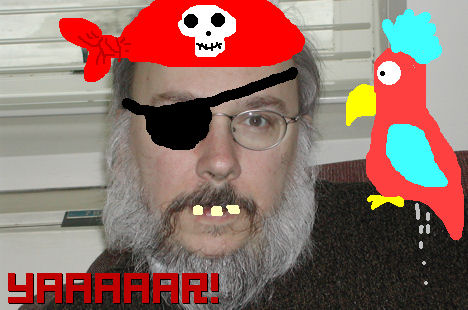
In mid-September, I went to Singapore to meet with some of our collaborators on the MIT-Singapore GAMBIT games lab and to speak to the Games Convention Asia about "Games as Transmedia Entertainment." In the course of the weekend, I gave an interview to a very thoughtful young reporter from the Philippines Daily Inquirer in which I was asked about the implications of the concept of convergence culture for the developing world. To be honest, I didn't think much more about the interview until some of my comments about "piracy" began to surface in western blogs within the gamer realm. The story spread through news portals focused on Asia to the gamer world, which is often keeping a close eye on developments in the Asian games sector and often gains prestige by being early importers of Asian-produced games before they are legally on offer here in the west. One American blogger even "pirated" one of my portraits, which was doctored to depict me as a pirate. I figured that "pirating" it back is only fair game.

henry pirate.jpg

Indeed, the time lag between the interview appearing in a Manila-based newspaper and its surfacing on western blogs could be counted in a matter of hours, rather than days. At no other time in human history would such a flow of information have been imaginable. In the past, an American academic giving an interview in Singapore would in all likelihood have been locked down in a very localized context. And so in many ways, the circulation of this story demonstrates in pretty powerful ways what I saw as the central thrust of my comments -- that media companies can no longer realistically lock down their content into predictable zones and roll it out on their own time table. The moment content emerges anywhere in the world, it creates a hunger around the planet among potential consumers which will be met illegally if it is not met legally.

When I was in Shanghai last January, I learned a good deal about how fans of popular western programs such as Prison Break operate: within a day of an episode appearing on American television, it has been digitized, translated into various Chinese languages by an army of dedicated fans, and begins circulating throughout the Chinese hinterland and across the Chinese diaspora. In many cases, this is content which would never have been commercially available in China as a result of nationalistic and protectionist policies limiting the amount of American media that can be marketed to their country. And if this content was made available commercially, then few Chinese locals outside of the most wealthy and cosmopolitan cities would be able to afford it. So, in what sense can Hollywood be said to have lost markets that it could not have reached and could not have sold to in the first place?

Yet, it is clear that exposure to American media in the developing world often awakens desires and fantasies that can only be satisfied by more such content; it is part of the process of westernization and modernization which is impacting many sectors in Asia at the present time. A growing number of researchers are finding that these same tendencies are operating in reverse across America and Europe, exposing western consumers to Asian-produced media (Bollywood films, Anime, K-Drama, and the like), and gradually creating viable commercial markets where they didn't exist before. In many cases, those fans who have taken these materials without permission, done the hard work of translating them into English from their original language, taken on responsibility for educating consumers about the contexts from which they came and the conventions under which they operate, have gone a long way to open up markets which would previously have been closed to Asian media producers. Here, "piracy" becomes "promotion."

Does it make sense to refer to such practices as "piracy"? It's a debatable proposition but for the moment, many in the media industries are inclined to think of such consumer practices through a language of copyright theft and piracy. If we adopt that framework, then yes, I think there's a solid case to be made that "pirates" actually expand markets, over time, even if they cause short term "losses" for the initial rights holders. That said: I recognize that not all "piracy" follows such a pattern. There are a significant number of people out there who are exploiting the intellectual properties of others for their own financial gain and there are some who buy these materials because they don't want to pay the price being asked for this content. Nothing we say is going to change this basic dynamic, but the media industries could reduce some forms of "piracy" by better understanding what motivates it and reading it as symptomatic of the marketplace reasserting demand in the face of failures in supply.

For example, should we be surprised that protectionist policies surrounding media imports no longer work effectively in a global networked culture? Whatever gets stopped by customs the border will spread easily online and reach geographically dispersed consumers. Should we be surprised that consumers no longer want to wait to view content that they know is already available in other markets and is being actively discussed by others in their online communities?

For example, relatively few hardcore American fans of Doctor Who or Torchwood are willing to wait the six to nine months it is taking these episodes to cross the Atlantic and get aired on the Sci-Fi Channel. Many of them are seeking online channels, mostly illegal, to gain access to this material in something close to the same time frame as British fans are consuming it. This has not necessarily reduced sales of the DVDS or viewership of the cable airings of this content here, but it has pushed many hardcore fans to step outside of the law in order to access content they would most likely willingly pay to access if it was made available to them in a timely, accessible, and legal manner.

In my heart of hearts, I think most people would prefer to work within legal structures if they are available to them and I'd suggest that the relative success of iTunes in the face of readily available "free" sources for much of this content points to a deep desire to behave "honestly" when media companies do not create strong incentives to behave otherwise.

We can also understand this piracy as part of a breakdown of the moral economy between producers and consumers. Here's what I mean by a moral economy: Underlying all economic transactions are certain social understandings between buyers and sellers that reflect their sense that exchanges are just and fair to both sides. We can call this a moral economy.

When the rules of exchange shift, they are accompanied by certain social disruptions as both sides seek to legitimate their new practices and thus secure a higher ground in the emerging moral economy. We can see the deployment of terms like "piracy" or "sharing" as different bids to legitimate these evolving practices. It's a kind of rhetorical war for moral legitimation, which reflects the fact that both sides want to see themselves as behaving fairly. When there is a perception of unfairness, then there is a much higher likelihood that parties will step outside of established mechanisms and adopt practices which the other side sees as illegitimate. And clearly over the past few years, technological and cultural shifts, not to mention the legal battles that have emerged around them, have gone a long way to undermine the existing moral economy and thus create a crisis of trust between producers and consumers. Until media companies find a way to restore the balance, they are going to find themselves increasingly subject to behaviors which undercut their perceived economic interests and such behaviors are likely to be increasingly labeled as "piracy."

Such "piracy" is a global phenomenon, but it occurs in particularly overt ways in much of the developed world, which has historically been used as a final dumping ground for media goods that have played out in the rest of the world. As more and more young people in the developing world go online, have access to information about such content, and desire stronger connections with their counterparts elsewhere, these inequalities of access to media content becomes more and more frustrating. And "piracy" is emerging as the "great equalizer" to insure they have a chance to participate more fully in our emerging media landscape. Such young people, long term, represent the most likely market for western produced media, and this early, often illegal exposure is part of what will make them a desiring market for such materials over time. Framed in these terms, the debate about "piracy" becomes about short term losses versus long term gains for the media industries.

"Piracy" enters the developing world in another way as well: the production of local knock-offs of western media properties. Consider, for example, almost twenty years of the production and circulation of "Black Bart" T-shirts in intercity and impoverished neighborhoods around the world. These appropriations of The Simpsons have been a source of revenue for the small scale entrepreneurs who produce and sell them and they have been another way of connecting to the larger media franchise. Throughout much of the developing world, the images of western media are being translated into local folk art practices and then sold back to visiting tourists from the West. When I visited Shanghai, for example, I came back with hand-woven Chinese New Year decorations which deployed Mickey Mouse to signify the "year of the rat." Such goods were clearly not authorized or licensed by the Disney corporation. Yet, they represent another way that those in the developing world were attaching themselves to Western media franchises and do represent a form of grassroots convergence.

I am not making a moral argument here. I certainly understand why many media companies would feel that all of this represents a serious threat to their livelihood and that it constitutes another example of how they are "losing control" over their content in a networked culture. All I am arguing is that current inequalities of access to media content and the fraying of the moral economy between producers and consumers work together to create a context where more and more consumers, not only in the developing world but here in the west, are stepping outside of legal mechanisms to acquire access to content. We can call this "piracy" or not. But it will continue to be a reality until the media companies develop a more sophisticated understanding of what factors motivate such behavior and the ways that such practices reflect breakdowns in the market mechanisms surrounding the creative economy.

So, in conclusion, I just want to say "Aargh!"

Video Games Myths Revisited: New Pew Study Tells Us About Games and Youth

Some years ago, I published an essay, "Eight Myths About Video Games Debunked" in conjuncton with the PBS Documentary, The Video Game Revolution. At least once a month, I see the article has been discovered by another blogger who is bringing it to the attention of his or her community, so I know that there continues to be interest and uncertainty about many of the issues that it sought to address. A recent report released by the Pew Internet & American Life Project offers some valuable new data about the place video games play in the lives of American young people. T

At the most basic level, game playing has become more or less universal. Fully 97% of teens ages 12-17 play computer, web, portable, or console games. 50% of teens played games "yesterday." I'm thinking about all of the moral reformers who note, whenever there is a school shooting, that they knew the suspects would turn out to be a gamer. I'd say the current statistics suggest that the odds are very much in favor of them being right but the claim is now meaningless. Indeed, many are suggesting that in such a context, the term, "gamer," may be obsolete -- at least as a description seperating those who play games from those who don't. It may, however, still work much like the term, "reader," to distinguish those who gain some kind of social identity through their relations with games from those for whom game playing is simply one activity among many.

The Pew research may also force us to rethink once again the assumption that there is a gender gap in terms of who plays games: "99% of boys and 94% of girls report playing video games. Younger teen boys are the most likely to play games, followed by younger girls and older boys. Older girls are the least "enthusiastic" players of video games, though more than half of them play. Some 65% of daily gamers are male; 35% are female. Girls play an average of 6 different game genres; boys average 8 different types."

A decade ago, when Justine Cassell and I edited From Barbie to Mortal Kombat: Gender and Computer Games the picture was dramatically different: many were worrying that girls were being left out of this particular version of the digital revolution and that there would be social and educational consequences of this "gender gap." The new statistics show that this gap has significantly closed and that even other patterns people have observed (that boys play games more often, that boys play more different kinds of games, and that boys play games over a longer period of their lives) are starting to shift, though we can still see traces of these earlier patterns in their data. If you are interested in the gender-specific nature of game playing, you should check out Beyond Barbie® and Mortal Kombat: New Perspectives on Gender and Gaming (Edited by Yasmin B. Kafai, Carrie Heeter, Jill Denner and Jennifer Y. Sun) and due out from MIT Press any day now. This book updates our earlier collection with cutting edge perspectives from a new generation of games scholars who grew up with this medium. Justine and I wrote a new piece for the book reflecting back on the context of gender and games in the mid-1990s and looking forward to new challenges confronting the industry today.

The Pew Data complicates easy generalizations about the place of violent entertainment in the lives of American teens. For example, the five most popular among young Americans are Guitar Hero, Halo 3, Madden NFL, Solitaire, and Dance Dance Revolution. Of these, only Halo 3 would qualify as a violent game. Over all, non-violent genres were the most popular. But, 50% of boys name a game with an M or A/O rating as one of their current top three favorites, compared with 14% of girls. (0ne of those places where gender really does make a difference in how people relate to games.) 32% of gaming teens report that at least one of their three favorite games is rated Mature or Adults Only. 12- to 14-year-olds are equally as likely to play M- or AO-rated games as their 15- to 17-year-old counterparts.

The Pew Data further challenges the idea that game playing is a socially isolating activity. The researchers found "65% of game-playing teens play with other people who are in the room with them. 27% play games with people who they connect with through the internet. 82% play games alone, although 71% of this group also plays with others. And nearly 3 in 5 teens (59%) play games in multiple ways -- with others in the same room, with others online, or alone." As someone who has watched games over the past two decades, I would argue that game play has always been more social than many non-gamers expect. I recall my son and his friends going to each other's houses as a kind of victory house when they beat a level in a challenging game, showing the others how to do it and helping them over the hump. Indeed, playing a game alone is often seen as a rehearsal mode, getting ready for more social forms of play, much like a kid bouncing a ball against a house and catching it, because there aren't people around to play ball with. The Pew data suggests that for many kids, games is sometimes social, sometimes solitary, but most have a healthy range of different ways of engaging with the games medium.

The Pew Research does indicate some areas where parents should be concerned about the gaming lives of their sons and daughters. Nearly two-thirds (63%) of teens who play games report seeing or hearing "people being mean and overly aggressive while playing," and 49% report seeing or hearing "people being hateful, racist, or sexist" while playing. However, among these teens, nearly three-quarters report that another player responded by asking the aggressor to stop at least some of the time. Furthermore, 85% of teens who report seeing these behaviors also report seeing other players being generous or helpful while playing. Many of us believe that cyberbullying is a much more real concern than the worry that playing violent games might somehow make young people more aggressive in the real world. A decade ago, the digital world felt like a safe space for many young geeks, especially when compared with school hallways or gyms, but now that everyone is playing games and going on line, the bullies are showing up there too and young people are having to confront in cyberspace those problems which haven't been resolved in the real world. It isn't that games make kids more aggressive; it may be that real world aggression and conflict is spilling over into games.

The Pew Research also challenges the prevailing myth that most parents are worried or alarmed about their young people's relations to games. 62% of parents of gamers say video games have no effect on their child one way or the other. 19% of parents of gamers say video games have a positive influence on their child. 13% of parents of gamers say video games have a negative influence on their child. 5% of parents of gamers say gaming has some negative influence/some positive influence, but it depends on the game. I see this data less as an indication of the "actual effects" of game play on children but rather as an indication that most parents have come to accept games as a normal part of American childhood and that more of them now see positive benefits than negative harms. After all, a significant number of contemporary American parents were part of that first Nintendo generation, grew up playing Super Mario Bros. and Sonic the Hedgehog, and are thus less likely to be panicked by an unfamiliar technology in their living rooms. Many discussions about games and parenting fail to reflect this generational shift in who these parents are and how they think about this medium.

There's lots more to chew on in the Pew report, including some interesting suggestions about the civic impact of games and whether online play has the same social value as face to face play. I am hoping that this new data will further sharpen the conversations around games.

For more interesting insights on these questions, check out the podcast of a recent CMS colloquium, "The Myths and Politics of Video Games Violence Research," featuring Lawrence Kutner and Cheryl Olson, authors of the recent book, Grand Theft Childhood: The Surprising Truth About Violent Video Games and What Parents Can Do. If you don't know this book, you should since like the Pew research, it challenges many common assumptions about this issue, daring to ask and find answers to basic questions about the place of violent games in young people's lives.

Marching to a Different "GumBeat"

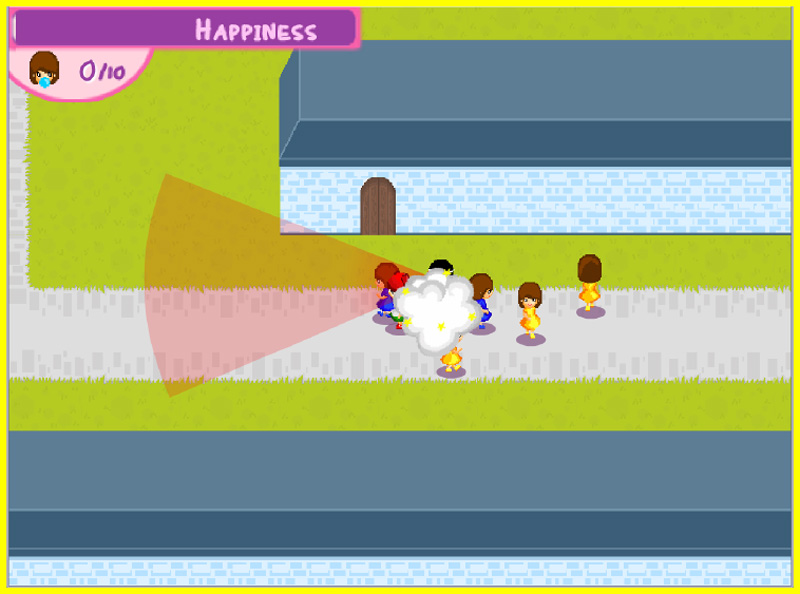
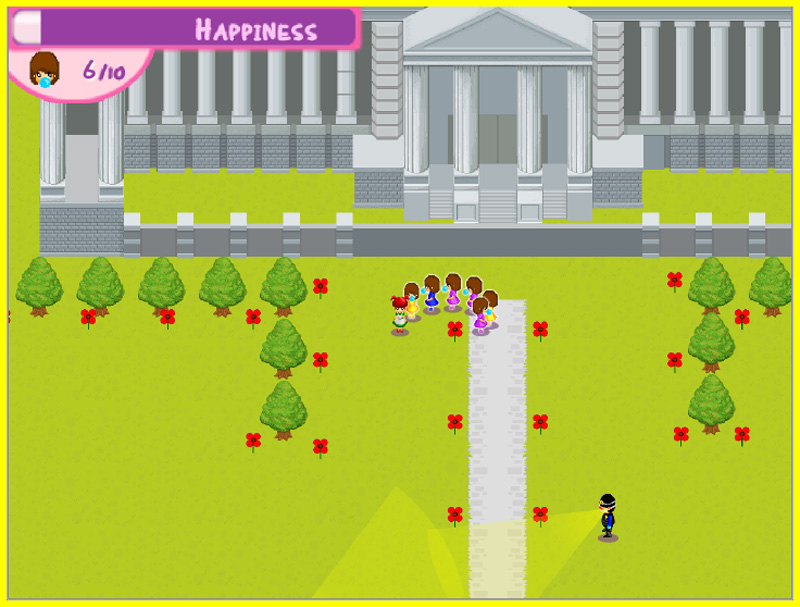
gumbeat_200x283.jpgThis summer, 45 Singaporean students, drawn from many of the island nation's universities, colleges, polytechs, and art schools, came to MIT to work with students from Comparative Media Studies and Computer Science through the MIT-Singapore GAMBIT games lab. The lab, funded by the National Research Foundation and the Media Development Authority, functions both as a training program fostering new talent and as a incubator for new approaches to game design, both of which will help recharge games as a creative industry in Singapore and, we hope, inform discussions of games as a medium around the world. It does so by putting Singapore and MIT students on teams which work together all summer to develop playable games which we hope will stretch our understanding of the medium. Having attended the roll out of this summer's games and having recently seen the Singapore students demoing what they created at a Pan-Asian games industry gathering in their home country, I have to say I am tremendously excited at what the GAMBIT teams have been able to achieve. You can see the games for yourself – they are available for download online. Some of them are already generating healthy discussions.
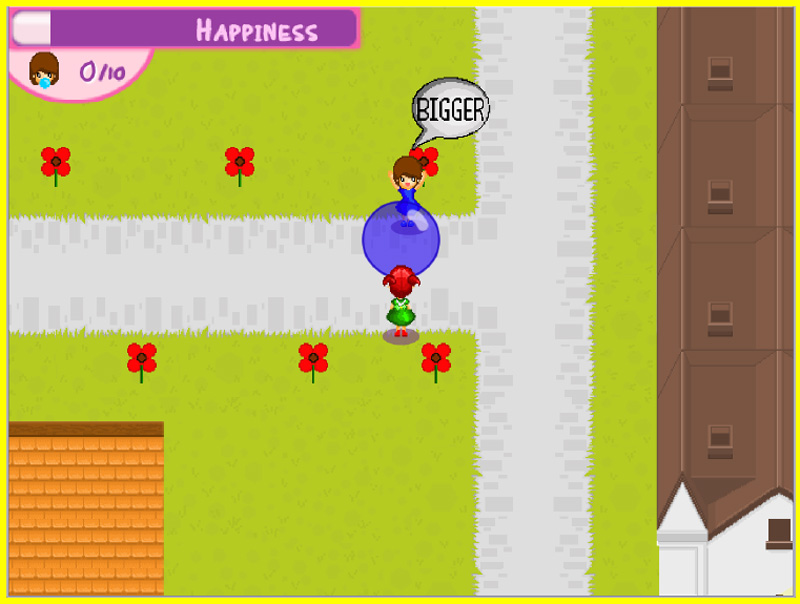
A case in point is GumBeat. Here's how the game was described by the Singapore Straits Times:

USE THE cheery pink power of bubblegum to convince your fellow citizens to join a popular revolt against a repressive government.

While doing so, you stop policemen by popping bubbles in their faces.

This is the premise of GumBeat, a new video game developed as part of an annual joint collaboration between the Massachusetts Institute of Technology (MIT) and Singapore's digital media students.

How does it work?

Well, the heroine chews on candy and blows them into big pink bubbles beside unhappy citizens in the unnamed country in which the candy is banned.

This cheers them up enough to entice them to join the protagonist in a revolution, mustering enough angry citizenry to overthrow the oppressive government.

This is the aim of the game, said National University of Singapore undergraduate Sharon Chu, who presented her team's game to reporters earlier on Tuesday.

Throughout the revolution, you and your followers must evade or stun policemen trying to prevent your march on city hall by popping the bubbles in their faces.

The game was made to show that games with serious-themes like say, 'political oppression', can be fun, said Ms Chu.

Asked if the unnamed country in question was Singapore, she would only say that 'it is up to the player's interpretation'.

Given that one of the first things many Americans learn about Singapore is that it has officially banned the public chewing of gum, the Singapore media can be forgiven for jumping to the conclusion that the game was made about local politics. *shrug* I couldn't say.

gumbeat_02.jpg

I know that the idea for the game originated in part in a blog post by Matthew Weise, a CMS Masters alum who is now the Lead Game Designer at GAMBIT. In the original post from the GAMBIT blog which I crossposted here, Weise talked about his experience of watching the film Persepolis and his desire to see a game which really put us inside the mechanics of what it was like to survive and perhaps resist in a repressive society. Here's part of what he wrote at the time:

The goal of a game like this, from the player's perspective, would involve two distinct

aspects:

Firstly, the player would have to learn the behavioral rules of the repressive society.This would be necessary so that the player could be invisible within the society in order to be able to subvert it. This layer would be somewhat like a stealth or spy game, in which players must learn to dress, act, and talk a certain way in order to avoid suspicion. Only instead of some military espionage scenario, the environment would just be everyday life.

Secondly, the player would have to perform acts that would affect the happiness levels of the society at large. This could manifest concretely as a list of civil liberties which the citizens don't have. Restoring each one of these liberties would be a goal of the game, like a series of non-linear missions. Once all the liberties were restored, the society would be transformed.

I was part of the early conversations with the GAMBIT team where they struggled with what it would mean to represent such political processes in a game and how one could still produce a game which was "fun" but dealt with these themes. I went away on vacation and came back to discover that they had come up with this distinctive approach, reflecting their own experiences growing up.

gumbeat_03.jpg

Joshua Diaz, a CMS Masters Student who was a "product owner" on the team and thus helped to shape the development of the game, has recently posted his reflections on the production process at the GAMBIT blog:

During the prototyping stage, they narrowed in on some basic concepts and hooks that would persist throughout the entire project: gum, police, impressing crowds, popping bubbles, and tagging NPCs with gum. Once they'd established the basic context, Nick Ristuccia designed several different mockups. Perhaps the most impressive was the live-action version of GumBeat that they ran; students sneaking through the lab, lifting sodas and smuggling them back to their lab. The use of a physical, tangible, active test session gave them access to a lot of mechanics that survived the development process and persist in the game you can download today. This was followed by numerous board and paper versions of the game, allowing them to experiment with different mechanics and verbs....

One of the successes of the game was the establishment of several different goals for players. The narrative has a a single driving goal and a short epilogue, but the way multiple gameplay systems combine enables a few open-ended challenges. Feel free to collect not just 10 but 20 or even all 30 citizens; try to max out the city's happiness (no, I don't know exactly what that means, philosophically, but roll with it), or trick the police officers into assaulting each other as supposed chiclet activists. As The Only Haven You Can Trust notes, these kinds of varied goal structures can be a powerful hook in a game's design, and I believe this sort of gameplay is definitely a result of the kind of player-focused testing strategy that PanopXis maintained as a core principle of development.

gumbeat_04.jpg

We are hoping that the game will help spark more reflections about what it means to create a "serious game" and how "serious" serious games need to be. We hope it will get people thinking about game mechanics as embodying social systems through their procedural logic, to channel Ian Bogost for a moment. And we hope that such conversations may lead you to check out the other games to come out of GAMBIT this summer. I'm sure I'm going to be talking about some of the others here before much longer.

Framing the Candidates (Part Three): The Daily Show Parodies

Over the past two posts, I've suggested ways educators could use the campaign bio videos produced for the two national conventions as a way of encouraging civic literacy. I've suggested that they are powerful examples of the different ways that the parties "frame" their candidates and platforms. The focus on personal biography brings to the surface what linguist George Lakoff calls the GOP's "Strict Father" and the Democrat's "Nurturing Parent" models, both of which see the family as a microcosm for the way a president will relate to the nation. I've also suggested that the videos surrounding the Vice-Presidential candidates help to broaden the appeal by bringing in aspects of the other party's "frame" so as to speak to swing voters. Today, I want to turn my attention to the parodies of these videos produced for The Daily Show. I've long argued that one of the program's greatest functions is to educate us to reflect critically on the discourse of news and politics, especially to focus attention on how issues get "framed" by commentators, how stories get handled by networks, and in this case, how the campaigns construct representations of candidates. As we laugh at its comedy, we learn to look at the "serious news" from a different angle.

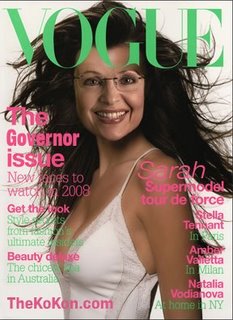
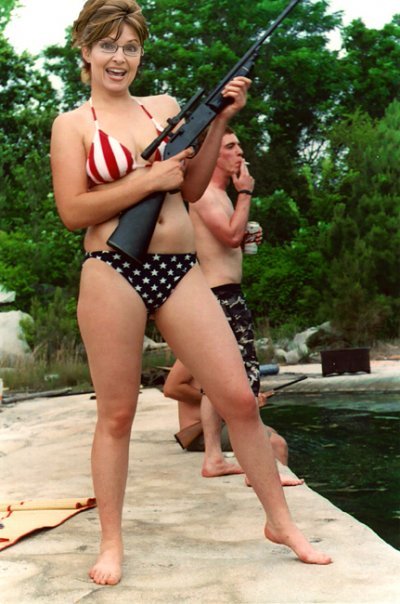
In this case, we might see the parody videos as representing the "return of the repressed." That is, these videos include the elements the parties themselves could never feature, because they reintroduce gaps or contradictions in the candidate's personas or elements which would play badly in the heartland of the country. At the same time, the parodies are deft at capturing some of the conventions ( in terms of narrative structure, rhetorical framing, and audiovisual style) of the campaign bio as a genre. And, as with the Photoshop parodies of Palin I focused on the other week, these parody videos also use a language drawn from popular culture to help us make sense of a political process that is often insular in its use of specialized language.

Obama and Mother Africa

In subtle and not so subtle ways, the official Obama video engulfed the candidate in America, excluding anything exotic in his background, stressing his mother's side of the family to the exclusion of his father's, stressing Kansas and not Kenya. Here, Africa speaks back, asserting itself again and again as the central frame for understanding Obama, "the earthly son of a goat herder from darkest Africa and an anthropologist from whitest Wichita." The video uses images and music from The Lion King to continually return us to "Mother Africa" -- and in the process, to make fun of the often mythic language the Obama campaign uses to describe his candidate. A key moment in his biography here is his trip to Kenya during which he has a "vision" of a Goat who guides him to run for the state senate. Obama's African background has been a large part of his international appeal with some suggesting that he may be uniquely situated to restore America's image in the developing world because he is seen as "one of them." Yet it is an idea that can not be spoken in an American context where Republicans often ridicule Democratic concern with international reputation, one of several meanings of their theme of "putting the country first."

We also see a parody of the idea of "predestination," which as we've seen is played more seriously in the McCain campaign biography's suggestion that he escaped death because God had bigger plans for him. Here, this idea is pushed to its logical extremes with the birth of Obama seen as a cosmic event that will set right the rift between the continents created during the Earth's formation 180 Million Years Ago. We are told, "a child is born, destined to heal that rift." Or as the title of the video suggests, in a reference to Jerry McGuire, "He Completes Us." The Obama campaign often deploys his mixed race background to bring together contradictory views of America. Obama, according to this logic, can embody the "American Promise" because he contains within his family background so many different parts of a multicultural nation. As the narrator tells us, "he was black and white, Christian and Muslim, land mammal and sea creature." The idea that an early childhood experience might foreshadow later political philosophies is ridiculed here with the suggestion that in working at Baskin-Robbins, he "united an astonishing 31 flavors of ice cream." And there are later images of blacks and whites, Arabs and Jews, even cats and dogs, embracing, as he delivers his keynote address at the 2004 Democratic National Convention.

And of course, running throughout the video, there's a spoof of the excesses surrounding praise for Obama's rhetorical prowese. "Every time Barrack Obama speaks, an angel has an orgasm," we are told, alongside promises that he will "unite the world" and that "change is coming." The narrator is unable to contain his excitement about Obama's speeches, lapsing into profanity which can't make it onto the air, in his enthusiasm.

John McCain: "Reformed Maverick"

The Daily Show's spoof of the McCain video works amplifies certain tendencies within the Republican framing, especially the desire to depict McCain's youth as one of rebellion against authorities (here transformed into the ongoing motif of Marlon Brando which runs through the video) and acknowledges elements that might be repressed in the official videos (such as his involvement in the Keating scandal or his shifts on many major issues.) The video reminds us that the candidate many Democrats knew and admired in the 2000 election is a very different person than the candidate who is being presented this time around, suggested by the way the video divides his life into "The Wild Years, 1936-2006" and "Abandoning Everything He's Always Stood For, 2006-Present." As the video explains, "if John McCain was going to be president, something would have to give."

The closing moments of the video illustrate something The Daily Show does very well -- raiding the news archive for footage that sheds light on recent statements by political leaders, often catching them in overt contradictions. It's a pity more mainstream news programs don't do the same because such juxtapositions can be deeply illuminating about what's going on in American politics.

There is a fair amount going on here designed to parody the hypermasculine imagery surrounding the candidate's official self-representation. His military career is framed in terms of recurring images of failure (which sometimes gets reframed as rebellion). So, we are told, "Everyone assumed this son and grandson of admirals would be a star at the Naval Academy. He showed 'em." The slow pan down the list of his graduating class, showing McCain at 894, makes fun at the way old documents and family photographs are used to authenticate ideological assertions. McCain is depicted as fighting back "against The Man" by crashing five Navy airplanes, while his fellow servicemen are described as "pussies" for keeping them in the air.

The video treads lightly around his POW experiences, certainly hard targets for humor, but then, it makes fun of the fact that these experiences insulate him from criticism, seeing this "inoculation against all future political attacks" as one of the many awards he was given in recognition of his service, alongside the Purple Heart and a "hotter, richer wife." The video also suggests his wife's wealth has also "insulated" him from the harsh realities of everyday lives. Here, the POW is seen as "decorating and redecorating the rooms of ten different imaginary houses," a reference to a recent moment when he was unable to answer a reporter's question about how many homes he owned.

Media Literacy advocates have long argued that as we study a piece of media content, we should ask our students to reflect on what it doesn't show or say, what's missing from this picture. The Daily Show parodies give us a great resource for doing just this, asking students why the official campaigns would not use such framings to represent their candidates and looking at what gets left out of the official videos.

I hope I've inspired some of you to take these materials into your classrooms. I'd love to find out what happens when and if you do so. Drop us a line and share your experiences.

Want to Learn More About CMS?

The Comparative Media Studies Masters Program In-House information sessions are held twice during the Fall semester. They offer an opportunity to ask CMS faculty, research staff, and students any questions that you may have about the masters program and to attend one or more classes or the weekly colloquium. Please RSVP to Generoso Fierro (generoso AT mit DOT edu) if interested in attending.

Information sessions are held on-campus and online from October through early December.

On-Campus

Thursday, October 2, 2008 9am-7pm

Thursday, November 13, 2008 9am-7pm

Online

Thursday, October 16, 2008 8-10am Eastern Standard Time (Asia)

Thursday, October 30, 2008 2-4pm Eastern Standard Time (Europe)

Previous Information Session Transcripts

Framing the Candidates (Part Two): The Vice Presidential Videos

Last time, I introduced George Lakoff's argument that the two major American political parties adopt different frames, based on images of parenthood and the family, for understanding the political process: the Strict Father paradigm associated with Republicans and the Nurturing Parent paradigm associated with the Democrats. I applied these two frames to looking more closely at the videos shown at the two party conventions to introduce Obama and McCain to the voters. If anything, the models fit too easily onto those videos, reflecting the degree to which Lakoff has not simply described the rhetoric of the two parties, but perhaps helped to shape them. Both groups knew what they were doing in constructing videos which would appeal more solidly to their bases. And my hunch is that both sides read Lakoff as they sat down to produce the videos. Yet, Lakoff also makes the point that independent voters may be torn between conflicting understandings of the family and that all of us have within us some elements of the other model which also shapes our emotions and actions. So, we should be looking for the elements which contradict these dominant frames as offering ways that the campaigns might broaden their appeal. Last time, I discussed, for example, how the McCain video uses images of his mother, even the phrase "mother's boy," to soften his tough, military-based persona, and how he was able to use images of personal suffering to express both vulnerability and toughness. We see many more such contradictions -- or appeals across party -- when we look at the videos for the Vice Presidential candidates. Traditional logic is that the VP choice is for charging up your base while the Presidential candidates have to work across party lines. It's easy to see how this works in the two convention speeches. But I would argue that more bridge building takes place in the videos for the VP candidates than for Obama and McCain themselves.

Keep in mind as you watch that these videos are shorter than those for the top of their tickets and that they were produced under many more constraints. In both cases, the VP choices were announced just a few days before the conventions which means the teams would have had to scramble to pull these together, while the candidate's own videos were crafted over weeks and probably in planning from the moment they launched their campaigns.

One thing to look out for in these two videos is the role of the music in shaping how we respond to the still images and spoken words. In the case of the Obama video, the music borrowed heavily from Aaron Copeland to give the video a sense of national grandeur and yet to make it a "fanfare for the common man." The McCain video is much more martial in its tone, helping to establish his toughness and military background. Here, the music tracks are in effect reversed. The Biden soundtrack captures a more forceful tone, while the Palin soundtrack is softer, more wistful. Palin's music is being used to soften much tougher images and language, allowing her "feminine" side to emerge, even as we are trying to reconstruct the "strict father" model to include the prospect of a "hockey mom" who is like a "pitbull" in lipstick.

Biden and the Nuturing Parent Model

The opening story in this video is used to establish Biden's toughness: "My Dad used the expression, 'You don't measure success on whether or not you get knocked down. It's how quickly you get back up.' Because everybody gets knocked down. The measure is in getting back up. That's the measure of this country. It never failed to get back up." It's all here -- the appeal to the father who is represented as tough-minded and who demands toughness in his son yet there's also here the extension of that image to represent the country as a whole. In doing so, there is just a hint of Democratic "nurturing" in the suggestion that "everybody gets knocked down" and the question of what can be done to insure that everyone gets back up. Is this a test of individual character as the story begins or is it a test of the nation's commitment to its most vulnerable members, as the ending hints?

The most compelling family images here center around Biden as a father: the story of him returning to his son's bedside following the car crash that killed his wife and daughter and "he never left it." Here, we see both a suggestion of protection against a harsh world but also the image of nurturing a child who has suffered an emotional loss. There is a strong emphasis throughout the video on the dedication that Biden feels as a father to his children -- taking the train back home from Washington every night, always taking their call -- as expressed through the testimony of his now adult son. And underlying this is the suggestion that Biden will be a dedicated father to the country. These scenes depend on a post-Feminist conception of the father not as a stern patriarch but as a mutual caregiver. And there's that warm, fuzzy shot of Biden craddling his young grandchild in his arms, which gives us a vivid picture of his gentle side.

For me, one of the most interesting rhetorical moment here is Biden's statement: "When you see the abuse of power, you've got to speak whether it is a parent slapping around a child or a president taking the nation to war that costs lives that wasn't a necessary war. That's an abuse of power." The move from domestic violence to war, from family to nation, is breathtaking here. We can read the comment as a critique of the stern father model -- suggesting that the stern father may also be an abusive father, may not adequately care for his children, may abuse his authority in demanding respect he has not earned. This passage appeals to Democratic anxieties about the patriarchal logic of the Stern Father model. But it also contains the explicit image of another kind of father who cares enough about those who are suffering to stand up to such bullies and defend the weak. Again, there's just that hint of toughness here which adds some backbone to the images of the nurturing parent. We can also see this as connected with the other image of bullying in the video -- the reference to the ways Biden's classmates tormented him because of his stutter. In this formulation, Biden is someone who has endured pain and humiliation but learned how to stand up to bullies to defend others who might become victims.

Palin and the Strict Father Model

While the "nurturing parent" paradigm is gender neutral, reflecting the reconfiguration of responsibilities within the family and the kinder, gentler conception of the patriarch that it embodies, the "strict father" model gets defined along specifically masculine lines. Lakoff takes his inspiration from James Dobson and Focus on the Family, which sees men and women as playing different and complimentary roles within the family and sees the father as the head of the household. So, the construction of Sarah Palin within the terms of this discourse is a fascinating process. Much has been made among the GOP faithful about how she has retained her "femininity" even as she has broken into the "good Ol' Boys network," and the video must somehow suggest this without undercutting the core values the Party wants to attach to their candidates.

This contrast between the models has another implication. While Biden and Obama may stress their partnership, much as husbands and wives are life partners within the nurturing parent model, the Republicans clearly want to subordinate Palin to McCain without undercutting their need to build her up as having the authority and experience to take over from him as president should he die in office. Throughout, she is depicted as a junior version of McCain, as if she was taken from his rib. The opening language of the video, which lists various roles she plays, explicitly mirrors the opening list in the McCain video. McCain, "the original maverick," (gee, I thought that was James Garner, the star of the 1950s western series, Maverick.), made an "astute choice" when he asked her to join him in Washington as his helpmate. And in the end, she's described as "Alaska's maverick" in contrast with McCain who is "America's maverick."

But, as others have noted, Palin is probably the most "rugged" Republican to be on a national ticket since Teddy Roosevelt, who also happens to be McCain's own role model, and so the video wants to wrap her up with the "frontier" myth and thus link Alaska to a broader understanding of the American west. Much of this is carried by the persistent images of the great outdoors, which also serve to reinforce the hints here that she's an environmentalist, although the kind that likes to shoot and skin moose as opposed to the "tree huggers" and "nature lovers" that Democrats are most often accused of being. Again, we see a form of environmentalism consistent with tough love rather than nurturing. Alaska, here, gains credit for being "the far corner of America," where-as if we talked about Obama's Hawaii in such terms, it would be seen as signs that he was "outside" the American "mainstream" and lacked "touch" with "heartland" values. The frontier myth is particularly strong when the video describes her family's decision to move to Alaska: "attracted to Alaska by its unlimited promise and an environment suited to outdoor adventure."

And of course, we can't overlook all of the images here of Palin interacting with service men and women, including the Alaska National Guard, given the emphasis on military backgrounds running through the McCain video. This is another way that Palin gets associated with "strength" even as we are trying to emphasis her status as an average Mom who goes to PTA meetings. But then it's worth stressing that military images appear far more often in the Biden video than in the Obama video, suggesting the ways that the Vice President is being used to increase the "toughness" of the Democratic ticket.

Reason's Jesse Walker has written a very cogent critique of Lakoff's model, one which reflects upon how difficult it is to understand groups like Libertarians within the framework that it offers.

Framing the Candidates (Part One): A Closer Look at Campaign Biography Videos

George Lakoff's book, Don't Think About an Elephant, has been one of the most influential arguments about the nature of American politics to emerge in recent years. Lakoff, a linguist, turned his attention to the "framing" of political discourse. If you want to look more closely at his argument, "A Man of His Words" is an online excerpt which pulls out most of the ideas that are going to interest us here. Lakoff argues that the Democrats lose elections even though they often have the facts on their side because the Republicans typically frame the debate. Consider for example the ways McCain has transformed the current energy crisis from one which might deal with the environment or economics or alternative energy to one which rises and falls on the question of off-shore drilling. Or consider the ways that the Republicans have deployed terms like "maverick" and "reformer" to distance themselves from the Bush administration. To turn this around, the Democrats need to reinvent themselves -- not by shifting their positions but by altering the frame.

As Lakoff explains, "Reframing is social change.... Reframing is changing the way the public sees the world. It is changing what counts as common sense." Much of the early excitement around Obama was that he seemed to offer the most compelling new way to "reframe" progressive politics and thus offered a way out of failed rhetoric of the past. For some, this is about style over substance or a matter of "just words," but Lakoff argues that framing is about a structure of ideas that gets evoked through particular words and phrases but has its own deep logic that shapes how and what we think.

In a simple yet suggestive analysis, Lakoff characterizes progressive and reactionary politics in terms of what he calls the Nurturing Parent and the Strict Father frames. According to the Strict Father model, Lakoff writes, "the world is a dangerous place, and it always will be, because there is evil out there in the world. ...Children are born bad, in the sense that they just want to do what feels good, not what is right." The strict father "dares to discipline" his family and supports a president who will discipline the nation and ultimately, the world. According to the progressive "nurturing parent" scenario, "Both parents are equally responsible for raising the children. ...The parents' job is to nurture their children and to raise their children to be nurturers of others."

Swing voters share aspects of both world views. The goal of politics, Lakoff suggests, is to "activate your model in the people in the middle" without pushing them into the other camp.

We can see this as almost a reverse of old-style Christian doctrine in which the relation of a husband to his wife or a father to his child is supposed to mirror the relations of God to man. In this case, the family becomes a microcosm through which we can understand the relationship of the president to the nation and the world.

This is consistent with an argument that I put forth in the introduction to The Children's Culture Reader that the Republicans and the Democrats both use the figure of the child as a rhetorical device in talking about their visions for the future of the country, but they understand the family in very different terms. In an analysis of the 1996 GOP and Democratic national conventions, I contrasted Hillary Clinton's deployment of the phrase "It takes a village to raise a child" with oft-cited Republican images of the family as a "fort" defending its members against a hostile world.

As a teacher, I've found that one of the best ways to introduce this important argument to my classes has been to engage in a critical comparison between the official campaign biography videos, shown at the national conventions, and intended to link the candidate's personal narrative with the larger themes of the campaign. Here, we can see very explicit connections between the ways that the two parties understand the family and the nation. These videos are easy to access on the web and bring into your classrooms.

Over my next three posts, I will look more closely at first the videos for the two Presidential candidates, then the bios for the two Vice Presidential candidates, and finally parodies of these videos produced for The Daily Show. I am hoping that this will provide inspiration for educators who might want a way to talk about the campaigns, the differences between the parties, and the role of media in the process.

First, a few general points. Students often react to these videos when they first see them as if they were documentaries, straight forward presentations of the facts of the candidates' lives. If Obama and McCain tell very different stories, it is because they led very different lives. And this is of course partially true. The videos mobilize elements from the candidate's biographies to construct narratives about them which are designed to introduce them to the American people. For many votes, these videos and the acceptance speeches are the first time they are paying attention to these candidates.

Yet, keep in mind the role selectivity plays here -- we can't tell everything about their lives in a short video, so get students to think about what they decide to include and what they leave out of these videos. There's also the question of framing -- what gets said by the candidate, by the people in his or her family, by others, and by the narrator -- which helps us to understand this person in specific ways. And then there's the matter of technique -- what kinds of images do we see, what role does the music play in setting the tone for these stories.

I've found that these videos work best in a classroom setting where I show them side by side so that the students compare the differences in their approach. On one level, there's a well established genre here -- a general framing, followed by childhood experiences, early career, courtship and marriage, education, national service, early political life, fatherhood and family, and launch of the campaign. These similarities make it easy to see the differences in framing at work. If you are pushed for time, as I was in class the other day, you are better off showing the first 2-3 minutes of each, and then getting the discussion started, than showing one through all the way. It is through the comparison that we really understand how these videos deploy melodramatic devices and images of the family to shift how we think about the candidate's relationship to the nation.

Obama and the Nurturing Parent Frame

From start to finish, the Obama video is focused on constructing the ideal image of the nurturing parent who will insure the well being of all Americans. The very opening lines of the video already evoke the image of childhood: "It is a promise we make to our children that each of us can make what we want from our lives" and the climax of the video comes when we return to that opening statement and build upon it: "It was a promise his mother made to him and that he intended to keep." Think about the difference between talking about the "American promise" and the "American dream," and you know a great deal about the ideological differences between the two parties.

The idea of "empathy" is a central cornerstone of the family as depicted in this video. It emerges most powerfully in the story about Obama's mother urging him to "imagine standing in that person's shoes. How would that make you feel." and again, by the end of the video, this concept of empathy becomes a cornerstone of Obama's relationship to the nation, as he describes how he remembers his mother as he travels "from town to town." Empathy runs through the list of values Obama tells us that he and Michelle want to pass down to their children: "hard work, honesty, self-reliance, respect for other people, a sense of empathy, kindness, faith." And we can see this respect for nurturing and empathy when he talks about the death of his mother, who was "the beating heart" of their family. Indeed, moments when candidates talk about personal losses of family members and loved ones are often potent appeals to the viewer's own empathy, since many of us feel our common humanity most powerfully through our shared experience of mortality.

And this logic of empathy emerges through the suggestion that Obama knows first hand the suffering and anxieties felt by average Americans: "I know what it's like not to have a father in the house, to have a mother who's trying to raise kids, work, and get her college education at the same time. I know what it's like to watch grandparent's age, worrying about whether their fixed income is going to be able to cover the bills."

We can see this last comment as part of a larger strategy in the video to depict Obama's personal narrative as the "story" of America and his "search for self" as a quest to better understand the nation that gave him birth. As the narrator explains, "By discovering his own story, he would come to know what is remarkable about his country." And this is an outgrowth of the first thing we are told about his mother, that she knew her son was an American "and he needs to understand what that means."

This video works hard to combat images of Obama's background as exotic, as outside the mainstream. There is no reference here to Hawaii and only an implicit nod to the fact that he spent part of his life overseas, even though this last detail has been central to the candidate's appeal internationally. The focus is on the most "heartland" aspects of his family background -- a strong focus on his grandparents who come from Kansas, and their experience of the Depression and World War II. Obama got into trouble for suggesting that some people in rural Pennsylvania were "bitter," so the video is careful to say that his grandparents were not "complainers." When it comes time to capture his sense of pride in his country, he tells a story about sitting on his grandfather's shoulders and waiving a flag at the return of the astronauts.

The representation here of his marriage might be summed up with the old feminist slogan, "the personal is the political." Michelle describes the moment she fell in love with Barrack: watching him deliver a speech in the basement of a community center in which he spells out "the world as it is" and "the world as it should be." This story collapses Obama's hopes for his family and his hopes for his country in a sublime moment of utopian possibilities. Michelle emerges as the ideal arbiter of his political integrity because she can testify that he lives these values through his personal lives.

And the final statement of the "nurturing parent" model comes when Obama tells us, "One person's struggle is all of our struggles." The government becomes a mutual support system that looks after its weakest members in a world which is often unjust. The president's job is to insure that all of his children gets what they need and deserve and that the "American promise" gets fulfilled and transfered to the next generation.

McCain and the Strict Father Model

If the Obama video sets up issues of nurtering and empathy from its first images, suggested by the long panning shots across American faces and a voiceover about the "American Promise," the McCain video opens with us staring directly into the face of the candidate as a young naval officer, trying to read his character and understand the relationship of this national service to the "mission" ahead. The opening narration starts with descriptions of him as "a warrior, a soldier, a naval aviator, a Pow," before pulling us down to the family -- "a father, a son, a husband", then into his political career. And then we get that surprising moment when he is called "a mother's boy," one suggestion of softness amid a series of hypermasculine sounds, images, and terms. My students suggested that the reference to the mother helps him deal with issues of age and mortality, yet it also seems part of a strategy to manage the negative associations which many independents and Democrats may feel towards the repeated references to his toughness throughout the video.

Strength of character and conviction, coupled with physical toughness as proven through war, are the central virtues ascribed to McCain by the video and they are introduced here once again through the narrative of his family. As suggested by the gender specificity of the "Strict father" construction, the family here, except for the references to the mother, is represented almost entirely through patriarchal bloodlines -- again a contrast to the absent father and strong mother image in the Obama video. We learn about his grandfather who died the day he returned from World War II; we learn about his father who ordered the carpet bombing of a country where his son was held captive, even as he waited at the border hoping for his return. When we see him with his son in the opening series of shots, he is standing alone with his offspring on the side of a mountain. Fatherhood is an extension of manhood and it gets expressed through discipline and competition more than through images of cuddling and craddling.

The critical moments here, of course, deal with his Vietnam war experience which require a recognition of vulnerability and weakness even as the larger narrative centers around his toughness and will power. Consider this key description: "Critically injured, his wounds never properly addressed, for the next five and a half years, John was tortured and dragged from one filthy prison to another, violently ill, often in solitary confinement, he survived through the faith he learned from his father and grandfather, the faith that there was more to life than self."

So, again, we see the passing down of civic virtue through male bloodlines as a central motif in this video. There's no question that the video constructs these experiences as a form of martyrdom out of which a national leader emerged: "The constant torture and isolation could have produced a bitter, broken man. Instead he came back to America with a smile -- with joy and optimism. He chose to spend his life serving the country he loved." or consider the phrase, "he chose to spend four more years in Hell." Or the ways the video depicts his role in the normalization of relations with Vietnam -- "Five and a half years in their hell and he chose to go back because it was healing for America. That's country first." Note this is one of the few places where metaphors of "caring" or "healing" surface in the video and it is specifically in relation to the pain of wartime. A more complex metaphor emerges as Fred Thompson reads aloud a passage from McCain's autobiography about "living in a box" and ends with "when you've lived in a box, your life is about keeping others from having to endure that box."

This toughness and individualism carries over into the discussions of national policy. McCain doesn't believe that the country should care for each of its members but rather he has "a faith in the American people's ability to chart their own course." He is "committed to protect the American people but a ferocious opponent of pork barrel spending and would do most anything to keep taxes low and keep our money in our pockets." What is implied by that contrast between "protecting" the public and "pork barrel spending" and "higher taxes"? There is a clear sense that as a stern father he will give us what we really need but protect us from our own baser urges and desires.

While the Obama video distributed its points across a range of different voices, including a large number of women, the McCain video tends to rely on a voice of God narrator who speaks the unquestioned truth about this man and on comments from McCain himself. All of this creates a more authoritarian/authoritative structure where truth comes from above, rather than emerging from listening to diverse voices, and reflects this notion of stern responsibility rather than nurturing.

This centralized discourse is consistent with the videos focus on experience and its tendency to read McCain as "superior" to others -- "no one cherishes the American dream more," for example, but also no candidate has had his experiences in public service. There is an underlying suggestion here of predestination -- "McCain's life was somehow sparred -- perhaps he had more to do." In this case, the hint is that he is fulfilling God's plan for him and for the country. This issue of predestination resurfaces near the end when the video repurposes some of the core themes of the Obama campaign, including some that McCain has criticized and turns them around, "What a life, what a faith, what a family! What good fortune that America will chose this leader at precisely this time. The stars are aligned. Change will come. But change must be safety, prosperity, optimism, and peace. The change will come from strength -- from a man who found his strength in a tiny dank cell thousands of miles from home."

There's so much more that we could say about both of these videos and that's the point. They are great resources for teaching young people to reflect critically on the ways the campaigns are being "framed." Next time, I will look more closely at the Vice Presidential videos.

Teaching "Ahab": An Interview with MC Lars

Not terribly long ago, I made a blog post discussing the nerdcore performer MC Lars and his music video, "Ahab," as appropriations from Herman Melville's Moby-Dick.

We have been using Lars's video as a resource for our Teacher's Strategy Guide for "Reading in a Participatory Culture." I ended the post with a plea to help me get in touch with MC Lars and it's a tribute to the network which has emerged around this blog that a little later, I did hear from the performer (and ex-Lit major) who was excited to learn that we were deploying his performance in schools. Since then, MC Lars agreed to respond to a set of questions submitted to him by Rebecca Rupert's students from Aurora Alternative High School in Bloomington IN. It serves students who have not experienced success in traditional settings. Rupert's English Language Arts classes are part of the pilot program for our project. I added a few more questions in the mix myself designed to place the students' questions in a fuller context.

How would you define nerdcore?

To me, nerdcore hip-hop is a genre of music that has lyrical content of things "nerds" would typically be interested in: computers, Star Wars, Final Fantasy, Magic the Gathering, Lord of the Rings, etc. Culturally, nerdcore "trades on" the implied notion that "authentic" hip-hop artists from urban areas spend less time reading comic books and more time "doing drive-by shootings", hence the instanty novelty appeal of the genre to any one familiar with pop culture. One can also ascertain the implication that nerdcore is "4th generation hip- hop created by 3rd generation hip-hop's target audience", as a new generation of thousands of rappers who make beats on their computers can attest. Nerdcore can be viewed as hip-hop created by a generation of artists whose parents may have grown up listening to artists of the genre's golden age, such as Chuck D, KRS-One, and Eric B & Rakim (much like the punk generation grew up listening to the three chord progressions of the early Beatles and distilled it into a more distilled presentation). If one wants to be cynical and explore how hip-hop has transcended racial and class boundaries, there is an implication that nerdcore is "white hip-hop", in lack of acknowledgement of its African American cultural roots.

How did you get involved in the movement?

I started out playing guitar in punk bands as a teenager growing up on the Monterey Peninsula. When I started by undergraduate work at Stanford, I was drawn to KZSU, a station that proudly boasts having "the oldest hip-hop show on the West Coast". One of my projects was to alphabetize the vinyl library of thousands and thousands of records... and this gave me a quick education on every important performer in the first 30 years of hip-hop. I continued writing and performing my rap songs, and when I went to study in Oxford, I made friends with local indie rock bands who asked me to open for them. This led to me getting signed to a British label and everything else that followed. When "nerdcore" became an "authentic" genre in 2003/2004, I looked it up on Wikipedia and saw that I was officially part of the movement. Reading more about it I was happy to have the label as a description of part of what I do.

How do you see "Ahab" as part of the larger nerdcore movement?

There isn't an MC in the scene who raps about 19th century American literature. I

thought it was time to make waves, so to speak. Nerdcore is an important cultural

phenomenon because it gives voice to people who write songs about things they love, and nerdcore gives license to people to rap about very "un-hip-hop" topics. I enjoyed my literature studies in college and wanted to write a song about one of my favorite books, and because only people with a certain education and understanding will understand what I'm doing, that makes "Ahab" part of the larger nerdcore movement. My hope is to inspire kids to read more Melville and turn off their televisions (after watching my video, of course).

One of the students got very passionate in arguing that mc Chris was better at rapping than you. This raises the question: How do we evaluate appropriations and remixing of materials within nerdcore?

Great question. Chris Ward is a talented rapper with a strong flow whose success can be directly attributed to his voice work for Cartoon Network and his comedic blurring of the line between "real hip-hop culture" and "nerd culture". He trades on the notion, as mentioned in my response in your first question, that nerdcore is unique in its lacking of songs about "bitches, blunts, and 40's". But Chris surprises people with album titles like "Life's a Bitch and I'm Her Pimp" and songs about recreational drugs, to show that nerds can relate to comedic elements of gangsta rap culture in their own ways. One might argue that he is a better rapper than me because of this, but I would argue that his act plays on elements of mocking African-American culture and verges on being a minstrel show. His voice and grammatical choices emulate African American culture in a way that would make the typical person laugh, this being its primary selling point. We evaluate mc chris's appropriation of culture by his closeness to "authentic hip-hop" and his use of comedy in the blurring of lines between "gangsta" and "nerd" culture. Other elements for evaluation of appropriation and remixing include musical craftmanship in constructing "beats", vocabulary, and originality in subject matter in writing lyrics.

Can you share some of your own experiences as a reader of Moby- Dick? When did you first read the novel? Do you consider yourself a fan of Moby-Dick?

I first read Moby-Dick as a Junior in college. My professor Jay Fliegelman taught a class on Melville, and we read Moby-Dick and some of Melville's shorter stories. I remember being frustrated at first with the slow pacing of the novel, but found myself being drawn into it one chapter at a time. I love the metaphor of the Pequod as a cross section of 19th century American life, with all of the racial and class diversity of American society at the time, and the depth of the characters who reflected different elements of American life during that time. The layers of metaphor and allegorical references are dense, and the footnotes to the Norton Critical Edition were very helpful in discerning the meaning. I am definitely a fan of Moby-Dick, especially because of the overarching theme of mankind's hubris in the face of Mother Nature's sublime indifference.

You've sung about the so-called "iGeneration" in ways that are very similar to our concept of new media literacies. What do you think this generation is bringing to the culture and what do you see as the relationship of these new ways of thinking to the things we've traditionally taught through school?

The iGeneration is the generation that grew up with an innate familiarity with the

internet. Kids can instantly access music by any band, old or new, and can find

information and background info on any film or book ever written through any medium they want. We are used to hyper-stimulation, chatting on AOL instant messenger while

emailing friends while watching a movie while download torrents while updating our

websites. We are used to creating our own niches within the subcultures through which

define ourselves, through Myspace pages of our local bands, or YouTube videos of our

local comedy troupes. But technology has shortened our attention spans as well, to the

point where if we can't "Wiki" something and understand it instantly, we move on.

Students can now comprehend the world a lot faster than the previous generation, because we are used to old technologies and are adept at using new technologies more quickly. We are used to processing many streams of information at once and are more discerning about the sources and intentions of those preventing the information (.com, .org, .gov etc.). Basically the "iGeneration" is the "information / internet" generation who is bringing new technologies and creative ways of implementing them and has the

responsibility of using their powers to leave the world a better place when we go. With

all of the technology at their disposal, the iGeneration could come together and find

cures for AIDS and for global warming, if we put down the Wii controller and log off of

Myspace for an afternoon. It's an exciting time to be alive and affecting culture.

What follows are the student's questions and his responses, including Lars's advice to teachers who want to engage the "iGeneration" with excitement about traditional literature.

Why did you want to make this video?

To retell Moby-Dick in an engaging and exciting way and to promote my 2006 release The Graduate. With our media-saturated culture, videos are an important way to promote albums and "Ahab" was a fun single from the last record.

How long did it take you to make this video?

I was on tour in Australia for most of June of 2006 when preparation for "Ahab" began, but the set designers and artists spent three weeks creating the sets, ship, and fish costumes. When I got back, we rented a warehouse in Brooklyn and filmed for two hot summer days, from 6 am to midnight. The post-production lasted another two weeks, compositing such scenes as the boat floating in the sea, the transition between the sailors on-deck and below the ship, and and exiting of the whale's stomach to reveal a cast of students taking bows. The entire project took 6 weeks of very hard work.

Why was it so cheap?

We had a finite video budget of $3,000, which is why the aesthetic differs from a Kanye West video. That's why it looks "cheap", or quite conveniently, like a school play.

Why did you put people in fishy costumes?

I made the video to show students how books can help us explore worlds we've never been to before. I wanted to bring the world of Herman Melville's dark tale to light, as done through the eyes of a 4th grade production. Our aesthetic for costume design was that of the feel of 80's-era PBS learning programs, such as Sesame Street and Reading Rainbow, where the fantasy world of imagination and the real world were brought together with color costumes and low budgets. The entire video was shot in just a few conjoined takes, to give the feel of a live performance. Having kids reenact every aspect of the novel was a pivotal part of the framing device of the presentation is a children's play for adults, which is why the choreographed dancing in the fish costumes was a key part in the design and presentation. The charm of a grade-school production is meant to help emulsify Melville's weighty prose.

Why is the whale limpy?

I'd like to have an erudite, complex answer for you, but the truth is that we had a

relatively small service elevator we had to use to get the Moby Dick model up to the

third floor of the warehouse where we shot. Moby was carried by three very patient PA's on the set, who walked around with walkie talkies and listened as the director Sean

Donnelly shouted directions to them. The tail was originally designed to move up and

down by the people in the costume, but it was snapped in half when we crammed the

costume into the elevator. Hence its unintentional "limpy-ness" - giving it a relaxed,

limp appearance, and perhaps more charm.

What point were you trying to make--were you trying to make fun of Moby-Dick or what was the point behind it?

As a writer, Jonathan Swift and Alexander Pope are big influences on my work. Swift

reveals mankind's shortcomings through his portrayal of the human condition and Pope was a master of the satirical verse and social commentary. Both of these writers were

influences on me as I worked to retell Moby-Dick for a younger audience to remind us that hubris can be deadly, and until we learn that the sublime power of nature is nothing to be tempted, we will be doomed to repeat Ahab's fate. When I wrote the song in 2005, the Iraq War was in its relatively early stages and many people in the media were comparing Bush to Ahab, a crazed leader in search of the white whale of terrorism, seeking justice in a confused and self-destructive way. It made me think about how relevant the story still was, so I decided to retell the book for a new audience,

updating it with modern references (Steve Wozniak, Supergrass, etc.) and compressed it into a Wiki-Wiki version, the cliff notes version of the cliff notes. It serves as a

warning for future politicians who may become crazed with power, presented in a fun,

catchy way.

How would you teach Moby-Dick to make it fun for students?

Young people have been brought up in a postmodern cut-and-past culture, replete with pop culture references and media saturations. A steady beat and cadence draws listeners in, as they are used to hyper- stimulation. Hip-hop is a very, very effective way to pique students' interest, in any topic, since it is the platonic manifestation of postmodern culture. I am intrigued by the lineage between Chaucer and KRS-One, a tradition of verse that reflects our struggles and victories as human beings.

As a lesson plan, I would encourage students to read Moby-Dick and find characters with which they identify. I would encourage students to keep an eye open for some of the less famous characters, such as Daggoo or Tashtego. I would then ask them to each write an 8 to 16 line verse that interprets their characters' experiences in the novel, and ask them to explore how these characters could be translated to a modern context.... either through their similarities to modern celebrities or how they reflect struggles of notably personalities in current events. For instance, Fedallah's stowaway experiences could shine light on immigration policies, while Pip could shine light on child labor laws or the class struggle.

I would then have students get into groups of three to four people each, bringing their verses together and create a song. I'd ask them to find similar themes between themselves to find a "hook" for the chorus song. They could then think of a lyrical chorus that reflects these similarities between character, and perform the "rap" for the class. Some instrumental beats that could convey the cadences and rhythms of such a translation are as follow:

Hip Hop by Dead Prez

Shook Ones Part II by Mobb Deep

MC's Act Like They Don't Know by KRS-One

This would show students how the plights of the characters in Moby-Dick relate to current events, and through an updated presentation of the form, this exercise would also inspire them to find more similarities between works 19th century literature and postmodern life in the 21st century.

Speaking of Geeks

A little while ago, I mentioned that the CMS grad students had been reading The Brief, Wondrous Life of Oscar Wao, in anticipation of a conversation with its author, Junot Diaz. Given the interest this generated for some readers, I wanted to add a pointer to the podcast version of that exchange. Diaz offers a masterful account for why he thinks comics, science fiction, and horror may speak truths that are excluded from official histories or from "serious literature" and explains how his novel was structured in part around borrowings from The Fantastic Four and Dune. Enjoy.

Aca-Fen Raise Their Banners High: Transformative Works and Culture

This week, the first issue of a new online, open source journal, Transformative Works and Culture, emerged, offering what promises to be an exciting new space for the work of my fellow aca-fen. The journal hopes to be a site for important new discussions around fan studies and cult media from a range of different disciplinary perspectives and represents the next logical step in the evolution of fan studies as a legitimate academic field. Kristina Busse and Karen Hellekson serve as the journal's primary editors. The first issue includes essays, provocations, interviews, and reviews, featuring some of the smartest young writers working in this terrain, with topics ranging from politics (the relationship between the Obama and Clinton campaigns understood in terms of fan politics), horror, soap operas, digital media, fan labor, intellectual property law, and of course, lots about fan fiction, blogging, and vidding practices.

Think you know what academics have to say about fandom -- well, there's probably at least one essay here certain to provoke surprise, shock, even outrage, and that's part of the fun. And while they want to provide an academically respectable place for young scholars to publish their work, they also see the site as a point of contact between academic and non-academic fans, anyone who wants to go "meta" about their favorite shows and their followings.

I was honored to be

interviewed in the first issue. Here's part of what I had to say reflecting back on the "Gender and Fan Culture" conversation we ran on this blog:

What the gender and fan culture debate forced me to think about was that there might be a connection between my new emphasis on the relations between producers and consumers and the more male-heavy, less feminist-focused nature of my new work. I need to be concerned that one group of fans may be gaining visibility and influence while other groups are still being excluded and marginalized. My friend Tara McPherson has noted that in general, gender and race have dropped out of academic discussions of digital media, and we need to find ways to reintegrate them into this work. And so, rising to her challenge, I am working much harder now to try to reengage with issues of gender and sexuality through my work. As I note above, my most recent work is about the exclusions within participatory culture and about the unequal relations between corporations and different kinds of fan communities. I am struggling to reconnect my work on participatory culture with the latest rounds of work in feminist scholarship. Fan scholars should try to acknowledge and address these questions of inequality and exclusion in their work. It's one reason why I speak so much right now about the participation gap and make the point again and again that a participatory culture is not necessarily a diverse or inclusive culture.

Fandom is certainly not exempt from these concerns. For a long time, as a Star Trek fan, I was concerned that we spoke about "Infinite Diversity in Infinite Combinations," yet those attending conventions are overwhelming white. I now worry a lot about the generational segregation of fan communities. When my wife goes to Escapade, she hears lots of talk about the graying of fandom and sees far fewer fans who are not middle-aged; when I speak at a Harry Potter con, I am shocked by how young most of the fans are. What does this suggest about the social structures of fandom?

Might something similar be going on with race, where we define what shows count as "fannish" according to a set of criteria that may marginalize or exclude minority participants at a time when the shows watched by most white Americans are rather different from those watched by most minority Americans? Interestingly, reality television has been the point of overlap racially, so it would be interesting to know more about how race operates in the fandoms around reality television. But in most cases, reality fandom is cut off from the fiction-focused fandoms.

Incidentally, gender seems to operate differently within some of these fandoms: younger men and women are interacting more together through Harry Potter or anime fandom than was the case with the highly female-centered fan cultures I observed a decade ago.

We need to be asking hard questions within the fan community about how we define our own borders and how different groups of fans interact. They are also questions we need to ask as academics about how we bridge between different scholarly communities that are studying related topics through different language and that may be breaking down along the lines of gender or race. I hope that OTW and TWC can extend the conversation we started on my blog and build connections to other such discussions taking place in and around fandom. But we are only going to achieve that goal if we embrace the broadest possible understanding of what constitutes fan culture and what models might motivate fan studies research.

Many of those featured here -- including Louisa Ellen Stein, Anne Kustritz, Francesca Coppa, Catherine Tosenberger, Sam Ford, and Bob Rehak -- were participants in my extended series of dialogues on fan studies last year, but there are many new voices which I had not encountered before as well. Those who read this blog will be pleased to see an interview with

Wu Ming 1 as well as to discover the interesting and provocative collaborative, the Audre Lorde of the Rings.

Here are a few other excerpts from the journal that spoke to some of the topics we've been discussing here in recent months:

Francesca Coppa on how Star Trek influenced the origins of fan vidding:

"All of these vids work to heal wounds created by the marginalization, displacement, and fragmentation of female characters like Star Trek's Number One, restoring female subjectivity and community by editing together what was put asunder. To be a vidder is to work to reunite the disembodied voice and the desiring body, and to embark on this project is to be part of a distinctive and important tradition of female art."

Catherine Tosenberger on Supernatural's cult status:

"Supernatural's pedigree gives some clues to its popularity among slash fans. The format of the show links it to classic male-male buddy series such as Starsky and Hutch and The Professionals, both of which have venerable slash fandoms. Moreover, Supernatural shares not only a thematic resemblance but an actor (Jensen Ackles) with its lead-in show, Smallville....In addition, Supernatural is a direct descendant of The X-Files: in addition to similar themes, structures, moods, and styles, the two shows share many writing and production personnel. Supernatural's most striking inheritance from The X-Files is its focus upon the intense relationship between its two main characters: as critic Whitney Cox (2006) remarks, Supernatural "is fueled past its failings almost entirely by the chemistry between the two principals, the boys who, like Mulder and Scully, generate enough sexual tension to power a small city". The fact that Sam and Dean are brothers in no way detracts from the slashy vibe. In fact, as brothers, they are given a pass for displays of emotion that masculinity in our culture usually forbids, which intensifies the potential for queer readings. Executive story editor Sera Gamble described her conception of the show as "the epic love story of Sam and Dean" (Borsellino 2006); while she quickly avowed that her comment was made in jest to tease creator Eric Kripke, many fan writers consider her statement to be a perfectly accurate description of the show, and they use their own narratives to explore all the implications of the "epic love story." These fan-fictional narratives are known as Wincest."

Rebecca Lucy Busker on how LiveJournal is changing fandom:

LiveJournal ... is made up of many interconnected spaces, most of which are focused on individual people. On any given fan's LiveJournal, she herself is the topic, choosing what to discuss or not discuss. Even LiveJournal communities sometimes serve only as link repositories, taking a reader back to a poster's individual journal. The impact of this shift has been profound, and in many ways it has served to take the focus off the source and put it on the fan, and in turn, on fandom.

One such impact has been an increasing awareness of multiple fandoms. When LiveJournal was just beginning to overtake mailing lists as a dominant medium, one of the purported benefits was customization of the fannish experience. Simply put, each fan could choose which LiveJournals she did or did not read, and thus which other fans she did or did not read. However, this customization extends only to people, not to topics. Although LiveJournal does allow the creation of custom filters, a given journal can only be on the filter or not. No mechanism for filtering posts on a given topic exists. In concrete terms, a person who reads my journal for my posts about Batman must also see my posts about Supernatural (2005-present), at least for however long it takes her to scroll past them. And that assumes I keep my fandoms in discrete posts. Pressure not to spam one's friends list with multiple posts (not to mention just our own pressures on time and attention) encourages the posting of several topics in one post. Thus, if I watch Doctor Who (2005-present) and The Middleman (2008) in one night (something more and more likely the age of TiVo and torrents), I might very well comment on both in one post. The fan who wants to see my reaction to the new Who episode will thus at least run her eyes over names like Wendy Watson and Ida.

As a result, fans have an increased peripheral, and sometimes even very specific, knowledge of other fandoms. Indeed, a popular meme that recurs every so often involves posting "what I know about fandoms I am not in." The results are sometimes humorous, but are also often fairly accurate. There was a time I could perhaps identify one song by *NSync if I heard it on the radio. And yet I knew the names of all the members, I could identify them by sight, and I even knew a few personal details.

If any of this grabs your interest, there's plenty more where this came from. So, check out Transformative Works and Culture.

The Informal Pedagogy of Anime Fandom: An Interview with Rebecca Black (Part Two)

To what degree are the pedagogical advances you saw simply a product of being motivated to spend more time writing? to what degree can they be traced back to Beta-Reading and Reader Responses providing greater feedback to the writer?

Well, I believe that one of the best ways to learn a new language and to improve your literacy skills is to practice using the language in meaningful, communicative tasks. So, I think that a good amount of the progress that the English language learners from my study made can be attributed to their motivation to write and read fan fiction and related texts. I also think that their success within the fan community allowed them to develop confidence and begin seeing themselves as people who write and use English effectively. For Nanako and Cherry-Chan, this was very different than how they were viewed in school--basically, in school they were seen as students who struggled with all literacy-based (as opposed to Math or Science-based) tasks. So, if you're constructed as "bad" at something for long enough, after a while you start to believe it. Fortunately, for Nanako at least, her success in the fan community helped her achieve success and popularity as an online author--which in turn provided her with motivation to continue writing and improving her English. Cherry-Chan, on the other hand, used her participation in the fan community to improve her social connections. Still, she used her language and literacy skills to make her own LiveJournal pages, forums, and web sites, and to post reviews of other people's fictions and to leave comments on other people's web pages.

In terms of the effect that beta-reading and peer-feedback might have had on their language abilities--it's important to note that they were both in English classes at school, so I can't really make any causal statements; however, over the 3 years that I followed her participation, Nanako's readers very clearly pointed out grammatical errors that she consistently made in her texts. And, she would acknowledge their feedback and then go back and correct her errors. In terms of second language acquisition, this is an important aspect of learning-- actually noticing errors and then figuring out how to correct them. For Nanako, sometimes her readers would tell her how to correct the errors, but other times they would simply point out the phrases, sentences, or paragraphs with errors and leave her to figure out how to correct them. In my opinion, I think these activities helped her to improve her English composition skills. Most of the fan fiction authors that I've talked with say that their reviewers and beta-readers were definitely responsible for helping them learn to be better writers.

Some argue that the fan fiction world supports literacy skills precisely because it doesn't operate under the structures and constraints of formal education. These critics would argue that we would destroy what's valuable here if we tried to integrate it back into formal schooling. Do you agree or disagree with this claim? What, if anything, can traditional educators learn from this affinity space?

I tend to agree that assigning fan fiction in classrooms would probably ruin its appeal for many students. However, other students might really appreciate having fan fiction texts or gaming-related texts available as options for their in-school composing. For example, many adolescents might feel more comfortable mastering the compare and contrast genre if they were able to write about subject matter that they have some expertise in, such as comparing and contrasting the merits of certain video game character classes or using Inuyasha or Harry Potter to discuss character development. Educators can create lesson plans that include or even encourage different options for students to incorporate their extracurricular literacy activities and/or interests in popular media texts into their classroom activities. Educators can also help students make the connections between their in and out-of-school practices. However, I think it ultimately should be up to students to decide to what extent their out-of-school activities will inform or work in concert with school-based tasks.

What do you see as the value of studying the process of fan fiction writing as opposed to studying fan fiction as a series of texts?

Well, one of the primary values that I see in studying fan fiction writing as a process is that it provides a mechanism for understanding the role of audience participation in the creation of texts. All of my focal participants' received a great deal of feedback from readers--for example, Grace has received around 9400 reviews, Nanako 7600, and Cherry-chan around 650. I don't know about you, but I've never had that many people respond to anything that I've written, especially not when I was a teenager. Hmmm... on second thought, you probably *have* had that many people respond to things that you've written. Anyway, the fan fiction audience often plays a significant role in determining the direction that a text will go in. As you pointed out in Textual Poachers, the audience has a vested interest in the media series, and they have strong opinions about what should and should not happen with the characters. So, they are happy to provide suggestions for how things should go and complaints about how things should not go in a story. Nanako in particular was very responsive to readers' suggestions about her texts. Sometimes she would incorporate their ideas into the narrative, other times she would go back and revise her chapters based on reader feedback. She would also use her Author's Notes to explicitly request guidance on certain parts of her texts, and the audience would respond to these requests. So, simply studying her fan fictions as a body of texts would be missing a great deal of the reciprocal interaction taking place as she goes through the process of writing, negotiating with readers, revising, and finalizing her texts.

Traditional notions of literacy have tended to see it in fairly individual and personalized terms. Yet, one could read your book as making a case for social and collaborative notions of literacy. Would you agree?

Absolutely. I think we have this whole focus in classrooms that's based around "keep your eyes on your own paper," and testing for what each individual learner knows, and it really stifles a lot of the potential for collaborative learning. Using language to effectively communicate ideas, negotiate perspectives, and even collaboratively complete projects is important for all students, but it's especially important for English language learners to have these kinds of interactive learning experiences. Through collaborative interaction, they're able to build on and extend the knowledge that each participant brings to the space. And, they're able to further develop their own skills and knowledge by using language for authentic purposes in meaningful contexts.

Appadurai suggests that the contemporary imagination is collaborative in nature--that people are growing accustomed to creating and thinking through things in collaborative contexts. We can see examples of this in how many people will post their projects or ideas on a blog or publish their creative texts online and await feedback. It seems to me that this sort of approach to creation and even thought might be a very effective way to come up with robust representations, perspectives, and solutions to difficult problems. So, it may not just be a matter of social and collaborative forms of literacy, but rather a turn towards all sorts of collaborative activities that are facilitated by new media and technologies.

Tell us about the cover of the book. You mentioned to me that it was designed by a fan artist. How did that come about and how did the press respond to working with a fan artist?

Well, after one of my talks, a professor from the audience told me that his daughter was actively involved in the anime fan community, creating fan art and scanlations (which are fan-created translations of Japanese manga) and suggested that I contact her. We stayed in contact a bit over the years, and when I started the book, she seemed like the perfect person to create the cover. I told her about the main themes of the book, and she came up with this fantastic cover with an original anime character actually drawing herself onto the page with a pencil. I thought this had a nice parallel with one of the points I was making in the book--that many of the focal participants were writing different aspects of their identities into their fictions. They weren't really writing Mary Sue's, but they did integrate different aspects of themselves and their lives into their fan fiction texts. The series editors, Colin Lankshear and Michele Knobel, and the press, Peter Lang, were all very supportive of using this artwork for the cover. I think it speaks to a strong ethos of valuing the communities and the practices that are represented in the text.

Rebecca W. Black is an assistant professor in the Department of Education at the University of California, Irvine. Her research centers on the forms of literacy and social engagement that are emerging in online environments. In particular, Black has focused on the ways that popular culture-inspired environments, such as fan communities, provide adolescent English language learners with opportunities to develop their language skills, establish social connections with global networks of youth, and construct powerful identities as successful authors and knowledgeable fans. Her work has been published in journals such as Reading Research Quarterly, TeacherÂ’s College Record, and the Journal of Adolescent and Adult Literacy. In addition, Prof. Black 's book titled Adolescents and Online Fan Fiction was recently published in the Peter Lang series on Digital Epistemologies.

The Informal Pedagogy of Anime Fandom: An Interview with Rebecca Black (Part One)

One of the central animating idea behind the New Media Literacies movement has been the observation that young people often learn better outside of schools -- through their involvement in informal communities, such as those formed around fandom or gaming -- than they do inside the classrooms. Researchers have sought to better understand these sites of informal learning and the often unconsciously developed pedagogical practices by which they communicate skills and information to newbies. James Paul Gee has used the term, "affinity space," to describe such sites of grassroots creativity and learning. Kurt Squire and Constance Steinkuehler deploy the "affinity space" concept to talk about communities of gamers. I've used the same concept in my discussion of young fan fiction writers. Rebecca W. Black, one of Gee's former students, has recently released an outstanding new book, Adolescents and Online Fan Fiction, which uses the study of anime fan fiction as the focus for a consideration of informal learning. Her central focus are on how fandom helps students for whom English is a second language refine their linguistic abilities and sharpen their expressiveness. She argues fandom has allowed many young people -- especially those from Asia -- to find their voice and gain greater social acceptance because the community is so eager to learn what they know about the cultures where anime is produced and circulated. This book reflects some of the best thinking in the current field of educational research on the value of participating in popular culture and will be of interest to parents, educators, policy makers, and fans.

I had a chance to meet Black some years ago when she was at the beginning of her research; my early conversations with her and with Gee helped to inform my own writing about "Why Heather Can Write" in Technology Review and Convergence Culture. I am proud to share her insights through the following interview.

The central claim of your book is that the practices and processes around the writing and sharing of anime-related fan fiction show many of the signs of a very robust and effective learning community. What aspects of fandom do you think support this kind of learning?

Well, for one I think that the openness and scope of the fan community really fosters learning. And, I should clarify that I don't just mean traditional school-based forms of learning but rather learning in a broad sense. For instance, in terms of openness, you don't have to pass any kind of a test, and there aren't any requirements for gaining access to all the sections of Fanfiction.net. Therefore, youth at all different skill levels have the opportunity to tackle any sort of communication or writing task that they choose. However, in schools the activities that students participate in are often determined by ability level. And while I think it's important to make sure that curricular materials are accessible, I also think that lessons are often oversimplified for certain groups of students, such as English language learners (ELLs) and struggling writers and readers, to the extent that these students aren't offered many opportunities to use language in rich and creative ways or to participate in challenging literacy activities. In contrast, ELL youth participating in the fan community often take on challenging tasks, such as writing stories with multiple chapters or creating their own fan-based websites. In addition, they're able to draw on an array of resources in the community for support. Other fans are available and happy to peer-review their fictions, they visit other websites to receive tips on how to compose their texts or to build their websites, to name just a few examples. Interestingly enough, schools often seem to discourage activities with these distributed forms of knowledge and resources, instead focusing on testing for what students have "inside their heads". However, I think it's just as important to recognize, evaluate, and help develop students' strategies for learning, collaborating, and accessing knowledge that they don't already possess, as this seems to be much more aligned with what we do as adults. I mean, I don't know all sorts of things, but I have pretty good strategies in place for finding them out.

You deploy James Paul Gee's concept of an "affinity space" to talk about FanFiction.net. Can you explain this concept and share some of your thinking about FanFiction.net?

Well, this is related to the previous question. For Gee, there are several defining features of affinity spaces that make them particularly effective sites for informal learning, and many of these features can be seen in fan fiction writing communities. For example, one defining feature is that experts and novices participate in the same areas and activities in affinity spaces. So, as I mentioned previously, novices aren't prevented from engaging in creative activities that they find interesting, even if these activities are challenging for them. And, through working in the same space as experts, novices are able to benefit from this exposure, by asking questions, collaborating, and by observing how experts go about certain tasks.

Another defining feature of affinity spaces is that they are organized around a common interest or goal rather than around age, socio-economic status, ethnicity, gender, or ability. One of the ways that this is really salient in anime fan fiction communities is in how they provide points of contact for individuals from diverse backgrounds. For example, the participants in my study had people from over 20 different countries reading and leaving feedback on their stories. I used to write fan fiction when I was younger, and the only people who read my stories were my closest friends who lived in the same town, went to the same school, and had similar backgrounds. And even they only saw the stories that I wasn't too shy to show them. Publishing on the web wasn't really an option back then. But now, the internet really provides unprecedented options for either anonymously (or somewhat anonymously) sharing content, and for exchanging information and ideas with people from all over the world. As one example, if a fan fiction writer wants to write a story that's based on high school students in Japan, s/he can post questions to a fan fiction forum asking for specifics about what everyday school and home life is like in Japan, and s/he can be pretty sure of getting some accurate responses from audience members who currently are living or have lived in Japan. And, the diverse and networked nature of affinity spaces also opens up a space for youth to discuss different culturally grounded practices and perspectives. For instance, one of my focal participants wrote a story that involved an arranged marriage between cousins. Now, this arranged marriage wasn't even a big part of the story, but it was something that several of the readers reacted pretty strongly to. Her response to this was to write a couple of fan fiction stories that focused on anime characters and their arranged marriages as part of a cultural practice that is grounded in familial duty. This was her way of pushing some of these readers to move beyond their limited scope of knowledge and learn more about a practice that is very common in many parts of the world.

These points of cultural connection also are providing many youth with the incentive to learn different languages and to find out about different cultures. I think this is related to the "pop cosmopolitanism" that you discuss in your book Convergence Culture. Many anime-based fan fiction texts are linguistically hybrid, in that they contain more than one language, and, as I mentioned previously, they're often set in Asian countries. But, it's important to note that this isn't limited to anime communities and Asian elements. Fan fiction authors use many different languages and cultural elements to enhance their stories. Sirpa Leppanen has some interesting insights into these hybrid language practices in the article "Youth language in media contexts: Insights into the functions of English in Finland". I think that reading and trying to write these hybrid texts creates a cosmopolitan sensibility and a culture of interest in learning about new things. For example, online anime translation dictionaries have become very popular; there are forums specifically for fan fiction authors trying to do historical and cultural research to make their narratives more accurate; there are discussions about the historical, cultural, and linguistic accuracy of fan fiction narratives taking place between authors and reviewers on fanfiction.net. And these are just a few examples that come immediately to mind. On a related note, Eva Lam has pointed out that these points of contact in online communities don't necessarily or automatically bring about empathy and acceptance, and the previous example about arrange marriages clearly supports this. Still, I think that the shared interest of the affinity space provides unprecedented exposure to other linguistic and cultural traditions that just wasn't available before, and exposure is the starting point for moving toward understanding.

What led you to an interest in fan fiction as a space for understanding informal learning?

Well, I was actually a fan fiction writer as a child. It started when I read Tolkien's trilogy for the first time. I was pretty upset that Arwen Evenstar had to give up her immortality to be with Aragorn. So, I came up with my own version of how this part of the story might go. I'd rather not go into detail about that particular fic, but I'll at least say that it involved a magic immortality potion and a bird carrying letters back and forth between Middle Earth characters. Unfortunately, I didn't really have any friends who were interested in this sort of writing; they were more interested in television and MTV, so I gradually abandoned these writing activities for others. Almost 20 years later I went to UW Madison to work on my doctorate with Jim Gee, and I started looking at the literacy practices of fans in gaming communities. This led me to online fan fiction, and to be honest, I was pretty excited to find that there were so many people like me, writing their own versions of popular texts. Also, my background is in linguistics and teaching English as a second language, so I became particularly interested in the communities where non-native English speakers were composing and interacting in English. At the time, there was very little discussion of fan fiction in relation to literacy--in fact, I think that only Kelly Chandler-Olcott & Donna Mahar and you had even remotely touched on the literacy aspect. So, I decided that a dissertation based on English language learners and online fan fiction might help us to understand how this literacy phenomenon might be impacting immigrant youth's literacy development and language socialization and providing a significant venue for informal learning.

You offer detailed accounts of how and what several young fans learn through their participation in the world of fan fiction. How was the world of fan fiction able to facilitate and support their different goals and styles as learners?

My focal participants were all in very different situations as English language learners, and they had very different goals for and outcomes from their participation in the site. For example, Grace lived in the Philippines, and she learned English as a third language there. Most of her experience with English had been in writing academic texts in her classrooms. In an interview, she explained that participation in fan sites helped her learn how to "speak American" and that made her feel more comfortable developing the texts for her own websites and interacting with people online. So, for Grace, the value of writing these texts in English was that it provided her with feedback and input on how to "Americanize" her existing English skills. Nanako, on the other hand, didn't learn English until she moved from China to Canada with her family when she was about 11. She used to start many of her fictions with an Author's Note explaining that she was just learning English and really wanted to improve her language and writing skills. And, the audience was pretty receptive to this. They would comment on her grammar and spelling errors, but in supportive or constructive ways. Some readers would give her very specific feedback on grammatical errors that were common in her writing, and she would take note of this and actually go back and correct these errors in her writing. The audience also would give her a lot of positive feedback about her plotlines which helped bolster her confidence enough to continue writing in spite of her early struggles with grammar and spelling. As a very different example, another focal participant, Cherry-chan, found it taxing to write the sort of long, narrative texts that Grace and Nanako would write (for example, Grace has one fan fiction that's 30 chapters long, and Nanako has one that's 14 chapters long). So, she got into Role Play (RP) Writing, which is a type of fan fiction that takes place on a synchronous medium such as instant messenger. RP writers will take on the personas of different characters and then take turns constructing the narrative from each character's point of view. Cherry-chan liked the social aspect of this collaborative kind of writing. RP writing also gave her immediate feedback on how her co-author was responding to her text, and it more or less forced her to continue writing.

Angela Thomas has done some interesting work interrogating adolescents' identity construction in RP writing that helped me think about how this form of composition was a way for Cherry-chan to extend her social relationships and use the anime characters to "ventriloquate" some of her own identity issues and perspectives. I think this is a common element of both RP and traditional fan fiction-- in that the authors use the characters to represent issues that they are struggling with in their own lives. As one example (that might be a little bit off topic), while I was conducting my study, I came across a "suicide fic" in which the teenage author depicted the anime protagonist committing suicide. The author concluded this fiction with an Author's Note stating that this would be his final story. Basically, he was implying that he was considering suicide himself. What was so powerful about this event was the outpouring of support he received from the audience of readers. There were youth and young adults alike offering up supportive advice, encouraging him not to give up, and providing their instant messenger addresses so that he could contact them at any time when he felt like giving up. Now, I've had some people ask me if it was actually harmful to have all these untrained people offering this young man encouragement and wouldn't it be better for him to reach out to a suicide hotline or a counselor where someone trained in such matters could help? This is where I think the affinity space aspect of fan communities comes into play again. Specifically, I think a lot of youth who are in crisis might have a difficult time approaching total strangers with whom they have nothing in common. However, in the anime fan community, they feel at least some point of affiliation and contact with the people that they've been sharing stories and feedback with. This might make it easier for them to reach out within the affinity space where they feel comfortable, when they might otherwise not reach out at all.

Rebecca W. Black is an assistant professor in the Department of Education at the University of California, Irvine. Her research centers on the forms of literacy and social engagement that are emerging in online environments. In particular, Black has focused on the ways that popular culture-inspired environments, such as fan communities, provide adolescent English language learners with opportunities to develop their language skills, establish social connections with global networks of youth, and construct powerful identities as successful authors and knowledgeable fans. Her work has been published in journals such as Reading Research Quarterly, TeacherÂ’s College Record, and the Journal of Adolescent and Adult Literacy. In addition, Prof. Black 's book titled Adolescents and Online Fan Fiction was recently published in the Peter Lang series on Digital Epistemologies.

DJ Le Clown Rocks the Total Recut Contest

A while back, I posted an interview with Total Recut's Owen Gallagher to publicize their video competition around the theme, "What is Remix Culture?" I had been asked to join a panel of judges ranging from intellectual property expert Lawrence Lessig to fan vidder Luminosity in assessing the finalists in the competition. This weekend, Total Recut announced the winners of the contest and I wanted to give a shout out to the finalists here. The First Place prize went to DJ Le Clown for his haunting and hypnotic Xmas in New York City. In his artist's statement, the DJ writes:

I'm a perfect product of the TV generation. I was raised with TV; through it I discovered cinema and music. I think cinema is now old enough to become an international langage - maybe the strongest one, along with music and painting.

Hazards of life led me to be a musician, and each song or piece of music I created brought images into my mind. Then came the computers time, that gave anybody - through the screen again - the opportunity to create whatever they could imagine.

3 years ago I started to work on "Mashups" ; it consists of melting songs from differents horizons together. I must confess that I first considered "Mashups" or "Bootlegs" as the most vulgar form of music possible, before I realized - trying it myself - that it was another way of giving songs a kind of second chance...A second life.

Songs (especially since they're recorded) are like Movies - somewhere a kind of lifes trap, and the good one always survive their creators...so as I decided to make videos for each of my tracks to play them live, it was natural for me to use any image sources I wanted - movies, the artist's images, of course, but also TV series, shows, commercials - well all bits of what I consider like our common cultural backup, and that you can now find easily on the web!

I really think that all of these belong to us - from Popeye the Sailor Man to David Vincent and Dracula or Dr Mabuse; it's now part of our culture ; like a bank of symbols anyone can use to express his own ideas.

His video starts with fairly comforting images of Bing Crosby and Frank Sinatra sharing egg nog and talking about the Yuletime season. Before the video is over, Sinatra's "Santa Clause is Coming" begins to feel more like a warning than a promise. The soundtrack samples and remixes Sinatra with AC/DC, The Rolling Stones, Benzio and the Pogues while the visual track creates complex layers and juxtapositions drawn from music videos, old Christmas specials, and disaster films. There is an unnerving suggestion of dystopian or appocalyptic futures awaiting us as Santa descends on New York City, such that the snowflakes normally associated with Christmas carry hints of nuclear fallout or cataclysmic climate change, depending on what your generation is and what you've been taught to fear. As one of the judges notes, the video may go on a tad too long but it never the less creates its own aesthetic through both sound and images which suggests how we may plow through the image banks and sound files of the past to give them new life through remix culture.

The Second place winner, Jata Haan's Composition, is perhaps even more original and provocative in its approach, but it is not as self contained and depends more heavily on its written statement to achieve its full effect. As she explains:

For my first experiment in remix video I wanted to create a short work entirely from creative commons licensed media, with an aim to simply illustrate the vast amount of this content that is available online, and the potential for using it in creative ways. I was also very interested in demonstrating the opportunities that remix culture combined with the Internet present for collaborative work, which for me reflects exciting new ways of communicating and interacting globally. I chose the Sydney Opera House as the subject of my piece not only for it's connection with my homeland, but also for it's iconic appearance and the amount of material available online. This short video was made possible through the use of creative commons content (with an attribution or attribution share-alike license) from more than 100 individuals, which when remixed together brings to life this beautiful building in a unique composition.

This is a fascinating experiment in collaborative authorship: the filmmaker is able to integrate snap shots produced by a range of photographers to create a continuous flow of images of the Sydney Opera House seen from many different angles. The use of retro sounds of slide and super 8 projectors adds to the effect of a home movie, although in this case, the film is actually a composite of snap shots taken by a range of amateur photographers. It suggests the way remix allows us to bridge between personal and collective memory.

Many of the other videos in the competition are worth visiting as well. Each of the finalists has something to recommend them and taken as a whole, the videos give us a snap shot of the current state of remix culture. When I agreed to judge the competition, I had expected to see documentaries which explicitly addressed the politics and poetics of remix culture -- and some of the finalists do that more or less -- but in the end what impressed me about the top place videos was how they embodied the expressive potential of remix and suggested rather than stated the opportunities for collaborative production embodied in these practices.

Youth, New Media Literacies, and Civic Engagement

Editor's note: I wrote this post originally for the Knight Foundation's Idea Lab blog where it appeared earlier this week. It has generated enough interest there that I figure it would also be relevant to my regular readers here. This fall, I am going to be teaching a course on New Media Literacies and Civic Engagement, which is designed to help facilitate conversations across two of the projects we run through the Comparative Media Studies program: the Center for Future Civic Media, funded by the Knight Foundation as a collaboration with the MIT Media Lab, and Project NML (New Media Literacies), which is funded by the MacArthur Foundation. My goal in the class is to systematically explore a rapidly expanding body of literature which deals with the ways that new forms of "participatory culture" are impacting how young people think about themselves as citizens and community members. Most of this material is available online and so I wanted to share with you some pointers in hopes that it may help spark larger conversations around these issues.

I plan to open the course with reflections on the current presidential campaign season, the role of both old and new media, and signs of increased voter registration and activity by young Americans. To set the stage, I am having my students read from several recent news stories on the campaign, including:

David von Drehle, "The Year of the Youth Vote," Time , Jan. 31 2008.

David Talbot, "How Obama Really Did It," Technology Review, September/October 2008,

Marc Ambinder, "HisSpace," The Atlantic, June 2008

In the first class session, we will be looking at the images constructed around the two candidates through their advertising, websites, and official biography videos. The best online resource for these materials is realclearpolitics, a site which aggregates recent media coverage of the campaigns, including collecting current political advertising. I plan to discuss the roles which YouTube played early in the campaign season, a topic which I discuss in a new "afterward" to the recently released paperback edition of Convergence Culture: Where Old and New Media Collide. And I plan to explore the ways that the McCain campaign is taking aim at Obama's blurring of the lines between popular culture and politics, a topic I addressed in a recent post on my blog. We also will be placing these materials in a larger historical context by looking at earlier forms of political advertising. You can find such materials through the Living Room Candidate, an archive created by the Museum of the Moving Image in Astoria, NY, and through Project Look Sharp's curricular materials on studying presidential campaigns.

From here, the course will progress across a range of related topics including:

  • New Media Literacies
  • Civic Engagement
  • Youth as Cybercitizens
  • Digital Ethics
  • Is There a Digital Generation?
  • Children's Fiction and the Fiction of Childhood
  • Expression and Participation
  • Games and Virtual Worlds
  • Collective Intelligence and Social Networks
  • Identity and Community
  • The Digital Divide and the Participation Gap

The only full book we are reading is Cory Doctorow's recent young adult novel, Little Brother, which deals with the politics of cyberactivism and homeland security. Check out my blog post on this important novel.

We will also be reading extensively from the recently published Born Digital: Understanding the First Generation of Digital Natives, written by John Palfrey and Urs Gasser from Harvard's Berkman Center.

We will also be drawing extensively from the new books, recently released by the MIT Press and the MacArthur Foundation, as part of their Digital Media and Learning Series -- Civic Life Online;Digital Media, Youth and Credability; Digital Youth, Innovation, and the Unexpected; The Ecology of Games; Learning Race and Ethnicity; Youth, Identity and Digital Media. All of these books are available online for free access and they include work by many of the most important contemporary thinkers on youth and media literacy.

I also anticipate working with the report out from an extensive ethnographic study of young people's online lives being conducted by Mimi Ito, Barrie Thorne, Michael Carter, and an army of graduate students from USC and Berkley; this document will be released later this term, but you can read about the research.

For a counter perspective on many of these issues, my students will also be reading from Mark Bauerlein's The Dumbest Generation: How the Digital Age Stupefies Young Americans and Jeopardizes Our Future (Or, Don't Trust Anyone Under 30).

And I will be having students look at parts of Ben Rigby's Mobilizing Generation 2.0. I recently interviewed Rigby for my blog.

Throughout the course, we will be looking at a range of recent white papers which offer cutting edge perspectives on these issues, including:

And we will be eagerly awaiting the report soon to be issued by the Pew Center on the Internet & American Life which deals with the ways young people's experiences as gamers might impact their lives as citizens.

Along the way, we will be exploring two significant PBS documentaries, both of which can now be accessed online -- Growing Up Online and By the People: Citizenship in the 21st Century

The Center will also be hosting two public events through the MIT Communications Forum this fall focused around the Presidential Campaign and the role of media. You can find out more information about these events and hear podcast versions of previous Forum events here.

I hope to offer some more reports on the class and how it is informing our work at the Center for Future Civic Media in the weeks ahead. But I'm hoping the above may introduce you to some materials you might not know about otherwise.

Photoshop for Democracy Revisited: The Sarah Palin File

During the 2004 presidential election season, I ran a column in Technology Review Online which described the way that average citizens were exploiting their expanded capacity to manipulate and circulate images to create the grassroots equivalent of editorial cartoons. These images often got passed along via e-mail or posted on blogs as a way of enlivening political debates. Like classic editorial cartoons, they paint in broad strokes, trying to forge powerful images or complex sets of associations that encapsulate more complex ideas. In many cases, they aim lower than what we would expect from an established publication and so they are a much blunter measure of how popular consciousness is working through shifts in the political landscape. Many of them explore the borderlands between popular culture and American politics. I called this "Photoshop for Democracy" and the ideas got expanded in the final chapters of Convergence Culture. I thought back on my arguments there this past week as I've begun to search out some of the images being generated in response to John McCain's choice of Sarah Palin as his running mate. Given the intense flood of news coverage around this decision, the ways that it has shaken up the terms of the campaign, and the ways that it challenges gender assumptions surrounding the Republican leadership, it is no surprise that it has provoked a range of response. And I thought it might be interesting to dissect some of these images here.

Some of the first images that circulated around the Palin appointment were, in effect, frauds. They sought to tap into the media feeding frenzy and the blogosphere's search for any incriminating evidence. Some of these images were probably already in circulation in Alaska before the announcement, while others may have emerged quickly as the nation started to learn who this woman is. Here are two examples. Both suggest the ways that Palin doesn't fit our expectations about what a female politician looks like. For the first time, we have a vice presidential candidate who is young, feminine, and well as she is one of the first to acknowledge, "hot." She was after all a runner up for the Miss Alaska competition and this couldn't be further removed from our current Vice President or for that matter, the tough matronly style adopted by America's most successful female politicians. Camile Paglia celebrates Palin in a recent Salon article: "In terms of redefining the persona for female authority and leadership, Palin has made the biggest step forward in feminism since Madonna channeled the dominatrix persona of high-glam Marlene Dietrich and rammed pro-sex, pro-beauty feminism down the throats of the prissy, victim-mongering, philistine feminist establishment." Needless to say, Palin's appearance and persona provokes strong reactions, ones which struggle to separate anxieties that she may be a Stepford Wife or a Barbie from a more generalized dismissal of attractive women. This first image plays on the fact that Palin did pose for photographs for Vogue by constructing a mock cover of the magazine.

sarah-palin-vogue2.jpg

This second plays with the contradiction between the sexy mom] and the rough and tumble Alaskan. She's a "babe," in this case, a Bikini-clad "Babe," who also knows how to shoot and skin her own meat. This image was deemed sufficiently plausible that it needed to be discredited at the Urban Legends site.

palin_rifle_bikini.jpg

Those of you who watched the televised convention no doubt caught the disconcerting images of 70 something male delegates bearing buttons bragging about how "hot" Governor Palin is. Given the actual buttons circulated at the convention, this mock button is not as far fetched as it might seem, though now we are moving into the space of political humor rather than anything that was meant to deceive the viewer.

mcsame-milf.jpg

This next one juxtaposes erotic images of Palin with the very real anxieties about mortality raised by McCain's age. One of the most powerful arguments against the Palin appointment has been the concerns about what would happen if McCain were to die in office. And before he announced her pick, pundits had said that he needed to choose someone who would reassure voters that the VP would be prepared to move into the top office and stabilize the country.

mac-picks-palin.jpg

This Photoshop collage also calls attention to the vast age difference between the 70-something McCain and his 30-something running mate -- in this case, by reading the pairing in relation to the Anna Nicole Smith case. This is a classic example of how grassroots political humor maps politics onto popular culture, thus allowing us to mobilize our expertise as fans or simply readers of People magazine to make sense of the complexities of American politics.

mccain-palin-anna-nicole.jpg

Several images in circulation read Palin as a superhero. Indeed, I was struck when I first saw her that she had adopted many of the stylistic choices of female superheroes in their alterego disguises -- her hair up in a bun, big librarian glasses. These "serious" trappings no more mask the beauty queen underneath than Clark Kent's glasses hide Superman and in the real world, they can come across as inauthentic. You add that with the stories of her braving the elements and slaughtering Alaskian wildlife and you can imagine the Amazon underneath the librarian disguise. I have been imagining that moment which would be inevitable if this were a movie where she takes off her glasses, lets out her hair, and gives a sultry look to the American voters.

mccain-palin-bottledwater.jpg

This next image pushes the conception of Palin as superhero in an entirely different direction -- this time, she's Batgirl. Here, she fits into an ongoing series of popular images which depict McCain as Bush's "sidekick," one of the ways that the idea that McCain represents a continuation of the Bush administration, a constant refrain at the Democratic convention, is entering the popular imagination. So, she's now the "sidekick" of a "sidekick," who will likewise continue the Bush Administration's policies for "four more years."

mccain-w-sidekick.jpg

Given the ways that Palin's announcement has been intertwined with debates about teen pregnancy, it is no surprise that the poster for Juno has become a basic resource for people wanting to comment on these issues. Many feminists have already critiqued the film for making teen pregnancy and adoption seem like the only viable option for its protagonists. And of course, it doesn't hurt that Juneau is one of the larger cities in Palin's home state.

palin-juneau-sex-ed.jpg

palin-juneau.jpg

I couldn't resist throwing in two additional examples surrounding the McCain campaign. This first links McCain himself to Doctor Strangelove as a way of conveying the fear that the candidate may be a war-mongerer.

mccain-strangelove.jpg

The second playfully reworks an Obama poster, one of the most vivid visual icons of the campaign to date, and in the process, sets up the contrast between Obama's politics of "Hope" and McCain's politics of "Nope."

john-mccain-nope.jpg

We can expect to see many more such images produced and circulated as the campaigns intensify even more over the coming two months.

Most of these examples are taken from the Political Humor site which regular collects such Photoshop images. You can find many more examples here.

Gay Bombay: An Interview with Parmesh Shahani (Part Two)

A central focus of the research concerns an online discussion list for Gay Bombay. What significance did this site play in the lives of your research subjects? What relationship exists between their online and off-line lives?

My research subjects were physically located in and out of Bombay city, and in some cases, out of India. Some of them accessed the Gay Bombay website and newsgroup exclusively online (either because they were apprehensive, married, lived out of Bombay or simply did not have the time to attend any of its offline manifestations) and for these individuals, the website and newsgroup engendered what Maria Bakardjieva has called "immobile socialization"- enabling them to feel connected to the Gay Bombay community at large. Those that lived in Bombay and were comfortable attending the local events equated their participation in Gay Bombay primarily with attending the city based events, and not with the list or website. Even here, there was a split between those who thought of it as primarily a party space and those who thought of it as a space for other kinds of community events.

For the newsgroup subscribers, the reasons for signing up were varied. For some it was just curiosity, for others, a way to know more about the emerging gay world in India. For activists, the possibility of advocacy and working for the issue of LBGT rights was the lure. But often, it was simply a search for empathic gay friends.

I found the Gay Bombay newsgroup to be an excellent site to observe the performative aspects of my respondents' identities. They used the Gay Bombay newsgroup along all aspects of Annette Markham's continuum of "tool", "place" and finally "a way of being".

The choice of their online nicknames typically resonated with their own sense of self or certain affiliations they wanted to highlight. For some, their nicknames were a combination of their religious and Indian identities. One respondent chose his nickname as a tribute to an iconic lesbian filmmaker, another's was the title of his favourite Bruce Springsteen song, and there were many nods in the direction of famous poets, fashion designers, and characters from literature and cinema. Others shifted between using multiple nicknames while posting to the group. Some respondents stated that their identities were the same online and offline. But the majority reported consciously activating a change in their online persona and performing it with pleasure. A few used their online selves to be more bitchy and flirtatious, something that they could not imagine doing offline because of shyness or being in the closet. Another said that he was very "violent and oppressive" in his writing, something that he was certainly not in his offline life. Significantly, for several respondents, the real issue was about identity in gay versus straight settings rather than online versus offline identities. Several of my interviews spoke about having distinct gay identities that they revealed or 'performed' in settings in which they were comfortable.

Given what you tell us in the book about the mainstream India media's often hostile treatment of gay-related stories, what has been the response to the book in India?

Well, I would call the media's treatment mixed. It is sometimes hostile, but at other times, the mainstream English media has been extraordinarily supportive to gay-related stories. Just last week, for example, the Times of India ran a front page opinion about why they felt section 377 of the Indian Penal Code needs to be abolished.

I am happy to report that the response to my book has been largely positive. It has been reviewed across the board - in mainstream newspapers and magazines, in the business press, and in the lifestyle media. In addition, it has also managed to get some decent international press, as it is available worldwide, including online on Amazon. I am especially happy that reviewers are looking at the book as not just a book about contemporary Indian sexuality, but about contemporary Indianness at large. You can check out some of these reviews:

Businessworld Magazine.

Financial Express.

Mint.

I suspect the autobiographical passages will be some of the most controversial aspects of this book. What do you think those chunks us to see about being gay in Bombay that we would not get through more traditional academic means?

I knew that the autobiographical pieces would be controversial. They were not easy to write, and I'm still queasy when I see them in print. But at the same time, I felt that if I had to do justice to the book, I needed to implicate myself in it, and this felt like the most personal way of doing so. For me, the process of research wasn't just a process of going through media archives, and of conducting and transcribing interviews with others; it also involved trying to understand myself, and where I fit into all of this. I felt that by going through my autobiographical passages, readers might have a closer to the ground view of everything else that I was describing. I call this autobiographical layer my memoryscape, which constitutes my thoughts, memories and lived experiences, both material and symbolic. It s the self-activation of my own imagination at work - my personal narrative of being gay in Bombay. I wrote the narrative exactly the way it appears in the book - in a weaving pattern, between and around the other parts of the book.

I think that all the approaches I use in the book combine to provide readers a fractal view about what it means to be gay in Bombay at this particular point in time. So, the media and cultural background provided segues into the interview comments, which in turn segue into the memoryscape. Also, specific themes raised within the book, such as the importance of family, coming out, class differences, etc. constantly repeat themselves - within the interviewee responses as well as within my own memoryscape.

You end the book with some very optimistic suggestions about the potential for change in your country. What gives you such great hope?

As I write in the concluding chapter, there are two Indian traits - fortitude and adaptability, which provide me with hope as I look towards the future of Gay Bombay and the Indian queer scene at large. Also, if Indianness is something that can be imagined and reimagined, then there's no reason why gay people shouldn't be a part of this imagination. I see daily instances of this imagination taking place all around me. I attended Bombay's first queer pride march some days ago where over a thousand people rallied, marched, sang and danced through the streets of Bombay. I cannot describe in words the spirit of that afternoon. This year, several such pride marches were held across cities in India. Recently, at at the world AIDS summit in Mexico, India's health minister came out strongly for section 377 being abolished. For someone in the government to be making a statement like this is unexpected. But the imagination isn't just confined to the law. There are gay marriages, commitment ceremonies and anniversary celebrations that keep on taking place in India, despite the laws being what they are, and several incidents, big and small, of society accommodating LBGT people, so at the pride march it wasn't just queer people who marched, there were so many families and friends, grandmothers, babies, everyone. It is moments like these that make me feel really positive, in the face of the negative news, and terrible incidents that also take place.

What did your time at MIT contribute to this particular project?

I could only have done this project at MIT. The idea for the thesis came about in 2003, during my first semester at CMS. As CMS students reading this might know (prospective CMS students, kindly note) we are strongly encouraged to think of our thesis from the moment we get into the program. :-) I knew right from the start that I wanted my thesis

to focus on contemporary India, and also work with many different media. There were a couple of factors that led me to fix on Gay Bombay as my final choice.

Firstly, I had just learnt about the existence of the Gay Bombay online-offline community before my arrival in Boston, and I felt kind of silly that I hadn't known about while I was in India. Secondly, I spent my first CMS semester in planning for a film festival and conference that would be held in the following semester called Between the Lines that dealt with South Asian LBGT identity. While working on this event, I discovered that MIT is one of the best places in the world to do queer-related research. The resources are top notch - professors, libraries, institutional support in terms of funding and facilities, LBGT student and faculty groups, and so on. Everyone from Katherine Wilmore then the Vice-President, to the Office of the Arts, to the Graduate Students Council, and of course, CMS, chipped in, and made a difference to the quality of the event. This was also a chance to read up about and see loads of queer South Asian films, which I enjoyed. Thirdly, the sudden death of one of my close friends, Riyad Wadia, the avant garde documentary filmmaker from India, towards the end of 2003. Finally, the encouragement of MIT faculty and staff members like William, Henry, Edward, Tuli, and Chris Pomiecko, who I first bounced the idea off.

Besides the excellent academic and institutional support, my time at MIT was also special in terms of my personal life. I met my (now ex) partner Junri at MIT, to who the book is dedicated, and in a sense the book and the relationship wrote themselves while we were living together. The relationship is a key part of the book; it dictates its optimistic tone and its hetero-normative politics. Incidentally, the break-up also happened at MIT, on the day that I received the first advance copy of the book in my hands, so I suppose, it was like completing a full circle.

Parmesh Shahani is based in Bombay, India, where he works on new media, venture capital and innovation for Mahindra & Mahindra and also serves as the Editorial Director of Verve magazine. He is also a research affiliate with the MIT Convergence Culture Consortium. His prior work experiences have included founding India's first youth website, business development for Sony's Indian television channel operations, writing and editing copy for Elle magazine and the Times of India group, helping make a low-budget feature film and teaching as a visiting faculty member at a Bombay college. Parmesh holds undergraduate degrees in commerce and education from the University of Bombay, and a graduate degree in Comparative Media Studies, from MIT. His first book - Gay Bombay: Globalization, Love and (Be)Longing in Contemporary India (New Delhi, London, Los Angeles, Singapore: Sage Publications) was released in April 2008.

Gay Bombay: An Interview with Parmesh Shahani (Part One)

Parmesh Shahani, a recent alum of the Comparative Media Studies Masters Program, now consulting for some of the leading magazines and media companies in India, has published an exciting new book, Gay Bombay: Globalization, Love and (Be)Longing in Contemporary India. The book, which was adopted from his thesis, is a tour de force which manages to apply multiple modes of analysis -- ethnographic, historical, institutional, and autobiographical -- to explore a moment of change as his home country adjusts to what is at once an economic, a sexual, and a media revolution. As one of his thesis advisors, I had a chance to watch this manuscript take shape as he learned how to balance the competing conceptual frames needed to understand and explicate this complex set of transitions. Some of the most compelling aspects of the book are the most confessional: Shahani draws on his own sexual experiences to offer insights into how people are living these changes through their bodies. It is a daring approach, especially given the recent history of homophobic backlash in India, but it also sheds insights that no more distanced writing could offer. In my classes, we read the manifesto introduction to Hop on Pop: The Politics and Pleasures of Popular Culture which talks about the importance of writing about "culture that sticks to your skin" and the value of first person perspectives for describing our experiences with popular culture. I recall his enthusiasm as we discussed this material and was happy to see him push this idea to the limits as he was writing his thesis.

So, I hope I can be forgiven a teacher's pride in seeing one of my students make good as I share with you this interview with Shahani about his book, about the place of gay culture in India, and about the methods behind his research.

You write, "Gay does not mean what it does in America, or in the west at large. They have creatively played with it, modified it, made it their own." So what does gay mean in an Indian context?

Homosexuality isn't an alien concept in India. A brief flashback. Ancient Indian texts from the Vedic period and the Kama Sutra all indicate that ancient Hinduism had place for a 'third sex'. Even pre- colonial India was generally tolerant, but things changed under British rule, and in 1861, the British legal system was imposed on to India as the Indian Penal Code. Section 377 of this code was an offshoot of the British 1860 anti sodomy law, and thus male same sex acts were criminalized. The British also collected, translated, rearranged and sometimes rewrote Indian history as part of their 'Orientalist' agenda during the two centuries of their rule and part of their rearrangement included eliminating or marginalizing all traces of positive same-sex references.

Flash forward to today. In contemporary urban India (My research was based solely within this context), while there is no guilt-based taboo against homosexuality, being gay has its own unique set of connotations and experiences because of the cultural and social structures, and family pressures that insist on conformity to traditional patriarchal, heteronormative values.

Family, social and community connections are the primary ties, and gay people do not want to let go of these at all. People hardly come out, and even if they do, they want to accommodate their gay identity within the established framework. In the west, if families are un- accepting, then gay men often move away and form separate communities but almost all the people I interviewed for the book who were living in India were adamant that they were very connected to their families and did not want to move away from them at all.

The second aspect is the institution of heterosexual marriage. It is almost like a compulsory stage of life, and for many gay people, this is the biggest challenge that they have to negotiate. Sometimes they manage to avoid it, but many times, they don't, which creates a whole new set of problems. The pressure to conform is even more intense when the gay person is effeminate and thus visibly marked different. Rebellion against this pressure can sometimes mean banishment but in most cases, the gay person is not thrown out, but pressured to change his ways in order to maintain the family honour.

The third aspect is the law. The Indian penal code continues to criminalize same sex behaviour, and this is really problematic in several ways - in terms of the limitations to health and safe sex outreach, in terms of the restrictions to same sex partnerships in terms of cohabitation and planning a life together, etc. At the same time, there are also so many global influences, whether it is the coverage of gay marriage in the US that gets reported on regularly in India, or films like Brokeback Mountain, or gay dance parties and so on.

When urban Indian gay men construct an idea of their gayness, they draw upon all of these different components and create an imagination with global influences but rooted very much in the local realities. I think that to be gay in Gay Bombay signifies being 'glocal'; and gayness here stands for Indianized gayness. So, one might dance in a Western style disco anywhere else in the world, but one can only munch on a post-dance jalebi sweet in India. The online-offline group Gay Bombay, around which my book is based, is certainly inspired by Western notions of what it means to be gay - its dance parties, PFLAG style meets, website, etc, have all drawn from Western experiences; but they have been customized, glocalized, and made uniquely Indian. For example, several support group meets take place around uniquely Indian festivals such as Holi (festival of colours) and Raksha Bandhan (which celebrates brother-sister love), and the festivals are appropriated to meet the needs of the group.

How are debates about how we label sexual identities tied up with concerns about

westernization and globalization?

Oh, they are very tied up. In fact, this is the main line of attack used whenever the discourse around homosexuality becomes too public, or too threatening. It seems that being gay is something that needs to be prevented from happening to the impressionable young men and women of the country! Right wing Hindu fundamentalist groups like the Vishwa Hindu Parishad (World Hindu Council) and Rashtriya Swayamsevak Sangh (National Brotherhood of Volunteers) are only too happy to jump on the "anti-Indian culture" bandwagon at any given time. I write in the book about how the current Indian prime minister, Manmohan Singh was clearly flustered by a question about same sex marriages by a Canadian journalist and emphasized that these kinds of things were not appreciated in India. The lesbian themed movie Fire (1998) was deemed as an attack by "ultra westernized elite" on "the traditional set up" through "explicit lesbianism and other perversities" by the right-wing newspaper The Organizer.

Concerns about the negative impact of globalization are also expressed by certain

members of the gay community. The English speaking upper middle classes have largely been the beneficiaries of globalization (jobs, travel, media consumption, internet usage, etc.), but for the non-gay identified homosexuals from the working classes, life might have become harder.

Globalization is also viewed as a positive prism to promote the decriminalization of

homosexuality. This point of view wonders if it is right for a country that aspires to

be part of global scene to victimize its minorities. As the journalist Karan Thapar

writes in a recent Hindustan Times article, "by continuing to do so we make a mockery of our commitment to human rights leave aside all the Geneva conventions we have signed up to. So, for the sake of our democracy, this must be repealed."

On a lighter note, some of my interviewees, especially the older ones, were very

uncomfortable with what they felt were the Westernized aesthetics of the younger

generation. One of them was particularly dismayed at the younger lot's disdain for body hair and mustaches, something that he described as inherently Indian.

How are shifts in the status of gay people in India being represented in Indian popular culture, especially in Bollywood films?

I'm not at all satisfied with the way gay people are currently being represented in

Bollywood films. Given the number of gay people within the film industry itself, I'd

have liked that the representation be more nuanced! However there have certainly been

some shifts over the years and these give me hope there will be progress in future.

We should remember that Bollywood has a long tradition of having comic sequences or songs featuring cross-dressing male stars. For instance, Amitabh Bachchan in a sari in

1981's Laawaris (The Orphan), Rishi Kapoor in a dress in 1975's Rafoo Chakkar (The Runaways), Aamir Khan in a gown in 1995's Baazi (Game), and there are so many more

examples. Post the economic reforms of the 1990s, we begin to see the gay sidekick as a regular comic character in many Bollywood films, like Hum Hain Rahi Pyaar Ke (Companions on the Road of Love, 1993), Raja Hindustani (Indian King, 1996) and Taal (Rhythm, 1999). These markedly effeminate, comic gay characters are ridiculed but also indulgently patronized by the protagonists, and effectively neutralized. Thus, the camp phenomenon Bobby Darling (who often plays himself in his on screen appearances) is teased and mocked in whatever film he is a part of, but his place in the youth gang is never in doubt. It is of course understood that he will never behave transgressively with the hero, coo over him or insinuate desire for him. He is accepted, despite being different, because his loyalty as a friend and overall integration into the master narrative overrule his effeminate behavior and implied homosexuality.

In recent years, the camp comic has been replaced in films like Page 3 (2004) and Let's Enjoy (2004) with the debauched, decadent gay designer, hitting on straight men with impunity for his own sexual gratification. I suppose all of this mirrors Hollywood and its initial portrayals of gay men as comic characters or villains. It is still very rare to find somewhat complex gay characters, as in films like Bombay Boys (1998) and Split Wide Open (1999). I want to point to three films that make me hopeful about change, and one trend that I believe is going to accelerate the process. These three films are 2003's Kal Ho Na Ho (If Tomorrow Does Not Come), 2005's My Brother Nikhil and 2007's Honeymoon Travels Pvt. Ltd.

In Kal Ho Na Ho, there is a funny 'gay' subplot between the two lead actors, played by stars Shah Rukh Khan and Saif Ali Khan, who form the two corners of the love triangle in the film, with actress Preity Zinta as the third. Shah Rukh and Saif's characters pretend to be gay throughout the film, much to the disapproval of Kantaben, the housekeeper. They constantly caress each other and spout double- entendre dialogue to shock old Kantaben, and they take us on the ride with them. It is not us, the viewers, but Kantaben who is old fashioned. Shah Rukh and Saif also camped it up with each other as emcees of the annual Filmfare Awards in 2004 (India's Oscar equivalent) - a show that was broadcast to millions of viewers over television. I find the casual breeziness with both these stars treat gayness, both on film as well as on stage, energizing. What's the big deal, they seem to suggest. Get over it. (The film, incidentally also featured a gay kiss between two white New Yorkers in one song sequence, and an overtly camp Indian wedding planner!)

I was very impressed with My Brother Nikhil in 2005, a Bollywood film that dealt with the trials and tribulations of a gay champion swimmer who is found to be HIV positive (based on the real life story of Dominic D'Souza). Its debutant director Onir had managed to portray homosexuality with decency, sensitivity, romance, and something that was completely incidental to the story, which I thought was amazing.

The 2007 film Honeymoon Travels Pvt. Ltd. had two gay sub-plots. The story was about six couples on a honeymoon package tour vacation in Goa. During the course of the vacation, two of the respective husbands on the trip get attracted to each other. One comes out to his wife, who is furious about the deception, but they land up becoming friends. The other one gets back in the closet and says nothing to his newly married wife. The film won the Best Film award at the inaugural Indian Queer Media Awards in 2007, that honor sensitive media representations of LBGT characters.

The trends that I think will accelerate a more vibrant, complex portrayal of gay

characters are that of multiplex cinemas and a corporate-managed portfolio-style

approach towards film making. Over the past five years, both these trends have enabled a wide spectrum of Bollywood films being made, right from the low-budget indie like Bheja Fry (Brain Fry) to the giant mega-expensive Singh is Kinng type of extravaganza. At the lower end of the spectrum, there is enough of a chance for creativity and diversity; studios are now bankrolling different type of efforts and small-sized theatres and the ancillary satellite/DVD markets are ensuring that the shelf life of these low budget films gets extended.

Parmesh Shahani is based in Bombay, India, where he works on new media, venture capital and innovation for Mahindra & Mahindra and also serves as the Editorial Director of Verve magazine. He is also a research affiliate with the MIT Convergence Culture Consortium. His prior work experiences have included founding India's first youth website, business development for Sony's Indian television channel operations, writing and editing copy for Elle magazine and the Times of India group, helping make a low-budget feature film and teaching as a visiting faculty member at a Bombay college. Parmesh holds undergraduate degrees in commerce and education from the University of Bombay, and a graduate degree in Comparative Media Studies, from MIT. His first book - Gay Bombay: Globalization, Love and (Be)Longing in Contemporary India (New Delhi, London, Los Angeles, Singapore: Sage Publications) was released in April 2008.

How Big a Geek Are You?

A few weeks ago, MIT launched a new video through its home page which was intended to prove to the world that MIT folks are not all geeks. (By the way, sorry not to be able to embed the video here but in the name of Youtube, the MIT geeks have decided they need to lock down their content rather than allowing it to spread!) It's an effective video which calls attention to many of the things I love about MIT but it left me frustrated. For one thing, most of the folks they depict still come across looking like geeks, not that there's anything wrong with that! And I thought the video would have been more effective if it broadened our definition of geek to include all of the rest of us at MIT who don't participate in the robotics competition or spend most of our time talking to our shoes. I'm proud to be a geek -- and to be geekish about culture and art. To my mind, saying that MIT isn't all geekish because it teaches the humanities is another way of saying that the humanities are cut off from the things that made MIT famous and I don't accept that core premise.

geeks2.jpg

So, rather than teaching our incoming students to feel proud because they aren't geeks, we hit them with a geek entrance exam, inspired by our colleague Junot Diaz's The Brief, Wondrous Life of Oscar Wao, which won the Pulitzer Prize for Literature. Diaz's writing is full of in joke references to games, comics, animated series, and pop music, all of which form the raw material for the various characters to construct their own personal mythologies.

Make no mistake -- Junot Diaz is a geek; he's also a hep cat. Both sides of his personality were on display during his appearance on The Colbert Report earlier this summer. In writing this book, it is clear that Diaz was struggling to make sense of his own geekish impulses and perhaps, this award winning book is his way of reflecting on how and why he belongs at MIT. It's an amazing book which I recommend to anyone reading this blog.

Every year we select a book to send to our graduate students to read over the summer. The books are carefully chosen to help set the tone and establish some key themes for the coming year. This year, we chose Oscar Wao and our graduate students are lucky enough to be able to sit down for a conversation with the author later this week. To get in the spirit, I put together a little quiz which includes many, though not all, of the geek references in the novel. We used it to break the ice as the graduate students got to show off their geek expertise. I thought you might also enjoy working their way through the quiz. I didn't bother to put together the answers. That's what Wikipedia is for, silly!

To show how geeky my students are, they ended up using ChaCha, the new text-message based research service, to track down answers to some of the hard to identify terms.

How Big a Geek Are You?

The following are geek culture references from Junot Diaz's The Brief Wondrous

Life of Oscar Wao.

How many of them can you identify?

How many other CMS students do you need to talk with to figure out what they all

are?

What digital resources would you use to track down this information?

Muhammad Ali

Akira

Lloyd Alexander

Appleseed

Isaac Asimov

Atari

Jeans Pierre Aumont

Balrogs

Billy Batson

Battle of the Planets

"Beam Me Up"

Big Blue Marble

Biggie Smalls

Blake's 7

Ben Bova

Bon Jovi

Brotherhood of Evil Mutants

Edgar Rice Burroughs

Captain America

Captain Horlock

Chaka

Chakobsa

Champions

Clay's Ark

Daniel Clowes

Dark Knight Returns

DC

D&D

Samuel Delaney

Deathstroke

DM

Doctor Who

Dr. Manhattan

Dr. Zaius

Dorsai

Dune

Eightball

Elvish

Encyclopedia Brown

The Exorcist

The Eyes of Mingus

Fantasy Games Unlimited

Final Fantasy

George Foreman

The Fountainhead

Galactus

Galadriel

Gamma World

Gen. Urko

Ghost

Gondolin

Good People of Sur

Gorilla Grod

Gary Gygax

Green Lantern

Hardware

Hector Lavoe

Robert Heinlein

Frank Herbert

Herculoids

Hernandez Brothers

Tracy Hickman

Harry Houdini

Robert E. Howard

Ill Will

Incredible Journey

Intellivision

Jabba the Hutt

Jack Kirby

Jedi

The Jeffersons

Kaneda

The Great Kazoo

Stephen King

Land of the Lost

Stan Lee

Ursula Le Guin

Lensman

Lothlorien

H.P. Lovecraft

Luba

Magic

Manhunter

Man Without a Face

Marvel

Mary Jane

Master Killer

John Merrick

Frank Miller

Minas Tirith

Miracle Man

Maria Montez

Alan Moore

Mordor

Morlock

My Side of the Mountain

"Nanoo-Nanoo"

Neo Tokyo

New Order

Andre Norton

"Oh Mighty Isis"

Palomar

Phantom of the Opera

Phantom Zone

Planet of the Apes

Roman Polaski

Project A

Rat Pack

Lou Reed

Return of the King

Robotech Macross

Rorshach

The Sandman

Sauron

Doc Savage

Shazam

Sindarin

Slan

"Doc" Smith

Robert Smith

Solomon Grundy

Sound of Music

Space Ghost

Squadron Supreme

Olaf Stapledon

Star Blazers

Star Trek

Street Fighter

Tom Swift

Sycorax

Take Back the Night

Teen Titans

Tetsuo

The Terminator 2

This Island Earth

Three's Company

J.R.R. Tolkien

Tomoko

Tribe

Tripods

Twilight Zone

U2

Ultraman

Adrian Veidt

Veritech Fighter

Virus

The Watcher

Watchman

Watership Down

Margaret Weis

H.G. Wells

What If

What's Happening

Wonder Woman

X-Men

Zardoz

Mobilizing Generation 2.0: An Interview with Ben Rigby

This fall, I will be teaching a course on New Media Literacies and Civic Engagement. The class is designed to provide a bridge between the research we are doing for the Center for Future Civic Media and Project New Media Literacies. It also hopes to explore in depth a range of current research about how the new media landscape is impacting how young people learn to think of themselves as citizens. Here's the course description:

New Media Literacies and Civic Engagement

What does it mean to be 'literate' and how has this changed as a consequence of the introduction of new communication technologies? What social skills and cultural competencies do young people need to acquire if they are going to be able to fully participate in the digital future? What are the ethical choices young people face as participants in online communities and as producers of media? What can Wikipedia and Facebook teach us about the future of democratic citizenship? How effective is Youtube at promoting cultural diversity? What relationship exists between participatory culture and participatory democracy? How is learning from a video game different from learning from a book? What do we know about the work habits and learning skills of the generation that has grown up playing video games? What impact are young voters having on the 2008 elections and why? What lessons can we take from the study of virtual communities which might help us enhance civic engagement at the local level? Who is being left behind in the digital era and what can we do about it? This class is designed to introduce students to a new wave of research which is bringing together scholars from many different disciplines to ask new questions, pose new models, and try new experiments to better imagine the future of American education and of democracy itself.

Much of the reading in the course will be drawn from a series of books recently produced by the MIT Press and the MacArthur Foundation. These books reflect a national push by the MacArthur Foundation to explore how young people are learning informally through the affordances of new media and what implications this has for the future of schools, libraries, public institutions, the workplace, and the American family. Researchers and guests from The MIT Center for Future Civic Media and Project New Media Literacies will play an active role in the course, sharing projects and curricular materials under development, grounding our more theoretical considerations with real world perspectives. Students will have an opportunity to explore these ideas through research papers but they will also be asked to get involved in the development of projects which are designed to have an impact on real world communities.

If you happen to be a student at MIT, Harvard, or Wellesley, I hope you will consider taking the class this fall. The class meets Mondays, 11-2 pm, and Weds, 3:30-5 pm. I am hoping to write here from time to time about some of the ideas that emerge from the class. We will also be hosting several discussions through the MIT Communications Forum this term focusing on the roles which new media played in the 2008 Presidential Campaigns.

To whet your appetite on this topic, I wanted to share here an interview with Ben Rigby, the author of a recent book, Mobilizing Generation 2.0, which offers case studies and insights for activists and campaigns as they think about how to reach and court young voters. The book includes discussions of blogs, social networks, mobile technologies, wikis, and virtual worlds, among other web 2.0 practices, and features contributions from a range of key thinkers including danah boyd, Seth Godin, Mitch Kapor, and Beth Kanter. Rigby, who has developed web and mobile strategies for a range of nonprofit and Fortune 1000 companies, founded MobileVoter.org, an organization dedicated to using new media to politically empower young people.

You organize your book around new technologies and platforms. Yet at every civic media event I've been at lately, the core debate has been whether the change is

being brought about by new technologies or by new social and cultural practices

which help to foster a greater sense of civic engagement. Is this a false

debate? Where do you fall in terms of the relative importance of technologies

vs. social and cultural practices?

It's absolutely a false debate. Technology is a social and cultural practice. It means nothing outside of the context of the people who use it. This question led me to re-read the paper that inspired me to pursue a thesis program in Science, Technology, and Society back in college. It's called "Steel Axes for Stone-Age Australians" by Lauriston Sharp.

To summarize Sharp's brief ethnography: The Yir Yoront is a Western Australian aboriginal group that, by the early 1900s, had very little exposure to any social group outside of their limited radius (and virtually no contact with non-aboriginal peoples). The stone axe played a central role in their lives as a productivity tool, but most important, as a lynch-pin of social relations. Being difficult to manufacture, these axes were in short supply. While any Yir Yaront was permitted to use one, their use was controlled by adult men. Women and children who wanted to use an axe were required to get one from a man (usually a direct relation) and needed to return it promptly and in good condition. A man referred to his axe as "my axe," but women and children never did. The axe also figured prominently in trading relations with nearby groups. The Yir Yaront traded sting-ray-barb tipped spears for raw stone with their neighbors to the south (where quarries were located). Again, adult males figured prominently in these relations as they were the primary producers of spears and lead negotiators.

When an Anglican mission arrived in 1915, the missionaries set up a plan for "raising native living standards." In return for undertaking certain tasks or behaviors, the missionaries distributed incentive goods to the Yir Yaront. The missionaries quickly discovered that their steel axes were valued more than any other trading item. Thus, they'd give out these axes as incentives for participation in their programs and as gifts during holidays. They'd give them to men, women, and children indiscriminately.

Sharp describes the events that follow the introduction of the steel axe as "the collapse and destruction of all Yir Yoront culture." Wives and children no longer needed to defer to their superordinate male. Men, in turn, became insecure as they questioned their roles and masculinity. The hierarchy of 'ownership' melted, which resulted in the rise in stealing and trespassing. Trading links weakened as stone was no longer highly valued. Associated trade ceremonies took on less significance and became poorly attended.

Frustratingly, Sharp's ethnography leaves off there. It appears that he left the field just as these monumental transitions were taking place. I haven't been able to find any followup reporting. It's the ultimate cliff hanger (if any readers have additional information on this group, please send!). He reports, somewhat melodramatically, that the Yir Yaront's southern trading partners passed through a similar set of cultural transformations which resulted in an "appallingly sodden and complete cultural disintegration, and a demoralization of the individual such as has seldom been recorded elsewhere."

Even without the melodrama or the end of the story, it's clear that a technical innovation (or introduction of such) sparked the transformation of a society. However, because the technology in question is a simple axe, it's easy to disambiguate the tool from the social and cultural practice that surrounds it. Here, the tool gets moderately more effective at its ostensible task (chopping), but it's how the Yir Yaront wove it into their life that's critical. If it were any garden variety tool, that'd be one thing. But the axe was central to the Yir Yaront hierarchy and belief system. It's impossible to understand the axe without understanding its cultural context - it doesn't make sense.

Similarly, email, social networking, and YouTube don't mean anything by themselves. They are what we make of them - and how we believe in them. Peer production of media is significant because of the way that we value media. Technology is inherently social.

In fact, this question ties into my motivations for writing Mobilizing Generation 2.0. In order to make social change, you have to understand -a- what the axe does (chopping) and -b- how people value it (cultural context). Of course, there's a chasm in complexity between the axe and today's technologies such that even understanding -a- is something of a challenge. However, it's -b- that's really important. And you can't get to -b- without first getting to -a-.

So the book is organized around our most significant axes: blogs, social networking, mobile phones, wikis, video and photo sharing, online mapping, and virtual worlds. It intends to give readers a crash course in understanding -a-. Then, once that territory is covered, the book goes into -b-: how young people are using their technologies and how organizations are, in turn, using these same technologies to connect with youth.

We have a curious relationship with the word "technology." In common speech, we use it to define a subset of our tools which are unfamiliar to some, but not all, members our social group. Thus, tools such as tshirts, shoes, and axes are just "things"... things familiar to everyone. But microchips, cell phones, and Web sites are "technologies." Of course, they all belong to a kind of tool continuum - and it's helpful to understand "technology" in this context.

There's a moment when a tool stops being referred to as a "technology" and becomes just a thing. A light bulb, for example, has moved from being a technology to just a thing. However, a cell phone is still a technology. It will eventually move into the category of "thing" as it becomes more familiar to more people and as newer and less familiar tools take its place. The dividing line on this continuum differs among age groups - it sits forward for younger people. This rough diagram illustrates this idea.

tech.PNG

Of course the continuum varies from person to person. But for an older person running a nonprofit or political campaign (as most director level people tend to be), it's helpful to imagine that most of their "technologies" are just "things" in the minds of young people - nearly as natural and thoughtless as putting on shoes in the morning (which is not to say, however, that they're insignificant).

All along this continuum (and back to your question), each of these tools is embedded in our cultural context. I can't imagine it being any other way until the point at which our tools take on an agency that's quite outside of our collective control. To my thinking, this point happens when we start having earnest discussions about civic rights for intelligent computer systems - which means that these systems will have evolved into something entirely different from what they've been. I think that this moment will eventually arrive, but that it's many years away.

Over the past few years, organizations of all kinds have begun to explore the

value of virtual worlds. Yet, virtual worlds still arguably reach only a culture of early adapters. What is the current value of virtual worlds as a political platform? Are we experimenting with something that will have a long term impact but may offer only limited short term rewards? If so, how can you justify putting energy there in what may turn out to be a tight political contest?

I don't know much about the inception of Second Life, but I imagine it went something like this:

[Scene: friends sitting around a poker table drinking beer]

Philip Rosedale: Have you guys read Snowcrash?

Friend #1: Yea, it rocked.

Philip Rosedale: Wouldn't it be cool if we built that thing?

Friend #2: What thing?

Philip Rosedale: The thing! The actual virtual world that Stevenson describes. I know some tech guys.

Friend #1: Phil, you should do it. That would rock.

Philip Rosedale: Yea, maybe I will.

Then Rosedale takes the book, hires some coders, and transliterates the book into pixels. And so, we've got Second Life, which is Snowcrash come to life - irony and all. Second Life was such an early sensation that it has, thus far, defined what is meant by "virtual world." In fact, it's gone further by defining the common understanding of character-driven 3D space (which is distinct from a "virtual world").

Second Life's early success and recent woes have, in fact, put a damper on innovation in the 3D space. Second Life and its imitators (of which there are now dozens, including Google's recent project called Lively) continue to replicate Snowcrash. They recreate fantasy versions of something that approximates real-life. And social change efforts in these worlds are doomed. They are shoddy replications of experiences that are better in real life: walkathons, tschotchke giveaways, museum exhibits.

But these efforts are only the first forays into what will eventually be the next world changing technical movement. Snowcrash is not where we'll end up. The potential of immersive 3D space is much greater than imitating and fantasizing about our existing reality. Remember in 1995 when businesses would scan their paper brochures and use the resulting JPG as their Web site? That's where we are today with the use of 3D space.

So, for anyone concerned about the 2008 Election, there's very little of interest. I wouldn't spend any time at all in today's virtual spaces. From the candidate perspective, it's not worth the effort. My advice for social changemakers is to keep a close eye on the space and to wait for it.

You end the book with a suggestion that "web 2.0" constitutes a "tectonic shift" in the political landscape. Explain. What's the nature of that shift? How quickly is its impact being felt? What changes will traditional political organizations need to make in order to take advantage of this new model for reaching voters? And what do you think will be the biggest points of resistance in moving in this direction?

Yochai Benkler describes this shift wonderfully in the Wealth of Networks. We (I) owe him a debt of gratitude for the book. Benkler describes the shift as nothing short of a massive redistribution of the means of production. That's tectonic. It's a dozen steel axes put into the hands of everyone. And it's a power grab right now between:

a) Those who are trying to prevent the redistribution (ie: RIAA)

b) Those who don't recognize that massive shifts are underway (ie: most large nonprofits and traditional political organizations)

c) Those who love their newfound axes (ie: most young people and Web2.0 business owners)

So -a- will fight it; -b- will lose (most of the time); and -c- will fight to make -b- join them instead of joining -a- so that -a- doesn't win, which is not at all a certainty at this point in time.

All signs are that a record number of young people have been participating in the current presidential elections and that voter registration for those under 30 have increased dramatically in recent years. What factors do you see as contributing to this increase in youth participation? Will these trends continue to rise as we look towards the fall?

I don't have anything substantively new to say on this topic, other than to echo what you and other smart observers have been saying for the past couple of years. Young people's media has become participatory - and they're reacting positively to a candidate (Obama) who has shaped his campaign in a similar fashion. Moreover, he's using language and speaking about issues in ways that give him the air of authenticity. For the sake of increasing youth political involvement, it's a good thing he won the nomination.

You begin the book by discussing your experiences running a nonprofit, Mobile

Voter, which you suggest failed to meet its goals for registering and

mobilizing young voters. Why did Mobile Voter fail and what did you learn from

this failure?

There's such a finality implied by the word "failure." I don't believe in it. It's too black and white.

To take a recent example - this spring, we entered our newest initiative, Volunteer Now!, into the NetSquared Mashup Challenge. The Challenge involved two rounds. To make it into the first, we needed to generate votes on Net2's web site. I emailed my list asking for votes and we made it in. The second round involved two days at a conference center in San Jose. At the conference we met dozens of enthusiastic social change activists and several potential funders. We also demonstrated the product dozens of times. In sum, we met a ton of people, honed our pitch, and got great feedback for the project.

We didn't place in the top three. Did we fail? Of course not. There's so much value in this experience. I'm unsure what historical events brought us to consider our efforts in Manichaean terms (win/lose, evil/good, fail/succeed), but I think it's a big problem. We're afraid of nuance.

So, instead of slinking away from not winning the Net2 challenge, I sent out an email to my list again with the subject line "We didn't win!!" And funny enough, that email generated a response that was 10x higher than the initial email asking for votes. There was a lot of value in looking at the "loss" as an opportunity for engagement.

So, that's a long entree to your question about Mobile Voter's 2006 "TxtVoter" campaign. In 2006, we raised funds from the Pew Charitable Trusts to register 55,000 young voters. By Nov 5th, we'd registered about 35,000 - of which only about 2,000 came through our text messaging system. The rest came via our GoVote.org Web site which we built and operated in conjunction with Working Assets (now Credo, who put the lionshare of the effort into generating traffic to that site).

It would be disingenuous to say that we weren't disappointed by the numbers - especially since we started the season with a Dean-like yell and aspirations to register many more than 55K. However, there's a rich context to this "failure." In addition to TxtVoter's registration component, we helped to implement a get out the vote (GOTV) campaign that was studied (and party organized) by researchers from Michigan (Dale/Strauss) which has since become the seminal study on the effectiveness of text messaging for GOTV. We also developed a list of best-practices which is now being used to replicate the most successful instances of the TxtVoter campaign (there were some events in which response rates surged to 46% versus the 1% overall average). To boot, the experiences of the '06 campaign led directly to the writing of Mobilizing Generation 2.0, which intends to address some of the pain points that I saw across hundreds of nonprofits and political campaigns during the TxtVoter initiative.

In sum, the learning is: there is no failure and we need to better embrace nuance.

My Inner Fan Boy Escapes, or Memoirs of a Comic-Con Newbie

Last time, I shared some reflections on my first time experience of San Diego Comic-con last month. I wanted to add a few more thoughts today. The biggest shift in the media coverage of the convention this year has come from growing attention to the women who attended to conference. As we've noted here in the past, San Diego is often depicted as the seat of power in the fan boy universe and over the past few years, we've seen a steady stream of articles stressing the renewed influence of male fans on the decisions made by the film and television industries. Yet, this time, primarily as a result of the phenomenal turnout for the Twilight panel, the press has finally started to notice that there are ladies in the house. As I noted in my exchange earlier this week with Kristin Thompson, there were certainly still more male than female attendees. I don't have access to any statistics but at a glance women represented between a quarter to a third of those attending the event. Yet, they made their presences felt and heard at pretty much every event I attended and to nobody's surprise, they were interested in different things than some of the guys in the room.

At the risk of stereotyping things, the archtypical fan boy at San Diego seemed preoccupied with getting spoilers. Almost every panel started with someone explaining that they were not going to be able to tell the audience much about the coming season. And the fan boys would see this as a competition, asking spoiler questions again and again, until someone let something slip and you knew it would be all over the blogs in a heart beat. The industry has helped to create this phenomenon by using the convention as a space to roll out preview reels, clips, or even whole episodes worth of forthcoming material, seeing the gathering both as a way to gauge response and as a publicity mechanism to get buzz going around their projects. The audience has gotten so spoiled that there's almost total indifference if the panel simply shows something that's already been released on the web -- even a few days before. The focus is relentlessly on the future -- everybody wants to know something before the general population -- and that's become half the reason why you wait in the long lines and sit in the back of a packed auditorium, hoping to see a few scenes of your favorite series before it reaches the air. And be forewarned, the notes that follow probably represent the rumblings of my inner fan boy.

Female fans are certainly interested in spoilers, but my experience was that they were much more likely to ask questions designed to get greater insights into the ongoing relationships on the series -- either those between characters or on the set. Rather than always racing ahead, they seemed to have a deeper interest in understanding what the series was all about and how the production staff thought about some of the issues which had sparked conversation on Live Journal or have started to inspire fan fiction. As a rule, these questions were more apt to get substantive responses from the panelists, rather than get shot down because they weren't going to share any spoilers. The male questions are all or nothing and most of the time they yielded nothing, where-as the fan girl questions are more apt to spark a bit of fun interplay between cast members or even, heaven forbid, shed some light on the programs and films of which we are fans.

While we are on the subjects of female fan culture, I wanted to do a shout out to Francesca Coppa who was interviewed in a recent issue of Reason Magazine about the history and practices of fan vidding. It's a very smart interview which contributes to the ongoing struggle of fan vidders to gain a bit more recognition for their historical contributions to remix culture. My bet is that anyone who's read this far into the post will find it a rewarding read.

My big bad confession is that while I came to San Diego for the comics, I didn't really attend any of the comics-related sessions. I was as star struck as anyone else by the sheer number of my favorite actors and creative artists in attendance and tended to camp out in the larger venues to learn more about film and television shows I liked. And to make matters worse, the one comics panel I attended -- a session featuring Stan Lee and Grant Morrison -- made it onto my schedule because it was right before the Doctor Who and Torchwood sessions and I was afraid I wouldn't get a seat. I convinced myself I was morally superior to the others camping out all around me because at least I know who Lee and Morrison were, and I could even rationalize being there because the topic was supposed to be about Virgin Comics and I have a grad student doing a thesis on Virgin. But to be honest, I've seen Stan the Man before and once you've heard him do his "I'm so egotistical..." jokes once, you've probably heard them enough to last a lifetime. And I also have to confess that I've never really liked Morrison's comics as much as I am supposed to -- you might apply this to any comic which is described as "cosmic." I don't do "cosmic." I like my comics to have richly drawn characters and witty dialog alongside the action scenes -- and not go trapsing off into other dimensions (spirital or otherwise). If I wanted mysticism, I'd buy a pack of Tarot Cards -- which some of Morrison or Moore's worst stuff seems to resemble.

The Doctor Who panel, on the other hand, was a real treat -- even if Russel T. Davies did not make his announced appearance. We still had an hour to bask in the wit and intelligence of Stephen Moffat who has not only written some of my favorite episodes of Who but also is the man behind Jekyll, a really stunning mini-series about a contemporary descendant of Doctor Jekyll. And things really came alive when John Barrowman (Captain Jack Harkness on Doctor Who and Torchwood came on stage). Barrowman is even more out-going in person than he is as a character and he brought the other castmembers and creators out of their shell. As with everything else, the audience had more fun when it looked like the actors were having fun and Barrowman was having a total blast.

But fan loyalties call me elsewhere and I had to sneak out of the room half way through the Torchwood panel in order to make sure I'd get a seat at the Middleman session. I sang this series praises after seeing only the first episode earlier this summer and I have to say it has gotten stronger and stronger with each episode, as we've gotten to know the characters and learned more Middleman backstory and as the writers and actors have found their voice. If you missed any episodes, get thee to iTunes. You missed what I think was the strongest television of the summer -- So You Want to Dance being the other series which helped me get through the hot and sweaty months. Alas, no Natalie Morales at the Middleman panel, continuing a panel of disappointing no-shows. But I did get a chance to hear Javier Grillo-Marxuach, the series creator and executive producer, and Matt Kesslar who plays the Middleman. This was a much cozier affair -- in a room that seated only a few hundred rather than several thousand -- but there was a sense that all of us in the room had made a discovery together of this little known cult series which needed our support.

And we ended an exhausting day with the panel focused on HBO's True Blood, a forthcoming vampire series created by Alan Ball (Six Feet Under), and starring, among others, Anna Paquin, both of whom were in attendance, along with pretty much the rest of the cast. Like Twilight, this is a "my boyfriend's a vampire" story, this time with lots of local color stemming from the New Orleans location. It seemed good enough to motivated me checking it out in September, but there was little here to distinguish it from any other recent vampire series on television, other than the fact that Ball has a pretty good track record and they have a very imaginative ad campaign involving mock billboards that we had seen all over Los Angeles earlier in the trip. The big problem is that most of the folks on the panel didn't seem to recognize that they were speaking in genre cliches and acted as if they were inventing most of these elements from scratch. If you want to read a good comic with a similar plot line, see Jessica Abel's Life Sucks.

Friday, like everyone else at the convention, the goal was to get a seat for the Watchmen session. And we made it -- barely. Zach Snyder, the Director from 300 who finally managed to get one of my all time favorite graphic novels on the screen, was there was pretty much the entire top tier cast of the movie. I had been nervous about what Watchmen was going to look like on screen, especially after the really tacky pictures which were in Entertainment Weekly, but once they got through showing the extended preview a few times and I picked my jaws off the ground, it was clear that I was going to love this movie. As someone who has taught the book more than once, I recognized pretty much every shot in the preview as coming from a specific panel in the graphic novel. And it was clear that they captured not just the look but also the tone of the story here. Snyder himself was mumbling and inarticulate. I suppose I now know why his movies are rich in images and sparse in spoken language.

We stuck through an hour's worth of screening of film previews (which disappointed primarily because most of them were already in the theaters and because so few of them really fell into the genres that drew me to the con in the first place) and then a short session showcasing the forthcoming remake of The Wolfman. Benicio Del Toro, who plays the Lawrence Talbot role made famous by Lon Chaney Jr. in the original Universal film, and Emily Blunt, who plays his love interest, were there in person as was veteran special effects artist Rick Baker. Baker totally sold me on the film -- as recapturing the spirit of the old Universal and Hammer horror films that I loved so much in elementary school, while giving them an adult spin. To be honest, I have been anticipating the release of this film since I saw the first stills of Del Toro in his monster make-up because it was so clear that the creature was crafted with enormous respect for the old style monster movies.

And then it was The Spirit session, including Frank Miller and Samuel R. Jackson, not to mention several of the actresses who played Femme Fatales in the film. This one made me a great deal more uneasy. Jackson was Jackson and that was worth all of the effort of coming to San Diego. And it looks like it should be a beautiful movie to watch, other than the fact that it looks just like Sin City. Miller was giving speeches about his long time relationship with Will Eisner and his respect for the original and so forth, but in reality, I came away seeing much more of Frank Miller on the screen than of Eisner. That's too bad because I love when Darwyn Cooke has been doing with The Spirit in recent comics and I admire the Eisner original, and this felt so radically different from either. I could go with it if I felt it was taking us some place fresh and different but so far, it just looks like they just kept on shooting when they finished the second Sin City movie and they just wanted more of the same. Maybe I will be proven wrong, but this was probably my biggest disappointment at the Con.

On Saturday, I felt even more victorious having waited in a line which seemed to have no end that I made it into the Heroes panel. And this was the Comic-Con experience I'd been waiting for. They brought out the entire cast of the series, as well as most of the creative talent behind the series, and they seemed as excited to see us as we were to see them. And as I wrote in my earlier post, it was nothing short of heart-stopping to be able to watch a new episode of the series in a room of more than 6000 hardcore fans. In many ways, Comic-Con had been the place where the cult following of Heroes began and the first season showed that more people than anyone had expected would rally around this well-made ensemble drama. I've suggested before that Heroes feels more like an alternative comics take on the superhero genre, less like Marvel and DC, and for that reason, it's exciting to see some many people get excited about its approach. I liked the second season better than most of my friends did but I still wasn't prepared for just how good the third season opener is. It's found its pace; it's rediscovered its characters; it's gone back to the plot elements that intrigue us; it's playing around with back story and flash forwards in a compelling way. (I think last season's Lost has probably paved the way for a discovery of how valuable flashforwards can be in serial drama but Heroes was also doing this in Season one.) If the rest of Season Three is anywhere near this good, it's going to be a hell of a year.

And, then we saw Joss Whedon and Eliza Dushku talk about their new series, Dollhouse. They were nothing short of delightful to see on stage together. It's clear that they really are very close friends and that the series is a labor of love which emerged from Whedon's interest to give Dushku something to show off her range as an actress. Dushku plays an escort, who gets stripped of her memory over and over again and then reprogrammed to do what the client wants. This allows them to put Dushku into a range of different genres and to play an array of diverse kinds of characters, all within a series which nevertheless has some serial elements, as her character is starting to remember things from one transformation to the next and a detective is doggedly trying to figure out what's going on. This one looks fun, though there was little here that showed the wit and humor that I value so much from Whedon's earlier series.

And, then came Battlestar Galactica, with Ron Moore and most of the lead cast members, minus Edward James Olmos and Mary McDonnell. They had just finished shooting the final episode of the series a few weeks before and this was the closest thing to a public goodbye party you could possibly ask for. I could have done without Kevin Smith as a moderator. Smith felt compelled to perform the part of Kevin Smith and he was anything but Silent Bob. In this context, I would have much preferred a moderator who got the cast members talking and then got out of the way. In any other circumstances, I would have really enjoyed seeing Smith. I've been hooked on his movies going back to the first release of Clerks but this was a bit like pouring really good chocolate on raw oysters. Either by itself will tickle my tastebuds but not all great tastes belong together.

And then my final Comic-Con experience was seeing J.J. Abrams and cast talk about Fringe. Abrams was as smart and thoughtful in person as I could have hoped for. He didn't fully sell me on the series premise but I was going to check it out before I went to the panel and nothing convinced me otherwise.

So, this was a classic Comic-Con experience -- in the course of three packed days, I got to hear Stephen Moffat, Alan Ball, Joss Whedon, Ron Moore, Javier Grillo-Marxuach, and J.J. Abrams, not to mention the casts of many of my current favorite series. I spent way too much time and money in the dealer's room. And I reassured myself that this was still a fan convention, despite its lofty trappings, by seeing bad paintings of cats, wolves, dragons, and scantly clad women in the art show. (Somethings in fandom never change!) I will certainly come back next year, though I doubt I will spend quite so much time camping out in Hall H, because I missed out on so many of my favorite comics writers and artists and on some of the smaller shows that are also programmed onto my Tivo. The absurdity of Comic-Con hit home when I found myself trying to figure out whether to stay for the Lost panel and run the risk of not getting in to see Joss Whedon who was going to be speaking right afterwards in another room. And we weren't there on Sunday to see the Harry Potter and Supernatural panels. You can't do even all of the E Ticket things at Comic-Con and you just have to control your hyper-fan-boy instincts.

One of the good things that came out of the con for me was discovering two blogs which offer extensive coverage of all the things that fans like -- Hero Complex, run by the Los Angeles Times, did the best coverage of the convention and I'm finding myself reading it a lot since I've been back, and io9, which is run by an old friend, Annalee Newitz, and again covers the world of genre entertainment very well. I'm sure I'm the last fan in the universe to discover these blogs, but in case, you are also totally off in Tralfamadore, check them out.

My inner fan boy has left my body and I will now go back to more high minded topics for the next few posts, in any case.