Who Do You Think I Am?: My Life as a Cartoon Character

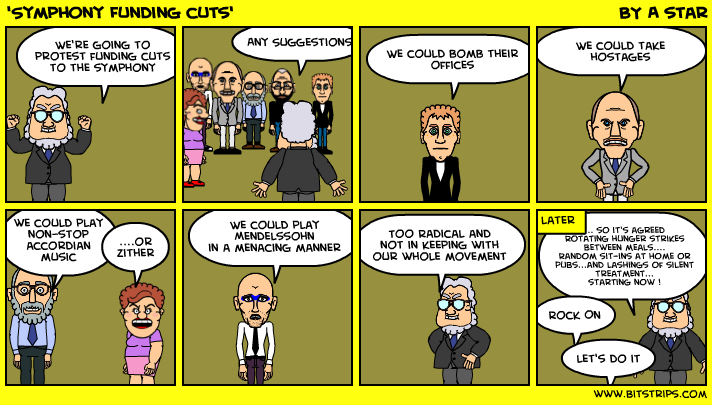
Shortly after South by Southwest, I got a note from Rafi Santo from Global Kids calling my attention to the fact that my likeness had become a cartoon character, thanks to a new site called Bitstrips, which has used the festival to broaden its public visibility. Bitstrips is a site which supports the production and distribution of user-generated web comics. More recently, reader Jordon Himelfarb, a Canadian journalist wrote to tell me that the Henry Jenkins character had been deployed more than 95 times. I am one of a small selection of icons supposed to represent "famous figures", including Steve Jobs, Moby, and Doogie Howser. (The narrow range of options here suggests how deeply embedded this project has been in geek culture to date.) As someone who is interested in the ways images get appropriate and transformed over time, not to mention a notorious ego-maniac, I was very interested to see what uses were being made of this iconic representation of me. For what it's worth, I think I am funnier in real life than in the comics.

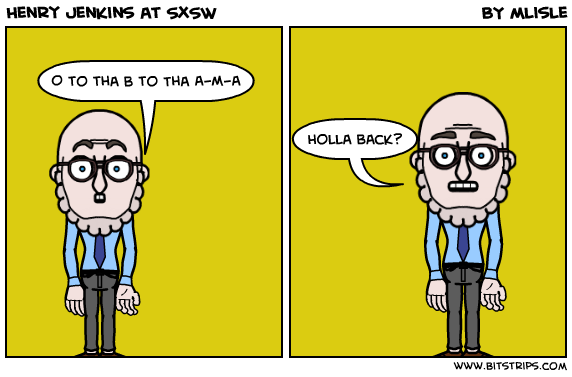
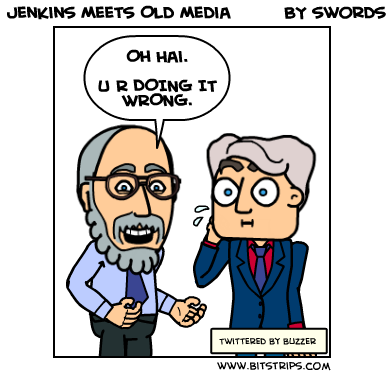
It is clear that the first few uses were from people who attended South by Southwest and were somewhat familiar with who I am and what kinds of things I am apt to say or do.

bitstrips 1.png

bitstrips 2.png

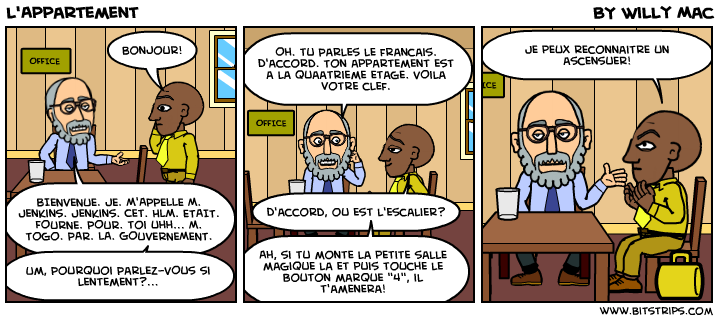
Quickly, though, the character begins to take on a life of its own. Certain aspects of the iconography (the bald head, the glasses, the beard) lend themselves to use to represent someone of a certain generation, as in this cartoon which depicts me as a father confronting his daughter's boyfriend for the first time.

bitstrips 4.htm

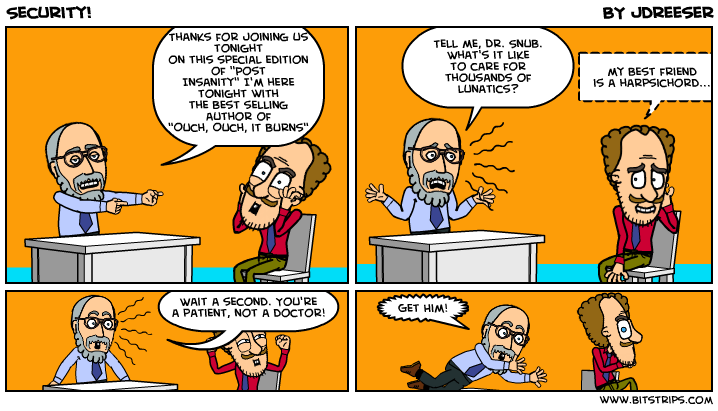
Something in my image conjures up a certain kind of knowledge and expertise. Thus, the character can be cast as a psychiatrist or doctor.

bitstrips 6.png

Or as a talk show host talking about psychology.

bitstrips 9.png

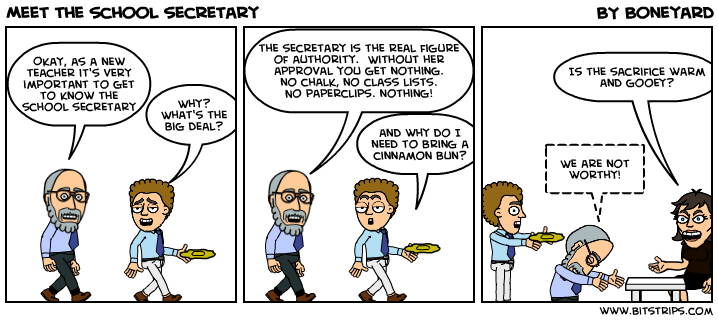
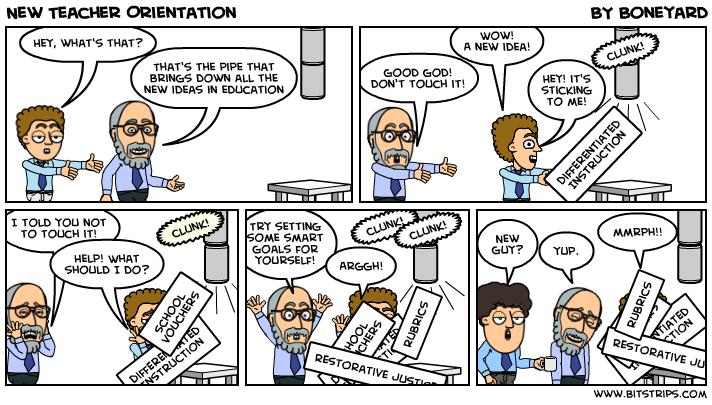
Or as a teacher.

bitstrips 8.png

Or as a mad scientist:

bitstrips 11.png

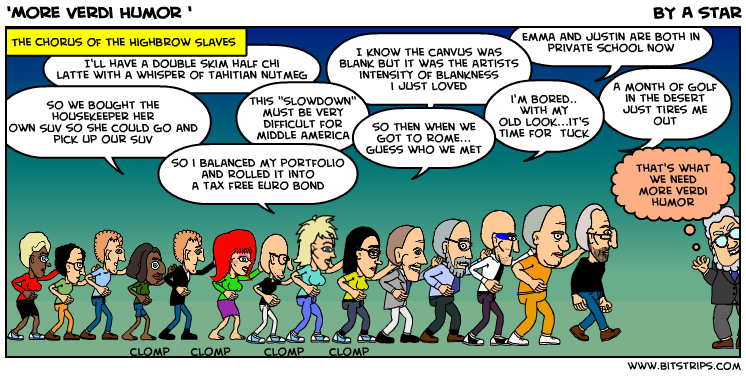
As a "high brow"

bitstrips 10.png

bitstrips 12.png

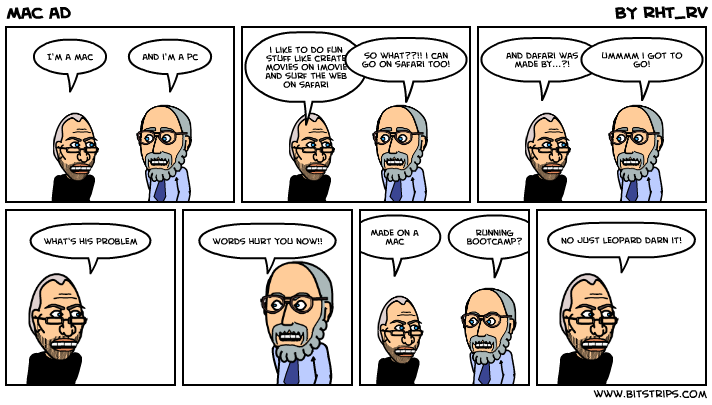
I'm even cast as the PC in a cartoon which plays with the Mac/PC template.

bitstrips 7.png

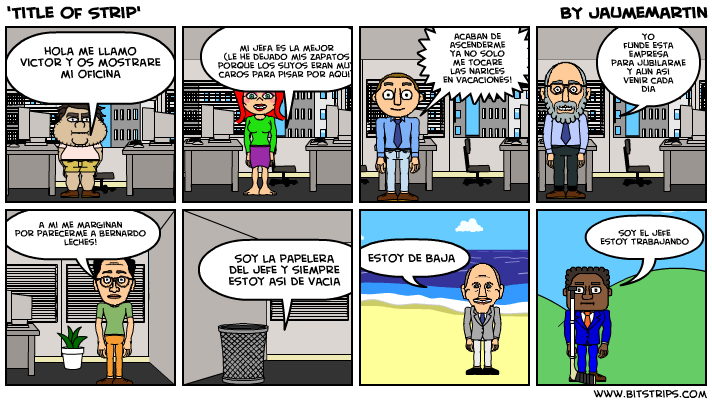
In short, the character got deployed many times not because people knew who I was in any specific sense but because my iconography constructs a particular kind of character which fits well within the classic formulas of the comic strip. This helps to explain both why my likeness becomes so spreadable and why it still carries a surprisingly narrow range of meanings, all things considered. I wonder what would have happened if the original "Henry Jenkins" character had shown me in my characteristic suspenders and not in a suit and tie.

This character, the expert, carries with it certain connotations and expectations. He is often a stuffed shirt or kill joy figure, that is, he deploys his authority to put others in their place and can thus in return become the object of ridicule. He is often portrayed as absent minded and befuddled, so that the comic situation can be used to suggest the limits of what can be comprehended. The familarity of this figure makes him a resource especially for professional humor including that involving medicine, computers, or education, themes clearly of interest to Bitstrips's first generation of users. It will be interesting to see what other ways this character gets deployed as the audience for Bitstrips diversifies. Already we can see examples of this figure getting used in other national contexts, though the stereotype seems to speak in languages that I don't personally understand. Even in the non-English language cartoons, though, I am most often depicted in an office setting suggesting that the character is seen as a professional and not as, say, working class.

bitstrips 3.png

bitstrip 14.png

I encourage my readers to see what they can do with the tool and send me a link to the results. In the meantime, see you in the funny pages!

I HEART Mutants (Except for That Shameless Mary Sue, Jean Grey)

This is the second in a series of "intimate critiques" produced by masters students in my Comparative Media Studies proseminar on media theory and methods. Each essay tries to blend personal narrative with larger theoretical issues as a way of digging deeper into the place of popular culture in our everyday lives. This year's set can be seen as a series of narratives of "coming out" as fans and how this process relates to other aspects of one's personal identity. I HEART Mutants

(Except for that Shameless Mary Sue, Jean Grey)

Lan Xuan Le

Spring 2008

I met the X-Men for the very first time on Saturday, October 31st, 1992. It was 9 AM, prime time for the grade school demographic, and the Fox Network was debuting its second attempt at an animated cartoon series based on a comic book of the same name. The first episode opened in the midst of the government's Mutant Registration Program, an initiative to find and round up all the human beings who possessed genetically-enhanced superpowers. In a recent, unexplained evolutionary burst, people across the world had begun manifesting unusual abilities at the onset of puberty. Pyrokinesis, telepathy, super-strength, invulnerability - the public had been waging a campaign of repression on these so called "mutants" out of a fear of their superior abilities. The first episode dumped the audience right into the middle of a long-standing conflict between homo sapien and "homo superior." It was in this political climate that Professor Charles Xavier and his band of select mutant followers have been fighting to preserve mutant rights against the human government and other mutants who would enslave humankind.

Running for a total of five seasons, X-Men was Fox Kid's second most successful show after Batman The Animated Series and continued airing reruns for a year after the release of its final episode. X-Men began as a popular serial comic book under the Marvel Publishing arm of Marvel Entertainment in 1963. Created by the legendary duo, Stan Lee and Jack Kirby, Uncanny X-Men told the story of a band of humans who struggled to protect a "world that hated and feared them." Although it was an established, long-standing franchise in American popular culture, the television show was my first point of entry into this universe.

I was not quite 12-years-old, the daughter of Vietnamese-American political immigrants, and a "gifted and talented" student in the mid-Western educational system. It seemed inevitable that the idea of mutant alienation and political struggle would ignite my young imagination. At the heart of the X-Men mythos lies a powerful metaphor of marginalization. Race, gender, sexuality - mutation stood in for and made visible the oppressions suffered by a class of people, of which I was a part. It spoke to the systematically, discursively constructed category of "othering" I suffered as a racial minority, de-naturalizing and exposing them. It spoke to my experience of systemic exclusions as a girl in America and a daughter in a family with Confucian values. X-Men represented my nascent political consciousness, the burgeoning understanding of myself as part of a larger grouping of people and an agent acting within a system of conflicting pressures. The story of X-Men became powerful to me in a way that the individual struggle of a character such as Batman could not.

The idea of mutation, a flexible metaphor, resonated with many of my experiences of exclusion. But race and gender remains, even today, the most powerful level of my experience of the mutation metaphor. Race is often discursively inscribed upon the bodies of racial minorities, like the "oversexed and savage" stereotype of black, male bodies or the sexual, pliant bodies of Asian women. So too is mutation a bodily "othering." This "otherness" of the mutant body often takes physical form, like with Doctor Hank "Beast" McCoy's hairy, animal-like appearance. Similarly, racialized or mutated bodies become the difference against which white or human bodies are visually and discursively normalized.

Some mutants in the X-Men universe, however, do not wear their differences on their bodies. Their abilities manifest in subtler ways, allowing them to "pass" as human. The conflict that arises between the obviously mutated and the "pretty" mutants erupts periodically in the story. In the X-Men universe, the physically mutated characters gathered into an underground, sewer-based community called the Morlocks after a similar, villainous society in H.G. Wells' The Time Machine. They could not avoid the political experience of mutancy and became angry at those who remained sheltered and apolitical in their appearance of humanity. This, for me, mirrored the way my Asian girlfriends used the increasing invisibility of their race to avoid or even deny themselves as racialized subjects, often as gendered subjects as well. Those were precisely the moments that I understood my decisions through the mutant metaphor. By choosing to be a Morlock, I chose to openly live a fraught political reality that would act upon me whether or not I confronted it.

The metaphor of mutation, especially as applied to bodies, became a very powerful expression of the ways in which my own body had been re-written without my permission. As an Asian woman, my body is all too visible and yet my "color" has receded, being neither white nor black. I too have been inscribed upon, defined into my very DNA. But for mutants, their power lay precisely their differences. The very performance of their differences gave them the power to resist. The heroes of X-Men were those mutants who could come to accept and judiciously use their powers, not those who remained silent. That proved an important idea for me at the age of twelve, the ability to appropriate the performance of difference in some way, to reclaim the language of these performances to empower myself. It gave me a option to act, to vocally resist the silencing and naturalization of my exclusions.

While the characters in X-Men fight against the teleological framing of "mutation" in the same way I do as a woman of color, the metaphor to race and gender is imperfect. What I find most unsettling about the mutation metaphor, and the differences this represents, is the struggle between the biological reality and socially constructed nature of "mutation." Linking differences to the term "mutation" implies a kind of biological determinism. Within the story, however, these genetic changes actually produce an incontrovertible difference in the X-Men. The ability to mentally levitate objects is not comparable to the experience of race, gender, class, and sexuality, which are socially determined. Many groups have struggled to shift the debates of difference from biological determinism to social construction, and I remain ambivalent about how powerful this imperfect metaphor is for me.

I read more than just race into the bodies of these mutant characters. The bodies of women take on another significance in the X-Men television show for me. The idealization and display of female bodies is a standard part of the comic book industry's practice, which is dominated by a male culture of production. But female bodies often become sites of social anxiety. Asian female bodies, for example, were considered dangerous during earlier immigration to the US, because reproduction is the power of a marginal, feminine body to spread and contaminate the normative political body.

One of the most interesting women in the X-Men universe is Rogue, a member of the X-Men. Rogue is lushly beautiful, possessing super-strength, flight, invulnerability, and the ability to steal the life force of anyone she touches skin to skin. I envied Rogue because she represented the impenetrable female body. Rogue has the appearance of a woman who is sexually permissive, but the body which denies penetration. The markers of Rogue's class - her Southern "trash" stylings - are intimately linked to this perceived sexual permissiveness. Rogue's yearning to touch and be touched, especially when expressed in the presence of her on-again-off-again boyfriend Remy, yield to both innocent and lascivious interpretations. But because of her powers, she remains a non-reproducing body, one that is safely neutered, a contagion contained. Whether or not I understood it as a child, Rogue has always represented to me a site where masculine anxieties about women found expression.

Just as I found Rogue and the text's relationship to her body intriguing, I found the character of Jean Grey equally repugnant. In all the ways that Rogue embodies ambivalence, Jean Grey equally and oppositely represents the heteronormative forces within the text. Beautiful and in control, Jean Grey's cerebral powers mirror her middle-class origins, which stands in contrast to Rogue's physical (and blue collar) powers. Jean Grey's empathic social role in the team was to mediate the tensions of class, gender, and sexuality. She invoked her authority as the mother, the sanctioned, reproducing body, to quell insurrection and unify the group under a liberal morality invested in the feminine as a site of cultural reproduction. She became a symbol of the ways in which liberalism's promise of social justice sacrificed so many marginal voices to speak from a unified position. In a story that allowed me discursive reprieve, that provided catharsis in its simple acknowledgment of my exclusions, Jean Grey violated the agreement offered by the text.

I followed the television show until its end in 1997, at which point I sought to find the "original," the comic books, and continue my relationship with the story. I quickly discovered that the series had been running for nearly 40 years, the whole of it beyond my reach both economically and logistically. The serial nature of the comic book defeated my ability to master the canon as thoroughly as did my economic circumstances. The Internet, however, offered a different way into the X-Men history.

In 1998 I discovered fan websites, places where pieces of the X-Men story came together, character by character. But I found these dry, journalistic recitations insufficient to approximate the experience of reading the comic books, of knowing the X-Men first hand. It was during my web surfing that I found fan fiction, the resource that finally opened up X-Men to me. These stories became a snapshot of the fan's ongoing experience of reading, problematizing, and subsequent (re)writing of the X-Men comic books. It seemed a recursive, cyclical process carried through many stories, probably extending to other media properties. Whatever they represented to the fan author, for me as a reader, fan fiction became a constant renewal of the X-Men text. Through these stories, I could read X-Men anew through the lens of another fan's love. I began a two-year journey into the collective imaginary of X-Men, a historiography of myth and memory.

These fan stories explored the tensions of the comic book, perhaps further than the original format would have allowed. Dozens of stories addressed the same events in canon, correcting, changing, darning over the snags and tangles of plot holes. I had access to a collective record of the major shifts in the X-Men franchise and the fan reaction to them. Reading fan fiction was like mining the secondary sources of an historical event. Fan fiction, for me, became a record of what could never be part of the comic book canon, the discourse of an experience. The "truth" of the canon became irrelevant compared to reading the fantasy of the reading.

Fan fiction transformed my experience of the X-Men story, turning it from a monoglossic text into a multiple, unstable, heteroglossic pleasure. Every character, every relationship took on a complexity impossible in a single text, even a serial one. Although the series was multi-vocal, containing a diverse, international cast and expressive of a range of views to begin with, the very nature of fan fiction and individual interpretation allowed me a far broader experience. I adore, for example, not the canonical character of Gambit, but a layered memory of Gambit as can only be possible through people who both love and loath him. And so he is even more fascinating, engaging, and ultimately satisfying a character than any single text could offer.

By early 2000, the tide of fan fiction on the web had begun to ebb, bringing my journey with the fan community to an end. I attended college later that year and moved on to other media properties, but the X-Men would remain an essential part of my cultural imaginary. But my relationship to the franchise continued to change nonetheless. In 2000, Marvel released a full-length, live action film adapted from the comic books followed by two sequels. The same year, the X-Men: Evolution cartoon began on television, aiming to recapture the popularity of the original by re-imagining the X-Men's beginning in the present day. In 2001, the X-Men comic books spun off another alternate universe under the title of Ultimate X-Men that again re-imagined the beginning of the X-Men, but in a completely different universe from the Evolution cartoon.

The increasing number of alternate universes validated my increasing distance from the "canon" that I was originally so keen to obtain. It only added to the multiplicity and richness of the X-men text. While this move inspired fan anger for "selling out" the franchise and violating the integrity of the story, I saw this move as a way for the franchise to preserve its heteroglossic mythology. Each one of these re-imagined beginnings was designed for me, the interested audience that found itself excluded from the long-running history of the comic book. I finally felt courted by a universe that likely was not speaking to me, but from which I had appropriated strategies of resistance. While these alternate universes aimed to renew my relationship to the series, the ties had faded over time. I now possessed academic theories and frameworks through which to parse my experiences and exclusions.

In early spring of 2008, a fan group, in defiance of copyright, scanned and released all the volumes of the X-Men as PDFs online. Through the magic of peer-to-peer downloading, I finally acquired the whole of the X-Men canon. But in the end, I could not come to love them. With the exception of Joss Whedon's short stint at the helm of the Uncanny X-Men, the story was written predominantly by men for an audience that was not me, nor necessarily a group that included me. Fan fiction, on the other hand, was written primarily by women with whom I shared many salient experiences. In the end, I chose not to read the comic books lest they fundamentally change the relationship I had already nurtured with the franchise. The potential loss of that wonderfully unstable text could not ultimately compare to the gain of the comic book itself.

Lan Xuan Le

Swarthmore College, BA Biology and Asian Studies 2004

Boston University, Masters of Public Health 2007

Lan Xuan Le, who has BAs in both Biology and Asian Studies from Swarthmore College (2004) and a Masters in Public Health from Boston University (2007), has been part of the "games for health movement," conducting a qualitative study and co-authoring a white paper for the Robert Wood Johnson Foundation on the use of games to combat childhood obesity. She also has a strong interest in the globalization of media and the construction of alternative understandings of what it means to be Asian and Asian-American through popular culture, an interest which led her to design, research and execute a library exhibition of anime and manga for Swarthmore's McCabe Library. She wrote an undergraduate thesis on problematic gender and sexual representations in Japanese popular culture with a particular focus on Card Captor Sakura, a paper which won the Swarthmore College Asian Studies Program's top writing prize.

The Videocassette or: How I Became a Fanboy and Learned to Love Explosions

Every year, I challenge my Comparative Media Studies Masters Students to tackle a piece of autobiographical prose which describes something of their own relations with media. This may at first glance seem like a pretty cushy assignment, most of us start our writing career on personal essays, but most of the students discover it can be extremely difficult to reconcile the competing modes of autobiographical and theoretical writing. On the one hand, the language of media theory is often highly abstract and for many, alienating. On the other hand, many of us fall into the trap of "overshare" when asked to recount of our own experiences, being so interested in the process of personal revelation that we don't necessarily think through why we are sharing or how autobiography might enable us to make more meaningful generalizations about media. In preparation for this assignment, we read and discuss such essays as Erica Rand's introduction to The Ellis Island Snowglobe, Annette Kuhn's discussion of a family photograph from Family Secrets, Sharon Mazer's discussion of the power relations she encountered in doing an ethnography of professional wrestling, Robert Drew's account of karoaki which draws heavily on his own experiences as a performer, and Geraldine Bloustein's work on "girl-making." (The last three can all be found in Hop on Pop: The Politics and Pleasures of Popular Culture, which I co-edited with Tara McPherson and Jane Shattuc.) Each of these writers make effective use of "intimate critique" as a way into dealing with complex aspects of personal identity and popular culture. As we suggested in the introduction to Hop on Pop, there are questions which we can only address through holding a lens up to our subjective experience of media -- the tendency of academics to hold popular culture at a distance may distort their understanding of the work it does for individuals and the society at large.

This assignment produces some of the most exciting writing I see all year and this year's crop of first year masters students produced work which I felt was especially rich and evocative. Last year, I shared some of the work my students produced for this assignment, including essays on what our lists on Netflix tell about us and about the world of Mexican comics. Over the next few posts, I plan to share some of the highlights from this year's crop. This year, there was a strong focus on cult media, fandom, and personal identity formation. I shouldn't be surprised, I suppose, given my own interests, so what is surprising is how very different each of these narratives about early fan experiences turned out to be.

The Videocassette or: How I Became a Fanboy and Learned to Love Explosions

by Abhimanyu Das

The cultural artifact I have chosen for this paper is the VHS tape. It is an object of resonance on two levels - it possesses enormous personal significance and, on a wider scale, it is the embodiment of a technological development that transformed the film culture of urban India. Given that videocassettes and the material they carried were a "companion for emotion and a provocation to thought" from an early point in my life, they were to me what Sherry Turkle categorizes as 'evocative objects'.

Until the liberalization of the Indian economy in 1991, films made outside India were very difficult to access legally. Urban centers generally contained only a few theaters (multiplexes did not arrive till the 21st century) and these were mostly dedicated to screening Bollywood fare that guaranteed more ticket sales. A tiny number of foreign films were exhibited every year, usually releases that were a year or more past their original theatrical dates. The situation for Indian cinephiles was dire. All this was transformed by the VHS boom of the mid to late 80s. The introduction of videocassette technology to Indian markets did not, however, signal the beginning of the home video release boom that was witnessed by countries like the United States. The heavily protectionist economy did not lend itself well to studios releasing foreign films on a home video market and availability of video recorders was initially too limited for any kind of real profitability from the exercise. This, however, did not preclude the burgeoning of a system of piracy and peer to peer sharing that was working well in Indian cities long before any of us had even heard of the Internet and was to survive till the cable television boom of the mid 1990s.

The first manifestation, according to my father, was the appearance in many neighborhoods of the local 'video parlor'. Some of these were larger establishments with proper storefronts while others were holes in the wall that could only be found via word of mouth. All of them, however, were stocked with pirated VHS copies smuggled in from east Asian countries. Given that the foreign studios had practically no presence or representation in India and that the police did not care the least bit about enforcing copyright laws, these parlors were free to operate. In addition to the regular Blockbuster-style services they provided, they could (at a price) copy your favourite film on to a blank videotape or even 'order' an 'official' copy of the film for you (these being a first or second generation shinier print of the film in a case adorned with color xeroxes of its American packaging as opposed to the generally fuzzy affairs in generic slipcases available for rent). The larger shops presented even more options, offering up 'camera prints' at half the usual rental for fans on a budget (the unwatchable prints of movies recorded in a theater) or 'family' versions of films with the sex scenes dubbed out (profanity and violence remained gloriously intact).

A vibrant popular film culture was to grow in the cities within years. My father tells stories of how Arnold Schwarzenegger and Sylvester Stallone became household names within a year and I can remember passing by, on my way to school, scores of streetside hawkers selling Rambo and Terminator t-shirts when just a year previous, they had been peddling religious iconography. School-children (like myself) started up movie sticker collections that were traded aggressively. The interesting side effect of the viral nature of the VHS phenomenon was the fact that the parlors were simply one of the available options. People would copy tapes that they had rented from these parlors and circulate them amongst friends and family who would, in turn, copy them. The picture and sound would degrade with each degree of separation but this did not dissuade the enterprising cinephiles that felt like they had put one over the Man ('the Man' presumably being the video parlor guy that rented smuggled goods) by watching the movie for free. Neighborhoods would organize community screenings of films where they would set up a television set in a local clubhouse, rent a tape from the nearest video parlor and charge a nominal fee for entry. The transformation, then, was beginning. India had always had a rich history of movie-watching in the Bollywood tradition and the arrival of VHS expanded the film-goers horizons to include the Western market. Cinema clubs popped up across the cities, catering to tastes across the board, from a weekly dose of 80s action drama to one of Bergman or Antonioni (two especial Calcutta favourites). Indian youth culture was impacted as the fashions, music and slang of the Americans they saw on their television sets (which had hitherto exhibited nothing but the two mostly soul-crushing public TV channels) crossed over into the urban lexicon. This intrusion of globalization (for better or for worse) into a relatively closed cultural space was accelerated manifold by the advent of cable television but I would argue that this particular event was primed by the preceding decade of VHS supremacy.

On a personal level, the VHS tape could be said to have shaped my entire life. Some of my earliest memories are of my father bringing home our first VCR from a business trip abroad and the subsequent weekend film-watching ritual. The homework would get done, be checked over and the approving nod would be the cue for the Disney film du jour to begin. Just as Turkle's closet full of memorabilia shapes the way she thinks about her family, my memories of our weekly congregation around the joys of VHS shapes the way I think about mine. In addition, these experiences contained within and associated with the tapes were to have a profound effect on my identity and interests. Pat or even cliched as these conclusions may seem, it was the memories of those early movie sessions that formed the seed for my later affinity for everything cinematic and helped push me toward the academic, personal and professional direction I am taking now. My love of music began with VHS tapes as my parents would record music videos from the half hour Western music show that aired past my bedtime on the aforementioned public television channel. I would then proceed to play these tapes all day, forming a soundtrack to my childhood that originates as much from VHS as it does my father's LP/audiocassette collection. My affection for everything narrative probably sprang from the multiple viewings of the same films (on the same tape) that we would rent repeatedly when nothing new had come in that week, as plot threads started to get embedded into my skull, complete with dialogue and interrupted by video snow where the tape had been damaged. Even my first induction into the enticing world of 'adult language' was thanks to the verbal clashes (in stereo!) between the working class New York accent of John McClane and the cultured delivery of Hans Gruber. Thanks to Bruce Willis and Alan Rickman, I knew how to swear in English before I learned the equivalents in any of the Indian languages.

The actual physical form of the videotape was also important. The tapes from the parlor that we rented from all had a particular smell (that I could never identify) - the first indication of an impending movie experience. Close at its heels was the mystique of the cassette itself, as my brother and I would open the protective tab and stare at the magnetic tape underneath, making wise pronouncements about the quality of the print based on the number of crinkles we could see in it. Despite our carefully performed expertise, however, we were completely in thrall to the inherent mystery of the incomprehensible machine, simultaneously imagining ourselves as a new generation of technopriests through our ability to perform a ritual around these objects and as slaves to our ultimate lack of knowledge about the object itself. The packaging was equally important (when there was any). Familiar faces of actors we were starting to recognize would create patterns in our choices. These packages were generally xeroxes of US or UK poster art and we learned to recognize the MPAA's Restricted logo or the BBFC's '18' and '15' symbols (ironically our parents were too frazzled and rushed to notice such things) and felt the twinge of anticipation for the forbidden darkness that we learned to anticipate within (the films rated such for sexual content were, however, generally pointed out by the 'video parlor man' for the benefit of our parents).

Finally, as the title of this piece indicates, the fanboy in me can actually be traced back to the magic of VHS as well. I still remember with relative clarity, the first defining cinematic moment of my life - my first viewing of Superman II. It was in 1988 and I was six. It was not the first film I had watched on our new VCR but it was the first one to leave an indelible stamp on my still-developing mind. The wonder of Superman's flight to the Eiffel Tower, the foreboding of the criminal Kryptonians' surprisingly brutal assault on the astronauts, the frustration of the beating suffered by humanized Clark Kent at the hands of the diner bully and - above all - the pure adrenaline rush of re-powered Superman's return and climactic clash with the villains in downtown Metropolis are all emotions that I am reasonably sure I remember accurately from that first viewing. This may well be owed to the fact that I replicated this experience countless times over the next few years, goading my hapless parents into renting the same tape to the extent that 'the video parlor man' automatically reached for it when we walked in. The reactions, however, were always echoes of my original visceral responses to what remains, to this day, one of my favourite films and the reason why I instinctively associate villainy of all sorts with General Zod. Superman II was the reason I picked up my first American comic book and marks the beginning of my lifelong fondness for fantastical narratives across media platforms, bringing us to the possibility that my presence at MIT may actually be traced back to the work of Richard Lester (or Donner, according to preference).

It is important to mention that a significant aspect of this anecdote is the fact that I managed to watch Superman II through the eyes of an impressionable young child, thanks to the convenience of VHS. Had it not been for this particular technological marvel, my exposure to pop culture (as embodied by Superman) would have really begun in the mid-90s with the appearance of cable television, by which point I would have been a teenager and - undoubtedly - indoctrinated into the way of the sciences by the ever reliable biases of the Indian educational system as it deals with male students. It was VHS that made the difference between a goggle-eyed child internalizing an epic, life-changing mythology and an engineering-track teenager laughing at a campy movie about an alien in a red cape and underwear fighting two British actors (and an ex boxer from Philadelphia) dressed like dominatrices while Gene Hackman delivered one-liners in the background. And for this, I am thankful.

Abhimanyu Das

Franklin and Marshall College, BA English, 2005

Born and raised in Kolkata, India, Abhimanyu Das graduated in 2005 with a BA in English from Franklin and Marshall College. Gradually, his interests in new kinds of media texts (such as computer games, graphic novels, and serialized fiction) began to push against the outer limits of proscribed curriculum of his English department. His struggles with core questions about transmedia storytelling, the audiovisual elements of texts and social context of genre narratives led him to develop a secondary concentration in Film Studies, during which he did archival research at the British Film Institute and also read a lot of comics. His relevant professional experience includes writing about film and literature as well as a brief stint in publishing.

At MIT, he hopes to pursue a thesis project that studies "the confluence of post-colonial influences and the effect of globalization on two rapidly expanding media movements, the Indian independent film and the Indian comic book." He is currently working at the MIT Center for Future Civic Media as an RA. His long-term goal is to be able to make a living as a cultural journalist with the clout to make a few people do more than just smile indulgently while he talks about movies and comics.

Children as Storytellers: The Making of TikaTok (Part Two)

Last time, I shared with you an interview with CMS alum Neal Grigsby and MIT Media Lab alum Orit Zuckerman, two of the key players in a new startup company, TikaTok, which is working to encourage children to create their own books and share them with other young readers. This time, we get a bit more personal as the two share their sense of how their MIT education contributed to their current projects. Your site also seems to promote opportunities for collaboration between young authors and illustrators. Is this a way of introducing young people to the world of collective intelligence?

Neal: It certainly is, and although it was always on our road map to add this feature, necessity made us move it up the schedule. Our users demanded it. Drawing, and getting an illustration up on the site, can be a creative and technical challenge for many. The team went back and forth for a very long time about the possibility of providing a digital drawing tool before finally coming to the conclusion that it was a bad idea for several reasons. But if you could use the illustrations that other kids had already provided and pledged to the community, if only until a time that your own drawings would be ready, it would really help.

Now we are seeing writing and illustrating as potentially two separate modes of participation, and it is quite exciting. Of course there will always be children who enjoy writing more than illustrating, and vice versa, and this gives both groups the ability to engage deeply on the site and not feel like they're missing a big part of the experience. I also suspect that for many users their first experience with collaboration will be almost accidental: they will use someone's illustration, or someone will use theirs, and the system will automatically attribute the illustration credit. And then once those two kids see the power of this passive collaboration, it may pave the way for a more deliberate collaboration like co-authorship of the text, which the site also supports, or even "massively multiplayer" co-authorship with a large group.

It is certainly possible that we will provide even more modes of participation in the future--one could easily imagine introducing analogs to the traditional roles of editor, copy editor, layout and design artist, and even publicist--but we haven't determined yet which of these would be the most meaningful to our community.

In a "Mother's Welcome," Sharon Kan suggests that this project emerged from the experience of "two mothers who wanted to create a place where children can write, illustrate, publish and print their own books." What specific experiences did you have as mothers which pushed you to start this company?

Orit: As mothers you see your children grow and their brains develop. It is one of the most fulfilling experiences to look at the world from a child's view. From very young age children try to express themselves in pictures and in stories. When I sat with my daughter and we created a story together, she knew exactly what she wanted to say and draw; she enjoyed creating a story and was very happy when it was presented to the world by her proud parents. Even though it wasn't storytelling as we see in books that are written by adults, the ideas that come out and the simplicity of the storyline was very interesting. I also noticed that through kindergarten she was always encouraged to draw, but when she went to first grade the emphasis went to reading and writing only, and all that talent of telling stories by pictures was neglected. Then I looked at my daughter's bookshelf. She loves books, yet all of her books were written by adults, edited by adults, and published by adults with adult priorities in mind. Why aren't there books for kids by kids? They clearly tell stories differently but no one publishes it? This is what led us to think that creating a platform where kids can tell their stories, bind them into real books, and be active in a community of book lovers would be a great thing to build.

Neal, you are in the process of becoming a father yourself. How is that impacting your perception of this project? What would you say in a "Father's Welcome" to the site?

Neal: In an interesting coincidence, the day that I learned I was becoming a father was the same day that we launched the private alpha release of the site. So you could say that both baby and website have been gestating for about the same amount of time. As you might expect it has been an incredibly busy and exciting time, and I approach the future with a sense of deep responsibility but also optimism.

Since learning of my impending fatherhood, I have been following blogs like Parent Hacks and GeekDad, and have been inspired by the ways those sites integrate this resurgent DIY culture with parenthood. From the stereotypes, one might expect a geeky parent to be particularly disengaged or self-absorbed, but these blogs almost show geek parents as the best hope for our future; they show passionate and caring parents who involve their children in projects of investigation, exploration, and invention.

If I were to write a "Father's Welcome," then, I would express my hope that the families who use our site embrace the opportunities it provides for parent and child to share a creative experience together. I am fully aware that, especially when he becomes a teenager, computers and the Internet will become tools of autonomy for my son. The old man will be embarrassingly uncool, as it is my destiny to become, and he will forge his online identity largely outside my direct supervision. Many sites for young children already reinforce this model, requiring the parent only for his blanket permission or his credit card. I hope on Tikatok a parent can hone a different facet of his relationship with his children: he can assist, collaborate, and inspire.

Orit, you recently completed a degree at the MIT Media Lab. Can you describe the work you did through the lab and what you learned there which has contributed to the current venture?

Orit: Part of my research in the media lab was creating a unique communication system for kids to involve remote relatives with their daily routines. Communication systems as we know them were designed for business use, later on they were adapted to home use, but without any changes to the basic design. Looking at what children need to communicate led to the development of a very unique video system that created contextual video correspondence between relatives. For example, a grandmother would read a story to her grandchild on the other side of the world; and then the grandson would get that message when he went to bed. The system would know the right time to connect between the relatives and thus create a more meaningful connection between them. Looking at things from the user's point of view creates a different product all together. With Tikatok, I tried looking at storytelling from a childs point of view and create something that would be easy and fun to use.

Neal, you recently completed a Masters through the Comparative Media Studies Program. Can you describe the work you did with us and how it has contributed to the current venture?

Neal: All of my work at CMS was united by the program's commitment to multidisciplinary thinking, and for putting theory into practice. It was really invaluable experience to me as I began work on Tikatok.

The research project I worked most on was the Project for New Media Literacies. As your regular readers well know, it is a project very much created to address the challenges of participatory culture. As a graduate student researcher it was my responsibility to create educational media and associated curricula that would illuminate media production practices for a youth audience. I produced materials around blogging and science fiction authorship (using BoingBoing's Cory Doctorow as an exemplar), public art and graffiti, Wikipedia, and video games. The project forced me to think of creative ways to teach both the practical and ethical dimensions of media production, and that experience has certainly come in handy for designing materials that engage and instruct our users. The project also trained me to see these processes of creation and expression not only as individual processes, but as social process that occur within a context. This perspective has frequently come in handy when, as a team, we discuss new features and priorities for the company. The community illustration database is the perfect example. Do we solve the problem of illustration uploading with a tool that allows individual children to create digital drawings instantly? Or do we provide a more powerful way for kids to work together and take advantage of their unique abilities? My work with NML helped me provide an informed opinion on this decision and others.

I also worked briefly at the Singapore-MIT GAMBIT Game Lab as the design lead for a team of Singaporean and MIT students charged with creating a multiplayer video game for mobile phones. GAMBIT really prepared me for the kind of rapid, iterative product development within a small team that is characteristic of many startups, including our own. My GAMBIT experience also gave me a heightened appreciation for the extreme importance of user interface design and QA. I believe that video games really have some of the best user interfaces of any interactive media. There are design principles common to video games that designers of websites and virtual worlds should ignore at their own peril. The multidisciplinary approach I learned at CMS has allowed me to recognize relevant connections between these different media modes.

Finally, there was my academic work. My thesis explored "Narrative of Adolescence Across Media" and its final chapter, which imagined video games as a platform for a new kind of player co-authored coming-of-age story, articulates many of the same goals that we are trying to meet with Tikatok. For someone whose thesis was inspired by Neal Stephenson's novel The Diamond Age, in which a young girl is aided in her development by, essentially, a digital platform for collaborative storytelling, it has been exciting to bring my research to bear on one of the closest real-world examples of such a platform that I have encountered.

What has been the biggest surprise as you've explored the intersection between these two MIT-based approaches to media?

Neal: The biggest surprise to me, I suppose, is how compatible the two approaches have been. If I were to believe the Media Lab stereotype, it would be that the folks there put too much faith in technological solutions. Certainly there is a huge technological optimism behind projects like the One Laptop Per Child, and it's important to peel away the layers of hyperbole to assess its potential impact. In starting a new company, it puts you in the position of having to promote yourself and your ideas, and it can be tempting to let your high aspirations get the best of you and let the hype flow unchecked. But I have never found myself battling Orit over unrealistic expectations. I think because the project is so grounded in her commitment to making something cool and worthwhile for her children, it makes her a sharp judge of what really works vs. what we want to work. She's not making something for "the children," she's making something for her children.

And while Orit works on a very intuitive level, the CMS approach has allowed me to bring a multitude of theoretical frameworks to the project, and helped me articulate what we are trying to achieve, sometimes to people on the outside, but sometimes even to the team. In that sense it is a nice marriage of a more bottom-up, creative approach with a top-down, analytical approach. But even that is a simplification - I think we both bring creative and analytical skills. As MIT media scholars I think we definitely speak the same language.

Orit Zuckerman - Co-founder and CTO

Orit has designed online communities since 1996, when she worked for Gizmoz Networks. In 1999, Orit co-founded uTOK Inc., a San Francisco-based Internet startup that created a "decentralized blogging community." She designed the community product, and supervised the R&D team. Most recently, Orit earned her Master's Degree from the MIT Media Lab, where she designed and implemented an innovative communication system for children. Orit has also exhibited her interactive portraiture installations in Milan, Monaco, Boston, British Telecom headquarters, and the National Portrait Gallery in London, England.

Neal Grigsby - Director of Online Community

Neal Grigsby worked for seven years at LookSmart.com, where he managed volunteers on a user-generated Web directory, co-managed partnerships and developed content for FindArticles, and designed education-themed search verticals. Neal recently earned his Masters Degree in Comparative Media Studies from MIT, where he produced educational media for the Macarthur-funded Project for New Media Literacies, and

designed video games for the Singapore-MIT GAMBIT Game Lab. Neal also

holds a BA from UC Berkeley.

Children as Storytellers: The Making of TikaTok (Part One)

When our son was three years old, we began the practice of having him compose stories for us before bed. We traded off nights. Some nights we'd read him a story. Some nights he would make up a story which we typed out on the computer for him, word for word, without changes. Sometimes he would take a few friendly prods to get moving but we were very careful to preserve the structure and details of his imagination. We would print out the stories and have him draw pictures to illustrate them. We would then photocopy the whole and send them to his grandparents on birthdays and other major holidays as a time capsule of his creative life. The process emerged, no doubt, because both his mother and father were fans and we knew the value of fan fiction. It benefited us as a family because it gave us a regular time when we could talk about the media he was consuming -- trust me, key themes of the stories came from television shows, movies, and from the Haunted Mansion at Disneyworld, which was a core influence on his thinking from early on. It allowed us to share our values with him, including the sense that he was empowered not simply to consume media but to rewrite it. And it helped him develop skills and a self identity as a writer which he has carried over into his adult life. I included an essay we wrote together in Fans, Bloggers, and Gamers. He also wrote and published an essay about his evolving relationship to professional wrestling in Nic Sammond's Steel Chair to the Head. All of this came back to me when I went on a walk recently with Neal Grgisby, who graduated a year ago with a Masters from the Comparative Media Studies Program, and has now taken on a job as the Director of Online Community for a startup company, TikaTok, which is trying to promote the idea of children writing, illustrating, and editing stories to share with other children. Interestingly, he's ended up working for a company started by an alum of the MIT Media Lab, so part of the story he shared with me had to do with the value of collaborations between the two groups. In the interview which follows, Neal and Orit Zuckerman, the company's CTO, talk about what they are trying to accomplish and in the process, they share some cutting edge thinking about how and why we can help children discover the power of authorship.

Tell us about your goals for Tikatok. What do you see as the core needs your company serves? What age groups are your targeting and why?

Orit: Tikatok's goal is to give young children (ages 5-12) a stage to show their creativity, cultivate it, and create a continuum of creativity and creation into their adult life. Young kids are encouraged to draw, to tell stories, and to let their imaginations go wild, yet when they start going to school this creativity tends to fade away (unless they have exceptional talent). We find that every child has a story to tell and a picture to show, and you don't need to be an exceptional talent to interest other kids in what you have to say. We believe that an active community of kids who like books can support this activity and give each other the confidence and help they need in the book making process.

Neal: I would add that we provide a space for younger kids to get in on what many of their teen siblings already enjoy: the ability to share their creative content on the Web. Due in part to the Children's Online Privacy Protection Act, children under 13 are explicitly prohibited from contributing to sites like YouTube and MySpace, and the sites made for younger children like Webkinz are so restricted that meaningful personal expression is nearly impossible. We believe that it's possible to protect the privacy of children without depriving them of their voices. Picture books provide a form that they are very familiar with and that can grow out of the kinds of activities they already enjoy. It is essentially taking digital what children have always done at their kitchen tables.

What do you see as the value of allowing young people to become authors at

such an early age? Are there any disadvantages?

Orit: The value is showing to the world the amount of creativity that this age group has in telling a story. If you look at their stories, especially the younger ages, you see they are truly creating from within with much less external influence than older kids have, and the results are fascinating. The disadvantage is that in many cases the stories are not in a format or quality we expect a story to be, and sometimes the stories make sense only to the parents. I believe, though, that we are not in a place to judge those stories because we look at it with an adult's eyes while they are intended for the eyes of children.

Neal: Right, the advantages and disadvantages are nearly one in the same. Their lack of experience and prejudice gives them such a fresh and unadulterated perspective, but it also means they haven't fully developed the strategies and tricks that an author uses to work through a story. The blank page can be really intimidating, so we try to provide them some support and structure if they want it. Also, children are computer novices at this age, so we can't overwhelm them with complicated tools - the editor has to be very elegant and intuitive, which is a huge design challenge.

How does Tikatok fit within the ongoing conversations about the value of participatory culture? For example, what similarities and differences do you see between what you are doing with younger children and what teens and adults do through fan fiction?

Neal: I definitely see Tikatok as helping to lower the barriers to creation and circulation of creative works for this cohort of kids Like many fan fiction communities have done, I hope we can encourage a culture of peer support on the site that will help kids refine their abilities in a less formal or judgmental atmosphere than they may be used to at school. And of course, writing is not a niche cultural practice, so I believe we can really foster multiple affinity groups within the community around any number of genres and styles, that is, we can bring kids with similar tastes and goals together in a way that will be very motivating.

Recently some members of the team were browsing the magazine Stone Soup, which is a really amazing thing: a literary magazine that publishes the best writing and illustrations of authors up to 13 years of age. I think we share many of the same ambitions of the editors of that magazine: to show that children can create works of real value, to give those works visibility, and, as a result, to give other children the confidence to create. But equally meaningful to us is the work that doesn't necessarily meet universal editorial standards, work that may be of more personal value to the child or the parent, or that may just represent a small step in a child's writing development. On the Stone Soup website they claim that they receive, and therefore reject, tens of thousands of story submissions from children a year. That figure really brought home the importance of an approach that is different but complimentary to theirs, one that only digital media and print-on-demand can provide.

What kind of relationship do you picture evolving between readers and writers? What do you see as the values of kids reading and responding to each other's work?

    Orit: I believe that some people will be more active writers waiting for fans and critique, while some will be avid readers that collect favorite books and authors. The immediacy of the internet will evolve this relationship to more of a co-dependency rather than that of a remote creator-reviewer. The creations of the writers will be highly influenced by the readers because they can see the unfinished product and even be part of the creation. The readers are not just bystanders, they are more involved and as such their reading experience is completely different.

Neal: First of all, I can personally admit to being surprised by just how excited kids are to read books by other children that they don't know. I think my niece and nephew have literally read every book that has been shared with the community (authors have the option to keep their books to themselves or to their network of friends), and when they find a book that they like they become filled with curiosity about the author; it has really been great to see them so engaged.

My own hope is that reading will become a way into writing for our users--that a child will be sent a book by a friend, or will spend some time browsing and reading the books on the front page, and will eventually become inspired or provoked enough to respond with his or her own story. Of course there is no contradiction between being a writer and a reader--far from it--and we hope that the community of writers will grow to support each other by posting constructive criticism, making creative suggestions, and becoming fans of each other. It is a huge motivator for kids just to know that other people are reading their books.

I think it will be incredibly valuable, personally and intellectually, for these kids to get and give feedback. Commenting and contributing to discussion is another vital form of participation on the site, and it forces a child to put into words what may begin as a gut feeling about a given book. Even if the initial way of giving feedback is just to say "I like this," eventually he will run into an author who will respond with, "thanks, why?" And there he will have the beginning of a conversation that will likely get both the reader and writer to reflect and articulate something about their tastes and develop their ideas about storytelling and design. Especially if a child is both an engaged writer and a reader, having to shift perspectives from one to the other will likely make him better at both. It will give them a more personal stake in their literacy learning.

And as a site for the youngest of Internet users, I think the reader/writer model is a fairly powerful one for learning about the ethics of online participation. Like many online communities our site has community guidelines--the rules for participation--but instead of just providing a simple list of do's and don'ts, I tried to ground our rules with reference to this paradigm. So instead of decontextualized commands like "don't copy another user's work," the guidelines begin with some thoughts about how great writers stick together and respect each other. We still have rules, of course, but we try to show how they grow naturally from an ethical framework, and hope that they will remain relevant to our users as they discover other communities and have other opportunities for participation.

You describe Tikatok as "where kids channel their imaginations into stories." How would you respond to critics who felt your templates did too much to "channel" young imaginations into particular narrative formulas. Some evidence suggest that children conceive stories in different terms than adults. Do your templates teach them to find what adults see as stories or allow them to articulate their own imaginations?

Neal: It can be a thin line between scaffolding a child's ability to express herself and shoehorning her into a certain mode of expression, and we try to be very sensitive to this in our designs and the creation of the templates, which we call StorySparks. The templates themselves are relatively minimal: a smidgeon of character and setting, the beginnings of a conflict, and some hints about where they might want to take the story next. Few provide guidance beyond what you might call the "first act" of a story. They are written to be inspirational rather than prescriptive.

We do have plans to add other ways of scaffolding that are less textual. Probably the way that most kids tell stories is not through writing or drawing at all, but through objects. You put GI Joe in the Barbie dream car and put Barbie in the tank, and you have a scenario just ripe for a story. I'm very excited about our designs for a story scaffolding system that is more improvisational and object oriented.

Until then, user choice has really been an overarching design principle. Using a StorySpark is optional, and for those that do choose to write with a template, we have a huge library to choose from. In writing the templates I tried to pull ideas from everywhere to compliment any personality: mythology, fairy tales, classic literature, pop culture, etc. Once a template is chosen, we prompt the child to personalize it with their own character names and genders. Any aspect of it can be changed or ignored, and we have good evidence to show that kids are comfortable with taking what they need from a template and going in their own direction. At Tikatok you can definitely draw, and write, "outside the lines."

I absolutely hope that the children will write stories that fly in the face of adult logic and I can't wait to read them. It is really the reason for the site to exist: to publish the authentic expressions of child authors. But for the kids that want the help, the StorySparks can be very useful in allowing them to overcome the tyranny of the blank page, or for getting them to think about conflict and resolution. Research shows that even very young children can recognize good stories--or, if you like, stories that track with what adults consider good stories--but that their ability to generate those kinds of stories lags behind. I think it would be presumptive of us to assume that children do not want to progress to more adult-like stories. It is the same with drawing: it is fascinating to see how children process the world visually and translate that into an illustration, and often the final result is far more colorful and beautiful than the most realistically rendered landscape. But at some point in one's learning, to take a completely random example let's say when an individual reaches his 30s, it is just frustrating to him that he can't draw better, and he wishes someone would have given him some tips.

Finally, I believe that adults are the ones who are most anxious about transgressing boundaries and authority. It comes naturally to kids. I am sure they will subvert whatever story idea I had in mind when I wrote these templates, and I welcome that.

One of your story templates features the arrival of a new and unknown game console. Many book lovers set up an opposition between reading/writing and game playing. Yet, here you are using young people's interest in games as an opening into writing. How do you think about the relationship between these two modes of engaging with stories?

Neal: That template has been the most popular choice for kids participating in our offline workshops, by far. Mostly I think it gives them the opportunity to follow that ages-old maxim: write what you know. Here is a topic that they are experts in, and they are so excited to have a chance to put their knowledge and experience to use.

The success of that template gives a certain credence to the theory that the experience of playing a game has some similarities to the task of authoring a story. Where there is overlap we have tried to exploit it in our designs. For example our decision to prompt kids to pick character names and genders for their templates was influenced by the fact that this is a standard practice in games; and we hoped it would help ease them into a situation where they have to take more control over the story. I would say you can put reading, writing, and playing videos games on the same spectrum where the axis is control. Reading a book gives you very little control over the outcome of the story, whereas writing a book gives you maximum control. Playing a video game, or at least a video game with a narrative, is somewhere in the middle. You and the designer are co-authors of the narrative experience.

But there is definitely a critical point along that spectrum that video games have not crossed, and maybe can never really cross. There are non-trivial differences between firing up the Wii to play Super Mario Galaxy and writing a story on Tikatok, even when using a template. At times we have been tempted to push further towards the gaming model, to give kids tools for point and click, branching-path story generation, but that is just not what our site is about. We want to challenge kids to really use their imaginations and focus. I see our task as not trying to make writing easy, because if it was easy it wouldn't be writing. Our task is to make it less intimidating and more rewarding.

That said, the success of games among kids has really paved the way to allow many people to understand why it is the right time for a site like ours. A decade ago maybe no one would agree that kids would be willing or able to do for fun something as complex as making a book, or that it would be a product for a very small niche of gifted children. Now we can point to games and say: kids routinely master incredibly complex systems and can't get enough. Not only are they willing to engage with these participatory forms of culture, but they will soon demand it from all of their entertainment.

Orit Zuckerman - Co-founder and CTO

Orit has designed online communities since 1996, when she worked for Gizmoz Networks. In 1999, Orit co-founded uTOK Inc., a San Francisco-based Internet startup that created a "decentralized blogging community." She designed the community product, and supervised the R&D team. Most recently, Orit earned her Master's

Degree from the MIT Media Lab, where she designed and implemented an innovative communication system for children. Orit has also exhibited her interactive portraiture installations in Milan, Monaco, Boston, British Telecom headquarters, and the National Portrait Gallery in London, England.

Neal Grigsby - Director of Online Community

Neal Grigsby worked for seven years at LookSmart.com, where he managed volunteers on a user-generated Web directory, co-managed partnerships and developed content for FindArticles, and designed education-themed search verticals. Neal recently earned his Masters Degree in Comparative Media Studies from MIT, where he produced educational media for the Macarthur-funded Project for New Media Literacies, and

designed video games for the Singapore-MIT GAMBIT Game Lab. Neal also holds a BA from UC Berkeley.

Ethics and the New Media Literacies

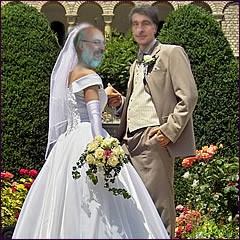
All this week, the collaboration between MIT's Project nml and Harvard's Good Play Project is being spotlighted over at the MacArthur Foundation's Spotlight on Digital Media and Learning. If you don't know Spotlight, you are missing out on some of the best conversations these days about the ways that young people are learning in the context of the new participatory cultures. The two groups made a joint presentation a few weeks ago at the American Educational Researchers Association Conference in New York City. marriage-H&H.jpg

As part of that presentation, Erin Reilly, NML's project manager, used her photoshop skills to put together this vivid representation of the collaboration we've started to build together.

The following text was written jointly by John Francis, Andrea Flores, Sam Gilbert, Lana Schwartz, and Steve Schultze

Meeting of the H's

In 2006, Henry Jenkins (Comparative Media Studies, MIT) and Howard Gardner (Harvard Graduate School of Education), both grantees of the MacArthur Digital Media and Learning initiative, met to discuss their mutual interest in ethical issues around digital media and possible opportunities for collaboration--and why not, being situated only two subway stops apart in Cambridge? More important than geography, though, were emergent complementary themes and research questions of Gardner's and Jenkins' work, which made a collaborative effort seem promising.

How has this meeting of the H's faired, and what has come out of the combined effort of Henry and Howard's teams? This week, we hope to give you an inside look at our collaboration through a series of blog posts highlighting our present accomplishments and future plans. Today, we'll start with a bit of background about our teams and the goals of our collaboration.

Two Projects, One Mission

As youth grow up in an increasingly connected environment, they are presented with a diversity of challenges. Many of these challenges arise in the context of new technologies of communication and creativity. How does digital copying relate to legacy notions of property? What do I need to know in order to collaborate with my online peers? How do I present myself online? What do I do when I encounter new communities with unfamiliar norms or ideas? In many cases, there are helpful analogies in "age old" practices. Nevertheless, the conventional wisdom of the analog world can seem like an ill fit. A more appropriate approach might frame the core skills and ethical issues within already established structures, but recognize the complications and opportunities of the contemporary media environment.

Project New Media Literacies (NML) headed by Jenkins at MIT's Comparative Media Studies program is guided by two questions:

  1. What do young people need to know in order to become full, active, creative, critical, and ethically responsible participants in a media-rich environment?
  2. What steps do we need to take to make sure that these skills are available to all?

NML uses digital media and new network technologies to help young people think about the role of media in their lives as consumers, producers, and participants

Gardner's GoodPlay Project, part of Project Zero at the Harvard Graduate School of Education, is similarly concerned with the roles that youth assume online. More specifically, the GoodPlay Project seeks to understand the ethical issues that youth face in the virtual frontier of new digital media. How models of ethics transfer from the offline to the online world--especially in the five areas of identity, privacy, authorship and ownership, credibility and participation--and how young people understand their roles and responsibilities in digital contexts are key concerns.

Together, it was decided that NML and GoodPlay would produce learning tools that help youth understand the connections between the digital media skills they learn and their roles and responsibilities as "good" cyber citizens. By integrating the GoodPlay ethical framework with the new media skill set defined by NML, the collaboration would develop activities that encourage reflection about ethical issues raised in various forms of media participation. These activities would draw on materials from the NML Exemplar Library and on data collected by the GoodPlay research team.

Let's Collaborate

In the summer of 2007, the NML and GoodPlay project teams set out to explore exactly what form our collaboration would take. We divided ourselves up into four "SuperTeams" to discuss compelling intersections between the two projects. After several weeks and many meetings, the entire group decided on a course of action for the fall: we--the "SuperQuartet" of Andrea Flores, John Francis, Steve Schultze and Lana Swartz--were challenged to generate ten high-level prototypes. After meeting with the full teams from NML-GoodPlay, we selected the best components of those prototypes for further refinement into two full learning modules. During this process, we began by considering the five core ethical issues identified in the GoodPlay white paper.

  • Identity: exploring and 'playing' with different identities
  • Privacy: choosing when and how to share information to whom
  • Ownership/Authorship: understanding issues of control and credit for intellectual work
  • Credibility: being authentic when representing one's competence and motivations
  • Participation: accessing communities, understanding codes of conduct, and engaging proactively

We chose to focus on Ownership/Authorship for this first prototype development and refinement phase. This issue highlights the challenges youth face in navigating questions like "who owns the output of my work?", and "what are the appropriate means of giving credit?" Offline, these issues have a long history of legal and social norms but ethical indiscretions are commonplace. The opportunities for transgressions are compounded online by the absence of clear-cut and well-understood norms, facile technology and a multi-author model of online creation. Within this core issue of Ownership/Authorship, we integrated several skills from the New Media Literacies white paper, such as:

  • Simulation: the ability to interpret and construct dynamic models of real-world processes
  • Appropriation: the ability to meaningfully sample and remix media content
  • Collective Intelligence: the ability to pool knowledge and compare notes with others toward a common goal
  • Networking: the ability to search for, synthesize, and disseminate information
  • Negotiation: the ability to travel across diverse communities, discerning and respecting multiple perspectives, and grasping and following alternative norms

In our activities, simulation helps students set up and understand real-world scenarios of ethical ownership. When facing an opportunity to sample or remix media content, students must decide what makes for acceptable and meaningful appropriation. In several instances, they must pool knowledge and compare notes with others toward a common goal. In so doing, they must exercise the ability to search for, synthesize, and disseminate information. Because ownership/authorship is a complex issue with different expectations in different situations, the activities encourage students to discern and respect multiple perspectives, and to engage alternative norms.

The combination of these issues and skills led us to four themes that we sought to address:

  • Collaboration/Co-Creation/Knowledge Communities: Developing models of how to work together effectively and ethically.
  • Responsibility: Highlighting the ways in which a creator has responsibilities to his/her audience, to the broader community, and to the original content and its creator (if he/she is a remixer).
  • Copyright: Understanding the proper use of materials by the individual and the individual's understanding of his/her rights as a creator of content.
  • "Inspired by " vs. Plagiarism: Identifying the difference between using content as a jumping off point for remixing/ creating new 'inspired by' materials vs. usurping materials as one's own creation.

We are excited with the progress that has been made, and the ways in which insights from both NML and GoodPlay informed the process. In some ways, we experienced the very concepts we were designing for, as we relied on the collective intelligence of all involved, easily negotiated differences and drew from a wide network of knowledge. It is clear that the shared authorship process can generate something greater than the sum of its parts, and that remixing and appropriation helped us iterate toward more effective activities.

But enough about us, we want to show you what we've made!

THE INSPIRED HIGHLIGHTER

When you're doing research or creating a work of art, the line between original work and copying is sometimes blurry. This activity helps "highlight" these distinctions.

In The Inspired Highlighter, students review different media samples in which one work is influenced by a former work. The two samples are presented side-by-side, and students identify the various tools that the latter author draws upon elements of the first work--characters, point-of-view, wording, theme, etc. We provide several options for teachers, such as Emma and Clueless, Gone with the Wind and Wind Done Gone, Moby Dick and a contemporary stage adaptation, Harry Potter fan fiction, and more. Students are also provided with simple summaries of concepts such as plagiarism, inspiration, copyright, public domain, and fair use. Working in groups or individually, students make comparisons across different genres, media forms, and authorial communities. This involves judging what makes for acceptable appropriation and what does not. Students identify the difference between using content as inspiration versus straightforward plagiarism.

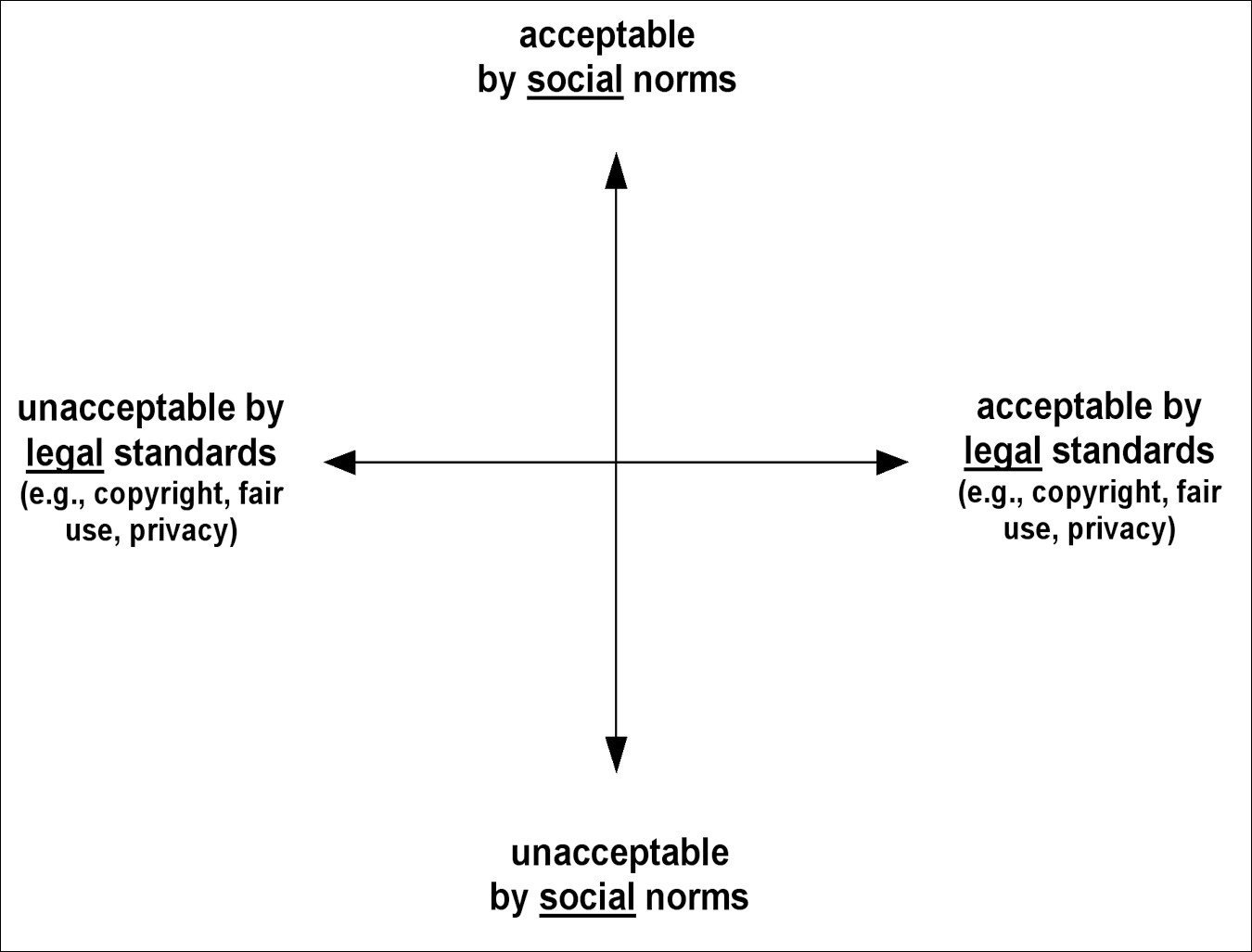
The activity uses two conceptual tools to guide students through this process. First, the students themselves place the particular instances that they discover in a simple grid that helps them the tools the author, the nature of the appropriation, and the possible motivations of the second author. The second conceptual tools is a simple graph, featuring "unacceptable copyright" on one axis and "acceptable norms" on the other. Together on the board, the class discusses where on this axis they would place the specific examples they found. Perhaps some examples are acceptable with respect to copyright law but unacceptable when it comes to authoring an original academic work. Perhaps some cases are unacceptable with a strict interpretation of copyright, but seem perfectly acceptable when considered in light of social norms.

By the end of the activity, students should be able to identify norms of ownership, tools of authorship, and instances of clear and not-so-clear plagiarism. Going forward, we hope that students will be able to highlight and consider these dilemmas not only in their school work but also in day-to-day situations.

MAD MEN

The themes of authorial responsibility and copyright are difficult concepts for many young people to grasp. In this activity, we let cows do the teaching.

In Mad Men, students role-play as advertising project managers for the 'Vegetable Growers of America' (VGA) in a campaign promoting vegetarianism. In the activity, students choose photos and music for the campaign, considering both the licensing and original intent of the musical and visual creations. For example, students have to decide whether or not using an "agency" owned photo of a cow statue at the Sri Mariamman Temple in Singapore is appropriate in this context. While the photo can be used appropriately from a copyright perspective, students must weigh the needs of the campaign, the original intent of the photo's creator, and the photo's religious context. Mad Men, then, does not simply ask students to consider copyright violations, but also encourages them to think about the potential consequences of using media for different purposes than the original artist intended.

After creating their advertising campaigns, students engage in a discussion about their decisions. In light of the music and photo choices they made for the ad campaign, they are asked to consider and articulate the likely views of different stakeholders--the VGA, the viewing public, and the original creator. Students are also prompted to consider how their concerns would change were they tasked with creating an anti-vegetarianism campaign using the same images and music. Our hopes in crafting this curriculum were twofold: 1) to expose youth to ownership norms and conventions of authorial responsibility; and 2) to scaffold youth to thoughtfully reflect on the meaning of ethical authorship and ownership decision-making in their everyday experiences.

Mad Men poses issues of responsibility and copyright in a fun and engaging role-play and a substantive experience of making distinct ethical choices. Who knew that cows could do all that?

Privacy and Publicity

Now that we've developed curricular activities that address issues of ownership and authorship, the NML-GoodPlay collaboration is focusing on to another ethical issue salient to digital youth: privacy. The Internet has changed how youth find and share information about themselves and others, challenging existing conceptions of privacy. These changes result in a lot of uncertainty about what constitute good privacy practices. Our hope is to create a curriculum that gives young people thinking tools that help them to 1) understand both the promises and the perils of disclosure online and 2) consciously adopt a set of values around what to share and what not to share online.

To start things off, the NML and GoodPlay teams recently got together for a 'group think' about privacy issues and strategies for encouraging reflection about privacy. Here are a few themes from that brainstorm that we feel will be important to address through the curriculum:

  • Digital media technology has made it possible for individuals to share more about themselves to more people than ever before. It has also made it harder than ever before for individuals to control what personal information gets shared with others. Thus, while young people may have more outlets to share their thoughts, receive support and feedback, and build relationships, it's much easier for them to be taken advantage of online.
  • Many young people use deception as a way of maintaining privacy. One teenager interviewed for the GoodPlay project, for example, changes the hometown listed on his facebook profile every couple of weeks so as to throw off people who might try to locate him.
  • Managing privacy is rarely as simple as knowing "what to say" and "what not to say" online. It involves managing one's information across diverse communities and contexts. Often, sharing an intimate part of oneself to others online can be a positive and rewarding experience; it's when such information is copied and pasted into a new context--or shared with an unintended audience--that problems arise.
  • For young people, many conflicts over privacy revolve around gossiping practices. Information is power, and young people are sometimes imprudent about sharing information so as to lift their standing in the social group.

Our heads are swimming with ideas about privacy, but we'd still love to hear some more. Do you have a great concept for an activity that capitalizes on these ideas? Any thoughts on how privacy issues manifest themselves online? Write something in the comments and continue our brainstorm!

For those of you who can't get enough of talk about new media literacies, you might want to check out this recording of a public conversation between Howard Gardner, James Paul Gee, Nichole Pinkard, Connie Yowell, and myself at AERA. Thanks to Barry Joseph and the fine folks at Global Kids for sharing this link.

Librarians, YouTube, and the New Media Literacies

I recently gave talks to two groups of librarians about their role in promoting the New Media Literacies: first, I did a webcast to more than 500 members of the Association for College and Research Libraries and then, I spoke in person to a meeting of the New England Educational Media Association and the Massachusetts School Library Association. Across both conversations, it was clear that librarians are on the front lines, dealing with those who have been left behind by the participation gap, struggling to deal with those opposed to or frightened by the participatory turn in our culture, helping anxious academics understand the value and limits of wikipedia, and so forth. In the question sessions at both talks, I heard some of the concerns they are facing on their ground as they try to keep pace with the changes in our understanding of literacy and in the ways that information circulates and knowledge is produced.

I was especially struck by some questions from libraries whose school districts require them to block such key sites of participatory culture as Youtube, MySpace, and Second Life -- in part out of fear of the content they will bring into their schools but also out of concern about their liability over what students may post during school hours. I was struck all over again by the tension between the rich pedagogical benefits we see through the effective deployment of such sites and the pressures schools face from those in their community who are anxious about the directions their culture is taking.

I tried to explain to them about the ways that YouTube has become an incredible archive of materials of invaluable use in the classroom. I cited for example the website, realclearpolitics, which everyday not only gathers together key articles about the presidential campaign from newspapers and newsmagazines all over the country but also collects major clips from the campaign trail, mostly posted on Youtube, so you can quickly catch up with everything from Saturday Night Live skits to the latest interviews on Sunday Morning talk shows, from advertisements to internet parodies, which help us to understand what's happening in American civic life. This site does a great job in curating the contents of Youtube yet it would be impossible to generate such a resources without the open ended platform for sharing media content that Youtube represents. As a media scholar, I think we should be teaching students ways to understand what's going on within Youtube and how it is impacting our culture. But I also think that regardless of what subject you teach, we can learn through YouTube. At the same time, producing and sharing media can be a powerful motivator for other kinds of academic research, can be a good way to get students to take greater responsibility over their own learning, and can be a way of introducing students to the rewards and challenges of civic engagement and cultural participation. The response to the risks posed by this new media platform is not to ignore them and let young people face them on their own outside of school but to insure that there are well informed adult mentors to watch their backs rather than snoop over their shoulders. So, I urge librarians and teachers to continue to struggle to insure that they have access to this resource in their schools.

I know that a number of teachers and librarians regularly read this blog so I'd like to invite you to share your stories and perspectives on this issue. Which sites does your local school board block access to? What rationales are they giving? To what degrees is it possible to work around those restrictions? Or conversely, what uses have you made of these sites for your teaching?

As you can probably tell from the reactions to the anonymous post, we now seem to be back on track in terms of processing reader responses: it does require a one time registration process but it allows you to post directly to the site without waiting for me to clear each post. So, let's see if we can put the system to a test.

If you follow these links, you can find a podcast version of the ACRL talk (if you want to cut to the talk itself, it starts about 12 minutes into the podcast) and an interview with with College & Research Libraries News editor-in-chief David Free, which follows up on some of the core ideas in the talk.

Both talks allowed me to share some of the materials we are developing through Project nml, including our Teacher's Strategy Guide on Moby Dick, our Learning Library, and the Ethics Casebook we are developing with Harvard's Good Play Project. You can find out more about all three projects at our Project NML blog. We are still looking for schools and after school programs which might want to test some of our materials next year. I am going to share more on the Ethics casebook project later this week.

Persepolis: The Video Game?

The following essay by Matt Weise appeared late last week on the blog for the Singapore-MIT Gambit Games Lab. My readers who are interested in games might well have encountered it there. But what he has to say is apt to be of interest to those of you who are interested in comics and animation, so I wanted to cross-post it to this blog. I read this essay with a certain pride: Weise was a Master's Student in our program before he went into the games industry (and then came back to play a central role in the operation of our games lab). His master's thesis (look under the class of 2004) dealt centrally with issues of how meaning and emotion get expressed through games, themes to which he is returning to within this post. Here, you see an example of a particular mode of games analysis which has become more wide-spread in our program through the years: Rather than writing an ideological critique which stressed the limits of the original text (or in this case, of games a medium), Weisse engages in a thought experiment -- first, comparing the game Just Cause to what he sees as a more rewarding media experience, Persepolis, and then imagining how games as a medium might be able to more fully realize what he sees as lacking in the text under examination. This is a mode of analysis which doesn't simply point out limitations but also imagines alternative possibilities; it doesn't just accept the text as given but rather writes beyond the ending of the text, reconstructs an alternative version of it to show what might be missing in the original. We've found that these kinds of thought experiments can generate more concrete discussions and may become the spring board for more creative interventions. In a space like Gambit, which is involved in developing playable prototypes which stretch the games medium, this ability to move between current examples and alternative versions can be a springboard for design activities. It represents one way that we can blur the lines between theory and practice.

Persepolis for Xbox 360?

by Matt Weise

Last week I bought a game I swore I wouldn't buy: Just Cause. I

">swore I wouldn't buy this game when I read that its politcal premise--the overthrow of a corrupt South American regime through guerrilla warfare--would involve the typical American rhetoric that, it would seem, no war-themed game can exist without: the protection of American interest. Thus a game that could have been, provocatively, Che Guevara meets Grand Theft Auto became yet another emulation of Chuck Norris barf bag cinema, the kind where some helpless country needs a swaggering yank to pull it, kicking and screaming if necessary, to democracy. This is why in Just Cause you are some CIA dude, and not just a suffering citizen of the (fictional) country who's finally had enough. One might imagine that a horrific dictatorship would be reason enough to go guerrilla, but in Just Cause we need the threat of WMD's which could possibly be used on America to justify ass kickery. Viva la Revolucion!

The notion fills me with disappointment. I know better than to expect a serious, documentary-like experience from a mainstream videogame, and yes many games are just elaborate power trips. But what's wrong with a power trip in which the indigenous population gets empowered in a way that isn't filtered through America's big brother mythology? Ugh. Still, I bought it last week.

I bought Just Cause because I played it at a friend's house, and it turned out to be pretty fun. The American aspect of the story is more or less in the background. Your avatar is Latin American at the very least, though he does appear to work for the CIA. The story itself is still moronic, full of Hollywood cliches. But those cliches make for fun gameplay at times, like when you perform all manner of ridiculous stunts. My friends and I had a ball riding cars, boats, and even planes like surfboards as we ran from government stooges. After that, I decided to swallow my political angst and pick it up for cheap.

Then, yesterday, my girlfriend and I went to see Persepolis.

The movie had a huge effect on me. I actually didn't know much about it, aside from the fact that it was based on a comic and was an autobiographical account of an Iranian woman's life. I wasn't expecting it to go so far into the politics and cultural fallout of the 1979 Islamic Revolution. I found the film deeply moving for many reasons, but I think what affected me most was how the protagonist was portrayed, as a wonderfully intelligent girl who was just trying to have a normal life while simultaneously dealing with a deeply repressive political shift. It humanized the recent history of Iran form me in a way that I hadn't experienced before. On another level the film worked simply as the story of a promising life tragically complicated by authoritarian religion... a concept that, at least in the abstract, strikes home for me.

I came home after watching this movie and didn't feel like doing anything. I just needed to sit and let the film sink in. My girlfriend kept asking me if I was okay because I basically stared into space for the rest of the evening. I thought maybe I could break out of my reflection by playing some videogames, but I stopped short at the thought of playing Just Cause. In light of something as moving and personal asPersepolis, the idea of playing a game that dealt with repression and revolution like Just Cause did made me recoil. My initial revulsion at the game's shallowness came surging back even more intense than before. Disgusted, I asked myself why it seemed impossible to make a game that dealt with social upheaval the way Persepolis did. Why couldn't Just Cause have been like Persepolis? Did I have to be embarrassed at the thought of picking up a controller every time I came home from a movie like Persepolis?

I don't have an answer to these questions, suffice to say that if it's not possible to make a game like Persepolis I've clearly been wasting my time with this garbage we call videogames. I wonder what it would take to make a game like Just Cause express ideas closer to what Persepolis is expressing. Leaving aside the typical objection of "you'd never get a game like that funded!" it seems a game design question worth exploring.

One striking aspect of Just Cause is how, for a game about a repressive regime, the regime doesn't actually seem to be repressing anyone. The NPC's--whom you see everywhere going about their daily lives--don't seem to do anything other than walk around and drive cars. They don't seem particularly unhappy. They are, essentially, exactly like characters in GTA: more of a decoration than a meaningful aspect of the virtual world. In GTA this is fine since the world is not about the NPC's, but in a game that's about revolution and freedom in the name of The People you'd think The People would be... well, people. Not that we need hyper-advanced A.I., but we at least need a game design where political repression is part of the world you are trying to simulate.

How do you do this? There's obviously no single, right way to do it. But we can start by observing that repressive states are, in essence, extremely limiting rule systems that every citizen must learn and deal with. This is something that Persepolis illustrates extremely well, especially in the first half where the protagonist is struggling to deal with all the new rules that are being imposed on women in the first years of the Islamic Republic. The women in the film learn to survive by quickly mastering this rule system, by learning exactly when to wear the veil, how to behave towards men in public, etc. As time goes on both men and women learn the system well enough that they are able to subvert it in small ways, such as having illegal parties with alcohol and banned western music.

It's easy to see how one can take the logics of state repression and model them as a game system. Because a citizen in a police state is in a game of sorts, a game with extremely dire consequences. But citizens try to game the system in order to survive, to express their sense of self and hope. A select few of those citizens might go further,and game the system with the intent not just to survive it but to change it. When the rules of the game are successfully rewritten, you've had a revolution.

Why can't Just Cause follow a model like this? One can imagine a virtual world in which citizens have simple behaviors. They wake up, eat, socialize, work, and go to bed... sort of like in The Sims. But they have to do all these things within a strict framework of government rules that sometimes conflict with their desires. For example, citizens might be expected to dress a certain way, stand at attention during a patriotic hymn, etc. If any deviation from this behavior was witnessed by patrolling police, citizens might be arrested, which would affect the happiness levels (like in The Sims) of the citizens around them.

The goal of a game like this, from the player's perspective, would involve two distinct

aspects:

Firstly, the player would have to learn the behavioral rules of the repressive society.This would be necessary so that the player could be invisible within the society in order to be able to subvert it. This layer would be somewhat like a stealth or spy game,in which players must learn to dress, act, and talk a certain way in order to avoid suspicion. Only instead of some military espionage scenario, the environment would just be everyday life.

Secondly, the player would have to perform acts that would affect the happiness levels of the society at large. This could be manifest concretely as a list of civil liberties which the citizens don't have. Restoring each one of these liberties would be a goal of the game, like a series of non-linear missions. Once all the liberties were restored,the society would be transformed.

This idea is interesting for its emergent possibilities. I am not imagining a game where society changes instantly, as the hard-coded result of a cut-scene or boss battle. I'm thinking that each "rule" that the police enforce (i.e. what clothes you can wear) correspond to a certain civil liberty on your list. Once that liberty is restored, the police stop enforcing it, changing the dynamics of the game. Thus "freedom" is something you experience as a player by having restrictions removed, and it is also something you see in the citizens around you because they no longer have to deal with those restrictions (i.e. there are less arrests, therefore happiness levels increase.)

And how exactly do you restore all these freedoms? Well, that's the real trick. Do you assassinate and intimidate? Do you organize peaceful protests in secret? It might be interesting to have a game where you could do both kinds of things, and each would have an affect on the citizens you are trying to help. For example, if you want to assassinate a government official by blowing up his house, that might work. But if you blow up his house, it will also affect the happiness levels of the population. Is the trade off worth it? What if you affect political change but end up alienating the population? Have you accomplished your goal? Is your goal to check all the liberties off your list? Or is it to make the population as happy as possible?

I don't know if the game I just described is subtle or complex enough to do justice to the personal nature of something like Persepolis. Of course, Persepolis isn't about being a revolutionary. It's about a citizen trying to keep her life and identity from falling apart under repressive rule. A game where you played a citizen under a repressive regime could be its own kind of game, with maybe some similarities to the game I described above.

Perhaps we're not ready for a Persepolis game on Xbox 360. Perhaps we're not ready for a Persepolis game at all. Perhaps I am dishonoring the reality of the author's life experience by even suggesting that we entertain such a notion. But I hang onto the notion that I am not doing that, that games are not somehow intrinsically superficial in their engagement of political ideas. Political and social ideas need not be trivial in videogames. They are not trivial by default. They are full of reality, tragedy, and emotion. The only reason they become trivial in videogames is because the makers of games choose to trivialize them.

I have no idea if a game like the one I described would work, but I believe that a Hollywood bubblegum crapfest like Just Cause could only benefit from such an experiment. Then maybe I could come home from a movie like Persepolis and not feel like a moron for having spent $400 on an Xbox 360.

I could feel proud.

Matthew Weise

Producer, Singapore-MIT GAMBIT Game Lab

Matthew Weise is equal parts gamer and cinephile, having attended film school before segueing into game studies and then game development. Matt is a producer for GAMBIT and a full-time gamer, which means he not only plays games on a variety of systems but he also completes (most of) them. Matthew did his undergrad at the University of Wisconsin in Milwaukee, where he studied film production before going rogue to design his own degree. He graduated in 2001 with a degree in Digital Arts, which included videogames (this was before Game Studies was a field). He continued his research at MIT's Comparative Media Studies program, where he worked on Revolution with The Education Arcade. After leaving MIT in 2004 Matt worked in mobile game development for a few years, occassionally doing some consultancy work, before returning to work at GAMBIT.

A Critfan Yearns for the World As It Was

One of the more unorthodox policy decisions we've made at the Comparative Media Studies Program is to allow students to include non-academics as outside readers on their thesis committees where they can demonstrate that the person has relevent experience and expertise. This has opened to door to bringing alternative kinds of knowledge into the thesis process. When Sam Ford, who now runs the blog for the Convergence Culture Consortium, wrote a thesis about soap operas and convergence, I ended up sitting on a committee which included both a veteran soap opera writer Kay Alden (The Young and the Restless, now writing for The Bold and the Beautiful) and a long time soap fan who had written for Soap Opera Weekly, Lynn Liccardo. Needless to say, it was a fascinating discussion -- one which allowed Sam to test his ideas against real world feedback from within both the industry and the fan community. As one of the the non-soap people in the room (along with William Uricchio), I learned a great deal from listening to both of

our visiting experts. This term, Sam Ford has been teaching a course through our program on soap opera and the blog for the course has attracted a range of outside participants, including, once again, Lynn Liccardo. I asked Lynn if I could share with you some thoughts she has about what has happened to the soap opera genre in recent years and why she is becoming increasingly frustrated with a genre which has been part of her life for decades.

A CRIT-FAN WHO'S YEARNING FOR THE WORLD AS IT WAS

by Lynn Liccardo

Over the past few weeks I've been checking in on the blog Sam Ford set up for his class on The American Soap Opera: here. The student comments touch on many of the issues that underlie the current, sorry state of the American Soap Opera. Of course, being only a few weeks into the course, and from what I can tell, relatively new soap viewers, they lack the contextual understanding to connect the dots.

They're watching As the World Turns, a show I've watched since it premiered in 1956, the year I started kindergarten. But they're watching and studying ATWT as it exists today; I'm watching the same show and yearning for the show it used to be. So when a student comments on how certain characters are either actors or reactors, I hesitate to respond. I could reiterate Sam's point that characters often switch between actor and reactor depending on the circumstances. He's absolutely right. But that barely scratches the surface; what I really want to tell them is that there used to be a time on soap opera when characters might switch between actor and reactor in the course of a single conversation.

It's been a good long while since that happened on ATWT, certainly not in the time that they've been watching. So long in fact, that I'm hard-pressed to think of a specific example to give them, one downside of the sheer volume of soaps' text. Then, is there available video, or do you have to try to explain the context? And even with video, how to capture the full depth of a story that ran over months, if not years, by showing just a few isolated episodes?

All of which brings me to Ryan's Hope, a show that ran from 1975-89, and is currently shown on SOAPnet, a digital cable channel created by ABC to rebroadcast their soaps. (How the channel has evolved from its original mission is a subject for further discussion.)A few months ago, just as when the RH's 1982 episodes were to begin, the show went back to its 1975 premiere. There was a huge hew and cry from viewers; SOAPnet claimed that they couldn't clear the rights to the music used in shows after 1982. While I appreciated the outrage, I was thrilled; RH was a show I'd dipped into now and then over the years, but had never really watched. When it premiered in 1975, I had a fulltime job, no VCR and had just begun working on my undergraduate degree at night. I could barely keep tabs on ATWT, but could depend on my mother to fill me in - Guiding Light, too.

Since I'd already been watching RH for a while before the switch, there was little about the actual opening story that surprised me since I already knew how much of it had turned out. What did shock me was just how awful the first few episodes looked - flat and dull - dreadful lighting. The graphics were amateurish, and have only slightly improved. And, I have to say, Frank Ryan, the show's ersatz hero, in a coma for weeks on end was less than scintillating storytelling. But that first day, when Mary Ryan met Jack Fenelli in her family's bar, I was in for the duration.

As I write this (March 2008), what's currently on screen is just over a year into the show's run. I have to say, as much of a pleasure it's been to watch the first year of RH, it's been a bittersweet experience since in that year's worth of episodes (they run two a night Monday-Friday) I've seen more genuine soap opera drama than I have in I don't know how many years of ATWT and, occasionally, GL. In the soap opera of recent memory, I have to settle for a moment here, some subtext there. In RH, I get to see fully-developed characters and fully-integrated storytelling - albeit, 30-years old. But, has it ever held up.

However, what's truly jarring - surreal, actually - is the juxtaposition between the down-to-earth Ryans, et al - characters who actually wear coats and scarves in the winter - and the SOAPnet promos featuring the current crop of soap opera characters where women's most important piece of clothing is a pushup bra and men often go shirtless - regardless of the weather. And then there are the promo taglines: "Ruthless people who will do anything to get what they want." That one's for Y&R. The OC's described as "Pretty people, pretty messed up."

This is not to say there aren't ruthless people on Ryan's Hope: Roger Coleridge comes to mind. But the insecurity that underlies Roger's behavior is so transparent, it's hard to think of what he's doing as pure ruthlessness. Even the local gangster (and neighborhood undertaker), Nick Szabo is clearly a devoted and loving, if infuriating, father and when a major character died, he behaved decently and compassionately.

And there are certainly pretty people on Ryan's Hope, and yes, some of them are pretty messed up, but messed up in ways that real people can identify with, not just watch agog. Anyone who grew up without a family can understand the behavior of those characters on the outside looking in: Jack, who's been so traumatized by growing up in an orphanage that he never misses an chance to sabotage his relationship with Mary and her family - a tension the writers continued to play years down the road as Mary's father, Johnny, never forgot how much pain Jack's fears created for Mary, and her mother, Maeve, never forgot the cause of Jack's fears. I always wondered if those early conversations between Johnny and Maeve discussing their concerns about Jack resembled conversations my own parents has about my boyfriends

And then there's Delia, who also lost her parents young. Dee's so unhappy in her marriage to Frank Ryan (and who can blame her, he was cheating on her for years, yet being the golden boy, no one ever really blamed him), so in need of the love that Roger Coleridge wants to share with her (cruel as some of Roger's actions seem, he really does love her), and yet she's willing to give it up to remain a Ryan.

But my all-time (thus far) favorite juxtaposition between Ryan's Hope and the SOAPnet promos came during the most recent mindless bloodbath on General Hospital. Bruce Weitz, best know as Mick Belker on Hill Street Blues, played Anthony Zacchara, leader of said bloodbath. Back in 1976, Weitz also had a one-day gig on RH playing an assistant district attorney prosecuting a euthanasia case (the love story between Seneca and Nell Beaulac remains a powerful testament to forgiveness, reconciliation, and the real meaning of love between grown-ups). In a single conversation with Seneca's lawyer, Jill Coleridge a very young and smooth-faced Weitz expressed compassion for, and understanding of, a tragic situation while making it clear he intended to win the case. I had really looked forward to seeing how Weitz would play the trial and was disappointed to see another actor playing the role. Seeing Weitz as Zacchara in the GH promos stood in stark contrast to the depth and complexity he brought to his one day on RH.

The issues underlying those juxtapositions explain a lot about the current sorry state of soap opera and I'll be writing more about how down the road. But back to my initial point: how characters might switch between actor and reactor in the course of a single conversation. I've always believed that the higher one's tolerance for ambiguity, the better one can experience the full emotional impact of soap opera. What happed on RH recently provides a perfect example:

Frank has found out about Delia's affair with Roger and wants to use that information to divorce her and win custody of their son, Little John. Except that Frank cheated on Dee with Jillian first, but since Dee took him back she can't use that first adultery to block the divorce Frank wants so desperately. So she enlists Frank's brother Pat (they were an item in high school), to find evidence that Frank has resumed his affair with Jillian. The repercussions play out among all the characters, including the deeply-Catholic Johnny and Maeve, who don't believe in divorce, yet know that the marriage was never right. They want to defend Frank and blame Dee, but Pat never lets his parents forget that it was Frank who cheated first.

These scenes are long enough (another big change; the short choppy scenes currently on ATWT and GL make me dizzy) that the characters move from actor to reactor seamlessly, and the camera shows each character's ambivalence in the reaction shots. And viewers get to experience the real life emotions of characters far more real than those on any reality show.

I know these kinds of moments happened on As the World Turns in the past, most recently, during the Douglas Marland era. Marland was ATWT's headwriter from 1985 until his untimely death in 1993. One of his best stories involved legacy characters Bob and Kim Hughes, Kim's ex-husband, John Dixon, their son, Andy Dixon and Susan Stewart, a longtime rival of Kim's.

I've always believed that the most powerful and compelling drama is created when all of the characters involved in a storyline are trying to do the right thing - the right thing for the situation, not necessarily the right thing for their character - and it's their efforts that come into conflict. The situation in this case was John and Kim's son, Andy's alcoholism. So, of course Kim and John were spending time together; their son was in trouble. And, of course, Bob wanted to help, but he wasn't Andy's father; John was. Susan may have been a troublemaker in the past, but here, she was Andy's AA sponsor. And so when Bob and Susan finally hit the sheets, viewers were sighing to themselves, "oh no," not screaming, "what the fuck!," as is all too often the case with current daytime soaps.

Sad to say (sad for soap viewers, anyway), these days the only place to see this kind of character-driven drama routinely played out, with the depth and intimacy that used to be the hallmark of soaps, is on primetime: Friday Night Lights; Ugly Betty and Dirty Sexy Money are three examples of the best of what primetime has to offer. In these shows, as in the soaps of old, conflicts between and among characters begin with the emotional conflicts within the characters; as the audience watches the former unfold, they are never permitted to lose sight of the latter.

The question of whether these primetime shows are in fact soaps came up last summer in the follow-up to a discussion between Abigail Derecho and Christian McCrea here, which led to further discussion on Just TV here and C3, here. And Sam has opened up a discussion with his students as to what exactly defines a soap opera here.

Given the deep-rooted stigma long attached to daytime soaps, it's not too surprising that fans of primetime serials invest time and effort parsing the textual and structural differences between daytime and nighttime soaps. What did surprise me, though, was the resistance that came from within daytime, in particular the daytime media. One daytime critic actually said, "Daytime drama and primetime drama are two very different genres with two very different audiences," an understandable, albeit specious, argument. I would argue (and will in an essay for the book Sam, Abigail and C. Lee Harrington are co-editing that grew of last summer's discussion) that daytime would do well to understand what is working on primetime soaps, and why, because it's what used to be working on daytime. And right now, daytime soaps are in so much trouble that none of us can afford to be territorial if it stands in the way of figuring out how to save this long-marginalized segment of popular culture.

Lynn Liccardo began writing about nursing after graduating from Harvard

University in 1983 with an undergraduate degree in the humanities. Her articles appeared in The Boston Globe, Revolution: The Journal for Nurse Empowerment, and Soap Opera Weekly, where she published a piece on how nurses are portrayed on soap operas. In the early 1990s, she wrote several articles for SOW, including, "Who Really Watches Soap Operas," a

demographic analysis cited in numerous scholarly articles. She currently posts on several soap boards and media blogs and still watches As the World Turns, as she has since its premiere in 1956, the year she started kindergarten. From 2005-2007, she also advised on a Master's thesis project on soaps at MIT. Lynn is also a playwright and screenwriters, with short plays performed in greater Boston, New York and Los Angeles. She's completed one screenplay, Never Can Say Goodbye, and a treatment for a second, The Good Father. In 2007, her one-act play, Settling In, was broadcast on Somerville Community Access Television (MA).

Why Academics Should Blog...

The Chronicle of Higher Education, this week, features excerpts from my remarks at their Technology Forum earlier this year. In the talk, I described some of the ways that our program has deployed new media technologies to expand its outreach to the public and I have suggested some of the benefits to academic programs in embracing the potentials which these technologies offer for us to extend our roles as public intellectuals. Since much of this deals with this blog, it seemed only appropriate to share it with my readers here. In the week after September 11, 2001, the students, faculty members, and alumni of the MIT comparative-media-studies program rallied forces to create a Web site called (http://re:constructions). It was designed to provoke public reflection on the media's role in shaping our responses to national tragedies. Over the course of an intense weekend, students produced films, identified quotations, wrote essays, and contacted friends and family around the world. When the site went live, we had generated more than 100 separate entries, including reports on media responses to the attacks in more than 30 countries.

In many ways, re:constructions represented a turning point in our conception of the new graduate program, setting up a model for what might happen if we deployed the new technologies we studied as a vehicle for opening up a larger public conversation about media change. Today the Comparative Media Studies home page hosts feeds from seven different blogs affiliated with our various research groups and faculty members. Our site regularly offers podcasts from conferences (like Futures of Entertainment and Media in Transition) and colloquia we hold at MIT. My own blog, Confessions of an Aca-Fan, attracts several thousand readers a day. We also recently made the decision to offer our masters' theses online so they can be read by researchers around the world. These efforts have had an impact on our relations with our current students, prospective students, alumni, faculty members, the news media, the general public, and other readers.

Current students. By design, students in our program come from many professional and disciplinary backgrounds, and will follow many career paths after they graduate. Early on, several students began to create blogs around their thesis projects -- in part to motivate them to write regularly, in part to get feedback on their ideas. Ilya Vedrashko, for example, started a blog called the Future of Advertising, which quickly became a favorite among industry insiders and reporters. The blog's visibility opened up new contacts and resources, which supported his research. Before long, he was also being courted by some of those companies for postgraduation jobs. Eventually, a major company created a position specifically for him.

Something similar has happened for subsequent student bloggers, who have gained visibility for their writing about "serious games", hip hop culture, music distribution, data visualization, and media policy. In each case, their work brought them into contact with key thinkers and professionals. Historically, scholars might develop a reputation as public intellectuals once they became senior statespeople in their fields; increasingly, younger researchers are using blogs as resources for reputation building, especially in cutting-edge fields that lack established authorities.

When I started my own blog, I was able to use it to showcase the writing of a broad range of students, allowing me to encourage them to refine class assignments into something that could be shared with a general readership. Several of my students have received invitations to publish their work based on the traffic they drew on my blog. Many graduate programs push their students toward academic publications, but we also see a value in helping students cultivate their skills as public intellectuals, finding ways to translate their ideas into a more citizenly discourse that speaks across disciplinary boundaries and communicates with a diverse audience.

When my blog first went live, a reader compared it with MIT's Open Courseware project, which makes material from the university's courses available online to the public. While Open Courseware allowed the public to view the content of an MIT education, the blogs offered a chance to witness the instructional process. Day by day the blogs unfold, offering a glimpse into the research culture and the ways we think about current issues in our field.

Running the blog feeds through the media-studies home page means that the site is continually refreshed without much conscious effort on the part of program administrators. Students become accustomed to checking our site daily, which means they are more likely to read other announcements we put up, thus enabling better information circulation.

Prospective students. A rising percentage of the students we admit list these blogs as the primary way in which they learned about the media-studies program. New students come to us with a much sharper understanding of the strengths of our program and how their interests might align with our continuing research efforts. The blogs thus raise the number and quality of applicants, and may have had some impact on our yield -- the percentage of accepted candidates who enroll. New students are increasingly integrated into the life of the program well before they arrive in September.

Alumni. At a time when many universities are starting to think about the value of lifelong learning, alumni of the program continue to engage with our current faculty members and students long after they graduate. Just as we feature student work through our various blogs, blog posts may also emerge from tips from our alumni working in industries.

Faculty members. The blog posts represent what might be called "just-in-time scholarship," offering thoughtful responses to contemporary developments in the field. Because they are written for a general rather than specialized readership, these short pieces prove useful for teaching undergraduate subjects. We are seeing a growing number of colleagues using blog posts or podcasts as a springboard for classroom discussions and other instructional activities. Having developed a steady readership for such content, we are also able to use our blogs to showcase innovative ideas and research from colleagues around the world. Through my blog, I regularly offer interviews with other academics whose work touches my areas of interest. Some of those academics have started their own blogs, having enjoyed the public response to their interviews on my site.

Last summer I responded to signs of continuing gender conflicts in the field of "fan studies" -- the study of the grass-roots creative expression of fans of television, films, comics, and video games -- by hosting a series of paired conversations between male and female researchers working on the topic. The duos used emerging collaboration tools, such as Google Docs, to be able to construct dialogues that at times came from opposite corners of the globe. Altogether, more than 30 academics contributed to this forum over a six-month period. Many of those involved have gone on to propose panels for conferences or collaborate on book projects that emerged from their blog conversations.

The news media. Our blogs provide a platform from which we not only publicize our research findings and conferences, but also focus news-media interest on issues we think deserve greater attention. Historically, academics have been put in a reactive position, responding to questions from reporters. Blogging places academics in a more proactive position, intervening more effectively in popular debates around the topics they research.

Following up an interview with a blog post allows us to provide interested readers with more information or to correct misinformation. A portion of readers now seek additional information online when they encounter an interesting quotation from an academic in the press.

The general public. Our society is undergoing a phase of prolonged and profound media change, which is having an impact on every aspect of our lives. In this context, there is tremendous hunger for insights into the changing media landscape. As honest brokers of information, academics may be ideally situated to bridge these more specialized conversations. As a consequence, our various blogs attract readerships that extend well beyond the academic sphere -- public-school teachers trying to foster new-media literacy, creative people from the media industries seeking to understand shifts in consumer behavior, advertising executives looking for new models of engagement and participation, fans and "gamers" (those who participate in computer and video games) trying to understand the objects of their passion. Since the program has multiple blogs, we have been able to develop and maintain diverse constituencies of readers.

Readers. I started my own blog a few months before the release of my most recent book, Convergence Culture: Where Old and New Media Collide (New York University Press, 2006). Over time, the blog has become central to the book's success. Most writers struggle to edit their books, often frustrated that interesting tidbits end up on the cutting-room floor. Having a blog gave me a place to publish outtakes from the book, nuggets that were interesting in their own right but clogged the flow of the argument. Another key frustration of anyone who writes about contemporary culture is that the world is changing so fast that certain details become out of date before a book sees print. Having a blog has allowed me to return to some of the case histories and explore those changes, as well as to extend the argument in order to deal with more-recent developments. I was able to flag aspects of the book that might appeal to different kinds of readers, and thus expand the potential market for the book over time. The global reach of the blog has helped generate interest in publishing translations of the book.

So how do you do these things? The crucial point is that running a blog is a commitment, and has to be understood as part of a larger set of professional obligations. When I first began blogging as an academic, I sought advice from other bloggers. They stressed that it was important to set a schedule for publication for your blog and stick with it. It mattered less whether you blogged once a week or once a day, so long as you were consistent in putting up material. Otherwise, on any given day it would be easy to miss a post. And over a period of time, giving over to that temptation would eventually push you out of blogging altogether. But setting deadlines and developing strategies for generating content during difficult periods insured a level of discipline that would allow one to maintain momentum over time.

Media studies as a discipline has been quick to embrace the potentials of new-media platforms as channels for sharing our research and scholarship. A growing number of junior and senior faculty members in our field are becoming bloggers. At the same time, media scholars are pooling their efforts to contribute to larger projects, such as the biweekly webzine Flow, which runs pieces on many aspects of contemporary television and digital culture, and In Media Res, which each day offers a short video clip and commentary by a leading media scholar.

These same strategies can be and are being adopted across a range of academic disciplines, as scholars make a greater commitment to circulate their findings more broadly and to respond to contemporary issues in a thoughtful and timely manner.

the following post is [about] anonymous

The following blog post was prepared by a CMS graduate student who, appropriately enough, wishes to remain anonymous. S/He has been watching with some interest the emergence of the Anonymous movement, a grassroots effort to protest against the Church of Scientology organization, which has adopted a range of references and models from popular culture to further its goals. It offers a rich reference point for those of us in better understanding the ways that participatory culture can offer a spring board for civic engagement. It seems like an appropriate followup to the interview I ran earlier this week with Witness's Sam Gregory in that it represents another example of how video sharing might contribute to civic discourse. The author closes the post with a call for academic discussion of the implications of this phenomenon. S/he and I offer this post as a resource for further study.

On March 15, 2008, over 9000* people worldwide took to the streets to protest practices of the Church of Scientology organization. Without any clear leadership, masked individuals descended upon local organizations with signs and flyers. They stood outside, chanting phrases like "tax the cult" and "why is Lisa Dead?" They gave speeches, recruited new members, and granted press interviews. Then, they sang and danced to Rick Astley's epic 1987 hit, "Never Gonna Give You Up."

Hi, We're from the Internet

The protesters call themselves "Anonymous" and their movement originated on several loosely affiliated web sites. The long-standing site Something Awful had built a community through its forums and a popular image manipulation competition called Photoshop Phriday. Other sites spun off of or grew up in parallel with Something Awful, including the always-offensive image posting site 4chan.org. The most popular "board" on 4chan was "/b/", which featured doctored photos, inside jokes, and porn. Through 2007, the community was pulling online pranks like taking down web sites and defacing Myspace pages. Their culture grew out of the pursuit of these sophomoric "lulz" and spawned several internet memes. Perhaps most well known is the LOLCats. Their language became filled with sarcastically self-referential bastardizations of English.

The community began coordinating "raids" against various sites, online games, and people that they deemed idiotic (or, in their words, had broken "teh Rules of teh Internetz"). They successfully shut down a white supremacist's page, lashed out at a site that copied one of their images, and flooded virtual games that they considered inane. They coordinated these efforts through several sites, but most prominently through a collaboratively maintained wiki. Plans would form as a result of many proposals, one of which would gain a critical mass of support. There were no leaders. At some point, the group decided to start calling itself "Anonymous," inspired by the largely anonymous web-posting tools they used. On July 26, 2007, KTTV Fox of Los Angeles did a news report on the group, calling them "hackers on steroids" and "domestic terrorists." The Fox report was quickly spread, parodied, and made fun of. It also formed the foundation for the group's ironic self-identity, and cemented the "Anonymous" moniker for months to come.

Throughout, Anonymous maintained a rough edge. Their "raids" often seemed more like cyberstalking or bullying. Their image boards continued to feature mostly porn, gore, and insults. Their conversations were peppered with what sounded like hate speech -- constant references to "fags" or "niggers". To be sure, it was a community made up largely of young white males acting somewhat immaturely. On the other hand, there have emerged more subtle undercurrents in their behavior. To some extent this language is used ironically and critically. Anons are equal opportunity offenders, and they seem to value free speech far more than they feel true hatred. They also use this harsh language when referring to each other just as much as when discussing the targets of their attacks. In a way, the phrases have been removed from their contextualized meanings in standard English discourse and reappropriated as part of the memetic language of the group.

On January 15, 2008, the online gossip site Gawker posted an internal Church of Scientology video featuring Tom Cruise riffing on the wonders of Scientology. The church had already successfully used legal tactics to remove the video from other sites, but Gawker claimed, "it's newsworthy; and we will not be removing it." Lawyers for the church claimed copyright infringement, and Gawker claimed fair use. At some point, some members of Anonymous became incensed at what they saw as an attempt to silence free speech and violation of internet principles. Debate ensued, and one member stated:

"Gentlemen, this is what I have been waiting for. Habbo, Fox, The G4 Newfag Flood crisis. Those were all training scenarios. This is what we have been waiting for. This is a battle for justice. Every time /b/ has gone to war, it has been for our own causes. Now, gentlemen, we are going to fight for something that is right. I say damn those of us who advise against this fight. I say damn those of us who say this is foolish. /b/ROTHERS, THE TIME HAS COME FOR US TO RISE AS NOT ONLY HEROES OF THE INTERNETS, BUT AS ITS GUARDIANS."

Scientology had thrown down the gauntlet, and Anonymous awoke. In a YouTube video addressed to the church, Anonymous explained that, "for the good of your followers, for the good of mankind, and for our own enjoyment, we shall expel you from the Internet and systematically dismantle the Church of Scientology in its present form." Anonymous promptly took down Scientology's web sites, endlessly faxed them black sheets of paper, and called their public phone numbers with loops of... you guessed it... "Never Gonna Give You Up."

A Funny Thing Happened on the Way to the LULZ

The initial objective of the campaign was a success. By all accounts, Anonymous was frustrating the Church of Scientology and generating amusement for Anonymous. The church replied publicly, counter-attacked Anonymous sites through legal (and, allegedly, technical) means, and was forced to move its servers to a more robust and costly provider. Soon, long-time Scientology critics began to take notice. Some of these critics had worked to expose the organization's practices for decades, and the massive influx of energy was both exhilarating and frightening. One critic, Mark Bunker, replied via YouTube:

"I think it's incredibly exciting to have an army of young, passionate people wanting to do something about Scientology's fraud and abuse. However, I think you're making some major mistakes that are going to hurt in the long run. They're going to make you look bad, they're going to get you in trouble... they're going to get us in trouble, those of us who have been long-time critics of Scientology. Scientology is good at tar-and-feathering us with other people's actions. It may seems like fun and games, but Scientology is serious, you have to be prepared... I'm mainly concerned because you shouldn't be doing things that are illegal. You just shouldn't. It's not morally right, it's not right when Scientology does it, and it's not right when we do it... a better way to get at them would be to try to get rid of their tax-exempt status... now I know that doesn't sound anywhere near as interesting as attacking their websites. It sounds dull, but that's going to hurt them. Going out and protesting, that's wonderful. I don't know if this makes any sense to you, but please please please reform your movement the way we want Scientology to reform their movement."

Bunker later commented that "I thought they'd lash out at me." Instead, they celebrated him and named him "Wise Beard Man." In his video, he sounds like an earnest and concerned parent. It's hard to imagine such an uncouth and authority-hating group taking him seriously. But, they did. They began to educate themselves about Scientology's various alleged abuses, including the 1995 death of Lisa McPherson who was under the care of the church at the time she died. When someone posted a YouTube video claiming to speak for families that had been torn apart by Scientology, one Anonymous replied:

"Fucking rise up, sons and daughters of the Internet. Rise the fuck up and stay up. Let 'em know we'll take the fight to them, and that we'll help every single person that wants to leave the cult. We have lawyers and social workers and therapists in our ranks, and we can, and will, give aid to those who want out. We are Anonymous. For the lulz, but moar than that now. For teh most epic win. Revoke Scientology's tax-exempt status. Great Justice for Lisa McPherson."

Nearly overnight, Anonymous shifted focus. The Anons began planning for a worldwide protest, they compiled research, started a lobbying campaign, and cranked out flyers and informational pamphlets. On February 10, they staged their first major protest with several thousand participating. Many Anonymous donned "guy fawkes" masks, made famous in the film "V for Vendetta", as a symbol of their resistence to oppression and their commitment to anonymity. There is a long history of Scientology protesters allegedly being harrassed and otherwise attacked by the church. When anonymous translated its digital anonymity into real-world anonymity, Scientology faced something it had never before experienced.

Nevertheless, just before the second wave of protests on March 15, the CoS began agressively pursuing members of Anonymous that it had managed to identify. In some jurisdictions, local anti-mask laws had actually made it difficult for Anons to protest anonymously--a sharp contrast to their accustomed protections online. The church posted videos "outing" members and accusing them of hate crimes and terrorism (Anonymous responded by cloning the site and replacing the videos with Rick Astley). The CoS claimed to have filed criminal complaints at federal agencies, with these allegations. It tried to get an injunction against protestors in Clearwater, and failed. The worldwide protests grew, and Anonymous declared March 15 a success. The protests had been timed to coincide with the birthday of Scientology founder L. Ron Hubbard. Anonymous donned birthday hats, ate cake, and danced to a cheesy song with the lyrics, "When it's time to party we will party hard."

After the March protests, CoS sent nastygrams to some de-masked Anons via at least two law firms, which in themselves constituted no legal action. In a couple of limited cases, CoS actually took demonstrable legal action. It accused LA-based Sean Carasov of making death threats, and the LAPD dismissed the charges. It also filed a complaint of Trespass and Criminal Harrassment against Boston-based "Gregg" who knocked on the door of the local CoS and attempted to give them fliers. Gregg has yet to be heard in court, but Anonymous feels confident that the legal merit is weak and that the actions were filed solely as an attempt to intimidate.

By all measures, the intimidation isn't working. The next protests occur on April 12th, and are focused on bringing attention to the families that have been "disconnected" by the CoS. Anonymous plans monthly protests for the forseeable future.

An Academic Opportunity

Anonymous presents an array of opportunities for interesting scholorship. It is a cultural community, a political movement, a legal battleground, and more. It straddles between internet and "real world" existence. We need to study Anonymous... and to study hard.

Academics from cultural studies, media theory, and anthropology might seek to better understand what holds this unique community together. How have they appropriated anime and internet culture into the core of their identity and used it to unify their movement? How do neighbor communities like cosplay and video gaming cross pollinate with Anonymous? How does Anonymous connect with the earlier Internet vs. Scientology effort? What do we make of their obscure and offensive language?

Legal academics also have a great deal to consider when it comes to Anonymous. How do our laws regarding online vs. real-world anonymity differ? For example, should a Kentucky bill banning anonymous online posting pass or should a New York statute banning anonymous protesting in real life be overturned? Is the CoS using official-looking lawyer letters to intimidate and chill free speech? What can be done to defend Anons who claim that they are the target of fair-gaming through the legal system? What about the larger questions of Scientology's tax-exempt status and their controversial 1993 settlement with the IRS?

Political scientists studying movements and agenda-setting might want to consider how this group organizes and affects political change. What has made Anonymous able to grow and adapt so dynamically? How can such a decentralized, leaderless collective maintain potency in the long term? What are the means that the group is using to lobby and advocate anonymously? How is the movement gaining newcomers while staying on message and not becoming fragmented?

Some academics have already begun to take notice, but their work is preliminary. PBS's digital news project "Idea Lab" recently posted a thought-provoking article on the Anonymous transition from the Internet to the "real world." Anonymous demonstrates the principles of digital learning as they translate their online skills into collective action. They leverage viral-like promotion strategies through efforts like youfoundthecard.com. They use language and tactics from the video game world. They have developed a decentralized news making and gathering service in support of their cause. What can academics learn from this?

Rise up, sons and daughters of the academy.

More About Anonymous

A Sample of Anonymous Media Coverage

Anonymous-related Sites

From Rodney King to Burma: An Interview with Witness's Sam Gregory (Part Two)

Yesterday, I ran the first part of a two part interview with human rights advocate Sam Gregory, who I met at USC's DIY Media event earlier this year. In this second part, Gregory explains why Witness is creating its own video distribution site, discusses the role of remix in the realm of human rights activism, and explores what it might mean to "do it with others" rather than "do it yourself." Tell us more about The Hub. What do you see as the advantages and disadvantages of creating a platform specifically for distributing human rights videos as opposed to tapping into the power of shared or general portals like YouTube?

The Hub, WITNESS' most recent project tries to address what's missing in the online media sharing ecosystem for human rights activists. It's in Beta at the moment, and launched on Human Rights Day, December 10, 2007. In our first four months of quiet beta, we've had in the region of five million views of media, and going on eight hundred items of media uploaded.

It's envisioned as the human rights channel for the online community, as a place where anyone can upload human rights-related footage, share it with others and self-organize into affinity groups, comment on material there, and most importantly access online tools for action, and guidance on how to turn their video into compelling advocacy material. It places a strong emphasis on security both for the uploader and for those filmed, on providing contextualization for imagery wherever possible, and also seeks to provide normative leadership around the impacts of participatory media creation and distribution in oppressive contexts. For me, that option to act is critical. There's nothing worse from the activists' point-of-view than risking your life to film a piece of footage, and to then to have that experience dismissed. From the viewer's point-of-view there's nothing worse than being exposed to scenes of misery, and to have no way to take action. It's deeply draining and de-motivating for people to watch and not be able to act, it misses the opportunity to engage support, and it contributes to the compassion fatigue that we all already experience.

We're not in favor of walled gardens, and to create something like that would be to waste so much of the potential of the networked online environment. So why not just use YouTube? (or Daily Motion? LiveLeak? etc.). In fact, many of the videos on the Hub have also been placed by activists on YouTube (it is possible to use YouTube or any other commercial or non-commercial site to host content, and then embed it on the Hub), and in many cases we can see real value in drawing on the mass public reached by YouTube. The power of YouTube is that it is increasingly becoming the most prominent platform (at least in the global North, and for English-language media) for video online - although finding an appropriate human rights video can be like looking for a needle in a haystack. From an advocacy perspective, we can see how IF a video achieves either prominent placement, or takes off virally on YouTube it can take off in terms of public prominence. Similarly for many non-governmental advocacy organizations that are trying to engage a general public either with a single video or via a channel, YouTube is likely to be the first place that public will look. And we also recognize that YouTube is a pushing-out point for footage that finds homes in many other subculture-specific media systems, including human rights, where it is embedded and re-contextualized - I particularly appreciate Michael Wesch's commentary on this.

However, we see some significant current limitations on YouTube as a platform for human rights activism. For some publics - namely concerned citizens on a global scale concerned about security, looking to ensure that their footage galvanizes action, and suspicious of corporate and government surveillance, it may not be the best choice. These issues of concerns include questions of being a small fish in a big pond raised by the Center for Social Media's report last year, opportunities for meaningful community and to generate action, and the dilemmas raised by the Transmission network and others of commercial exploitation of human rights imagery, safety and security for the uploaders and filmed, surveillance by corporations and state, inflexibility in redistribution, downloading and sharing, and where editorial control is vested.

To illustrate one of these points, human rights video is generally among the least-viewed content on YouTube amidst the proliferation of music videos, parodies and commentary. A March 2007 Center for Social Media study found (though this was before the launch of the YouTube Nonprofit Channel which has increased slightly the visibility of social issue videos, and the pro-active work of the Citizen Tube editor at YouTube), public-issue videos find themselves 'small fish in a vast sea' . The most popular social/public issue video in the Center for Social Media study had 150 times less viewers than the most popular video on YouTube, and the terms on which they must compete for the public audience are the co-option of the characteristics of humor, celebrities, popular culture touchstones and music that are most common in the top-ranked YouTube videos. You yourself talk about the vaudevillian aesthetic of online video in which 'the best YouTube content is content that is so unbelievable that it has to be shared'. Some human rights video can play in this field. A powerful example is the 'Waiting for the Guards' video developed by Amnesty UK for their Unsubscribe-me campaign that feature a recreation of the stress position enhanced interrogation technique used by the CIA, as the center-piece of a web 2.0 campaign focused on action via social networking sites. But with some exceptions much human rights material is not immediately powerful performance, and may not be most effectively or honestly presented in that mode.

Another aspect is what happens to grassroots human rights video on YouTube if it does secure viewers. WITNESS' own experience with YouTube has included two videos that were very fortunate to be picked as Editor's Picks - 'Shoot on Sight,' produced by partners Burma Issues documenting military attacks on ethnic minority civilians in eastern Burma, and picked during the height of the crisis in Burma in autumn 2007; and 'Awaiting Tomorrow' highlighting lack of access to HIV/AIDs treatment in Democratic Republic of the Congo, produced by locally-based partners Ajedi-Ka, and placed on YouTube's homepage on December 10, 2007, International Human Rights Day. Both videos received reasonably high viewer levels (approximately 380,000 and 225,000 as of now) and significant levels of comments ('Awaiting Tomorrow' ranks among the top forty most-discussed ever videos in the Non-Profit and Activism Channel with almost 1,400 comments before comments were disabled preventing further belligerent commentary). These levels of viewership are great in terms of reaching an audience that would know little about ethnically-targeted violence in eastern Burma, or access to anti-retrovirals in the Congo. However, the comments ranged from the constructive to the racist, and conspiracy-theory obsessed, and the framework of the YouTube page does not lend itself to using individual videos to focus action of the type WITNESS or local human rights advocates seek, or to foster discussion.

From the point-of-view of human rights advocacy, it was very hard to turn a transitory audience into an engaged public, or to measure the transition from viewing to action or impact. For human rights activism you want a community oriented towards action, recognizing also that online environments where no-one 'listens' to others and responds constructively are the opposite of the empowerment of voice that grounds WITNESS. As Howard Rheingold has observed in relation to youth participation online, in an analogy that could easily be extended to over-stretched, marginalized human rights advocates, "it isn't "voice" if nobody seems to be listening". Our experience illuminated the need for a channel dedicated to human rights and related action.

Recognizing that YouTube should not be viewed solely as a single site, but as a nexus of content that circulates in more detailed, niche contexts, I should note that the most effective uses of the YouTube version of 'Shoot on Sight' were in blog postings where it was embedded in additional context, commentary and recommendations for action, and in its use by venues such as the Facebook 'Support the Monks in Burma' action group.

As additional factors to consider -- in contrast to many commercial platforms -- the Hub carries no advertising, does not track IP addresses and advises users on how to avoid surveillance, and will soon include functionality allowing downloads so that people can use it in the most appropriate setting to generate action. Although we do currently have an editorial process to ensure fit of videos to guidelines, our hope is that the community will eventually monitor, rate and control the content that is on the site; and WITNESS does not claim ownership on the footage and allows the user to choose a Creative Commons license that will exactly lay out how they would like their work to be used

What, if any, kinds of remixing are appropriate in the space of human rights video? How can we reconcile this mash-up aesthetic with the evidentiary claims made for traditional documentaries?

Remixing is one of the most powerful aspects of the new participatory culture. From a human rights advocacy point-of-view, the positive dimensions of this are clear: the narrative possibilities of remixing footage are extensive and build on an increasingly reflexive contemporary media literacy, and there is a possibility to benefit from the creativity and capacity of a distributed network of peer production which can rework the 'raw' audiovisual material to appeal to diverse communities of interest, and within which the opportunity to be a 'co-'producer rather than just a user may promote sustained engagement.

Some of the most powerful political commentary in the US over the past 5 years has featured powerful remixes of news, archival and user-generated footage, especially around President Bush and his actions in Iraq, and groups WITNESS have worked with at a local and regional level around the world have used karaoke remix formats to communicate effectively around human rights issues. One example of the karaoke remix style I've seen in Southeast Asia is a video by one of our Video Advocacy Institute alumni, Dale Kongmonts's from the Asia-Pacific Network of Sex Workers. The rub is in how this remix culture relates to a human rights culture that is concerned for the dignity and integrity of victims and survivors, and the role of ethical witnessing. We love seeing George Bush remixed, but where would we draw the line? For me, that's a bigger concern than the evidentiary aspect. I think we have to recognize that the process of narrative creation is always subjective.

The remix question raises the underlying problem that bothers many human rights advocates when they consider visual imagery. WITNESS has wrestled for years with how to try and ensure that people filmed in human rights contexts understand how the video will be used, and the implications both positive and negative (we produced a whole chapter on 'Safety and Security' in our recent 'Video for Change' book), emphasizing model that relies on presenting worst case scenarios for impact, to enable genuine informed consent to be given. Simultaneously, human rights culture emphasizes the value of the integrity and dignity of the individual survivor of abuse on the basis of the first principle that every human being is possessed of 'inherent dignity', a concept which runs through every right articulated in the Universal Declaration of Human Rights. A particular concern in the victim and survivor-centered human rights model is to avoid re-victimization either directly or indirectly (as can happen when an image is distributed and exploited inappropriately). The most graphic issues - of violent attacks, or at the most extreme, sexual assault - is seen as the material that most easily translates into a loss of dignity, privacy, and agency, and to the potential for real re-victimization. Individuals featured in videos who are not victims or survivors, but bystanders or witnesses, are also understood to be in positions of vulnerability and risk.

But that's a practice that's difficult enough to promote in the 'professional' documentary world, and impossible to sustain in an online participatory media culture of user-generated citizen media. How do we support emerging norms in the emerging online culture that, promote respect, tolerance and an understanding of risks? Over at Internet Artizans Dan McQuillan talks about "propagating an online culture pervaded by a sense of fairness & justice" and suggests "writing the Universal Declaration of Human Rights in to all web 2.0 Terms of Service". I think this is really one of the key tasks ahead for a concerned community online, only brought home more and more as we increasingly experience global human rights crises - Burma, Tibet - via imagery circulated online. The urgency of this normative work is clear if we think about the implications of increasing live eventcasting from cell-phones facilitated by technologies like Flixwagon and Qik. These technologies will have powerful positive implications for sharing footage and engaging constituencies immediately, but at the same time consent and security norms become even more critical once more video is streamed immediately rather than edited/uploaded after the fact?

You are an advocate of a "DWO" (Do With Others) approach to video production.

Explain. What value does collaborative production and distribution bring to the field of advocacy and activism?

The biggest concern for human rights activists is how video can be deployed to create real change. Alongside renewed opportunities for individual production and targeted advocacy both online and offline, I think collaborative production, distribution and advocacy offer powerful new possibilities for a network-centered video advocacy.

This DIWO (Doing It With Others) recognizes the advocacy possibilities of drawing on some "audiences" as collaborating publics both between themselves and with you, and as co-producers and not just as consumers or passive distributors of advocacy video. This means attention to how to facilitate meaningful and responsible ways in a many-to-many environment for people to speak to each other and create locally-specific and contingent media.

Collaborative production, distribution and advocacy allows for the possibility of drawing on all the potential resources in a given advocacy community. At the most simple format, it includes efforts like the video collages created by campaigns including 24 Hours for Darfur, which gathers expert, citizen and refugee voices to speak out on the situation in Darfur and join an online montage of voices, that was also screened at the UN. It also includes the YouTube and MoveOn.org approaches to user-generated or citizen-generated video contests, and what Greenpeace did last year in the environmental community, where it provided a stock of footage to supporters and encouraged them to "... Download our footage from the e-waste yards in China and India to edit and use in your video. Use it to make your own video about e-waste and how Apple should be a leader in helping tackle this problem...only limitations are please use the logo provided, a positive campaign message and the website URL somewhere in your video"

What is often most effective in advocacy are trusted voices, and often advocacy videos are blunt weapons in terms of finding a trusted voice that will speak to a broad and divergent audience. You either do it by finding a powerful story of a non-famous individual and find ways to engage your audience emotionally, or you take a default option of going with figures with a broad-based of 'authority' or just plain recognition, such as a celebrity. But with collaborative production of advocacy video you can go beyond that - you can mix together, say the footage from Burma or Darfur with the most trusted voices for a specific audience, to create locally-specific advocacy videos.

As a concrete example of this approach, I am currently working with the US Campaign for Burma, which has student chapters across the country on how to facilitate student action around divestment campaigns in universities. One idea in involves collaborative video editing, in this case using a software called Kaltura. At an online editing site they will find a set of stock clips of what is going on in Burma, including some interviews and visual footage as well as tips and advice from the coordinators and their peers about how to construct an effective advocacy video. They will then shoot their own material (for example, someone at University of Iowa could include a clip from a supportive academic or community leader) and create a localized video. All these clips, as well as the contingently finished films are shared online for all the student groups, so that another group has the option to borrow a useful video from others in the campaign, use it straight or remix it, or if they like just one of U-Iowa's local-specific clips borrow it for their own.

This is an example of a situation where collaborative production produces a range of advocacy videos, each locally-specific and targeted. We see the potential here for pressuring at a local level, by using shared footage and adding material that taps into local power dynamics - drawing on influencers and authority figures with specific resonance, or who have the 'ear' of a key person - and by making calls to action as specific as possible. You could also imagine collaborative production being used to produce one product that drew on the capacity and collective knowledge of many to create a more effective advocacy strategy

This approach - which relies on dense information connections to allow individuals to draw on and act with networked, shared resources has been termed 'network-centric advocacy' by Marty Kearns. As he defines it, network-centric advocacy differs from traditional advocacy in the strategy used to 'form and deliver an argument as well as the methodology used to build alliances across stakeholders'. Where traditional advocacy involves the advocate organization picking and packaging an argument for delivery to an audience, a network-centric approach 'asks the network to find, package and select the arguments (think MoveOn Bushin30Seconds example). The network picks the message.' Similarly whereas a traditional advocacy campaign has a core communications team at its center 'managing' the campaign, a distributed network campaign trains 'many spokespeople to speak their own voice'. We're seeing this in political campaigns in the US - see for example the excellent analysis by Connect US (which is doing work on doing network-centered advocacy here in the foreign policy community in the USA) of Obama's campaign.

From Rodney King to Burma: An Interview with Witness's Sam Gregory (Part One)

I came back from the USC DIY Media Event with a whole range of new contacts. One hallmark of this outstanding conference was that it brought together people from very different social networks -- people who are working in parallel across different communities to explore the potentials of participatory culture. I've already featured through this blog an extensive interview with independent filmmaker and critic Alex Juhasz exploring her efforts to teach through and about Youtube. Today, I want to showcase another participant in the USC event -- human rights activist Sam Gregory. Gregory's comments about the strengths and limitations of Youtube as a site for media activism were eye-opening to me and I hope you will find them equally illuminating. In the interview which follows, Gregory describes the evolution in the thinking of his organization, Witness, from the aftermath of the Rodney King video, to the recent use of Youtube as a platform for the Burmese democracy movement. Drawing a phrase from Jamais Cascio, Gregory speaks here about the "participatory panopticon," the potentials of a world where citizens can use light weight portable cameras, including those built into their cellphones, and video distribution platforms to alert the world about human rights violations in their country. The past decade plus of DIY activism has taught veterans to be skeptical about some of the more utopian claims of the previous generation, even as they are learning to be more effective at exploiting every available opportunity to capture and distribute harsh realities that much of the world doesn't want to watch.

Sam Gregory, Program Director, is a video producer, trainer, and human rights advocate. In 2005 he was the lead editor on Video for Change: A Guide for Advocacy and Activism (Pluto Press), and in 2007 he lead the development of the curriculum for WITNESS' first ever Video Advocacy Institute. Videos he has produced have been screened at the US Congress,the UK Houses of Parliament, the United Nations and at film festivals worldwide. In 2004 he was a jury member for the IDFA Amnesty International/Doen Award. He was a Kennedy Memorial Scholar at Harvard's John F. Kennedy School of Government, where his Master's in Public Policy focused on

international development and media. He has worked as a television researcher/producer in both the UK and USA, and for development organizations in Nepal and Vietnam, and holds a BA from Oxford University in History and Spanish. He is on the Board of the US Campaign for Burma, and the Tactical Technology Collective. He speaks fluent Spanish, conversational French and basic Nepali.

Can you tell us something about the thinking which led to the creation of WITNESS? How has your organization's vision shifted over time in response to shifts in the nature of participatory culture?

In the late 1980's, our founder, Peter Gabriel had been participating in the Amnesty Human Rights Now Tour, travelling the world and meeting human rights activists at each concert stop. And in many cases, it struck him that their stories were not being heard, and that new tools like the consumer video-camera could perhaps change that. Fast-forward a couple of years, and the Rodney King incident brought the possibilities home. From the window of his apartment George Holliday filmed a sequence of graphic human rights violations that generated massive media attention. That provided the impetus for the creation of WITNESS - founded in the assumption that if you could place cameras in the hands of the people who chose to be "in the wrong place at the right time", i.e. human rights advocates and activists around the world living and working with communities affected by violations, then you would enable a new way to mobilize action for real change.

For the first decade of our work we wrestled with how best to operationalize this idea. In the early 1990's we were focused on the technology. We distributed hundreds of cameras to human rights groups around the world, assuming that they would be able to gather footage that could get on television or be used as evidence -two polar extremes of usage, one very specialized and targeted at a judicial fact-finder or jury, the other playing to a vast, undifferentiated court of public opinion.

In those first years we learnt that without technical training, you could shoot raw video but you could not create the finished narratives that matter in most advocacy contexts outside of providing raw footage to the news media. We evolved to a strategy of working intensely with a select group of 10-12 'core partners' - human rights groups on the ground who approach us to collaborate in helping them integrate video into their campaigns; as well as doing extensive trainings, producing online training materials like our Guide to Video Advocacy and writing books like 'Video for Change: A Guide for Advocacy and Activism' to promote effective ideas in our community. And most recently we embarked on a new project, the Hub, which is the most DIY part of our work - a participatory media site where individuals and organizations can safely upload footage of abuses and finished advocacy videos, share it, learn how to deploy it in their campaigns, and present clear context and links to more information, groups working to address the issues, and actions that viewers and supporters can take.

Over the past fifteen years, a number of factors came to characterize the WITNESS approach. We focus on the empowered voices of those who are closer or closest to rights violations - including victims, survivors, community members and engaged advocates on behalf of affected communities. And until recently we've generally sought to use "smart narrowcasting" rather than "broadcasting" to reach key audiences. So for example, the video 'Bound by Promises' was framed for and used in screenings to government officials and legislators in Brazil to push them to prioritize concrete programs to reduce rural slave labor. Our work has also always blurred the line between amateurs and professionals in terms of using video -we are training human rights workers, and now concerned citizens, to use video as an everyday facet of their work, rather than to turn them into documentary film-makers.

We've seen a progressive expansion of the participatory possibilities of video: first, increased access to cameras, the increased access to editing capacity, then the dramatic growth of online video-sharing for distribution. And in the past three years we see the possibilities for increased collaboration in editing and production, for online distribution, and for more immediate and widespread filming - all facilitated by a digitally-literate youth, by mobile technology with still image and video capability and by new online tools.

What role does do it yourself video play in heightening public awareness of human rights issues around the world?

I would identify three spheres of usage of DIY video in raising awareness of human rights issues around the world: advocacy videos, witness documentation and perpetrator video. All three are facilitated by ubiquitous technology for documentation (via video-cameras, digital still cameras with video functionality, and cell-phone cameras), by increasing digital literacy, and by increased opportunities for sharing, remixing and re-circulating.

To date most of our focus has been on advocacy video and on working to find the spaces where bringing the visual story into the virtual or real room can make a difference. Here we're trying to change the vernacular language of human rights advocacy, to make a space for the voices from outside, and to push a new way of communicating around rights abuses.

Frequently we've promoted an approach that's all about smart narrow-casting, speaking to a particular audience at a particular time, and seeking a distinct change in policy, behavior or practice. Videos are always part of a continuum of action -- and a strategy -- rather than stand-alone. Here we're working in the middle ground between the extremes of undifferentiated mass media attention and direct evidence in the courts. This could include showing video to an international or regional tribunal (we've been involved in a precedent-setting case to present video before the African Commission on Human and People's Rights, on land rights in Kenya), it could involve bringing to the voices of victims and the visual evidence of abuses in Burma into a Congressional briefing or a meeting of Security Council representatives, and it can involve engaging communities themselves to take action on a rights issues, for example by showing a video on voluntary recruitment of child soldiers in villages across eastern Congo. Videos always provide a 'space for action' by the audience, encouraging them to participate in solving the problem.

The scope of this use of video is increasing by the day, alongside more traditional human rights documentaries. We can see it on the Hub, where many of the videos uploaded are produced by NGOs, both at a national and an international level - for example, Video Volunteers' 'Stop the Privatization of Water, films by Amazon Watch, and 'Drying up Palestine.

The two modes that we're seeing now in increasing prevalence are witness documentation and perpetrator footage. Both are circulating increasingly in online video sharing contexts, and in the blogosphere. It's partly in response to the radically increased possibilities for participation in creating human rights video online that we've created our Hub project. In some senses with both witness documentation and perpetrator footage you're revisiting a Rodney King moment - only this time, there is a potential global audience of both activists and publics who can have access to the footage, and there are distribution options to get it to them, and knowledge about how to frame action around them. It's an exciting moment as people experiment with what can work with this radically expanded access to production and distribution.

Our founder, Peter Gabriel talks sometimes about "little brothers" and "little sisters" watching Big Brother, and this world of the 'participatory panopticon' as Jamais Cascio calls it - is one filled with emancipatory potential as long as we can make sure that the footage that circulates helps facilitate voice and change, rather than enable repression.

You've written that the project was initially shaped by assumptions about the "transparency" of the video medium. Explain. What happens to human rights video as we become more self conscious about the properties of the medium and the ways that it can be manipulated?

Our starting point was what the scholar Meg McLagan has succinctly termed a moment of "1990s technophilia and (with a) model of change based on the transparency of media". So it was very technology-focused and grounded in a perhaps naïve belief in the indexicality of the image - a firm conviction that 'seeing is believing' and that seeing would create action, in the same way that the Rodney King had seemingly inspired mass outrage and in the same way that at first.

Our initial assumptions about audience and how footage would be perceived and used, were not correct. In those days before widespread online video sharing, the modes to access broad publics were ineffective. We focused on video in judicial processes, and sharing video with the mass media - both of which are premised on the 'evidentiary' value of human rights footage. Yet both news media and evidentiary settings were challenging to access. The Rodney King experience was anomalous. Although George Holliday's footage permeated the mass media and was used in the subsequent state and federal trials, the overwhelming majority of human rights video cannot and does not reach those venues. And if it does, as many marginalized groups have experienced in their media advocacy, it is often presented in ways that are contradictory to the desires and intentions of the communities affected by the rights violations. The reasons for this - of course -- vary. But the result is the same. In some countries it may be that media is government, or corporate-controlled, or won't screen graphic imagery -- or is only interested in screening graphic imagery. And in many cases news media focuses on episodic framing that emphasize individual actions, victims and perpetrators, and is less interested in structural violence, systemic challenges or the ongoing problems that characterize many of the most pernicious abuses, and especially violations of economic, social and cultural rights. So, for example, a group I work with in Papua, Indonesia documents the systematic, ongoing and pervasive exclusion of indigenous Papuans in an economy dominated by migrants from other parts of Indonesia, and in a justice system that moves rarely against the powerful. In seeking widespread media attention they will face the triple barrier of government censorship, popular neglect and an issue that is not easily reduced to blow of a security force baton.

Similarly, trying to use the video as evidence frequently does not work. The rules of evidence are hard to navigate. And even if the evidence is admitted, we need only see how the Rodney King footage was flipped around and manipulated both to prove that the Los Angeles Police Department officers were following the training they had been provided to deal with a resisting suspect, and to demonstrate the grotesque abuse of power evident in the fifty-six strikes delivered on Rodney King.

So what this boiled down for us - alongside some re-thinking on audience --- was the need for framing and narrative to create effective advocacy videos. This framing can come both within the video and in the way it is presented within a campaign. Rather than relying on the 'visual evidence' in and of itself, you have to place this in a rhetorical framework that explains it, and offers ways to act. Seeing may be believing, but it may also lead to pessimism, and compassion fatigue in the absence of opportunities to act. We're not promoting a journalistic model of studious neutrality - our experience is that marginalized voices are excluded enough, without the need to balance their voices in a one-for-one ratio to the voices of authority or perpetrators. So most advocacy videos do have a point-of-view and an outcome in mind, but the best do this with clear respect for the facts of the situation.

You've argued that some of the most effective videos for dramatizing human rights issues have come not from activists but from the oppressive regimes themselves. Can you cite a few examples? Why were these videos produced in the first place? What new significance has been ascribed to them as they move into new contexts?

The futurist Jamais Casco has suggested that the 'Rodney King' moment of the digital camera era may hav e been the Abu Ghraib photos, and I would argue that the analogue for cell-phones was the footage of Saddam Hussein's execution. Yet both sets of images were filmed by perpetrators or by insiders, not by concerned citizens, advocates or observers. More broadly we can see a proliferation of images, particularly of torture by police, security force and military personnel.

One of the most viewed videos on the Hub is a redacted version of footage shot by Egyptian police in which they humiliate a Cairo bus driver by slapping him repeatedly. These and other more graphic videos that include the sodomization of another driver were filmed by the police themselves. They were then used to humiliate the victims - including by sending the images to other drivers-- and to intimidate other people by demonstrating what would happen if they didn't follow police orders. They share many similarities with the psychology of happy-slapping: adding for the victim the humiliation of the act of filming, as well as the humiliation of the probability of preservation, and allowing the perpetrator to relish the memory, and share it with their friends. Similar cases have galvanized debate in Greece, Malaysia (the notorious Squat-gate incident) and a number of other countries. And of course, footage is also shot increasingly by government to document and apprehend protestors and dissidents - here in the US, there has been the contentious suit around the NYPD and activists filming at the Republican National Convention in 2004, while most recently we can see official cameramen in the footage of protests from Burma and Tibet (for example, at 00:32 in this clip).

What happens is that these videos then circulate beyond the circles for which they were intended - and are re-ascribed new meanings. For example in Egypt, bloggers and journalists lead by Wael Abbas and Hossam el-Hamalawy circulated leaked cell-phone videos to challenge repeated denials of accountability for police brutality and torture by the government. By circulating the videos, and connecting online to both a local and international audience, they were able to generate media attention, and force an official response. Although the government initially tried to discredit the activists, it was very hard to deny the truth of the images, and for the first time, there was an investigation into the conduct of police officers in two of the leaked videos leading to a prosecution.

One issue that does arise is around the re-victimization of individuals featured in the footage. They are often doubly humiliated in the first instance - by what happens to them in custody, and by the act of filming, and then they are further exposed as the footage achieves widespread circulation. We've tried to address this in our own practice - for example, by respecting the victim's wishes in the Squatgate case and not re-posting the video on the Hub pilot project, but I think the most important thing we can do institutionally is to support the growth of norms in the online video community that are respectful of individuals' dignity and rights (the Transmission community has been leading on this concept)

Human rights videos, you've claimed, need to be thought of as "transnational stories." What are the implications of that statement? What factors insure that the video will achieve its desired effect as it encounters alternative audiences?

Much human rights activism is still about speaking to distant audiences, often to generate a 'boomerang' effect in your home country. In these cases you are telling transnational stories that must speak to an audience inevitably less grounded than you in the everyday realities of the oppression. So, the footage in the video produced by our partners working undercover in Burma 'Shoot on Sight' must speak to activists not only within Asia, but to government officials, decision-makers and solidarity supporters in North America and Europe. Most human rights situations are embedded in contexts of structural complexity, long histories of repression and reaction and many actors with different agenda. As activists and concerned citizens create human rights advocacy videos they face a dilemma. They want to resist a globalization of local images stripped of their meaning, by keeping intact local voices in local contexts, and in a way that is faithful both to the direct visible violence of a situation as well as the underlying structural causes. But at the same time as you move testimony and images between different advocacy and media arenas it often 'helps' to strip out some of the markers of specificity. From experience, I know that with many audiences too much analysis of the particularity and nuance of a testimonial story may undermine it as an advocacy call.

You are balancing the ethical demands to be true to the people who speak out, a recognition of the real complexities and the desire to make viewers genuine ethical witnesses, against the need to convince, shame or horrify a distant audience with a medium whose power often lies in directness both visually and in narrative. You also have to make tough choices in balancing the visceral power and problems of raw visual evidence (for example, of graphic violence) with the use of testimony.

Now as human rights video circulate increasingly unmoored from its original location - i.e. embedded, shared, remixed - it becomes key to place context and ways to act within the video and imagery itself rather than outside it since no sooner has your video been forwarded from YouTube, the Hub or elsewhere it becomes de-coupled from options to act unless those are built into the video itself, and unless your message comes through loud and clear.

Links, Links and More Links...

I have been pulled in so many directions lately that I've been having trouble finding time to blog about everything that has been happening. So consider this post as a chance to catch up on some materials which may be of interest to my regular readers. A few weeks ago, I joined my CMS colleague Beth Coleman for a conversation about virtual worlds, hosted by the MIT Club of Boston and webcast to alumni around the country. You may recall that Coleman and I were two participants in a three way conversation with Clay Shirky about virtual worlds a while back. Coleman is in the process of writing Hello Avatar!, which is intended as a primer about virtual worlds. She regular writes about such topics over at her Project Good Luck Blog. The fine folks at the MIT Alumni Office offer a streaming version of the conversation. And Ravi Mehta, VP of Publishing for Viximo, a virtual goods start-up, has posted a thorough and perceptive account of the event over at Virtual Worlds News

Those of you who have been engaged by my recent posts on "The Moral Economy of Web 2.0" might be interested in the podcast of a recent colloquium CMS hosted which focused on "viral media." Berkman Center Fellow and C3 Consulting Researcher Shenja van der Graaf moderated a candid converation with Natalie Lent from Fanscape and Mike Rubenstein of The Barbarian Group. The session offers some rich insights into the thinking behind contemporary branding and advertising practices.

For those of you more interested in the world of games, check out this podcast of our event last week with Dennis Dyack, the founder and president of Silicon Knights. In this capacity, he oversees the creation and development of games, and continues to further the growth of the company. Under Dyack's direction, Silicon Knights has evolved into one of the top independent interactive software developers in the world. Working with Nintendo as a second party, Silicon Knights created the critically acclaimed Eternal Darkness. Together with Nintendo, Silicon Knights worked with Konami to create Metal Gear Solid: Twin Snakes. In this podcast, Dyack discusses his views on why video games may represent the 8th Art and describes some of the thinking going into their Too Human trilogy, currently under development. This event was sponsored by the MIT-Singapore GAMBIT Lab.

You might also be interested in listening to recordings of two other recent events hosted by the MIT Communications Forum:

A conversation with John Romano, writer and producer on more than a dozen shows including Hill Street Blues, Party of Five, and Monk as well as creator of Class of '96, Sweet Justice, and Michael Hayes.

A discussion of the globalization of contemporary television featuring CMS's co-director William Uricchio, Utrecht University's Eggo Müller and University of Nottingham's Roberta Pearson.

Both events are moderated by David Thorburn, the director of the MIT Communications Forum.

Coming up soon: two events jointly hosted by the MIT Communications Forum and the Center for Future Civic Media: one featuring a conversation between Cass Sunstein and Yochai Benkler; the other a program on Youth and Civic Engagement (which features Lance Bennett, editor of Civic Life Online: How New Media Can Engage Youth; City Year's Alan Khazei; and MTV's Ian V. Rowe).

Catching Up on Project NML

I am currently in New York City participating in a range of sessions at the American Educational Research Associaton conference designed to showcase the work which we are doing on New Media Literacies. Yesterday I participated in a panel discussion with James Paul Gee, Nichole Pinkard, Howard Gardner, and Connie Yowell. Last night, at a MacArthur Foundation reception, our team showcased some of the work we've been doing on the NML Learning Library (see below). Today, we are showcasing our collaboration with Harvard University's Good Play Project (Under the supervision of Howard Gardner) which is designed to encourage reflection on the ethical challenges young people face as they navigate through the complexities of the online world. All of this is part of an effort by the MacArthur Foundation to publicize the creation of a national network of researchers, scholars, educators, and activists who are focusing their attention on Digital Media and Learning. This has been one of the most exciting collaborations of my academic career. I love working with all of these people. Individually, collectively, we are starting to make a difference in the conversations that impact young people's relations to new media technology and participatory culture. Project NML recently launched a new blog designed to create greater "transparency" around the development of curricular materials and activities supporting the teaching of new media literacies. An early highlight is a post by Jenna McWilliams, our outreach coordinator, talking about how working on a teachers strategy guide designed to support the teaching of Moby Dick has forced her to reconsider this great American novel. She writes:

Before I came to NML, I had long lived among the multitudes who for many reasons--actually, for me it was mainly out of guilt and the heavy weight of cultural duty--keep a copy of Moby-Dick on a bookshelf with the really truly honest intention of getting through it some day. My guilt was compounded by my personal history as first an English major and then a student-writer in an MFA program. Every time I looked over at that fat little book sitting plumply on my bookshelf, I got just a little miserable all over again. But then I thought, you know, it's a very long novel. And hard. And word on the street is that it's kind of...boring. But then I joined NML and started in on this teacher's guide and I figured, okay, it's time to end the shame. And I took a deep breath and I jumped in....

There's no doubt that reading Moby-Dick is not the same kind of rollicking good time as, for example, reading Harry Potter. I won't argue about the degree of concentration, deliberation, and discipline required to make it through...

When I started the book, I prepared myself for serious tedium, determined to charge through for the good of the project (good-hearted team player that I am). But--I promise you I'm telling the truth--I actually had a really good time. I think this is mainly because as I started to read, I was surrounded by some very smart people (Henry Jenkins and Melville Scholar and MIT professor Wyn Kelley) who framed the novel for me as the work of a kind of proto-fan--a writer who channeled a lifelong love of literature, science, mythology, and the tiniest details of whaling culture into the classic text we engage with today. I couldn't help but imagine Melville as a sort of geeky fanboy, running around from library to museum to shoreline to dock and collecting information that he couldn't wait to share with readers.... When you picture Melville like that, and when you think about the book as evidence of his fandom, it starts to get really fun. You can even slog your way through the pages and pages of whaling history and lore, because you understand that Melville has collected all the information he could possibly find and is presenting it to you, the reader, because he thinks it's really, really neat.

McWilliam's post captures beautifully the excitement we are all experiencing reading Moby Dick through the lens of participatory culture.

I have long argued that the New Media Literacies should not be conceptualized as an add on subject or as something teachers do on Friday afternoon if the students have been good all week. It requires a paradigm shift on the same order as the ways schools have started to confront the challenges of multiculturalism and globalization. It impacts everything schools teach. In this project, we are focusing on Literature and Language Arts. Our hopes is to provide a model for how we teach authorship and classic literature differently in an era of remix culture. For more of my thoughts on this project, see earlier blog posts -- The Whiteness of the Whale (Revisited) and

href="http://henryjenkins.org/2007/09/was_herman_melville_a_protofan.html">Was

Herman Melville a Protofan?

MIT's Tech TV site is also showcasing some of the materials Project nml is producing for its forthcoming learning library. As Erin Reilly explains in the blog:

The Exemplar Library that was once documentary videos highlighting best practices of participatory culture is now an integration of learning activities embedded into multimedia material. In addition to videos, the Exemplar Library now has animated data visualization, flash movies, and other motion media as launching points. The learning activities are a combination of online activities that teens can do on their own to group activities that can happen both in and out of the classroom. This new informal approach to learning through the Exemplar Library encourages teens from passive viewing into interactive participation... and we saw just that in our first focus group of the semester.

The featured videos include several segments focused on what young people are learning through their participation in cosplay, some thoughts about the value of simulations and visualizations including a segment dealing with animation.

We welcome your feedback on these works in progress -- especially from Educators (whether based in schools or after school programs) or Librarians.

I will be giving two talks next week focused on these materials -- on Weds. as part of a webcast for Association of College and Research Libraries and on Friday before the New England Educational Media Association. Hope to see some of my regular readers there.

The Moral Economy of Web 2.0 (Part Four)

Prohibitionists and The Moral Economy

"The world of Web 2.0 is also the world of what Dan Gillmor calls "we, the media," a world in which "the former audience", not a few people in a back room, decides what's important." - Tim O'Reilly (2005)

"Our entire cultural economy is in dire straights....We will live to see the bulk of our music coming from amateur garage bands, our movies and television from glorified YouTubes, and our news made up of hyperactive celebrity gossip, served up as mere dressing for advertising." -- Andrew Keen (2007)

Despite the apparent long-term necessity of the entertainment industry reshaping its relations with consumers (both in the face of new technological realities that make preserving traditional control over content difficult and in the face of new models of consumer relations which stress collaborations with users), media executives remain risk-averse. Andrew Currah (2006) argues that the reluctance of studio executives to risk short term revenue gains accounts for their reticence to experiment with alternative content distribution models despite growing data that suggests some forms of legal file-sharing would be in the industry's long-term best interests. Many executives at public companies are paid to draw incremental increases in revenue from mature markets rather than to adopt more long-ranging or entrepreneurial perspectives. New ventures might violate agreements media producers maintain with big-box retailers, decrease revenues from established markets (DVD, PPV), or spoil the balance of release windows and the geographic management of content distribution. According to Currah (2006, pp. 461-463), the executives best placed to authorize such changes are not likely to be around to see the long-range benefits and thus they opt for the stability and predictability of the status quo.

Both industry leaders and creative workers worry about a loss of control as they grant audiences a more active role in the design, circulation, and promotion of media content; they see relations between consumers and producers as a zero-sum game where one party gains at the expense of the other. For the creative, the fear is a corruption of their artistic integrity, according to what Deuze (2006) calls an editorial logic (where decisions are governed by the development and maintenance of reputations within the professional community). For the business side, the greatest fear is the idea that consumers might take something they made and not pay them for it, according to a market logic (where decisions are governed by the desire to expand markets and maximize profits). A series of law suits which have criminalized once normative consumer practices have further inflamed relations between consumers and producers.

If the hope that consumers will generate value around cultural properties has fueled the collaborationist logic, these tensions between producers and consumers motivate the prohibitionist approach towards so-called "disruptive technologies" and practices. If the collaborationist approach welcomes fans as potential allies, the prohibitionist approach sees fans as a threat to their control over the circulation of, and production of meaning around, their content. Consumers are read as "pirates" whose acts of repurposing and recirculation constitute theft. The prohibitionist approach seeks to restrict participation, pushing it from public view. The prohibitionist response needs to be understood in the context of a renegotiation of the moral economy which shapes relations between media producers and consumers.

The economic and social historian E.P. Thompson (1971) introduced the concept of "moral economy" in his work on 18th century food riots, arguing that where the public challenges landowners, their actions are typically shaped by some "legitimizing notion." He explains, "the men and women in the crowd were informed by the belief that they were defending traditional rights and customs; and in general, that they were supported by the wider consensus of the community. In other words, the relations between landowners and peasants, or for that matter, between contemporary media producers and consumers, reflect the perceived moral and social value of those transactions. All participants need to feel that the involved parties behave in a morally appropriate fashion.

Jenkins (1992) introduced this concept of "moral economy" into fan studies, exploring the ways that fan fiction writers legitimate their appropriation of series content. Through their online communication, fan communities develop a firm consensus about the "moral economy"; this consensus provides a strong motivation for them to speak out against media producers who they feel are "exploiting" their relationship or damaging the franchise. The growing popularity of illegal downloads amongst music consumers, for example, reflects the oft-spoken belief that the record labels are "ripping off" consumers and artists alike through inflated prices and poor contractual terms. The controversy surrounding FanLib spread so rapidly because the fan community already had a well articulated understanding of what constituted appropriate use of borrowed materials. Fans objected to profiting from fan fictions both because they saw their work as gifts which circulated freely within a community of fellow fans, and because they believed rights holders were more apt to take legal action to shut down their activities if money was changing hands (Jenkins 2007a).

In a review of the concept of the "moral economy" in the context of a discussion of digital rights management, Alec Austin (et. al. 2006) writes, "Thompson's work suggested that uprisings (or audience resistance) was most likely to occur when powerful economic players try to shift from existing rights and practices and towards some new economic regime. As they do so, these players seem to take away "rights" or rework relationships which were taken for granted by others involved in those transactions." A period of abrupt technological and economic transition destabilizes relations between media producers and consumers. Consumers defend perceived rights and practices long taken for granted, such as the production and circulation of "mix tapes", while corporations try to police behaviors such as file sharing, which they see as occurring on a larger scale and having a much larger public impact. Both sides suspect the other of exploiting the instability created by shifts in the media infrastructure.

This moral economy includes not simply economic and social obligations between producers and consumers but also social obligations to other consumers. As Ian Condry (2004) explains, "Unlike underwear or swim suits, music falls into the category of things you are normally obligated to share with your dorm mates, family, and friends. Yet to date, people who share music files are primarily represented in media and business settings as selfish, improperly socialized people who simply want to get something -- the fruits of other people's labor -- for free." Industry discourse depicting file-sharers (or downloaders, depending on your frame of reference) as selfish doesn't fully acknowledge the willingness of supporters to spend their own time and money to facilitate the circulation of valued content, whether in the form of a "mix tape" given to one person or a website with sound files that can be downloaded by any and all. Enthusiasts face these costs in hopes that their actions will generate greater interest in the music they love and that sharing music may reinforce their ties to other consumers. Condry says he finds it difficult to identify any moral argument against file sharing which young people find convincing, yet he has been able to identify a range of reasons why people might voluntarily choose to pay for certain content (to support a favorite group or increase the viability of marginalized genres of music). The solution may not be to criminalize file-sharing but rather to increase social ties between artists and fans.

Contemporary conflicts about intellectual property emerge when individual companies or industries shift abruptly between collaborationist and prohibitionist models. Hector Postigo (2008) has documented growing tensions between game companies and modders when companies have sought to shut down modding projects which tread too closely onto their own production plans or go in directions the rights holders did not approve. Because there has been so much discussion of the economic advantages of co-creation, modders often reject the moral and legal arguments for restraining their practice.

Some recent critics of Web 2.0 models deploy labor theory to talk about the activities of consumers within this new digital economy. The discourse of "Web 2.0" provides few models for how to compensate fan communities for the value they generate. Audience members, it is assumed, participate because they get emotional and social rewards from their participation and thus neither want nor deserve economic compensation. Tiziana Terranova (2000) has offered a cogent critique of this set of economic relationships in her work on "free labor": "Free labor is the moment where this knowledgeable consumption of culture is translated into productive activities that are pleasurably embraced and at the same time often shamelessly exploited....The fruit of collective cultural labor has been not simply appropriated, but voluntarily channeled and controversially structured within capitalist business practices."

Consider, for example, Lawrence Lessig's (2007) critique of an arrangement where LucasFilm would allow fans to "remix" Star Wars content in return for granting the company control over anything participants had generated in response to those materials. Lessig, writing in the Washington Post, described such arrangements as a modern day version of "sharecropping." Fans were embracing something like this same critique in their response to FanLib, rejecting the idea that the company should be able to profit from their creative labor.

On the other end of the spectrum fall writers like Andrew Keen (2007), who suggests that the unauthorized circulation of intellectual property through peer-to-peer networks and the free labor of fans and bloggers constitute a serious threat to the long-term viability of the creative industries. Here, it is audience activity which exceeds the moral economy. In his nightmarish scenario, professional editorial standards are giving way to mob rule and the work of professional writers, performers, and media makers is being reduced to raw materials for the masses who show growing contempt for traditional expertise and disrespect for intellectual property rights. Keen concludes his book with a call to renew our commitment to older models of the moral economy, albeit ones that recognize the new digital realities: "The way to keep the recorded-music industry vibrant and support new bands and music is to be willing to support them with our dollars -- to stop stealing the sweat of other people's creative labor" (Keen 2007, p. 188).

Lessig, Terranova, and others see the creative industries as damaging the moral economy through their expectations of "free" creative labor, while Keen sees the media audiences as destroying the moral economy through their expectations of "free" content. Read side by side, the competing visions of consumers as "sharecroppers" and "pirates" reflects the breakdown of trust on all sides. The sunny Web 2.0 rhetoric about constructing "an architecture for participation" papers over these conflicts, masking the set of choices and compromises which need to be made if a new moral economy is going to emerge.

Final Thoughts

Rebuilding this trust relationship requires embracing, rather than resisting, the changes to the economic, social, and technological infrastructure we have described. The prohibitionist stance adopted by some companies and industry bodies denies the changed conditions in which the creative industries operate, trying to force participatory culture to conform to yesterday's business practices. While prohibitionist companies want to maintain broadcast era patterns of control over content development and consumer relations, they hope to reap the benefits of the digital media space. NBC enjoyed the viral buzz that came with fans sharing the Saturday Night Live clip "Lazy Sunday" but issued a take down notice to YouTube to ensure the only copies available online came from NBC's official site (within the proximity of their branding material and advertising) (Austin et al 2006). The network's prohibition of file sharing reflects NBC's discomfort with YouTube drawing advertising revenue from consumer circulation of its content. While perhaps completely defensible within broadcast era business logic, the decision ignored the ways that the spread of this content generated viewer interest in the broadcast series. For the network, the primary if not soul value of the content was as a commodity which could collect rents from consumers and advertisers alike. In attempting to re-embed "Lazy Sunday" within the distribution logics of the broadcast era, locking down both the channel and context of its distribution, NBC also attempted to re-embed the clip within an older conception of audience impressions. Many viewers responded according to this same logic - skipping both commercials and content in favor of producers who offered them more favorable terms of participation.

Navigating through participatory culture requires a negotiation of the implicit social contract between media producers and consumers, balancing the commodity and cultural status of creative goods. While this complex balance has always shaped creative industries, NBC struck down their fans in order to resolve other business matters, such as their relationships with advertisers and affiliates, sacrificing the cultural status of creative goods for their commodity value. The alternative approach is to find ways to capitalize on the creative energies of participatory audiences. Mentos' successful management of the Mentos and soda videos that emerged online in 2006 represents a more collaborative approach. Noticing a fad around dropping Mentos mints into bottles of soda and filming the resulting eruption, Mentos permitted, supported and eventually promoted the playful use of their intellectual property. Mentos could have issued cease-and-desist notices to regulate their brand's reputation, as FedEx did after a college student built a website featuring his dorm furniture made out of free FedEx boxes (Vranica and Terhune 2006). Instead, Mentos capitalized on the cultural capital its product had acquired, collaborating with audiences to construct a new brand image. Engaging and promoting fan engagement offers media companies a more positive outcome than attempting the wack-a-mole game of trying to quash grassroots appropriation wherever it arises. Doing so also brings corporations into direct contact with lead users, revealing new markets and unanticipated uses.

The renegotiation of the moral economy requires a commitment on the part of participatory audiences to respect intellectual property rights. We see the potential of rebuilding consumers' good will when anime fans cease circulating fan subbed content when it is made commercially available or when gamers support companies that offer them access to modding tools. Collaborationist approaches recognize and respect consumer engagement while demanding respect in return. Working with and listening to engaged consumers can result in audiences who help to patrol intellectual property violations; though their investment may not be measured according to the same market logics as the production and distribution companies, fans are likewise invested in the success of creative content. In doing so, media companies not only acknowledge the cultural status of the commodities they create, they're in a position to harness the passionate energies of fans.

Bibliography

Anderson, C. (2006) The Long Tail: Why the Future of Business is Selling Less of More. Hyperion, New York.

Ang, I. (1991) Desperately Seeking the Audience. Routledge, New York.

Askwith, I. with Jenkins, H., Green, J., & Crosby, T. (2006). This is Not (Just) An Advertisement: Understanding Alternate Reality Games. Report Prepared for the Members of the MIT Convergence Culture Consortium, Cambridge.

Austin, A. with Jenkins, H., Green, J., Askwith, I., & Ford, S. (2006). Turning Pirates into Loyalists: The Moral Economy and an Alternative Response to File Sharing. Report Prepared for the Members of the MIT Convergence Culture Consortium, Cambridge.

Banks, J. (2002) Gamers as Co-creators: enlisting the Virtual Audience - A Report from the Net Face. In: Balnaves, M., O'Regan, T., & Sternberg, J. (eds.) Mobilising the Audience. University of Queensland Press, St. Lucia, pp.188-212.

________ (2005) Opening the Production Pipeline: Unruly Creators. Proceedings of DiGRA 2005 Conference: Changing Views - Worlds in Play. University of Vancouver, Vancouver.

Benkler, Y. (2006) The Wealth of Networks: How Social Production Transforms Markets and Freedom. Yale University Press, New Haven.

Boutin, P. (2006) Web 2.0: The new Internet "boom" doesn't live up to its name. Slate, 29 March,

Brabham, D. (2008) Crowdsourcing as a Model for Problem Solving: An Introduction and Cases. Convergence: The International Journal of Research into New Media Technologies 14, 75-90.

Bruns, A. (2007a) Produsage, Generation C, and Their Effects on the Democratic Process. Media in Transitions 5: Creativity, Ownership, and Collaboration in the Digital Age, MIT, Cambridge.

________ (2007b) Produsage: Towards a Broader Framework for User-Led Content Creation. Creativity & Cognition Conference: Seeding Creativity: Tools, Media, and Environments, Washington DC.

Camper, B. (2005) Homebrew and the Social Construction of Gaming: Community, Creativity and Legal Context of Amateur Game Boy Advance Development. Thesis, Comparative Media Studies Program, MIT, Cambridge.

Condry, I. (2004) Cultures of Music Piracy: An Ethnographic Comparison of the US and Japan. International Journal of Cultural Studies 7, 343-363.

Currah, A. (2006) Hollywood Versus the Internet: The Media and Entertainment Industries in a Digital and Networked Economy. Journal of Economic Geography 6, 439-468.

Dena, C. (2008) Emerging Participatory Culture Practices: Player-Created Tiers in Alternate Reality Games. Convergence: The International Journal of Research into New Media Technologies 14, 41-57.

Deuze, M. (2006) Media Work and Institutional Logics, Deuzeblog.

________ (2007) Media Work. Polity, London.

Fiske, J. (1989) Understanding Popular Culture. Routledge, New York.

Ford, S. with Jenkins, H. & Green, J. (2007) Fandemonium: A Tag Team Approach to Enabling and Mobilizing Fans. Report Prepared for the members of the MIT Convergence Culture Consortium, Cambridge.

________ with Jenkins, H., McCracken, G., Shahani, P., Askwith, I., Long, G., & Vedrashko, I. (2006) Fanning the Audience's Flames: Ten Ways to Embrace and Cultivate Fan Communities. Report Prepared for the members of the MIT Convergence Culture Consortium, Cambridge.

Frank, B. (2004) Changing Media, Changing Audiences. Remarks at the MIT Communication Forum, Cambridge.

Hartley, J. (1987) Invisible Fictions: Television Audiences, Paedocracy, Pleasure. Textual Practice 1, 121-138.

Hatcher, J. S. (2005) Of Otakus and Fansubs: A Critical Look at Anime Online in Light of Current Issues in Copyright Law. Script-ed 2, 514-542.

Horowitz, B. (2006) Creators, Synthesizers and Consumers. Elatable, 17 February,

Humphreys, S., Fitzgerald, B. F., Banks, J. A., & Suzor, N. P. (2005) Fan Based Production for Computer Games: User Led Innovation, the 'Drift of Value' and the Negotiation of Intellectual Property Rights. Media International Australia incorporating Culture and Policy 114, 16-29.

Jenkins, H. (1988) Star Trek Rerun, Reread, Rewritten: Fan Fiction as Textual Poaching. Reprinted in Jenkins, H. (2006) Fans, Bloggers, and Gamers: Exploring Participatory Culture. New York University Press, New York.

________ (1992) Textual Poachers: Television Fans and Participatory Culture. Routledge, New York.

________ (2006a) Convergence Culture: Where Old and New Media Collide. New York University Press, New York.

________ (2006b) From a 'Must' Culture to a 'Can' Culture: Legos and Lead Users. Confessions of an Aca-Fan. 4 October,

________ (2006c) So What Happened to Star Wars Galaxies?. Confessions of an Aca-Fan. 21 July,

________ (2006d) Snake Eyes. Confessions of an Aca-Fan. 24 August,

________ (2006e) Triumph of a Time Lord: An Interview with Matt Hills. Confessions of an Aca-Fan, 28 September,

________ (2007a) Transforming Fan Culture into User-Generated Content: The Case of FanLib. Confessions of an Aca-Fan, 22 May,

________ (2007b) Four Eyed Monsters and Collaborative Curation. Confessions of an Aca-Fan, 19 February,

Keen, A. (2007) The Cult of the Amateur: How the Democratization of the Digital World is Assaulting Our Economy, Our Culture, and Our Values. Doubleday, New York.

Koster, R. (2006) User-Created Content. Raph Koster's Website, 20 June,

Kozinets, R. (2007) Inno-Tribes: Star Trek as Wikimedia. In: Cova, B., Kozinets, R., & Shankar, A. (eds.) Consumer Tribes. Elsevier, London, pp.194-211.

Lessig, L. (2007) Lucasfilm's Phantom Menace. Washington Post, 12 July,

Leonard, S. (2005) Progress Against the Law: Anime and Fandom, with the Key to the Globalization of Culture. International Journal of Cultural Studies 8, 281-305.

Levy, P. (1997) Collective Intelligence: Mankind's Emerging World in Cyberspace. Plenum Trade, New York.

Levy, S. & Stone, B. (2006) The New Wisdom of the Web. Newsweek, 3 April, pp.46-53.

McCracken, G. (1997) Plenitude: Culture by Commotion. Periph: Fluide, Toronto.

________ (2005) 'Consumers' or 'Multipliers': A New Language for Marketing?. This Blog Sits at the Intersection of Anthropology and Economics, 10 November,

O'Reilly, T. (2005) What Is Web 2.0?: Design Patterns and Business Models for the Next Generation of Software. O'Reilly, 30 September,

Perryman, N. (2008) Doctor Who and the Convergence of Media: A Case Study in 'Transmedia Storytelling' Convergence: The International Journal of Research into New Media Technologies 14, 21-39.

Postigo, H. (2008) Video Game Appropriation through Modifications: Attitudes Concerning Intellectual Property among Modders and Fans. Convergence: The International Journal of Research into New Media Technologies 14, 59-74.

Pine, B. J. and Gilmore, J. H. (1999) The Experience Economy: Work is Theatre & Every Business a Stage. Harvard Business School Press, Boston.

Roberts, K. (2004) Lovemarks: The Future Beyond Brands. Powerhouse Books, New York.

Rosen, J. (2006) The People Formerly Known as the Audience. PressThink, 27 June,

Shirky, C. (2000) RIP The Consumer,1900-1999. Clay Shirky's Writings About the Internet: Economics and Culture, Media and Community, Open Source, May, http://www.shirky.com/writings/consumer.html

Squire, K. D. & Steinkuehler, C. (2000) The Genesis of 'Cyberculture': The Case of Star Wars Galaxies. In: Gibbs, D. & Krause, K. L. (eds.) Cyberlines: Languages and Cultures of the Internet. James Nicholas Publishers, Albert Park, Australia.

Taylor, T. L. (2006) Does WoW Change Everything?: How a PvP Server, Multinational Player Base, and Surveillance Mod Scene Caused Me Pause. Games and Culture 1, 318-337.

Thompson, E.P. (1971) The Moral Economy of the English Crowd in the 18th Century. Past and Present 50, 76-136.

Terranova, T. (2000) Free Labor: Producing Culture for the Digital Economy. Social Text 63, 33-58. Retrieved online at: http://www.electronicbookreview.com/thread/technocapitalism/voluntary

Toffler, A. (1980) The Third Wave. Collins, London.

Vranica, S. & Terhune, C. (2006) Mixing Diet Coke and Mentos Makes a Gusher of Publicity. Wall Street Journal, 12 June,

Von Hippel, E. (2005) Democratizing Innovation. MIT Press, Cambridge.

The Moral Economy of Web 2.0 (Part Three)

The Value of Engagement and Participation

"Corporations will allow the public to participate in the construction and representation of their creations or they will, eventually, compromise the commercial value of their properties. The new consumer will help to create value or they will refuse it... Corporations have a right to keep copyright but they have an interest in releasing it." --Grant McCracken (1997)

At the most basic level, the distribution and publicity mechanisms of networked computing renders visible the often "invisible" labor fans perform in supporting their favorite properties. As Jenkins explains:

If old consumers were assumed to be passive, then new consumers are active. If old consumers were predictable and stayed where you told them, then new consumers are migratory, showing a declining loyalty to networks or media. If old consumers were isolated individuals, then new consumers are more socially connected. If the work of media consumers was once silent and invisible, then new consumers are now noisy and public (Jenkins 2006a, pp. 18-19).

Fans act as "grassroots intermediaries," shaping the circulation of media content at a moment when the industry is concerned about market fragmentation. The result has been a revaluing of fan loyalty and participation based on "affective economics" (Jenkins 2006a). Older audience measurements were based on the concept of "impressions," counting the number of eyeballs watching a particular program at a particular time. Scaling up via samples said to be statistically significant, this counting determined the potential number of people exposed to advertisements. An impressions model assesses the frequency of exposure and contexts where ads are placed. Over time, "impressions" have been supplemented by demographic measurements, seeking more precise information about the kinds of viewers watching particular programs, given that different "demos" hold different value for different brands.

These same companies now search for signs of audience activity and "engagement." For example, research done by Initiative Media found that less than ten percent of the viewers of most network television shows regard the program to be a favorite, while some shows -- especially cult programs -- are regarded as top choices by as many as 50 percent of their viewers (as described in Jenkins 2006a). The research, further developed through a close study of viewers of American Idol, suggests that viewers watching a favorite series were twice as likely as more casual viewers to pay attention to advertisements, less likely to switch channels during commercial breaks, and had significantly higher brand recall. Almost half of loyal American Idol viewers search the web for more information about the show and thus had more extensive exposure to affiliated brand messages. The researchers advised their industry clients that a show with a high level of engagement may be a better investment than a program with higher overall ratings but only superficial audience interest.

Under this model, the value of consumer loyalty is still being read primarily in relation to traditional consumption roles: watching television programs and purchasing advertised products. Other companies push further, developing feedback mechanisms which tap consumer's individual and collective insights to refine the production process. In his book Democratizing Innovation, Eric Von Hippel (2005) describes how manufacturers have enabled low cost innovation by closely engaging with their "lead users." The earliest adopters frequently adapt products to their particular needs and interests. By incorporating these "lead users" into the design process, Von Hippel argues, companies can discover new and unanticipated uses for their products or locate untapped markets. Von Hippel talks about the emergence of an "innovation commons" as companies monitor social networks for user insights. In some cases, companies actively solicit such feedback throughout their design and development process; Lego engaged its most hardcore fans in a feedback loop when improving its Mindstorms product (Jenkins 2006b). "Crowdsourcing" constitutes a more formalized version of the innovation commons: companies such as Threadless, iStockphoto, and InnoCentive solicit design ideas from their consumers, using their online community to weight their attractiveness, and sharing revenue with the amateur creators whose products the companies produce and distribute (Brabham 2008).

While Von Hippel writes about manufacturing processes, similar practices occur within the creative industries. Historically, fan cultures have most often involved what the industry regarded as "fringe viewers" who fell outside of the desired demographic -- for example, the most active reworking of program content came from female fans of action-adventure series or adult fans of children's culture (Ford et al. 2006). Increasingly, more sophisticated companies pay attention to such "surplus" consumers because they represent ways of extending their potential market. Modest shifts in the program content, for example, spending more time on a beloved secondary character or adding more serial elements, can broaden interest while spin-off products sometimes directly target these consumers. Similarly, some video game companies (Jenkins 2006a) allow player access to development tools , resulting in a "mod" culture where amateur designers produce and circulate "skins" for characters, new levels of game play, or animated films (machinima). Mods provide a low cost, minimal risk way of determining what refinements might generate consumer interests. Minimally, these practices extend the shelf life of the original products (since the amateur content can only be played with the original software) and in some cases, these companies have hired these amateur designers or contracted to distribute their mods as part of official expansion packs (Camper 2005).

As John Banks (2002; 2005) discusses, Brisbane-based developer Auran distributes player-modded elements of their train simulator Trainz. The company develops a "third party developers" relationship with these amateur co-creators, enabling Auran to better align their product with the community's desires. Auran has effectively expanded its workforce by releasing design guidelines and production tools and providing enthusiasts access to Auran's professional design team. These amateur teams sometimes generate labor intensive features the company couldn't otherwise afford to produce. This model has been so successful for Auran that they also use the fan network to manage the distribution and promotion of their product at gamer events.

Harnessing productive fans is not always so straightforward. Raph Koster, the man in charge of the development of the multiplayer game, Star Wars Galaxies, incorporated the fans of George Lucas's science fiction saga as clients in the design process, making early specs for the game available via the web (Squire et al. 2000; Jenkins 2006a). Koster's early courtship of these fans resulted in an immediate fan base when the game launched but power struggles within the company (2006c) resulted in significant deviations from the recommended policies. Retooling the game in hopes of expanding its market, the company alienated the original players without generating new interest. Van Hippel (2005) acknowledges that the earliest adopters are not necessarily representative of the larger market and thus their insights need to be weighed carefully in predicting market interest. Moreover, incorporating users into the design process requires trust; companies risk alienation and backlash when they pull back from what consumers perceive as commitments.

Tapping a creative user-base requires balancing market and non-market motivations. Discussing the Auran example, Humphreys et al. note that hobbyists often operate along different timetables than publishers. Motivated by passion, interest, and social rewards, amateur developers often fall behind timetables and they demand more attention than companies can afford. Humphreys et al argue this relationship reveals not the exploitative nature of mobilizing users as co-creators, but the complexity of the power relationships shaping participatory culture.

In other cases, fans play curatorial roles. For example, American fans of Japanese anime grab content which has not yet been imported, circulating copies through an underground circuit with their own amateur subtitles. While some companies might shut down such "piracy," the Japanese companies watched this black market closely but allowed it to continue. These "fansubbing" practices are credited with identifying properties with American appeal and educating consumers about unfamiliar genres (Jenkins 2006a; Leonard, 2005). Commercial distributors often draw heavily on titles with fan bases established through underground circulation. In many cases, fans have stopped circulating their amateur versions to ensure a viable market (Hatcher 2005). Sam Ford (et al. 2007) argues something similar has occurred among fans of American wrestling, where the underground circulation of wrestling tapes indicated a market for the World Wrestling Entertainment's archives.

Accordingly, Wired Magazine Editor-in-Chief Chris Anderson's (2006) idea of the "Long Tail" has become a major preoccupation within the creative industries. Drawing on examples such as Amazon, Netflix, and iTunes, Anderson argues that rather than focusing primarily on a small number of expensive properties with generalized viewership, media producers should produce and distribute lower cost materials which may appeal to a range of niche audiences. While most physical stores can only stock those titles which quickly move units, online distribution can sustain a vast backlist. Anderson argues that the "long tail" of storehouse titles will collectively generate greater revenue than the most popular titles. Anderson's model suggests profit from niche markets depends on lowering promotional expenses (by relying more heavily on "buzz" from impassioned and empowered consumers) and distribution costs (through online exchanges). MySpace represents a good example of how this process works: the social network site is a favorite among bands -- big and small -- who want to identify and get information out to their most hardcore fans; here fans form "friend" groups, whose music they like, and then pass cuts along to their friends. Bands, in turn, use their sites to get word out about concerts or allow fans to sample new releases. Similar ideas have been embraced by independent media producers of all kinds. For example, the producers of the independent film, Four Eyed Monsters, have used a range of different Web 2.0 platforms to generate public awareness of their production (Jenkins 2007b). They have, for example, encouraged potential viewers to register their interest in seeing the film. As they identify sufficient numbers of interested viewers in any given locale, they solicit exhibitors, demonstrating a ready market in their area. Some television producers have proposed that fans of cult media producers might sign up in advance, funding the production and distribution of new properties (Jenkins 2006a). A smaller number of shareholders or subscribers might sustain programs which otherwise didn't meet the Nielsen ratings bar required for broadcast television.

If media companies were monitoring fan conversations, they still didn't necessarily understand what they were hearing. In mid-2006, New Line Cinema responded to online anticipation for B-grade horror-thriller Snakes on a Plane. Based on fan feedback, the film went back into production six months after principal photography had concluded to re-shoot scenes to up the films rating to an R (from PG-13) and add dialogue that emerged from fan discussions. Most famously, star Samuel L. Jackson delivered the line, "I've had it with these motherfucking snakes on this motherfucking plane," which originated in a popular Internet parody. Taking a hands-off approach to fan use of Snakes intellectual property (IP), the studio showcased mash-up trailers, artwork, and t-shirts through their official website and relied heavily on the buzz rather than critics previews or expensive marketing campaigns to "open" the movie. This online buzz generated its own interest, both online and off, setting up high box office expectations.

When it failed to deliver a blockbuster opening, Snakes was quickly declared a bomb. This measurement of achievement, however, seems a narrow assessment of its success. While domestic box office didn't match inflated expectations, the energy around the property created by grassroots intermediaries produced pre- and post-opening revenue streams in the form of marketing, merchandising, and ad-sales opportunities a B-grade film like Snakes might not be expected to generate, and, as Jenkins (2006d) notes, a significant measure of the film's success will come further down the tail as Snakes succeeds or fails to generate more revenues as it is released on DVD or shown by campus film societies. The media confused the internet fan following for a focus group, expecting it to scale out across the general population, rather than trying to understand the committed niche audience it attracted. Accounting for its success as a cultural phenomenon requires a more nuanced mode of measurement than box office revenue.

In each of these examples, companies are re-appraising the value of fan engagement and participation -- in some cases, openly collaborating with fans and in others, allowing fans some free space to repurpose their content towards their own ends. Yet, each also suggests potential conflicts since fan and corporate interests are never perfectly aligned.

The Moral Economy of Web 2.0 (Part Two)

Convergence Culture

"The historic role of the consumer has been nothing more than a giant maw at the end of the mass media's long conveyer belt, the all-absorbing Yin to the mass media's all-producing Yang....In the age of the internet, no one is a passive consumer anymore because everyone is a media outlet." -- Clay Shirkey (2000)

Push-button publishing, citizen journalism, and pro-amateur creative activities dominated early conceptions of the ways digitization would change media production. Newer, so-called "Web 2.0" companies integrate participatory components into their business plans. These activities run from feedback forums and beta-tests to inviting audiences to produce, tag, or remix content. Online services regularly collected under the banner of 'Web 2.0' such as photo sharing site flickr, social networking sites MySpace and Facebook, and video uploading sites such as YouTube and Veoh, have built entire business plans on the back of user-generated content. Software companies engage users as beta-testers and co-creators of content (Banks 2002). Marketing departments build puzzles, scavenger hunts, and interactive components into websites and mixed-media campaigns to generate buzz around branded entertainment properties. Technological, cultural, and marketplace changes make such tactics a necessity.

Henry Jenkins (2006a) describes many of these changes in Convergence Culture: Where Old and New Media Collide. The book's argument might be reduced to the following core claims - that convergence is a cultural, rather than technological, process; that networking computing encourages collective intelligence; that a new form of participatory culture is emerging; and that skills acquired through 'leisure' activities are increasingly being applied in more "serious" contexts.

1. Convergence is a cultural rather than a technological process. We now live in a world where every story, image, sound, idea, brand, and relationship will play itself out across all possible media platforms.

Convergence is understood here not as the bringing together of all media functions within a single device but rather as a cultural logic involving an ever more complex interplay across multiple channels of distribution. A decade ago, people predicted the digital revolution would displace older one-to-many broadcast media systems with newer many-to-many modes of communication. Today, the major changes emerge from the interactions between old and new media, sometimes working in concert (as in transmedia storytelling or branding efforts) and sometimes in opposition (as when consumers use new media channels to talk back to media conglomerates.). This convergence is being shaped both by media conglomerates' desires to exploit "synergies" between different divisions and consumer demands for media content where, when, and in what form they want it.

2. In a networked society, people are increasingly forming knowledge communities to pool information and work together to solve problems they could not confront individually. We call that collective intelligence.

This capacity of consumers to work together across geographic and social distances has been at the heart of Web 2.0 discourse. Networked communities, as Pierre Levy (1997) has suggested, represent an alternative source of knowledge and power which intersect, but remain autonomous from, the transnational reach of consumer capitalism and the sovereignty of nation-states over their citizens. Web 2.0 companies incorporate and embrace (in Tim O'Reilly's (2005) terms, "harness") this collective intelligence rather than allowing it to exist as an independent source of consumer power and critique.

3. We are seeing the emergence of a new form of participatory culture (a contemporary version of folk culture) as consumers take media in their own hands, reworking its content to serve their personal and collective interests.

Patterns of media consumption have been profoundly altered by new media technologies that enable us to archive, annotate, appropriate, and recirculate media content. An increasingly more digitally enabled and media literate population has taken tools once the reserve of professional media producers and made reworking photographs, video, and music a routine practice. The "remixability" of media content, shared platforms for the distribution of grassroots media, and the social networks that have grown up around media properties are reshaping audience expectations about the entertainment experience.

4. We are acquiring skills now through our play and recreational lives which we will later apply towards more serious ends.

This logic of participation is extending from consumer relations within the entertainment industry towards a broader range of interactions, including the interface of political candidates and government agencies with consumers, ministers with congregations, corporations with their employees, and educators with students. Indeed, as Yochai Benkler (2006) argues in his book, The Wealth of Networks, the emergence of new media technologies, platforms, and practices results in a hybrid media ecology, where commercial, amateur, nonprofit, governmental, and educational media producers interact in ever more complex ways, often deploying the same media channels towards very different ends. These groups come together at YouTube, which has provided a distribution channel, or Second Life, which has provided a meeting ground for diverse companies, institutions, and subcultural communities. A model based purely on amateur consumers and commercial producers can't adequately account for the diverse points of intersection between these various stakeholders. Far from the frictionless economy envisioned by some corporate gurus, there seems to be rather a lot of friction when one looks closely at any point of contact between these groups.

Produsers and Other Participatory Audiences

"The term multiplier may help marketers acknowledge more forthrightly that whether our work is a success is in fact out of our control. All we can do is to invite the multiplier to participate in the construction of the brand by putting it to work for their own purposes in their own world. When we called them "consumers" we could think of our creations as an end game and their responses as an end state. The term "multiplier" or something like it makes it clear that we depend on them to complete the work." -- Grant McCracken (2005)

How audiences are imagined is crucial to the organization of media industries (Ang 1991; Hartley 1987), which rely on such mental models to shape their interface with their public. Convergence culture brings with it a re-conceptualization of the audience - how it is comprised, how it is courted, what it wants, and how to generate value from it. Increasingly, audiences are valued not simply based on what they consume but also on what they produce. The audience is no longer the end point along an industrial chain, and as Bruns (2007a n.p.) argues, they no longer need to "resort to auxiliary media forms."

There are many new labels for "those people formerly known as the audience" (Rosen, 2006). Some call them (us, really) "loyals," (Jenkins 2006a) stressing the value of consumer commitment in an era of channel zapping. Some are calling them "media-actives," (Frank 2004) stressing a generational shift with young people expecting greater opportunities to reshape media content than their parents did. Some are calling them "prosumers," (Toffler, 1980) suggesting that as consumers produce and circulate media, they are blurring the line between amateur and professional. Some are calling them "inspirational consumers" (Roberts 2004), "connectors" or "influencers," suggesting that some people play a more active role than others in shaping media flows. Grant McCracken (2005) calls them "multipliers," stressing their role in proliferating the values and meanings that get attached to particular brands. Each label describes audience practices related to, but significantly different from, the construction of the active audience within media and cultural studies' discussions in the 1970s and 1980s. To talk about participatory audiences now is to talk about how differently-abled, differently resourced, and differently motivated media producers work in the same space. Consumption in a networked culture is a social rather than individualized practice.

Describing the productive consumption within collaborative projects such as the Wikipedia and online news sites, Axel Bruns (2007 a, b) introduces the concept of the 'produser', a "hybrid user/producer" (2007a n.p.) involved in "the collaborative and continuous building and extending of existing content in the pursuit of further improvement" (2007b n.p.). Produsers contribute to the iterative improvement of goods and services, whether explicitly, in the form of online news sites (Slashdot, Digg) or knowledge projects (Wikipedia), or perhaps without their conscious knowledge, as happens when user purchase decisions contribute to Amazon's recommendation services.

Bruns (2007b) outlines four characteristics of produsage, describing a system built on community logics of re-use and permission rather than commercial logics of ownership and restriction. Produsage relies on the belief that with enough size and diversity, the

community can achieve "more than a closed team of professionals" (ibid.). This community is flexibly organized and affords fluid participation. Not only do users move between status as producers and consumers, they participate as much as they are able to, depending on their skill, time, desire, interest, and knowledge. This fluidity reflects the 'ad-hoc' basis of collective intelligence and the ways participatory audiences self-organize to achieve complex tasks. It also means the community is invested in

the re-use and continued development of the "unfinished artifacts" it produces. Rather than commercial products, the fruits of produsage are open to iterative development and re-development. As such, produsage privileges what Bruns describes as "permissive

regimes of engagement", where artifacts are licensed under copyright schemes that allow community re-development but prohibit the commercial uses, especially those that in close off these development rights.

Just as Bruns' category of the produser suggests a blurring of the role of producer and user, these trends also suggest a blurring of the historic distinction between fan and "average" consumer. As the web has made fan culture more accessible to a larger public and as digital tools have made it easier to perform such activities, a growing portion of the population now engages in what might once have been described as fannish modes of consumption. Describing pyramids of participation, some commentators note that the most labor intensive activities are still performed by a self-selected few, while more casual modes of participation extend to a larger population (Horowitz 2006; Koster 2006). It matters that these more casual consumers have the option of a more intensified engagement even if they choose not to participate at that level. But research needs to extend beyond the most visible members of fan communities to encompass more mundane and casual modes of consumption.

While Bruns links produsage to collaborative news gathering, citizen journalism, and the Free and Open-Source Software (FOSS) movement, these core characteristics also describe fan behaviors around branded entertainment. Robert Kozinets (2007) uses the term "wikimedia" production to describe the behavior of Star Trek fan filmmakers, who, in backyards, basements, and home-made studios, have been creating and distributing unofficial "episodes" using high quality equipment and state of the art special effects. Star Trek: New Voyages, for example, hopes to complete the original Enterprise's intended five-year mission (cut short after three seasons) while others raise questions not addressed on the air (including, for example, satisfying a long standing but never fulfilled promise of explicitly queer characters). Kozinets compares this production process, where fans add not only to the original text but also correct, comment on and contribute to other fan productions, to the collaborative process that is generating Wikipedia, a user-built online encyclopedia. Wikimedia is the application of an open source model to branded entertainment - often operating outside but in dialogue with the processes that generate commercial culture (Kozinets 2007, p. 198).

These "collaborative media creators", like produsers, are motivated by a desire to enrich the community of fellow fans. In doing so, Kozinets argues they are also promoting the Star Trek brand, strengthening and prolonging its market value. Looking towards the future, these amateur productions are also providing a training ground from which writers, directors, and producers of any future Star Trek series might be recruited. Something similar occurred around the British television series, Doctor Who, which was off the air for more than a decade but rebounded, in part, based on talent recruited from the fan community (Perryman 2008; Jenkins 2006e). Several of these fan media productions have involved active collaboration with the original creators (actors, writers, and technical crew) from the official Star Trek franchise. Kozinet's description of Star Trek fan cinema challenges the ways that fans have been depicted both within the political economy tradition (as passive consumers of mass generated content rather than as active participants in cultural production and circulation) and within the cultural studies tradition (as autonomous or resistant subcultures rather than as collaborators with commercial shareholders).

The roles of producer and consumer are being blurred further within the new media landscape. Mark Deuze's Media Work (2007) traces these shifts in the relations between media producers and consumers across the advertising, film and television, news, and games industries as part of a larger pattern of changes in the ways creative work is organized and monetized. Deuze notes, however, that companies often feel threatened by the ways this shift of power and responsibility towards consumers disrupts older practices; many companies limit participation, even as they recognize its potential for generating revenue.

The Moral Economy of Web 2.0 (Part One)

I wrote the following essay on the cultural politics around web 2.0 with Joshua Green, a post-doc in the CMS program, who is speerheading the Convergence Culture Consortium and who is my partner in crime in organizing the Futures of Entertainment conferences. Green came to us from the Creative Industries program at Queensland University of Technology. This paper blends work out of Queensland on creative industries with work out of MIT on Convergence Culture. Green is currently completing a book manuscript about Youtube with Jean Burgess, who was interviewed here at my blog earlier this year. The Moral Economy of Web 2.0:

Audience Research and Convergence Culture

Joshua Green and Henry Jenkins

"The central principle behind the success of the giants born in the Web 1.0 era who have survived to lead the Web 2.0 era appears to be this, that they have embraced the power of the web to harness collective intelligence....The lesson: Network effects from user contributions are the key to market dominance in the Web 2.0 era." -- Tim O'Reilly (2005)

" please describe web 2.0 to me in 2 sentences or less.

you make all the content. they keep all the revenue." -- Bash.org

Throughout the 1980s and 1990s, fans were emblematic of audience resistance (Jenkins,1992; Fiske, 1989), understood as actively appropriating and transforming mass media content as raw materials for their own cultural productions. Mass media depicted fans as living in the shadows of mass culture (if not the basements of their parent's suburban split-level houses), and media companies saw their tastes and concerns as "unrepresentative" of the general population. By the early 21st century, fans have been redefined as the drivers of wealth production within the new digital economy: their engagement and participation is actively being pursued, if still imperfectly understood, by media companies interested in adopting Web 2.0 strategies of user-generated content, social networks, and "harness[ing] collective intelligence." (O'Reilly 2005)

This new talk about "putting the We in the Web" (Levy and Stone 2006) was initially embraced as granting consumers greater influence over the decisions that impacted the production and distribution of culture. By 2007, contradictions, conflicts, and schisms have started to appear within the Web 2.0 paradigm around the imperfectly aligned interests of media producers and consumers.

Consider, for example, FanLib.com, a start-up company that included established media players such as Titanic producer Jon Landau and entertainment lawyer Jon Moonves as advisors, and former Yahoo CMO Anil Singh as Chairman (Jenkins 2007a). FanLib began by hosting officially sponsored fan fiction competitions around The L Word and The Ghost Whisperer. Soon, the company sought to become a general interest portal for all fan fiction, actively soliciting material from leading fan writers, deciding not to solicit prior approval from the studios and production companies. The company's executives told fans they wanted to promote and protect fan fiction writing and informed initial corporate investors that they would teach fans how to "color within the lines." When fans stumbled onto the corporate pitch online, there was an intense backlash which spread across blogs, LiveJournals, and various social networking sites.

Fans raised a number of objections. The company wanted to profit from content fans had historically circulated for free (and adding insult, they refused to share the generated revenues with the fan authors). This debate revealed a rift between the "gift economy" of fan culture and the commodity logic of "user-generated content." At the same time, the company promised to increase the visibility of once cloaked fan activities, thus, fans argued, heightening the legal risk that media producers would put the entire community under closer legal scrutiny. (There has been an unofficial truce between fans and producers: most producers weren't going after fan fiction sites as long as they didn't intend to make money off of what they created.) Yet, FanLib.com denied that it bore any legal responsibility to defend fan writers against cease and desist letters from studios and networks. All of this fit within a growing debate about whether corporate distribution of user-generated content constitutes a form of unpaid outsourcing of creative labor, contributing to the downsizing of internal production teams (Scholz and Lovink 2007). These fans refused to be the victims of corporate exploitation, quickly and effectively rallying in opposition to FanLib and using their own channels of communication to inflect damage on its nascent brand. At the same time, Fanlib.com did attract more than 18,000 participants (personal correspondence with Chris Williams, March 2008), including both those new to the world of fan fiction and thus not part of existing communities and those who, for whatever reason, felt disenfranchised from the existing fan fiction groups (Li, 2008).

This example shows how media companies are being forced to reassess the nature of consumer engagement and the value of audience participation in response to a shifting media environment characterized by digitization and the flow of media across multiple platforms, the further fragmentation and diversification of the media market, and the increased power and capacity of consumers to shape the flow and reception of media content. The result has been a constant pull and tug between top-down corporate and bottom-up consumer power with the process of media convergence shaped by decisions made in teenager's bedrooms and in corporate boardrooms.

Mass media are increasingly operating in a context of participatory culture, but there is considerable anxiety about the terms of participation. Some media producers adopt what we are calling a collaborative approach, embracing audience participation, mobilizing fans as grassroots advocates, and capitalizing on user-generated content. Others adopt a prohibitionist posture. Frightened by a loss of control over the channels of media production and distribution and threatened by increasingly visible and vocal audience behavior, some companies tighten control over intellectual property, trying to reign in the disruptive and destabilizing impact of technological and cultural change. Most companies are torn between the two extremes, seeking a new relationship with their audiences which gives only as much ground as needed to maintain consumer loyalty.

This essay focuses on the resulting reworking of the "moral economy" that shapes the relations between producers and consumers. "Moral economy" refers to the social expectations, emotional investments, and cultural transactions which create a shared understanding between all participants within an economic exchange. The moral economy which governed old media companies has broken down and there are conflicting expectations about what new relationships should look like. The risks for companies are high, since alienated consumers have other options for accessing media content. The risks for consumers are equally high, since legal sanctions can stifle the emerging participatory culture.

To understand this debate, we must bridge between the historically separate spheres of audience studies and industry research. Industry research - at least within academic circles - has taken a top-down approach, emphasizing the power of media companies and the impact of the decisions they make upon the culture; audience research has historically taken a bottom-up approach, emphasizing audience interpretation and cultural production read in cultural rather than economic terms. The result has been two conflicting claims about the current state of our culture: one emphasizing media concentration and the narrowing of options; the other emphasizing the expansion of grassroots participation. This essay proposes to read these two trends against each other and in doing so, provoke a conversation between two sets of literatures - one derived from business research, the other derived from cultural and media studies. This conversation, in our case, is a literal one, since many of the ideas here emerged from work done through the MIT Convergence Culture Consortium, which facilitates regular dialogues between academics and industry insiders. This conversation also reflects the increased focus on social and cultural factors, even among tech industries, as people come to grips with the implications of "web 2.0." This conversation might also be understood in global terms as this article combines work done by American researchers interested in "convergence culture" with that done by Australian researchers focused on "creative industries" and "produsage." Historically, both audience research and industry studies have concentrated on single media industries rather than examining trends which cut across different media sectors and platforms. Our contention is that this research increasingly needs to adopt a comparative or transmedia approach because of the increased flow of media content and audiences across every available platform and the speed with which developments in one media sector impact thinking in every other corner of the entertainment industry.

(TO BE CONTINUED)

GDC Roundup 2008: Diversity and Innovation in the Contemporary Games Industry

Every Friday afternoon, the team at our GAMBIT Lab hosts a game critique session. Lab staff and students pick a theme, bring out a range of contemporary examples for people to play and pick apart, as the lab seeks to develop their own strategies for game design. GAMBIT's remit commits it to trying to expand and diversify our understanding of games as a medium of expression. A few weeks ago, Eitan Glinert presented the group with his perspectives on the games which had been nominated or won awards at the recent Game Developers conference and they individually and collectively generated a lot of buzz and excitement in our group. There is especial interest here in games which manipulate time and space in creative ways. Some years ago, I was part of a group which organized a series of Creative Leaders workshops for Electronic Art. One of the exercises we did was have game designers read passages from Alan Lightman's novel, Einstein's Dreams. Lightman, a physicist, was interested in describing worlds with radically different structures of time and space and then playing out how they would impact the lives of their residents. Our conversations with game designers focused on how they might giv e players the experience of "visiting" such worlds, though I have also had fun in class discussions getting students to imagine what it would mean to design media for the inhabitants of such worlds

Much of the creativity which Eitan saw exhibited at this year's conference emerges from the newly revitalized indie games movement -- a topic which we explored here through a series of interviews with Greg Costikyan, Stephanie Barish, and Eric Zimmerman a little over a year ago. I have long argued that games need a strong independent sector if they are going to escape the constraints which a studio mode of production can impose on artistic expression. This seems to have been the year where that surge of creativity was felt in the games industry much as this year's Oscars reflected the continued creative dominance of independent films (not to mention the globalization of the movie industry, another topic for another day!)

In any case, the conversation which Eitan has started aroung GAMBIT was so interesting that I wanted to share it with my readers.

GDC 2008 Round Up

by Eitan Glinert

The Game Developer's Conference, GDC for short, is the annual meeting of the entire video games industry: from studio executives to indie developer to academics, just about everyone who works with games for a living either attends or follows the proceedings. Last year I covered some of the more interesting presentations; this year I'll discuss some of the prevalent themes to come out of the conference.

Conventional wisdom tells that commercial video games are generally derivative. Almost all first person shooters inherit huge portions of their gameplay from Doom, which in turn borrowed from Wolfenstein 3D. Most of today's racing games have the same core game mechanics as Pole Position, an Atari offering from early 1980's. Now, this isn't to say there say that there hasn't been any innovation; surely, objective based missions, multiplayer capabilities and narrative storylines have improved the FPS genre, likewise realistic graphics and physics engines have made racing games far more enjoyable. However, it seemed that these innovations tended to be incremental in nature, and that the best selling games tended to be the ones that didn't stray too far from prior accomplishments (the Madden football series comes to mind).

Well, at least that was the conventional wisdom. Recently there has been a shift in the industry, and it seems like this year more than most innovation has been greatly rewarded. This was especially evident at the Game Developer's and Independent Game Festival awards ceremonies, the video game world's version of the Oscars. Many of the winners and nominees were relative newcomers with interesting new game mechanics, and these games frequently beat out competition from large studios with long standing franchises. Nowhere was this more apparent than in the "game of the year" category, in which Portal, a short puzzle game in which you use a personal wormhole generator to escape a prison-like lab, beat out favorites like Super Mario Galaxy and Rock Band.

I feel that much of what I saw can be grouped into three non-exclusive themes: Games as art, space/time manipulation games, and user generated + independent games.

Games as Art

I've heard a lot of talk about whether or not games can serve as art, and apparently several developers have tried to address this issue in the past year with games that have heavily artistic components. Nominated for just about every award out there, Everyday Shooter is a game by Jon Mak which, on it's surface, is just a regular "shoot anything that moves" game. However, it presents itself in album format - each level has a unique song track that marks the level's progression, and gameplay that reflects the mood of the song. When the song ends, so does the level. Jason Rohrer's Passage, downloadable here, is a short and interesting game that has a lot to say about life. Winning the best downloadable game of the year, flOw is a beautiful game that has you exploring an ocean, eating other fish, and probably enjoying the relaxing experience. Finally, The Night Journey is an interesting experimental offering that really is more of an art piece than a game. In it, the player explores a strange valley during the last minutes of dusk before nightfall, meditating upon past experiences along the way.

Space/Time Manipulation Games

A second theme I noticed was the prevalence of games that focus on manipulating space and time in interesting new ways. The most well known of this group is Portal, which made huge waves this year with it's puzzle/FPS/comedy mix. In the game you have a portal gun, which can shoot two sides of a wormhole upon (just about) any surface. These two sides are then linked in space, allowing users to rapidly hop between two remote locations. If the concept sounds confusing, pick up the game or watch one of the myriad youtube videos and it'll make more sense. Another game called Fez has the user taking the role of a 2D avatar in a 3D world, shifting the world viewpoint to solve spatial puzzles.

Playing with time was also prominently showcased, with many popular games like Cursor x10 and The Misadventures of P.B. Winterbottom. In both these games, a single player is faced with what is essentially a multiplayer game, and needs to control different versions of himself in time to accomplish certain goals. Need to get over a gap? No problem, just clone yourself several times, and stand on a tower of you!

User Generated + Independent Games

With all this focus on new and innovate games, it should come as little surprise that the game dev environment is becoming much friendlier for indie developers (i.e. anyone with a computer, some talent, and the desire to make their own game). Microsoft announced the creation of the XBox community, which promises to be the youtube of the games world. Of course, it is only available on the Xbox 360, but at least it will give burgeoning developers the chance to release their work to the greater community. Microsoft should also be commended for releasing useful toolkits for these indie developers, the only real problem as I see it is the lack of a payment structure in which the person who made the game can actually make money off their work. Then again, youtube doesn't have a payment structure, and there doesn't seem to be any shortage of people clamoring to put their content out for the world to view.

Beyond the Microsoft announcement, many of the award winners and nominees were small, interesting games made by small or single person teams. Audiosurf, Crayon Physics, and World of Goo all took big honors, and show the creativity people can have when they think outside the realm of what's normal for games. Even Portal started out as a small student project, with a few Digipen students creating the prototype as a Half Life 2 modification. Valve was smart enough to pick them up and now, two years later, they won best game of the year. Will other big developers follow their example?

What Will be Next?

So that's my analysis of the big themes from this year's GDC. I'm now going to do something dangerous and potentially foolish, and hazard a prediction about one interesting theme we'll be seeing in coming years: new user interfaces. We've been playing video games for years with roughly the same interface - joystick(s), buttons, mouse, keyboard. But that's now changing. We've already seen how new controllers like the Wiimote or Guitar Hero guitars can radically change how we interact with games. I suspect that the future games will really drive in this direction, and we'll start seeing incredibly intuitive new user interfaces that are so natural that you don't even need instructions to play. Several companies had their own take on head tracking virtual reality displays, copying work by Carnegie Mellon grad student Johnny Lee, and despite some hiccups during a live demo Emotiv had some interesting new brain motoring hardware which could be used as controller input. I think this is the tip of the iceberg, and that over the next few years we'll see some really engaging new interfaces that will make today's controllers seem quaint by comparison.

Eitan Glinert is a MIT Computer Science Master's student, graduating this May. He's worked on educational and accessible game titles like Immune Attack and AudiOdyssey, and most recently helped create Zen Waves, a digital take on the Zen garden. After graduating he will be doing a startup to explore how to make games with meaningful new user interfaces. For more information you can check out his blog at www.eitanglinert.com.