Recut, Reframe, Recycle: An Interview with Pat Aufderheide and Peter Jaszi (Part One)

I am posting tonight from the west coast, having flown out to California to participate in 24/7 A DYI Video Summit being hosted by the University of Southern California. The event brings together videomakers from a range of different communities -- everything from fan video producers to activists who use Youtube to get their messages out to the world. I am thrilled to be participating on a plenary panel on the future of DYI Video, featuring Yochai Benkler, John Seely Brown, Joi Ito, and Lawrence Lessig, hosted by Howard Rheingold. As I was getting ready to head out to the conference, I conducted an interview for the blog with media scholar Pat Aufderheide (of the Center for Social Media) and Law Professor Peter Jaszi, both from American University. I've long been interested in the work Pat and Peter have been doing promoting fair use in relation to a range of different communities of practice -- including documentary filmmakers, media literacy instructors, and producers of online video content. We featured some of the work they were doing through the Media in Transition conference at MIT last year. You can hear a podcast of that discussion online. I wanted to check in with them because in the past few months, they've issued several major new studies on the impact of copyright confusion on our culture, work which is setting the stage for efforts to identify "best practices" and to negotiate "acceptable use" standards to broaden the protections afforded those of us who are tying to integrate media production activities into our classrooms or who are involved in mashing up content as a form of expressive practice. Today, I am running the first installment of this exchange.

A recent study by the Pew Center for Internet Research suggests that almost 60 percent of teens on line have produced their own media content and a growing percentage of them are circulating that content beyond their immediate friends and families. What are the implications of this growth of grassroots media production for our current understandings of fair use?

PA: A more participatory media culture is definitely going mainstream. While it's still true that many more people watch than make at the moment, you're right to point out that young people are growing up as makers, and seizing upon blogs, online video and social networks to express and even form their identities. There are DaxFlame aficionados, and there are dozens of take-offs on "Dick in a Box," and "Dramatic Chipmunk" has spawned "Dramatic Snake" and "Dramatic Squirrel" and even compilation and fan websites for the phenomenon.

Many practices enthusiastically being pioneered and developed online involve use of copyrighted material. That's normal for new cultural creation. It builds on existing culture. Our culture is markedly commercial and popular, and our current copyright regime features default copyright (your grocery list is copyrighted when you've written it down) and very, very long terms (meaning that nothing you'd want to quote ever seems to fall into the public domain). So quoting of copyrighted culture will continue to be a key tool of new cultural producers.

Those new cultural producers often today believe that they're doing something illegal by quoting copyrighted culture. That's partly because of relentless miseducation on the part of corporate owners of content. They are justifiably terrified of peer-to-peer file sharing and other digital copying that threatens their business models. Their response has been to demonize all unauthorized use of copyrighted material as theft and piracy.

At the same time, they're desperately trying to revamp their business models for a digital era, and are making the blanket assumption that all unauthorized copying could be a threat to some as-yet-unimagined or as-yet-unpracticed business model.

Well, you wouldn't want to be them at this moment, it's true. At the same time, when they ignore the right of fair use, they are ignoring a very vital part of the law.

They're now worried about online video as a kind of "DVR to the world." So content providers like NBC Universal and Viacom are working out deals with online video providers like Veoh and MySpace, for specialized filters and software to identify copyrighted material. These filters will be able to "take down" videos that are copies of copyrighted material. The trouble is, nobody has yet figured out how to protect online videos that may be using copyrighted material legally, under fair use. As Fred von Lohmann, a lawyer with the Electronic Frontier Foundation, says, it's like going tuna fishing without a dolphin-safe net.

Until now no one has known how big the problem of accidentally suppressing legal work really is. Our study, called "Recut, Reframe, Recycle: Quoting Copyrighted Material in User-Generated Video," (available at centerforsocialmedia.org/recut) demonstrates that it could be a very big problem indeed.

Many online videos, we showed, use copyrighted material in one of nine ways that are eligible for fair use consideration. (We weren't saying that they all are examples of fair use, only that these kinds of uses can be seen and in some cases have been widely recognized as fair use.)

Many of the precedents concerning fair use could be read as protecting specific classes of users -- the right of journalists or academics to quote for the purposes of reviews or critical commentary, for example. To what degree can or should those rights be extended to include amateur media producers?

PJ: It's really not a question of extending rights, but of making users aware of the right they already have. Fair use has been around as a judge made doctrine since the mid-19th century, and back in 1976, in its (for once considerable) wisdom, the Congress came up with a formulation of the doctrine that was general in its application rather than specific to any area or areas of practice. The problem for any group of practitioners is knowing how fair use applies to them and having the collective courage to rely on it. Some groups (journalists and academics are good examples -- and commercial publishers are another!) have done well at this over the years, and as a result they enjoy use rights that are apparently more extensive. But the truth is that documentary filmmakers, K-12 teachers, and on-line video producers have the same entitlement to fair use as everyone else.

That's why the "Best Practices" approach that we've been working on over the past several years is so important. It's an effort to help practice communities claim their legal rights by formulating consensus statements of what kinds of unlicensed use of copyrighted materials are necessary and reasonable for the creative work they do.

YouTube's impact has directed much greater public attention onto the work of these amateur media producers. In your white paper, you walk through a range of different genres of media appropriation and remixing. Which of these are the most clearly protected under current law? Which seem most at risk?

PA: First, a note: Because we're at the end of the mass media era, and because the pioneers of participatory media have been end-users or non-commercial producers, we think of this as an "amateur" movement. But it won't be for long. It'll just be expression in an open digital environment. Some of that expression, whether it's produced by professionals or not, will be monetized; much of it, most of it, will be available to be monetized. So the neat distinctions between professional and amateur, and between non-commercial and commercial use, are getting a lot messier and will soon be unhelpful. One thing we're very sure of is that we won't solve this problem by creating a non-commercial, amateur zone. Now, everyone's a player.

In our study, we identified a wide range of kinds of practices -- remix/remash (Ten Things I Hate about Commandments), quoting of a whole work for online commentary (The Worst Music Video Ever), critical commentaries (analysis of Fox news bias for instance), tribute videos (Steve Irwin), diaries (Me on Stage with U2 -- again!!), to name a few. We also saw a wide range of actual practices within those genres. One of the things we didn't do was to pass any lawyerly judgment on the fair use of any particular instance. We stopped at identifying kinds of practices as fair-use eligible, which is all that the survey we did permits us. We think this is very valuable because the kinds of practices are all clearly eligible for fair-use consideration. We hope that the next phase of our work, creating a best-practices code, will provide guidance to help people make judgments for themselves about what is fair use.

You can, however, make some generalizations:

  • It gets harder to claim fair use the closer people get to merely quoting the work without commenting on it, reframing it, or adapting it.
  • It gets harder to justify fair use the closer the copier's purpose is to the original.
  • It gets harder when the quotation is longer or more extensive than is justified by its purpose.
  • It gets harder to claim fair use the more the copier is intending to monetize the original item in order to compete with the copyright owner.
  • It gets harder when proper credit isn't given.

We also found that it's very easy for everybody to understand why it's o.k. to use copyrighted material for critical, political and social commentary. People understand that you can't critique something without referring to it, which in video would also involve hearing and seeing it. They also see critical speech as a great example of the First Amendment.

What's harder for people to grasp is that it's also o.k. to use copyrighted material to make new work that may be illustrative or celebratory or illustrative rather than critical, or may re-imagine the culture as remixes do, or may archive it, or may simply record reality that includes it. Why is that so hard to grasp? All this activity uses the same cultural processes, the building of new work and meaning on the platform of the old. We think it's because people have cultivated, in the mass media era, a cult of the author, a belief in creativity as the product of the genius of the individual creator. This of course flies in the face of everything we know about the creative process, which is a social, collective and iterative one. It also flies in the face of cultural evolution. After all, until very recently in the West, copying was homage, copying was learning.

Many of these amateur media makers know little about the law. Most of them lack the resources to seek legal advice about their work. What steps can or should be taken to protect their fair use rights?

PJ:We're suggesting that a "blue ribbon" panel of experts in law and communications should take on the task of developing a set of "Best Practices" for fair use in on-line video production. The first step would be to talk with a wide range of producers (and platforms) about what they regard as necessary and appropriate quotation. Then the panel would be in a position to craft a document that would be a useful reference for media makers themselves and for the platforms that make their work available – as well as for the content owners themelves. In particular, it would be a point of reference that platforms and content owners could use when they develop mechanisms (like filtering techniques or take down protcols) designed to block or disable infringing on-line content. Everyone seems to agree that mechanisms of this kind shouldn't interfere with fair use, but unless there is some consensus about what constitutes fair use in this new area of practice, these pious affirmations aren't likely to be translated into meaningful practice. In the extreme and unlikely case that an issue involving fair use and on-line video were to find its way to court, a "Best Practices" statement also would help to guide the courts. Following a long-standing (and sensible) tradition in fair use decision-making, judges in these cases pay close attention to practice communities' views of what is fair and reasonable. (More about tradition and its implications is at www.centerforsocialmedia.org/files/pdf/fairuse_motionpictures.pdf),

And, of course, if a media maker working within the framework of a "Best Practices" document were to be sued or otherwise harassed, there would be a healthy supply of expert IP lawyers lining up to defend that person on a pro bono basis. IP progressives -- and there are plenty of them in the legal community -- always are looking for good "test cases" to demonstrate the reach of fair use. In fact, Stanford's Fair Use Project is actively looking for such cases, and would offer legal defense if it could find one.

Pat Aufderheide, one of American University's Scholar-Teachers, is a critic and scholar of independent media, especially documentary film, and of communications policy issues in the public interest. Her work on fair use in documentary film has changed industry practice, and she has won several journalism awards. She is the founder, in 2001, of the Center for Social Media, which showcases media for democracy, civil society and social justice. She recently received the Career Achievement Award for Scholarship and Preservation from the International Documentary Association.

Peter Jaszi is faculty director of the Glushko-Samuelson Intellectual Property Law Clinic and professor of law. He holds expertise in intellectual property and copyright law. He was Pauline Ruvle Moore Scholar in Public Law from 1981-82; Outstanding Faculty Scholarship Awardee in 1982; and he received the AU Faculty Award for Outstanding Contributions to Academic Development in 1996. He is a member of the Selden Society (state correspondent for Washington, D.C.). Previously he was a member of the Copyright Society of the U.S.A. trustee, 1992-94; International Association for the Advancement of Teaching and Research in Intellectual Property; National Zoological Park, Washington, D.C., Animal Welfare Board, 1986-present; Library of Congress Advisory Committee on Copyright Registration and Deposit (ACCORD), 1993. He has written many chapters, articles and monographs on copyright, intellectual property, technology and other issues. He was editor of The Construction of Authorship: Textual Appropriation in Law and Literature Durham, N.C.: Duke University Press, 1994 (with M. Woodmansee) (also published as a law journal issue, 10 Cardozo Arts and Entertainment Law Journal 274, 1992). He is co-author of Legal Issues in Addict Diversion (Lexington Books, 1976) and Copyright Law, Third Edition (Matthew Bender & Co., 1994).


Sharing Notes about Collective Intelligence

Last week, my travels took me to San Antonio where I delivered one of the keynote addresses at the Educause Learning Initiative conference -- a gathering focused on the application of technology for learning at the college and university level. My presentation, "What Wikipedia Can Teach Us About New Media Literacies," drew on materials we have been developing through Project nml and was based in an article, originally published here on the blog, soon to appear in The Journal of Media Literacy. The conference organizers are distributing a podcast of the talk. One of the highlights of the Educause Learning Initiative conference is the release of the 2008 Horizon Report. Each year, the New Media Consortium and the Educause Learning Initiative work together to prepare a report "that seeks to identify and describe emerging technologies likely to have a large impact on teaching, learning, or creative expressions within learning-focused organizations." The report positions these technologies in terms of their likely horizons of impact on higher learning -- hence the report's name.

This year's report profiles the following technologies:

  • Grassroots Video -- "virtually anyone can capture, edit, and share short video clips, using inexpensive equipment (such as a cell phone) and free or nearly free software."
  • Collaboration Webs -- "collaboration no longer calls for expensive equipment and specialized expertise. The newest tools for collaborative work are small, flexible, and free, and require no installation."
  • Mobile Broadband -- "each year, more than a billion new mobile devices are manufactured -- or a new phone for every six people on the planet....New displays and interfaces make it possible to use mobiles to access almost any Internet content -- content that can be delivered over either a broadband cellular network or a local wireless network."
  • Data Mashups -- "mashups-- custom applications where combinations of data from different sources are 'mashed up' into a single tool -- offer new ways to look at and interact with datasets."
  • Collective Intelligence -- "the kind of knowledge and understanding that emerges from large groups of people is collective intelligence."
  • Social Operating Systems -- "the essential ingredient of next generation social networking, social operating systems, is that they will base the organization of the network around people, rather than around content...Social operating systems will support whole new categories of applications that weave through the implicit connections and clues we leave everywhere as we go about our lives, and use them to organize our work and our thinking around the people we know."

The presenters, and some of the attendees, signaled some disappointment that Virtual Worlds did not make the final cut this year, suggesting that there is still some disagreement about their viability and their long-term impact on education.

The Horizon report can be downloaded off the web and goes into some detail about each of these technologies and processes. I was personally very pleased to see such a strong focus not simply on collective intelligence but in other forms of collaboration and social networking. As we suggested in our white paper for the MacArthur Foundation, newer forms of literacy might best be understood as social rather than individual skills, having to do with the ways we share knowledge and pool resources within a larger community. Our white paper identifies collective intelligence as a core social skill and cultural competency which young people need to acquire if they want to meaningfully participate in the new media landscape.

The Horizon report situates collective intelligence on a Time-to-Adoption Horizon of Four to Five Years, though they identify forms of collective intelligence at work within many of the current Web 2.0 applications. They identify a range of current applications of collective intelligence principles in projects shaping environmental studies, history, meteorology and astronomy.

In the past, I have drawn a distinction between collective intelligence (based on the work of Pierre Levy) and "the Wisdom of the Crowds" model (proposed by James Surowiecki). The first is based on a model of deliberation in which diverse groups of people consciously compare notes and work through problems together. The second is based on a model of aggregation as individual decisions made autonomously get collected and mapped through some technology. The Horizon report makes a similar distinction:

"Two new forms of information stores are being created in real time by thousands of people in the course of their daily activities, some explicitly collaborating to create collective knowledge stores like the Wikipedia and Freebase, some contributing implicitly through the patterns of their choices and action....Explicit knowledge stores refine knowledge through contributions of thousands of authors; implicit stores allow the discovery of entirely new knowledge by capturing trillions of key clicks and decisions as people use the network in the course of their everyday lives."

Both forms, the report notes, have educational implications:

"Sources of explicit collective intelligence provide opportunities for research and self-study and give students a chance to practice the construction of knowledge -- they can contribute as well as consume....Implicit collective intelligence is already revealing a great deal about everyday patterns of activity based on programs that mine datasets of information from huge numbers of human actions."

There are several important implications of this move towards the use of collective intelligence in education:

  • As I noted in my keynote remarks, the push towards collective intelligence requires us to rethink the nature of expertise and the historic monopoly that schools and institutions of higher learning have claimed over the production and circulation of knowledge. Collective Intelligence recognizes that there are diverse forms of expertise and that we learn more if we draw on as many different minds as possible rather than placing our trust in singular minds. At the same time, this push towards collective intelligence should force academics to engage more actively in public dialog with other kinds of "experts" who operate outside of the so-called "Ivory Tower." We have much to contribute, and much to learn, through participation within these larger conversations, which are being enabled through networked computing.
  • Most of our current educational practices are based on the assumption that schools produce autonomous thinkers. We need to rethink our pedagogical practices to reflect the way knowledge is being produced and distributed within a networked culture. This means that we need to help young people identify and foster their own expertise while giving them skills at weighing evidence and arguments presented by others who also participate within their knowledge community. It means that we need to help them develop a set of ethical practices which holds them responsibile for the value of the information and insights they contribute to the group.
  • Collective intelligence is going to work best on a scale larger than the individual college or university. As such, the push towards collective intelligence is closely linked towards moves for distance learning and for open courseware. Yet, it may force us to rethink some of the models shaping our first steps in that direction. Most of these efforts start from the assumption that information travels from an elite centralized institution to a range of peripheral locations. Collective Intelligence, however, starts from the premise that information must circulate freely and equally among all of the participating institutions.
  • Collective intelligence places a new value on diversity -- this is true in both the explicit (deliberative) model and the implicit (aggregative) model. The greater diversity of inputs into the process, the richer the output. Higher education still often thinks about diversity through a lens of affirmative action and remediation. Instead, incorporating greater diversity into a collective intelligence process benefits all of the participants.

As it happens, Project nml has been developing a range of classroom activities focused on helping young learners develop a better understanding of the practices and values associated with collective intelligence. Erin Reilly, the Project's Research Manager, recently shared with me a report about a field test of some of those materials which they ran with teens from Boston's Youth Voice Collaborative. I offer it here as an illustration of some of the ways these principles might be incorporated into classroom teaching practices:

The first group activity was called "Stump the Expert". This activity put their adult facilitator, Julian ("The Expert"), in the position to work on his own and write down all that he knew about Caribbean culture …his own stated expertise. While Julian was making his long list, the girls collectively worked to jot down phrases and words on the board; anything they knew about the Caribbean culture. When Julian came back into the room, he looked at the board and laughed, stating, "Wow. You guys got a lot." He then showed the girls his paper and said how he'd written full sentences. He had started his list with the etymology of the word Caribbean. Lana Swartz, a NML Research Assistant and the Focus Group Facilitator, remarked how starting out with the origin of a word was a really good example of what an expert does.

The two lists were very different and very good in different ways. The one from the girls was totally random and not connected with each other; while Julian’s list was more like an expert where things were organized. With the two lists together, the knowledge pooled was that much greater and when the girls were asked what Collective Intelligence means to them. One girl said, "all together" and they all agreed.

This low-tech group activity was an introduction to the Exemplar Library. The group searched the skill Collective Intelligence and a video on Wikipedia pulled up. With the learning activities embedded into the multimedia material, the cue-point was when Kevin Driscoll says, "and nobody owns that sandcastle, you all built it together, you're all proud of it, and you all get the benefit of each others’ work so you really are relying on each other. And Wikipedia is like that sandcastle, except no ocean is going to wash Wikipedia away." At that point, the girls could have continued watching the video or pause and step into the exemplar to participate in the online activity. Stepping in, they were introduced to the Platial.com website, where collective intelligence is used to make maps. The clip provided a demonstration of how to make a map mash-up and they began to create their own maps.

The girls worked in two groups of two and one girl worked on her own. They were given the choice and this is what they chose. Interestingly, both 'working alone' & 'working in a group' had its drawbacks. For the kids who were in groups of two, one of the girls tended to do the whole computer part, (though in both groups, the other girl didn't seem to mind). For the girl on her own, she had the drawback of not having anyone to brainstorm and make a plan with (Luckily, Julian, the adult facilitator, jumped in and played that role which was a good example of the informal mentorship that is a key trait in participatory culture).

The girls had a great time with the activity and a picture was taken of the whole group and posted on the YVC marker on their Platial.com map. There was lots of laughing when they saw the picture. It's a fun picture. When asked if they would make these maps with their friends, they all had a resounding "Yes!"

If you'd like to learn more about collective intelligence, check out the following resources:

Podcast of a session from the Media in Transition 5 conference focused on Collaboration and Collective Intelligence -- featuring Mimi Ito, Cory Ondrejka, and Trebor Scholz, and moderated by Thomas Mallone.

Podcast of a MIT Communications Forum event focused on Collective Intelligence featuring Karim R. Lakhani, Thomas W. Malone, and Alex (Sandy) Pentland and moderated by David Thorburn.

Podcast of a conversation at the ELI conference between George Siemens and Michael Wesch about "Future Learning." I saw Seimens present an outstanding workshop on Connectivism which lay out some core assumptions about the value of social networks and collective intelligence for education.

Those of you who are in the Boston area might want to try to attend another MIT Communications Forum event this term, which is certain to consider issues of collective intelligence:

our world digitized: the good, the bad, the ugly

visionary and skeptical perspectives on the promise and perils of

the internet era

yochai benkler, harvard law school, author of The Wealth of Networks: How Social Production Transforms Markets and Freedom

cass sunstein, univ. of chicago law school, Author of Infotopia: How Many Minds Produce Knowledge

april 10

5-7 p.m., bartos theater

Confessions of a Superhero: An Interview with Filmmaker Matt Ogden

Superman on couch.jpg Earlier this month, documentary filmmaker Matt Ogden released his most recent film, Confessions of a Superhero, on dvd. I first became aware of this film, which depicts the personal lives of the people who perform the parts of superheroes in front of Grauman's Chinese Theater in Hollywood, when it played at the South By Southwest Film Festival in Austin. Ogens' previous work includes Timeless and The Life for ESPN,

Players for VH1, each of which deals in one way or another with the colorful personalities behind the scenes in sports and show business. The film is hauntingly beautiful, showing us something of the fantasy lives of its protagonists, as well as heartbreaking in its depiction of these men and women, their motives for performing, their professional dreams and disappointments, and the society they have created for themselves. There are places where the film edges a bit too close to pathologizing its subjects for my taste, but there's always something to complicate any easy judgment we might want to make about these people and the choices they've made with their lives. You can learn a good deal more about the film over at their engaging homepage or at Myspace. You can also see some sample sequences on Youtube, including this sequence of Superman working the streets, an exploration of the economic realities of street performing, The Hulk's account of his struggle to escape homelessness, and a sequence showing the superheroes at home getting ready to perform.

What first attracted you about this topic? In your Director's statement, you describe a process which takes you from estrangement towards a closer identification with your subjects. How did this reassessment of these people and their lives come about?

I'm always attracted to stories about the underdog, about people on the fringes of society, or just interesting, sometimes quirky characters. At first, I thought it would be an oddball comedy documentary. Who would dress up and work for tips on Hollywood Boulevard? After we began production, Los Angeles became a character in itself. The city draws so many different types of people from all over the world seeking fame and fortune. It's a cliché, yet it's true. As I delved deeper into filming, I discovered these "superheroes" aren't much different than myself on the inside; and not much different than the other seekers in Hollywood. They want to make it. They want success. Deep down they want to matter, to make a difference. Don't we all want that, whether it's through acting, as a doctor, lawyer, entrepreneur, or teaching? Success comes in many forms - money to some, awards to others, a sense of accomplishment, et cetera - but in the end we all want to feel like we're enough. It's easy to judge people that are different. At first glance most would say they do not relate to these characters. But stick around and get to no anyone and you just might find something you have in common. I did.

Many of your earlier films -- The Life about sports, Players about Ludacris -- dealt with celebrities in the traditional sense of the word. This film deals with people who see themselves as having found fame but not fortune, as one of the characters puts it, having acquired fame for the characters they perform but not as a result of their own personalities. How did that earlier work shape your perception of these people? What did making this film suggest to you about the culture of celebrity?

I'm an idealist. I think celebrity is ridiculous. Then, why the hell did I choose this career, you might ask? I love it. I love telling stories. And I don't mind being paid for it, but I don't need the fame. I just don't care about Paris Hilton or Lindsay Lohan. People should be recognized, if it all, for being good at what they do, what they contribute, not for who they date or who they made a sex tape with. I'd like to think the other people I've directed whether it's a hip hop artist named Ludacris or an MVP in the NBA or NFL, are more than just celebrities. They are good at their chosen professions whether anyone knows their names or not - they are great at what they do. Celebrity is just a natural offshoot of that. It's when people become celebrities for doing nothing that I don't relate to. When it's not about their profession, but what they do when they're not working - that is not what I want to learn about.

The characters in my film have found a different kind of fame. They've been featured on Jimmy Kimmel, Jay Leno, in magazines and interview shows all over the world. But they're not household names. And most people don't know their real names. They just recognize them for the characters they portray. And there is nothing wrong with that. In Robert Fritz's book The Path of Least Resistance he states "the path by which you move from where you are in your life to where you want to be cannot be put into a formula." This applies to my career as a director, even more so to these characters. This is their path and the road they chose to hopefully find success in the entertainment industry. Who's to say they want find it? Not me.

As far as celebrity goes, I do feel kids today want to be famous as opposed to a great actor. They want to be filthy rich, drive a Bentley GT Continental and where a Rolex instead of playing basketball for the love of the game or making music because they have to make music. Entertainment is a means to an end for a lot of people. If you aspire to be a celebrity, well...good luck, I guess.

In your director's statement, you said, "At first I wanted to show the eccentricities of these characters, but I didn't want to take the easy route and simply make fun of them. I wanted to peel the onion and go deeper." What steps did you take to avoid the stereotypes and preconceptions that your viewers might have about these people?

I attempted to keep my point of view out of the film. Once you turn the camera on, even if you never ask a question, reality is manipulated of course. People act different in front of a camera. In most family photos everyone is smiling. As soon as mom points a camera at you, you're trained to smile. Same with moving pictures sometimes. But I kept myself out of it as much as possible. If you laugh at the characters, they're being themselves and I'm not editing it in such a way as to get you to laugh at them. Im just showing you, the audience, what happened. As I got to know them better while filming I began to empathize with them. I hope the audience will take the same journey I did and end up rooting for the characters by the end, or at least some of them.

How have your subjects responded to this film? On the one hand, you do give them a kind of visibility on the screen. As they suggest in relation to the news coverage of the arrest of Elmo and Mr. Fantastic, all publicity has a value in their world. On the other hand, you really don't pull many punches here in terms of depicting some of the painful and humiliating aspects of their lives. Yet, several of your subjects came out to South By Southwest to help you promote the film.

Certainly, I was concerned and curious as to how they would react, particularly Max, who portrays Batman. He is definitely the antagonist, or villain of the film, if there is a villain. Truth be told, I do not know how Max feels about the film. Chris "Superman" Dennis seems to love it. Some people love recognition whether it's for good or bad reasons. Bad publicity is better than no publicity. I'm sure there's a little bit of this in play.

At SXSW, Superman and Hulk were celebrities. People loved seeing them there. And they deserved the notoriety.

One of the striking components of the film is the visual style -- especially your use of still photographs and oversaturated colors. How did these two stylistic choices come about and what do they signal about your relationship to this content?

From the moment the idea came to me, I knew I wanted this to be a visual documentary. In my opinion, a film should look as good as the story its telling. Charlie Gruet, the director of photography and a producer on the film, set out to give a style to the film, and not just shoot willy-nilly. The idea was to make this look cinematic, filmic, like you're watching a narrative film, not a talking head corporate video. All of the verite moments on the boulevard were shot handheld, in a fly on the wall style. The sit down interviews, scenics of Los Angeles, and specialty shots were more set up and art directed. But we didn't make things look "cool" for the sake of it. Each set, if you can call it that, was discussed and reasoned. Superman was interviewed on a vinyl couch against patterned wallpaper as if he was in Martha Kent's country home in the movie or comic book versions of Superman. Batman was shot in a cavernous warehouse (instead of a cave), but you get the point. Batman's past is dark. And we wanted a darker setting for him.

In addition to directing, I also shoot stills and we always shot during production for marketing materials, the website, posters, etc. The idea to use stills within the film didn't come until late in the process. We didn't settle on using still photos for the transitions until a month before we locked picture. We felt the composition of the photos complemented the sit down interviews and helped tell the story.

You clearly portray Christopher Dennis not simply as someone who performs the part of Superman but as a hardcore fan, someone who actively collects Superman related materials, who hero worships Christopher Reeves, and who shows clear disappointment when he doesn't win the costume competition.

Chris "Superman" Dennis is hardcore. He is obsessive about his character to the nth degree. The others certainly have an affinity for their characters, but not nearly to the extent as Chris. I personally feel Chris has lost himself in his character and I think he would agree. I know his wife Bonnie would agree. He so much want to be a leading actor, he is only known as Hollywood Superman. I think he's afraid of shedding the costume. He has an identity with it and without it he may feel no one will recognize him.

How did you select these particular characters out of the dozens of other performers you suggest are working in this same space? What made these stories stand out against the pack?

It was not a long "casting" process. I thought it would take forever to find the right characters. There are probably 80 people who work on and off on the boulevard and we highlight four of them - Superman, Batman, The Hulk, and Wonder Woman. First, I decided early on to stick with recognizable superheroes. For one, I felt like Superman or Wonder Woman was more iconic and forever then Sponge Bob or Freddie Krueger. Also, I felt that superheroes would make a good metaphor for the lives of the people inside the costumes.

Superman was the first character I approached. He looked like one of the leaders out there. That's how he carried himself. He introduced me to the others. I could have kept "casting." We did have a Spiderman character, played by Spike Henderson. And he was a great character. As opposed to trying to make it as an actor, this ex-professional golfer is trying to qualify for the Senior's Tour. We just didn't get enough footage of him. He didn't allow us enough access into his life to make a full story with an arc, so we had to leave him on the cutting room floor.

The film suggests at places that there is a hierarchy among the performers who work the Strip -- with Superman as a leader of sorts within this community -- as well as some antagonisms between some of the performers. What can you tell us about the community of personalities who interact in this space? Are there, for example, rival Superman performers competing for the same bit of turf or is there an understanding that once a character is taken, newcomers need to assume new roles?

Chris Superman Dennis certainly is the self-proclaimed leader of the boulevard. I don't know if the other characters would agree. But he is probably one of the most knowledegable out there. And he takes the unwritten code of the boulevard seriously. I never witnessed a second Superman but I did see rivals of other characters. Max Batman Allen has had a longstanding rivalry with another Batman character. The two have had many arguments over the years (with police involvement at times). People know what the rules are but don't always follow them so you will see duplicate characters and they compete for tips, argue, and sabatoge one another. This is how these people put food on their tables so someone coming on the boulevard with the same outfit is a problem they must take seriously. It is quite a soap opera out there. I spent two years witnessing it. God, I'm exhausted.

Fieldnotes from Shanghai: Cult of the Unscrutable Colonial

In Search of the Inscrutable Colonial... Neil Stephenson's The Diamond Age refers to a future Chinese cult around the "inscrutable Colonial" who never revealed the secrets of his recipe for fried chicken. We saw plenty of signs that this cult was taking shape when we visited Shanghai but we also saw even greater symptoms of another religion in the making -- perhaps centered around the resurrection of a certain character from Battlestar Galactica. If nothing else, these images suggest how transnational brands get adapted to fit within culturally specific contexts.

colonial.JPG

starbucks.JPG

Photographs by Sasha Barab

Field Notes from Shanghai: China's Digital Mavens

As I was getting ready for the trip, I stumbled onto a recently released study, produced by IAC and JWT, which compared the centrality of digital media in the life of teens in the United States and China. I used these statistics in my talk at the conference to suggest the importance of fostering new media literacies and ethics among Chinese youth. Here are some of the report's findings:

  • Almost five times as many Chinese as American respondents said they have a parallel life online (61 percent vs. 13 percent).
  • More than twice as many Chinese respondents agreed that "I have experimented with how I present myself online" (69 percent vs. 28 percent of Americans).
  • More than half the Chinese sample (51 percent) said they have adopted a completely different persona in some of their online interactions, compared with only 17 percent of Americans.
  • Fewer than a third of Americans (30 percent) said the Internet helps their social life, but more than three-quarters of Chinese respondents (77 percent) agreed that "The Internet helps me make friends."
  • Chinese respondents were also more likely than Americans to say they have expressed personal opinions or written about themselves online (72 percent vs. 56 percent). And they have expressed themselves more strongly online than they generally do in person (52 percent vs. 43 percent of Americans).
  • Chinese respondents were almost twice as likely as Americans to agree that it's good to be able to express honest opinions anonymously online (79 percent vs. 42 percent) and to agree that online they are free to do and say things they would not do or say offline (73 percent vs. 32 percent).

In almost every category, Chinese youth expressed an even deeper investment in the online world than their American counterparts. It is particularly compelling the degree to which they use digital media to escape constraints on their real world experience, whether local constraints imposed by parents and schools or larger societal constraints imposed by governments.

We need to be careful about framing these findings through Cold War discourse which stresses the free west against the repressive east. It seems more useful to think about the different constraints on participation teens in each country face in their offline lives and the ways that online experiences may allow them at some limited experiences of transcending those constraints. Of course, in both countries, there are ongoing struggles about how much access to and what kinds of participation teens should enjoy in the online world.

Several people I've spoken with here, however, have sought to qualify the picture of Chinese digital youth culture represented through the study. They note, for example, that while Chinese youth have extensive access to blogging technologies they have little to no access to social networks like MySpace and Facebook and they are blocked from being able to use Wikipedia except through elaborate proxies. (I've struggle while I have been in China with having my own access to wikipedia cut off behind the firewall.) Others suggested that Chinese youth have been very active in helping to translate western media content, including the work of participatory culture, into Chinese but have been much slower to embrace such cultural practices themselves. Some have adopted judgmental perspectives on this participation gap suggesting that the Chinese take but do not give to the culture of the web.

Certainly, we can point to the visible contributions of amateur Chinese media makers to YouTube -- most notably, of course, the Back Dorm Boys. (See an interview here conducted by my CMS colleague Beth Coleman as part of her Project Good Luck initiative designed to better understand the rise of digital culture in China.) Yet, I am told they have been much slower to embrace re-mix or modding practices or to generate their own fan fiction, though some have told me that this is starting to change at a rapid pace.

One might hypothesize that Chinese and American teens deal with the uncertainties of the digital environment in different ways: many American teens are unaware of the potential consequences of posting their own content on the web, showing ignorance or naivity about the intellectual property implications of such activities or the long term impact of digital content on how they are perceived by schools or future employees. The Chinese youth, living in a very different cultural and political context, seem less willing to take risks and probably much more awareness of the potential ramifications. They seem to value the freedom they find online all the more because they know what the stakes are in their exercise of those freedoms.

Others stress that the difference may have to do with the language barrier of the online world. Chinese young people may have more skills at translating English content for their own community and may have stronger incentives for wanting to access that western content; Chinese youth perceive the west as having little interest in what they have to say and little willingness (not to mention capacity given how rare it still is for schools to offer courses in Chinese languages) to help close that gap in terms of translating their content into English.

Field Notes from Shanghai: Fansubbing in China

I had dinner on my last night in Shanghai with Yu Liu, a reporter who covers digital culture for Lifeweek Magazine, which is roughly the equivalent of Time. She shared with me a story she had written about the growing fan culture around Prison Break in China. As she notes, Prison Break's focus on strong filial bonds resonate powerfully with Chinese cultural tradition. (This left me wondering about the popularity of Supernatural in China -- which has the strong brotherly affection coupled with ghost stories and would seem ready made for this market, but I didn't see any signs of it.)

Prison Break had already been mentioned to me several times during the visit as a series which was sparking strong fan response here. Yu Liu's report describes the elaborate collaborative network which has emerged to allow Chinese fans to translate and recirculate Prison Break episodes within twelve hours of their airing in the United States. As we spoke, she drew strong parallels to the fan subbing practices around anime in the western world, which I have discussed here in the blog in the past.

She said that during the first season, the Chinese fans had discovered the series on dvds sold on street corners as part of the black market in entertainment properties here. By the second season, the fans primarily relied on the internet to access content, impatient with the longer turnaround time of dvd production. Like American anime fans, they took the media in their own hands.

She notes that some of the amateur media fan groups in China can translate as many as twenty television shows a week, suggesting how Prison Break fits within larger patterns of cultural practice. She noted that the technical languages used on contemporary procedurals such as CSI and the slang used on many American programs posed particular difficulties for Chinese translators, who had mastered textbook English but had less exposure to more specialized argots.

The internet distribution of this content had special implications for rural communities, which had enjoyed less access to dvds than their urban counterparts. Web-based fan cultures were allowing rural youths to more actively engage with their urban counterparts and to become more fully integrated into online communities because they could consume the same television and film properties without significant delays.

Such access, however, was also fostering greater dissatisfaction with what many fans saw as the inferior quality of local media content. Chinese programs, produced under a state service model, had less of a focus on entertainment and fewer of the hallmarks of cult media than programs produced from outside the country, including not only American series but also Korean soaps and Japanese anime programs. Such programs, however, gain little airtime on Chinese television given the government’s long standing quotas on how much foreign content can be distributed within the country.

I was reminded of how I first got into Hong Kong Action films in part through a local dealer who had made pirated dubs of films from Japanese dvds, many of which were not available commercially here in the United States. Over time, I watched attendance at local screenings grow and grow because more and more people got access to films which no one imagined we would be interested in seeing in the first place. You started to see websites emerge which offered more information about the filmmakers and stars. All of this proceeded a wave of immigration during which people like Michelle Yeoh, Chow-Yun Fat, and Jackie Chan, began to appear in western films. Here, again, as I suggest in Convergence Culture, piracy becomes promotion.

Field Notes from Shanghai: Whatever Happened to Shanghai Swing?

Shanghai had been a thriving center for jazz and swing music during the 1930s and 1940s. These night clubs are vividly recreated in the opening segments of Indiana Jones and the Temple of Doom . I got deeper into this world when I had a chance to see some 1930s and 1940s era Chinese musicals when I attended the Hong Kong film festival a decade or so ago. Unlike Hollywood's representation, Shanghai swing was not simply derivative, appropriating western tunes and translating them into a new language. Rather, Shanghai Swing offered a fusion of western syncopation with classical Chinese instruments and sounds. It was, in effect, an early predecessor of today's world music movement. I was able to find a few rare recordings of the 1930s Shanghai Swing, mostly taken from film soundtracks, during a trip to Beijing five years ago and it has a cherished place on my ipod. So, I was determined to learn more about the contemporary swing scene during this trip.

A little research suggests that there are at least some new groups seeking to revive this popular music tradition, much as neo-swing music has enjoyed at least niche success off and on across the western world over the past few decades. I was able to find this website which offers some background on "Yellow Music," as Shanghai Swing was known among some of its followers. They explain:

In the colourful cabarets and sepia-lit dance halls of Old Shanghai, Jazz music set the background score to a fleshy world of mobsters, adventurers, and sing-song girls. Old Shanghai was the uncontested Jazz capital of Asia, where musicians from the World over tested their musical mettle nightly to the delight of enthusiastic audiences. In 1935, Du Yu Sheng, the notorious overlord of Shanghai's ominous "Green Gang" ordered into creation the first all-Chinese jazz group, called "The Clear Wind Dance Band", to perform at the Yangtze River Hotel Dance Hall. Critics called this music 'pornographic,' but the band played on just the same. The wheels of time brought Shanghai's heady heyday to an end as the once-bustling nightclubs were boarded up or converted into Communist factory buildings, and Jazz music was outlawed as an 'indecent' form of entertainment...Until Now.

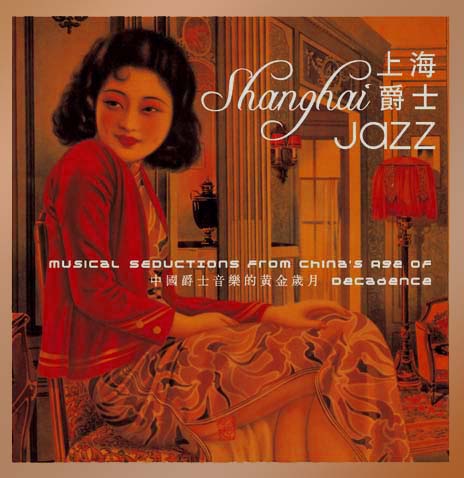
shjazzcover.jpg

This site publicizes the efforts of the Yellow Music Ensemble to revive his rich cultural tradition, through a series of albums which promise us "musical seductions from China’s Age of Decedence," a phrase which turns decades of anti-jazz criticisms among Chinese cultural and political leaders on its head, even as it continues to exploit western orientalist fantasies about musical exotica from the East. In explaining their name, the site suggests,

The term 'yellow music' was used as early as 1926 by May 4th musical reformers condemning the works of composer Li Jun Hui, labeling them as 'fleshy', 'pornographic' and 'decadent'. Fusing Chinese folk melodies with western jazz and the styles of such composers as George Gershwin seems innocent enough, but having them performed by rows of teenage girls 'clad in costumes that left their arms and legs unencumbered' , drew its' critics . This yellowness to which the authorities objected was not so much the exposed skin color or even the urban pentatonic quality of the music, but its' Chinese-ness, and perhaps its' blackness as well. During the 1920s jazz was racialized and assigned to the lowest rungs of the musical evolutionary ladder, the Shanghai Conservatory considered jazz to be 'a bad form of Western music' much the same manner as were Chinese folk tunes; 'primitive music composed with a pentatonic scale'. This is obviously not the case in the 21st century. We have revived this concept in describing the modern instrumental fusion of Chinese and Western musical styles.

The group has produced three albums so far, which don't seem to be for sale on the site. I have friends in China trying to track down copies for me. The site does offer some mp3 samples as well as an interesting video showing Shanghai Swing then and now. The design of the album covers evoke the aesthetics of old Chinese calendar art, a popular collectible among western visitors to this country, though I suspect few of them connect these amber images of beautiful women in traditional garb back to the thriving entertainment industry in Shanghai during the pre-war years

Field Notes from Shanghai: My Newest Avatar

Last time, I offered some perspectives on the current state of serious games in China, based on a conference I recently intended in Shanghai. Today, I want to share some other impressions of the place of popular culture and digital media in contemporary Shanghai based on other experiences and encounters I had in the country. MY NEWEST AVATAR

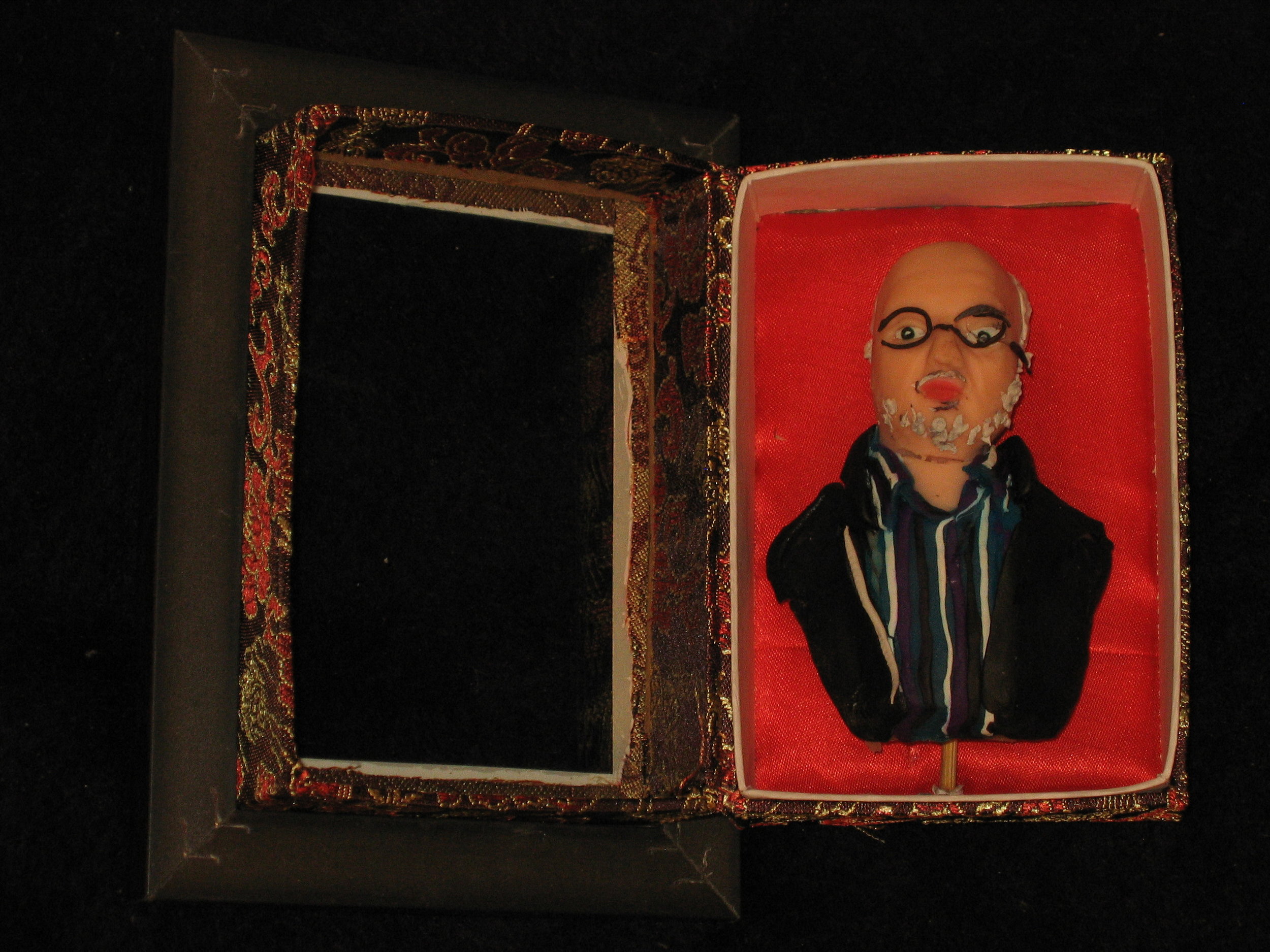
shanghai figure.jpg

While visiting the Yu Gardens, I stumbled onto a series of craftspeople from the region, including a sculpture who was producing likenesses of visitors by carving colored dough. Being obsessed with multiple personas, I could not resist the temptation to have him sculpt a "mini-me," my term, not his. The process took about twenty minutes from start to finish. Sitting for the clay portrait gave me a chance to watch him apply his skills as a craftsman involved in an activity which I am told goes back centuries. I have reproduced the likeness here (though the piece was damaged slightly during my trip back to the United States and seems to be falling apart day by day as the clay dries.) It was interesting to see what someone from another culture would emphasize in representing me. I'd just had a hair cut and beard trim before the trip so you don't get the full 'shaggy man' Henry look, but he does capture my salt and pepper beard. He spent a great deal of time trying to replicate the precise pattern and coloring of my blue and purple striped shirt. I was wearing my black leather jacket so you don't get to see my trademark suspenders.

The practice involves rolling very thin strips of clay which may be cut and shaped using tiny implements. He also mixes his colors from a more limited palette, a skill which especially came into play as he tried to match the coloring of my beard.

Games and Social Responsibility -- Perspectives from Shanghai

Shortly after the start of 2008, I traveled to Shanghai to attend the International Games and Learning Forum, an event organized by the MIT Education Arcade team in collaboration with Peking University and funded by the Hewlett Foundation. The gathering brought together some leading American thinkers (including Sasha Barab, Eric Klopfer, and Scot Osterweill) about the pedagogical potentials of games with their Chinese counterparts in education, government and industry. Special thanks to Alex Chisholm who organized the event. This fascinating series of conversations started broadly with a consideration of the current context of digital games in China and ended with a concentration on the value of games as a resource for teaching foreign languages. Here I want to share with you some impressions about the current state of games in China which emerged from these exchanges.

The concept of the 'social responsibility' of games companies was a much more central concept to these conversations than in an American context. The western discussion of 'serious games' is framed by the assumption that pedagogy is an unrealized potential of the medium but without any expectations that games companies have an obligation to create games which might transform societies. Perhaps because of the ways that media industries in China seek to walk a line between some emerging capitalist impulses/opportunities and an overarching state economy, the industry representatives at this event sought to continually reassure participants that they were fully aware of their ethical and social responsibilities. These responsibilities operate at multiple levels -- not simply a repressive notion of ethical responsibility (focused on what they exclude from games in order to protect impressionable young people) but also a generative notion (what they included in games in order to promote national culture or ethical self-consciousness). And it is this affirmative or generative notion of social responsibility which holds open the greatest promise in terms of promoting a serious games movement in China.

One attendee went so far as to link this focus on serious games to the United Nation's statement on children's rights which identified a 'right to play' as a fundamental expectation. (It's hard to imagine such a U.N. resolution playing a central role in any American discussion of games given our national disdain at the moment for such international agreements, but one can imagine such a fit carrying greater weight in China at a time the country is courting global respectability through hosting the Olympic games.)

Game Addiction

Let me break this down a bit more. First, I was struck by how little of the conversation about the negative social impact of games centered around issues of media violence or even sex. I had noted a similar disinterest in games violence when I had visited China five years ago in the wake of a tragic fire in a cybercafe started by a high school student frustrated that he was not being allowed to access the internet or play games. My essay on this incident for Technology Review is reprinted in Fans, Bloggers, and Gamers. Basically, I argue that the Chinese had little interest in the argument that games violence causing real world violence. Rather, the incident was read in terms of concerns about the breakdown of traditional community life and the loss of the moral influence of the extended family in Chinese culture, both of which were seen as a consequence of rapid cultural, technological, and economic changes. The incident was also read partially in relation to a focus on 'games and internet addiction.'

We need to be careful about taking this 'addiction' rhetoric at face value even though there are some highly publicized incidents where Asian youth played games to the point of physical collapse. For one thing, Chinese youth used cybercafes as their point of access to both games and the internet. To some degree, the Chinese government is using a rhetoric of addiction to rationalize their periodic crackdowns on young people's digital access, knowing that concern about media effects is more likely to be accepted by western governments. In that sense, addiction rhetoric does some of the same work that the Firewall does in terms of restricting youth participation in the online world.

The addiction rhetoric, though, carries force within China where it is connected to a number of concerns which the Chinese have about their children's culture. First, at a time when aspects of capitalism are reshaping Chinese society (especially in Shanghai), addiction rhetoric gives the Chinese a way to talk about the impact of leisure culture and consumer capitalism on their lives. Playing games is problematic precisely because it is unproductive (or seen as such). This focus on unproductive play rather than productive labor takes on particular significance when you recognize that time spent playing games was time “stolen” from exam preparation in a culture where one's future (and that of your family) often rested on how well you perform on standardized testing. It is the high pressure nature of Chinese education which helps to account for the attractiveness of games as a cultural outlet.

Of course, this focus on play is not unique to Chinese youth, even if the forms that play takes breaks along generational lines. On most residential streets, you can see people squatting around a card game, Chess, or Mah Jong, the game providing a context for face to face interactions within the adults of the community. Many of the public parks we visited on this trip included plastic playground equiptment, not aimed at small children but rather targeted at senior citizens, who used them to exercise. Seniors are being encouraged to play but that play is organized around keeping young and improving their physical health (that is, play is redefined as enabling self improvement). Chinese youth, by contrast, are more likely to be interacting online (or within the closed space of the cybercafes) and often to be playing games with people they do not meet face to face.

This brings us to a second aspect of gaming from a Chinese perspective: government policies have promoted birth control and the single child family. Several folks in the Chinese games industry stressed the ways that online gaming reflected the loneliness and isolation of single children who were forced to reach out beyond their own families or even local communities in search of playmates. Whether understood literally or metaphorically, this link between the one child family and the debates about games addiction helps to explain the intensity of this concern.

Finally, the games addiction debate takes on a historically and geographically specific reference point. Several of the speakers talked about the addiction to western games as the modern equivalent of the opium wars, with games suspected as vehicles for inculcating western values or simply as distractions which insured that Chinese youth would under-perform in other aspects of their lives. Here, we can read the introduction of games consoles alongside ongoing debates in China about the appropriateness of recognizing Christmas, an alien holiday which never the less fit well with the gift giving focus of traditional Chinese culture (and in effect, extended the shopping season around Chinese new year.) Walking around Shanghai one saw strange overlaps between the decorations that still lingered from Christmas sales campaigns and the decorations which had already appeared in anticipation of New Years celebrations. I was amused by a sign I spotted in the Shanghai airport wishing visitors a "Merry Chris". The rest of the world talks about putting the Christ back in Xmas, but here, it is the Mass which has dropped off altogether as Kris Kringle and not the Christ child becomes the icon for this merchant's festival. Games, not surprisingly, are popular gift purchases during these holiday seasons but like Christmas, they were often understood in terms of unwelcomed western influences upon Chinese cultural traditions.

So, on one level, the social responsibilities of games companies were framed in terms of managing games addiction with the companies falling all over themselves to talk about devices and programs they have developed to limit the amount of time Chinese youth spent playing games. There are parential controls which allow adults to set and enforce fixed limits on how long their children can play. And games produced by Chinese companies are designed to provide stop points appropriate for the anticipated limits set on game play. One speaker at the conference even suggested a plan which linked access to game worlds and assets to performance on exams. Good test scores might translate into tokens which could be redeemed in games, thus providing gamers with a stronger incentive to spend time studying.

There was also a great deal of discussion about the need to develop games which encourage families to play together, insuring that gaming helps to reinforce strong family ties rather than representing one more factor of modernity which separated youth from the influence of their parents. (This is a society where a group sitting down to lunch is still given a single menu with the expectation that the patriarch will order for the entire group.) One Chinese games industry speaker described the ways that games focused on national culture might bridge generation gaps: young people could use games to help older players to master new technologies while adults could use game play to transmit traditional cultural values and practices.

Serious Games

On the other hand, many of the speakers defined the social obligations of games companies in a more generative sense -- in terms of the introduction of elements into the game play which are seen in more positive terms by the adult society. Games in China, then, are seen as part of a national cultural policy aimed at restoring pride in Chinese history and cultural traditions, traditions which were severely disrupted by the Cultural Revolution and just now beginning to gain some traction in the society once again. Parents worry that their offspring are being drawn to alien cultural experiences --not only games but also anime and comics from other parts of the world -- rather than embracing aspects of their own cultural tradition which adults want to see transmitted to the next generation. The computer here is seen as an important educational resource, one which prepares Chinese youth for a greater engagement with the world beyond their borders.

At the conference, several Chinese game designers proudly displayed games which included historically accurate and precisely realized recreations of historical villages and cities from pre-20th century China. They have filled these historical recreations with artifacts replicated from cultural museums or used them as settings to re-enact cultural rituals, such as wedding ceremonies. Many of the games were based on classical Chinese literature, especially Three Kingdoms.(For more on the relation of games to Chinese cultural policy, check out this earlier blog post.)

One participant noted that western games did much better in the cities but Chinese games rooted in traditional cultures were expected by more rural consumers. Such a distinction makes sense if we see games as part of the process of modernization, westernization, liberalization, and capitalization of China. Those young people who will have the most contact with western travelers or business men were being educated through their play to understand the world beyond while those who would have the least contact were more invested in protecting their national culture from outside influences.

Social responsibility was also being expressed in terms of promoting games which encouraged ethical reflection and thus transmitted the country's philosophical traditions and in terms of the potential educational uses of games. Games companies had a much stronger commitment to the development of serious games, even though most of them were no closer towards developing a business model to support edutainment titles than their counterparts in the west.

One unfortunate downside of this emphasis on games as a means of transmitting national culture was a tendency to link the idea of educational games to a particular kind of content -- to this idea of historical reconstructions -- rather than to a pedagogical process. Several of us in the group of westerners attending the conference were struck by how little our Chinese counterparts spoke about game play as a learning process, saying very little about what you did in the games and much more about the worlds that players could observe. At a western conference on serious games, there is much more likely to be a schism between educators who have a curricular focus and game designers who insist that good game play is necessary for games to be able to motivate or facilitate learning. As a result of this conceptual gap, the two delegations spent a lot of time talking past each other rather than sharing insights about the challenges of designing educational games.

The western participants were more likely to embrace games in terms of a conception of enrichment activities -- things we might learn which went beyond national standards and exams. The Chinese were, as a whole, much more likely to embrace drill and practice models of educational gaming with all education understood in relation to school policies and testing practices.

Piracy and the Chinese Games Industry

This discussion was also shaped by the particular character of the Chinese games industry which is being profoundly shaped by the culture of media piracy. All we had to do was to walk outside of our hotel and we could see a thriving business in the sell of illegal copies of western media content -- games, software, films, television series, and music. I spotted several Hollywood films on dvd which had not reached the screens in the states at the time I had left for the trip. Walk anywhere in the city and you will get accousted by row after row of merchants asking you to "Lookie, Lookie" at their "Watches, DVDS, ipods, suitcases, pocket books, shoes", all knock offs or copies of western produced goods.

I spoke with one college aged young woman here who offered a range of explanations: western copyrighted materials were priced too high for most people to afford; the government set limits on how many western media properties could be imported legally and there was aggressive censorship of anime and manga (with almost no Japanese content available legally here). The black market was the only place they could go to access such cultural goods, allowing them to work around both political and economic obstacles to access.

Yet, the presence of the black market also made it difficult to make a profit off the distribution of their games in this country and caused equal difficulties for local games producers. The game company folks explained that there was almost no legal market in China for platform or pc based single player titles since there was no way to stop the rapid distribution of such materials at low prices through the black market. The only kinds of games which could make money were multiplayer games, where companies could create incentives for buying legal copies. These games were funded on subscription models or on the basis of the sale of assets and services. This focus on multiplayer experiences, then, forced the Chinese companies to compete within a space where production costs and labor demands are highest and this made it very hard for commercial companies to embrace a serious games model, even in the face of the other strong policy incentives for them to do so.

Another factor pushing against the wide spread embrace of instructional games in China has to do with the technical infrastructure of their schools. A government official from the Education ministry described a 10 billion dollar national program to insure that every school in the country had at least one computer. While Urban Chinese youth enjoyed increased access to digital technologies at home, at school, and through the cybercafes (more on this next time), the rural youth still had little or no direct access to computers. So, a school which has only one computer would not be equipt to integrate computer games into its normal instructional practices as anything beyond the focus for teacher demonstrations. No wonder there is so little focus in their thinking about game play experiences: games may be seen much more as a simulation technology performed in front of the classroom than as anything that young people get to actually play themselves.

Wu Ming on Convergence Culture

I was very flattered to have the Wu Ming Foundation write the introduction to the Italian language edition of Convergence Culture, which came out late last year. I have been corresponding with Wu Ming 1 off and on over the past year. You may recall the interview I did with Wu Ming 1 and 2 in the blog late in 2006. I've been dying to read what they have to say about the book and Wu Ming 1 just shared with me an English translation of their text. Their introduction does a first rate job of linking the arguments of the book to the current work I am doing on new media literacies, mostly by relying on content originally published on this blog. They open with some interesting comments about what my book might contribute to European discussions of popular culture and cyberculture, which I thought would be of interest to my readers here:

In the best of possible Italies, the publication of this book would be a telluric event, one that would shake the debate on the Internet and the new technologies of communication. If nothing happens, not even a twitch, it will mean that there's no actual debate, no semblance of life, only a deserted house with loose shutters in the wind. In comparison, poltergeist activity in a graveyard will sound like Rio de Janeiro's carnival.

Convergence Culture is a revolutionary work in many ways. It remains a fascinating and comprehensible reading all the way through, and it's crammed with examples and evidence. The works of European theorists are often cited, explained in a vivid language, and used to analyze concrete behaviors and practices, with none of the original intricacies. It works like magic: in the pages of this book any obscure convolution turns to crystal-clear, no-nonsense talk. Professor Jenkins plunges into the culture of our time and gives an accurate picture of how the new technologies are changing it, then he re-emerges and gives us a report not so much on the media, but on the people who are using them to communicate. The picture shows us, all of us.

A propos of this, it is necessary to make a distinction clear.

In Italian, by "cultura popolare" we usually mean folk culture, a pre-industrial heritage whose manifestations have managed to survive until today. Sardinian cantores and tarantella dances are cultura popolare. Those who use the phrase in other contexts do it with reference to the English homologue "popular culture", which is more commonly translated as "cultura di massa". Although the latter expression also exists in English ("mass culture"), it may cause equivocation and - as Jenkins observes - there are different shades of meaning between "popular culture" and "mass culture".

Equivocation: la cultura di massa is transmitted through the [mass] media (cinema, tv, print etc.), but it isn't necessarily aimed at the big masses. It may also include music addressed to a niche of listeners, or cinematic sub-genres appealing to specific subcultures. In fact, the majority of today's cultural products are not di massa. We live in a world of countless niches and subgenres. The mainstream, what we call "il nazional-popolare", is far less important than it once used to be, and it keeps getting smaller.

Shades of meaning: the expression "mass culture" stresses the way this culture is transmitted, i.e. through the media. On the contrary, "popular culture" emphasizes the role of the people who receive it and then reappropriate it. Usually, when we talk about what a song or a film means in someone's life ("Listen, it's our song!"), or how a crime novel or a comic book influenced its era, we call it "popular culture".

The problem is that, ninety times out of a hundred, the Italian debate on pop culture focuses on junk TV, as if that were the only way to be "popular", as though there were no quality distinctions and historical evolutions, as though Sandokan, Star Trek, Lost, TG4 and Beauty and the Geek were all of the same mould. It's like saying that there are no differences between Bruce Springsteen, REM, Frank Zappa and Shakira, and no possible distinctions between Stephen King books and Totti-joke collections, since both categories of books hit the top charts.

There are two armies fighting each other, and we should stay away from both of them. On one side are those who shield behind the "popular" to produce and peddle crap. On the other side, those who despise anything not aimed at an elite audience or readership.

These positions are perfectly symmetrical, they feed each other and share common views. One is that pop culture only addresses mute audiences probed by people meters, masses that express themselves only as percentages in opinion polls or figures at the box office.

And here's another merit Convergence Culture has: it gets to the roots of equivocation and puts them out. The focus shifts from an inextricable tangle of banalities to a new perspective, a way of tackling all issues by redrawing known boundaries and barricade lines.

Next Time: Thoughts on the Serious Games Movement in China

Resources for Science Fiction Fans

For science fiction fans, let me suggest two potentially interesting links. Flow TV recently ran a special issue last month focused entirely around Battlestar Galactica, including an interview with Mary McDonnell (Laura Roslin on the show), reflections by Bob Rehak on the role of remakes and reboots in contemporary television, Sarah Toton's thoughts on the Battlestar Wiki, Anne Kustritz's reflections on the interplay between the series producers and their fans, and a piece from Julie Levin Russo which gets billed as 'A transmedia love story''. (My wife and I have spent the past four months madly trying to catch up on the series through a combination of dvds and downloads. We've now caught up and are waiting for the return of the series later this year.) Fun, Fun, Fun! The second comes curtesy of Reason Magazine's Jesse Walker, a regular reader and sometimes commentor on this blog. Jesse sent me a lead to io9, a blog which describes itself as "strung out on science fiction." I certainly know where you are coming from, dude, and feel your pain. There Annalee Newitz has put together a chart which shows the ideological shifts that occur in Doctor Who over time with The Doctor sometimes seen as preserving the status quo and other times fermenting revolt among the underclasses. Newitz shows how these shifts in ethical and ideological frameworks correspond with shifts in political leadership in the United Kingdom, though readers write in to suggest a range of other factors explaining some of the philosophical inconsistencies of the show.

American Idol and the Variety Show Tradition

I also recently had a chance to contribute a guest blog for the PBS Remotely Connected Site. I was asked to write about a current PBS series, Pioneers of Television, which is a first rate exploration of tv history featuring interviews with more than a hundred key players in the early history of the medium. My post dealt primarily with an episode centered on variety programming. Near the end of the post I made an argument that in many ways American Idol has taken on some of the functions which variety programming used to serve. I wrote:

Vestigial elements of variety survive. If the episode had paid more attention to amateur variety competitions, an important sub-genre which goes back to Major Bowles on radio and Godfrey on television, we would see the clear links to contemporary series, such as So You Want to Dance, Dancing with The Stars, Americas Got Talent, and of course, American Idol. Such talent competition series fuse aspects of the game show and the variety traditions, even if they are now lumped into the larger category of reality programming. Consider some of the similarities:

  • These shows are often performed live, much like the earlier variety shows.
  • These shows are much more likely to be watched as they are aired than other contemporary programming, helping to create that sense of a national audience.
  • These shows are more likely to be watched in a social context, whether among family members or roommates.
  • The performances provide music, while the judge offer recurring comic characters.
  • Such programs combine classic old songs with emerging performers, much like the repertoire of Tin Pan Alley standards which were the stock and trade of variety show musical numbers.
  • Such programs offer constant shifts in style which move up and down the taste hierarchy -- ballroom dancing one week, hip hop moves the next.
  • Hosts like American Idol's Ryan Seacrest play much the same functions that Ed Sullivan performed on his program, introducing the performers and warming up the audience between acts.

The Writers Strike and Transmedia Entertainment

I was going to run a series of short items today. I am experimenting with breaking these down into a series of smaller posts, instead. I have not had a chance to write extensively here about the Writers' Strike. By this point, there are some very good discussions of the strike out there by other media researchers which more or less say what I would have said on the topic. For example, check out Jason Mittell's Post. I did participate in a discussion on the future of online content early this year organized by newteevee.com. Here's what I said there about the likely impact of the strike:

The writers' strike is a struggle over transmedia content and as a consumer, I certainly hope that the writers gain significant ground in their current efforts. As long as the media companies see online content purely in terms of promotion, they will not fully integrate it into the storytelling system. As long as creatives see generating 'extensions' as extra unpaid work, they will not put their best effort into this content.

The other interesting thing about the writers' strike as it intersects online video is the fact that the writers have been so much more effective than the producers at using YouTube and other online platforms to get their messages out to the public. Most mainstream media coverage of the strike has focused on how it inconveniences consumers -- after all, it is being produced by the same companies the writers are striking against. But the writers have been inventive at generating compelling online video which does get spread by their consumer base and helps to explain the underlying issues of the conflict. If nothing else, this shows how much better they understand the new media ecology than the people they are working for.

My Own Personal Writer's Strike...

Hi gang! I'm back after a somewhat longer hiatus from blogging than I had initially anticipated. I haven't posted new content on the blog in almost a month. I've been joking to people that I declared my own personal writer's strike. In reality, my absence has been caused by several factors: for one thing, we've been transferring the blog to a new server and setting up some new systems which should allow us to post comments more promptly and should result in less frustration all around. But secondly, I have needed to focus my energy on catching up on some other writing projects including some significant revisions of Convergence Culture as NYU Press gets ready to issue the paperback edition of the book. And finally, I've spent the last week or so in Shanghai attending a conference on games and education. You will be seeing a burst of posts about my China experiences over the next week or so.

Now for the sad news: I've struggled for some time trying to figure out how I maintain the pace of this blog, given increased demands on my time on other fronts. The past few years have been transformative in my career, with each week opening up new opportunities. I have a bad habbit of saying yes when confronted with an interesting invitation or when given a chance to do something I've never done before. I am on the road someplace almost every week and I am trying to manage an expanding portfolio of research projects back at MIT.

When I first started the blog, the advice I got was that the only way to sustain such an activity was to take deadlines seriously. You should figure out how many times a week you want to post, set a schedule for yourself, and stick with it. Naively, I figured I could put out content five days a week and I promised myself that I would do my best to hold to that schedule for the first full year. I succeeded. In that first year, I didn't miss a single day and I think the richness and diversity of my output speaks for itself. By last summer, I was finding it harder and harder to sustain that pace, but the Gender and Fan Culture series helped to reign in my panic because it meant that I needed to produce content for only three days a week. By the end of last term, I was having trouble doing that and so I missed some days there near the end of the year, which made me unhappy with life.

My new year's resolution, thus, is to lower the pressure on myself a bit more by stating outright that I am going to be producing content three days a week. Some weeks I may be able to do better than that, but let me lower expectations a bit. I doubt that there are very many readers out there who fully read everything I post now.

Cutting back will have some impact on the diversity of what I can cover clearly and as it was, there were topics that I wanted to write about – J.K. Rowling's outing of Dumbledore, the Writers' Strike being two examples – which I just couldn’t find time to catch up on. So, this will still be a source of tension for me, but I think life will be better if I scale back just a little bit.

I have no desire to stop blogging, altogether. Have no fear. Doing this blogging has been an enormously rewarding experience for me. Almost everywhere I go these days, I meet people who are reading the blog and I love the chance to talk with them and get their perspectives about what I've written. I confess to being totally addicted to the various blog search engines especially with seeing what other bloggers have to add to the discussions we’ve started here. When I first graduated from college, my goal had been to become a professional journalist but I wasn't able to find full time employment. In some ways, blogging has allowed me to merge the career I thought I wanted (as a journalist) with the career I have pursued (as a college professor). Writing in the blog has forced me to find ways to be even clearer and more accessible in my prose as I have been able to build up a readership here which is overwhelmingly composed of people who are not academics.

Through the interviews and guest blog posts, I have been able to expand public awareness of the work of many other media scholars and in the process, have helped to mentor them about what is involving in expanding the readership for their work. I have been able to use this blog to host important conversations in our field, such as the marathon series of exchanges on gender and fan culture we ran starting in the summer. I hope to hold other such conversations in the future. Hosting the blog has allowed me to share some of the outstanding work of my students and colleagues to a larger public and has given me a chance to collaborate with some alums of our program as they share their interests with this community.

The blog has had a huge impact on the admissions for our graduate program. More and more of the students applying understand what is unique about our program. As a result, we are getting students who are more motivated to take advantage of the opportunities we offer. They become regular readers of the blog once they are accepted and thus come to campus already feeling a part of the CMS community.

The blog has also helped our alums to feel more attachment to the program and maintain greater awareness of what we are trying to accomplish. The blog has helped to bridge between a range of different conversations about media change including those involving fans and gamers, within the brand and entertainment industries, among media literacy advocates, and among academic media researchers.

Having a regular channel through which to share my insights to the world has increased my professional visibility, calling my work to the attention of researchers in a range of different fields and dramatically increased speaking invitations. It has also allowed me to help set the agenda for how media gets covered in the press with a growing number of reporters using the topics we discuss here as a spring board for stories.

Convergence Culture has probably sold more copies than my other eleven books combined and I am certain a large portion of those sales can be traced back to the ways that this blog has increased public awareness of my work. In this case, as in many others, giving away a daily sample of my content for free has increased public interest and resulted in more book sales, not fewer. So, for these and countless other reasons. I am finding the time I pt into this blog as intensely rewarding. But I do need to cut back just a little on the time I put into this project if I am going to do justice to all of the other things people want me to do.

I've said it before and I will say it again. I see this blog as an experiment in how academics might use emerging technologies to expand their role as public intellectuals. For too long, academics were dependent on old media channels to get their ideas out to a larger public. One of my early blog posts centered on my concern that academic publishing had become a kind of ghetto which was cut off from the larger conversations which impacted our culture. I had hoped that blogging might provide an alternative means of circulating ideas and engaging in conversations.

In doing so, though, I did not want to give up on those things I value about academic writing -- the ability to connect local or topical issues to much larger, more abstract concerns; the ability to dig into substantive issues in a deeper way than would be possible through a mass media channel; the ability to provide a historical context for contemporary developments or to deal comparatively with developments in different national contexts or within different media sectors. All of this requires depth and doesn't result in the short posts which have typically characterized other forms of blogging.

The length of my posts remain one of the most controversial aspects of this blog. Some people bust me for writing too much, saying that what I do isn’t really blogging. For me, what makes blogging exciting is that when we step outside of commercial contexts, space limits become relatively arbitrary and people are free to do their own things using the new media platforms. In general, I find that my longer posts get more discussion, not less, despite those who insist that if I wrote shorter, I would have greater impact. I am finding blog posts are getting cited in academic papers because they gain some element of scholarly respectability even as they are being used as springboard for casual conversations among my regular readers because they maintain timeliness. I am going to try this year for some posts that are shorter but I don't think I can or want to move away from the longer posts which have been an aspect of this site from the start. If you want shorter posts, there are many other very good blogs out there to read. And in any case, I try to write even my longer posts in modular units which make it easy for people to duck in, read as much as they want, skim through the rest.

We are still working on finalize the new comments mechanism for the site. Be patient a little longer and we hope to improve a situation which has long frustrated me and many of you.

Futures of Entertainment Podcasts

This will be my last post of 2007, barring unforeseen circumstances. The blog is going to go down for a little bit to allow us to switch servers and hopefully provide better service in the future. The blog is also going down because I am exhausted from the term, want to spend time with my family, and need to catch up on other writing and regroup my thoughts so that I have interesting things to share with you all when I return next year. Before I sign off though, I wanted to let you know that the podcasts of the Futures of Entertainment 2 conference are slowly but surely being posted on the CMS homepage. So far, the following podcasts have appeared:

Opening Remarks by Joshua Green and myself, laying out what we see as some of the most important media trends of the past year.

Metrics and Measurement

Panelists: Bruce Leichtman, Leichtman Research Group; Stacey Lynn Schulman, Turner Broadcasting; Maury Giles, GSD&M Idea City

As media companies have come to recognize the value of participatory audiences, they have searched for matrixes by which to measure engagement with their properties. A model based on impressions is giving way to new models which seek to account for the range of different ways consumers engage with entertainment content. But nobody is quite clear how you can "count" engaged consumers or how you can account for various forms and qualities of engagement. Over the past several years, a range of different companies have proposed alternative systems for measuring engagement. What are the strengths and limits of these competing models? What aspects of audience activity do they account for? What value do they place on different forms of engagement?

Fan Labor

Panelists: Mark Deuze, Indiana University; Catherine Tosenberger, University of Florida; Jordan Greenhall, DivX; Elizabeth Osder, Buzznet; Raph Koster, Areae

There is growing anxiety about the way labor is compensated in Web 2.0. The accepted model -- trading content in exchange for connectivity or experience -- is starting to strain, particularly as the commodity culture of user-generated content confronts the gift economy which has long characterized the participatory fan cultures of the web. The incentives which work to encourage participation in some spaces are alienating other groups and many are wondering what kinds of revenue sharing should or could exist when companies turn a profit based on the unpaid labor of their consumers. What do we know now about the "architecture of participation" (to borrow Kevin O'Reilly's formulation) that we didn't know a year ago? What have been the classic mistakes which Web 2.0 companies have made in their interactions with their customers? What do we gain by applying a theory of labor to think about the invisible work performed by fans and other consumers within the new media economy?

And don't miss the webcast of the MIT Communications Forum event, Forum: NBC's Heroes: "Appointment TV" to "Engagement TV"?

The fragmenting audiences and proliferating channels of contemporary television are changing how programs are made and how they appeal to viewers and advertisers. Some media and advertising spokesman are arguing that smaller, more engaged audiences are more valuable than the passive viewers of the Broadcast Era. They focus on the number of viewers who engage with the program and its extensions -- web sites, podcasts, digital comics, games, and so forth. What steps are networks taking to prolong and enlarge the viewer's experience of a weekly series? How are networks and production companies adapting to and deploying digital technologies and the Internet? And what challenges are involved in creating a series in which individual episodes are only part of an imagined world that can be accessed on a range of devices and that appeals to gamesters, fans of comics, lovers of message boards or threaded discussions, digital surfers of all sorts? In this Forum, producers from the NBC series Heroes will discuss their hit show as well as the nature of network programming, the ways in which audiences are measured, the extension of television content across multiple media channels, and the value producers play on the most active segments of their audiences.

Keep an eye on the Comparative Media Studies Program Home page and the Futures of Entertainment 2 Conference website for the roll out of the other conference podcasts.