Bitch Ass Darius "Follow The Sound" Mixtape

This is the fourth in a series of "intimate critiques" produced by masters students in my Media Theory and Methods proseminar. Here, Kevin Driscoll walks us through the process by which he learned to hear and appreciate a mix tape which initially challenged him both formally and ideologically. In the process, as a young white male, he confronts some explicit lyrics which force him to re-examine some of his assumptions about race, class and sexuality. This essay may take some readers out of their comfort zone -- and that's part of its point, since he is trying to explain how we renegotiate our senses of ourselves when we encounter forms of expression which do not fit our norms or pre-established tastes. Bitch Ass Darius "Follow The Sound" Mixtape

by Kevin Driscoll

The CD itself is rather unassuming. Sleeveless, its face bears a name and phone number handwritten in Sharpie. Flip the disc over and you might suspect it is blank. The area pock-marked with data stretches from the center hole to just before the outermost edge. Drop it into a CD player and you'll discover that there are eighty tracks, few of which extend beyond sixty seconds.

I met Joe Beuckman in the summer of 2003 when we performed together in a small artspace located inside one of dozens of post-industrial hulks scattered around Allentown, PA. He gave a demonstration about reverse engineering Nintendo cartridges, showed off a vinyl record used to store executable computer instructions, and then scratched that record over Three 6 Mafia's "Sippin' On Some Syrup" while shouting, "I'm scratching data right now!" I introduced myself after the show and he gave me CD-Rs containing the latest mixtapes from two of his DJ alter-egos: Kenny Kingston and Bitch Ass Darius. Kenny Kingston is a lover of early-90s dance music: house, hip-hop, r'n'b, and new jack swing. Bitch Ass Darius plays a mixture of Miami bass, acid house, and pitched-up Detroit techno known occasionally as "ghettotech" or "booty bass". While I found familiarity, comfort, and nostalgia in Kingston's pop-heavy mix, everything about Darius' mix, from the super-fast tempo to the puerile lyrics, felt alien and alienating.

Despite (or perhaps because of) my utter inability to relate, I did not discard Follow The Sound but continued to return to it. As I grew more affectionate of the recording, I became more literate in its governing logics. This change happened with the same slow haze that enshrouds the acquisition of any new language. Meaning and distinction emerge from the undifferentiated whole as the gradual process of Platonic recollection plays out. Details pop into relief along the surface of the text that can be used to uncover further information. A snippet of one lyric is found repeated in the title of song on another mixtape. In time, I began to construct a likely tracklisting, to understand the recording and performance technique, to relate with the lyrics, and to imagine and embody the physical movement booty music is designed to accompany and control.

This passage from confusion and alienation to conversant literacy and familiarity necessarily involved a confrontation with the uncommon lyrical content of most booty music. In 2003, I (somewhat naively) considered myself anti-racist, a feminist, and self-reflective about my own privileged social status. Gripped by a fear of repeating patterns of domination, I avoided all but the most clearly "safe" heterosexual scenarios. As such, most of my intimate encounters took on a tone of conservative sexual diplomacy and made no room for the absurd, titillating application of domination at play in lyrics like "girl, let me nut on your face / and let me know how good it tastes." By struggling to understand this strange music, I was forced to put my own sexual practices in question.

Constructed in the tradition of non-stop DJ mixtapes found in hip-hop, dancehall reggae, house, and techno, Follow The Sound differs significantly from the compilations traded among fans of other musical genres. The mixtapes discussed in this essay are collections of sound recordings gathered from different sources and collaged by an individual DJ using tools for sound manipulation, playback, and recording. While a personal computer can perform all of these tasks, it is common for mixtape DJs to deploy some combination of analog and digital technologies in their production process. Turntables, CD players, analog mixers, samplers, microphones, and tape machines sit alongside personal computers in the mixtape studio.

Listeners construct an image of a traditional recording artist by reading the voices, instrumental performances, and deployment of studio technology on a track. It is not possible to locate the mixtape DJ using these signs, however, as few of the tracks feature newly recorded vocal or instrumental performances. Rather, the DJ reveals or obscures her position in the text through strategic sonic interventions, specifically, the selection, sequencing, remixing, and blending of existing tracks, the inclusion of voice-over and/or sound effects, and the improvised (often atypical) application of studio technologies. Though only a handful of the eighty tracks on Follow The Sound feature original production by Bitch Ass Darius, the DJ is nonetheless embodied in the recombinant whole. Using three turntables connected to a mixer, Darius is able to synchronize and layer multiple existing recordings to create a new continuous piece of music. In addition, rather than smoothly blend one track into the next, he calls attention to the seams between various recordings through deployment of conventional DJ transitions: scratching percussive snippets of an incoming track, suddenly turning off the motor of a spinning platter, or manually rewinding an outgoing track while slowly reducing its volume to create an ascending "zip-zip-zip" effect.

Drawn from over two decades of electronic dance music, many of the tracks on Follow The Sound share certain formal characteristics that unify the mix and enable imperceptible transitions between existing recordings from different sources. Most of the tracks are in 4/4 time and feature a handclap, snap, or snare drum on beats 2 and 4. They are also synchronized to approximately 150 beats per minute and usually aligned such that the first beat of an incoming track matches the downbeat of the track (or tracks) currently playing. To achieve this synchronization, Bitch Ass Darius uses turntables with variable speed motors to adjust tempo. The use of similar synthesizers, drum machines, and samples among dance music producers further facilitates this process of layering, stacking, and blending tracks.

Not all of the songs on Follow The Sound were unfamiliar on my first listen. Track 24 features Michael Jackson's "Rock With You" played atop a sparse acid house track built of a hi-hat, clap, and a synthesized bass line. To match the relatively slow original Jackson recording with the fast tempo established earlier in the mix, the vinyl record designed to be played at 33rpm is "pitched up" by setting the turntable to spin at 45rpm. Although this technique yields the desired tempo, it substantially distorts the pop recording, producing a "chipmunk" vocal effect. Isolated from the rest of Follow The Sound, this disruption would sound uncomfortable to listeners familiar with the original version. In the context of the mix however, this alteration is coherent and consistent with an established logic.

An important distinction between Beuckman's Kingston mix and his Darius mix is the nature of the source materials. In the case of Kenny Kingston, many of the original recordings are songs that follow a traditional pop structure. Their composers anticipate that the recordings will be heard from beginning to end as they would on typical pop radio programming. The tracks on Follow The Sound, however, are primarily composed with a DJ in mind. They often feature long repetitious passages to facilitate blending and synchronization. This shift in imagined audience on the part of the tracks' composers indicates an important distinction between the dance music following in the disco tradition and the rest of Western popular music.

To understand Follow The Sound, I needed to learn how the logics of disco-derived dance musics contrast with the rest of pop music. The clearest distinction is in the division of labor between the producers of recordings and the DJs who present those recordings to the public. In some dance musics, the marketplace mirrors this separation. Vinyl singles are printed in limited qualities and marketed to DJs who then play the tracks in clubs, on the radio, and on mixtapes for the general audience.[1] Whereas the value system at play in many traditional genres of pop music demand that the application of sound recording apparatus be limited to the creation of accurate representations of historical events [2], dance musics necessarily distinguish a musical recording from a musical performance and treat the construction and assembly of an audio recording as a creative end in itself.

Beyond the technical concerns of the recording studio, dance music producers must imagine the audiences and contexts for whom and within which their recordings will be played. While it is not uncommon to hear dance music used as retail ambiance, employed in scoring films, or playing out of car stereos, headphones, and radios, this essay concerns those recordings constructed specifically to be played on a sound system to a group of people in an environment that permits and encourages dancing. To engage with the bodies of an unseen audience is at once a mysterious and an intimate act requiring producers transcend the contrast between a typical music studio and nightclub dancefloor.

I have twice referred to disco as the antecedent for the music found on Follow The Sound. I make this connection because disco's core innovations have been carried through several generations of dance music to find themselves echoed in the essential framework of booty bass. In the 1970s, disco producers brought a straightforward drum pattern to the front of the mix by simplifying some of the swing and syncopation of funk, soul, and r'n'b. (The Black and gay roots of disco complicate the arguments of critics who suggest this "simplifying" was also a "whitening".) Typically organized in 4/4 time, disco established the dominance of "four on the floor" drum patterns in which the bass drum is struck on all four downbeats while the snare is played on the second and fourth. Disco singles were also the first records to be pressed onto 12" vinyl, a size typically reserved for full-length albums. This permitted the production of much longer versions of songs and lead the way for the lengthened intro, break, and outro passages in which a song is stripped down to its barest parts. With the availability of these records and their shared "four on the floor" drum pattern, nightclub DJs soon developed an overlapping style of mixing records that maintained a steady rhythm throughout the evening. Thus opened a transit of inspiration, need, innovation, and fulfillment among the producers of musical recordings, DJs, and dancers.

To attend to the needs of a live mixing DJ and a dancing audience, disco records vary little in their core rhythmic pattern and tempo. In the 1980s, disco was superseded by house, techno, and bass music in the U.S. and the distinctions between dance music and traditional popular music genres became more clear. Producers of dance music, aware of the DJs future interposition, tend to delay (or altogether deny) the visibility of a central melodic figure in their compositions, upsetting one of pop music's cornerstones: the hook. Pop's verse / chorus structure also gives way to highly repetitive compositions that gradually vary in timbre and instrumentation over the course of a track with no identifiable resolution.

These changing production concerns reflect changing expectations and demands on the part of dancing audiences. Whether at a nightclub, a hall, a bar, a gymnasium, or a living room, the dancefloor is a social space that encourages an emphasis on embodiment. Drowned out by loud music, verbal communication gives way on the dancefloor, and the dancer's public performance of identity is centered on the movement of his body. By joining the dancefloor, the dancer has entered into a new trusted relationship with the DJ and the music being played. If the sequence of songs progresses in a sufficiently familiar fashion, he will be able to establish a comfortable sense of himself and his place within the dancing crowd. With subtle shifts, raised tempos, or tonal transitions between each track, the DJ can thus carry this dancer from a familiar sonic space to a fairly alien one without damaging his sense of trust and comfort by causing him to falter or feel otherwise embarrassed.

Tempo and timbre can be shifted subtly on the dancefloor without disrupting the dancer's experience of self. The introduction of lyrics, however, requires its own consideration. In a loud nightclub, lyrics, whether in a familiar language or otherwise, necessarily introduce a power imbalance. Dancers have no voice and are thus spoken for by the voices in the recordings selected by the DJ.

Since disco distinguished club music from pop, dance musics have struggled with their relationships to lyrics. One role of lyrics in dance music can be to affirm, motivate, and direct dancers. The most didactic example of this type being the square dance caller. Various subgenres and producers take different approaches to the deployment of voice and verbal signs. Some focus on vaguely affirmative lyrics about dancing and partying ("Move your body!"), or positive messages ("I'm feeling so free!"), some opt for looping familiar phrases sampled from rap acapellas or film soundtracks, while others still forgo lyrics altogether to produce strictly instrumental music.[3]

Taking its cue from the sex rap found in Miami Bass, booty bass lyrics represent a sophomoric approach to sexuality. They typically feature snippets of schoolyard sex talk repeated ad naseum such as:

"Hit it from the back / Let me bang / Hit it from the back / Let me bang / Hit it from the back / ... " (etc., etc.)

During my first listen to Follow The Sound, I recall laughing out of discomfort and surprise at lyrics like, "Big booty bitches / They talk a lot of smack / Bring your ass here / And ride on this dick". I tried to mitigate this discomfort by exoticizing the lyrics and acting as though they were of an alien culture I could no more understand than judge. Yet as I was drawn deeper into the music, through repeated listens and exposure to other DJs, artists, and - most importantly - dancefloors, I had to challenge this uncritical approach.

By reading the lyrics literally, I was ignoring their role inside the logic of dance music. If the dancefloor is a place where it is safe to move one's body in unusual ways, perhaps it is also a space where the embodiment of the sex act can be exposed, toyed with, and manipulated. Like sampled drum hits and sped-up Michael Jackson songs, the coherency of booty bass lyrics is threatened by decontextualization.

The boundaries are flimsy between the technical and social structures of booty music. For example, the practice of "pitching up" records complicates typical gender performance and sexuality among vocalists. The following lyric is sung in a gender-ambiguous high-pitched voice to a feminized "girl":

"Every freaking day / Every freaking night / I wanna freak you girl / Your body is so freaking tight"

Often, the mention of particular sexual organs or gendered slang is the only way to visualize an orator. In several tracks, a call-and-response takes place between supposed male and female voices. For example, on track 19, we hear the following exchange:

F: Nigga what's your cheddar like?

M: Bitch, you know my cheddar tight.

F: Nigga, what's your ride like?

M: Bitch, you know my ride tight.

F: Nigga, what's your tongue like?

M: Bitch, you know my tongue tight.

F: Nigga, what's your dick like?

M: Bitch, you know my dick tight.

This preposterous conversation overgrounds the most subterranean inner-dialogue of the sexually-charged dancefloor. It amplifies the basest voice of the dancefloor id. The joy I find in booty bass is not simply the naughty thrill at hearing sex chat but is in the liberating potential of a construction of sonic space in which sexual desire, fetish, and perversion are no longer taboo.

The experience of dancing to these tracks in trusted spaces challenged my assumptions about sex and power. By treating sex like a courtroom proceeding and trying to remove all hierarchies from the physical interplay, I was actually maintaining my hegemonic power over the relationship. If there is no space to be be a "freak", to say and do freaky things, then the "safety" I sought has not actually been established. The absurd lyrics by DJ Nasty, DJ Funk, and DJ Assault all revel in these moments of "freakiness" where people willingly submit to themselves and their partners. By exploring these themes and ideas through movement on the dancefloor, I learned to complicate my own understanding of sex and sexual desire.[4]

Footnotes

[1] This model is quickly collapsing as the reduced costs of online distribution and digital DJ tools remove the need for pressing vinyl records.

[2] Consider on-going controversy surrounding authenticity and the use of pitch-correction software in country music. In 2003, singer Allison Moorer put stickers on her CDs that read, "Absolutely no vocal tuning or pitch-correction was used in the making of this record." (www.soundonsound.com/sos/oct03/articles/vocalfixes.htm ) Notably and consistent with a history of creative appropriation, hip-hop producers have recently begun to deploy the maligned "auto-tune" software in unexpected ways.

[3] Although it is beyond the scope of this essay, it is interesting to consider the role of language in the global movement of dance musics. How do verbal samples function differently as they move among communities and changed territories? There is considerable opportunity for an investigation of the materiality of voice, exoticism, and globalization in the ways that various dance musics carry with them vocalizations in Brazilian Portuguese, Puerto Rican Spanish, Jamaican Patois and countless other languages, slanguages, and dialects.

[4] This discussion of Bitch Ass Darius is a first attempt at discussing the thorny topic of sexually and racially charged lyrical content. As such, it fails to address some very important issues that were no doubt raised in the minds of its readers. Chief among them are the racial dynamics at play in the popularity of booty bass and my own use of a racially unfamiliar, geographically remote culture to explore my own (heterosexual, White) discomfort. The vast majority of booty bass is produced by African-Americans living in Chicago and Detroit. The use of African-American music to explore sex and embodiment by White audiences is a well-documented and a recurring pattern of appropriation that debases and essentializes Black Americans. In addition, the "safety" of the dancefloor I describe above is highly variable. In the same group of people, conditions that feel "safe" to one participant can very reasonably be threatening to another.

Kevin Driscoll

Assumption College, BA Visual Art 2002

Kevin Driscoll earned his BA in Visual Art from Assumption College in 2002. He joins CMS after three years teaching Computer Science at Prospect Hill Academy Charter School in Cambridge, MA. There he explored issues of identity management, media production, literacy, hacking, and hip-hop with the consistently brilliant students in grades 6-12. Inspired by a challenging first year in the classroom, Kevin co-founded a non-profit organization called TeachForward (later re-named Developing Curriculum, Inc.) to encourage the sharing and development of high-quality, free learning materials on the web. In addition to his work in education. Kevin is a frequent collaborator with internet-based artist Claire Chanel and a hip-hop dj responsible for Gold Chain and Todo Mundo events. Check out his blog at

http://kevindriscoll.info/todomundo.
My Mary Sue: What Fanfic Noobdom Reveals about Scholarly Methods

This is the third in a series of "intimate critiques" or autobiographical essays produced by graduate students in the Comparative media Studies Program. This essay, in particular, works through some of the methodological issues we've been studying this term, having to do with what one sees as an ethnographer working inside or outside the group they are studying. It also connects to an ongoing conversation we've been having in the program about whether or not the concept of "fandom" can be applied to talk about our relationships to high art or middle brow culture. Here, Lana's essay explores how seeing Les Miz on Broadway made her an active and appropriative fan of a literary character, even if she saw what she was doing as somehow distinct from fan fiction. My Mary Sue:

What Fanfic Noobdom Reveals About Scholarly Methods

by Lana Swartz

When I was in the seventh grade, we went on a class trip to New York City. I attended a public arts magnet school, so our tour filtered the city into an art shrine. We went to all the museums, the concert halls, and of course, to see a Broadway show. It was 1993 or so, so Les Misérables was well into its long run at the Imperial Theater but had lost little of its gusto. I can remember thinking, a year or so later, that my life could be divided into two halves--the time before I saw Les Misérables and the time after. Yes, I actually did think that very phrase. I probably even wrote it down. Even now, as I joke about it, I don't want to describe what it was like to see the play because the doing the work of that describing would be too emotionally intense. Seriously!

And here is list item #1-- Be Respectful. See how terrifying this is? Everyone feels this vulnerable when they talk honestly about their lives. It is absolutely essential that we as qualitative researchers not cut corners, not totalize someone else's life to fit into our academic goals. As hard as it is write about our passions, to be prepared to present them to our peers, it is a lot more difficult to read what someone else has said about them. Joan Didion, that scary lady, once wrote, "Writers are always selling someone out." That may be unavoidable, but we can try. And maybe that's the difference between writers and scholars? And maybe we--and by "we," I mean, "I"-- can remember the paralysis I felt just a few paragraphs up when I tried to write about something very pleasant that happened close to fifteen years ago.

But okay here goes. The most important thing about Les Miz is that there is a character named Enjolras. Enjolras is not a main character. He's the leader of the young would-be revolutionaries who chastises a fellow would-be revolutionary, the dreamy Marius, for falling in love, as love simply distracts from revolution. Enjolras (he was played by Ron Bohmer--an actor whose autograph I currently possess) is tall and blond and uncompromising. He dies heroically, though, sadly, more as more of a symbol than an agent of change, atop the barricade, waving his big red flag. I was would say it was hot because is it ridiculously hot, but that would be a cruel understatement.

The rest of New York was a blur. The next thing I remember (at least in this reconstructed, narrativised memory) was being at home and tearing through Victor Hugo's novel. In the book, Enjolras was even better. Check out what old VH had to say:

Enjolras was a charming young man, who was capable of being terrible. He was angelically handsome. He was a savage Antinous. One would have said, to see the pensive thoughtfulness of his glance, that he had already, in some previous state of existence, traversed the revolutionary apocalypse. He possessed the tradition of it as though he had been a witness. He was acquainted with all the minute details of the great affair. A pontifical and warlike nature, a singular thing in a youth. He was an officiating priest and a man of war; from the immediate point of view, a soldier of the democracy; above the contemporary movement, the priest of the ideal. His eyes were deep, his lids a little red, his lower lip was thick and easily became disdainful, his brow was lofty. A great deal of brow in a face is like a great deal of horizon in a view. Like certain young men at the beginning of this century and the end of the last, who became illustrious at an early age, he was endowed with excessive youth, and was as rosy as a young girl, although subject to hours of pallor. Already a man, he still seemed a child. His two and twenty years appeared to be but seventeen; he was serious, it did not seem as though he were aware there was on earth a thing called woman. He had but one passion--the right; but one thought--to overthrow the obstacle. On Mount Aventine, he would have been Gracchus; in the Convention, he would have been Saint-Just. He hardly saw the roses, he ignored spring, he did not hear the caroling of the birds; the bare throat of Evadne would have moved him no more than it would have moved Aristogeiton; he, like Harmodius, thought flowers good for nothing except to conceal the sword. He was severe in his enjoyments. He chastely dropped his eyes before everything which was not the Republic. He was the marble lover of liberty. His speech was harshly inspired, and had the thrill of a hymn. He was subject to unexpected outbursts of soul. Woe to the love-affair which should have risked itself beside him! If any grisette of the Place Cambrai or the Rue Saint-Jean-de-Beauvais, seeing that face of a youth escaped from college, that page's mien, those long, golden lashes, those blue eyes, that hair billowing in the wind, those rosy cheeks, those fresh lips, those exquisite teeth, had conceived an appetite for that complete aurora, and had tried her beauty on Enjolras, an astounding and terrible glance would have promptly shown her the abyss, and would have taught her not to confound the mighty cherub of Ezekiel with the gallant Cherubino of Beaumarchais.

And then, comparing him to his comrade:

Enjolras was a chief, Combeferre was a guide. One would have liked to fight under the one and to march behind the other. It is not that Combeferre was not capable of fighting, he did not refuse a hand-to-hand combat with the obstacle, and to attack it by main force and explosively; but it suited him better to bring the human race into accord with its destiny gradually, by means of education, the inculcation of axioms, the promulgation of positive laws; and, between two lights, his preference was rather for illumination than for conflagration. A conflagration can create an aurora, no doubt, but why not await the dawn? A volcano illuminates, but daybreak furnishes a still better illumination. Possibly, Combeferre preferred the whiteness of the beautiful to the blaze of the sublime. A light troubled by smoke, progress purchased at the expense of violence, only half satisfied this tender and serious spirit. The headlong precipitation of a people into the truth, a '93, terrified him; nevertheless, stagnation was still more repulsive to him, in it he detected putrefaction and death; on the whole, he preferred scum to miasma, and he preferred the torrent to the cesspool, and the falls of Niagara to the lake of Montfaucon. In short, he desired neither halt nor haste. While his tumultuous friends, captivated by the absolute, adored and invoked splendid revolutionary adventures, Combeferre was inclined to let progress, good progress, take its own course; he may have been cold, but he was pure; methodical, but irreproachable; phlegmatic, but imperturbable. Combeferre would have knelt and clasped his hands to enable the future to arrive in all its candor, and that nothing might disturb the immense and virtuous evolution of the races. The good must be innocent, he repeated incessantly. And in fact, if the grandeur of the Revolution consists in keeping the dazzling ideal fixedly in view, and of soaring thither athwart the lightnings, with fire and blood in its talons, the beauty of progress lies in being spotless; and there exists between Washington, who represents the one, and Danton, who incarnates the other, that difference which separates the swan from the angel with the wings of an eagle.

Yes, I know that Hugo writes in long paragraphs, and I know that I have done little to summarize them, and I know that this is supposed to be a five page paper, but when the opportunity arises to direct a reader--even a solitary one--to the experience of the description of Enjolras, I can't resist.

But back to the story. Basically, I was in love. Certainly more in love than I'd ever been at 11 or 12, but, honestly, the feeling would certainly hold up against a few grown-up boyfriends I'd later claim to love. I felt almost immediately that Enjolras needed a woman. Someone... someone like me! Except better! Someone worthy of him. And this is where it gets embarrassing. I began to write stories that I thought belonged in the book, about a character that I thought, too, belonged in the book. Someone with, uh, long red curly hair and brilliant green eyes. Someone with a firey personality who must overcome her own pampered upbringing to come to understand the true meaning of the revolution. God! This is embarrassing. Knowing what I know now... You see, this person, this character I lovingly created and cared so much about? There's a word for it. It's not a nice word, either. Mary Sue.

Okay this is where I'm going to jump back into my list. #2 Don't be afraid to be stupid or wrong or look silly. All semester, I have been terrified to put things in writing, even on our class's weekly forum postings. When we write things down, they become relatively permanent. That which is posted to the internet should be thought of as never going away. But the fact is, we were all noobs once. Noobs to fanfiction. Noobs to scholarship. But we have to start somewhere and not be afraid to do so. Graduate studentship is nothing if not institutionalized noobdom. Also, fear leads to boring scholarship. What if Clifford Geertz or certainly Erica Rand had been afraid of looking silly? The earliest media thinkers at MIT--Bush, Wiener, and certainly the later Stallman and Negroponte--were objectively "wrong" about many things, but that doesn't mean that their work and the ideas generated around their work, even (and especially) when those ideas pointed out problems, were useless. I know this all sounds simplistic and obvious, but I think that it should be acknowledged that doing academic work is scary. One feels vulnerable even when one is not writing about their own life, their own Mary Sue.

Did I ever get past my fanfic noobdom? Not really. I never wrote a non-Mary Sue fanfic story. I never really even became part of a fan community. I searched AOL profiles, because that was how I accessed the internet, and found someone named Heather. She was about my age and into the same things I was--Les Miz, War and Peace--and we both hated the same things--The Phantom of the Opera, anything having to do with the 1960s. In War and Peace, she liked Pierre and I like Andrei, who I saw as an iteration of the Enjolras archetype (a complex a very different iteration, an Enjolras without a cause). We had long IM conversations where we pretended that Pierre and Andrei had been transported to the future, were married to us, and fought over the Sizzler buffet was a good place to eat (Pierre says yes, Andrei said no).

But back to Angelique. Yes. Angelique. That was her name. Angelique de Cadinet. Did I mention that she was beautiful? And rich? And feisty... it's so obvious now. Heather did not point out that Angelique was a Mary Sue. We didn't really have that vocabulary. Though we didn't know what to call it, and we didn't know how to contextualize it as a larger cultural practice, we brushed up against fandom, but not usually very good fan fiction. Heather and I regarded those we met online who wrote Les Miz fanfic as lame. Of course, most wrote stories centered around Eponine, a character we did not like, and paired her romantically with Marius, a relationship of which we did not approve. Because we regarded this subject matter as immature at best, we looked at our own work as somehow more legitimate. I know now, of course, it's pretty common for fandoms to split off into sub-fandoms in which certain relationships are verboten and that our persnickety preferences made us more like fan than less like them. In fact, we probably would have been able to criticize the Eponine stories as Mary Sue stories. Mine was, too, but maybe if I had been more overtly part of fan discourse, I would have been able to get past that.

Which brings me to lesson #3-- Do your research and be merciless about your limits. Certainly, it is possible to get away with dilettantish knowledge when you are working outside the expertise of your audience. When I told people about my experience, I didn't have the discourse to say fan or fanfic, so I would engage them in my experience on terms I felt were appropriate to the situation. Maybe I wanted to relate that I was a passionate but a quirky literary type person. Or maybe I'd use Enjolras or Prince Andrei to describe the kind of guy I liked, or the kind of guy I didn't ever want to date again. Or maybe I'd frame it with a little hipsterish irony--what strange creatures we all were in our adolescence. Once, I was able to charm the professor of a Russian literature class into a better grade than I probably deserved on a paper by describing my Prince Andrei thing. Anyone cares that much about Tolstoy probably deserves another 5 points added to their grade, right? I even got some scholarship money for an essay I wrote about Angelique as "an influential person" in my life. In most cases, the novelty of my experience was a foregrounded. But at some point, all dilettantes will encounter someone who can see right through their bullshit, even if isn't bullshit so much as lack of due diligence (though sometimes they amount to the same thing).

Years later, as a post-college almost grown-up person, I came in contact with academic writing about fandom and I began to realize that what I had been doing with Les Miz and War and Peace was a lot like fandom. I even began to consider myself a fan, even though my actual experience with fandom was clearly very limited. I even applied to CMS in part because I was excited about the way thinking about fandom liberated other kinds of thinking. The fan (perhaps as a metaphor?) reconciled and clarified a lot of frustrations I had-- about how to acknowledge the emotional stakes we all have in the work, about appropriation and authorship, and about cultural hierarchies. Does this make me an acafan? Right now, I would feel a lot more presumptuous about saying yes than I would have a year ago.

It began to be clarified when I came to visit CMS at MIT5. I was sitting in an Au Bon Pain with some aca-fanboys. We were talking about--of course--fandom. I cutely (I thought) told my Angelique story. Everyone laughed. I caged the whole thing with enough "Ah, youth" to get away with it. And then one of the acafan-boys asked, "So you wrote Mary Sue stories?" Everyone laughed again and I faux-solemnly admitted to it. But the thing was, I had no idea what he was talking about. Dear reader, imagine the fate that would have befallen me if I had dared--DARED--to enter into some sort of research with that kind of hubris? Imagine, even, if it had been aca-fangirls that I was casually talking to? The gender dynamic is another issue entirely, but the question still stands.

Clearly, this lesson (as I hope all in this paper do) applies to entering any kind of community. For me, a Mary Sue in fandom puts the matter under scary fluorescent lights. Perhaps this is why so many writers, before talking about fandom, include a disclaimer or caveat about the extent to which they might be considered fans. We might assume that (and this would follow the logic of Camille Bacon-Smith's work) that it's because they're nervous about associating themselves with a marginalized subculture. But it may be (and this would follow the logic of many fan reactions to Camille Bacon-Smith's work) that the writers are justly nervous about overstating their level of insider status. Fans have the ability to write back. And they're often really good at it. What if all ethnographers worked were required by their "subjects" to be so responsible?

The mention of Bacon-Smith's work brings up another point. #4 The kind of answers you get depend on the kind of questions you ask. A lot of what happened between Angelique and I (if I can put it that way) impacted my adolescent development. Angelique, as is the partial definition of Mary Sue characters, was a stand in for me. And though she was beautiful and rich and French and perfect, she was sort of like me. Or like the me I wanted to be. Particularly, Angelique was sexual. And everyone (yes, everyone) wanted to have sex with her. And she usually went for it. Through her, I was able to imaginatively play with my own emerging sexuality. "Being" her in fiction enabled me to actually get closer to being like her. I was able to play with my identity and reflect upon the way I conducted myself in my everyday life. What Would Angelique Do? This experience resonates with James Paul Gee's idea of "projective identity" in gaming. I was able to, as Gee describes, "project [my] values and desires onto the virtual character" and "see the virtual character as [my] own project in the making." Writing and thinking about Angelique, and her indeed her life after Enjolras's death, allowed me to have an immersive experience in which I questioned and projected my own sexual values and lifestyle as I hoped and expected it would be.

Between Heather and I, it was a way of interacting with texts socially. But it was definitely not for, as Bacon-Smith writes, "mutual healing, for protection from the outside, or to ponder the most pressing questions of our lives." I was learning something about how to be myself, but I wasn't converting the risks I'd have to take as an emerging adolescent into fanfiction. There was pain, yes. I walked around everyday with the pain of Enjolras's death in my heart, and to a lesser extent the pain of not being the same world as him. To be honest, I sometimes thought I was crazy! But the purpose of entering into that world was certainly not to ask, ask Bacon-Smith suggests of the fans she studies, "why does life hurt so much?"

Yes, my narrative might have fit into my understanding of Bacon-Smith's schema--a kinda' nerdy 7th grader uses fanfiction and (a two person, in this case) community to sublimate the fear of my own emerging identity as confident sexual being--but it doesn't really ring true for me. And, more importantly, it doesn't really ask the questions I'm most interested in. As someone who is most interested in the social and cultural process of fandom, my own story looks, at least until I start asking new questions, to be too psychological oriented to be of much interest.

As I interrogate even my own experience, I am compelled to look at things more culturally and less psychologically. Sometimes, as is true in this case, those questions push me beyond my personal experience. And I have to remember that all data points, even mine, are singular and thus may not individually reflect the most interesting aspect about a given phenomenon. #5 Your own experience should not limit the kind of thinking that you do.

In retrospect, it seems possible that, if Heather or I were aware of the word at all, we thought of the Eponine/Marius stories we detested as fan fiction and our own process as something else, something more "original." During that time of my life, I wanted to be a writer, and I wanted to be able to publish my finished work as my own sovereign creation. I know now that I was caught up in notions about authenticity and authorship that I would probably feel a lot more ambivalent, at the very least, about today. I thought that in order to make my work real, to make it count, I would have translate it into something unrecognizable as rooted in Les Miserables. I tried everything--converting it to the American Revolution but keeping the characters essentially the same, which didn't really work because that time period just didn't do it for me. Eventually, I began to get bored. I knew what I was writing would never be publishable, and my interest began to drift. If Heather or I had made the write social connection with the right fan--or perhaps if Les Miserables or War and Peace had a larger fandom--I would have found the community to help me appreciate the value of the appropriative work that I was actually doing, but I didn't. My idiosyncratic experience limited me from extracting--at least not until years later--some of the more intriguing potential meanings I could have made out of it.

Heather and I remained in touch, but we began talking about other things--starting High School, getting involved with new kinds of music and subcultures. Soon I wanted to be Courtney Love or Kim Deal, the amazing female bass players from the Pixies. And soon after that I wanted to be Joan Didion. Funny, now, at 26, I find myself again needing a fictionalized avatar self. Maybe she could give me direction toward one of these careers--and, really, lifestyles--that do not yet exist. Got any suggestions? Another methodological journey never hurt anyone

Deja Elana Swartz

University of Florida, BA English, 2002

Deja Elana Swartz grew up on a houseboat in Miami, Florida. She graduated with a B.A. with Highest Honors in English from the University of Florida in 2002. After graduation, she taught high school English in Houston, Texas as part of Teach For America. She's also worked in nonprofit development and in autism education and research.

Here at CMS, she is a researcher specializing in learning and user insights at Project New Media Literacies and serves as the liaison to the Harvard GoodPlay Project. She is fascinated by taste-making. Her own tastes currently include nail-art, knock-off fashion, fast food breakfast sandwiches, soap opera comic strips, and Tolstoy.

Who Do You Think I Am?: My Life as a Cartoon Character

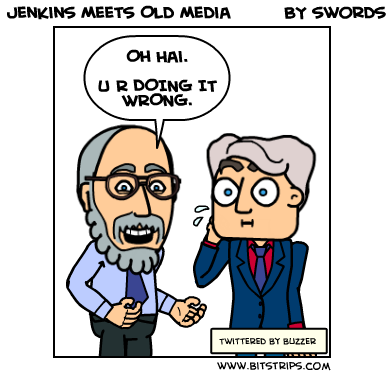
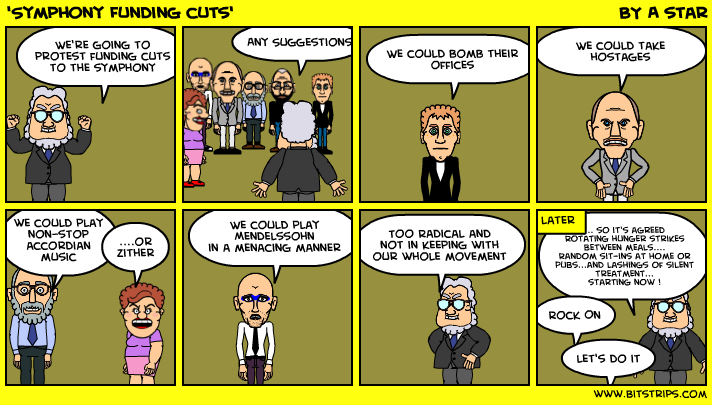
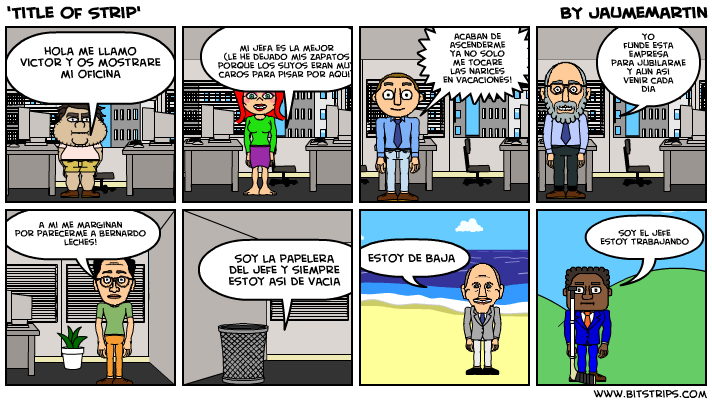
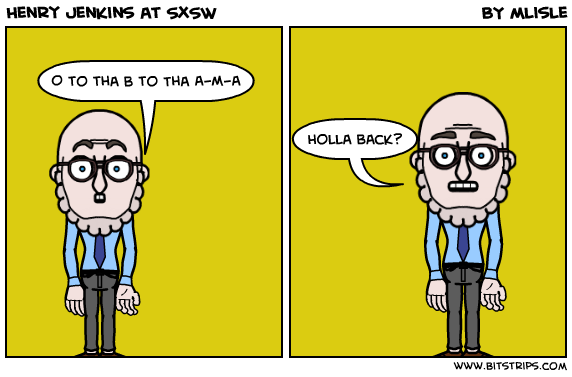
Shortly after South by Southwest, I got a note from Rafi Santo from Global Kids calling my attention to the fact that my likeness had become a cartoon character, thanks to a new site called Bitstrips, which has used the festival to broaden its public visibility. Bitstrips is a site which supports the production and distribution of user-generated web comics. More recently, reader Jordon Himelfarb, a Canadian journalist wrote to tell me that the Henry Jenkins character had been deployed more than 95 times. I am one of a small selection of icons supposed to represent "famous figures", including Steve Jobs, Moby, and Doogie Howser. (The narrow range of options here suggests how deeply embedded this project has been in geek culture to date.) As someone who is interested in the ways images get appropriate and transformed over time, not to mention a notorious ego-maniac, I was very interested to see what uses were being made of this iconic representation of me. For what it's worth, I think I am funnier in real life than in the comics.

It is clear that the first few uses were from people who attended South by Southwest and were somewhat familiar with who I am and what kinds of things I am apt to say or do.

bitstrips 1.png

bitstrips 2.png

Quickly, though, the character begins to take on a life of its own. Certain aspects of the iconography (the bald head, the glasses, the beard) lend themselves to use to represent someone of a certain generation, as in this cartoon which depicts me as a father confronting his daughter's boyfriend for the first time.

bitstrips 4.htm

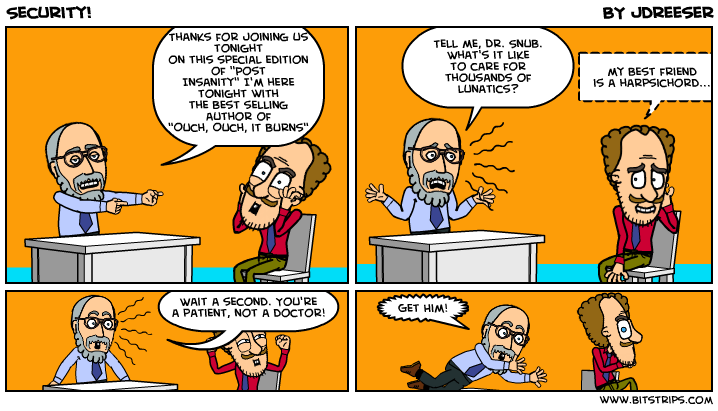
Something in my image conjures up a certain kind of knowledge and expertise. Thus, the character can be cast as a psychiatrist or doctor.

bitstrips 6.png

Or as a talk show host talking about psychology.

bitstrips 9.png

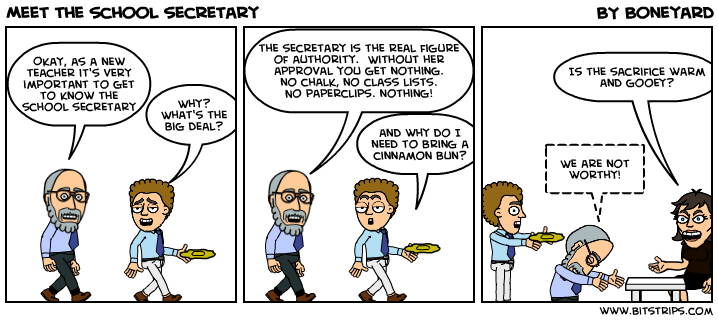
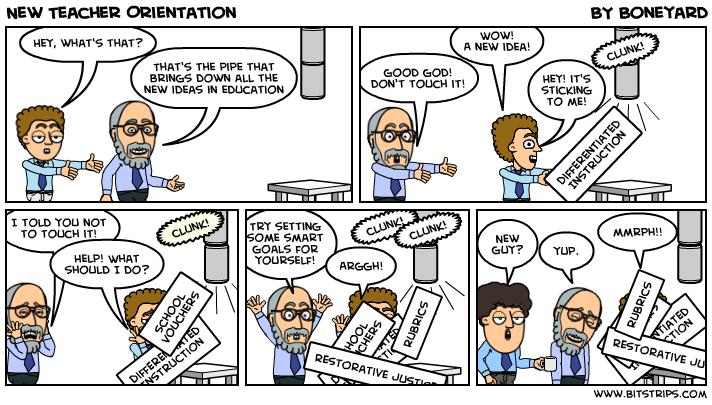
Or as a teacher.

bitstrips 8.png

Or as a mad scientist:

bitstrips 11.png

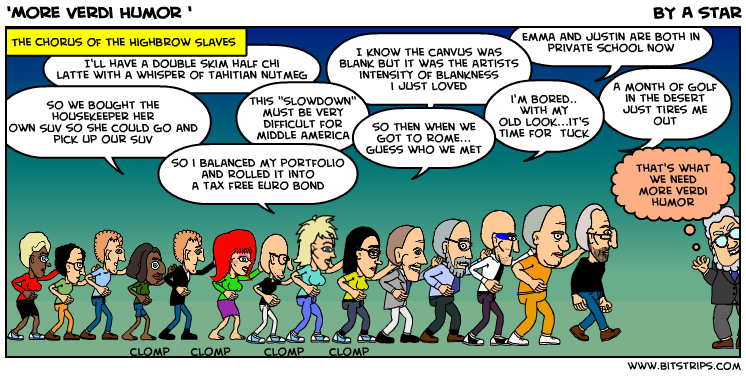
As a "high brow"

bitstrips 10.png

bitstrips 12.png

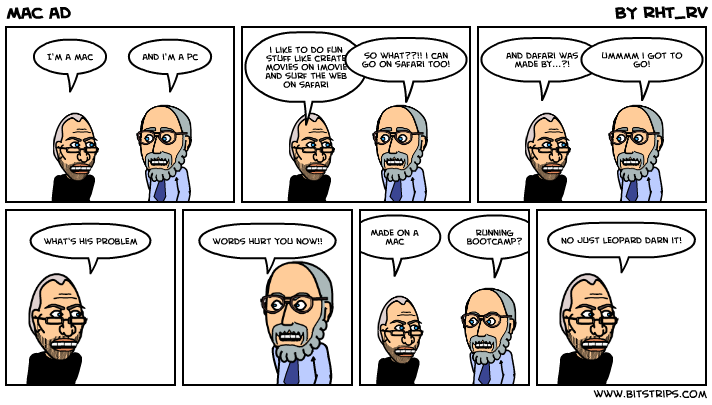
I'm even cast as the PC in a cartoon which plays with the Mac/PC template.

bitstrips 7.png

In short, the character got deployed many times not because people knew who I was in any specific sense but because my iconography constructs a particular kind of character which fits well within the classic formulas of the comic strip. This helps to explain both why my likeness becomes so spreadable and why it still carries a surprisingly narrow range of meanings, all things considered. I wonder what would have happened if the original "Henry Jenkins" character had shown me in my characteristic suspenders and not in a suit and tie.

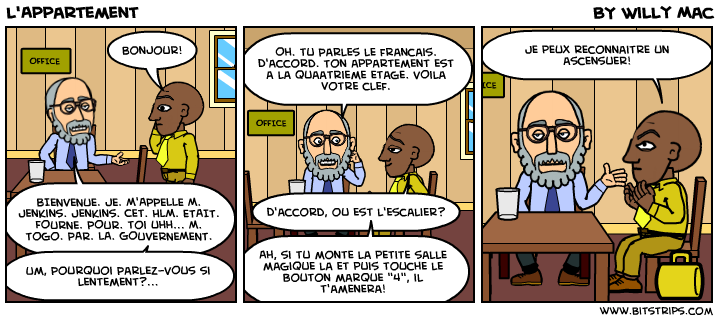
This character, the expert, carries with it certain connotations and expectations. He is often a stuffed shirt or kill joy figure, that is, he deploys his authority to put others in their place and can thus in return become the object of ridicule. He is often portrayed as absent minded and befuddled, so that the comic situation can be used to suggest the limits of what can be comprehended. The familarity of this figure makes him a resource especially for professional humor including that involving medicine, computers, or education, themes clearly of interest to Bitstrips's first generation of users. It will be interesting to see what other ways this character gets deployed as the audience for Bitstrips diversifies. Already we can see examples of this figure getting used in other national contexts, though the stereotype seems to speak in languages that I don't personally understand. Even in the non-English language cartoons, though, I am most often depicted in an office setting suggesting that the character is seen as a professional and not as, say, working class.

bitstrips 3.png

bitstrip 14.png

I encourage my readers to see what they can do with the tool and send me a link to the results. In the meantime, see you in the funny pages!

I HEART Mutants (Except for That Shameless Mary Sue, Jean Grey)

This is the second in a series of "intimate critiques" produced by masters students in my Comparative Media Studies proseminar on media theory and methods. Each essay tries to blend personal narrative with larger theoretical issues as a way of digging deeper into the place of popular culture in our everyday lives. This year's set can be seen as a series of narratives of "coming out" as fans and how this process relates to other aspects of one's personal identity. I HEART Mutants

(Except for that Shameless Mary Sue, Jean Grey)

Lan Xuan Le

Spring 2008

I met the X-Men for the very first time on Saturday, October 31st, 1992. It was 9 AM, prime time for the grade school demographic, and the Fox Network was debuting its second attempt at an animated cartoon series based on a comic book of the same name. The first episode opened in the midst of the government's Mutant Registration Program, an initiative to find and round up all the human beings who possessed genetically-enhanced superpowers. In a recent, unexplained evolutionary burst, people across the world had begun manifesting unusual abilities at the onset of puberty. Pyrokinesis, telepathy, super-strength, invulnerability - the public had been waging a campaign of repression on these so called "mutants" out of a fear of their superior abilities. The first episode dumped the audience right into the middle of a long-standing conflict between homo sapien and "homo superior." It was in this political climate that Professor Charles Xavier and his band of select mutant followers have been fighting to preserve mutant rights against the human government and other mutants who would enslave humankind.

Running for a total of five seasons, X-Men was Fox Kid's second most successful show after Batman The Animated Series and continued airing reruns for a year after the release of its final episode. X-Men began as a popular serial comic book under the Marvel Publishing arm of Marvel Entertainment in 1963. Created by the legendary duo, Stan Lee and Jack Kirby, Uncanny X-Men told the story of a band of humans who struggled to protect a "world that hated and feared them." Although it was an established, long-standing franchise in American popular culture, the television show was my first point of entry into this universe.

I was not quite 12-years-old, the daughter of Vietnamese-American political immigrants, and a "gifted and talented" student in the mid-Western educational system. It seemed inevitable that the idea of mutant alienation and political struggle would ignite my young imagination. At the heart of the X-Men mythos lies a powerful metaphor of marginalization. Race, gender, sexuality - mutation stood in for and made visible the oppressions suffered by a class of people, of which I was a part. It spoke to the systematically, discursively constructed category of "othering" I suffered as a racial minority, de-naturalizing and exposing them. It spoke to my experience of systemic exclusions as a girl in America and a daughter in a family with Confucian values. X-Men represented my nascent political consciousness, the burgeoning understanding of myself as part of a larger grouping of people and an agent acting within a system of conflicting pressures. The story of X-Men became powerful to me in a way that the individual struggle of a character such as Batman could not.

The idea of mutation, a flexible metaphor, resonated with many of my experiences of exclusion. But race and gender remains, even today, the most powerful level of my experience of the mutation metaphor. Race is often discursively inscribed upon the bodies of racial minorities, like the "oversexed and savage" stereotype of black, male bodies or the sexual, pliant bodies of Asian women. So too is mutation a bodily "othering." This "otherness" of the mutant body often takes physical form, like with Doctor Hank "Beast" McCoy's hairy, animal-like appearance. Similarly, racialized or mutated bodies become the difference against which white or human bodies are visually and discursively normalized.

Some mutants in the X-Men universe, however, do not wear their differences on their bodies. Their abilities manifest in subtler ways, allowing them to "pass" as human. The conflict that arises between the obviously mutated and the "pretty" mutants erupts periodically in the story. In the X-Men universe, the physically mutated characters gathered into an underground, sewer-based community called the Morlocks after a similar, villainous society in H.G. Wells' The Time Machine. They could not avoid the political experience of mutancy and became angry at those who remained sheltered and apolitical in their appearance of humanity. This, for me, mirrored the way my Asian girlfriends used the increasing invisibility of their race to avoid or even deny themselves as racialized subjects, often as gendered subjects as well. Those were precisely the moments that I understood my decisions through the mutant metaphor. By choosing to be a Morlock, I chose to openly live a fraught political reality that would act upon me whether or not I confronted it.

The metaphor of mutation, especially as applied to bodies, became a very powerful expression of the ways in which my own body had been re-written without my permission. As an Asian woman, my body is all too visible and yet my "color" has receded, being neither white nor black. I too have been inscribed upon, defined into my very DNA. But for mutants, their power lay precisely their differences. The very performance of their differences gave them the power to resist. The heroes of X-Men were those mutants who could come to accept and judiciously use their powers, not those who remained silent. That proved an important idea for me at the age of twelve, the ability to appropriate the performance of difference in some way, to reclaim the language of these performances to empower myself. It gave me a option to act, to vocally resist the silencing and naturalization of my exclusions.

While the characters in X-Men fight against the teleological framing of "mutation" in the same way I do as a woman of color, the metaphor to race and gender is imperfect. What I find most unsettling about the mutation metaphor, and the differences this represents, is the struggle between the biological reality and socially constructed nature of "mutation." Linking differences to the term "mutation" implies a kind of biological determinism. Within the story, however, these genetic changes actually produce an incontrovertible difference in the X-Men. The ability to mentally levitate objects is not comparable to the experience of race, gender, class, and sexuality, which are socially determined. Many groups have struggled to shift the debates of difference from biological determinism to social construction, and I remain ambivalent about how powerful this imperfect metaphor is for me.

I read more than just race into the bodies of these mutant characters. The bodies of women take on another significance in the X-Men television show for me. The idealization and display of female bodies is a standard part of the comic book industry's practice, which is dominated by a male culture of production. But female bodies often become sites of social anxiety. Asian female bodies, for example, were considered dangerous during earlier immigration to the US, because reproduction is the power of a marginal, feminine body to spread and contaminate the normative political body.

One of the most interesting women in the X-Men universe is Rogue, a member of the X-Men. Rogue is lushly beautiful, possessing super-strength, flight, invulnerability, and the ability to steal the life force of anyone she touches skin to skin. I envied Rogue because she represented the impenetrable female body. Rogue has the appearance of a woman who is sexually permissive, but the body which denies penetration. The markers of Rogue's class - her Southern "trash" stylings - are intimately linked to this perceived sexual permissiveness. Rogue's yearning to touch and be touched, especially when expressed in the presence of her on-again-off-again boyfriend Remy, yield to both innocent and lascivious interpretations. But because of her powers, she remains a non-reproducing body, one that is safely neutered, a contagion contained. Whether or not I understood it as a child, Rogue has always represented to me a site where masculine anxieties about women found expression.

Just as I found Rogue and the text's relationship to her body intriguing, I found the character of Jean Grey equally repugnant. In all the ways that Rogue embodies ambivalence, Jean Grey equally and oppositely represents the heteronormative forces within the text. Beautiful and in control, Jean Grey's cerebral powers mirror her middle-class origins, which stands in contrast to Rogue's physical (and blue collar) powers. Jean Grey's empathic social role in the team was to mediate the tensions of class, gender, and sexuality. She invoked her authority as the mother, the sanctioned, reproducing body, to quell insurrection and unify the group under a liberal morality invested in the feminine as a site of cultural reproduction. She became a symbol of the ways in which liberalism's promise of social justice sacrificed so many marginal voices to speak from a unified position. In a story that allowed me discursive reprieve, that provided catharsis in its simple acknowledgment of my exclusions, Jean Grey violated the agreement offered by the text.

I followed the television show until its end in 1997, at which point I sought to find the "original," the comic books, and continue my relationship with the story. I quickly discovered that the series had been running for nearly 40 years, the whole of it beyond my reach both economically and logistically. The serial nature of the comic book defeated my ability to master the canon as thoroughly as did my economic circumstances. The Internet, however, offered a different way into the X-Men history.

In 1998 I discovered fan websites, places where pieces of the X-Men story came together, character by character. But I found these dry, journalistic recitations insufficient to approximate the experience of reading the comic books, of knowing the X-Men first hand. It was during my web surfing that I found fan fiction, the resource that finally opened up X-Men to me. These stories became a snapshot of the fan's ongoing experience of reading, problematizing, and subsequent (re)writing of the X-Men comic books. It seemed a recursive, cyclical process carried through many stories, probably extending to other media properties. Whatever they represented to the fan author, for me as a reader, fan fiction became a constant renewal of the X-Men text. Through these stories, I could read X-Men anew through the lens of another fan's love. I began a two-year journey into the collective imaginary of X-Men, a historiography of myth and memory.

These fan stories explored the tensions of the comic book, perhaps further than the original format would have allowed. Dozens of stories addressed the same events in canon, correcting, changing, darning over the snags and tangles of plot holes. I had access to a collective record of the major shifts in the X-Men franchise and the fan reaction to them. Reading fan fiction was like mining the secondary sources of an historical event. Fan fiction, for me, became a record of what could never be part of the comic book canon, the discourse of an experience. The "truth" of the canon became irrelevant compared to reading the fantasy of the reading.

Fan fiction transformed my experience of the X-Men story, turning it from a monoglossic text into a multiple, unstable, heteroglossic pleasure. Every character, every relationship took on a complexity impossible in a single text, even a serial one. Although the series was multi-vocal, containing a diverse, international cast and expressive of a range of views to begin with, the very nature of fan fiction and individual interpretation allowed me a far broader experience. I adore, for example, not the canonical character of Gambit, but a layered memory of Gambit as can only be possible through people who both love and loath him. And so he is even more fascinating, engaging, and ultimately satisfying a character than any single text could offer.

By early 2000, the tide of fan fiction on the web had begun to ebb, bringing my journey with the fan community to an end. I attended college later that year and moved on to other media properties, but the X-Men would remain an essential part of my cultural imaginary. But my relationship to the franchise continued to change nonetheless. In 2000, Marvel released a full-length, live action film adapted from the comic books followed by two sequels. The same year, the X-Men: Evolution cartoon began on television, aiming to recapture the popularity of the original by re-imagining the X-Men's beginning in the present day. In 2001, the X-Men comic books spun off another alternate universe under the title of Ultimate X-Men that again re-imagined the beginning of the X-Men, but in a completely different universe from the Evolution cartoon.

The increasing number of alternate universes validated my increasing distance from the "canon" that I was originally so keen to obtain. It only added to the multiplicity and richness of the X-men text. While this move inspired fan anger for "selling out" the franchise and violating the integrity of the story, I saw this move as a way for the franchise to preserve its heteroglossic mythology. Each one of these re-imagined beginnings was designed for me, the interested audience that found itself excluded from the long-running history of the comic book. I finally felt courted by a universe that likely was not speaking to me, but from which I had appropriated strategies of resistance. While these alternate universes aimed to renew my relationship to the series, the ties had faded over time. I now possessed academic theories and frameworks through which to parse my experiences and exclusions.

In early spring of 2008, a fan group, in defiance of copyright, scanned and released all the volumes of the X-Men as PDFs online. Through the magic of peer-to-peer downloading, I finally acquired the whole of the X-Men canon. But in the end, I could not come to love them. With the exception of Joss Whedon's short stint at the helm of the Uncanny X-Men, the story was written predominantly by men for an audience that was not me, nor necessarily a group that included me. Fan fiction, on the other hand, was written primarily by women with whom I shared many salient experiences. In the end, I chose not to read the comic books lest they fundamentally change the relationship I had already nurtured with the franchise. The potential loss of that wonderfully unstable text could not ultimately compare to the gain of the comic book itself.

Lan Xuan Le

Swarthmore College, BA Biology and Asian Studies 2004

Boston University, Masters of Public Health 2007

Lan Xuan Le, who has BAs in both Biology and Asian Studies from Swarthmore College (2004) and a Masters in Public Health from Boston University (2007), has been part of the "games for health movement," conducting a qualitative study and co-authoring a white paper for the Robert Wood Johnson Foundation on the use of games to combat childhood obesity. She also has a strong interest in the globalization of media and the construction of alternative understandings of what it means to be Asian and Asian-American through popular culture, an interest which led her to design, research and execute a library exhibition of anime and manga for Swarthmore's McCabe Library. She wrote an undergraduate thesis on problematic gender and sexual representations in Japanese popular culture with a particular focus on Card Captor Sakura, a paper which won the Swarthmore College Asian Studies Program's top writing prize.

The Videocassette or: How I Became a Fanboy and Learned to Love Explosions

Every year, I challenge my Comparative Media Studies Masters Students to tackle a piece of autobiographical prose which describes something of their own relations with media. This may at first glance seem like a pretty cushy assignment, most of us start our writing career on personal essays, but most of the students discover it can be extremely difficult to reconcile the competing modes of autobiographical and theoretical writing. On the one hand, the language of media theory is often highly abstract and for many, alienating. On the other hand, many of us fall into the trap of "overshare" when asked to recount of our own experiences, being so interested in the process of personal revelation that we don't necessarily think through why we are sharing or how autobiography might enable us to make more meaningful generalizations about media. In preparation for this assignment, we read and discuss such essays as Erica Rand's introduction to The Ellis Island Snowglobe, Annette Kuhn's discussion of a family photograph from Family Secrets, Sharon Mazer's discussion of the power relations she encountered in doing an ethnography of professional wrestling, Robert Drew's account of karoaki which draws heavily on his own experiences as a performer, and Geraldine Bloustein's work on "girl-making." (The last three can all be found in Hop on Pop: The Politics and Pleasures of Popular Culture, which I co-edited with Tara McPherson and Jane Shattuc.) Each of these writers make effective use of "intimate critique" as a way into dealing with complex aspects of personal identity and popular culture. As we suggested in the introduction to Hop on Pop, there are questions which we can only address through holding a lens up to our subjective experience of media -- the tendency of academics to hold popular culture at a distance may distort their understanding of the work it does for individuals and the society at large.

This assignment produces some of the most exciting writing I see all year and this year's crop of first year masters students produced work which I felt was especially rich and evocative. Last year, I shared some of the work my students produced for this assignment, including essays on what our lists on Netflix tell about us and about the world of Mexican comics. Over the next few posts, I plan to share some of the highlights from this year's crop. This year, there was a strong focus on cult media, fandom, and personal identity formation. I shouldn't be surprised, I suppose, given my own interests, so what is surprising is how very different each of these narratives about early fan experiences turned out to be.

The Videocassette or: How I Became a Fanboy and Learned to Love Explosions

by Abhimanyu Das

The cultural artifact I have chosen for this paper is the VHS tape. It is an object of resonance on two levels - it possesses enormous personal significance and, on a wider scale, it is the embodiment of a technological development that transformed the film culture of urban India. Given that videocassettes and the material they carried were a "companion for emotion and a provocation to thought" from an early point in my life, they were to me what Sherry Turkle categorizes as 'evocative objects'.

Until the liberalization of the Indian economy in 1991, films made outside India were very difficult to access legally. Urban centers generally contained only a few theaters (multiplexes did not arrive till the 21st century) and these were mostly dedicated to screening Bollywood fare that guaranteed more ticket sales. A tiny number of foreign films were exhibited every year, usually releases that were a year or more past their original theatrical dates. The situation for Indian cinephiles was dire. All this was transformed by the VHS boom of the mid to late 80s. The introduction of videocassette technology to Indian markets did not, however, signal the beginning of the home video release boom that was witnessed by countries like the United States. The heavily protectionist economy did not lend itself well to studios releasing foreign films on a home video market and availability of video recorders was initially too limited for any kind of real profitability from the exercise. This, however, did not preclude the burgeoning of a system of piracy and peer to peer sharing that was working well in Indian cities long before any of us had even heard of the Internet and was to survive till the cable television boom of the mid 1990s.

The first manifestation, according to my father, was the appearance in many neighborhoods of the local 'video parlor'. Some of these were larger establishments with proper storefronts while others were holes in the wall that could only be found via word of mouth. All of them, however, were stocked with pirated VHS copies smuggled in from east Asian countries. Given that the foreign studios had practically no presence or representation in India and that the police did not care the least bit about enforcing copyright laws, these parlors were free to operate. In addition to the regular Blockbuster-style services they provided, they could (at a price) copy your favourite film on to a blank videotape or even 'order' an 'official' copy of the film for you (these being a first or second generation shinier print of the film in a case adorned with color xeroxes of its American packaging as opposed to the generally fuzzy affairs in generic slipcases available for rent). The larger shops presented even more options, offering up 'camera prints' at half the usual rental for fans on a budget (the unwatchable prints of movies recorded in a theater) or 'family' versions of films with the sex scenes dubbed out (profanity and violence remained gloriously intact).

A vibrant popular film culture was to grow in the cities within years. My father tells stories of how Arnold Schwarzenegger and Sylvester Stallone became household names within a year and I can remember passing by, on my way to school, scores of streetside hawkers selling Rambo and Terminator t-shirts when just a year previous, they had been peddling religious iconography. School-children (like myself) started up movie sticker collections that were traded aggressively. The interesting side effect of the viral nature of the VHS phenomenon was the fact that the parlors were simply one of the available options. People would copy tapes that they had rented from these parlors and circulate them amongst friends and family who would, in turn, copy them. The picture and sound would degrade with each degree of separation but this did not dissuade the enterprising cinephiles that felt like they had put one over the Man ('the Man' presumably being the video parlor guy that rented smuggled goods) by watching the movie for free. Neighborhoods would organize community screenings of films where they would set up a television set in a local clubhouse, rent a tape from the nearest video parlor and charge a nominal fee for entry. The transformation, then, was beginning. India had always had a rich history of movie-watching in the Bollywood tradition and the arrival of VHS expanded the film-goers horizons to include the Western market. Cinema clubs popped up across the cities, catering to tastes across the board, from a weekly dose of 80s action drama to one of Bergman or Antonioni (two especial Calcutta favourites). Indian youth culture was impacted as the fashions, music and slang of the Americans they saw on their television sets (which had hitherto exhibited nothing but the two mostly soul-crushing public TV channels) crossed over into the urban lexicon. This intrusion of globalization (for better or for worse) into a relatively closed cultural space was accelerated manifold by the advent of cable television but I would argue that this particular event was primed by the preceding decade of VHS supremacy.

On a personal level, the VHS tape could be said to have shaped my entire life. Some of my earliest memories are of my father bringing home our first VCR from a business trip abroad and the subsequent weekend film-watching ritual. The homework would get done, be checked over and the approving nod would be the cue for the Disney film du jour to begin. Just as Turkle's closet full of memorabilia shapes the way she thinks about her family, my memories of our weekly congregation around the joys of VHS shapes the way I think about mine. In addition, these experiences contained within and associated with the tapes were to have a profound effect on my identity and interests. Pat or even cliched as these conclusions may seem, it was the memories of those early movie sessions that formed the seed for my later affinity for everything cinematic and helped push me toward the academic, personal and professional direction I am taking now. My love of music began with VHS tapes as my parents would record music videos from the half hour Western music show that aired past my bedtime on the aforementioned public television channel. I would then proceed to play these tapes all day, forming a soundtrack to my childhood that originates as much from VHS as it does my father's LP/audiocassette collection. My affection for everything narrative probably sprang from the multiple viewings of the same films (on the same tape) that we would rent repeatedly when nothing new had come in that week, as plot threads started to get embedded into my skull, complete with dialogue and interrupted by video snow where the tape had been damaged. Even my first induction into the enticing world of 'adult language' was thanks to the verbal clashes (in stereo!) between the working class New York accent of John McClane and the cultured delivery of Hans Gruber. Thanks to Bruce Willis and Alan Rickman, I knew how to swear in English before I learned the equivalents in any of the Indian languages.

The actual physical form of the videotape was also important. The tapes from the parlor that we rented from all had a particular smell (that I could never identify) - the first indication of an impending movie experience. Close at its heels was the mystique of the cassette itself, as my brother and I would open the protective tab and stare at the magnetic tape underneath, making wise pronouncements about the quality of the print based on the number of crinkles we could see in it. Despite our carefully performed expertise, however, we were completely in thrall to the inherent mystery of the incomprehensible machine, simultaneously imagining ourselves as a new generation of technopriests through our ability to perform a ritual around these objects and as slaves to our ultimate lack of knowledge about the object itself. The packaging was equally important (when there was any). Familiar faces of actors we were starting to recognize would create patterns in our choices. These packages were generally xeroxes of US or UK poster art and we learned to recognize the MPAA's Restricted logo or the BBFC's '18' and '15' symbols (ironically our parents were too frazzled and rushed to notice such things) and felt the twinge of anticipation for the forbidden darkness that we learned to anticipate within (the films rated such for sexual content were, however, generally pointed out by the 'video parlor man' for the benefit of our parents).

Finally, as the title of this piece indicates, the fanboy in me can actually be traced back to the magic of VHS as well. I still remember with relative clarity, the first defining cinematic moment of my life - my first viewing of Superman II. It was in 1988 and I was six. It was not the first film I had watched on our new VCR but it was the first one to leave an indelible stamp on my still-developing mind. The wonder of Superman's flight to the Eiffel Tower, the foreboding of the criminal Kryptonians' surprisingly brutal assault on the astronauts, the frustration of the beating suffered by humanized Clark Kent at the hands of the diner bully and - above all - the pure adrenaline rush of re-powered Superman's return and climactic clash with the villains in downtown Metropolis are all emotions that I am reasonably sure I remember accurately from that first viewing. This may well be owed to the fact that I replicated this experience countless times over the next few years, goading my hapless parents into renting the same tape to the extent that 'the video parlor man' automatically reached for it when we walked in. The reactions, however, were always echoes of my original visceral responses to what remains, to this day, one of my favourite films and the reason why I instinctively associate villainy of all sorts with General Zod. Superman II was the reason I picked up my first American comic book and marks the beginning of my lifelong fondness for fantastical narratives across media platforms, bringing us to the possibility that my presence at MIT may actually be traced back to the work of Richard Lester (or Donner, according to preference).

It is important to mention that a significant aspect of this anecdote is the fact that I managed to watch Superman II through the eyes of an impressionable young child, thanks to the convenience of VHS. Had it not been for this particular technological marvel, my exposure to pop culture (as embodied by Superman) would have really begun in the mid-90s with the appearance of cable television, by which point I would have been a teenager and - undoubtedly - indoctrinated into the way of the sciences by the ever reliable biases of the Indian educational system as it deals with male students. It was VHS that made the difference between a goggle-eyed child internalizing an epic, life-changing mythology and an engineering-track teenager laughing at a campy movie about an alien in a red cape and underwear fighting two British actors (and an ex boxer from Philadelphia) dressed like dominatrices while Gene Hackman delivered one-liners in the background. And for this, I am thankful.

Abhimanyu Das

Franklin and Marshall College, BA English, 2005

Born and raised in Kolkata, India, Abhimanyu Das graduated in 2005 with a BA in English from Franklin and Marshall College. Gradually, his interests in new kinds of media texts (such as computer games, graphic novels, and serialized fiction) began to push against the outer limits of proscribed curriculum of his English department. His struggles with core questions about transmedia storytelling, the audiovisual elements of texts and social context of genre narratives led him to develop a secondary concentration in Film Studies, during which he did archival research at the British Film Institute and also read a lot of comics. His relevant professional experience includes writing about film and literature as well as a brief stint in publishing.

At MIT, he hopes to pursue a thesis project that studies "the confluence of post-colonial influences and the effect of globalization on two rapidly expanding media movements, the Indian independent film and the Indian comic book." He is currently working at the MIT Center for Future Civic Media as an RA. His long-term goal is to be able to make a living as a cultural journalist with the clout to make a few people do more than just smile indulgently while he talks about movies and comics.

A Critfan Yearns for the World As It Was

One of the more unorthodox policy decisions we've made at the Comparative Media Studies Program is to allow students to include non-academics as outside readers on their thesis committees where they can demonstrate that the person has relevent experience and expertise. This has opened to door to bringing alternative kinds of knowledge into the thesis process. When Sam Ford, who now runs the blog for the Convergence Culture Consortium, wrote a thesis about soap operas and convergence, I ended up sitting on a committee which included both a veteran soap opera writer Kay Alden (The Young and the Restless, now writing for The Bold and the Beautiful) and a long time soap fan who had written for Soap Opera Weekly, Lynn Liccardo. Needless to say, it was a fascinating discussion -- one which allowed Sam to test his ideas against real world feedback from within both the industry and the fan community. As one of the the non-soap people in the room (along with William Uricchio), I learned a great deal from listening to both of

our visiting experts. This term, Sam Ford has been teaching a course through our program on soap opera and the blog for the course has attracted a range of outside participants, including, once again, Lynn Liccardo. I asked Lynn if I could share with you some thoughts she has about what has happened to the soap opera genre in recent years and why she is becoming increasingly frustrated with a genre which has been part of her life for decades.

A CRIT-FAN WHO'S YEARNING FOR THE WORLD AS IT WAS

by Lynn Liccardo

Over the past few weeks I've been checking in on the blog Sam Ford set up for his class on The American Soap Opera: here. The student comments touch on many of the issues that underlie the current, sorry state of the American Soap Opera. Of course, being only a few weeks into the course, and from what I can tell, relatively new soap viewers, they lack the contextual understanding to connect the dots.

They're watching As the World Turns, a show I've watched since it premiered in 1956, the year I started kindergarten. But they're watching and studying ATWT as it exists today; I'm watching the same show and yearning for the show it used to be. So when a student comments on how certain characters are either actors or reactors, I hesitate to respond. I could reiterate Sam's point that characters often switch between actor and reactor depending on the circumstances. He's absolutely right. But that barely scratches the surface; what I really want to tell them is that there used to be a time on soap opera when characters might switch between actor and reactor in the course of a single conversation.

It's been a good long while since that happened on ATWT, certainly not in the time that they've been watching. So long in fact, that I'm hard-pressed to think of a specific example to give them, one downside of the sheer volume of soaps' text. Then, is there available video, or do you have to try to explain the context? And even with video, how to capture the full depth of a story that ran over months, if not years, by showing just a few isolated episodes?

All of which brings me to Ryan's Hope, a show that ran from 1975-89, and is currently shown on SOAPnet, a digital cable channel created by ABC to rebroadcast their soaps. (How the channel has evolved from its original mission is a subject for further discussion.)A few months ago, just as when the RH's 1982 episodes were to begin, the show went back to its 1975 premiere. There was a huge hew and cry from viewers; SOAPnet claimed that they couldn't clear the rights to the music used in shows after 1982. While I appreciated the outrage, I was thrilled; RH was a show I'd dipped into now and then over the years, but had never really watched. When it premiered in 1975, I had a fulltime job, no VCR and had just begun working on my undergraduate degree at night. I could barely keep tabs on ATWT, but could depend on my mother to fill me in - Guiding Light, too.

Since I'd already been watching RH for a while before the switch, there was little about the actual opening story that surprised me since I already knew how much of it had turned out. What did shock me was just how awful the first few episodes looked - flat and dull - dreadful lighting. The graphics were amateurish, and have only slightly improved. And, I have to say, Frank Ryan, the show's ersatz hero, in a coma for weeks on end was less than scintillating storytelling. But that first day, when Mary Ryan met Jack Fenelli in her family's bar, I was in for the duration.

As I write this (March 2008), what's currently on screen is just over a year into the show's run. I have to say, as much of a pleasure it's been to watch the first year of RH, it's been a bittersweet experience since in that year's worth of episodes (they run two a night Monday-Friday) I've seen more genuine soap opera drama than I have in I don't know how many years of ATWT and, occasionally, GL. In the soap opera of recent memory, I have to settle for a moment here, some subtext there. In RH, I get to see fully-developed characters and fully-integrated storytelling - albeit, 30-years old. But, has it ever held up.

However, what's truly jarring - surreal, actually - is the juxtaposition between the down-to-earth Ryans, et al - characters who actually wear coats and scarves in the winter - and the SOAPnet promos featuring the current crop of soap opera characters where women's most important piece of clothing is a pushup bra and men often go shirtless - regardless of the weather. And then there are the promo taglines: "Ruthless people who will do anything to get what they want." That one's for Y&R. The OC's described as "Pretty people, pretty messed up."

This is not to say there aren't ruthless people on Ryan's Hope: Roger Coleridge comes to mind. But the insecurity that underlies Roger's behavior is so transparent, it's hard to think of what he's doing as pure ruthlessness. Even the local gangster (and neighborhood undertaker), Nick Szabo is clearly a devoted and loving, if infuriating, father and when a major character died, he behaved decently and compassionately.

And there are certainly pretty people on Ryan's Hope, and yes, some of them are pretty messed up, but messed up in ways that real people can identify with, not just watch agog. Anyone who grew up without a family can understand the behavior of those characters on the outside looking in: Jack, who's been so traumatized by growing up in an orphanage that he never misses an chance to sabotage his relationship with Mary and her family - a tension the writers continued to play years down the road as Mary's father, Johnny, never forgot how much pain Jack's fears created for Mary, and her mother, Maeve, never forgot the cause of Jack's fears. I always wondered if those early conversations between Johnny and Maeve discussing their concerns about Jack resembled conversations my own parents has about my boyfriends

And then there's Delia, who also lost her parents young. Dee's so unhappy in her marriage to Frank Ryan (and who can blame her, he was cheating on her for years, yet being the golden boy, no one ever really blamed him), so in need of the love that Roger Coleridge wants to share with her (cruel as some of Roger's actions seem, he really does love her), and yet she's willing to give it up to remain a Ryan.

But my all-time (thus far) favorite juxtaposition between Ryan's Hope and the SOAPnet promos came during the most recent mindless bloodbath on General Hospital. Bruce Weitz, best know as Mick Belker on Hill Street Blues, played Anthony Zacchara, leader of said bloodbath. Back in 1976, Weitz also had a one-day gig on RH playing an assistant district attorney prosecuting a euthanasia case (the love story between Seneca and Nell Beaulac remains a powerful testament to forgiveness, reconciliation, and the real meaning of love between grown-ups). In a single conversation with Seneca's lawyer, Jill Coleridge a very young and smooth-faced Weitz expressed compassion for, and understanding of, a tragic situation while making it clear he intended to win the case. I had really looked forward to seeing how Weitz would play the trial and was disappointed to see another actor playing the role. Seeing Weitz as Zacchara in the GH promos stood in stark contrast to the depth and complexity he brought to his one day on RH.

The issues underlying those juxtapositions explain a lot about the current sorry state of soap opera and I'll be writing more about how down the road. But back to my initial point: how characters might switch between actor and reactor in the course of a single conversation. I've always believed that the higher one's tolerance for ambiguity, the better one can experience the full emotional impact of soap opera. What happed on RH recently provides a perfect example:

Frank has found out about Delia's affair with Roger and wants to use that information to divorce her and win custody of their son, Little John. Except that Frank cheated on Dee with Jillian first, but since Dee took him back she can't use that first adultery to block the divorce Frank wants so desperately. So she enlists Frank's brother Pat (they were an item in high school), to find evidence that Frank has resumed his affair with Jillian. The repercussions play out among all the characters, including the deeply-Catholic Johnny and Maeve, who don't believe in divorce, yet know that the marriage was never right. They want to defend Frank and blame Dee, but Pat never lets his parents forget that it was Frank who cheated first.

These scenes are long enough (another big change; the short choppy scenes currently on ATWT and GL make me dizzy) that the characters move from actor to reactor seamlessly, and the camera shows each character's ambivalence in the reaction shots. And viewers get to experience the real life emotions of characters far more real than those on any reality show.

I know these kinds of moments happened on As the World Turns in the past, most recently, during the Douglas Marland era. Marland was ATWT's headwriter from 1985 until his untimely death in 1993. One of his best stories involved legacy characters Bob and Kim Hughes, Kim's ex-husband, John Dixon, their son, Andy Dixon and Susan Stewart, a longtime rival of Kim's.

I've always believed that the most powerful and compelling drama is created when all of the characters involved in a storyline are trying to do the right thing - the right thing for the situation, not necessarily the right thing for their character - and it's their efforts that come into conflict. The situation in this case was John and Kim's son, Andy's alcoholism. So, of course Kim and John were spending time together; their son was in trouble. And, of course, Bob wanted to help, but he wasn't Andy's father; John was. Susan may have been a troublemaker in the past, but here, she was Andy's AA sponsor. And so when Bob and Susan finally hit the sheets, viewers were sighing to themselves, "oh no," not screaming, "what the fuck!," as is all too often the case with current daytime soaps.

Sad to say (sad for soap viewers, anyway), these days the only place to see this kind of character-driven drama routinely played out, with the depth and intimacy that used to be the hallmark of soaps, is on primetime: Friday Night Lights; Ugly Betty and Dirty Sexy Money are three examples of the best of what primetime has to offer. In these shows, as in the soaps of old, conflicts between and among characters begin with the emotional conflicts within the characters; as the audience watches the former unfold, they are never permitted to lose sight of the latter.

The question of whether these primetime shows are in fact soaps came up last summer in the follow-up to a discussion between Abigail Derecho and Christian McCrea here, which led to further discussion on Just TV here and C3, here. And Sam has opened up a discussion with his students as to what exactly defines a soap opera here.

Given the deep-rooted stigma long attached to daytime soaps, it's not too surprising that fans of primetime serials invest time and effort parsing the textual and structural differences between daytime and nighttime soaps. What did surprise me, though, was the resistance that came from within daytime, in particular the daytime media. One daytime critic actually said, "Daytime drama and primetime drama are two very different genres with two very different audiences," an understandable, albeit specious, argument. I would argue (and will in an essay for the book Sam, Abigail and C. Lee Harrington are co-editing that grew of last summer's discussion) that daytime would do well to understand what is working on primetime soaps, and why, because it's what used to be working on daytime. And right now, daytime soaps are in so much trouble that none of us can afford to be territorial if it stands in the way of figuring out how to save this long-marginalized segment of popular culture.

Lynn Liccardo began writing about nursing after graduating from Harvard

University in 1983 with an undergraduate degree in the humanities. Her articles appeared in The Boston Globe, Revolution: The Journal for Nurse Empowerment, and Soap Opera Weekly, where she published a piece on how nurses are portrayed on soap operas. In the early 1990s, she wrote several articles for SOW, including, "Who Really Watches Soap Operas," a

demographic analysis cited in numerous scholarly articles. She currently posts on several soap boards and media blogs and still watches As the World Turns, as she has since its premiere in 1956, the year she started kindergarten. From 2005-2007, she also advised on a Master's thesis project on soaps at MIT. Lynn is also a playwright and screenwriters, with short plays performed in greater Boston, New York and Los Angeles. She's completed one screenplay, Never Can Say Goodbye, and a treatment for a second, The Good Father. In 2007, her one-act play, Settling In, was broadcast on Somerville Community Access Television (MA).

the following post is [about] anonymous

The following blog post was prepared by a CMS graduate student who, appropriately enough, wishes to remain anonymous. S/He has been watching with some interest the emergence of the Anonymous movement, a grassroots effort to protest against the Church of Scientology organization, which has adopted a range of references and models from popular culture to further its goals. It offers a rich reference point for those of us in better understanding the ways that participatory culture can offer a spring board for civic engagement. It seems like an appropriate followup to the interview I ran earlier this week with Witness's Sam Gregory in that it represents another example of how video sharing might contribute to civic discourse. The author closes the post with a call for academic discussion of the implications of this phenomenon. S/he and I offer this post as a resource for further study.

On March 15, 2008, over 9000* people worldwide took to the streets to protest practices of the Church of Scientology organization. Without any clear leadership, masked individuals descended upon local organizations with signs and flyers. They stood outside, chanting phrases like "tax the cult" and "why is Lisa Dead?" They gave speeches, recruited new members, and granted press interviews. Then, they sang and danced to Rick Astley's epic 1987 hit, "Never Gonna Give You Up."

Hi, We're from the Internet

The protesters call themselves "Anonymous" and their movement originated on several loosely affiliated web sites. The long-standing site Something Awful had built a community through its forums and a popular image manipulation competition called Photoshop Phriday. Other sites spun off of or grew up in parallel with Something Awful, including the always-offensive image posting site 4chan.org. The most popular "board" on 4chan was "/b/", which featured doctored photos, inside jokes, and porn. Through 2007, the community was pulling online pranks like taking down web sites and defacing Myspace pages. Their culture grew out of the pursuit of these sophomoric "lulz" and spawned several internet memes. Perhaps most well known is the LOLCats. Their language became filled with sarcastically self-referential bastardizations of English.

The community began coordinating "raids" against various sites, online games, and people that they deemed idiotic (or, in their words, had broken "teh Rules of teh Internetz"). They successfully shut down a white supremacist's page, lashed out at a site that copied one of their images, and flooded virtual games that they considered inane. They coordinated these efforts through several sites, but most prominently through a collaboratively maintained wiki. Plans would form as a result of many proposals, one of which would gain a critical mass of support. There were no leaders. At some point, the group decided to start calling itself "Anonymous," inspired by the largely anonymous web-posting tools they used. On July 26, 2007, KTTV Fox of Los Angeles did a news report on the group, calling them "hackers on steroids" and "domestic terrorists." The Fox report was quickly spread, parodied, and made fun of. It also formed the foundation for the group's ironic self-identity, and cemented the "Anonymous" moniker for months to come.

Throughout, Anonymous maintained a rough edge. Their "raids" often seemed more like cyberstalking or bullying. Their image boards continued to feature mostly porn, gore, and insults. Their conversations were peppered with what sounded like hate speech -- constant references to "fags" or "niggers". To be sure, it was a community made up largely of young white males acting somewhat immaturely. On the other hand, there have emerged more subtle undercurrents in their behavior. To some extent this language is used ironically and critically. Anons are equal opportunity offenders, and they seem to value free speech far more than they feel true hatred. They also use this harsh language when referring to each other just as much as when discussing the targets of their attacks. In a way, the phrases have been removed from their contextualized meanings in standard English discourse and reappropriated as part of the memetic language of the group.

On January 15, 2008, the online gossip site Gawker posted an internal Church of Scientology video featuring Tom Cruise riffing on the wonders of Scientology. The church had already successfully used legal tactics to remove the video from other sites, but Gawker claimed, "it's newsworthy; and we will not be removing it." Lawyers for the church claimed copyright infringement, and Gawker claimed fair use. At some point, some members of Anonymous became incensed at what they saw as an attempt to silence free speech and violation of internet principles. Debate ensued, and one member stated:

"Gentlemen, this is what I have been waiting for. Habbo, Fox, The G4 Newfag Flood crisis. Those were all training scenarios. This is what we have been waiting for. This is a battle for justice. Every time /b/ has gone to war, it has been for our own causes. Now, gentlemen, we are going to fight for something that is right. I say damn those of us who advise against this fight. I say damn those of us who say this is foolish. /b/ROTHERS, THE TIME HAS COME FOR US TO RISE AS NOT ONLY HEROES OF THE INTERNETS, BUT AS ITS GUARDIANS."

Scientology had thrown down the gauntlet, and Anonymous awoke. In a YouTube video addressed to the church, Anonymous explained that, "for the good of your followers, for the good of mankind, and for our own enjoyment, we shall expel you from the Internet and systematically dismantle the Church of Scientology in its present form." Anonymous promptly took down Scientology's web sites, endlessly faxed them black sheets of paper, and called their public phone numbers with loops of... you guessed it... "Never Gonna Give You Up."

A Funny Thing Happened on the Way to the LULZ

The initial objective of the campaign was a success. By all accounts, Anonymous was frustrating the Church of Scientology and generating amusement for Anonymous. The church replied publicly, counter-attacked Anonymous sites through legal (and, allegedly, technical) means, and was forced to move its servers to a more robust and costly provider. Soon, long-time Scientology critics began to take notice. Some of these critics had worked to expose the organization's practices for decades, and the massive influx of energy was both exhilarating and frightening. One critic, Mark Bunker, replied via YouTube:

"I think it's incredibly exciting to have an army of young, passionate people wanting to do something about Scientology's fraud and abuse. However, I think you're making some major mistakes that are going to hurt in the long run. They're going to make you look bad, they're going to get you in trouble... they're going to get us in trouble, those of us who have been long-time critics of Scientology. Scientology is good at tar-and-feathering us with other people's actions. It may seems like fun and games, but Scientology is serious, you have to be prepared... I'm mainly concerned because you shouldn't be doing things that are illegal. You just shouldn't. It's not morally right, it's not right when Scientology does it, and it's not right when we do it... a better way to get at them would be to try to get rid of their tax-exempt status... now I know that doesn't sound anywhere near as interesting as attacking their websites. It sounds dull, but that's going to hurt them. Going out and protesting, that's wonderful. I don't know if this makes any sense to you, but please please please reform your movement the way we want Scientology to reform their movement."

Bunker later commented that "I thought they'd lash out at me." Instead, they celebrated him and named him "Wise Beard Man." In his video, he sounds like an earnest and concerned parent. It's hard to imagine such an uncouth and authority-hating group taking him seriously. But, they did. They began to educate themselves about Scientology's various alleged abuses, including the 1995 death of Lisa McPherson who was under the care of the church at the time she died. When someone posted a YouTube video claiming to speak for families that had been torn apart by Scientology, one Anonymous replied:

"Fucking rise up, sons and daughters of the Internet. Rise the fuck up and stay up. Let 'em know we'll take the fight to them, and that we'll help every single person that wants to leave the cult. We have lawyers and social workers and therapists in our ranks, and we can, and will, give aid to those who want out. We are Anonymous. For the lulz, but moar than that now. For teh most epic win. Revoke Scientology's tax-exempt status. Great Justice for Lisa McPherson."

Nearly overnight, Anonymous shifted focus. The Anons began planning for a worldwide protest, they compiled research, started a lobbying campaign, and cranked out flyers and informational pamphlets. On February 10, they staged their first major protest with several thousand participating. Many Anonymous donned "guy fawkes" masks, made famous in the film "V for Vendetta", as a symbol of their resistence to oppression and their commitment to anonymity. There is a long history of Scientology protesters allegedly being harrassed and otherwise attacked by the church. When anonymous translated its digital anonymity into real-world anonymity, Scientology faced something it had never before experienced.

Nevertheless, just before the second wave of protests on March 15, the CoS began agressively pursuing members of Anonymous that it had managed to identify. In some jurisdictions, local anti-mask laws had actually made it difficult for Anons to protest anonymously--a sharp contrast to their accustomed protections online. The church posted videos "outing" members and accusing them of hate crimes and terrorism (Anonymous responded by cloning the site and replacing the videos with Rick Astley). The CoS claimed to have filed criminal complaints at federal agencies, with these allegations. It tried to get an injunction against protestors in Clearwater, and failed. The worldwide protests grew, and Anonymous declared March 15 a success. The protests had been timed to coincide with the birthday of Scientology founder L. Ron Hubbard. Anonymous donned birthday hats, ate cake, and danced to a cheesy song with the lyrics, "When it's time to party we will party hard."

After the March protests, CoS sent nastygrams to some de-masked Anons via at least two law firms, which in themselves constituted no legal action. In a couple of limited cases, CoS actually took demonstrable legal action. It accused LA-based Sean Carasov of making death threats, and the LAPD dismissed the charges. It also filed a complaint of Trespass and Criminal Harrassment against Boston-based "Gregg" who knocked on the door of the local CoS and attempted to give them fliers. Gregg has yet to be heard in court, but Anonymous feels confident that the legal merit is weak and that the actions were filed solely as an attempt to intimidate.

By all measures, the intimidation isn't working. The next protests occur on April 12th, and are focused on bringing attention to the families that have been "disconnected" by the CoS. Anonymous plans monthly protests for the forseeable future.

An Academic Opportunity

Anonymous presents an array of opportunities for interesting scholorship. It is a cultural community, a political movement, a legal battleground, and more. It straddles between internet and "real world" existence. We need to study Anonymous... and to study hard.

Academics from cultural studies, media theory, and anthropology might seek to better understand what holds this unique community together. How have they appropriated anime and internet culture into the core of their identity and used it to unify their movement? How do neighbor communities like cosplay and video gaming cross pollinate with Anonymous? How does Anonymous connect with the earlier Internet vs. Scientology effort? What do we make of their obscure and offensive language?

Legal academics also have a great deal to consider when it comes to Anonymous. How do our laws regarding online vs. real-world anonymity differ? For example, should a Kentucky bill banning anonymous online posting pass or should a New York statute banning anonymous protesting in real life be overturned? Is the CoS using official-looking lawyer letters to intimidate and chill free speech? What can be done to defend Anons who claim that they are the target of fair-gaming through the legal system? What about the larger questions of Scientology's tax-exempt status and their controversial 1993 settlement with the IRS?

Political scientists studying movements and agenda-setting might want to consider how this group organizes and affects political change. What has made Anonymous able to grow and adapt so dynamically? How can such a decentralized, leaderless collective maintain potency in the long term? What are the means that the group is using to lobby and advocate anonymously? How is the movement gaining newcomers while staying on message and not becoming fragmented?

Some academics have already begun to take notice, but their work is preliminary. PBS's digital news project "Idea Lab" recently posted a thought-provoking article on the Anonymous transition from the Internet to the "real world." Anonymous demonstrates the principles of digital learning as they translate their online skills into collective action. They leverage viral-like promotion strategies through efforts like youfoundthecard.com. They use language and tactics from the video game world. They have developed a decentralized news making and gathering service in support of their cause. What can academics learn from this?

Rise up, sons and daughters of the academy.

More About Anonymous

A Sample of Anonymous Media Coverage

Anonymous-related Sites

The Moral Economy of Web 2.0 (Part Four)

Prohibitionists and The Moral Economy

"The world of Web 2.0 is also the world of what Dan Gillmor calls "we, the media," a world in which "the former audience", not a few people in a back room, decides what's important." - Tim O'Reilly (2005)

"Our entire cultural economy is in dire straights....We will live to see the bulk of our music coming from amateur garage bands, our movies and television from glorified YouTubes, and our news made up of hyperactive celebrity gossip, served up as mere dressing for advertising." -- Andrew Keen (2007)

Despite the apparent long-term necessity of the entertainment industry reshaping its relations with consumers (both in the face of new technological realities that make preserving traditional control over content difficult and in the face of new models of consumer relations which stress collaborations with users), media executives remain risk-averse. Andrew Currah (2006) argues that the reluctance of studio executives to risk short term revenue gains accounts for their reticence to experiment with alternative content distribution models despite growing data that suggests some forms of legal file-sharing would be in the industry's long-term best interests. Many executives at public companies are paid to draw incremental increases in revenue from mature markets rather than to adopt more long-ranging or entrepreneurial perspectives. New ventures might violate agreements media producers maintain with big-box retailers, decrease revenues from established markets (DVD, PPV), or spoil the balance of release windows and the geographic management of content distribution. According to Currah (2006, pp. 461-463), the executives best placed to authorize such changes are not likely to be around to see the long-range benefits and thus they opt for the stability and predictability of the status quo.

Both industry leaders and creative workers worry about a loss of control as they grant audiences a more active role in the design, circulation, and promotion of media content; they see relations between consumers and producers as a zero-sum game where one party gains at the expense of the other. For the creative, the fear is a corruption of their artistic integrity, according to what Deuze (2006) calls an editorial logic (where decisions are governed by the development and maintenance of reputations within the professional community). For the business side, the greatest fear is the idea that consumers might take something they made and not pay them for it, according to a market logic (where decisions are governed by the desire to expand markets and maximize profits). A series of law suits which have criminalized once normative consumer practices have further inflamed relations between consumers and producers.

If the hope that consumers will generate value around cultural properties has fueled the collaborationist logic, these tensions between producers and consumers motivate the prohibitionist approach towards so-called "disruptive technologies" and practices. If the collaborationist approach welcomes fans as potential allies, the prohibitionist approach sees fans as a threat to their control over the circulation of, and production of meaning around, their content. Consumers are read as "pirates" whose acts of repurposing and recirculation constitute theft. The prohibitionist approach seeks to restrict participation, pushing it from public view. The prohibitionist response needs to be understood in the context of a renegotiation of the moral economy which shapes relations between media producers and consumers.

The economic and social historian E.P. Thompson (1971) introduced the concept of "moral economy" in his work on 18th century food riots, arguing that where the public challenges landowners, their actions are typically shaped by some "legitimizing notion." He explains, "the men and women in the crowd were informed by the belief that they were defending traditional rights and customs; and in general, that they were supported by the wider consensus of the community. In other words, the relations between landowners and peasants, or for that matter, between contemporary media producers and consumers, reflect the perceived moral and social value of those transactions. All participants need to feel that the involved parties behave in a morally appropriate fashion.

Jenkins (1992) introduced this concept of "moral economy" into fan studies, exploring the ways that fan fiction writers legitimate their appropriation of series content. Through their online communication, fan communities develop a firm consensus about the "moral economy"; this consensus provides a strong motivation for them to speak out against media producers who they feel are "exploiting" their relationship or damaging the franchise. The growing popularity of illegal downloads amongst music consumers, for example, reflects the oft-spoken belief that the record labels are "ripping off" consumers and artists alike through inflated prices and poor contractual terms. The controversy surrounding FanLib spread so rapidly because the fan community already had a well articulated understanding of what constituted appropriate use of borrowed materials. Fans objected to profiting from fan fictions both because they saw their work as gifts which circulated freely within a community of fellow fans, and because they believed rights holders were more apt to take legal action to shut down their activities if money was changing hands (Jenkins 2007a).

In a review of the concept of the "moral economy" in the context of a discussion of digital rights management, Alec Austin (et. al. 2006) writes, "Thompson's work suggested that uprisings (or audience resistance) was most likely to occur when powerful economic players try to shift from existing rights and practices and towards some new economic regime. As they do so, these players seem to take away "rights" or rework relationships which were taken for granted by others involved in those transactions." A period of abrupt technological and economic transition destabilizes relations between media producers and consumers. Consumers defend perceived rights and practices long taken for granted, such as the production and circulation of "mix tapes", while corporations try to police behaviors such as file sharing, which they see as occurring on a larger scale and having a much larger public impact. Both sides suspect the other of exploiting the instability created by shifts in the media infrastructure.

This moral economy includes not simply economic and social obligations between producers and consumers but also social obligations to other consumers. As Ian Condry (2004) explains, "Unlike underwear or swim suits, music falls into the category of things you are normally obligated to share with your dorm mates, family, and friends. Yet to date, people who share music files are primarily represented in media and business settings as selfish, improperly socialized people who simply want to get something -- the fruits of other people's labor -- for free." Industry discourse depicting file-sharers (or downloaders, depending on your frame of reference) as selfish doesn't fully acknowledge the willingness of supporters to spend their own time and money to facilitate the circulation of valued content, whether in the form of a "mix tape" given to one person or a website with sound files that can be downloaded by any and all. Enthusiasts face these costs in hopes that their actions will generate greater interest in the music they love and that sharing music may reinforce their ties to other consumers. Condry says he finds it difficult to identify any moral argument against file sharing which young people find convincing, yet he has been able to identify a range of reasons why people might voluntarily choose to pay for certain content (to support a favorite group or increase the viability of marginalized genres of music). The solution may not be to criminalize file-sharing but rather to increase social ties between artists and fans.

Contemporary conflicts about intellectual property emerge when individual companies or industries shift abruptly between collaborationist and prohibitionist models. Hector Postigo (2008) has documented growing tensions between game companies and modders when companies have sought to shut down modding projects which tread too closely onto their own production plans or go in directions the rights holders did not approve. Because there has been so much discussion of the economic advantages of co-creation, modders often reject the moral and legal arguments for restraining their practice.

Some recent critics of Web 2.0 models deploy labor theory to talk about the activities of consumers within this new digital economy. The discourse of "Web 2.0" provides few models for how to compensate fan communities for the value they generate. Audience members, it is assumed, participate because they get emotional and social rewards from their participation and thus neither want nor deserve economic compensation. Tiziana Terranova (2000) has offered a cogent critique of this set of economic relationships in her work on "free labor": "Free labor is the moment where this knowledgeable consumption of culture is translated into productive activities that are pleasurably embraced and at the same time often shamelessly exploited....The fruit of collective cultural labor has been not simply appropriated, but voluntarily channeled and controversially structured within capitalist business practices."

Consider, for example, Lawrence Lessig's (2007) critique of an arrangement where LucasFilm would allow fans to "remix" Star Wars content in return for granting the company control over anything participants had generated in response to those materials. Lessig, writing in the Washington Post, described such arrangements as a modern day version of "sharecropping." Fans were embracing something like this same critique in their response to FanLib, rejecting the idea that the company should be able to profit from their creative labor.

On the other end of the spectrum fall writers like Andrew Keen (2007), who suggests that the unauthorized circulation of intellectual property through peer-to-peer networks and the free labor of fans and bloggers constitute a serious threat to the long-term viability of the creative industries. Here, it is audience activity which exceeds the moral economy. In his nightmarish scenario, professional editorial standards are giving way to mob rule and the work of professional writers, performers, and media makers is being reduced to raw materials for the masses who show growing contempt for traditional expertise and disrespect for intellectual property rights. Keen concludes his book with a call to renew our commitment to older models of the moral economy, albeit ones that recognize the new digital realities: "The way to keep the recorded-music industry vibrant and support new bands and music is to be willing to support them with our dollars -- to stop stealing the sweat of other people's creative labor" (Keen 2007, p. 188).

Lessig, Terranova, and others see the creative industries as damaging the moral economy through their expectations of "free" creative labor, while Keen sees the media audiences as destroying the moral economy through their expectations of "free" content. Read side by side, the competing visions of consumers as "sharecroppers" and "pirates" reflects the breakdown of trust on all sides. The sunny Web 2.0 rhetoric about constructing "an architecture for participation" papers over these conflicts, masking the set of choices and compromises which need to be made if a new moral economy is going to emerge.

Final Thoughts

Rebuilding this trust relationship requires embracing, rather than resisting, the changes to the economic, social, and technological infrastructure we have described. The prohibitionist stance adopted by some companies and industry bodies denies the changed conditions in which the creative industries operate, trying to force participatory culture to conform to yesterday's business practices. While prohibitionist companies want to maintain broadcast era patterns of control over content development and consumer relations, they hope to reap the benefits of the digital media space. NBC enjoyed the viral buzz that came with fans sharing the Saturday Night Live clip "Lazy Sunday" but issued a take down notice to YouTube to ensure the only copies available online came from NBC's official site (within the proximity of their branding material and advertising) (Austin et al 2006). The network's prohibition of file sharing reflects NBC's discomfort with YouTube drawing advertising revenue from consumer circulation of its content. While perhaps completely defensible within broadcast era business logic, the decision ignored the ways that the spread of this content generated viewer interest in the broadcast series. For the network, the primary if not soul value of the content was as a commodity which could collect rents from consumers and advertisers alike. In attempting to re-embed "Lazy Sunday" within the distribution logics of the broadcast era, locking down both the channel and context of its distribution, NBC also attempted to re-embed the clip within an older conception of audience impressions. Many viewers responded according to this same logic - skipping both commercials and content in favor of producers who offered them more favorable terms of participation.

Navigating through participatory culture requires a negotiation of the implicit social contract between media producers and consumers, balancing the commodity and cultural status of creative goods. While this complex balance has always shaped creative industries, NBC struck down their fans in order to resolve other business matters, such as their relationships with advertisers and affiliates, sacrificing the cultural status of creative goods for their commodity value. The alternative approach is to find ways to capitalize on the creative energies of participatory audiences. Mentos' successful management of the Mentos and soda videos that emerged online in 2006 represents a more collaborative approach. Noticing a fad around dropping Mentos mints into bottles of soda and filming the resulting eruption, Mentos permitted, supported and eventually promoted the playful use of their intellectual property. Mentos could have issued cease-and-desist notices to regulate their brand's reputation, as FedEx did after a college student built a website featuring his dorm furniture made out of free FedEx boxes (Vranica and Terhune 2006). Instead, Mentos capitalized on the cultural capital its product had acquired, collaborating with audiences to construct a new brand image. Engaging and promoting fan engagement offers media companies a more positive outcome than attempting the wack-a-mole game of trying to quash grassroots appropriation wherever it arises. Doing so also brings corporations into direct contact with lead users, revealing new markets and unanticipated uses.

The renegotiation of the moral economy requires a commitment on the part of participatory audiences to respect intellectual property rights. We see the potential of rebuilding consumers' good will when anime fans cease circulating fan subbed content when it is made commercially available or when gamers support companies that offer them access to modding tools. Collaborationist approaches recognize and respect consumer engagement while demanding respect in return. Working with and listening to engaged consumers can result in audiences who help to patrol intellectual property violations; though their investment may not be measured according to the same market logics as the production and distribution companies, fans are likewise invested in the success of creative content. In doing so, media companies not only acknowledge the cultural status of the commodities they create, they're in a position to harness the passionate energies of fans.

Bibliography

Anderson, C. (2006) The Long Tail: Why the Future of Business is Selling Less of More. Hyperion, New York.

Ang, I. (1991) Desperately Seeking the Audience. Routledge, New York.

Askwith, I. with Jenkins, H., Green, J., & Crosby, T. (2006). This is Not (Just) An Advertisement: Understanding Alternate Reality Games. Report Prepared for the Members of the MIT Convergence Culture Consortium, Cambridge.

Austin, A. with Jenkins, H., Green, J., Askwith, I., & Ford, S. (2006). Turning Pirates into Loyalists: The Moral Economy and an Alternative Response to File Sharing. Report Prepared for the Members of the MIT Convergence Culture Consortium, Cambridge.

Banks, J. (2002) Gamers as Co-creators: enlisting the Virtual Audience - A Report from the Net Face. In: Balnaves, M., O'Regan, T., & Sternberg, J. (eds.) Mobilising the Audience. University of Queensland Press, St. Lucia, pp.188-212.

________ (2005) Opening the Production Pipeline: Unruly Creators. Proceedings of DiGRA 2005 Conference: Changing Views - Worlds in Play. University of Vancouver, Vancouver.

Benkler, Y. (2006) The Wealth of Networks: How Social Production Transforms Markets and Freedom. Yale University Press, New Haven.

Boutin, P. (2006) Web 2.0: The new Internet "boom" doesn't live up to its name. Slate, 29 March,

Brabham, D. (2008) Crowdsourcing as a Model for Problem Solving: An Introduction and Cases. Convergence: The International Journal of Research into New Media Technologies 14, 75-90.

Bruns, A. (2007a) Produsage, Generation C, and Their Effects on the Democratic Process. Media in Transitions 5: Creativity, Ownership, and Collaboration in the Digital Age, MIT, Cambridge.

________ (2007b) Produsage: Towards a Broader Framework for User-Led Content Creation. Creativity & Cognition Conference: Seeding Creativity: Tools, Media, and Environments, Washington DC.

Camper, B. (2005) Homebrew and the Social Construction of Gaming: Community, Creativity and Legal Context of Amateur Game Boy Advance Development. Thesis, Comparative Media Studies Program, MIT, Cambridge.

Condry, I. (2004) Cultures of Music Piracy: An Ethnographic Comparison of the US and Japan. International Journal of Cultural Studies 7, 343-363.

Currah, A. (2006) Hollywood Versus the Internet: The Media and Entertainment Industries in a Digital and Networked Economy. Journal of Economic Geography 6, 439-468.

Dena, C. (2008) Emerging Participatory Culture Practices: Player-Created Tiers in Alternate Reality Games. Convergence: The International Journal of Research into New Media Technologies 14, 41-57.

Deuze, M. (2006) Media Work and Institutional Logics, Deuzeblog.

________ (2007) Media Work. Polity, London.

Fiske, J. (1989) Understanding Popular Culture. Routledge, New York.

Ford, S. with Jenkins, H. & Green, J. (2007) Fandemonium: A Tag Team Approach to Enabling and Mobilizing Fans. Report Prepared for the members of the MIT Convergence Culture Consortium, Cambridge.

________ with Jenkins, H., McCracken, G., Shahani, P., Askwith, I., Long, G., & Vedrashko, I. (2006) Fanning the Audience's Flames: Ten Ways to Embrace and Cultivate Fan Communities. Report Prepared for the members of the MIT Convergence Culture Consortium, Cambridge.

Frank, B. (2004) Changing Media, Changing Audiences. Remarks at the MIT Communication Forum, Cambridge.

Hartley, J. (1987) Invisible Fictions: Television Audiences, Paedocracy, Pleasure. Textual Practice 1, 121-138.

Hatcher, J. S. (2005) Of Otakus and Fansubs: A Critical Look at Anime Online in Light of Current Issues in Copyright Law. Script-ed 2, 514-542.

Horowitz, B. (2006) Creators, Synthesizers and Consumers. Elatable, 17 February,

Humphreys, S., Fitzgerald, B. F., Banks, J. A., & Suzor, N. P. (2005) Fan Based Production for Computer Games: User Led Innovation, the 'Drift of Value' and the Negotiation of Intellectual Property Rights. Media International Australia incorporating Culture and Policy 114, 16-29.

Jenkins, H. (1988) Star Trek Rerun, Reread, Rewritten: Fan Fiction as Textual Poaching. Reprinted in Jenkins, H. (2006) Fans, Bloggers, and Gamers: Exploring Participatory Culture. New York University Press, New York.

________ (1992) Textual Poachers: Television Fans and Participatory Culture. Routledge, New York.

________ (2006a) Convergence Culture: Where Old and New Media Collide. New York University Press, New York.

________ (2006b) From a 'Must' Culture to a 'Can' Culture: Legos and Lead Users. Confessions of an Aca-Fan. 4 October,

________ (2006c) So What Happened to Star Wars Galaxies?. Confessions of an Aca-Fan. 21 July,

________ (2006d) Snake Eyes. Confessions of an Aca-Fan. 24 August,

________ (2006e) Triumph of a Time Lord: An Interview with Matt Hills. Confessions of an Aca-Fan, 28 September,

________ (2007a) Transforming Fan Culture into User-Generated Content: The Case of FanLib. Confessions of an Aca-Fan, 22 May,

________ (2007b) Four Eyed Monsters and Collaborative Curation. Confessions of an Aca-Fan, 19 February,

Keen, A. (2007) The Cult of the Amateur: How the Democratization of the Digital World is Assaulting Our Economy, Our Culture, and Our Values. Doubleday, New York.

Koster, R. (2006) User-Created Content. Raph Koster's Website, 20 June,

Kozinets, R. (2007) Inno-Tribes: Star Trek as Wikimedia. In: Cova, B., Kozinets, R., & Shankar, A. (eds.) Consumer Tribes. Elsevier, London, pp.194-211.

Lessig, L. (2007) Lucasfilm's Phantom Menace. Washington Post, 12 July,

Leonard, S. (2005) Progress Against the Law: Anime and Fandom, with the Key to the Globalization of Culture. International Journal of Cultural Studies 8, 281-305.

Levy, P. (1997) Collective Intelligence: Mankind's Emerging World in Cyberspace. Plenum Trade, New York.

Levy, S. & Stone, B. (2006) The New Wisdom of the Web. Newsweek, 3 April, pp.46-53.

McCracken, G. (1997) Plenitude: Culture by Commotion. Periph: Fluide, Toronto.

________ (2005) 'Consumers' or 'Multipliers': A New Language for Marketing?. This Blog Sits at the Intersection of Anthropology and Economics, 10 November,

O'Reilly, T. (2005) What Is Web 2.0?: Design Patterns and Business Models for the Next Generation of Software. O'Reilly, 30 September,

Perryman, N. (2008) Doctor Who and the Convergence of Media: A Case Study in 'Transmedia Storytelling' Convergence: The International Journal of Research into New Media Technologies 14, 21-39.

Postigo, H. (2008) Video Game Appropriation through Modifications: Attitudes Concerning Intellectual Property among Modders and Fans. Convergence: The International Journal of Research into New Media Technologies 14, 59-74.

Pine, B. J. and Gilmore, J. H. (1999) The Experience Economy: Work is Theatre & Every Business a Stage. Harvard Business School Press, Boston.

Roberts, K. (2004) Lovemarks: The Future Beyond Brands. Powerhouse Books, New York.

Rosen, J. (2006) The People Formerly Known as the Audience. PressThink, 27 June,

Shirky, C. (2000) RIP The Consumer,1900-1999. Clay Shirky's Writings About the Internet: Economics and Culture, Media and Community, Open Source, May, http://www.shirky.com/writings/consumer.html

Squire, K. D. & Steinkuehler, C. (2000) The Genesis of 'Cyberculture': The Case of Star Wars Galaxies. In: Gibbs, D. & Krause, K. L. (eds.) Cyberlines: Languages and Cultures of the Internet. James Nicholas Publishers, Albert Park, Australia.

Taylor, T. L. (2006) Does WoW Change Everything?: How a PvP Server, Multinational Player Base, and Surveillance Mod Scene Caused Me Pause. Games and Culture 1, 318-337.

Thompson, E.P. (1971) The Moral Economy of the English Crowd in the 18th Century. Past and Present 50, 76-136.

Terranova, T. (2000) Free Labor: Producing Culture for the Digital Economy. Social Text 63, 33-58. Retrieved online at: http://www.electronicbookreview.com/thread/technocapitalism/voluntary

Toffler, A. (1980) The Third Wave. Collins, London.

Vranica, S. & Terhune, C. (2006) Mixing Diet Coke and Mentos Makes a Gusher of Publicity. Wall Street Journal, 12 June,

Von Hippel, E. (2005) Democratizing Innovation. MIT Press, Cambridge.

The Moral Economy of Web 2.0 (Part One)

I wrote the following essay on the cultural politics around web 2.0 with Joshua Green, a post-doc in the CMS program, who is speerheading the Convergence Culture Consortium and who is my partner in crime in organizing the Futures of Entertainment conferences. Green came to us from the Creative Industries program at Queensland University of Technology. This paper blends work out of Queensland on creative industries with work out of MIT on Convergence Culture. Green is currently completing a book manuscript about Youtube with Jean Burgess, who was interviewed here at my blog earlier this year. The Moral Economy of Web 2.0:

Audience Research and Convergence Culture

Joshua Green and Henry Jenkins

"The central principle behind the success of the giants born in the Web 1.0 era who have survived to lead the Web 2.0 era appears to be this, that they have embraced the power of the web to harness collective intelligence....The lesson: Network effects from user contributions are the key to market dominance in the Web 2.0 era." -- Tim O'Reilly (2005)

" please describe web 2.0 to me in 2 sentences or less.

you make all the content. they keep all the revenue." -- Bash.org

Throughout the 1980s and 1990s, fans were emblematic of audience resistance (Jenkins,1992; Fiske, 1989), understood as actively appropriating and transforming mass media content as raw materials for their own cultural productions. Mass media depicted fans as living in the shadows of mass culture (if not the basements of their parent's suburban split-level houses), and media companies saw their tastes and concerns as "unrepresentative" of the general population. By the early 21st century, fans have been redefined as the drivers of wealth production within the new digital economy: their engagement and participation is actively being pursued, if still imperfectly understood, by media companies interested in adopting Web 2.0 strategies of user-generated content, social networks, and "harness[ing] collective intelligence." (O'Reilly 2005)

This new talk about "putting the We in the Web" (Levy and Stone 2006) was initially embraced as granting consumers greater influence over the decisions that impacted the production and distribution of culture. By 2007, contradictions, conflicts, and schisms have started to appear within the Web 2.0 paradigm around the imperfectly aligned interests of media producers and consumers.

Consider, for example, FanLib.com, a start-up company that included established media players such as Titanic producer Jon Landau and entertainment lawyer Jon Moonves as advisors, and former Yahoo CMO Anil Singh as Chairman (Jenkins 2007a). FanLib began by hosting officially sponsored fan fiction competitions around The L Word and The Ghost Whisperer. Soon, the company sought to become a general interest portal for all fan fiction, actively soliciting material from leading fan writers, deciding not to solicit prior approval from the studios and production companies. The company's executives told fans they wanted to promote and protect fan fiction writing and informed initial corporate investors that they would teach fans how to "color within the lines." When fans stumbled onto the corporate pitch online, there was an intense backlash which spread across blogs, LiveJournals, and various social networking sites.

Fans raised a number of objections. The company wanted to profit from content fans had historically circulated for free (and adding insult, they refused to share the generated revenues with the fan authors). This debate revealed a rift between the "gift economy" of fan culture and the commodity logic of "user-generated content." At the same time, the company promised to increase the visibility of once cloaked fan activities, thus, fans argued, heightening the legal risk that media producers would put the entire community under closer legal scrutiny. (There has been an unofficial truce between fans and producers: most producers weren't going after fan fiction sites as long as they didn't intend to make money off of what they created.) Yet, FanLib.com denied that it bore any legal responsibility to defend fan writers against cease and desist letters from studios and networks. All of this fit within a growing debate about whether corporate distribution of user-generated content constitutes a form of unpaid outsourcing of creative labor, contributing to the downsizing of internal production teams (Scholz and Lovink 2007). These fans refused to be the victims of corporate exploitation, quickly and effectively rallying in opposition to FanLib and using their own channels of communication to inflect damage on its nascent brand. At the same time, Fanlib.com did attract more than 18,000 participants (personal correspondence with Chris Williams, March 2008), including both those new to the world of fan fiction and thus not part of existing communities and those who, for whatever reason, felt disenfranchised from the existing fan fiction groups (Li, 2008).

This example shows how media companies are being forced to reassess the nature of consumer engagement and the value of audience participation in response to a shifting media environment characterized by digitization and the flow of media across multiple platforms, the further fragmentation and diversification of the media market, and the increased power and capacity of consumers to shape the flow and reception of media content. The result has been a constant pull and tug between top-down corporate and bottom-up consumer power with the process of media convergence shaped by decisions made in teenager's bedrooms and in corporate boardrooms.

Mass media are increasingly operating in a context of participatory culture, but there is considerable anxiety about the terms of participation. Some media producers adopt what we are calling a collaborative approach, embracing audience participation, mobilizing fans as grassroots advocates, and capitalizing on user-generated content. Others adopt a prohibitionist posture. Frightened by a loss of control over the channels of media production and distribution and threatened by increasingly visible and vocal audience behavior, some companies tighten control over intellectual property, trying to reign in the disruptive and destabilizing impact of technological and cultural change. Most companies are torn between the two extremes, seeking a new relationship with their audiences which gives only as much ground as needed to maintain consumer loyalty.

This essay focuses on the resulting reworking of the "moral economy" that shapes the relations between producers and consumers. "Moral economy" refers to the social expectations, emotional investments, and cultural transactions which create a shared understanding between all participants within an economic exchange. The moral economy which governed old media companies has broken down and there are conflicting expectations about what new relationships should look like. The risks for companies are high, since alienated consumers have other options for accessing media content. The risks for consumers are equally high, since legal sanctions can stifle the emerging participatory culture.

To understand this debate, we must bridge between the historically separate spheres of audience studies and industry research. Industry research - at least within academic circles - has taken a top-down approach, emphasizing the power of media companies and the impact of the decisions they make upon the culture; audience research has historically taken a bottom-up approach, emphasizing audience interpretation and cultural production read in cultural rather than economic terms. The result has been two conflicting claims about the current state of our culture: one emphasizing media concentration and the narrowing of options; the other emphasizing the expansion of grassroots participation. This essay proposes to read these two trends against each other and in doing so, provoke a conversation between two sets of literatures - one derived from business research, the other derived from cultural and media studies. This conversation, in our case, is a literal one, since many of the ideas here emerged from work done through the MIT Convergence Culture Consortium, which facilitates regular dialogues between academics and industry insiders. This conversation also reflects the increased focus on social and cultural factors, even among tech industries, as people come to grips with the implications of "web 2.0." This conversation might also be understood in global terms as this article combines work done by American researchers interested in "convergence culture" with that done by Australian researchers focused on "creative industries" and "produsage." Historically, both audience research and industry studies have concentrated on single media industries rather than examining trends which cut across different media sectors and platforms. Our contention is that this research increasingly needs to adopt a comparative or transmedia approach because of the increased flow of media content and audiences across every available platform and the speed with which developments in one media sector impact thinking in every other corner of the entertainment industry.

(TO BE CONTINUED)

If You Saw My Talk at South By Southwest...

On Saturday, Steven Johnson (Everything Bad is Good For You) and I delivered the opening remarks at the South by Southwest Interactive Conference in Austin, Texas. Conference organizers told me that we were heard by around 2000 people, including those in the large auditorium and in various overflow rooms. So, I've got to figure that a certain percentage of those people are going to be visiting this blog for the first time in the next week so I am pulling together a guide to where they can read more about some of the topics we discussed. For the rest of you, you might want to check out this very elaborate chart which was "live drawn" during our discussion and which does a reasonably good job of mapping out some of the core topics. For those of you who want to learn more about the New Media Literacies, you might want to check out the white paper my team wrote for the MacArthur Foundation which identifies 11 core skills and cultural competencies which we think young people need to acquire to become full participants in this emerging media culture. The MacArthur network has generated a series of books on key topics surrounding digital media and learning which can be downloaded for free.

If you'd like to read more about the politics of fear and the ways it blinds us to what's really going on as young people engage with media, you should consider this blog post and this document which danah boyd and I co-authored in response to the push to regulate school and library access to social network software.

I discussed the concept of collective intelligence in relation to Wikipedia in this post, which is an early draft of an article which will appear soon in The Journal of Media Literacy. For the distinction I raised between "collective intelligence" and "the Wisdom of the crowds," you might read this post which considers how both might be tapped through serious games.

Steven and I chatted a bit on the relative merits of The Wire (which I described as one of the best shows "inside the box") and Lost (which I characterized as one of the best shows "outside the box"). Here's an earlier discussion of Lost in relation to shifts in how we process television content. For a fuller consideration of Lost as a new form of television, you might check out CMS alum Ivan Askwith's Masters Thesis on engagement television. For an interesting take on The Wire, see Jason Mittell's essay here. And of course, Johnson's own Everything Bad is Good For You brought the debate about complexity in popular culture to a much larger public.

I spoke at some length about Harry Potter fandom. These ideas are more fully developed in the "Why Heather Can Write" chapter of my book, Convergence Culture: Where Old and New Media Collide. I expanded my thinking on Harry Potter fandom this summer here at the blog. The remarks on Harry Potter were inspired in part by the fact that I appear in a new film (which I still haven't seen), We are Wizards, which was premiering at the South by Southwest film festival.

I've had several people ask me about what I meant when I suggested that the amount of energy and creativity that surrounds fan culture might be understood, at least in part, in the context of a culture which fails to tap the full intelligence and creative energies of its citizens. I suggested that many of the women I had met in the fan fiction writing community, for example, held jobs, such as those of a librarian, school teacher, nurse, or nanny, which require high level of education for entry but often do not tap that knowledge as regularly as might be ideal. Many of these women use fan fiction as an outlet for their surplus creative energies, as a way of getting recognition for their accomplishments outside of the workplace, and as a means of forming community with others who share the same frustrations and fantasies. The same is true for fans of many other types: they are able to do much more outside of the workplace than they are allowed to do in their jobs. Someone asked me if I had meant women. Well, women are certainly as a group devalued and under-utilized in our society and this may account for why such a large number of them are participating in online communities of all kinds and accomplishing extraordinary things. But the same would be true of many other groups, including a larger number of young men. The point is that we look in the wrong direction when we pathologize fans for finding creative outlets through participatory culture rather than asking why America is not more actively cultivating that intelligence and creativity through every aspect of our society. (None of this is to suggest that fan activities are meaningless in their own right or need to be justified by appealing to more 'serious' values. As I also said during my remarks, humans do not engage in activities that are meaningless. If you think you see people doing things you find meaningless, look again and try to understand what the activities mean for them.)

We talked about the Obama campaign and its relationship to collective intelligence and social networks, a topic that I explored in my blog very recently. From there, we extended to talk about the concept of civic media, a topic which allowed Steve to talk about his new project, Outside.in, and for me to talk about the work we are doing through the newly launched Center for Future Civic Media at MIT.

In response to a question from the audience, I spoke about the newly created Organization for Transformative Works, a project by and for fans, in response to the commercial exploitation and legal threats surrounding their culture. It's a good example of how we can use the mechanics of participatory culture to exert pressure back on other institutions.

And if you want to hear my conversation last year with danah boyd, you can find it here.

For those of you who are new to this blog, welcome. Explore the backlog of posts. Stick around for more conversations on participatory culture, collective intelligence, and new media literacies.

Gender and Fan Culture (Wrapping Up, Part Four)

Cynthia Walker: This conversation series has been very enjoyable and interesting and even, at times, fascinating, and I would like to thank everyone who participated and Henry Jenkins for hosting it.

It felt very much like a virtual conference and, as with most academic conferences I attend, I came away feeling both exhilarated but also overwhelmed. Indeed, I've been spending the last few days reviewing each of the conversations and making notes so I can remember the participants and their areas of expertise for future reference.

Although the conversations were organized around the question of gender, they ranged across a wide variety of subjects including fan fiction, fan vidding, machinima, gaming, horror, graphic novels and more. Still, there were common themes running through the discussions, particularly the relationships between individual fans and fan communities, between and among academics, and between audiences and producers.

What has become clear to me is that what we're seeing in fan studies is an emerging interdisciplinary field and as such, we should be moving toward establishing our own conferences, our own forums (such as this one) and our own journals. Unlike the folks in other fields who sometimes seem to be talking just to each other, we have the opposite problem: we have to comb academic conferences just to find one another. I know I often search the programs of conferences I attend in Communication, popular culture, media literacy and media ecology, just to find panels on fan-related topics. Sometimes, there's just one. Sometimes, there are none at all. This needs to change.

Another point that struck me in reading these conversations was how much we depend upon impressions, anecdotes, and personal conversations and experiences in discussing fan identity and fan practice. Perhaps because, originally, I came into academia through Communication and media studies rather than cultural and literary studies, I think I would like to see more quantitative and qualitative research, more surveys and focus groups, exploring just how fans see themselves, what they do, how they do it, and why. In this, I have felt encouraged to pursue my own research in that direction because I would really like to get a sense of the lay of the land of fandom -- a map as it were. What exactly is this phenomenon called Fandom (with a capital F)? Does it have boundaries, and if so, what are they?

Since the relationship of media producers and fan audiences is also a subject that keeps cropping up, I would like to see more research in this area, research that is not conducted only by mainstream Communication and media studies scholars, but by those of us who also have some knowledge and acquaintance with fan communities. This is especially important because more and more of those working as media professionals either come from, or self-identify, as fans, and, particularly on the Internet, commercial and fan spaces are encroaching upon one another.

Finally, because gender apparently does influence, at least to some extent, fan identity, community, practices, interests, and interpretation, I hope these conversations will inform our work in this new field of fan studies so that certain topics, practices and approaches are not privileged over others. We have more in common than not, and as fan studies scholars, I believe it's in our collective interest to find those areas where our identities and interests overlap and pursue them.

Will Brooker:

If this was a superhero summer crossover event, I guess I was Animal Man, or the Blue Beetle, or Booster Gold& one of those third-string DC characters (barely even superheroes, more a normal guy with a bit of a gimmick) who appears for a few issues then vanishes between the frames, leaving only his most die-hard fans to wonder where he went.

My little narrative involved a team-up with Kristine Busse and Ksenia Prassolova, across a series of messy personal emails that we then group-edited down into a neater conversation. I enjoyed those emails; I felt we found some common ground, disagreed respectfully and had a few laughs. It was a positive experience for me, especially given that the last time I'd seen Kristine in real life, in the bizarre setting of the Dog and Duck English pub, Austin Texas, we had the kind of mildly-drunken debate about gender privilege that may have prompted this whole event.

My feelings about that mini-narrative entering the bigger debate of Henry's blog and the LiveJournal mirror are closely tied into my feelings about internet forums in general. I was deeply involved in maybe half a dozen discussion groups between 2001 and 2006, and while that's late in the day by some people's standards, about a third of my life seemed to be lived online during that period. So I'm familiar with the sniping, the cross-board politics, the elaborate insults, the wounded egos - the dynamics that occur when normal people meet online as larger-than-life textual persona, often with a few different codenames, a hardcore group of followers and an established reputation - maybe the closest we get in academia to a clash of superheroes. I know a handful of the participants in real life, and I often didn't recognise the way they were being constructed and responded to; sometimes it did seem as though the debate demanded a few villains to knock up against and tear down.

So I bowed out of participating in the spin-off discussions because I've had enough of internet arguments for the time being, and it looked to be going a way I've seen before. I think the anonymous, text-based nature of an online forum encourages people to see each other as cartoonish, stylised opponents, encourages the sense of a grand battle complete with allies and cheerleaders, and encourages individuals to carefully craft poisonous barbs and rhetorical missiles, and fling them at each other trying to cause maximum damage. When really, if they sat down face to face, they'd just be normal men and women with a bit of a gimmick. But I've probably been reading too many comics.

Francesca Coppa:

What's been striking to me over the course of this debate is the extent to which the gender issues reflect general problems of convergence culture--that is, the mainstreaming of fannish practice as well as the as growing respectability of "fandom studies". Fandom is a subculture well on its way to becoming culture, and while that has many benefits, it also raises the risk of re-marginalizing the groups that the subculture once represented. The Enterprising Women of 1992 are now only a small, not terribly profitable, subdivision of Fandom, Inc. The line between "fans" and "consumers," once fairly distinct, is blurring as we talk of Apple fans, Dr. Pepper fans, Hummer fans, etc.

I worry about women becoming, yet again, a minority voice in a mixed gender fannish culture in which the makers of Chad Vader get a movie deal and the makers of the K/S vid Closer flee the internet when their vids go viral. The media--especially the genre media which has been the center of so much fannish activity--has typically courted a male demographic, despite (or perhaps because of) their female-dominated audiences. And female fans have typically made lemonade from these lemons; it's no accident that so much "remix" culture happens in the context of minority communities: women, blacks, and the disabled. But in the end, my lovingly crafted fanwork is not your marketing team's "user-generated content."

I think this is why there was such a strong reaction to the gender composition of the panel audiences at MiT5: it reflected our larger cultural fears about the way media is marketed and which consumers matter. In a world where fanboys get development deals, many female fannish interests--and the scholarly works about them--can look comparatively non-mainstream; with their longstanding (and culturally determined) commitment to the local, the handmade, the non-profit, female fans can seem small time, of limited interest, insufficiently "universal." In fandom studies female-created artifacts were a priority because media fandom was so heavily female. Now, as this summer's debate proved, the field has expanded to include all sorts of new arts, practices, and communities.

This is a good thing; I think fandom studies is exciting right now because of its diversity of subject, and also because it has a lot more than its share of "public intellectuals": we're not simply nattering to ourselves, locked in our own esoteric disciplines. We're talking to media producers, legislators, teachers, public advocacy organizations, and we're making connections across fannish communities. But it's important that we keep talking to each other, too, because there's a danger that minority communities (and somehow women in a mixed-gender groups end up as "minority communities," no matter how many of us there are in the room) might be marginalized in the transition from subculture to culture.

Robin Anne Reid

Now I must admit up front that there are gaps. During the first rounds, I was in summer mode, with more time to read and comments. Later on, as we started a new term in a department with major new program and curriculum initiatives taking place, I fell back on skimming, without being able to take the time to read carefully enough to respond. I hope to spend some more time reading over the winter break (and of course I'll respond in the LJ community then!), but take what is below as based on a partial reading (and if you want to point me at great rounds I missed, feel free to do so).

I learned :

That while there are still some important issues regarding gender in the area of fan studies, one of the more serious gaps that needs to be addressed are disciplinary differences. I have a much stronger sense than before of all the current academic disciplines that fan studies is developing in, and a sense that we need to talk more. That being said, I was disappointed to

see so little representation by people trained in the social sciences [remember, point me to stuff I might have missed].

I was glad to see so much work being done along such a wide spectrum of fan productions and communities, and in fandoms such as sports, soap opera, etc. I learned a lot from reading postings by people active in those areas.

I was glad to see some sense of the international nature of fan studies, although I look forward to seeing more work in future by academics working with fan communities and cultures in other national languages.

However, I also learned:

My initial skepticism about the tendency of the majority of male academics to show little to no interest in any serious discussion about gender disparity in scholarship, status, texts, professional places, etc., was confirmed. Perhaps the existence of some women academics saying they had not faced discrimination indicates that in some academic environments things

are changing, or in some disciplines, but the lack of acknowledgment of other women's experiences was problematic.

I am concerned at the extent to which, even in discussions where feminism was identified as an important part of a field or discourse, many of the participants seemed to insist on locating sexism as individual intentional acts as opposed to acknowledging the systemic and institutionalized nature of organized and restrictive hierarchies. Being marginalized in one academic discipline because you study X subject being consistently equated with being

marginalized in the whole academic culture because of gender and field or study and perhaps sexual identity reduces the whole debate to accusations of some individuals lack of character

I learned that if it was this hard, after thirty some years of feminist discussions in mainstream culture and academia, to discuss gender disparity, that serious discussion of class and race are probably not going to happen any time soon among the aca-fen (despite happening more in fandom). I saw only one round where a participant seriously discussed race and class.

I learned that it is very rare for male academics even in this more informal forum to talk at all about how children might affect their careers in any way whatsoever. Whether there is little or no effect, or whether men are simply trained never to talk about their children in professional

spaces, or some combination of both, I am not sure. From research done about women's marginalization in the academy, I suspect that the gaps showing up between childfree women and women who choose to have children will consider to be a problem for some time.

I learned that identification of male privilege, a common concept for decades among feminists, is still perceived as an attack on individuals by some.

I learned that there are always male allies who are appreciated.

I have been glad to meet those men who I will consider from now on as part of the (numerically mostly) female networks where I prefer to spend most of my networking energies.

On the whole, however, I do not think that new and evolving disciplines are necessarily move egalitarian than existing/traditional ones, and that without careful and on-going self-evaluation, a new discipline can easily ossify into old patterns, even if there are a few more white, middle-class women active in it.

Jonathan Gray

One of my original responses to Kristina when she and I discussed fandom, fan studies, and academia's gender divides in Austin was that a lot of the divisions were "just" because of friendship groups. I've since come around to seeing many structuring divides that determine those friendship groups in the first place. And since knowing each other's work and ideas are the best "in" towards establishing better social networks, which will in turn determine more balanced panel constituency, audience constituency, collaborations, etc. in the future, I'm cautiously optimistic that the discussions that have taken place here have formed something of a community (The Fan Détente Summer Camp?) that wasn't there before, and that is now considerably more gender diverse. I know many more people's work, and I feel I know the field much better now.

That said, I don't want to make it sound like the work's done, since I think this Détente has pointed out how much work is required to try and fight the subtler forms of gendered privilege. In particular, clearly more effort is required of us guys to be feminist fan studies (or fan studies-ish) scholars than just smugly knowing we're not the overtly sexist bastards we see elsewhere, and than reading, teaching, and writing with feminist theory.

In moving forward, part of what interests me is how representative or not this group is. For instance, there've been numerous "fandom-lite" males at the Détente, but few fandom-lite females. I know they exist en masse, though, because I meet many of them at conferences, in dept corridors, etc. I'd like to hear how streamlined the experiences of the "fangirls" are with those of the "non-fangirls," as this might tell us what's unique and what's not to fan studies' gender divides. I worry somewhat that at times in this discussion the small group of scholars here, along with their fandoms and fan practices, have been asked to stand in for female or male fandom and female or male consumption more generally. So I'm keen to continue these discussions, both with the Summer Camp and with other fan and non-fan studies men and women.

All along, though, I wish we could've had this whole thing take place in a pub. With Henry buying. Nevertheless, thanks go out to Henry and Kristina for getting the ball rolling on this, and here's to some pub trips in the future.

Karen Helleckson:

Although these fan debates have been valuable, for me, they were less valuable as an explication of gender disparity than as an examination of current scholarship in a huge variety of arenas. I liked the biography parts the best: I found myself looking for others like me, like Deborah Kaplan (#16) and Kristina Busse (#7)--those of us who are unaffiliated. I read everybody's bio with interest. This situating of the self helped me construct their theoretical framework for reading their texts. These constructions of self credential, but they also illuminate. With "my published books include" laid next to "my primary fandom is," it's clear that the academic and the fan must coexist, else how to entwine the interests?

The explications of the entwining that followed ranged from practice (eg, #21, Lucas and Santo) to theory (eg, #18, Russo and Postigo). I found myself enjoying the latter just a little bit more: I have my own practice, my own ways of engagement, which seems unlikely to change anytime soon, but my mind grabs onto these theoretical elements and then begins free-associating. I read about affect and gender (#14, Coppa and Kozinets) and was seized with a desire to revisit the poetics of pleasure; or I read about Japanese cinema fandom (#19 Morimoto and Surman) and it struck me that I have not seen much Japanese cinema, and certainly that must be rectified immediately. The sheer range of interests makes me dizzy, and everywhere I look, I see potential for good, fruitful, interesting work--work that I would like to do, and in that regard, the fan debates have inspired me to begin writing again, after a long time away.

I wrote my dialogue with Jason Mittel using Google Documents, where each could go in and edit the work of the other--a collaboration I very much enjoyed and have used since then with others. I began writing down my own thoughts at my WordPress blog, a process I enjoy despite the lack of dialogue inherent in the fan debates. So the fan debates have certainly helped make me engage better, and they've drawn my attention to the work of many people I didn't know anything about--as well as taught me things about people I do know.

Instead of he said/she said, the fan debates have become we said. The dialogues, taken together, have created a kind of metadialogue. True, it doesn't come to any kind of grand conclusion. The gender-based feelings of exclusion that inspired the project are still in evidence (I witnessed much the same thing at the recent 21st annual SLSA meeting). The same notions of power and authority still apply, even as we discuss them. But the connections made, interlocutor to interlocutor, pairing to pairing, strike me as worthy things in and of themselves. I would consider e-mailing someone I don't really know to ask for advice or an opinion, rather than staying close to my own network. I spend too much time in a small group, and it's time to widen my circle of acquaintances.

Thanks for that opportunity.

Anne Kustritz:

In reviewing these past few months of blog posts, I find I'm left with tentative optimism and a few areas of future concern. I've appreciated the opportunity to speak publicly in this company, and particularly to raise the visibility of gender as an axis of oppression and a lens for analysis within fan studies. When time permitted, I greatly enjoyed reading the contributions posted here for the glimpse that they provide into such a wide range of approaches to fan studies. However, I must also recall moments of shock and dismay as the discussion repeatedly revealed the enormous amount of work yet to be done on gender issues within our field, and in the academy more generally.

Overall, I remain unconvinced that a discussion series between individual scholars adequately responds to the institutional problems which prompted this debate. The issues of sex/gender related disparities in graduate student admissions, hiring, tenure decisions, wage levels, publishing, and conference organization require broad, institutional interventions far beyond the scale of our conversations here, and I hope that the détente will inspire those larger acts of intervention.

In addition, this series of exchanges magnified some of the difficulties which always plague interdisciplinary work and communication within an interdisciplinary field. Crossing disciplinary boundaries is incredibly exciting and necessary to the study of fan activities. Yet, such hybrid methodologies also involve increased risk. As fan studies adopts the tools of many disciplines, I think that we must take a very serious look at how those tools developed, and what kind of theoretical, socio-cultural, and historical baggage they carry with them. Further, if we are committed to being able to talk with each other, the task of translation across disciplines also deserves attention as the language of fan studies moves to embrace the jargon of an ever expanding number of fields. This détente included scholars from a promising array of disciplines, theoretical backgrounds, and methodological hybridities, but that very richness demands that in the future fan studies scholars work together to understand each other's theoretical languages, and work to fully engage with the literatures associated with our interdisciplinary methodological choices.

Barbara Lucas:

While I cannot say that I have faced the same level of institutional sexism that has been discussed in (and was, in part, the impetus for) our debates, mostly because my full-time job is in management at a Fortune 100 company, I am a woman working in a male-dominated industry. My company has women managers in accounting and call center operations, human resources, and client relations, but I am the only female manager in field operations. I believe it is easier for me to compete in my corner of the corporate world than it would be in academia. In my corporate position, I can measure success in terms of goals met and results achieved. Those are the things I am judged on, and they are things that can be documented and verified. However, in academia, I am judged on my ideas, my interpretations and perceptions, and the judgments people make based on such things are definitely more subjective, more likely to be colored with their own biases.

In these debates, we have touched on what it means to be a part of an environment where judgments are made in such a fashion. We've also taken care to distance ourselves as individuals from the sort of behavior. I would have liked to have seen this issue discussed in greater detail. It seems critical when we consider that we are called on to specialize and hone a particular area of expertise, only to find that the texts or approaches that speak most strongly to us are the marginalized ones. This makes it all too easy to marginalize the scholars who work with them and the work those scholars produce.

One of the things that our shared field of study encourages and demands is a flexible, interdisciplinary approach to texts. While our critical approaches may reach across disciplines, at times, our focus and application of them can become decidedly myopic. These debates have afforded me the opportunity to see how other scholars approach their own work, and it is this unearthing of the rich veins of possibility that I might not have stumbled across on my own that I found this the most valuable part of our exchanges. I hope that we can continue the dialogues we stared in this forum.

Eden Lee Lackner:

While I think the discussion has been useful in allowing for some limited cross-discipline discussion and for bringing gender, racial and cultural issues to the fore, I do believe that it has also underlined the insidiousness of institutionalized sexism. This may be a function of individualized debates in which participants are far more focussed on person-to-person discourse than larger frameworks, as much of the gendered considerations seemed to whittle down to individual experiences that discard the context in which they take place. That is fairly disheartening as it is a block that requires work from all sides to dissolve, and I do not get the sense that that willingness is in place as of yet.

Additionally, in preparation for these debates I was once again reminded that sexism is not only intergender, but is also -- perhaps more insidiously -- intragender. Issues around providing childcare are largely ignored by many academics on either side of the gender divide, as are essential caregiver roles for those of us with elderly or ailing parents; while these may be major barriers to traditional notions of "proper" academic compliance, no quarter is given for those of us who have loved ones depending on our support. By and large, it is women who fill the caregiver role, and most often suffer the consequences of it: lack of opportunities to move up the academic ladder/participate in projects, lack of tenure, lack of recognition, lack of support. Although I saw this spectre of intragender sexism raise its head, I did not see it discussed in a frank manner within the scope of the series.

I think the reliance on binaries -- fan/academic, female/male, fangirl/fanboy, pink/blue -- is damaging, as it polarizes research and researchers, and frankly, most observations and interactions tend to fall somewhere in between regardless. By forcing our work and ourselves into neat categories, we fail to consider a multiplicity of viewpoints and the palimpsests that make up so much of active fanworks.

Regardless, I was pleased to see a number of different facets considered, from sexism to racism to ethnocentrism, and I do hope to see these discussions spin out in other arenas. And of course, while we touched on these things, we have by no means plumbed the depths of any of them. There is much work still to be done in these areas, which will prove fruitful for those who pursue them. I think we missed an all important complicator, however, in terms of class and who has access to the media we study.

In short, I think these debates were a good start. The interdisciplinary nature of them was eye-opening and fascinating, and the various approaches therein provide Fan/Media Studies with a scope that other disciplines lack. It'd be in all our best interests to continue discussing and interacting with one another, and I would hope in doing so we not only strengthen the discipline but also become more open to issues of privilege.

Robert Jones:

When I was first asked by Henry to participate in the Fangirl/Fanboy discussion, I was both honored and unsure of how I would fit in the conversation. Having published a chapter in Nina and Karen's book on fan cultures, I figured that was what had earned my invitation into the discussion. But as with that volume, I tend to find myself odd man (and I use that intentionally) out among the aca-fan crowd because my fandom extends strictly from gaming. I will always be a lover of the Star Wars sage, but would hardly count myself a fan of the ranks of so many of the other participants in this discussion. And I say this not to alienate gaming fandom from TV/Film fandom because there are certainly crossover elements that many have explored; Bob Rehak and Christian McCrea in particular have illustrated that during this process. However, so many of the aca-fans who primarily come from literary backgrounds and deal mostly with fan fiction seem to share a lack of interest in gaming as a narrative form. Add to that the fact that gaming already carries with it a huge amount of cultural baggage as an area that has so far to come in terms of gender divides, and the fit seems even more difficult. I certainly found the process rewarding and felt I have learned quite a bit about the many tensions at play within the fandom literature.

I would say that the defensive nature in which people were so quick to guard their sacred cows was somewhat surprising. Looking back at my own contribution, I even surprised myself in falling into that same trap. I hardly intended to fetishize gaming technology in regards to the fandom of machinima, but it certainly reads that way in retrospect. My intent was to instead introduce that gender divide that gaming brings with it as it pertains to the technology. Far from essentializing gender as a prescriptive way for understanding why we find so many more men participating in gaming fan culture (i.e. machinima, mods, tournaments), I wanted to suggest cultural discourses and expectations become the motivating factors that make gaming spaces more welcoming to young men. So access becomes the key issue to address here, which is why I really liked it when Robin Reid suggested we expand this to a larger discussion of race/class. Because when we talk about fanboys, we are most often talking about white males with access to these texts and free time to consume them. Unfortunately, the discussion I wound up having tried to situate gaming technology on a different plane than fan-fic and fan-vids. In retrospect, not my best move.

In regards to the split of the discussion that ultimately migrated to Live Journal, I wonder if that is just indicative of this tension/conflict (I hate even using such combative language) that this whole project aimed to overcome. As many had pointed out, the gender divide seemed to carryover into that forum as well, with the women commenting on LJ while the men commented here. Again as an outsider to traditional fan cultures, I found myself only lurking there without the courage to respond to what was certainly a more "spirited" debate than the tamer comments on Henry's site. So while this experience has been rewarding in many ways, particularly being directed to the work of Hector Postigo, I'm not sure that we get to say that "we did it." Not that there were ever any hard and fast goals set out to what this was to achieve, but I would be curious how this will ultimately impact practice. Perhaps a good question to ask everyone would be: What do you plan to do differently within your own work now that you have been a part of this ongoing dialog? To be honest, I'm not even sure how I would answer that question. I'd have to give it some more thought.

Gender and Fan Culture (Wrapping Up, Part Two)

Editor's note: The blog has been under attack from hackers in recent weeks. We have had to disable the comments function in the short run but hope to have it working again soon. I am still very interested in your comments about the Gender and Fan Culture series so send comments to me at henry3@mit.edu and I will post them as soon as we get the comments section functioning. Sorry for encouraging comments just as the whole site went down. Really bad timing! Bob Rehak:

I enjoyed reading and taking part in the summer's conversations, in part because I don't consider myself an aca-fan so much as -- if you'll forgive the neo-neologism -- a fan-aca: that is, while fandom definitely informs my research and teaching (it's what led me to graduate school in the first place), my projects tend not to center on fandom "as such." So while I engaged with the dialogues most immediately for moments of fellow-fan-recognition ("Hey, she likes Battlestar Galactica too!"), I spent more time reflecting on the strange phenomenon of acafandom: this group of exceptionally smart and articulate people positioning ourselves -- with varying degrees of forthrightness, self-critique, pride, and disavowal -- around not just the texts and objects that we love/hate, but the potent essence of love/hate itself. In short, it was interesting to watch ourselves wrestling with our own jouissance, a collective (if variegated) upwelling passion that functioned both to disrupt and drive our interactions.

But to boil it down to a few blunt, highly subjective specifics:

1. The women ruled. Not that there aren't a lot of cool guys here. But I grew impatient with the defensive, almost willful missing-the-point that snaked through the dialogues like a malingering virus, usually expressed in some version of "Gendered power may exist, but it's not germane to what we study/how we study it" or, more perniciously, "Gendered power may exist, but I myself am free of it." Again, I don't mean to totalize. Standing back from the debates, though, it seemed that "we" (the men) were first and foremost being invited to consider the idea that gender has different but valid meanings to, and significant material impact upon "them" (the women), and that, too often, we chose to counterattack rather than to listen.

Of course, it *was* a debate, and assessing the validity of arguments is one aspect of what we do professionally. I just think that if we're going to cross the troubled waters, we should start by building bridges, not standing on opposite shores tossing rocks at each other.

2. Forum matters. It's utterly intriguing to me how the debate unfurled in two distinct realms, Henry's blog and LiveJournal (with of course a halo of side discussion throughout the blogosphere). While I tended to read Henry's blog for the initial posts, I would usually bounce over to LiveJournal for the comments, which seemed more lively and dynamic, more raw and honest. My sense is that we all tried to *behave* on Henry's blog; we were guests at the dinner party (and grateful, let me add, to be invited!). By contrast, LJ was like the afterparty, where people felt free to let their hair down. Was this good or bad? Inevitable or avoidable? I dunno. But the way in which these two spaces structurally reproduced certain essentialist notions of masculinity and femininity is troubling, and I will leave its exegesis to more experienced LJers (I was but a nomad, passing through the territory).

3. We're all really smart! Really. I was astounded at the depth, range, and sophistication of the exchanges, and glad to see that, freed from classrooms, conferences, peer-reviewed publications, and other restrictively overdetermined speech environments, we remain capable of

nuanced, compelling, adventurous intellectual engagement.

4. Where next? More dialogue. More debate. More connections. More friendships. More misunderstandings on the way to enlightenment.

Kristina Busse:

After I posted publicly about unexamined gendered assumptions in play across scholarship

of fandom as well as within the community of fan scholars, Henry approached me about

launching a conversation that would bring a variety of fan academics together to discuss

and debate gender. Within my corner of fandom and among my female acafan friends, we'd

been discussing these issues repeatedly, so I was very excited that Henry's forum would

bring these concerns to broader attention. In fact, I hoped it would offer all of us the

chance to engage more constructively with it among a group of academics that would

include those who had quite different approaches and investments. I thought the series

might result in more general awareness and maybe greater recognition of the academic

contributions of the women around me, but over these recent months I have seen that and

much more: I've seen conference panels organized, co-written articles planned, and more

awareness across the gender line, of both the importance of fan artifacts as subject

matter and of particular scholars. I think everyone has made connections and gotten to

know scholars they might otherwise not have interacted with. More women have started

blogs, more men have started LiveJournals, and more scholars are talking to one another,

whether in public or private. Personally, I hope to attend SCMS with a fanboy/fangirl

panel that effectively draws from our different perspectives, and will be co-writing an

essay on fandom, hopefully offering both perspectives. I have made personal friends and

started corresponding with more scholars--male and female.

So while there remain a lot of things that are frustrating to me coming out of this

conversation, while there are exchanges and comments that still exhibit unreflected

acceptance of patriarchal culture, I think it's been a great beginning. Beyond continuing

the discussion in other venues, however, there are two things that I think we need to

focus on as we complicate the issues. One is the question of different realms of contact

in which being a woman matters. Most of the debates tried to separate academic and

fannish and personal spheres, but in my experience they are all connected. The

disproportionately amateur status of women is interwoven on the one hand with the type of

fan productions we prefer and on the other with the conditions of our offline lives. I

don't think we should focus on one area alone, because gender issues run through all

areas and mutually affect one another. As we continue to address women and gender in

fandom studies, I'd like more of us to examine these often repressed issues of how and

why women create what they do (or not), analyze what they do (or not), choose the

academic careers they do (or not), and how these are interrelated.

Also, on a larger scale, I feel we're still not reaching out enough to bridge other,

related gaps. Race has been mentioned multiple times as a conspicuous exclusion, and I

hope that we can all become more aware of what trajectories we might be leaving out even

as we're becoming more aware of the axis of gender. But the one issue I'm most interested

in, and which I believe to be closely related to gender, is academic status. We haven't

succeeded in sufficiently addressing, let alone solving, the professional/amateur divide

in academia that is also so central to fandom itself. I think the fact that all of us

have gotten connected with at least one (and quite often many more than one) scholar we

may not have known before has increased the depth of the overall fan studies world. In

particular, as fan studies is so interdisciplinary, the debate allowed us to meet across

a variety of disciplines and methodologies. I hope that going forward we can strengthen

acquaintances and friendships and reach out to new scholars. I want this debate to be the

beginning of an ongoing increased awareness of gender and the way it inflects all other

areas we need to now focus on: race, class, ethnicity, nationality, sexual orientation,

and all the issues that have been raised as insufficiently addressed and, even more

importantly, those we haven't even begun to think about.

C. Lee Harrington:

I was very intrigued by this series of dialogues though my own area of fan studies (mainly soap opera) has not been fraught with the gender concerns/debates that launched the blog. I have been more a lurker than a participant these past 5 (6?) months, as is my nature, but I learned a lot -- about scholars whose work I was unfamiliar with, about fan studies in general (especially areas outside of my own), and most useful to me, about specific books/articles/chapters that I haven't read but should. I have compiled a large list of materials to slowly plow through. I've been intrigued by gender debates I didn't really know existed, and frustrated at times with attempts to work through complex notions of gender, feminism, privilege, and media through written (rather than spoken) dialogue. Gender is a hard topic to talk about, teach, and learn, regardless of the context or topic in question, and it was hard at times here. I was dismayed by several exchanges that seemed to devolve into personal attacks. I was impressed by most participants' seeming open-mindedness about hearing perspectives very different from their own. Participating did not change my own line of research in any way that I could articulate on the spot, but as I slowly digest both the exchanges and my to-read stack, I'm sure new ideas and ways of thinking will emerge that would not have happened otherwise.

The only real negative for me is that I'm not in the blogosphere much. It's not a preferred method of communication for me so at times participating seemed like homework rather than intrinsically motivated. I also became more and more guilty over time because I *have* been lurking rather than participating actively....I'm happy to have been invited to the table, though.

Alan McKee:

The reason I haven't sent anything in is because I'm slightly embarrassed about what I would say ...

There is nothing worse than members of a dominant group saying that they haven't noticed the importance of an identity category: 'Why do you have to go on about being gay all the time? Why do you have to talk about your sexuality? We [ie, straight folk] don't do that ...'

So I'm hesitant to say that for me the experience of taking part in this discussion was about the delight and excitement of finding a like mind (Deborah). I wasn't really aware before I started about the gendered debates in fan studies, and I didn't find that they impinged on my discussions with Deborah. But you see? Even by saying that I feel like a patriarchal oppressor.

So - I thought this was a wonderful project. Mostly I find academics tiresome - their interests and debates bore me. It is always delightful to find others who are interested in things that interest me, who value fun, and decency and delight and joy. Oh, and who are deeply informed about things that I don't know about, but care about (yes, there are a lot of them who know a lot more than I will ever know about the writings of Deleuze, but I really can't bring myself to care about that. There's something wrong with me, I suppose. I'm missing the 'caring about philosophy' gene).

Every time I read what Deborah had written, I laughed and got excited and thought about stuff, and had more that I wanted to say. In the end we were almost late with our contribution simply because it was so hard to let go - there was always just one more paragraph that I just *had* to squeeze in, inspired by something she had said.

And so - thank you so much for setting this up. I am awe of your energy, your passion, your ideas, your networks, your organisational ability. How do you find time to sleep?

Lori Morimoto:

Throughout the Gender and Fan Culture conversations, I've been continually interested in

the degree to which women comprise a much muddier field of fan commentators than do men.

It doesn't seem to be an exaggeration to say that, for the most part, participating men

have been firmly situated within mainstream academic culture - their fannish activities

notwithstanding - while many of us female participants have a more tangled relationship

to that culture. As a graduate student teetering on the edge of academic employment,

I've been encouraged by the extent to which women outside of academia have nonetheless

managed to publish and otherwise contribute to scholarly discussions about fandom; yet,

the ways in which our lack of affiliation with recognized institutions hampers our

ability to conduct and disseminate our research is dismaying. This situation seems, in

some ways, to mirror fans' relationships to the media they consume (and produce), and, in

this sense, something we might engage with more transparently as 'aca-fans'.

Vidder Luminosity Profiled in New York Magazine

A little over a month ago, an editor from New York Magazine wrote me to see if I might nominate what I saw as "the best online videos." I saw this request as an opportunity to promote the amazing work that goes on in the fan vidding community, work which is frequently not discussed when people are talking about the vernacular creativity of YouTube. After consulting with some friends in that creative community (including long time reader Laura Shapiro), and corresponding with the artist herself, we decided to nominate Luminosity, who ranks among the very best of contemporary vidders. Here's the letter I wrote nominating her:

The tradition of fan video making long predates the rise of YouTube and our current fascination with remix culture. For several decades, fans, mostly women, have re-edited footage from their favorite films and television shows, setting them to music, as a way of expressing their complex feelings towards their favorite media franchises. These women produced compelling videos when it was hard,editing on their home vrs, and now, they have achieved incredible sophistication and virtuosity now that they can use digital editing equipment. Luminosity is among the best of this current generation of fan video-makers: one need only look at a few of her works to see the range of different styles and interpretations she brings to her material. "Vogue" merges the music of Madonna and the images of the recent Hollywood blockbuster, 300, into a

compelling consideration of masculine spectacle, one which plays with our expectations about gender and sexuality. "Bite me, Frank Miller," Luminosity says, blurring the lines the original work constructs between the hypermasculine Spartans and the perverse Persians. "Women's Work" offers a feminist critique of the place of sexual violence in the CW television series,

Supernatural, while "Ecstatic Drum Trip" spins wrecklessly out of control, offering us a mad rush of images, drawn from the science fiction series, Farscape. These represent just three of the more than 30 videos which she has posted on the web so far, each transforming content from mass media into the raw materials for her own expressive activity. Much of contemporary remix culture falls back on parody but these fan videos seek to convey the emotional intensity which fan women feel towards these original

works, taking us into the heads and hearts of their favorite characters. These fan videos can be funny (as "Vogue" suggests) but they can also be deeply moving (exploring the pain and loss which surrounds some of our favorite characters.) These videos communicate more if you know the shows on which they are based but they represent on their own mood poems or character

sketches which pack a powerful punch.

(Those of you who have followed the Gender and Fan Culture conversation series this summer and fall will already know Luminosity's work which was referenced by Francesca Coppa in her discussion with Robert Kozinets.)

Well, the New York editors must have liked what they saw because Luminosity is profiled, alongside a range of other independent and amateur media artists, in a special issue which explores "the New Online Star System."

Here's how the story begins:

Luminosity is the best fan that shows like Friday Night Lights, Highlander, Farscape, and Buffy ever had--but she can't use her real name in this interview for fear that their producers will sue her. As a vidder--a director of passionate tributes and critiques of her favorite shows--Luminosity samples video in order to remix and reinterpret it, bending source material to her own purposes...We emailed with Luminosity about her meticulously crafted videos, including "Women's Work," her loving critique of violence in Supernatural, and Vogue/300, her hysterical riff on those hunky Spartans.

The interview which follows is respectful of her accomplishments and seeks to reclaim a place for women's creative work in the larger history of online video. Luminosity speaks, for example, about the politics behind "Women's Work," which remains one of her most controversial videos. Like many other fans of Supernatural, I have admired what she accomplishes here, showing how fan vids can be used for feminist critique of popular culture, but have wondered if the critique may be misplaced, given how much work the series does to make us care about its female characters, how complex the friendships which emerge between the men, especially, Sam and these women, as compared with the representations of sexual violence in many other works in the horror tradition. But Luminosity offers a thoughtful response to these concerns:

"Women's Work" is a critique of the eroticization of the violence done to women in all media, not just Supernatural. Women are sexually assaulted, murdered, and then laid out in artistic tableaux, chopped into pretty, bloody pieces. They usually further the plot, but they're hardly ever a part of the plot. We wanted to point out that in order for us to love a TV show--and we do--we have to set this horrible part of it aside. A lot. Often. Sisabet [the co-vidder of the project] and I believe that we could have made this vid using almost any show, from Heroes to CSI, but we are fans of Supernatural. We care so much about a show that we want share it, make an argument, highlight a character or situation, lampoon something, evoke a mood. I've also made four other Supernatural vids that celebrate the show, the arc, the relationship between the brothers and the genre itself.

I can appreciate the critique of the horror genre as a whole, which has historically relied heavily on the victimization of women, but I remain concerned that this video holds Supernatural accountable for what it takes from the genre but not what it adds to it. That said, I see it as a credit to the power of this particular work that people want to argue with it -- "Women's Work" makes a clear and unambiguous statement which forces us to think more deeply about the series in question and that's what I think vidding at its best can achieve.

Congrats to Luminosity for the visibility her work is starting to receive. Here's hoping that the coverage leads to greater recognition not just for her work but for other cutting edge fan media makers.

I haven't spent enough time yet working through the other articles in this special issue. There's a tremendous number of links here as a range of critics have curated what they think is the best work out there on the web. Even a quick browse through the articles New York has assembled will suggest the creative energy that has emerged as we have lowered barreers for creative artists of all kinds to get their work into circulation via the web.

This may be a good time to also alert my readers to a major event in the realm of Do-It-Yourself Media Production, which is coming up at the University of Southern California this February. I am excited to be able to participate in a plenary event along with Howard Rheingold, Yochai Benkler, John Seely Brown, Joi Ito, and Lawrence Lessig on the Future of DIY Media.

Here are the details of the event:

24/7: A DIY VIDEO SUMMIT

February 8-10, 2008 School of Cinematic Arts, University of Southern California

Conference web site: http://www.video24-7.org

Blog: http://diy.video24-7.org/

Spaces are limited for attendance at the academic panels and the workshops. The video

screenings are free and open to the public.

24/7: A DIY Video Summit will bring together the many communities that have evolved

around do-it-yourself (DIY) video:artists, audiences, technology providers, academics,

policy makers and industry executives. The aim is to discover common ground, and to

chart the path to a future in which grassroots and mainstream, amateur and professional,

artist and audience can all benefit as the medium continues to evolve.

This three-day summit features:

SCREENINGS OF DIY VIDEO

On February 8 and 9, there will be screenings of DIY video that are

open to the public. These will feature curated programs on design video, activist

documentary, youth media, machinima, music video, political remix and video blogging.

The video program will culminate in an evening program and reception on February 9 that

will draw from all of these video genres.

ACADEMIC PROGRAM

Registered attendees will have access to the academic program on February 8 and 9 that

features panels on The State of Research, The State of the Art, DIY Media: The

Intellectual Property Dilemma andDIY Tools and Platforms.

WORKSHOPS AND BIRDS-OF-A-FEATHER MEETINGS

On February 10, the day will be devoted to practical and hands- onworkshops for

registered attendees on topics such as intellectual property, media creation,

distribution and new-media design tools.

Attendees will also have the option of organizing their own birds-of- a-feather meetings

to connect with other attendees.

Gender and Fan Culture (Round Twenty Two, Part Two): Eden Lee Lackner and Jes Battis

NEGOTIATING SUBCULTURAL VALUES ELL: And now I find myself thinking of the fact that many people approach fandom as if it is a monolithic counterculture, very much invested in subverting mainstream notions -- which certain parts are, of course -- but each part operates very much as a series of small subcultural groups, thus not rejecting the larger cultural norms, but rather creating rules and modes of behaviour that fit within the larger culture. Right now, a number of fiction/art exchanges, patterned on the "Secret Santa" model, are gearing up or in progress, and it reminds me of the discussions around whether fanfic/art itself is the gift and feedback a thank-you, or the flipside of that, where feedback is the gift. Obviously within the fic exchange, there are hard and fast rules not only around participation but also in terms of how a recipient must respond (positively, since the fic/art is a gift), but in the larger community, outside of the exchange, the relation between constructive criticism and positive-only feedback is one fraught with tension and a reoccurring discussion. Despite the fact that a more formalized type of fen mentoring appears to have fallen away, the amount of time spent by active fans in discussing etiquette, values and "correct" behaviour certainly argues for a subculture that is continually negotiating its own set of norms to allow it to more easily fit in with the reigning culture.

Actually, I'm not sure if you're familiar with Fandom_Wank, a long-standing community of close to five thousand fans who exist, by their own mandate, to mock the absurdities and less-than-rational behaviour in fandom. They're widely known past their own membership, and while they discourage trolling, as a member of fandom I know I'm potentially inviting "wank" by bringing them up in any sort of critical way, much as one expects a throat-slashing after calling for Bloody Mary. And yet despite situating themselves as extra-fandom -- i.e. only there to mock, not participate -- their very existence acts as a type of watchdog to enforce specific behaviours. There's much debate over whether or not they're a "good" or "bad" influence, whether they're the "mean girls" (and yet I can't help but note a top-heavy masculine moderation team) or if those that dislike them are the "nice girls," but all issues of quality aside, there's a clear sense within related fandom circles that one must avoid "wank" or wanking publically, lest one ends up reported on Fandom_Wank.

TEXTUAL BODIES

ELL: You mentioned your interest in CSI fic, which I think is fascinating. Given that it's a more episodic show than many fan-favourites, do you find that there are certain issues that exist within the community that differ from those in closed-text fandoms? Or do you note any issues around writing both het and slash within one story, given that het, gen and slash communities often have rather clear boundaries between each? What are the challenges in straddling the divide between fan writer and author, especially in light of how fanfic is often charged as good for practise, but not "real" writing?

JB: My response from different fan communities has been mixed. When I was writing the OC paper, I contacted a few fic writers for permission to include their work, and often they didn't want it published at all. They drew very clear boundaries between their professional lives and their fanfic writing. I tend to be really non-discriminating about the different genres that I write in, and I don't mind if people come to my writing through a novel, an academic essay, or a slash-fic CSI story, just as long as they're reading! But part of that comes from the privilege of being a middle-class white fag working in progressive cultural-studies institutions.

I like writing CSI fic because the show is so patently unsexy, at least from the standpoint of bodies colliding in bed. All of the sexuality is traced through the forensic analyses, and cadavers themselves become erotic objects (think of all the scenes where Doc Robins is gently washing and debriding a body on his autopsy table). All of the erotic subtext between Gil and Sarah (well, until a few weeks ago) was/is communicated through glances, gestures, and science. So it's perfect for slash, since you literally have to use chemistry and science to make queer sexuality happen. Most of the CSI fic circulating is hetfic, but several authors have explored the Greg/Nick relationship, which just fascinates me.

ELL: There's a perennial argument that goes on in the LiveJournal circles about the preponderance of slash vs. het and gen, and an odd sense that there's far more slash in any one fandom than het and/or gen, so it's interesting to see the flipside of it. Strangely enough, most of my interaction with CSI fanfic has been with Greg/Nick writers (apart from the one time I tried my hand at Grissom/Nick for a friend, that is), so I'd always had the skewed sense of it as a large area of CSI fanfic.

I love the idea of CSI as furthering the work of body as text, as after all, the fan writer is already inscribing on the canon body, or dissecting and reassembling it in a more pleasing manner. It's curious that the body through which one explores the erotic/queer in CSI is so often deceased; a closed text, if you will, in a still-open canon.

MARGINALIZATION

JB: As some who's always used academia to explore marginalized genres--queer writing, fantasy/sf, disability studies, children's and adolescent lit--I feel drawn to fanfiction because it straddles so many cultural and professional divides. The thought of a tenured-prof writing mpreg or really hot slash is just so kickass to me, I love it. I want my students to read the slash that I write. I'm teaching a class on Cult TV in the spring, and one of the assignments is to write an essay on fanfiction, to see fanfic as critical theory, and hopefully I can encourage them to write their own fanfic as well.

I'm just reading Judith Butler's new book with Gayatri Spivak, Who Sings the Nation State? wherein they exchange ideas about what makes the nation. It's produced as a dialogue between the two, and it makes me wonder what a dialogue between two expert fanfic critics--like Constance Penley and Camille Bacon-Smith--might look like. The book itself is quite small and artfully made by Seagull Press, in contradistinction to the edited volumes on fanfic currently available. But its size also reminds me of Penley's Nasa/Trek, which was also a slim and very pretty volume, as if its aesthetic was meant to disguise that it would seriously be talking about fan communities. It makes me think of how a lot of fanfic critics tend to do more mainstream work that's published with university presses, and their essays on fan culture pop up in unexpected collections and online journals.

ELL: As someone who continues to struggle to find a place to do "serious" work on fan culture, I'd absolutely concur. It's such a marginalized area that a lot of institutions simply don't know what to do with it just yet. Hopefully with the rise in cross-discipline research in Fan and Media Studies and discussions such as these, this will stop being a hurdle, or something that almost has to be published on the sly.

JB: I was originally going to write my dissertation on Buffy. I knew that Michele Byers had done it at the University of Toronto, so there was a precedent. But I was still nervous about devoting 4-5 years on a Buffyology treatise. The only person who didn't worry about it was my supervisor. He basically said, "I think it's hot, you should do it if that's what you're drawn to, and I'll support you." That was so valuable. I ended up writing Blood Relations a lot earlier instead as a monograph, and then did something much broader for my dissertation, but to know that I could have done it was great. Not every supervisor is willing to give that kind of unconditional support. I was very lucky, because I developed relationships with several amazing people at SFU, and they all supported my engagements with pop culture and queer studies rather than telling me to become a Victorianist. I was originally doing an MA thesis on, of all things, Sir Gawain and the Green Knight. I loved the text, but hated the criticism. My then-supervisor, a medievalist, answered a frantic email from me one evening--holy fuck, I don't think I can do this project, I'm freaking out--by telling me gently that if I wasn't in love with the work, I needed to do something else. He even recommended someone else to work with. That's real pedagogy. So I started getting more and more involved with pop culture scholarship, until I suddenly realized one day that I was "doing" pop culture and television studies. How had that happened?

Things are getting better for interdisciplinary studies, but there's still a frustrating emphasis on literary canon and film studies in the humanities that makes it nearly impossible for pop culture scholars to get jobs teaching what they actually want to. Camille Paglia is up in arms because Buffy is being taught in undergraduate film seminars, and Jamieson's new book on SF Utopias contains almost no discussion of popular SF television, comics, manga, or fan cultures. Then again, Paglia is still getting over the shock that Judith Butler is popular among grad students. We need to do away with all this bullshit about gender performativity and just do close readings again. Like that's a viable answer. Conservative scholars see work on popular culture--work not based wholly on participatory analysis and endorsed by the stamp of Cultural Studies--as a violent movement in the wrong direction, but it's really a lateral movement. And those are the same arguments used to enforce ironclad class boundaries. Television isn't culture. Television promises too much access, both at the transnational and the inter-city level, and if we call it culture then we have to give it more grants, and if we do that we risk not giving money to the canonical research that actually keeps English and Film departments afloat. It's a bad situation. So fan-culture and TV specialists end up taking jobs explaining film aesthetics, because film aesthetics is Cultural Studies and television is really just poor culture.

I've always been pretty open about doing pop culture scholarship. I've got two books out that focus on television shows, but they were hard to publish, especially when I was still a graduate student. I enjoyed sending proposals to big journals and university presses just to see what they'd say. Everyone should email Duke UP with a crazy proposal just to see if they answer. I managed to write an essay on queer hobbits having sex for Modern Fiction Studies, which still probably counts as my name-brand publication, along with small pieces I did for Canadian Literature. But a lot of my work on science fiction and fan cultures has come out in online journals like Refractory, Slayage, Jump Cut, The Looking Glass. These are great journals who publish new and exciting scholarship, but they aren't getting indexed by MLA or HSSI because they're not Postmodern Culture. The hierarchy of these databases just infuriates me, especially because a lot of hiring committees embrace an ethic of: "If it's not indexed, it's not a real publication." Fuck that. Cynthia Fuchs has been publishing online for years. Which reminds me, I find it a little odd that Duke has suddenly decided to publish a volume of essays on Buffy, something like 8 years after scholarship on the show was being pioneered by critics like David Lavery and Rhonda Wilcox. I'm happy that Fuchs got them agree to the project, but confused by its pertinence. And why doesn't it feature the work of critics who wrote about Buffy in Slayage and Refractory? What about grad student essays? You can't tell me that presses like Duke, Minnesota, and Routledge haven't gotten endless proposals for books on Buffy and Angel over the years. Why did this particular book get produced?

There's still a resistance to work on fan cultures because academics can't figure out if it's sociological, psychoanalytic, literary, or what. Every university press is back-logged with proposals, and most of the time they have to choose clearly definable work that's guaranteed to sell and get good press. That's not shitty of them, it's just survival. But as a result they end up passing on interdisciplinary work that blurs academic categories. If I write a book about television, for instance, is it a fan study, a literary analysis, a film analysis, or a piece of critical theory? If I include the work of online fan writers without going through the standard ethical reviews necessary for sociological analyses--since they aren't being interviewed, but their feelings, their affective orientations, their passions are being marshaled and invoked--what kind of "study" is that? If I use Of Grammatology to talk about CSI fanfic, what "novel" am I deconstructing? It gets confusing. And, given that a lot of acafans like us produce fanfic as well, there's a potential for scholarly incest--writing positively and uncritically about the same literature that we produce. When, in fact, most scholars are able to write critically (but not dispassionately) about texts that they love, and texts that they themselves might silently or publicly emulate. So it's really the same thing, but acafans are more open about it, so they get targeted.

I think that fanfiction provides a crucial and even redemptive inventory of terms, energies, and affects for writers and viewers. The ability to embroider a text and make it your own, to develop a charged relationship with the characters while simultaneously producing new possibilities, new pairings--to offer up those pairings to other fans and writers, who might adhere to them, possibilities that they never foresaw or never even knew they wanted--that's critical theory.

ELL: You make some excellent points. The interdisciplinary nature of Fan Studies and Popular Culture is a real barrier to "fitting in" with the more conservative aspects of academia, yet it provides a whole new frontier to explore in a myriad of really creative ways. I would hate to see pop culture relegated to one discipline, as I'm certain it would hobble it in ways that research more fixed in historical, social or political spheres is not. That's why I think that debates like the one hosted here are so important. The more conservatively-oriented realms certainly aren't going to go out of their way to make space for people interested in these areas, not even when they intersect with their own interests -- and here I note that I straddle traditional and non-traditional English Literature Studies in the fact that I chose to become a Victorianist and continue to nurture those interests in tandem with Fan Studies, especially as the Nineteenth Century paves the way for modern notions of popular culture and fan behaviour -- so it's fairly important that we make an effort to take note of what we're all up to, as well as sharing knowledge and working together to clear spaces for ourselves. Interdisciplinary projects, journals, conferences, collections, etc. are of paramount importance not just to get our names out there, but to create a solid base on which Fan/Media/Popular Culture Studies can rest and from which it can grow.

Furthermore, just as I think a lot of us are feeling our imperfect way to how to properly interact with the texts and people we study (who, after all, are often people we know personally and/or on a fannish level), it's important that non-acafen work with us as well. It's impossible for fandom to exist as a hidden subculture anymore, not with the globalization of the internet, and not even if all acafen stopped writing about fandom tomorrow. We're our own best friends; anti-academic sentiment gets us about as far as anti-fan opinion does, as it just sets up more barriers to understanding and allows for more othering by the dominant culture. One of the best things, I think, about the second wave of fan culture studies is that it has become more acceptable, at least within the field, to openly declare one's positioning as both fan and academic. Participatory studies can often bring more insight than the outsider looking in, as long as the critical eye is still in play, and as you said, most scholars are more than capable of remaining critical, even when dealing with something we love. It's a shame that in order to remain "legitimate" in the eyes of more traditional disciplinary work, one must remain somewhat closeted. (It's especially a shame in that I used to play a game with my officemates in which I'd make them name a text they enjoyed, and I'd find slash written in that particular universe in five minutes or less. Lots of fun, but harder to do when you're supposed to present yourself as a serious scholar.)

I think your assessment of fanfic as a type of critical theory is an important one, and something that would benefit from more explication in surrounding research. The fact that so much of fanfic exists in a legal grey area that does not recognize it as a critical engagement with a preexisting text is perhaps one of the sources of anxiety around the threat of Cease & Desist letters and DMCA notices. If fanfic is critique, it takes on a whole new legal standing, as I understand it.

There's a movement afoot to set up an umbrella organization under which fan fiction is recognized and defended as both transformative and creatively legitimate that I have been watching with great interest (The Organization for Transformative Works; news and updates on project process available at otw_news). I wish the organization all the success in the world. I hope it also heralds more acceptance by fans of the acafen in fandom's ranks; one day any one of us could find ourselves in a position to help bolster up fan fiction's claim to legitimacy, and working together, fan and acafan, can only help pave the way to wider acceptance.

Thank you, Jes, for an interesting and thought-provoking discussion.

Editor's Note: This is the last entry in the Gender and Fan Culture discussion series. Next week, I will run closing reflections from many of the participants in this conversation and will invite you to share your own reflections about what you have learned about Fan Studies through this series and how and where this conversation should be continued.

Gender and Fan Culture (Round Twenty Two, Part One): Eden Lee Lackner and Jes Battis

INTRODUCTIONS ELL: My name is Eden Lee Lackner. I'm currently an Independent Scholar, and I have a Master of Arts in English Literature with a focus in Victorian Literature from The University of Calgary (Calgary, Alberta, Canada). While my Masters was particularly concerned with the sanctification of execution in Nineteenth Century novels (an interesting, if ghoulish topic), a lot of the narratives and theories I encountered helped elucidate some of my thoughts on the body as text, and further into the erotics of that written-upon body, which then links up quite beautifully with the erotics of fans writing upon a textual body with and for other fans.

To that end, I recently collaborated on an article titled "Cunning Linguists: The Bisexual Erotics of Words/Silence/Flesh" with Barbara Lucas and Robin Reid, which is currently available in Busse and Hellekson's Fan Fiction and Fan Communities in the Age of the Internet. We discuss, in detail, this erotic exchange between writer, co-writer and reader, with an eye to complicating earlier, more homogeneous notions of "fan" as well as the straight/gay binary of the slash writer/reader. I'm particularly interested in the oversimplification of such binaries, especially as present in Fan/Media Studies and related areas. One of the assumptions that seems to remain largely unchallenged to date is the representation of internet-based fans as almost exclusively culturally American (a label which carries more problematic homogeneity, of course), when in fact the internet allows for cross- and multi-cultural contact, often without explicitly drawn/acknowledged boundaries. In line with these notions of boundaries, more recently I've been considering how gatekeeping works within both academia and fandom, and how in many cases the behaviours performed in the process of blocking/restricting access in either realm mirror each another.

For going on six years now, I've presented papers, as well as moderated and participated in panels and theory roundtables dealing with Fan Studies at the International Conference on the Fantastic in the Arts, held annually in Florida (and still accepting proposals in a variety of disciplines for the upcoming year). I was actually (one of) the first to present on fan texts at the conference, which was a pleasure and a privilege, as the conference has begun to attract quite a number of academics interested in the area in the years following.

On a more personal level, I come from a family of fans. My mother, a hard-core science fiction fan (and an academic), introduced me to the world of speculative fiction at a very early age; in fact, Star Wars: A New Hope was the very first movie I ever saw in theatres. Granted, I was not quite two and it was a Drive-In, but nevertheless... She and I have a long history of shared fantasy worlds, and she encouraged me to devour those universes without apology. My father, on the other hand, is a dedicated golfer, and can very easily discuss and debate professional stats, amateur up-and-comers, and potential career-impacting issues for hours on end, preferably while on the greens himself. Thus fannishness has always been normative behaviour for me, and it's often a bit unsettling to interact with people who claim no fan status of any kind.

When I was eleven I read The Lord of the Rings for the first time (after a few years of repeated annual readings of The Hobbit), and was hopelessly and forever lost as, for lack of a better term, I found my "home fandom." I continued on for years as a feral fan, consuming all sorts of fantasy, science fiction, horror and mystery texts on my own, until I encountered an anime club that was just starting up at my university during the first years of my Masters. From there I became much more involved in communal fannish activities, including taking part in a number of shared creative endeavours and organization of Province-wide events. Although I was already peripherally aware of the existence of fan fiction, it was around this time that I was introduced to shounen-ai/yaoi/shoujo-ai/yuri, and very shortly after, in 1999 (once I had seen Qui-Gon's death scene in The Phantom Menace and teased out the homoerotic subtext underneath), I became interested in slash fiction as a reader and writer. In 2001, with the release of The Fellowship of the Ring, I returned to my home fandom as a more active participant, where I continue to participate in the surrounding fiction-writing community today.

JB: I did my PhD at Simon Fraser University in Vancouver, focusing on melancholy within LGBT fantasy texts. I covered a lot of writers who had never been given academic attention before, including Mercedes Lackey, Tanya Huff, Fiona Patton, Lynn Flewelling, and Chaz Brenchley. While I was writing the diss, I actually got in touch with Lynn and Chaz, and they offered me lots of great advice and encouraged me with fiction writing. Earlier this year, I got a contract from Ace for my first novel, Night Child , as well as a sequel. The first will be out in Spring/08, and the second will be released the following year.

So, I'm one of those weird hybrids: an academic-fan who also writes fantasy fiction. I got to meet Samuel Delany for the first time a few weeks ago! He was giving a talk at CUNY, and I (terrified) introduced myself in a mousey little voice and told (stuttered) him about my first novel. He said it sounded great, and offered to take a look at it. Now I fantasize about him smoking a pipe, surrounded by books in his massive office in Philadelphia, turning the pages of my manuscript. To me, that's hot.

I started reading fantasy early, although it took me till I was 20 to get through LoTR. I couldn't really appreciate it when I was younger, since I had such a short attention span. I'm still not good with Victorian novels, although I love Charlotte Bronte (especially Villette), and have a sort of affection for Dickens because he just describes things so fucking well. His desks and drawers seem more real than my characters sometimes. I decided to write the great (Canadian) fantasy novel when I was 11, and I would force all of my friends to read these bad, bad pages printed off on our old dot matrix printer. I still remember the screee--whrrrrr--screee sound of the printer as somehow being the most exciting sound in the world for me, at 11.

I came late to the fanfiction scene. A friend got me hooked on CSI, and convinced me to read some GSR fanfiction. It took me a while to get into it, but then I discovered a lot of slash devoted to Seth/Ryan in The OC, and I was a goner. I was watching The OC at the time, and reading the slash gave me so many ideas (some academic, some dirty, dirty), so I wrote an essay on incest and slash fiction with The OC as the focal point. The essay got rejected by some major journals, which is nothing new for me. It might get picked up by an edited volume, but the writing was so fun that I almost don't care if it ever gets published. Almost.

After writing the essay, I started experimenting with writing CSI slash, but containing elements of GSR as well. Basically, I enjoyed writing about Grissom and Sarah observing a fledgling relationship developing between Greg and Nick, kind of an older foster-couple giving advice to young foundlings. I want to keep at it, but once I moved to New York, things got really busy really fast. So hopefully I'll get the chance to return to it soon.

I started blogging as a way to talk about my anxiety around moving away from Canada, and that kind of morphed into a forum for talking about everything else. Recently, my little blog received some unexpected international attention when a reported from the National Post in Canada targeted my research on pop culture as "pointless" and "a drain on tax dollars." He tried to use my blog to discredit me, but just ended up giving my research more publicity and actually making me sound pretty cool.

CULTURAL HOMOGENIZATION

ELL: I must admit to being rather pleased to be paired up with another Canuck, especially since I've been itching to discuss how the globalization the internet affords affects fan exchange and assumptions. Perhaps your experiences have been different than mine, but I've found that when operating in multicultural spaces, whether as an academic, a fan, or an acafan (or, really, all three, because who can separate out the distinct strands completely?), there's a very strange positioning that goes on as a Canadian, living so close to the US (or in your case, in the US itself) and having such easy access to the same (or similar) streams of entertainment and popular culture. Since we often speak the same language, and have shared knowledge of trends, I've often run into the assumption on the part of other scholars or fen that "Canadian" is indistinguishable from "American," which has made me hyperaware of some of the (cultural/gendered/ethnic/linguistic/etc.) homogenization that goes on in fan spaces and the corresponding research. Of course, it's impossible to not make some generalizations when discussing any topic, but I think cultural assumptions are largely overlooked in Fan Studies at the present time. I note that there are some studies emerging that discuss non-English speaking fan groups, such as Finnish or Russian fans -- Irma Hirsjärvi's work springs to mind most immediately with regard to the former -- and their activities within spaces bound by language, but less consideration given to fans participating in fandom via a shared language yet coming from varied cultural backgrounds.

In fact, speaking from an experiential point of view, I've met more than one fan who has used fandom as a (fairly successful) way to learn English -- a close Italian friend of mine is fond of joking that when people ask her how she's acquired such impressive English skills she barely manages to suppress the urge to say, "from reading gay porn on the internet" -- or who has made a conscious decision to participate in fandom using a second or third language instead of her first.

In this debate series we've touched on many complicating spheres, including gender, race, and sexuality, and I think it's a worthwhile proposition to push for one more factor that perhaps requires a little more attention. Since you mention experiencing anxiety at moving into another culture, I wonder if you have some insight into how cultural assumptions work within academic and fan communities, or if you've seen any of this at work.

JB: As a "legal alien" living in New York, I definitely feel a cultural divide. My American colleagues tend to stress Canadian difference, however, rather than emphasizing sameness. This usually takes the form of: "Do you have this in Canada? Is this book distributed? Can you watch this show?" Suggestions that Canada has its own national programming are usually met with blank stares or polite astonishment. Also, I never get to talk about Degrassi Jr High to my students, which is traumatic.

ELL: I can imagine that's traumatic! (And, oh no, now I've got the theme song stuck in my head.)

It's interesting that you've found the cultural differences are emphasized. I wonder if that has to do with the difference between the anonymity the internet affords, and in person and/or communication that comes with background information already provided. I imagine one of the more difficult aspects of considering the diversity of the internet is that just like a myriad of other dimensions, nationality needs to be self-reported, and is often an aspect that is dropped from or left out of research into fanworks, or is simply not reported.

Oddly enough, in my encounters with scholars at international conferences, I've found that I need to state my nationality or display it prominently in my own discourse in order to achieve that same level of recognition or risk being folded in with other North Americans. It's a strange balance, though, isn't it, finding comfortable ground between being singled out as a stand in for a larger culture or being erroneously decoded?

I think that perhaps this is an issue that extends to cultures that mirror each other in Seymour Martin Lipset's sense of the concept. I've run across some of these same identity issues in conversation with New Zealanders, for instance, who are often folded in with Australians by outsiders despite having a distinctly different sense of themselves. I really do think that just like gender and sexuality, national identity, especially in concert with the global nature of internet fandom, adds an interesting complication to concepts of what "fandom" is.

GATEKEEPING AND GENDER

ELL: I'm absolutely fascinated by the encounter you had with the National Post! Not knowing the whole story, I can't help but wonder how much that particular reporter's story was an attempt to gatekeep; one of the perennial issues facing academia in North America seems to be a push towards "practical, hands-on" training over more esoteric pursuits, and of course Fan Studies itself seems to exist in a marginalized area of a larger marginalized specialization. (I'm thinking of Fan Studies as part of Popular Culture or even Speculative Fiction research, here, but of course there are a number of other flagships it often sails under.) It's interesting how throughout this debate we've been discussing potential othering and privileging of one gender over another while at the same time many of us are part of a larger othered discipline.

And here I must note that while I certainly believe that gender often plays a role in status and whose voices are heard -- the lack of interest by Chris Williams of FanLib in engaging with the largely female audience that opposed him and his decision to speak to a male academic being a relatively recent and high-profile example -- I do believe it's much more complicated than a simple binary of male vs. female, blue vs. pink would have us believe. Gatekeeping is certainly prevalent in fandom, academia and acafandom, and oftentimes it doesn't cross gender lines. There are a variety of fannish communities on LiveJournal, for instance, that require certain conditions be met before a fan is allowed to become part of the collective (Resistance is Futile!); often these conditions are some subjectively perceived level of quality or trustworthiness. Some, such as the "stamping" communities, which sort you into Hogwarts' houses or assign you a specific Star Wars character, go so far as to require others to vouch for you, and/or fill out complicated applications which are reviewed by part or all of the membership before the fan is granted access. And of course some of the most strident gatekeepers I've encountered in my own academic pursuits have had no regard for gender, but have, much like your National Post reporter, applied arbitrary standards that have little or nothing to do with "quality" or "worth" and have far more to do with perpetuating a system of (sometimes fairly petty) personal beliefs. I certainly can't discount the possibility that the intragender gatekeeping has extragender roots; very much a "don't embarrass me in front of the boys" impulse, of course, which I imagine loops right back around to issues of gender marginalization.

Now, granted, while to a certain extent gatekeeping is required in any group lest chaos reign, the more that control rests in the hands of a single person or small like-minded group, the more it seems to shuffle towards the absurd. I do wonder how much gatekeepers have replaced mentors as the first introduction to fan-writing communities with the increased access the internet allows.

Gender and Fan Culture (Round Twenty One, Part One): Barbara Lucas and Avi D. Santo

INTRODUCTIONS ADS: I am an assistant professor at Old Dominion University. This is my second year out of graduate school. I graduated in 2006 from the University of Texas at Austin with a degree in Radio-Television-Film. My dissertation focused on corporate authorship practices in managing transmedia brands prior to conglomeration. Basically, I analyzed how cultural icons like Superman, the Lone Ranger and Little Orphan Annie were licensed across media and merchandising sites and how their inter-textual meanings were managed. I also looked at how authorship rights were articulated by corporations over properties whose economic success rested on their seeming authorless and iconic. At ODU, I teach classes on critical race theory and media, international media systems, superheroes and US culture, and authorship and discourse. I am a co-founder of the e-journal Flow (http://www.flowtv.org) and current co-coordinating editor of MediaCommons (http://mediacommons.futureofthebook.org).

Outside of academics, the first job I ever wanted was to be a soap opera writer (apologies for not using the term "daytime melodrama", but they were just soap operas when I was a teenager; a term that likely contributed to my eventual embarrassment over truly persuing this vocation). I watched Another World obsessively throughout my teens. I am a huge comic book dork. I primarily read revisionist superhero narratives that play at established conventions of the genre, but my pull list ranges from Fablesto Y The Last Man. Favorite TV of the moment: Battlestar Galactica, The Boondocks, My Name is Earl, Friday Night Lights, Project Runway.

BL: I have an MA in English from Case Western Reserve University with a concentration on British Renaissance literature and am a member of the adjunct faculty and Lakeland Community College. However, I've been a fantasy, horror, and (to a lesser extent) science fiction reader since I was a child. It wasn't until I was an adult that I returned to my passions as a field of study as well as one of pleasure. I have been a regular presenter at the International Conference on the Fantastic in the Arts (www.iafa.org), and I'm the Division Head for the new Community and Culture in the Fantastic Division that focuses on fan fiction and culture, video game theory, hypertexts, viral marketing, RPG's, ARG's, folkloric and sociological approaches to the fantastic. Basically, my division deals with new and emergent texts, texts that are non-traditional in nature. The deadline for this year's conference, held in March 2008 is close, and I am still accepting papers. I have calls up at the UPenn website. They can also be accessed at http://community.livejournal.com/ccfantastic/.

Outside of academic and corporate lives, though intersecting with my academic interests, I write fantasy fiction and poetry. I am interested in comics and graphic fiction and tend to be an eclectic reader who can bounce between Sandman (Gaiman's version),Preacher, Age of Bronze, Gloom Cookie, and A Distant Soil with no problem. The one genre I tend to avoid is "mainstream" superhero comics. I am the sort of gamer geek that feels like she is cheating on her Playstation when she is playing games on her Xbox. My television watch list includes Heroes, Pushing Daisies, 24, Project Runway, Top Chef, Lost, and Dexter (though my hectic schedule often results in my falling behind and catching up once I get the DVD's).

My primary scholarly focus the last five years or so has been on fan culture and fan fiction, especially slash fiction. My work primarily involves complicating early monolithic assumptions about slash fiction and slash fans, assumptions that have seen it as another sort of romance writing. While that notion does fit a lot of the work that is being produced, it works less well when considering fringe writing such as dark fiction or BDSM fiction, which shatters or explodes traditionally romantic (a la romance novels) notions. Like many aca-fans who work in the fan studies area, I practice what I study. I co-moderate a The Lord of the Rings fan fiction community and write fan fiction myself. My article (co-written with Robin Reid and Eden Lackner) "Cunning Linguists: The Bisexual Erotics of Words/Silence/Flesh," which appeared in Busse and Hellekson's Fan Fiction and Fan Communities in the Age of the Internet, looks at the erotics of writer/reader and writer/writer interaction during the composition and circulation of collaboratively written erotic slash fiction. Perhaps we can talk a bit about collaboration processes?

EROTICS OF COLLABORATION

ADS: I'd love to hear more about your findings here. What are the relationships of the authors to the text they are slashing versus one another? Are the characters/stories being reworked the object of erotic fascination or is it the sharing process?

BL: It is a combination of the two. Not all slash stories are erotic in nature, by that I mean the level of graphic description of the relationships depicted in them; however, writers tend to focus on characters and actors (in media fandoms) that they themselves find attractive or arousing. This explains the tendency for writers to follow characters across films or series, adding new fandoms as their objects of fannish interest add to their resumes.

Fans do play with sexuality through slash and het fiction, expressing their own desires, which they perhaps show more frankly because of the distance they achieve through filtering them through fiction, fiction that is (at least on the surface) about male characters.

There is even a further distancing in that the fictions are not entirely theirs; they are borrowed. I don't mean to suggest that there is a simple correspondence between the desires expressed in fics and those of the fans. Certainly, some fics reflect nightmares (e.g., rape fics and dark fics) and others simply explore modes of desire the fan may be curious about but would not ordinarily want to engage in. If horror fiction provides its audience with ways to confront fears and terrors while remaining safe and sheltered from them, erotic fiction does the same with desire, and many fans use it as a means of playing with desire in that way.

The sharing process itself is also erotic, something that we talk about in the "Cunning Linguists" article. The more erotic content, sensuality and/or sexuality, a story contains, the more likely the writer is to get feedback that is flirty, passionate, and erotic in nature from her readers. However, I do not believe this is a hallmark of slash fiction so much as it is of erotic fiction. I am on several lists with professional writers of romantic erotica, and the commentary from their fans tends to be similar in nature. They are also similar in that romantic erotica featuring male/male relationships is very popular with female readers. Romance publishers like EllorasCave and Samhain Press, to name a few, have male/male fiction title lines. These are, for the most part, communities that are by and for women.

ADS: Is there less slash fiction written about female characters, or is the erotic relationship between writers and readers different? In the past, I've frequented a CSI fan-fic site that featured a lot of different romantic pairings, including lesbian pairings like Sarah-Catherine. These stories ranged from BDSM narratives that either punished one or both characters for their "frigidness" or celebrated their non-traditional femininities to stories that softened one or both characters in ways that conform to very traditional constructions of femininity.

BL: There is going to be a much higher percentage in Xena fandom than there is in Buffy and more in Buffy than in The Lord of the Rings. Within more mainstream publishers of professional romance/erotica, the same trend applies. In fact, while they welcome male/male stories, they specifically state that they are not interested in female/female stories. Again, these are spaces where the creators and audience trend female. While this tendency has been criticized as straight women fetishizing gay men, that reading is far too simplistic.

The percentage of femslash in fandoms definitely varies according to fandom, and the sorts of themes particular to it does as well. Most of the femslash I have read (and I will confess to not having read great quantities of it) tends to focus on friendships between women that deepen as an erotic component is introduced to them, which is, in essence, the most classic and traditional pattern for slash fiction. The feedback I have read on femslash stories tends to follow the same pattern as that for male/male slash, and the works I am familiar with tend to be single-authored rather than collaborative.

Overall, the collaborative writing process tends to be erotic in nature. Not all collaboration is erotic, but long-term collaborations between writers, as many are, that focus on producing erotic texts tends to knit levels intimacy between the writers as those same forces work on their characters.

In the parts of fandom I move in and study, fandom wife relationships develop between two women who are writing fic, especially erotic fic, collaboratively. The women really become "partners," a perspective that applies to their own relationship and how it is seen from the outside by other fans. While fandom wives can simply be good and fast friends, there are dynamics to the relationship that are not unlike those in a romantic relationship. A certain sense of possessiveness develops between the partners, and jealousies often arise if one partner wants to go on to write with someone outside the relationship. From what I've observed, a goodly percentage of fandom wives go on to other fandom wifely relationships when/if their current one ends.

The endings to such relationships tend to be messy and to be played out in front of the rest of fandom. I have been witness to several spectacular fandom wife marriages and divorces. In one, one partner lived on the East Coast, the other on the West Coast. The East Coast partner actually moved across the country to move in with her fandom wife, and their fandom divorce (spurred on by one's complaints that the other did not spend enough time with her and spent too much time online) ended up splitting many of their online friends between them.

ADS: This fandom wife dynamic you describe is fascinating, partly because of the gendered terminology fans use (are there no fandom husbands or fandom life-partners?), but also because it sounds so normative, even as it so clearly challenges assumptions about coupling.

BL: I agree. In fact, when it comes to tensions in fandom, some of the more fascinating ones exist between subversion and normativity, between exploding or reinforcing the status quo. Male pregnancy fictions are a good example of this. On one hand, they completely disregard the limitations of biological gender and are in a unique position to question and critique heteronormative assumptions about family. However, few fics actually do this. Instead, they reinforce many of the most pervasive, traditional, and heteronormative ideals, including ones that insist that jointly producing a child is the ultimate validations of a loving relationship.

ADS: My assessment is likely influenced by my own position within the academy, but I tend to read fan collaborations/the building and sharing of community as simultaneously desirable and fraught with tensions. This seems especially true when dealing with particular fan practices like collaboratively writing and sharing slash fiction, especially the more "taboo" kinds like BDSM or dark fiction, which not only refocus attention on particular relationships within media texts but also subvert power hierarchies (or call attention to them in new ways). The subject matter is often sexual and the sharing of fantasies that stretch the boundaries of what the official corporate authors of the text would find permissible (its amazing how lax many corporations are about fan-fiction until it "crosses a line" that has more to do with taste than profits - though these are often conflated in corporate rhetoric) seems to meld with the thrill of challenging cultural assumptions about "good taste".

For me, I see the conflation of breaking both legal and moral laws as part of the erotics here. Intellectual property law certainly cheats by trying to delimit how the public uses their cultural icons, so there is a thrill in ignoring these rules. Authorship is still largely imagined in official discourses as either a solitary act of creation or a corporate practice (Joss Whedon may be a genius, but we all know he didn't write every episode of Buffy. He had a writing team that was subject to some sort of rational assembly-line type production practice). Thus, fan collaboration seems to break down those dichotomies as well, making creation a shared experience that obfuscates the production process in favor of focusing on the content being shared. Finally, since cultural icons are often popular heroes in the Bennett and Woolacott sense that they are ever changing figures that embody (and neutralize) shifting cultural anxieties, the ability to play with these figures and tease out one aspect of their personas both unravels their function of preserving the status quo and actively engages the larger meanings of the icon, effectively shifting the tensions they are intended to manage. This seems simultaneously empowering and subversive, even as it confirms the middlebrow pleasures these icons/texts normally prescribe as desirable. The more I write here, the less I feel I know about the erotics of fandom, since I seem to have reduced this down to an instructional manual.

BL: The tensions between desirability and frustration apply to any collaborative endeavor. They are particularly acute for writers because our work is such a solitary labor. Collaboration adds a social element that can be a source of energy or vitality and a source of drama and anger. Naturally, building a community, fannish or otherwise, is also a collaborative venture.

I do not quite agree with your point that more taboo forms of expression necessarily represent tension points in fannish communities. In slash fandom, readers and writers tend to cluster around specific character pairings and specific kinks. For example, there are many slash fans who enjoy male pregnancy (MPREG) fictions. This is an acquired taste, one that has a loyal fanbase. Fans who do not share the same fascination avoid such fictions. Unless they are like me and decide to write papers on them. One of the icons I have on my LiveJournal says, "You have your kinks, and I have mine," which is often the prevailing attitude among fans. This is not to say that eruptions over personal kinks never happen, but they are not common in my corners of fandom. While we can talk about "slash fandom" as it was a monolithic entity, a more accurate way of looking at it would be as more discrete groups who crystallize around different discourses of desire.

ADS: I agree with you about the acceptance/celebration of different kinks that goes on in fan communities. I was thinking more of tensions that arise in relation to normative ideals. One's choice of kink is always in some way informed by knowledge of the social rules and the pleasures/ consequences of breaking them.

BL: Those tensions are actually playing out right now around a holiday fic exchange called Yuletide. The exchange cuts across fandoms, and this year includes over 1,200 participants. The first day of signups happened at the end of the Jewish high holidays, and one fan complained about this (even though signups lasted two weeks and there is no incentive for signing up early). The argument spiraled out into a debate about how fans will often organize events on Saturdays and resist the same on Sundays. The same sorts of complaints are voiced over these normative ideals, which tend to see slash fandom as female, heterosexual, white, and American.

ADS: As for how these ideas seem to connect with academic practices for me, the tenure process has made it very clear to me that single authorship is valued over collaboration. The denial of the community except as rational audience sitting in judgment transforms collaboration into a fetish for me, where new modes of academic publishing can reinvigorate community and focus on the processes of creation rather than the final product. Though a stretch, perhaps, I can definitely see these practices as erotic because they are both taboo and because they place emphasis on the act itself (no longer either masturbatory or a peep show where I show my body [of work] to an audience that I cannot see but I know is looking and judging me) rather than the final product (the money/tenure shot). The work I've done on MediaCommons and Flow are both informed by a deep sense that current academic publishing practices are limiting, but also that there is a liberating freedom that comes from sharing. Do I imagine fan community practices like slash fiction writing as similar? Somewhat. As media scholars, we typically seek to alter/challenge/tease out a text's meanings/underlying ideological assumptions/ institutional logics and constraints. Many fans do this as well, but they get to do this in forms that seem more like play (even though a lot of work often goes in to these creations) and sharing. Of course, part of this is the projection of my desires onto fan communities.

I'd imagine this works quite differently for non-tenure track faculty and as these discussions have clearly shown, there is a gendered component to these categories, with more women found in non-tenure track positions. I also know from working in a Comm department where half my colleagues are social sciency types who regularly co-author works that they find nothing erotic or exciting about collaboration. At best it is functional, at worst frustrating. They tend to fetishize the solo authoring process as much as I worship at the alter of community-building.

BL: I agree with the social science folks: collaboration on academic work is, well, it's work. It lacks the element of play and fun that is so much a part of fannish experience. Fandom can be serious play, but a portion of it, the part that poaches from and tests the canonical source texts, is playful. The relationships and intimacy between community members is often not, and tensions between fans who consider their experience all play and those who take their community and interactions more seriously do crop up.

I think attitudes about academic communication and community are shifting, like all things in academia, they will move slowly. I credit the Internet with this. As more scholars interact online in listservs and blogs and email, the more their interactions include personal and professional discussion and the more we become invested in each other as individuals. We move beyond being collections of ideas and methodologies. I have a personal blog (which is badly in need of updating) linked to my ICFA division blog. When I met one of my presenters on video game theory at the conference last spring, he immediately asked how my mother (who had been having health concerns, something I wrote about in my blog) was faring. It took me aback until I worked through to, "Oh, you read my blog." At that moment, our sense of community was built on more than our shared ideas, interests, and work.

ADS: This is very encouraging. I hope you are right.

STRETCHING THE CANON VERSUS CANONICAL FIDELITY

ADS: As you can probably tell, I am not a fan scholar per se. My interests are in the collective authoring practices and authoring constraints that accompany popular icons like superheroes. Within this lens, I tend to focus on how contemporary IP companies like Marvel Comics engage with fans and negotiate the various fan iterations of popular heroes in fan fiction, fan art, and various other collective knowledge initiatives. I also look at the ways that fans police the boundaries of authorship as often as they challenge them. I have studied the ways that superhero fan communities will often reject unauthorized stories as unprofessional, non-canonic, and out of continuity, while embracing certain professional writers and artists as part of the fan community (even as these individuals work for the very institutions seeking to police the meanings of popular heroes)

BL: Your experiences with the superhero communities and fan practices is very interesting to me, because there isn't quite the same sort of border policing in slash fandom. Perhaps it is because slash fans realize they are teasing very submerged meaning that is usually not intended out of the source text. That is, we accept we are going to be stretching canon, which makes it easier to accept some other distortions to or challenges of the source texts. However, there is a constant tension that exists between official canon and fan-defined canon/fanon. This permission to play with canon has its limits, and fans are not usually going to respond well to texts that totally shatter major canonical expectations, unless the work is clearly parody or crackfic.

At the same time, as texts grow more complex, defining what is canonical gets more problematic. In real-person fiction, for example, when the canonical source text is a person's like and persona, what defines canon? Some would say there is no such thing. I am not one of them. Canon tends to be an amalgamation of facts about an actor (or musician or sports figure), interviews with actors, commentary by colleagues, reading public persona and presentation, and a dose of the persona of fictional characters that actor has played in various roles. It is definitely something that is assembled, ordered, and prioritized by fans (and often contested by them) much more actively than canon in a fictional work is assimilated.

When we look at other texts that spill across media boundaries, the question of defining canon becomes even more complex as levels exist. Fans of Heroes, for example, can produce texts based on the canon of the television series, but they do so without having the benefit of additional information about characters that is revealed online in the Heroes digital graphic novel. If a fan wants to write about a character like Hana Gitelman, the woman who can mentally "hear"/intercept and communicate wirelessly, they have to access the digital graphic novels (soon to be released in a hardcover version), as her character is developed in cyberspace, not in the series. Hana also breaks out of the confines of the canonical television narrative by interacting directly with fans. My sister (who firmly insists she is NOT a fan) prowls the Heroes message boards and has signed up to get text messages from Hana on her cell phone.

ADS: Differences within communities over the rigidity or flexibility of the canon seems a valuable conversation. Of course, this is a question of degree, not an either/or scenario. Comic book/superhero fans definitely write fiction (general and slash) that potentially challenges the official continuity of their hero's universes, even as they also hotly debate what ought to be counted as canonical. My experience has been that many superhero fans privilege the officially produced stories over fan variations. Of course, this has a lot to do with the particularly close and incestuous relationship the comic book industry has historically cultivated with its fan base since the late 1960s. Henry Jenkins points out how over the past two decades the comic book industry has put out many elseworld-type variations of its own products, essentially creating in-house the narrative multiplicity that many fans otherwise create (with obvious limitations on certain subject matter). Partly, this can be seen as an attempt to reign in fan efforts to stretch the boundaries, but it is also partly an acknowledgement of those fan desires that many other media texts/ properties continue to deny.

Moreover, because the barriers for entry have usually been lower (and are still perceived to be) for the comic book industry, the perceived lines between creators and fans are blurred, so that many comic book writers and artists are not just fan-favorites, but marketed as fans themselves. I think this does two things: One, it reassures fans that their fantasies are being catered to because the people who create these texts are just like them (my point here is not whether this is true or not, but the way that the discourses of authorship and fandom that circulate blur the insider/outsider status so central to other fan community creative practices). Two, they encourage a detailed knowledge of the official continuity (and its official derivatives) because there is still the sense that this type of knowledge might be rewarded with a job or some similar form of cultural access. Thus, fan creations that push too far against the canonical grain are often devalued because there is a sense that this not only alienates the industry but also that there are already fan-insiders challenging that canon with an official stamp of approval. This seems similar to your assertion of the limits of fan openness to texts that shatter canon entirely without coding itself as parody or crackfic.

Of course, I am also massively oversimplifying what is often a very contentious and charged relationship between superhero fans and creators. What I wonder is, as digital authoring tools become more easily accessible, will we see this relationship shift with other media texts, as fans are both actively courted as potential creators by the industry and fan practices become increasingly integral to industry branding strategies? If television series started offering alternate variations of their plots (like those alternate universe episodes that occasionally pop up) would this change fan writing practices? And, of course, given the disparity within the industry in terms of gendered access to creative power, would there be a change along those axes?

BL: I think we are already starting to see the beginnings of a fan/creator convergence. In order to overcome the mid-season hiatus ratings slump, Heroes is set to produce 30 episodes. A number of them will be one-shots, focusing on a new hero not integral to the overall story arc of the series. Fans will get to weigh in on favorites, and the favorite will become a regular part of the cast. This very limited and restrictive sort of collaboration (where the boundaries and control is still rather firmly in the hands of the creators) is something that should fuel fan production, especially if a beloved hero is not renewed and fans want to continue his/her story.

While the new technologies offer fans more creative possibilities, I do not see creators giving much access to their power to fans in significant ways. However, I do see fans offering fellow fans more sophisticated (and competitive) alternatives to the creators' products. I'm thinking here of shows like Hidden Frontier, a Star Trek fan film series that released their episodes on the web and made the focus on the series the relationships between the characters, some of whom were gay. Of course, creators will likely take note of other popular and visible fan alternatives and popular ideas and themes may work their way into the creators' works.

Gender and Fan Culture ( Round Twenty , Part Two): James Nadeau and Alicia "Kestrell" Verlager

James:This leads me to the next point: the relationship between the female protagonist and the monster. The monster both represents the repression and is a doorway to allowing the female figure to escape the social boundaries placed upon her. I am thinking here of Mel Brooks Young Frankenstein. Madeline Khan's character is the frigid girlfriend of the doctor who is transformed by her "relations" with the monster. It is an interesting exposure of the relationship trope. By making it humorous Brooks is actually revealing another aspect of the monster. By being "other" the monster also allows those possibly inclined to be different to join in being different. The monster is the gate way to deviance. And this is what I find fascinating because it makes the monster a transformative figure. Simply by being exposed to the monster one can gain access to monstrous attributes or become monsters. I think this is why the monster figure resonates with both queer and disability communities. It is the irrational fear that one will be transformed by interacting with a queer or disabled person. The idea that one's difference is contagious. This is what the monster does. It acts upon the erotic nature of the other that destabilizes normalcy, be it physical or sexual. Like you said it unleashes the repressed. Think about the alien monster in John W. Campbell, Jr's Who Goes there? (1938) which is the source for John Carpenter's well known film The Thing (1982) as well as two other films The Thing From Another World (1951) and Horror Express (1973). Here the monster itself is the transformer. It is an amorphous "thing" that replaces and consumes the human characters. Each molecule of the alien transforms and consumes. It is a literal metaphor for fear. The thing represents what each generation finds terrifying. It is a tabula rasa with which the viewer can project their fears onto. It operates as tool for them to confront or identify with whatever socio-cultural fears are present. In Carpenter's film the thing is an amorphous blob that undulates and shifts constantly. It is in a state of transformation until it becomes something it can hide within. It plays upon the fear of the passing deviant. The Thing is the one that looks like us but isn't. And once again, like with the vampire, it is the blood that tells. The blood is alive and sentient, it infects. And then there is the fact that the story is female free. So the film also comments on the mutability of identity in the face of single sex environments and the anxieties that that can provoke. This ultimately leads to testing the blood in order to identify who is human and therefore normal.

Kes:

The same is true of that other great contagion movie, Aliens, which had been released a few years after Carpenter's The Thing. One of the things I love about both these movies--and maybe it's something that as a blind fan I am just particularly focused on--is the way the space these characters move through becomes an extension of their inner psyches. Carpenter takes the cold isolation of this snowbound military base and Cameron takes the inhuman darkness of the space station but both spaces end up being very gothic threatening spaces. The viewer isn't just given a text or dialogue, but sound, motion, a sense of the process of moving through these intensely felt spaces. It's something that a purely textual or psychoanalytical interpretation of these horror movies can't really address--their sense of virtuality. This is where Deleuzian theory comes in and gives horror media such a radical spin: because horror media is often very focused on conveying that sense of the experience as a process, as something transformative in itself.

Yet that element of horror manifesting the inner space as external space is not limited to horror films. I watched Aliens with my husband, who is a game designer, a number of months back and he commented on how much that movie influenced the look of game interfaces. It's not just the look though: it's the sound, from the sound effects to the music to the use of voices. Horror media is still very much influenced by its roots in old radio shows, with a strong focus on creating a sense that the audience is actually occupying this other space with the monster. And I think that is one thing which, as this Wired article "Gore Is Less: Videogames Make Better Horror Than Hollywood" points out, links the horror film to video games.

James:

Definitely. Space plays a large role in the construction of horror and science fiction cinema. One way to look at this is in terms of Deleuze's theory of the any-space-whatever. For Delueze this moment arises in cinematic scenes where the viewer is destabilized and unsure of where he or she stands in space within the sphere of the film. The consistent use of close-up shots in the absence of expansive wide angle establishing shots serve to isolate the actor/character in the narrative creating a claustrophobic feeling in the viewer. Aliens is a perfect example of this. You can probably count on one hand the number of establishing shots that occur in this film and when they do they are noticeable in the way they pull you out of the taunt, tense feeling of the film. These shots are actually jarring in that they both establish a setting for the viewer and at the same time eliminate some of the effectiveness of the close-ups. To jump back to The Thing - the whiteness of the environment adds to the sense of the isolation of the camp. It is literally a blank space - indefinable. This works in concert with the anamorphic state of the thing. Neither of them is solid or identifiable. This destabilizes the viewer. They are in any space whatever.

Kes:

And I think it is that sense of destabilization which draws so many horror fans. Horror as a genre is more about ambiguity rather than certainty, and that leaves a lot of room for fans to bring personal interpretations to bear in thinking of how such narratives relate to their own identity. In particular, horror seems to be fascinated with complicating subjectivity, and this seems to connect it not only with the monster-woman/queer alignment we mentioned before but with those virtual or Deleuzan spaces we were just talking about.

In her book Deleuze and Horror (Edinburgh University Press, 2005) Anna Powell discusses how the subject-object binary is blurred in horror films by using sensation and affect to subsume the subject and show it melding with the external world. Some of the most vivid horror--and here I am thinking of Cronenberg's Videodrome and Moore's graphic novel From Hell--show humans being penetrated by their technology and/or their technological spaces. This kind of surreal technogothic is an entire subgenre in itself, and I think one of the reasons it emerged as such a powerful theme late in the 20th century was that our technologies, which in the 1950s had been framed as such an uncomplicated salvation for the human race, called into question our traditional definitions of both technology and the body, and the questions which arose proved to be particularly relevant to disabled and queer individuals. Previously there was this assumption that the perfect body was one which was whole, completely self-reliant, free of technological prosthetics, and at the peak of its intellectual and physical abilities; in other words, a definition many would read as masculine. How many of us fit that description now? From contacts to prescription drugs to pacemakers, many of us are wearing technology beneath our skin, and we're all a little nervous when we consider how it might change us both individually and as a species. It has already radicalized our definitions of what is an "able" body and what is a gendered body.

James:

I believe that has also changed the face of contemporary horror. Much of today's horror films are centered on the destruction of the body: Saw versions 1though 3, Hostel and the like. These are films that use the threat of physical destruction in numerous ways under the rubric of horror. Of course now these are considered their own genre within the horror genre; they are snuff horror films. So in light of the extreme technological evolution we see a return to fears about the body. The destabilization and dismemberment of the body has remerged as a means of striking fear in the audience. I say re-emerged because some of the horror films of the early seventies also played with this genre albeit not to the extent we see today.

Kes:

We can trace those dismemberment stories back to the science fiction of Maurice Renard, who wrote the story The Hands of Orlac in 1920, which would become the basis for the 1926 film by the same name and also the 1935 remake Mad Love which starred Peter Lorre. Again, there is an entire subgenre of horror narratives involving dismembered/possessed body parts, but my favorite is Clive Barker's The Body Politic (I think that was published in 1984), in which a man feels that his hands are somehow working against him, as if they aren't sure they want to be part of him any longer, and this becomes a metaphor for how people are encouraged to think of themselves as body parts, with media images focusing on specific areas--breasts for women, muscles for men--as if the part can define the whole. Of course the surgeries which Renard focused on in his story have now become an entire technology for reshaping and redefining the human body and the technology of medical augmentation meets the technology of media until we all feel a bit disassociated from our own body parts, to a degree that shows like Nip/Tuck basically pick up the monster theme by promising us that ultimate monstrous wish: to swap one's monster parts for somebody else's.

But let me move to a more positive aspect of media technologies, one which brings us back to those definitions of genre with which we began this discussion, namely, how new media has opened up production and distribution channels for fans. Not only can artists distribute their own radical visions through the technologies of the Internet and new media, but fans can locate and access all sorts of media that not so long ago was completely out of reach. From classic movies to indie shorts, from new fiction to fan sites, female and queer artists are finding encouragement, inspiration, and their own fans.

As a closing thought, I just want to point out that this is in turn calling into question traditional methods for data collection, such as assuming that there are no female slasher fans because the researcher didn't see many at a movie premiere. Female and queer fans are meeting up online, or at indie film festivals, or just waiting until the DVD comes out on Amazon, and I think this is another way in which new media appeals strongly to fans who previously may, like female and queer comics fans, have felt pushed out of the more public forms of media consumption and fan events.

Gender and Fan Culture ( Round Twenty , Part One): James Nadeau and Alicia "Kestrell" Verlager

Kes: I'm Alicia "Kestrell" Verlager, a 2006 graduate of the Comparative Media Studies master's program at MIT. I am a relative newcomer to fan studies, though I have been a lifelong fan of genre media, particularly SF and horror. My writing often explores the intersections of non-normative bodies and identity, with an emphasis on interpretations informed by both disability and queer studies (an intersection often referred to as crip studies). My thesis was on images of disability and technology in science fiction media, and I have also written about the theme of disability in Harry Potter fan fiction. I write about media, disability, and technology at my blog http://kestrell.livejournal.com.

James and I were grad students together in the CMS program at MIT, but since graduating, we continue to get together and discuss both theory and our favorite media, so our post here will probably convey that sense of this being an ongoing conversation between us.

James: I am James Nadeau, also a 2006 graduate of CMS. My own work is centered in visual art and technological evolution, specifically video and related technologies. My background is in critical studies, psychoanalytic and queer theory with a focus on Queer Cinema. I curate a monthly queer film and performance series at the Brattle Theatre here in Cambridge. On top of that I am a longtime comic book collector and science fiction fan. I am particularly interested in British post-apocalyptic graphic novels, mainly Judge Dredd, as well as Marvel produced superhero comics (pretty much why I landed at CMS). Like Kestrell I am fascinated by the possibilities that looking at horror and science fiction through the lens of queer and disability studies provides. Our conversations have centered on the similarities that both queerness and disability have when placed within the genre of horror and extreme science fiction. By extreme I mean the type of science fiction that operates as both horror and science fiction, be it from a gore or Lovecraft-ian "horror beyond the worlds" nature.

Kes:

I would like to open the conversation by exploring how genre becomes intertwined with gender through the process of defining what horror is. As a fan and a scholar, I have become increasingly intrigued by the representations of female and queer fans in horror fandom. Specifically, I am curious about what role gender plays in defining the horror genre itself and how deeply gender influences interpretations of horror, its purposes and its effects.

These questions were prompted by a pattern I noticed in how discussions of horror are often framed: In either an online or real-time discussion of horror, a panel of male writers and critics open the discussion by seeking to define "real" horror. One of the first things mentioned, usually with a laugh, is the dismissal of paranormal romance. Aside from the fact that paranormal romance is not a new genre (it can be traced at least as far back as the TV. shows Beauty and the Beast and Dark Shadows, both of which suffered from critical and marketing attitudes which devalued their female audiences), this dismissal is usually followed by adding more subgenres to the list of what isn't horror, with subgenres like gothics, ghost stories and even new horror such as Buffy the Vampire Slayer, Scream, etc. (refer to the work of Mark Jancovich

http://www.baas.ac.uk/resources/pamphlets/pamphdets.asp?id=28 ).

This disavowal of specific subgenres and their female fans isn't limited to books or film, either: in horror comics fandom, the stereotype of a female fan is that of the gothy Sandman fan. No slight to Neil, but the linking of goth fashion and being female is another way in which I see female fans being portrayed as romantic and/or ridiculous, which comes close to reflecting the way the overly-sexualize and ridiculously romanticized has come to be associated with camp, another disavowed form of horror. There are films that are labeled camp which I am not even clear on why they are labeled camp: Bride of Frankenstein, for instance, which a number of horror producers such as Clive Barker, have listed as their favorite horror classic: why is that classified as camp? If,

as one definition of camp claims, camp is equated with being "effeminately homosexual," then I think we are seeing media being disparaged and disavowed not for its content, but for its audience, and that disparaged audience is identified as female and queer.

I can't help but feel that these attempts to restrict the definition of "real" horror are prompted, at least in part, by an inclination to define who the ideal reader/viewer is, and, for a lot of male

critics and scholars, that ideal reader/viewer is someone a lot like him. And yet you have artists like Alan Moore, Clive Barker, Angela Carter, and their works include elements of not just horror, but also fantasy, surrealism, the gothic, and yes, romance.

James:

I'd like to tackle a few of these points. First I think that you are correct in that camp is most often associated with queer culture. However, it is mainly thought of in terms of exaggerated behaviour verging on the ludicrous. To quote John Waters, camp is "the tragically ludicrous and the ludicrously tragic." It has been used on pop culture artifacts in this manner since Susan Sontag published her essay "Notes on Camp" in 1964. For Sontag camp was liberating. It is noteworthy for being both naïve (completely unaware of one's camp-ness is a requirement) but also it's extravagance. Bride of Frankenstein is thought of as camp because it is so over the top. One look at Elsa Lanchester's hairdo as the bride and you know there is something not quite right. As Sontag notes "Camp is art that proposes itself seriously, but cannot be taken altogether seriously because it is "too much." I think that what we need to establish here is that for Clive Barker (for example), a gay man, having this as his favourite film is motivated by forces other than those that seek to feminize or demean. I would also say that Bride of Frankenstein is pretty commonly thought of as an example of camp even by those only marginally aware of what camp really is. But I think this is a good starting point to discuss the viewer. For the queer viewer of horror films where does camp fit in or does it even need to? There is a lot of classic (the twenties right through the sixties) Hollywood horror films that could be seen as campy by queer audiences. There is something decidedly fey in Max Schreck's performance in Murnau's Nosferatu. And do we even need to mention the homosocial Lost Boys or the lesbians in The Hunger? The vampire character itself has come to be known for outside normal sexual boundaries. And I agree with you that the vampire character is recognized as a romantic figure and it is consistently associated with the feminine. Is it this "feyness" or implied deviance that pushes it outside of the patriarchy and into deviance? I think that romanticism in horror and science fiction offers up an interesting opportunity to think about alternative identities within these narratives and how they relate to what audiences feel and desire outside of heteronormative paradigms. These films open our eyes to the possibilities that exist outside the hegemony of "the normal."

Kes:

I think your final sentence is very telling, and there seems to be a lot of evidence to support it around this time of year, when we seem to see a lot of these alternate identities, from the romanticized to the queer and campy, being literally tried on during the Halloween season. It's interesting that the mainstream seems to focus so much on the campy aspects of Halloween, from Elvira costumes to Dracula to drag: if camp is a combination of the overly-sexualized

and the naive, then it's okay to play with identity at Halloween as long as you maintain that element of camp, of emphasizing that it's all pretend, *really*.

Yet these exaggerated campy figures also seem to be a way of shedding the old worn out images of horror and replacing them with something that's still emotionally powerful and socially transgressive. Vampire fashions, or how the vampire is fashioned, may change, but each change seems to say something about the culture at that historical moment. Anne Rice's vampires may have come to be associated with the cliché of the overly romanticized erotic vampire, to such a degree that her stories have become *the* source for the stereotype of the Byronic emo boy which was often parodied in Joss Whedon's "new" vampire mythology of Buffy, the Vampire Slayer, but looking back there was a lot more going on in Rice's story, such as a preoccupation with the metaphysical, the transcendental, and the historical. There also emerges this theme of families and communities that are based on blood but are oppositional to the nuclear family. At times the erotic seems as much a means for making emotional connections as it is reflective of the strictly sexual.

Perhaps what Rice's vampires did most explicitly, however, and I think this is something which Clive Barker's horror and fantasy has always done very explicitly, is allow the monster a voice. Once upon a time Robin Wood could write the following prohibition:

"...Dracula must never be allowed a voice, a discourse, a point of view: he must remain the unknowable, whom the narrative is about, but of whom it simultaneously

disowns all intimate knowledge..."

That kind of vampire, however, is kind of the old school vampire, and it began to lose its potency at the same time that the women's movement and the gay movement began to really be heard. Unfortunately, a lot of what female and queer artists wanted and needed to express was still considered taboo, is still considered taboo, by many of the critics and gate keepers who get to officially define art and fiction.

Helene Cixous managed to link this feminist and queer art with a kind of monstrous mythmaking in her essay "The Laugh of the Medusa," in which she said

"Where is the...woman who...hasn't been ashamed of her strength? Who, surprised and horrified by the fantastic tumult of her drives (for she was made to believe that a well-adjusted normal woman has a ... divine composure), hasn't accused herself of being a monster? Who, feeling a funny desire stirring inside her (to sing, to write, to dare to speak, in short, to bring out something new), hasn't thought she was sick?"

What horror of the '70s and '80s did--and I am going to return to my favorite trio of Clive Barker, Alan Moore, and Angela Carter-- what made it so transgressive, was it reclaimed that idea of the non-conforming body as a point of identity. It blurred the subjectivity between the female or male protagonist and the monster and it questioned how authority was physically located in the idea of the "perfect" most masculine, most normal, body. And from Carter's re-imagined Red Riding Hood to Moore's Swamp Thing to Barker's Nightbreed, identity as it related to gender, sexuality, and subjectivity intersected at the nexus of sexual relationships between women and monsters.

James:

There are a few things I want to respond to. To continue with the vampire exposition I agree that there is much more going on in Rice's books than a simple horror romance. She also touches upon the idea of creating a family as opposed to being born into one. This is a metaphor that resonates within the queer community. The notion of choosing one's family based not upon blood but upon social and physical difference in complete opposition to that nuclear family is something that the queer community has always done - out of a need for close social ties that have to replace those severed by identity. And of course the transformation can also be read as a coming out narrative - one that involves the severing of ties with one's former life (something unfortunately that is extremely common). I think these are some of the reasons that her books resonated with the queer community. Not to mention the transformative nature of the bloodletting and drinking. The fact that the vampiric traits are transmitted through the exchange of blood added another layer as her books gained popularity at the height of the AIDS epidemic in the US. I think that you are right as well in that the underlying erotic current of these relationships adds to their romantic nature. It also complicates it further with the inclusion of the "incest" or family taboo to these already "outsider" relationships.

Gender and Fan Culture (Round Nineteen, Part Two): Lori Hitchcock Morimoto and David Surman

Mastery and Expertise DS: There are so many overlaps between film and game fandom Lori, which I sense both domains are subject to some of the same conceptualizations. In my own experience, it was the depth of the fandom that brought new knowledge to bear in the pre-internet days. I remember, in particular in games culture, how anecdote and fuzzily understood Japanese names would circulate among our group, as a form of ill defined knowledge, which nonetheless enabled us to evidence our commitment to the medium. At a time when US and European game adaptations would feature designers and developers in the end credits using arcade-style acronyms, such as 'Maki1000', I remember the particular case of Yuzo Koshiro, the musician behind the Streets of Rage Series (Burning Knuckle in Japan), and other Sega games throughout the early-to-mid nineties. Koshiro was distinct in that his name was featured on the attract screen of the arcade machines for the Streets of Rage games. Knowing the name of a particular person within a Japanese games production, and being able to associate it explicitly with good practice (the music was particularly good!) meant that, certainly within my own limited childhood experience, there was a palpable sense of connoisseurship and expertise that emerged from what today I objectify as fandom. The 'scars' of Americanization were no longer naturalized into the mediascape we had become accustomed to. Our commitment to complexity, with its associated passion for knowledge concerning origins, authenticities, modes of production, was profound, and manifested in ways exactly reminiscent of what you describe in the language play in women's HK film fandom.

There was a discernable sense of a 'private contract', much like what Anderson calls 'communities of the imaginary', at the point these unknown authors acquired names and faces. I felt a powerful sense of authority that came from the absolute ignorance of my parents, whose views of Japan and Asia still chimed with wartime anecdote and tragedy. We felt like a collective of codebreakers, learning languages, both Japanese and those of semiotic media literacies, in the course of resolving the burning questions that arose from games as subculture. I think that the contemporary relationship to authorship in videogames is still inflected by the revelations of the nineties.

As a teenager, the gender and transnational dimension emerged in the ambiguity surrounding Japanese names to provincial British kids like us. Is it a boy's name or a girl's? From that ambiguity rolled out other questions (certainly compounded by my own questions surrounding sexuality), as a young aspiring artist; for instance, do girls make/like these violent beat-'em-up games? And likewise, are there boys out there designing characters with the sexual charge and ambiguity like Prince Ali in the Sega roleplay game Beyond Oasis, imagining new paradigms of male beauty and power which stepped outside the hyper-masculine fantasies of the British and American teen culture I had been exposed to until that time?

LHM: What you write reminds me of what my partner says about his own mid/late '80s anime fandom. He's Japanese-American, and says that he had a particular (and peculiar!) credibility among American anime fans at the time because he 'looked' the part of a Japanese person AND had some cultural knowledge to impart as well. This emphasis on cultural specificity (in contrast to, say, authenticity) seems to be a contrary impulse to what Iwabuchi describes as "odorless" transnational popular culture; fans' knowledge of the originating culture may be incomplete and even wholly 'inauthentic', but - particularly within the fandom itself - it still holds considerable cultural capital.

This seems especially the case with Anglo-American interest in yaoi fan fiction; slash writers have moved into yaoi fiction and make a distinction between the two (one that I don't wholly understand, but which seems to be based at least in part on yaoi's emphasis on 'beautiful boys'), but this is as far as their appropriation of the Japanese practice goes. For many such writers, the term 'yaoi' seems to have taken on a life of its own, independent of its Japanese origins. We might ask if the same is true within other Asian (eg: Korean) yaoi-style works, given the very different role played by Japan, as a nation, within those contexts.

Indeed, this is one problem with the monolithic characterization of transnational media fandom that you describe above: if our conversations are confined to comparisons of "Western" and, in this case, "Japanese" media and fans (with each being described in terms of the other), we are left not only with a limited understanding of how media circulates and is used by such fans, but also with narrowly defined points of origin and destination.

Soft Power and Shallow Consumption

DS: I want to return to the specifics of the transnational relation in my fandom in academic terms, but first describe an anecdote from my teaching that certainly supports my ideas. At Newport we run Japanese lessons as part of our community-learning program, and every year a large cohort of undergraduate games design and animation students sign up, passionate about anime, games and Japanese popular culture in general. As an evening class, it doesn't compete with their core study, and the class is almost always three quarters constituted by my students, with the remainder members of the general public interested in learning a new language. After a number of sessions, the numbers start to drop off radically, most after the first. We are left with a committed core that will go on to finish the complimentary program (it is interesting to note that those who generally remain are young women). While there are numerous explanations, including their study workload, and the first year undergraduate experience in particular, I have often thought about the particular relationship between fan knowledge and fandom generally, which in many cases brought them to undergraduate studies in these areas, and the acquisition of orthodox knowledge (such as learning the language) in these areas.

It reminds me of suggestions Koichi Iwabuchi was making in the mid nineties about transnational multiculturalism, in the particular case of relations between 'Japan' - and its constructed 'Japaneseness' - and the 'West'. He frames the discussion in terms of Self and Other, and discusses the construction of Japaneseness both by the orientalizing rhetorics of the West, and Japan's self-orientalizing position in relation to its perceived 'others', in particular America and its Asian neighbours. He writes that the West from Japan's view had been '...discursively created in a quite systematic way...' and that most importantly, '...what had mattered was the ideas of the West that the Japanese had created for the purposes of self-definition. The real West was irrelevant.' Much of what I see in the contemporary fandom for Japanese games, film and anime chimes with Iwabuchi's suggestion, albeit from the inverse position. The pattern of their consumption and the scope of their connoisseurship have much more to do with their own identity politics than with any substantive enquiry into another culture. The new mobility and accessibility of Japanese popular culture provides new imaginary negotiations with archetypes of gender, class and power which are highly attractive to contemporary young people, insofar as they act as a means to configure selfhood, and as a source of information from which cultural capital can be drawn and parlayed between sympathetic peers. I think that sometimes this solipsism is written out of the account of transnational media fandom, the idea that something so global can have such domestic drivers.

LHM: I have to say, I'm very intrigued by the fact that the majority of remaining students in your language curriculum are women. When I was a Japanese language teacher back in the late 80s, the bulk of our students were men, drawn to Japanese language study by tall tales of all the money to be made in Japan's then-booming economy. The parallels between this shift from Japanese business to cultural attractiveness, and from male to female students, seems worthy of study in its own right!

I both agree and disagree with last point above; or, rather, I think it's something that's less an "either/or" than "both/and" situation. I agree with you that while we've moved away from early work on Western anime fans, in which they are characterized as almost wholly divorced from any awareness of, or interest in, Japan, we have yet to fully integrate our understandings of what the specific "domestic drivers" of transnational media fandom might be in the conversation. Are there aspects of specific transnational media that resonate with specific fandom practices in the target country (slash and yaoi again come to mind here)? Particularly in the case of such apparently different countries as, for example, Japan and the United States, the question of what exactly it is about anime texts (and its modes of production and distribution) that is so attractive to transnational fans is one that had yet to be fully interrogated.

Yet the word "substantive" is a sticking point for me, insofar as it seems to ask fans to justify their interest in non-native popular culture - something that we simply don't ask of fans of domestic media. Failing this, critics such as Iwabuchi tend to dismiss what transformative work the fandom might perform, and yet my own experience and that of the women I've interviewed suggests that, for at least some fans, this work does in fact occur. This would probably be your "committed core" of language students; they may not represent the mainstream of anime fans (and not all of them may even be fans), but that even a few take a very personal interest and parlay it into something that exceeds their fandom suggests that, at the very least, the question of what constitutes "substantive" interest in the cultures of other nations needs to be revisited.

DS: I think you are right in the sense those who go the distance are transformed by their engagement with the subject, though the degree to which this relates to their capacity as fans or as learners is a conversation in itself. To come back to your point about the play of language, in the Q&A session at a conference a few years ago I heard Western anime and game fandom being described as an 'infinitely shallow pool', in which fans circulated information about the latest series of gameworld which incredible rapidity and energy, but that any single encounter with that media was not defined with particular depth. The anecdote of kids torrenting hours and hours of Naruto, Inuyasha and the like, but never getting round to watch it, constructed this contemporary archetype of the cable-internet-fuelled frenzied collector. While I don't find this sort of illustration particularly illuminating, writers like Thomas Lamarre have observed that contemporary otaku spectatorship can be understood as a process of 'scanning' a series, or vinyl figure, or manga, for affirmative traces of textual tropes, which chime with established genre and representation conceits, understood by the fan community. Extending from this, fans knowledge of the Japanese language follow its yoked association with signification important to the currency of fandom. And so, to return to that first Japanese lesson filled with my students, they will certainly know the word for cat, neko, since feline-eared characters are a mainstay in the manga/anime/cosplay world. The language of anime is the currency, not Japanese per se. Language and world are intimately bound in this fandom; is the labour intensive investment in learning conversational Japanese measured against its use within the fan community, when the rhetoric of fandom legitimates and even celebrates what to orthodox eyes is 'partial knowledge', but which, in the case of fan subculture, constitutes a world of signs all of its own.

So, in contrast to the picture you posed of conversations across borders, I think transnational fandom in animation and games is not so much the cosmopolitan conversation it might have been portrayed as previously. I think that the majority of young people in this country who actively hunt out Japanese manga/anime/games/film do so with a view to pursuing a passion (albeit an increasingly mainstream one) that provides them with a means to re-imagine themselves outside of the relative confines of their domestic experience. I am trying to speak from the perhaps mythic position of a 'general fan', and I think such a thing exists, since commercial culture is now configured so absolutely to provide consumers with a means to invest in an experience of fandom as much as a text in itself. The organization of comic book, music and media stores are optimized to create the sensibility of the collector, and with manga imports, invariably the pricing and sale pitching compound this effect. Rarefied media are no longer the golden chalice they once were, where transnational media relations were evidenced in import/export flows. Transnational dimensions to contemporary media are found in its production of meaning through narrative and representational cues, which assume unforeseen levels of literacy in a wide variety of territories, along with the serialization and multimedia distribution of franchised intellectual properties. In this space, fan endeavour is characterized by a systemic filtering of proliferating media around a core text. Finding the good stuff assumes that you know the bad when you see it, and implicit to this assumption, is that almost any franchise will not exist as a single series, film or manga, but will spawn unforeseen ancillary media texts claiming to extend its scope.

The face of popular culture is merging into one, with transnational flows moving with a frightening intensity. When I was a teen Japanese popular culture was monolithic and exotic, now kids have Korean Chinese and their own homegrown media, which has followed the Japanese mould. But still, most interesting to me are the generic realities of Japanese culture that are coded as gendered. Shojo and Shonen, girls and boys genres, and beyond that Seinen, Bishonen, Yaoi. The specification of genres featuring action stories for boys, or stories of beautiful boys for girls in Japan, or for British queer teenagers who revel in the Bowie-like anti-heroes, I think the enduring influence on fandom that has come from transnationalism has been the complication of archetypal gender roles. While the people I speak to consider themselves fans, they choose to operate in shallower waters than the first generation of fans that aimed for the stars, and they nonetheless return to the enduring influence, through games/manga/anime of these new subjectivities, and for instance the subversive power of explicitly queered male heroism. Its amazing to me how the image of young men nowadays, through bands like Fallout Boy/AFI/Lost Prophets, draw on the image culture of imported anime from the eighties and nineties. Not quite dandyism, since a certain sobriety is key, the hair and the attention to detail is suffused with anime influences, and the gender play most explicitly betrays this heritage. Through Japanese performers like Gackt whose influence can be traced in the contemporary 'scenester' and 'emo' aesthetics, the softening of male aesthetics is perhaps the most enduring evidence of how fandom went mainstream here in the UK.

Wrapping Up

LHM: Given the really nascent state of writing on gendered (and gendering in) media fandom in the transnational context, I feel like we've only been able to begin to think through some of the issues at work here. We seem to be performing a dance around issues of in/authenticity, transcultural and transsexual masquerade, and carnivalesque language play that I'd love to see picked up and discussed more in the comments. Thanks for a rigorous and thought-provoking discussion, David.

DS: Yeah, writing late in the gender and fandom series has meant so much ground has been covered, I have found myself drawing a lot on my own experiences. I think that the potential for a further discussion on issues of authenticity in fandom is huge, since it plays such a decisive role in the structure and hierarchy of communities. As you say, it would be good to take it further in the comments. It's been great fun Lori.

Gender and Fan Culture (Round Nineteen, Part One): Lori Hitchcock Morimoto and David Surman

Introduction LHM: I'm Lori Hitchcock Morimoto, and my academically sanctioned biography states that I'm a PhD candidate at Indiana University, working on a dissertation that examines Japanese female fans of Hong Kong cinema in the 1980s and 1990s. Normally, I would not include the information that I just now plopped my daughter in front of an episode of Dora the Explorer in order to buy some time to write, but that information - as well as the fact that I'm presently seven months pregnant - turns out to be relevant to the ways in which I'm thinking about female fandom in my dissertation, as well as the ways I'm thinking about academia in my own life. In essence, I'm interested in unruly fans (and unruly academics).

My own fan experiences, like those of the women about whom I'm writing, are very much a product of personal transnationalism. I spent my formative years living in Hong Kong; there, I was a fan of Hollywood blockbusters and took every opportunity to fill Chinese embroidered scrapbooks with movie stills culled from the Japanese movie magazines Screen and Roadshow. Later, I paradoxically 'discovered' the unique pleasures of Hong Kong cinema in Japan, and, as a fan, I've invested my fair share of hard-earned cash in star and movie memorabilia, quaked with excitement upon realizing that the Hong Kong restaurant I happened to visit was the backdrop of a favorite scene in Peter Chan's He's a Woman, She's a Man, and shaken Leslie Cheung's hand at a concert in Osaka. This is all by way of saying that fandom, for me, has been - first and foremost - a very personal and highly affective experience. As with many of the female fans I've talked with over the years, it stems from passion - for a narrative, for a genre, for a star. The fans with whom I identify are messy - to borrow from Martti Lahti and Melanie Nash, we're "those girls": the ones who exceed predetermined parameters of fan/star interaction, who allow our lives and our fandom to commingle to an unseemly degree.

DS: My name is David Surman, and I am founding Senior Lecturer in Computer Games Design at the University of Wales, Newport. Fandom brought me to university, where I studied animation, with a view to working in the games industry. I was chaperoned through childhood by a Sega Mega Drive, and as a teenager I was consumed by an expanded passion for Japanese animation, games and popular culture; I guess I would qualify as one of the first wave of UK game otaku. I was caught up in the cloud of excitement around anime and manga generated by Jonathan Clements and Helen MacCarthy in magazines like Manga Max and Manga Mania, at a time when British and American animation was a dust bowl. Even though retailers sold the limited number of titles available at mercenary prices, over the years I acquired numerous videos with my meager allowance. I came to them knowing something of the controversy but nothing of the pedigree in anime.

My own media mixing put Kaneda and Tetsuo headlong along the same highway as the Gunstar Heroes and Joe Musashi on horseback. Videogames, manga and anime became the counterpoint to boredom at school, and university provided me with an opportunity to deepen those interests in an almost-legitimate way. No sooner had I got there, my interests began to broaden, through a patchwork exposure to film studies and classic film and animation. I found a passion for European experimental and North American limited animation, and these in turn deepened my appreciation of anime. My masters and PhD work followed the path set during the degree; I have sought to bring film studies methods to bear on transnational videogame and animation cultures. I guess, in this process, I have been examining my own fandom. I don't think that my experience is in many ways idiosyncratic; it always amazes me how many of my students share biographical details, motivations, dreams and desires, having spent their childhood committed to the same mediums as me.

In several recent essays I have vainly vindicated my own abstruse feelings about games fandom. My film studies prejudices come to the fore in the essays on Fable in the Animated Worlds anthology, and on StreetFighter in Videogame/Player/Text. Until relatively recently game studies have tended to focus on matching the sociology of play to the dynamics of gameplay. Along with a few other guilty parties, some of whom have contributed to this gender and fandom series, I am interested in the relationship between game aesthetics and fandom, though I suspect aesthetics is sometimes too weighty a term. Game art, images, advertisements and merchandise fascinate me, in particular when they betray particular cultural and generic assumptions about gender and games.

The 'Messiness' of Transnational Fan Culture

Whenever I think, "what am I doing?," I remind myself of what I consider one of the great fan studies texts, Barthes' The Language of Fashion. His summary exclamation, 'The most seemingly utilitarian of objects - food, clothes, shelter - and especially those based on language such as literature (whether good or bad literature), press stories, advertising etc., invite semiological analysis.'

I have tended to work with an emphasis on close analysis within the systems of games representation. Like Barthes I guess, the sum of my interests in games, animation and fandom pass through another lens, sexuality, which shapes my thinking, and my consumption of images and play experiences. I think I qualify as one of your messy fans, Lori. In my recent work I have become interested in female transnational/transmedia character archetypes (phew!), as loci for fan investment, authorial refinement, and cultural commentary.

LHM: Actually, I'm intrigued by your parenthetical "phew!" there at the end of your self-introduction, since it really is a mouthful but, at the same time, something that's part and parcel of contemporary globalized (or transnational or transcultural), gendered fandom. Since we've both written on media fandoms in a transnational context, I think this is something we might be able to talk to in addition to issues of gender. In my own work, I've found that the sheer amount of exposition necessary to bring a more general audience up to speed in terms of the specific culture(s) I'm talking about often acts as a barrier to discussing those cultures in terms of broader issues of fandom. In an English-speaking Western conference setting, for example, comparatively little background information is needed for speakers and audience members alike to engage in fairly high-level theoretical discussions of, say, Doctor Who or Lord of the Rings fandom. But in the case of characters like Kaneda and Tetsuo (who I was pleased - and mortified, but only because it dates me - to recognize), theoretical discussion often seems to take a back seat to exposition. My feeling is that, as a result, such discussion tends to get ghettoized or relegated to 'specialties' within academic discourse on fan cultures.

DS: Specialties indeed; your description of the challenge facing new territories of media research chimes exactly with my experience over the past 5 years or so, as games in particular have entered the mainstream as a object worthy of intense scrutiny. The stellar growth of the games and animation research fields has not been matched by moderate methodology, and there is still a substantial problem regarding the sensitivity with which scholars and critics figure transnational relations, and even the principle of national identity, in their research questions.

For me, one of the crucial issues in fan critique is the discrepancy between the needs of industry, journalistic, academic and general fan opinion, in relation to the expression their views on subjects, for instance national identity, and oriental/occidental constructions. I recently commented on this issue on the DiGRA (Digital Games Research Association) listserv. Distinctions between East and West require sensitive disentangling in academic thought, and such demands aren't generally expected of those in other domains.

I think it is absolutely crucial in this sort of comparative discussion that the category of the 'West' is not positioned as a coherent singularity, where narrative/generic/ideological operations can be thought relative to opposing and equally pejorative notions of 'Japan', which is somehow taken out of its Asia-Pacific context. The conceit of 'Japan' juxtaposed against a singular 'West' depends on outmoded assumptions about the dynamic topography of transnational media relations. It seems essential to figure into aca-fan thinking the internal complexities within Western media culture, and to further measure those against a similarly nuanced discussion of Asia-Pacific media culture, within which Japan is placed. The uncomplicated singular construction of 'Japan' as a media producer recurs time and again in animation and game scholarship, and it's not useful, especially when justified in relation to an equally mythic West. Woeful industry, journo and fan conceptualizations of East and West should be left for them to ruminate. A discussion of transnational media relations needs to proceed from a more nuanced set of assumptions, am I right? You wouldn't get away with it in any other field...

LHM: It's the challenge of articulating heretofore discrete fields of inquiry - area studies, in particular - with disciplines that have only just begun to confront your "dynamic topography of transnational media relations." These days, it's become more difficult to talk about fandoms within the American television mediascape without at least a passing knowledge of shows such as Torchwood or Naruto (or even Are You Being Served? - and I'd love to see a paper that really delved into the apparently bottomless popularity of that dinosaur in the U.S.!), yet because of those persisting notions of national coherence that you describe above, we seem to have a hard time breaking out of a framework that emphasizes cross-cultural exchange at the broadest national (or regional) level. At the risk of appearing sycophantic, given the forum for this conversation, I would mention that recent work by Matt Hills and Henry Jenkins emphasizing "semiotic solidarity" and "pop cosmopolitanism," respectively, offers a means of making sense of transnational fan networks that takes us outside traditional notions of the individual and the nation.

Of course, once gender enters the conversation, we're confronted with an even more complex nexus of identity construction. These days, we're relatively comfortable talking about 'otaku' in the context of transnational fan cultures centering on anime, but it's generally a foregone conclusion that, in the Japanese case, 'otaku' are men and, thus, comfortably "Japanese." When the discursive construct "Japanese woman" is introduced to the conversation - along with centuries' worth of baggage about her ostensible subservience and cultural/political disenfranchisement - discussion about what role Japanese female fans might play in furthering our understanding of how fan cultures work across national borders gets shelved in favor of trying to understand the women themselves. Scholars such as Brian Larkin have written exceptional work introducing non-Western media fans to discussions of how transnational media are consumed across borders, but these fans are almost exclusively male; the conversation about non-Western women and media consumption seems to be stalled in debates about resistance and subversion - debates that the mainstream of fandom studies has called into question. And given the contested value of any kind of "cosmopolitanism" in fostering mutual empathy among media consumers within a framework that privileges resistance and, in particular, cultural authenticity, it becomes all the more difficult to break out of old models of national identity in attempting to make sense of globalized patterns of media consumption on the part of non-Western female fans.

Performing the National

DS: I remember reading Volker Grassmuck's early work on otaku culture, and being amazed when his first interviewee was a female game otaku. I think problems associated with women's fandom emerge from a complex historical construction of women's work, play, recreation and entertainment. Early games culture was profoundly male dominated, with only a few women of exceptional resilience able to stand the grunts and smells of the old arcades! I guess a comparative analysis of women's recreation between different cultural spaces would no doubt shed new light on how we conceive the operations of fandom. Like Lawrence Grossberg suggested, I think we need to bring it these sorts of issues closer to home if we are to see rich new avenues opening up. William Gibson has drawn some interesting parallels between British and Japanese culture, mutually juxtaposed against American culture, he writes that '...the connoisseur, more concerned with the accumulation of data than of objects, seems a natural crossover figure in today's interface of British and Japanese cultures.' Gibson has certainly contributed to the conceited picture of 'Japan' through his science fiction novels, but his statements in the Guardian are useful for illustrating the point that comparative analysis is best researched in discussions taking place closer to home than antiquated notions of East and West.

Making the effort to proceed from complicated beginnings might mean that, in the long run, we say much more sustainable and durable things about the subject in question, in this case gender and fandom. Work like Andrew Higson's early essay 'The Concept of National Cinema' in Screen from 1989 give a really sound explanation of why we can't permit brutish and uncomplicated discourse on the scale of transnational relations. A few lines are pretty useful:

'To claim a national cinema is first of all to specify a coherence and a unity; it is to proclaim a unique identity and a stable set of meanings. The process of identification is thus invariably a hegemonising, mythologising process, involved both in the production and assignation of a particular set of meanings, and an attempt to prevent the potential proliferation of other meanings.'

My question would be, to what extend does English-speaking fan film/animation/game criticism need a represented Japanese mode of production to perform a particular set of codes (and by extension narrative and ideological functions), against which it can define itself within a particular set of its own traditions? In increasingly globalised and mutually intelligible film/animation/games production cultures, where different production traditions rub shoulders in elective spaces such as the Tokyo Game Show or cable television channels, are such national/occidental/oriental discourses evoked out of 'fear of cultural contamination', as Iwabuchi would suggest?

Does the need for a coherent Western fan tradition (see responses to Dr Who, LOTR) arise from the new transparency of transnational games culture? Is that need for coherence the driver rather than the cause? In this case, do differing national fan subjectivities exist as a textuality of sorts in themselves, which compete within commodified fan culture as a form of generic reconciliation (the fight for shelf space in retail comic book stores for instance).

LHM: This last question is very intriguing, and it gets me thinking about the ways in which fans perform both their own, as well as target, national identities within the context of, for lack of a better term, non-native fandoms. For example, one female writer of Torchwood and Doctor Who fanfiction who I know from my own X-Files fanfiction writing days assumes what might be described as a stereotypically British personae when talking about these particular shows on LiveJournal: exclamations of "La!" and observations that "I'm so knackered" seem to express a kind of delight in - rather than fear of - cultural difference. The beauty of one of her exclamations - "He's lovely!" - is especially nice insofar as it refers to a Japanese anime character; this isn't the rigid Anglophilia of the PBS crowd but, rather, a messy and decidedly incoherent revelery in transnational fandom.

Equally, this kind of playfulness is at work in the Japanese female fandom of Hong Kong cinema, again manifesting itself in language. In this case, similarities between written Japanese and Chinese, which have typically been used to demonstrate discrete cultural affinities (often in the aid of arguments for the cultural "Asianization" of East Asia), become a site of excessive intra-fandom communication. For example, stars are referred to not only by their Anglicized stage names (ie: Jacky Cheung), but also by their Chinese given names (Cheung Hok-yau) and - most notably - Japanized versions of their Chinese names (Cho Gakuyu), which, in spoken Japanese, are intelligible only to other Japanese fans of Chinese stars. Japanese fans of East Asian popular culture have been used to illustrate Japan's rediscovered Asian belonging on the part of political and cultural elites, but such arguments are grounded in the maintenance of coherent borders between Japan and its East Asian neighbors. In contrast, this kind of play exceeds conventional understandings of linguistic and cultural coherence, and it emerges not from a perceived need to communicate across borders, but from the sheer pleasure and intimacy it fosters between both fellow fans and those fans and the stars they admire.

Given that this kind of transcultural play is especially evident in recent role-playing fanfiction (eg: Milliways bar on LiveJournal - http://community.livejournal.com/milliways_bar/), I wonder if this sort of thing is at work in transnational gaming culture, as well?